-
-
We dig. You dig in.
-
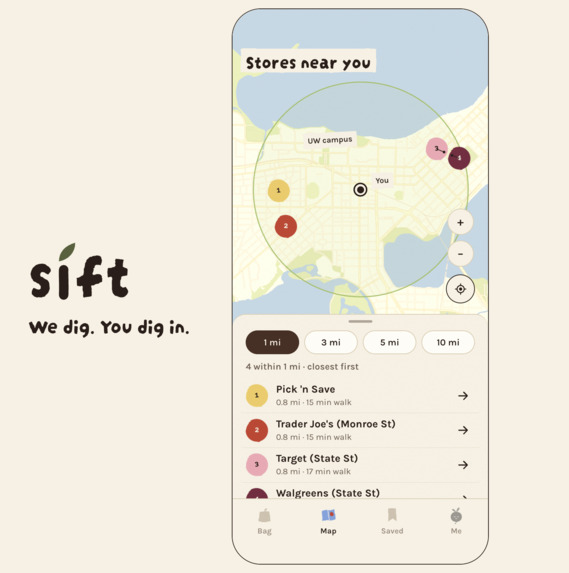
Stores near you, with a 1, 3, 5 or 10 mile radius and walking times.
-
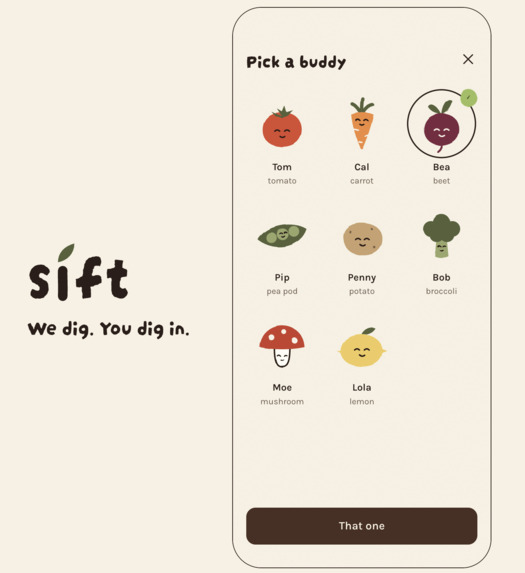
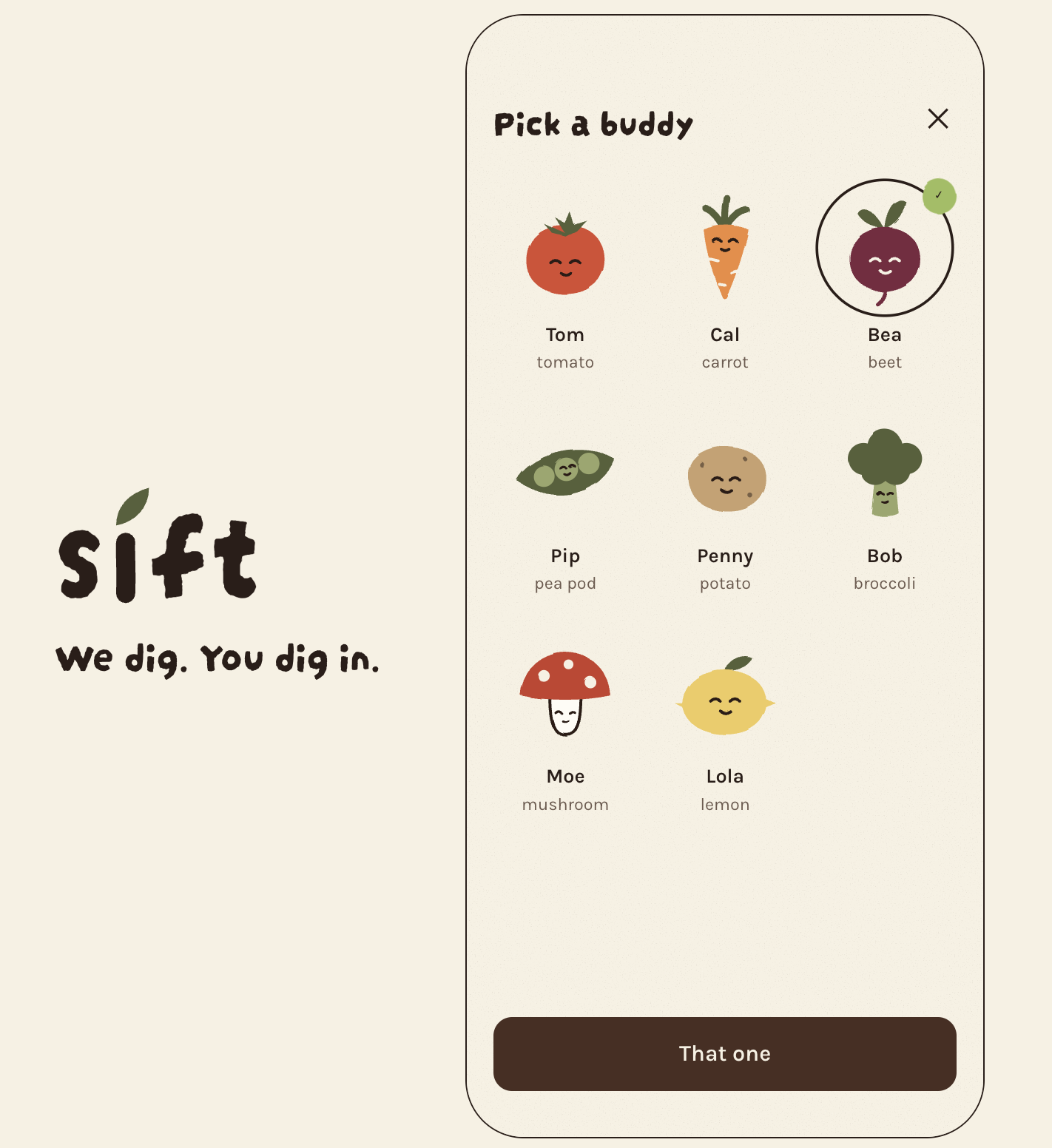
Pick a produce buddy to guide you. They answer your questions about the ranking.
-
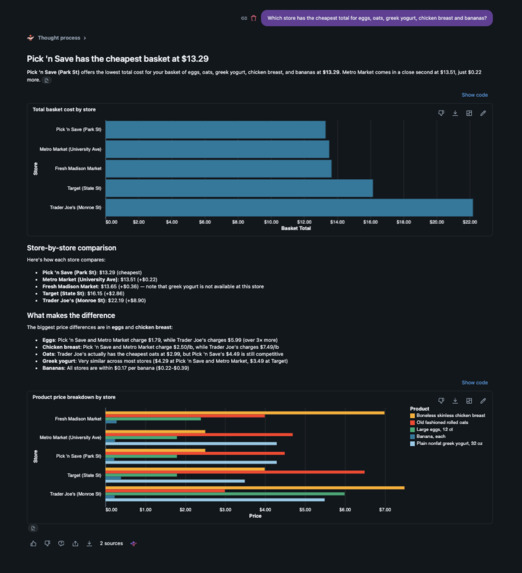
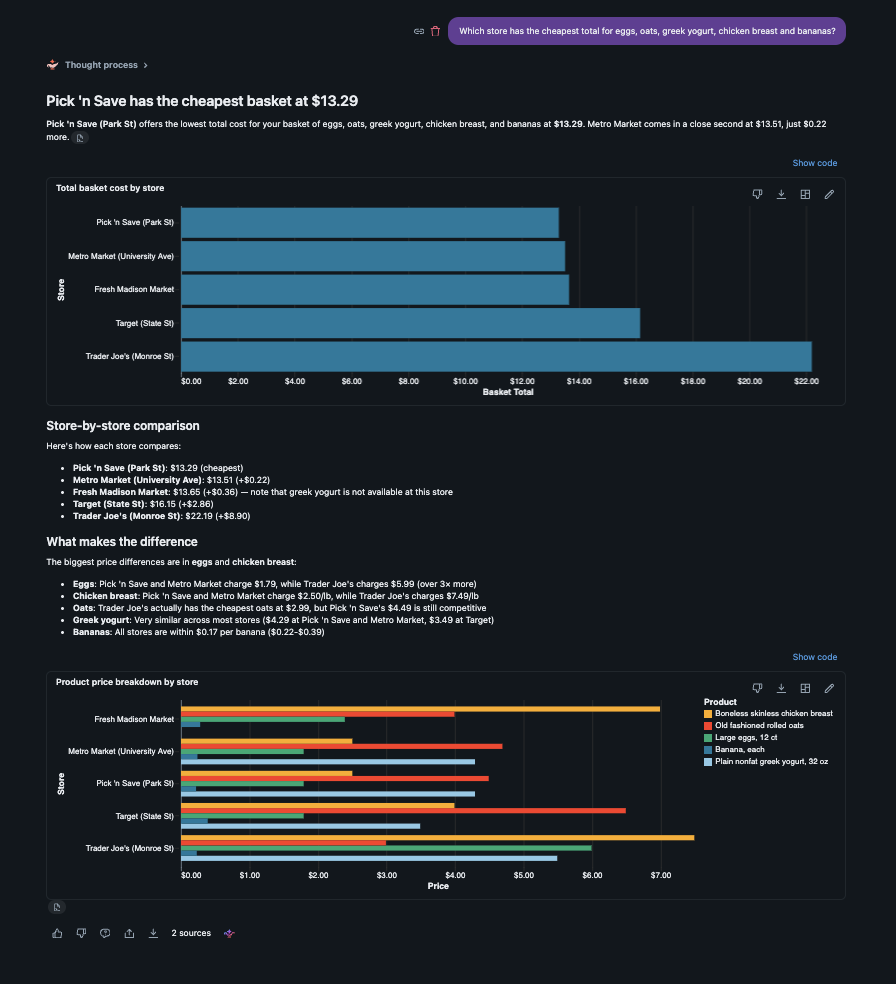
Databricks Genie answering "which store has the cheapest basket?" from our real price tables. Pick 'n Save wins at $13.29.
-
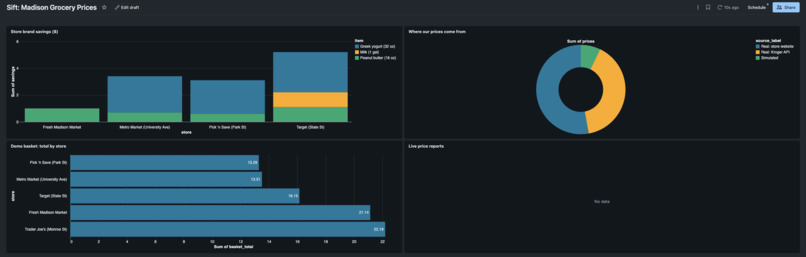
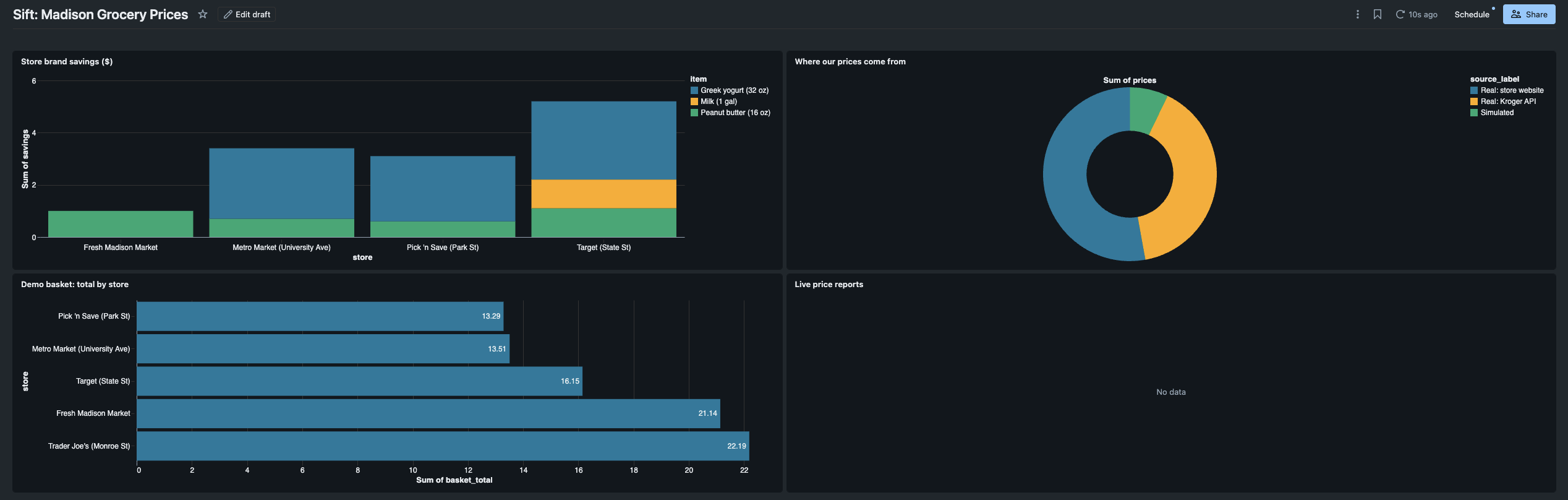
Databricks AI/BI dashboard: basket total by store, store-brand savings, and where each price comes from (website, Kroger API or simulated).
-
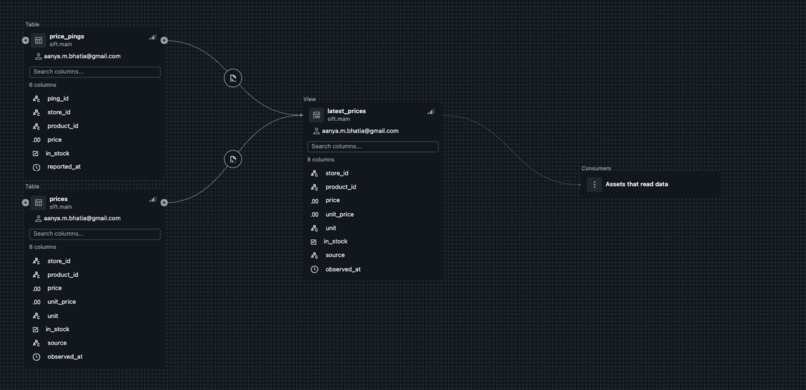
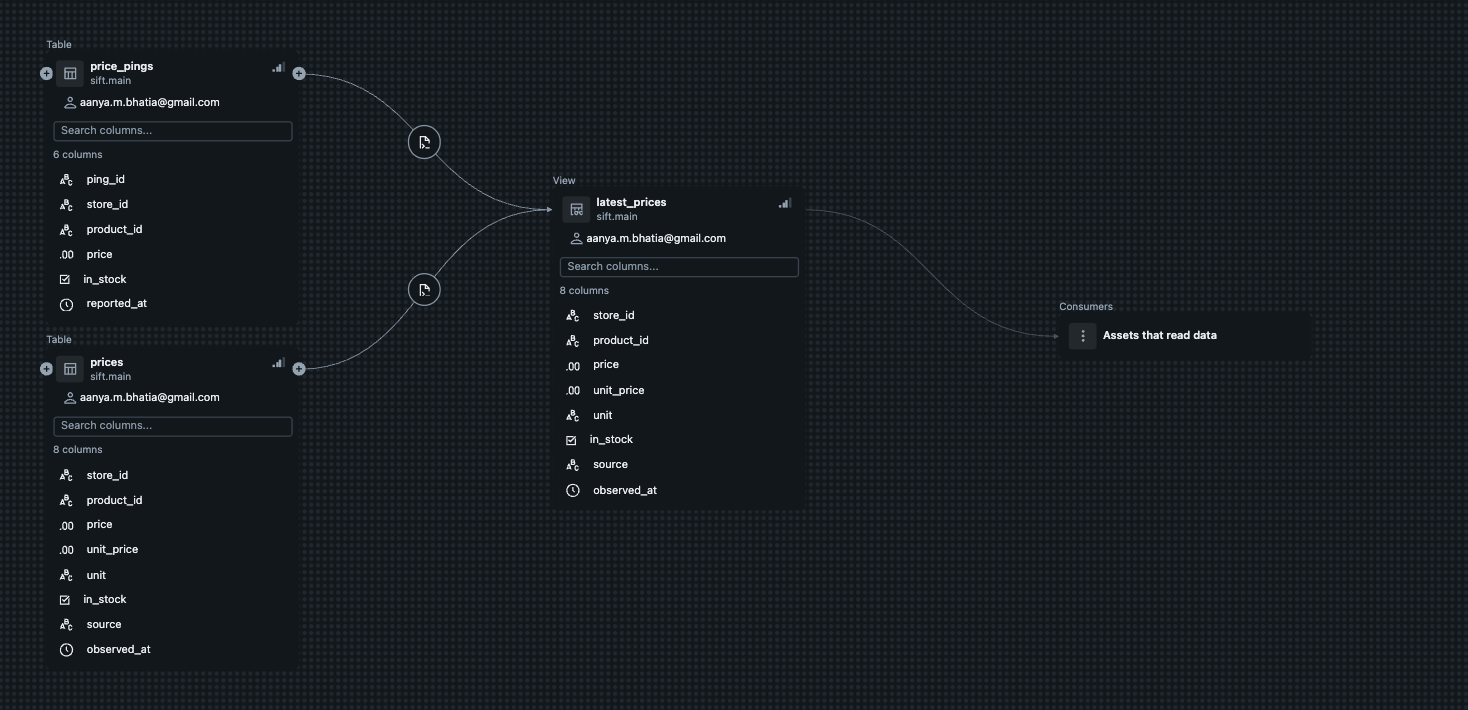
Unity Catalog lineage: collected prices and crowd reports feed the latest_prices view, where a newer report wins.

Inspiration
Grocery prices around campus vary a lot, and nobody checks five store websites before a grocery run. The tools that do exist compare one item at a time, but that's not how people shop. You have a list. We wanted one answer: for my whole list, which store should I go to right now?
What it does
Sift ranks nearby Madison grocery stores by what your whole basket would cost, how far away each store is, and whether your items are in stock.
- Type or say your list. Sift matches what you say to real products, even with mishearings like "bred" or "tee pee." If it isn't sure, it asks instead of guessing.
- See the winner and the receipt. Sift picks a store, shows every item's price, how old each price is, and what's missing. You can switch between Cheapest, Closest and your buddy's balanced pick.
- Snitch a price. See a wrong price on the shelf? Report it. It's saved to Databricks, overrides the older price right away, and the stores re-rank.
- Ask your buddy. Pick a produce buddy (Tom the tomato, Lola the lemon and friends) and ask things like "why this store?" or "is there a cheaper swap?" Answers come from our tables or Databricks Genie, and the backend checks every answer against the tables before showing it.
- Map, radius, budget and diets. See stores on a map with a 1 to 10 mile radius, set a budget, and save bags you buy often.
How we built it
Data (Databricks). We collected real prices for 15 common products at 5 Madison stores: Target (State St), Trader Joe's (Monroe St), Pick 'n Save (Park St), Fresh Madison Market and Metro Market (Shorewood). Pick 'n Save and Metro Market prices come from the Kroger Products API through a Python script. The rest come from store websites. Every price is labeled api, website, crowd or simulated, and the few simulated prices are never used to claim savings.
Raw CSVs land in a Unity Catalog volume, get loaded into Delta tables (stores, products, prices, price_pings), and a latest_prices view serves the newest price per store and product, letting a newer crowd report override it. On top of that we built:
- a Genie space with instructions about package sizes, store IDs and honesty rules
- an AI/BI dashboard showing basket cost by store, where prices come from, store-brand savings and live crowd reports
- MLflow runs logging the scoring model and our eval results
Backend (FastAPI). The ranker is a transparent weighted score, not a trained model: price, distance, stock and best unit price, with tunable weights (0.6 / 0.3 / 0.1 by default). Totals use pack-normalized prices so different package sizes compare fairly. A missing item is priced at the highest price seen anywhere, so a store can't win by not carrying something.
Frontend (React, Vite, Tailwind, Framer Motion, Leaflet). A mobile-first app with a hand-made paper and kraft look: torn-edge receipts, stickers, and one color per store across its map pin, tags and receipt. A demo mode runs the full flow offline if the backend goes down.
Measuring it
- Voice parser: 82% → 100% on 30 messy spoken lists. The old matcher gave 2 confidently wrong answers. The new one asks for confirmation on 4 instead.
- Assistant: 24 of 24 answers match the live tables.
- Genie: 79% → 100% after we started passing store IDs instead of store names.
Challenges we ran into
- Real prices are messy. Package sizes differ (Trader Joe's oats are 18 oz), some stores price bananas per pound, and the Kroger API sometimes returned the wrong item, like extra-large eggs or double-roll toilet paper. We added size parsing, exclusions and pack-normalized totals.
- Genie and apostrophes. Store names like "Pick 'n Save" broke Genie's filters, so we switched to store IDs. That's the 79% → 100% jump.
- Genie is slow (10 to 25 seconds), so common questions are answered straight from the tables, and Genie handles the open-ended ones.
- Staying honest. It would have been easy to fill gaps with made-up prices. We labeled every source and kept simulated prices out of any savings claim.
Accomplishments that we're proud of
- Real prices from a real API and real store websites, labeled honestly, in under 24 hours
- A crowd price that actually changes the ranking live
- An assistant we measured instead of just trusting, with answers checked against the data
What we learned
How to build an end-to-end pipeline in Databricks (Unity Catalog, volumes, Delta tables, views, Genie, dashboards and MLflow), how hard real-world grocery data is, and that measuring your AI is the only way to know if it's right.
What's next for Sift
- Scheduled price refreshes as a Databricks job
- More stores and products across Madison
- Trust scores for crowd reports, so one bad report can't flip a ranking
Built With
- databricks
- databricks-genie
- delta-lake
- fastapi
- kroger-api
- leaflet.js
- mlflow
- python
- react
- sql
- tailwindcss
- unity-catalog
- vite
