-
-

SIFT : Saving Lives Every Day
-
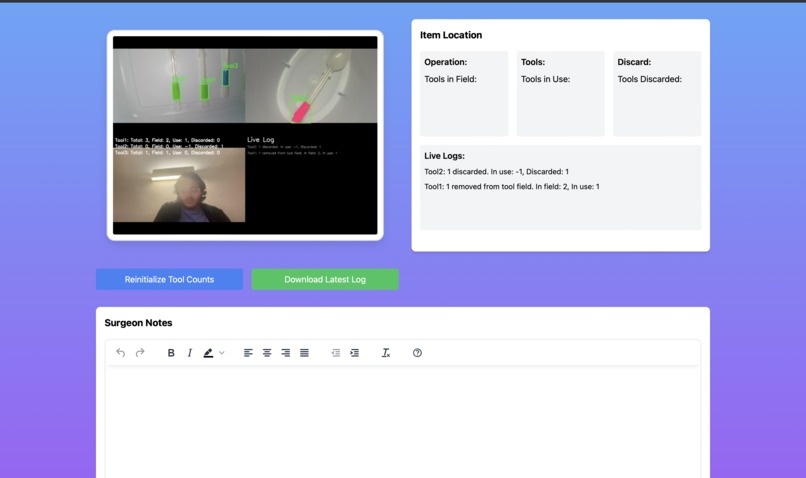
SIFT Dashboard with Surgeon Notes
-
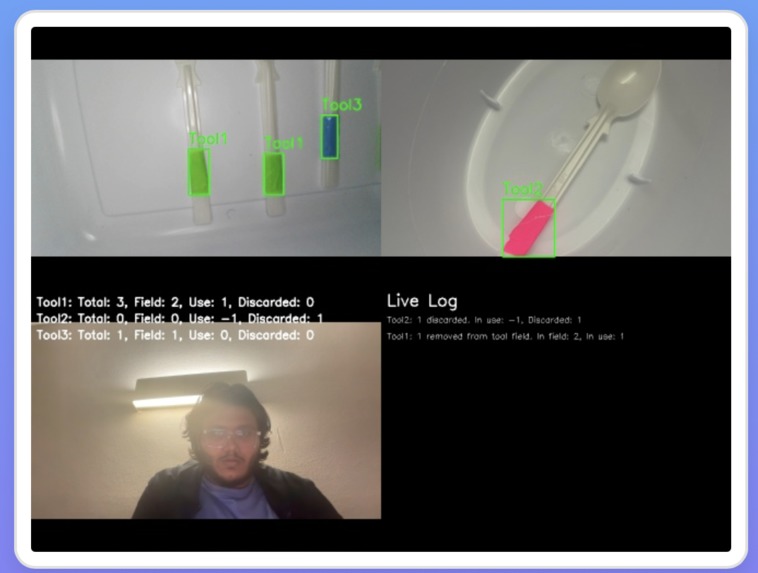
Camera Tracking of tools to increase patient saferty


Inspiration
The high incidence of surgical errors due to misplaced or retained instruments inspired us to develop a system that could minimize these risks. We wanted to create a solution that enhances patient safety and reduces the burden on surgical teams by automating the tracking of surgical tools.
What it does
SIFT is a real-time tool tracking system that uses cameras and neon markers to monitor the movement of surgical instruments during procedures. It logs tool usage, shows live updates on tool status, and helps prevent tools from being left inside patients by providing reinitialization counts and downloadable reports for post-surgical analysis.
How we built it
We built SIFT using a React.js frontend integrated with a Flask backend. The system leverages OpenCV for real-time image processing and tool detection using neon-colored markers. We used SQLite for log storage, ensuring detailed record-keeping of tool usage. Docker was employed to containerize the application for seamless deployment.
Challenges we ran into
One of the main challenges was accurately tracking tools in real time across multiple camera frames, especially in high-motion environments like an operating room. Ensuring the system could differentiate between tools in use, discarded, and returned required fine-tuning the detection algorithms. Another challenge was integrating the frontend and backend for smooth, real-time data updates.
Accomplishments that we're proud of
We successfully built a system that enhances surgical safety by preventing tool mismanagement. The real-time tracking and logging features work seamlessly, and we’re particularly proud of how we integrated the object detection algorithms to function efficiently in a real-world use case.
What we learned
We learned a great deal about real-time image processing, camera handling with OpenCV, and building full-stack applications with React and Flask. This project also reinforced the importance of seamless communication between the frontend and backend in real-time applications.
What's next for SIFT: Surgical Instrument Field Tracker
The next steps include enhancing the accuracy of tool detection by integrating machine learning models like YOLO for better recognition. We also plan to scale the system to track a wider range of tools across multiple operating rooms and provide advanced analytics on tool usage trends for surgical teams.


Log in or sign up for Devpost to join the conversation.