Inspiration
Product teams drown in app store reviews. Thousands of comments arrive every week, and nobody has time to read them all, so real bugs and feature requests get missed. We wanted to turn that pile of raw reviews into a ranked product backlog in minutes.
What it does
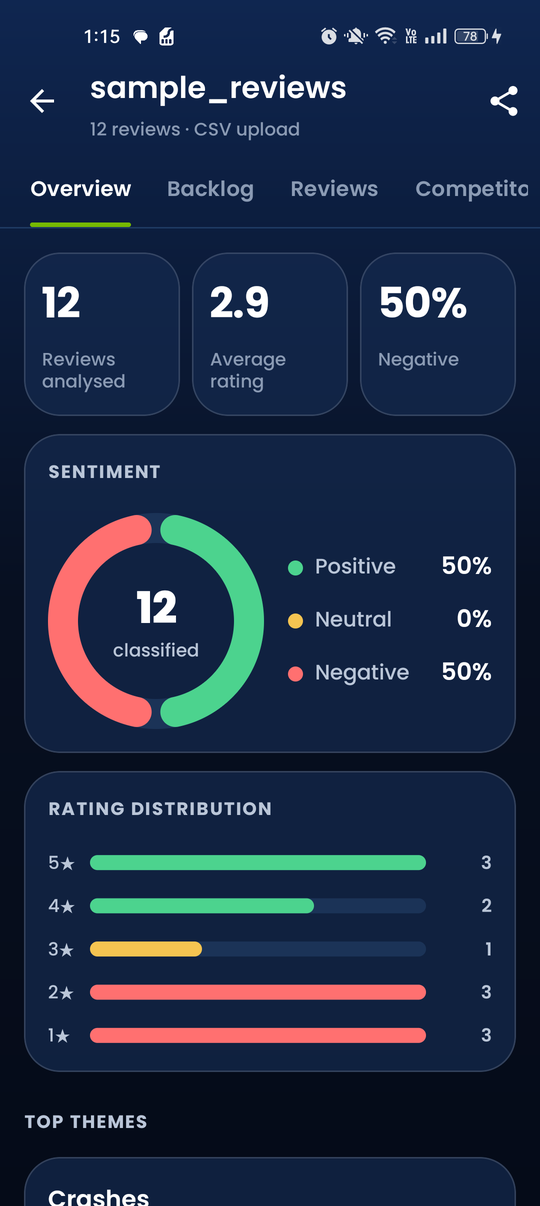
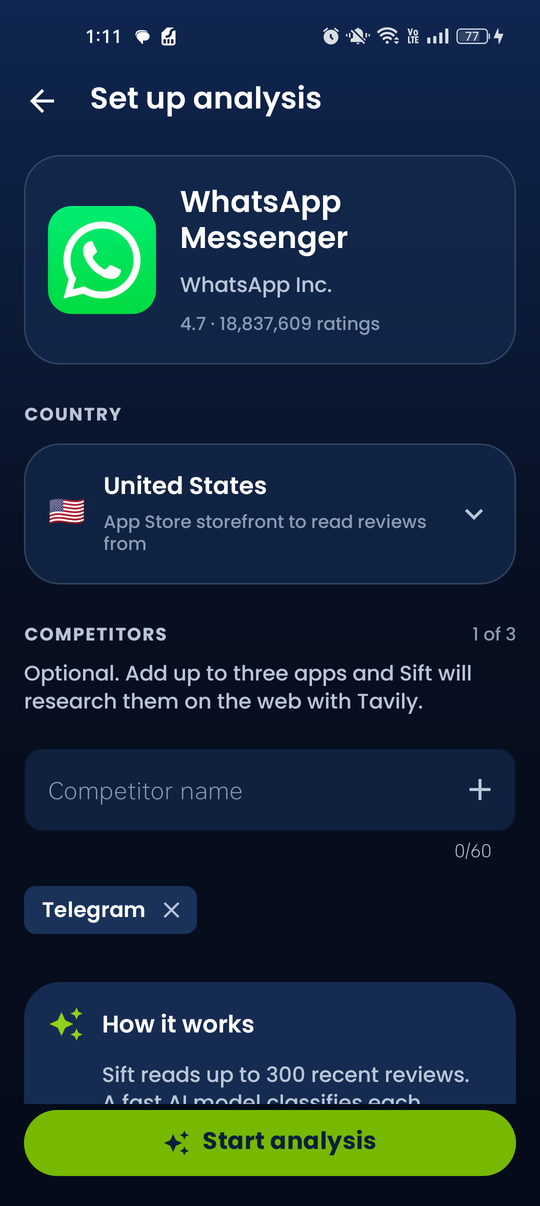
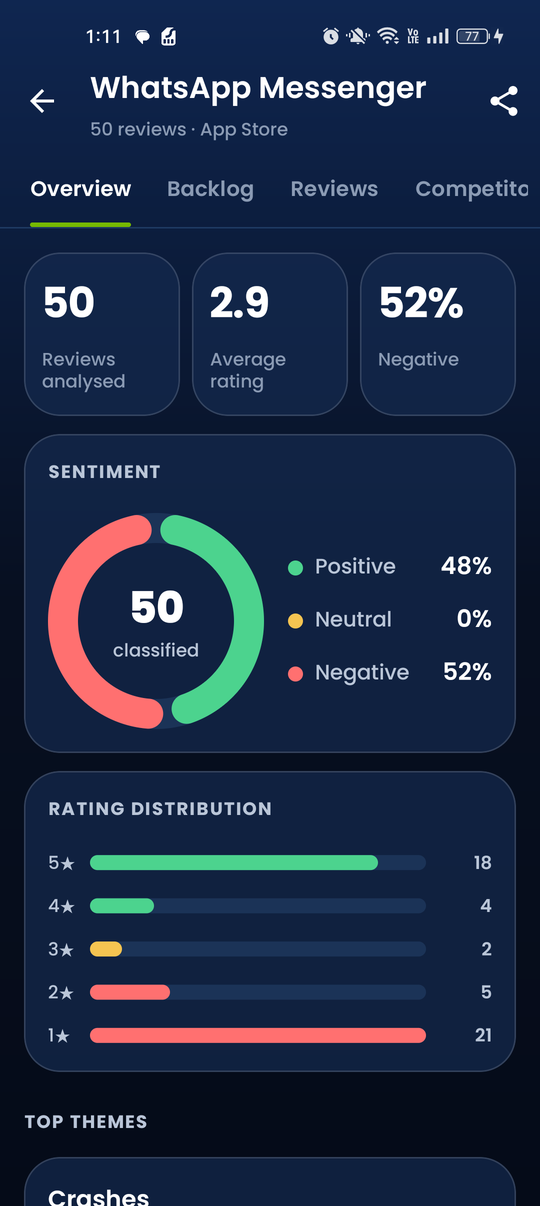
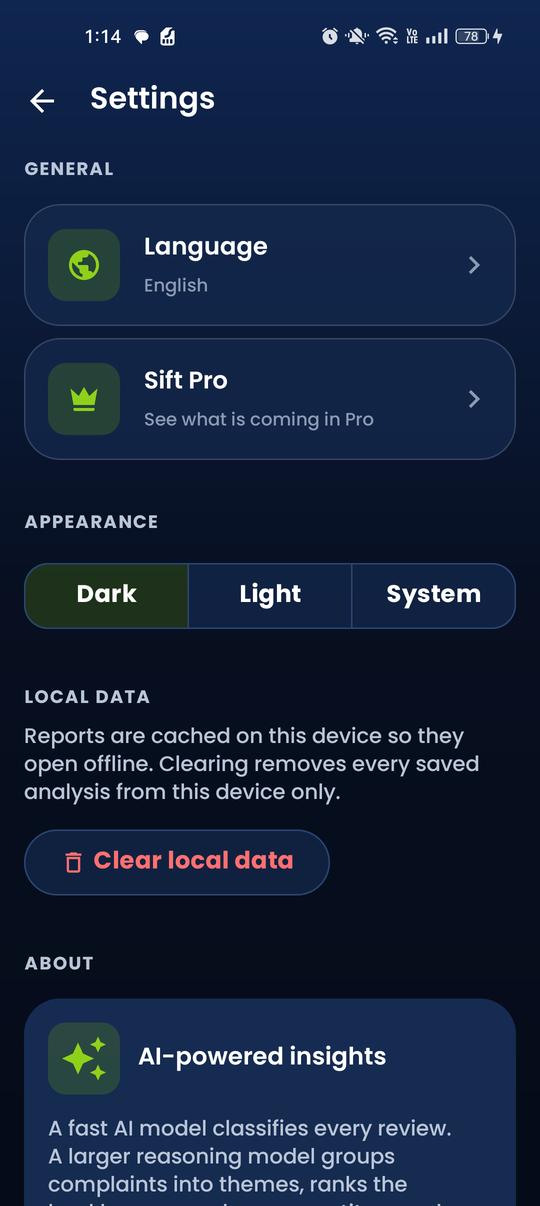
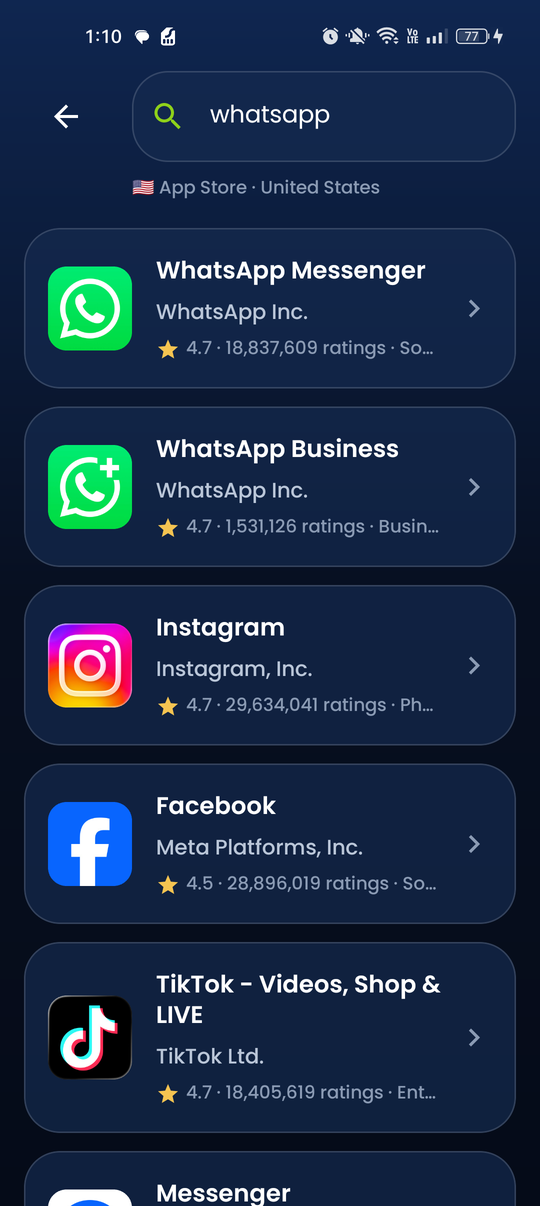
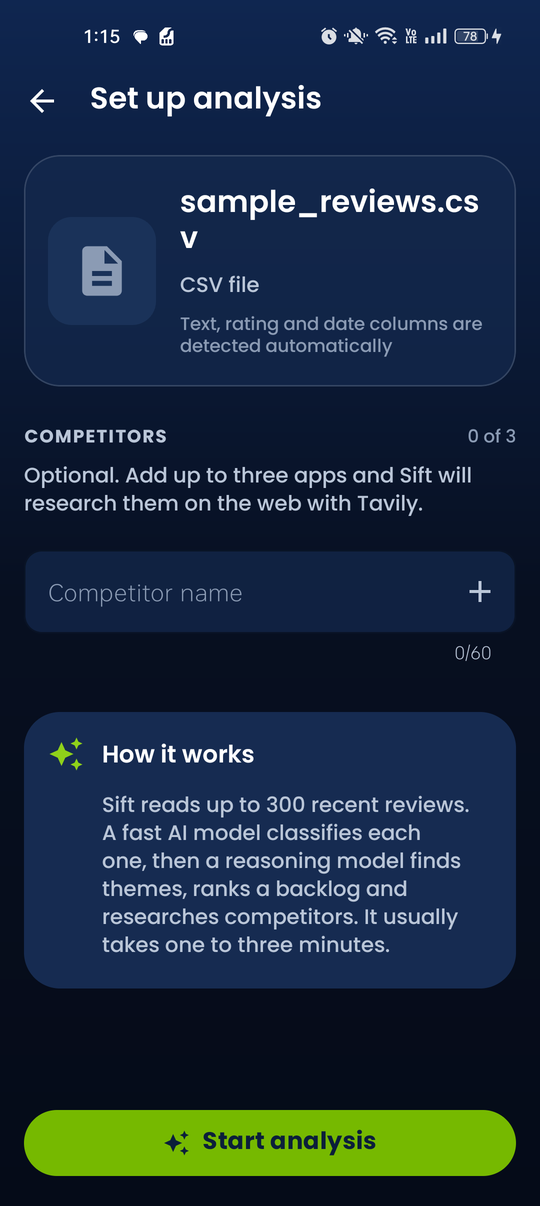
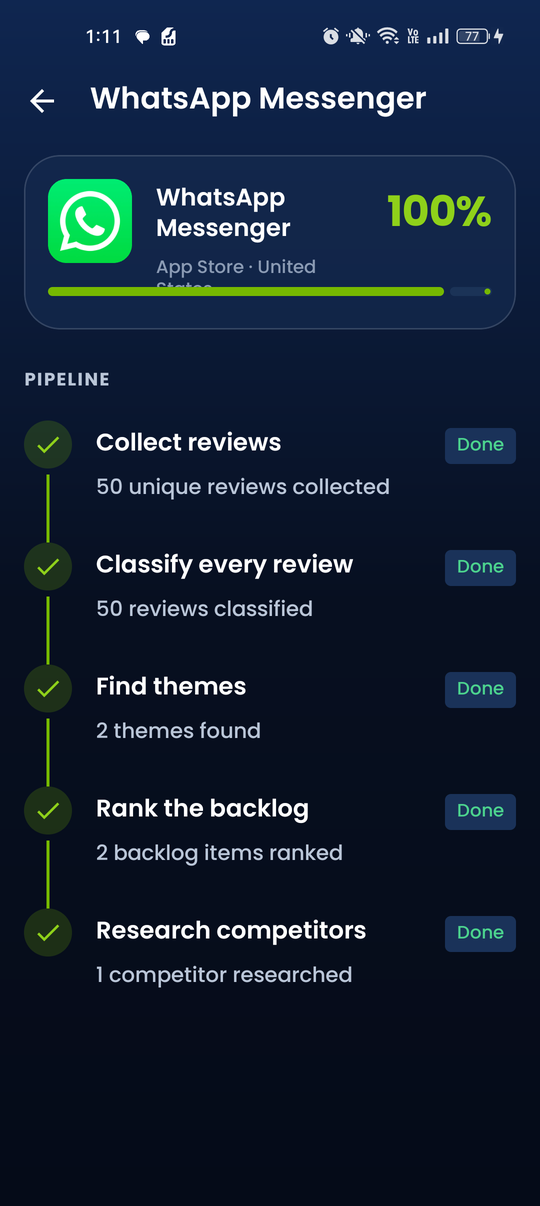
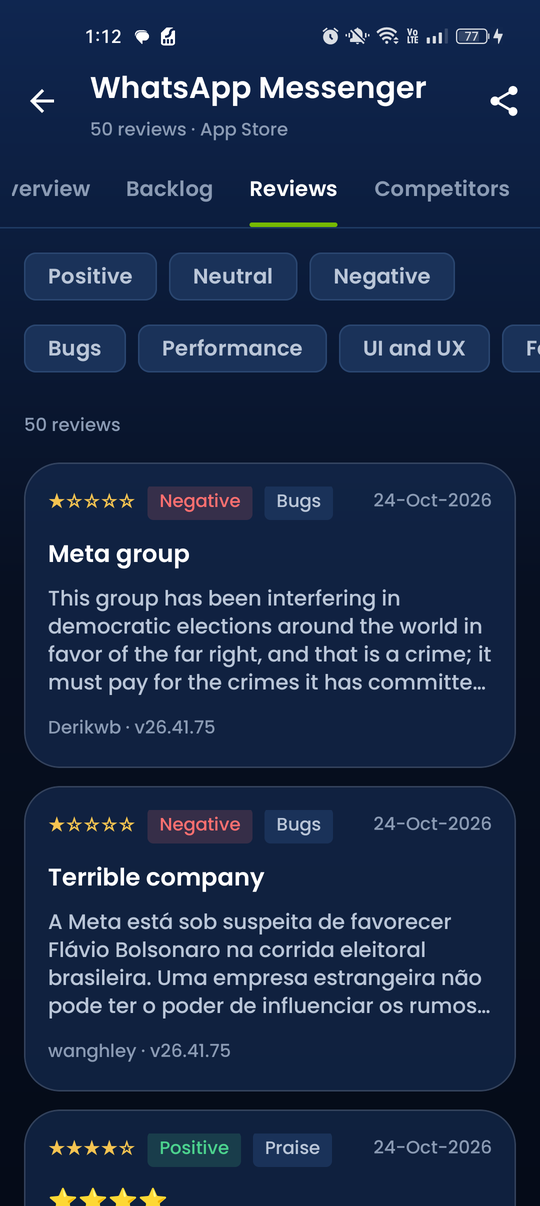
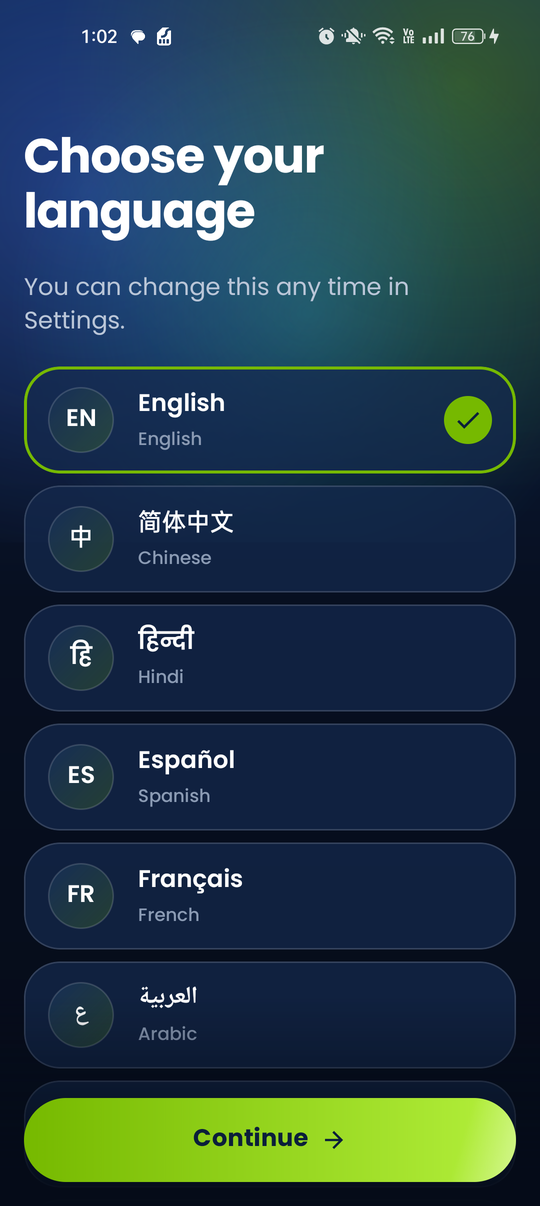
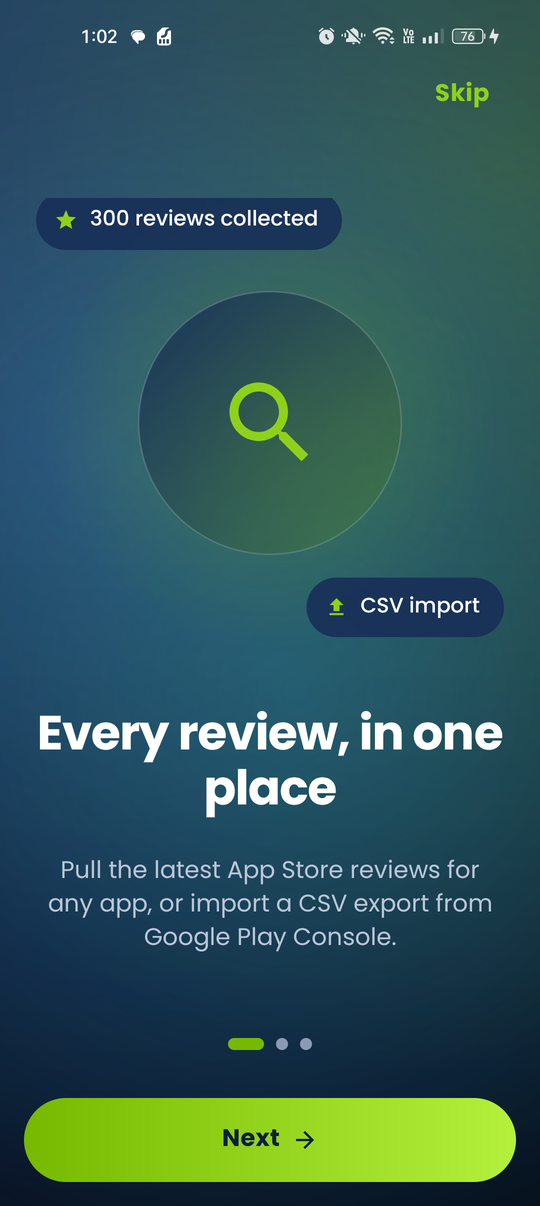
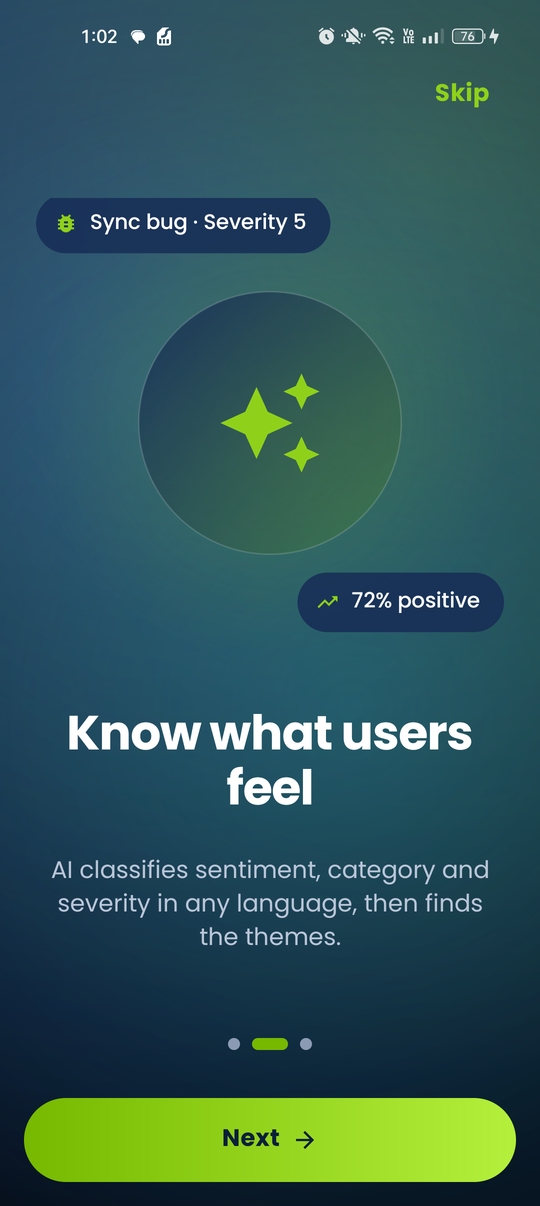
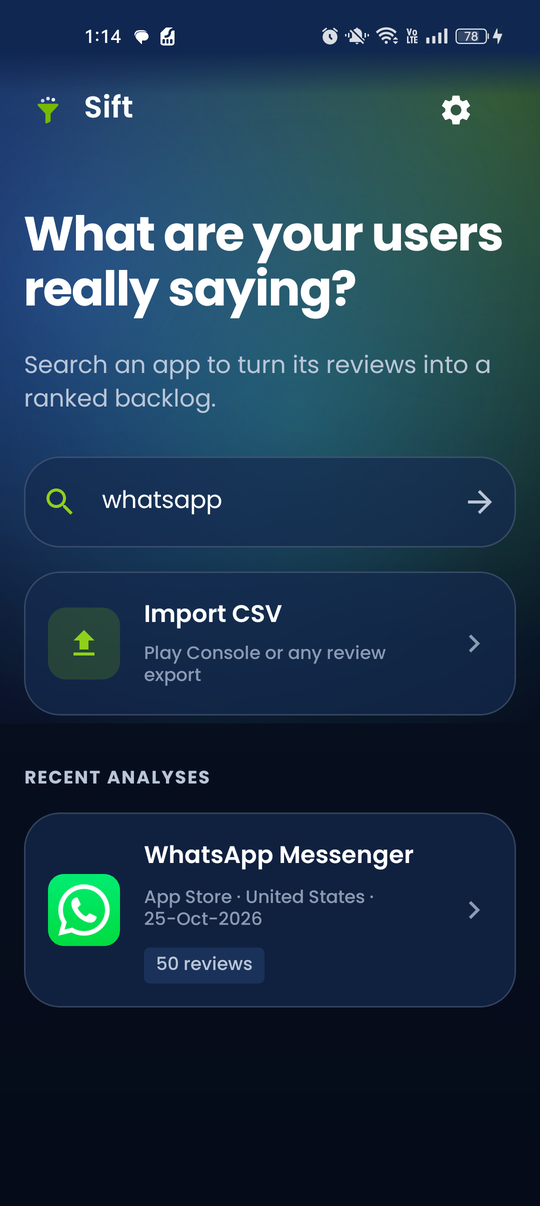
Sift is an Android app that takes an app from the App Store, collects its reviews (or a CSV you import), and analyzes them with AI. It classifies each review, groups them into themes, and produces a prioritized backlog of bugs and feature requests with supporting quotes. It also researches competitors on the web and drafts replies to reviewers. Everything works in 15 languages and reports can be shared as Markdown.
How we built it
- Android app in Kotlin with XML layouts, ViewBinding, MVVM and Room for local storage.
- Django REST backend that fetches reviews and runs the analysis pipeline.
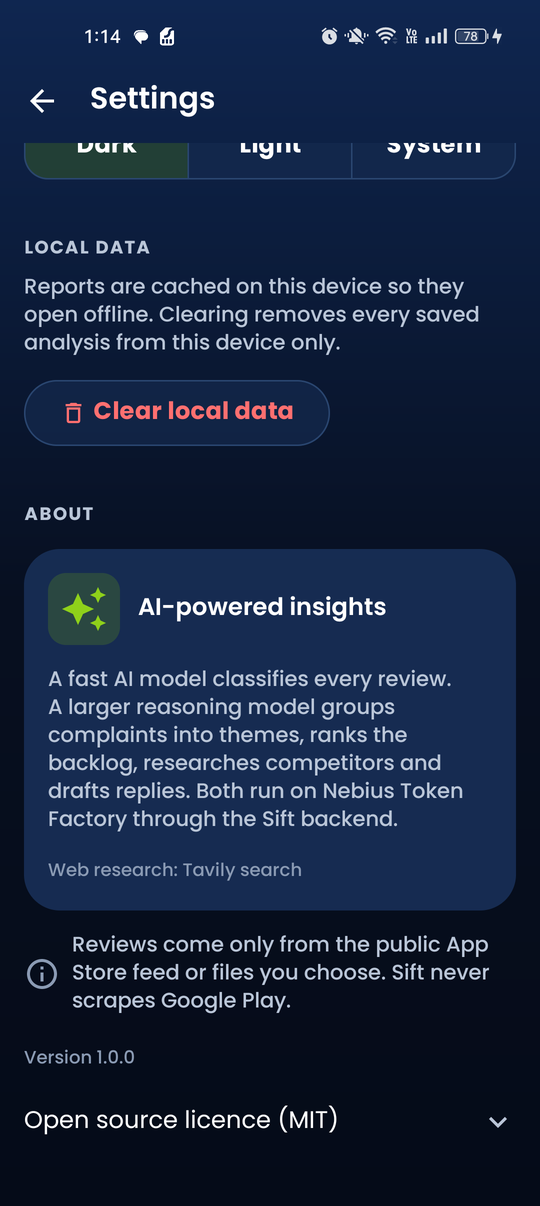
- Nemotron models served through Nebius Token Factory for classification, theme clustering, backlog generation and reply drafts.
- Tavily for live web research on competitors.
Challenges we ran into
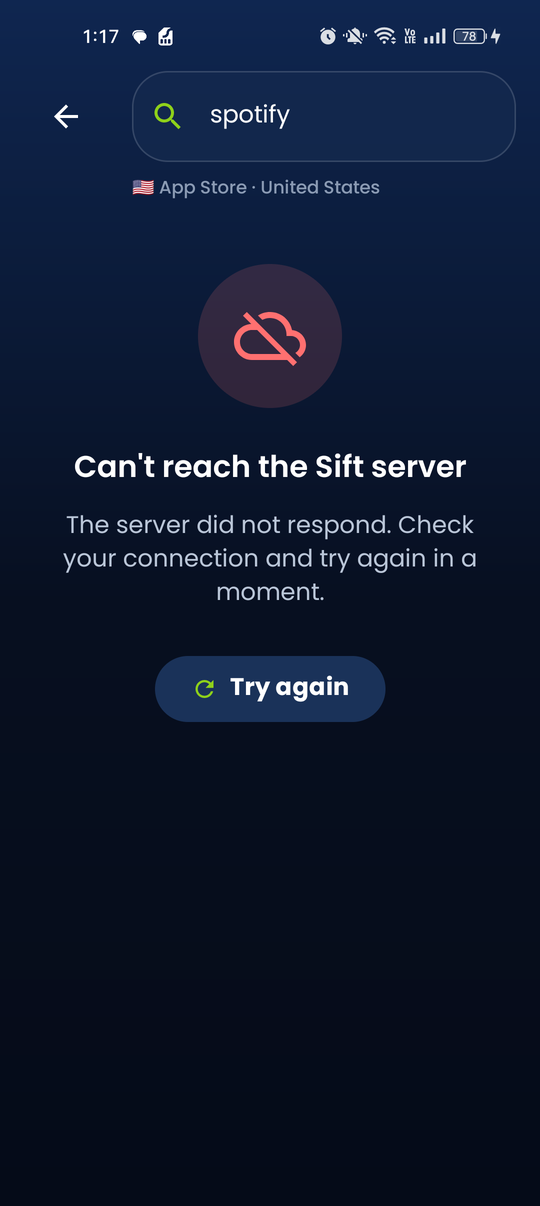
Getting consistent structured output from the model across 15 languages, keeping long review sets within context limits, and building the whole Android app without being able to run Gradle in our build environment. We also had to handle offline states and missing API keys gracefully.
Accomplishments that we're proud of
A complete end-to-end flow from app search to a ranked backlog, a polished animated UI, 15 languages, 53 backend tests plus Android unit tests, and a judge-ready README and demo video.
What we learned
How to design prompts and schemas so an LLM returns reliable structured data, how to combine an agent-style research step with review analysis, and how much polish matters for a demo.
What's next for Sift: App Review Intelligence
Google Play support, scheduled weekly reports, direct export to Jira and Linear, sentiment trends over time, and one-tap publishing of approved replies.

Log in or sign up for Devpost to join the conversation.