-
-
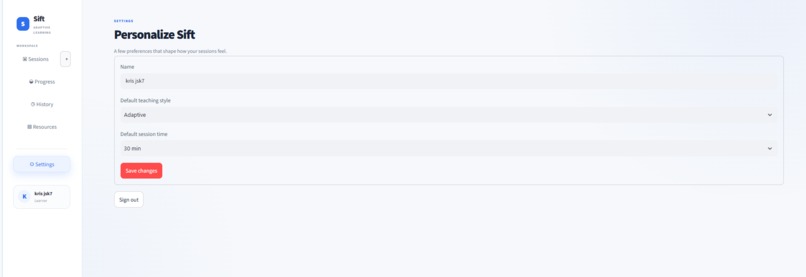
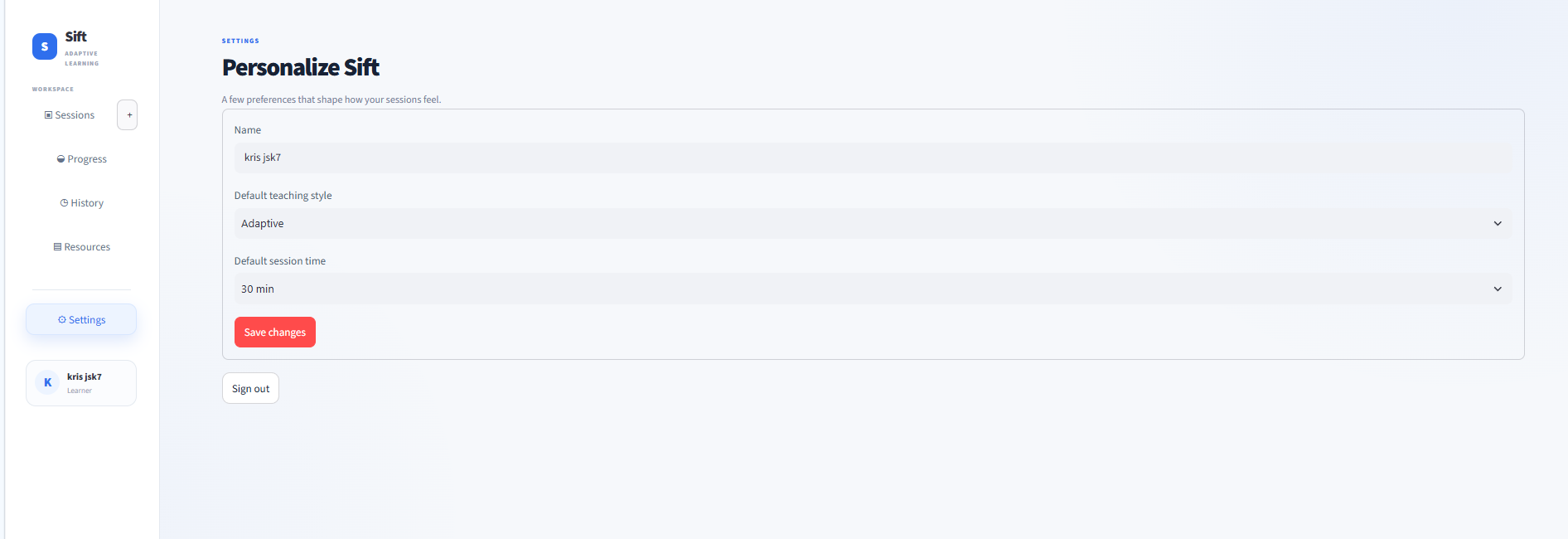
Settings
-
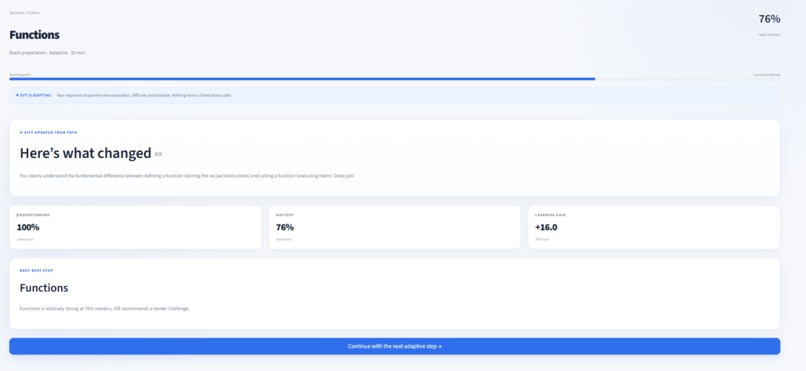
Evaluation
-
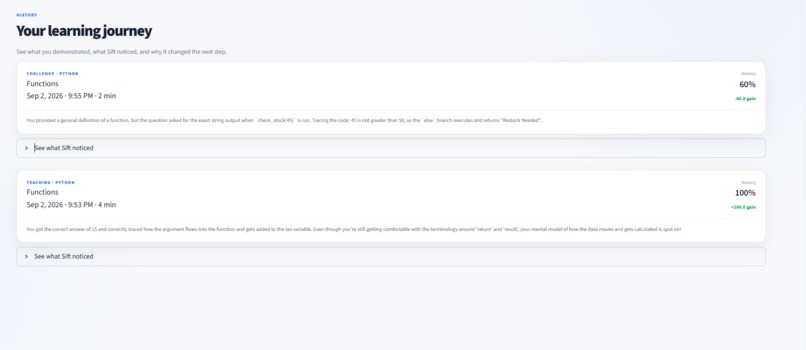
History
-
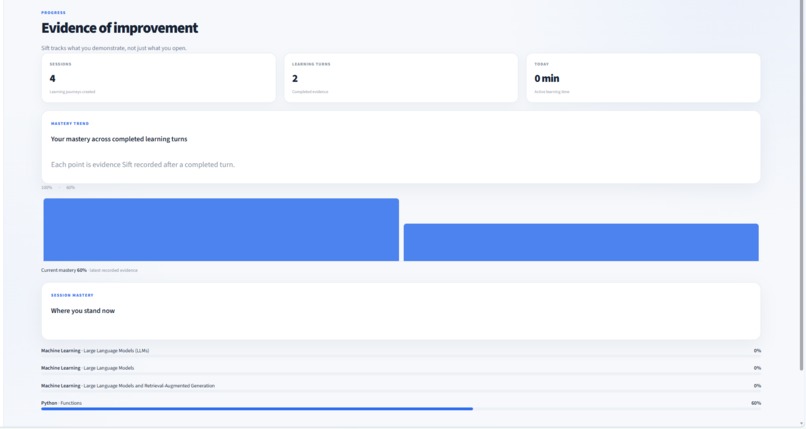
Progress
-
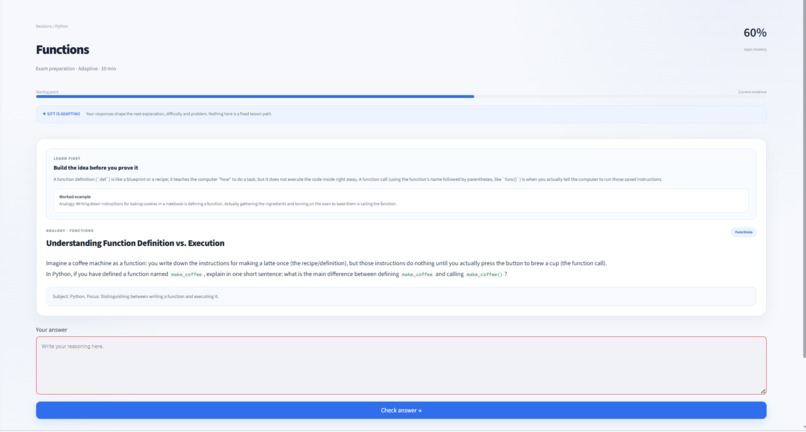
Learning Process
-
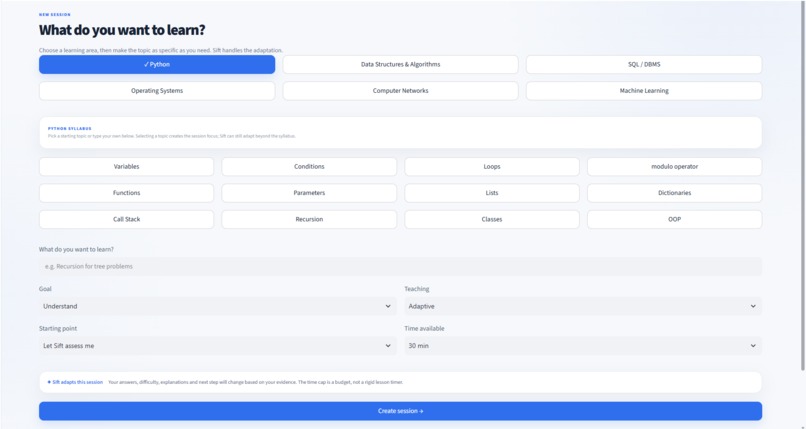
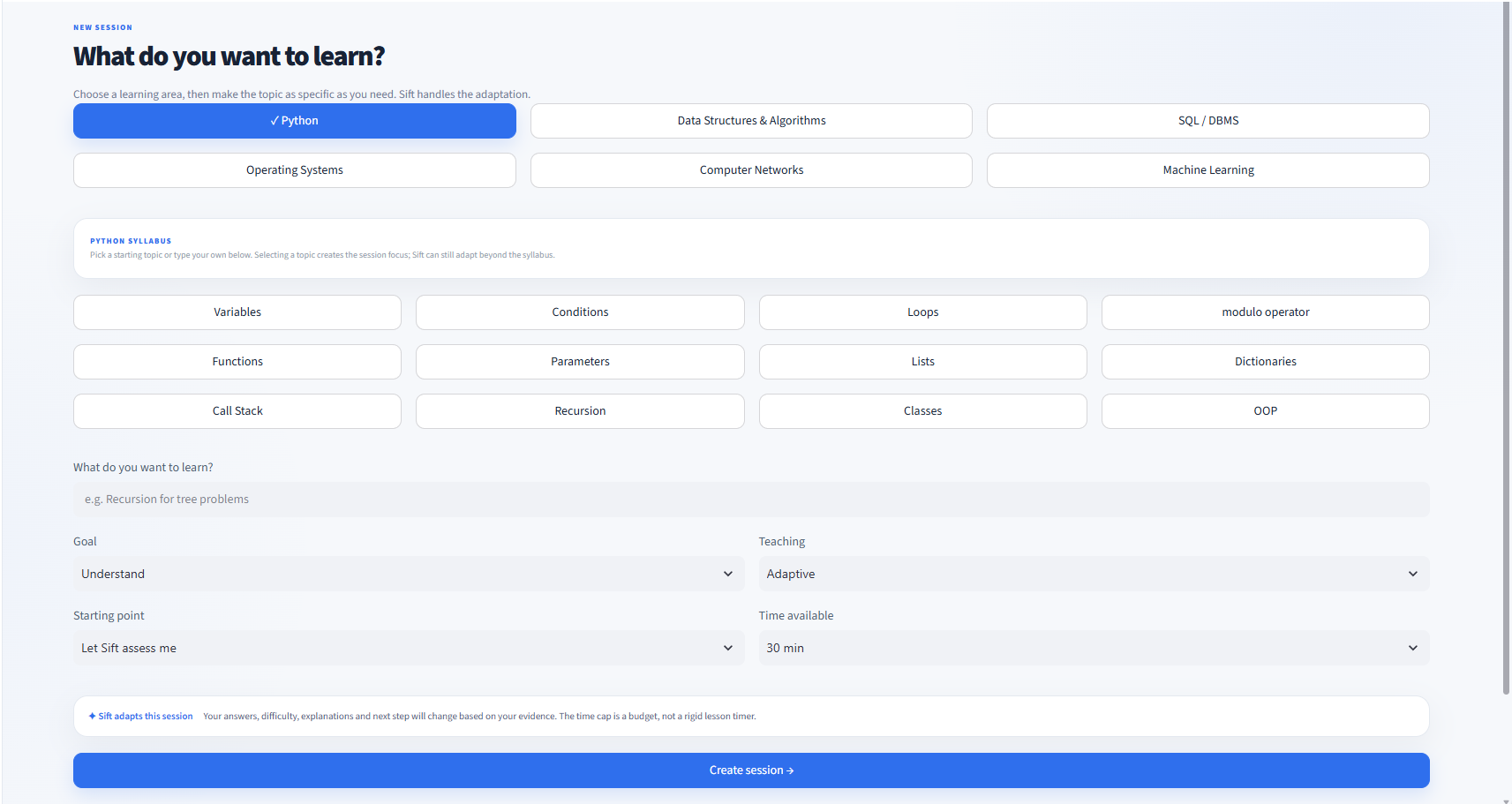
Session creation
-
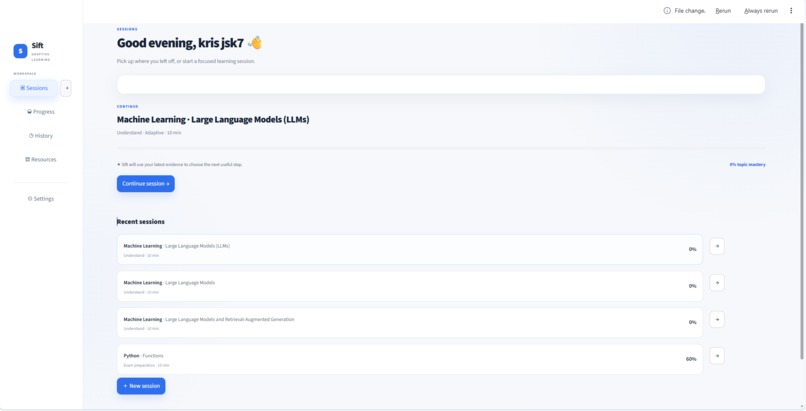
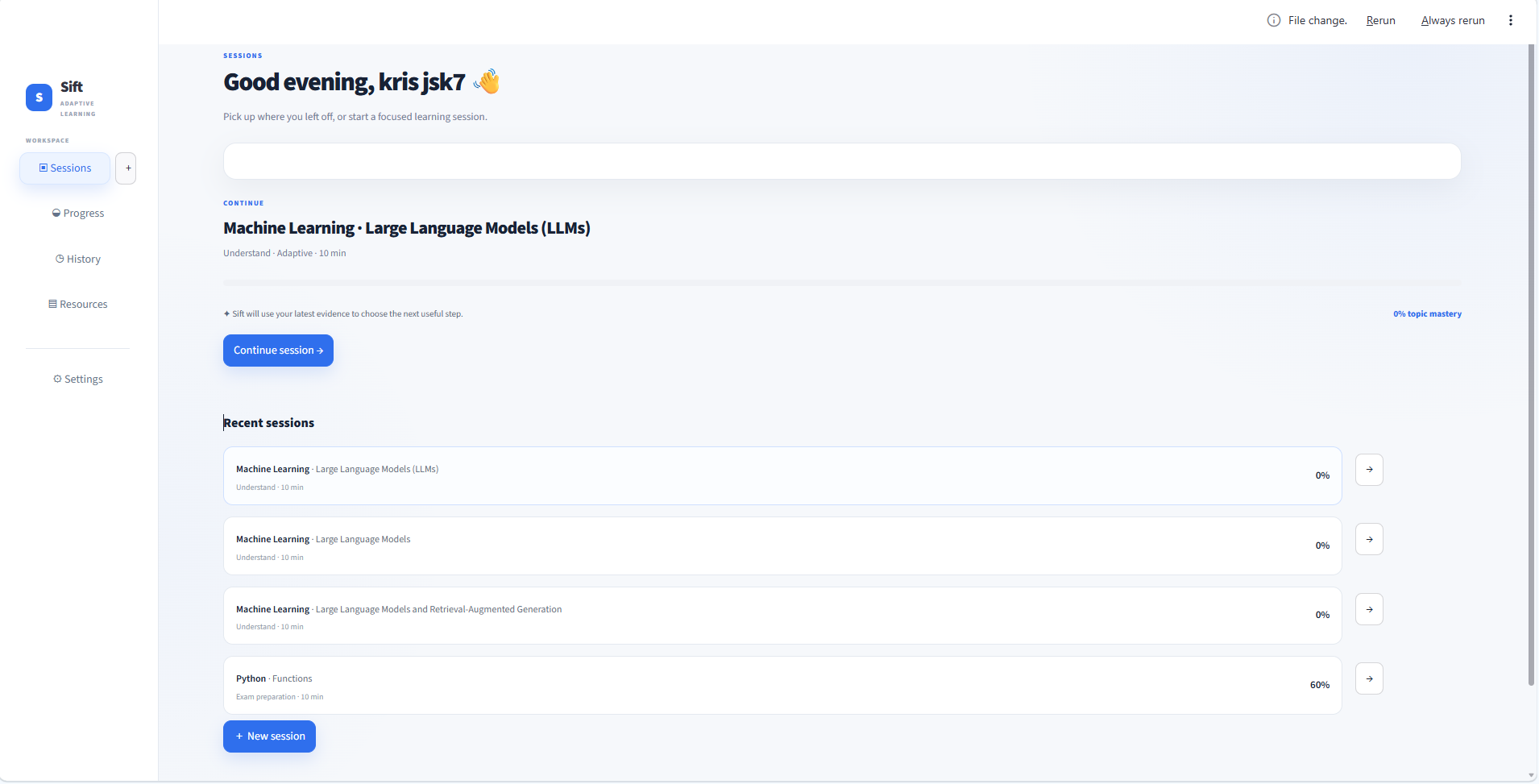
Session lists
-
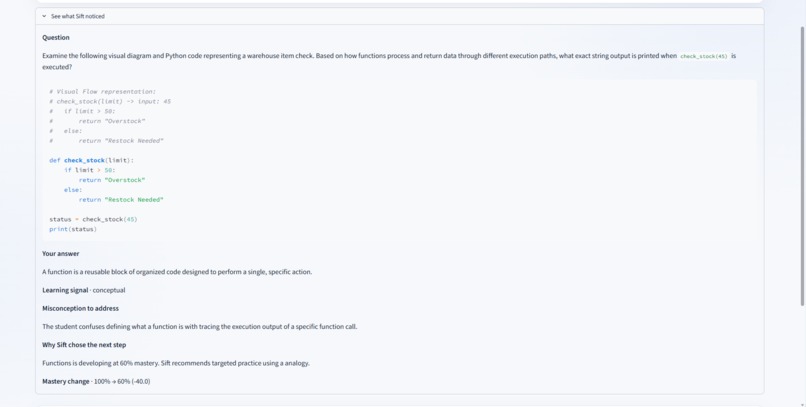
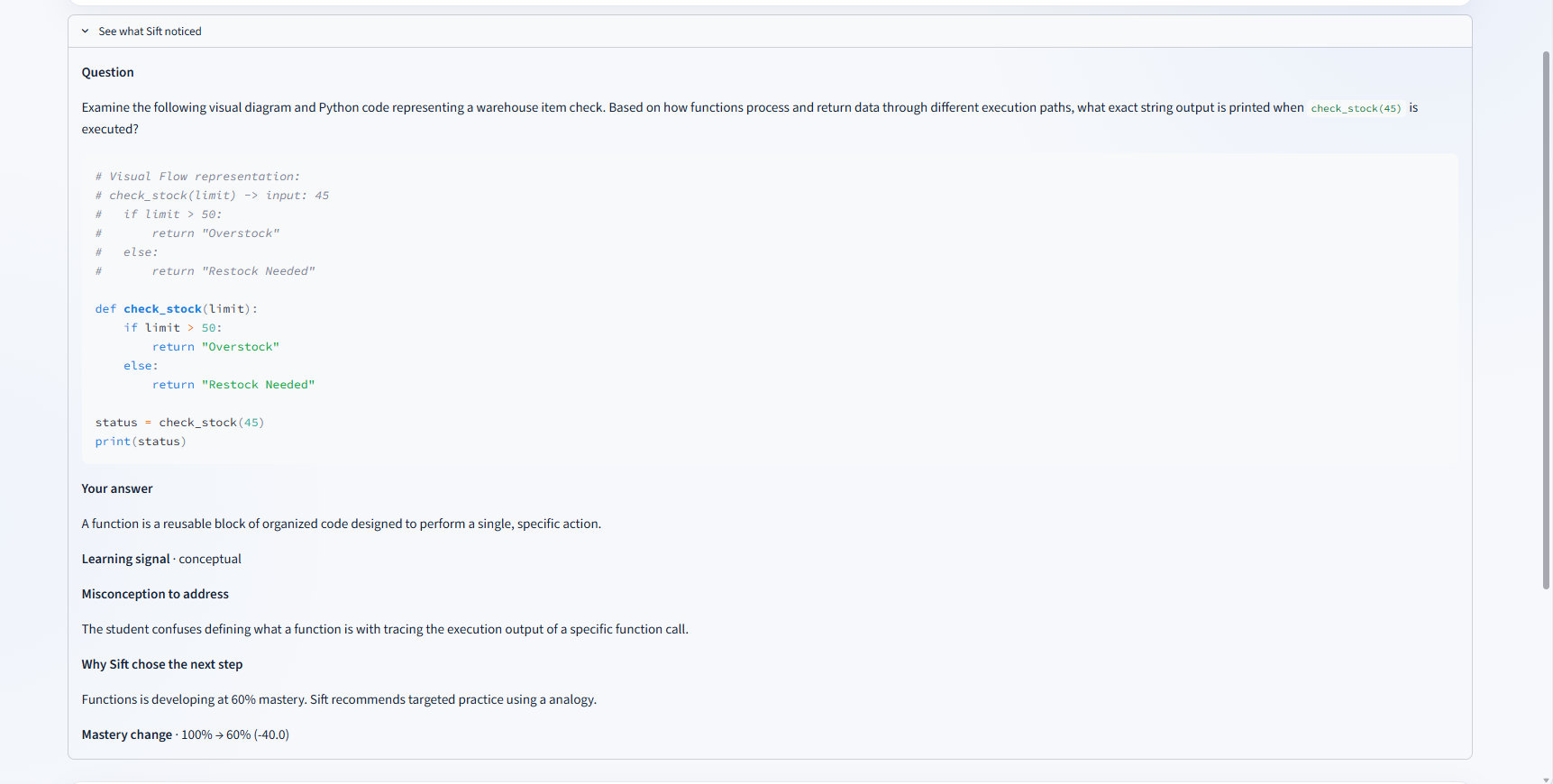
detailed evaluation and sift opinion
-
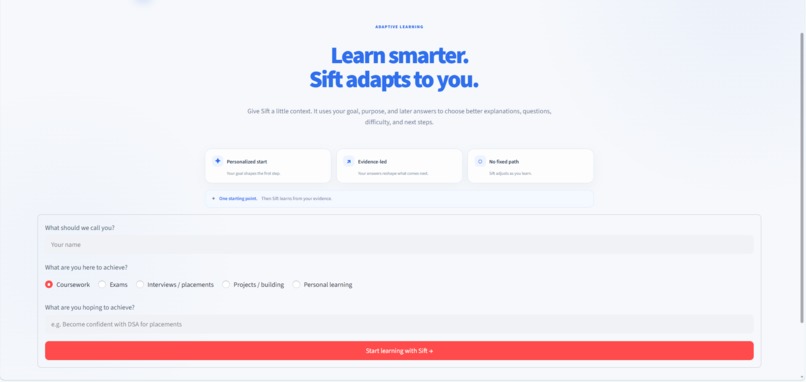
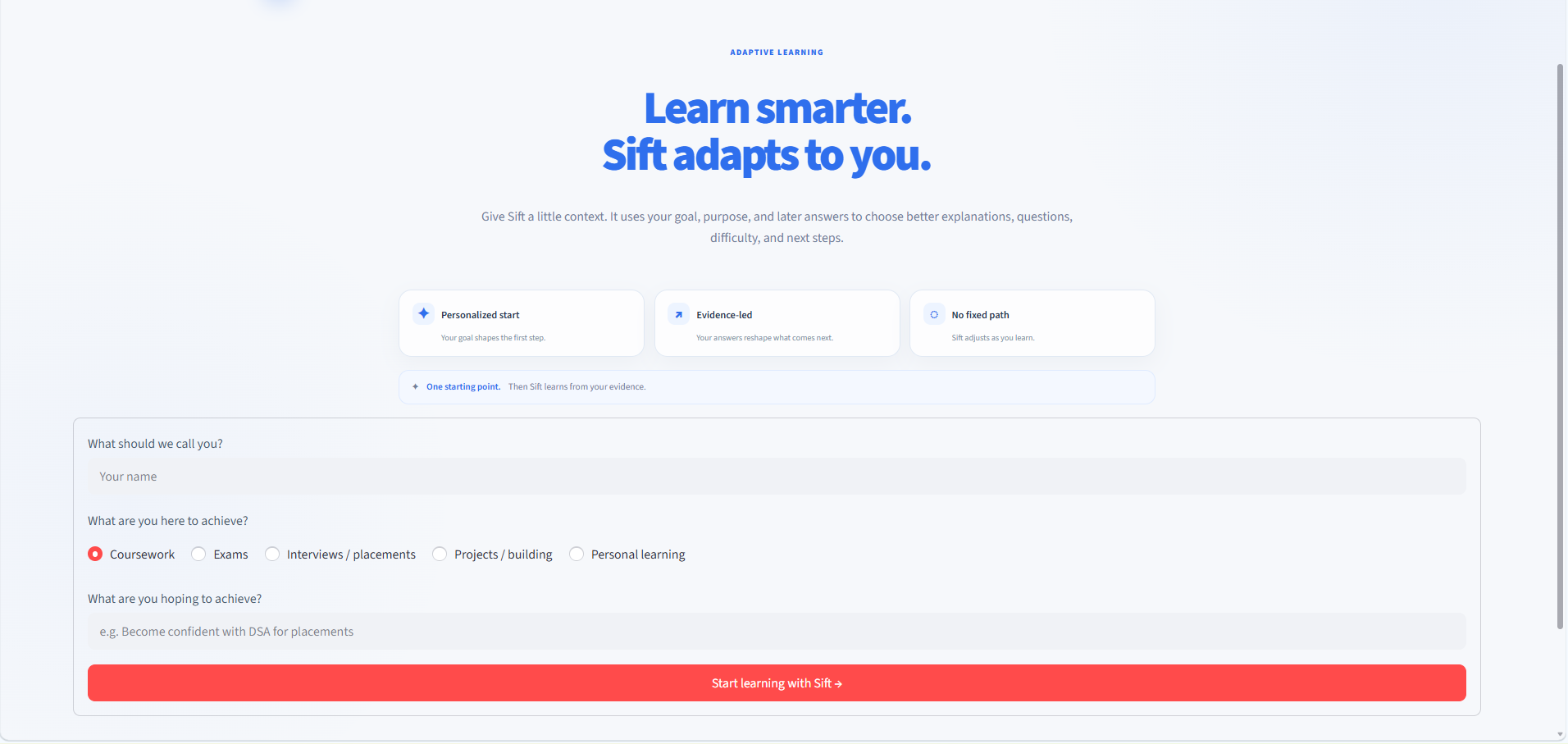
First user interface
-
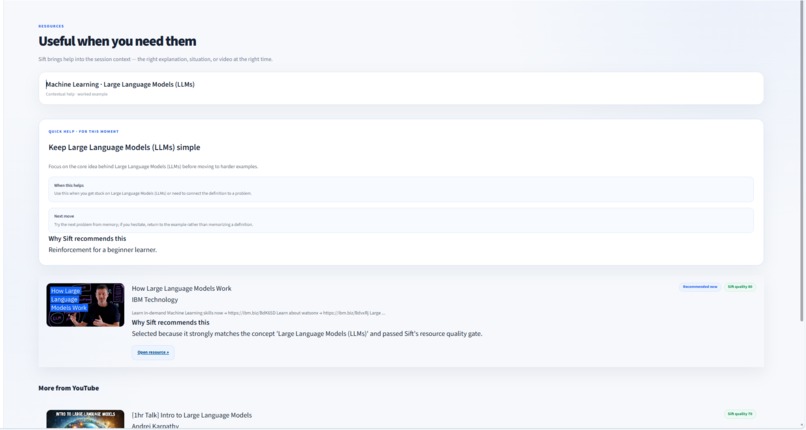
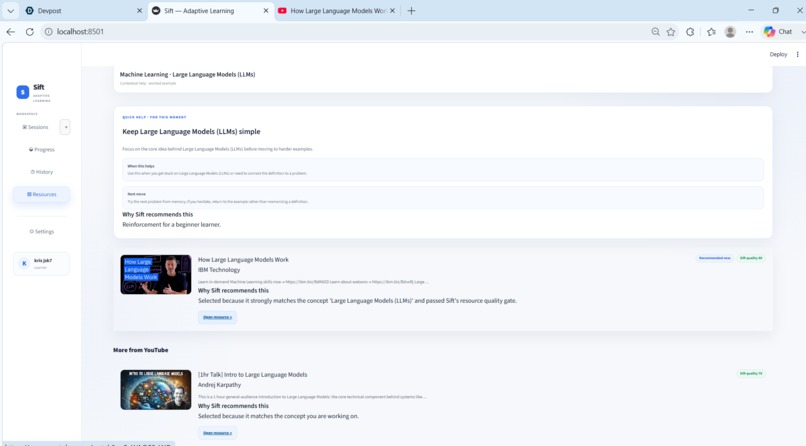
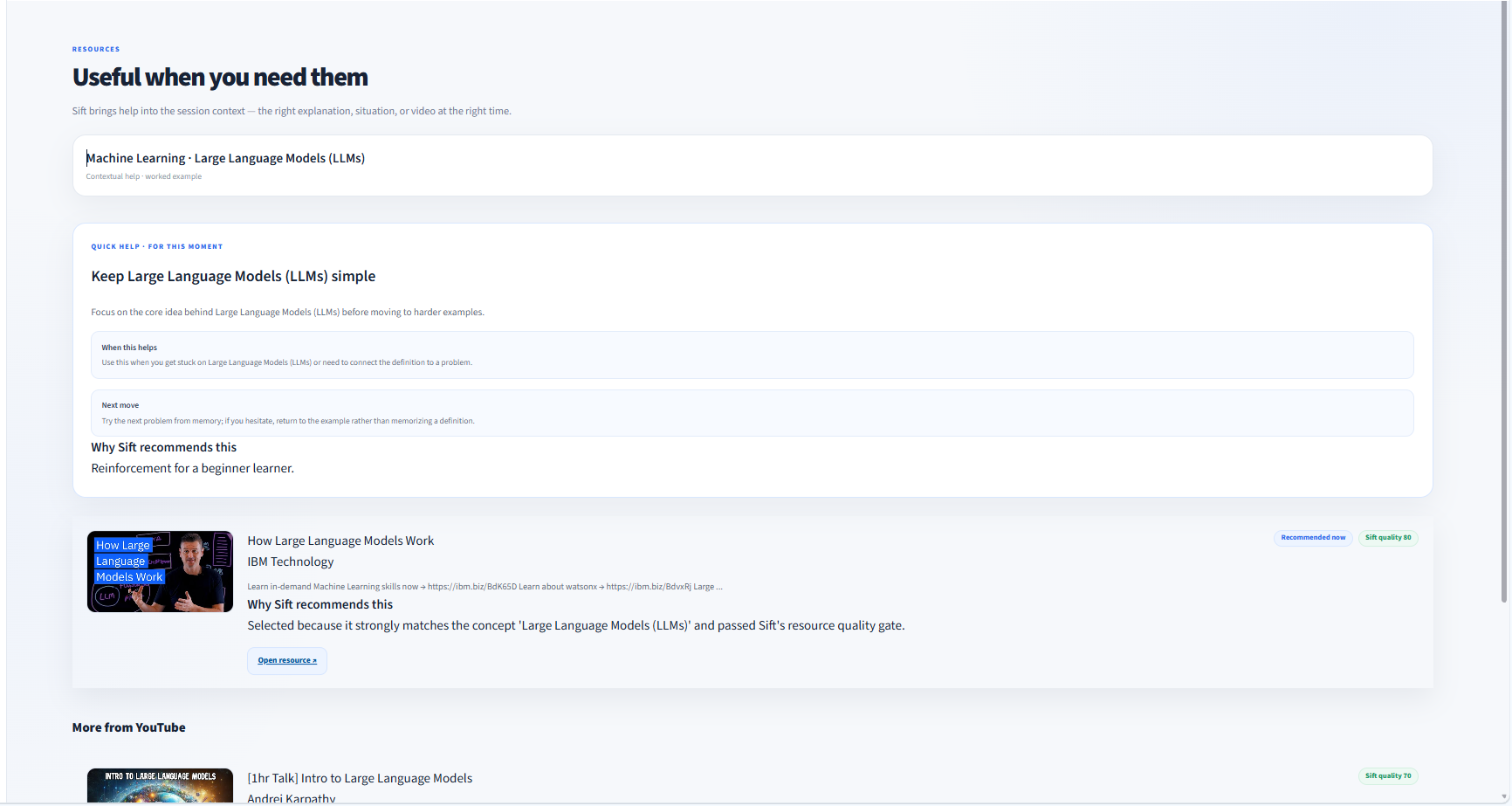
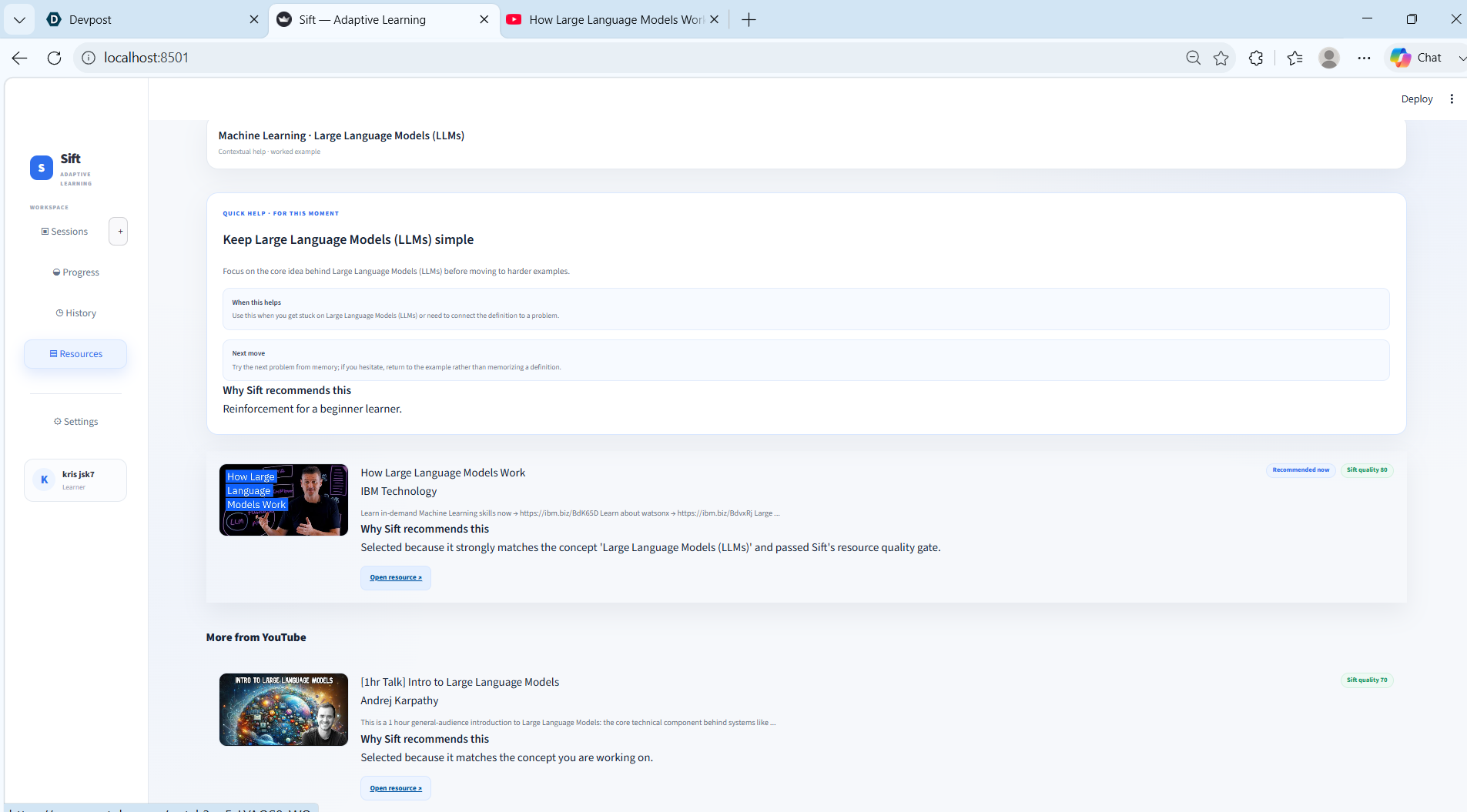
Resources
-
Inspiration
We built Sift around a simple problem: most learning platforms decide the learning path before they really know what the learner understands.
Two students can study the same topic but have completely different strengths, misconceptions, and gaps. Yet they often receive the same explanation and the same sequence of exercises.
We wanted to build something closer to a real tutor — one that learns from the learner's responses and changes what happens next.
That led to Sift's core idea:
Don't ask what lesson comes next. Ask what this learner needs next.
What it does
Sift is an adaptive AI learning tutor.
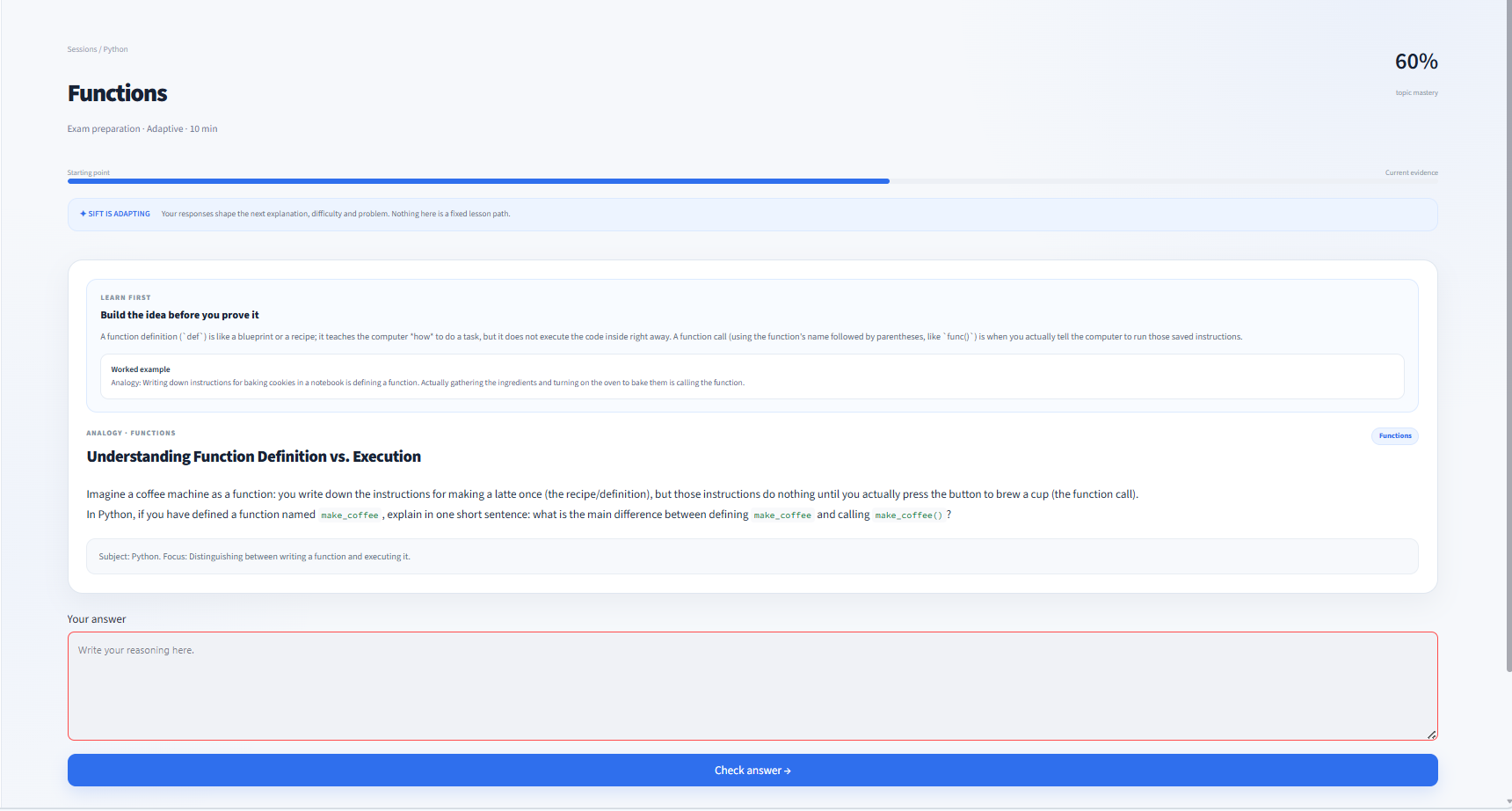
A learner starts by choosing a subject and topic, their goal, starting point, teaching style, and the amount of time they have available.
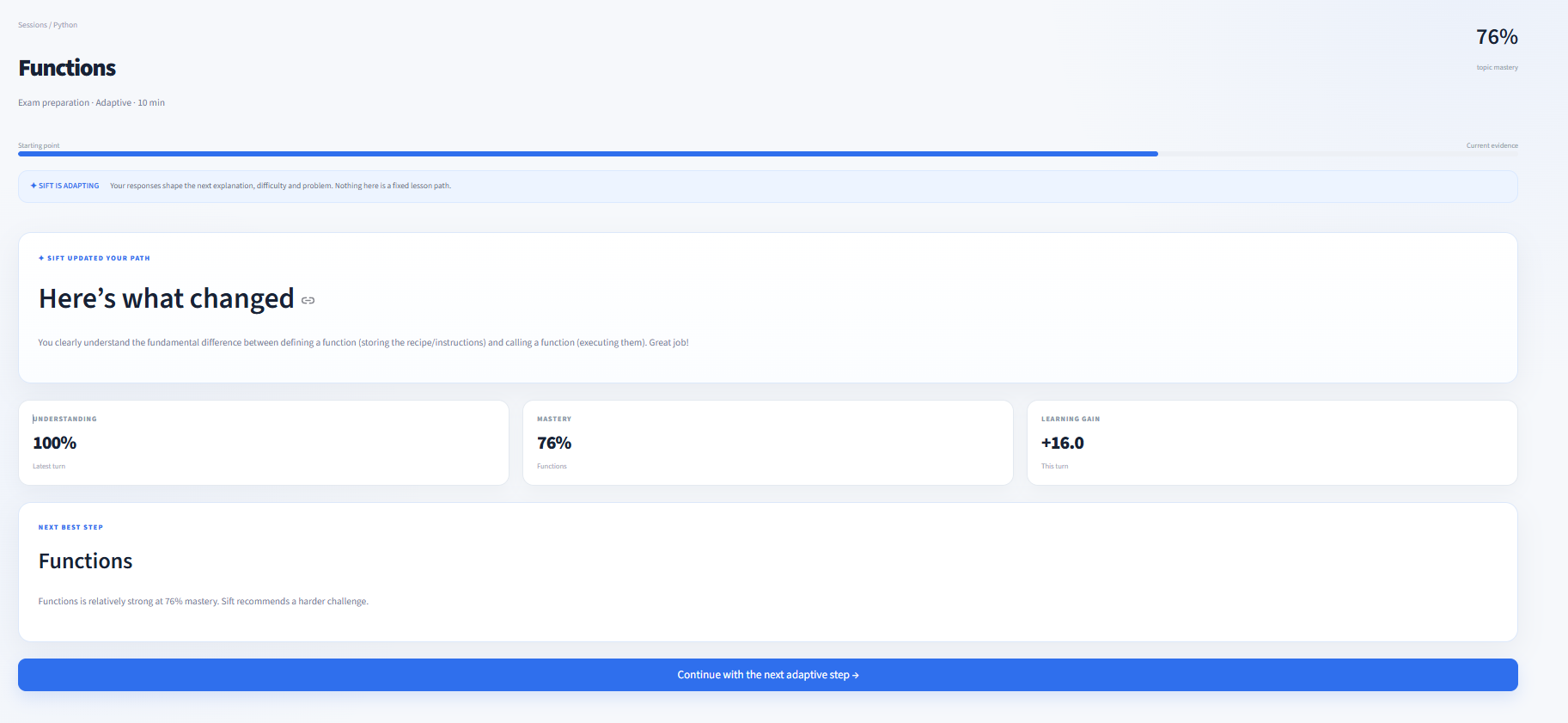
During the session, Sift uses the learner's responses as evidence of understanding. Instead of simply marking an answer right or wrong, the system evaluates what the learner demonstrated and uses that evidence to influence the next learning step.
The core loop is:
Teach → Observe → Evaluate → Adapt → Repeat
Depending on the evidence, Sift can adjust the explanation, difficulty, practice, reinforcement, or progression.
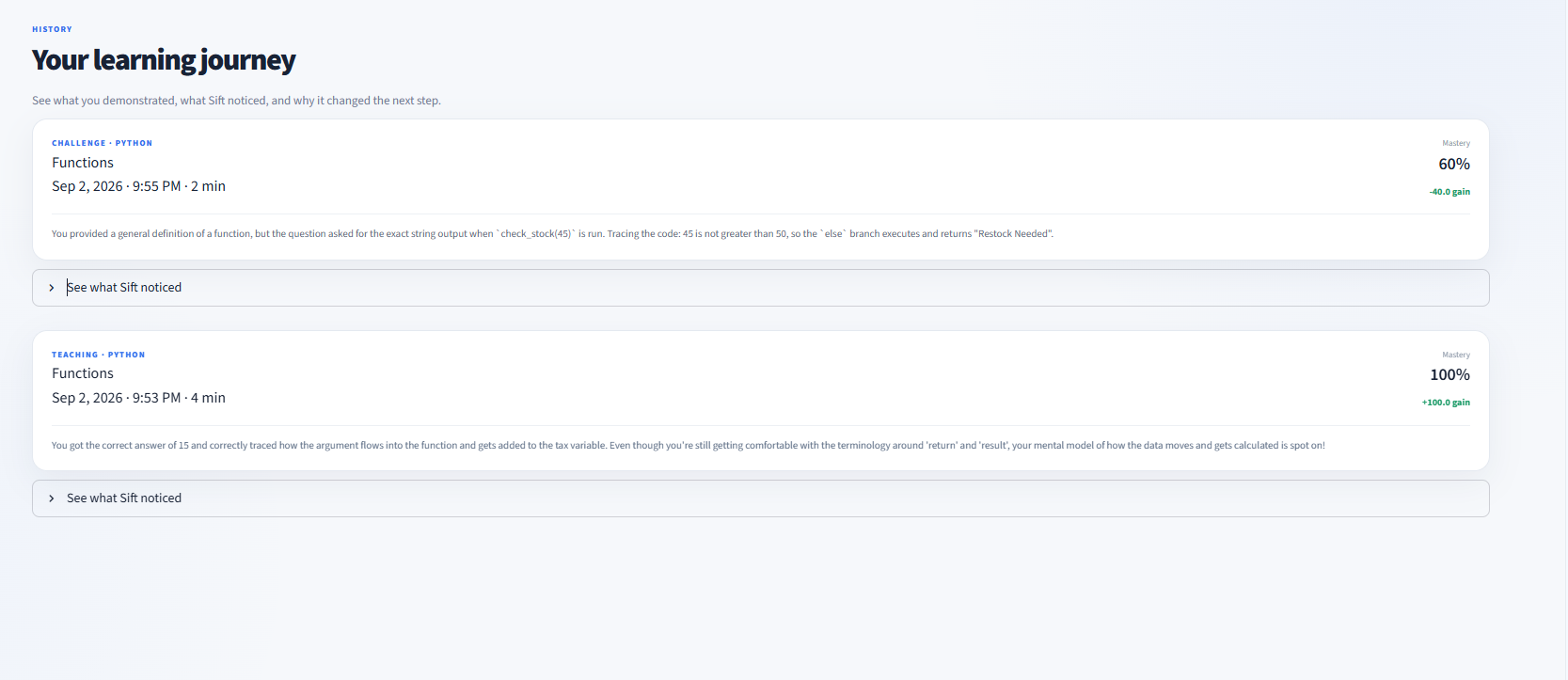
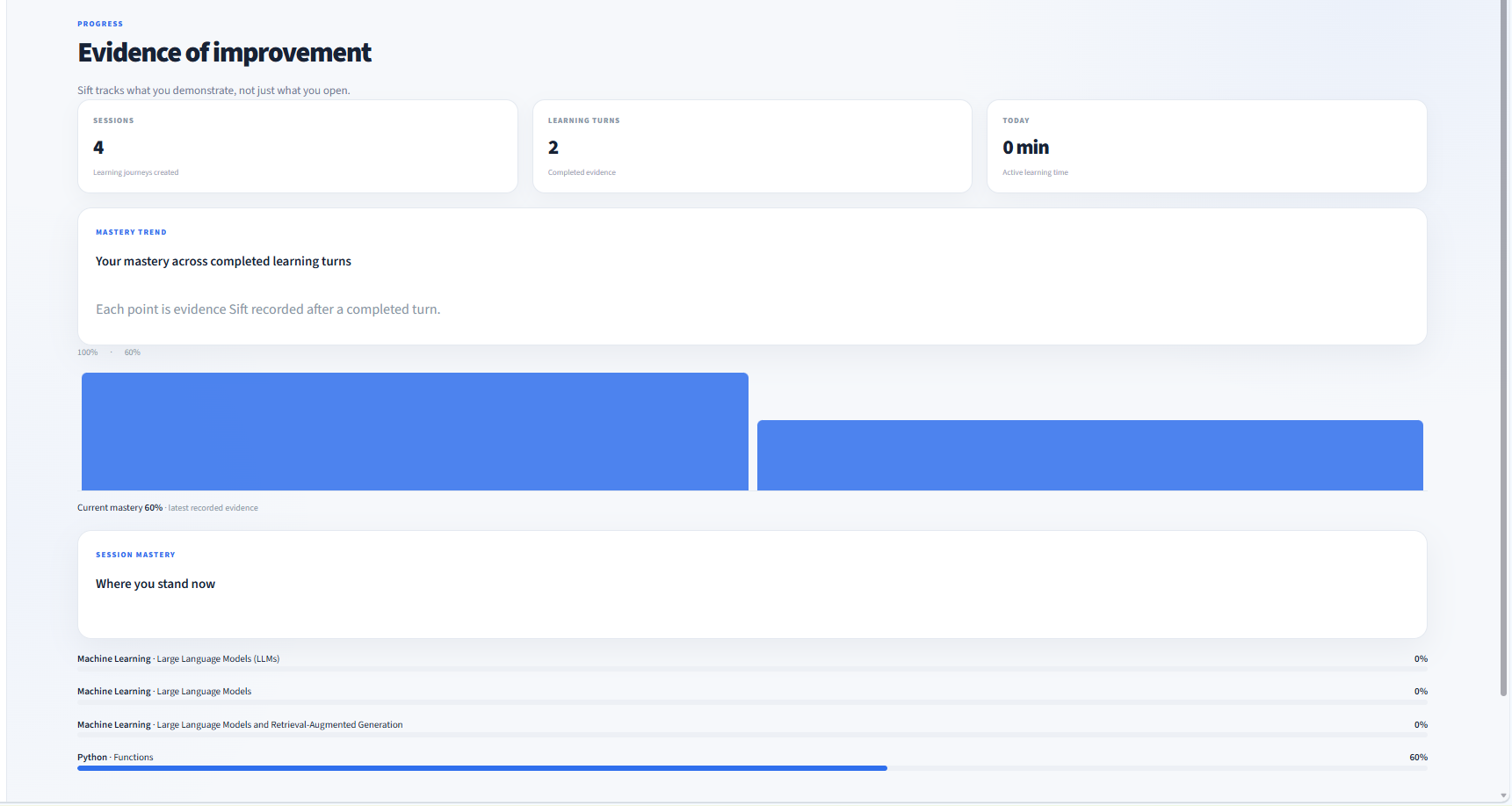
Sift also maintains progress and learning history so that demonstrated understanding can carry beyond a single interaction. When additional support is useful, it can surface contextual learning resources.
Time is treated as a learning budget rather than simply a countdown. A shorter session can focus on a specific learning outcome, while a longer session can allow more diagnosis, practice, and reinforcement.
How we built it
Sift is built with Python and Streamlit, with an AI-driven adaptive learning layer at the center.
We designed the application around a feedback loop:
Learner response → AI evaluation → Learning evidence → Adaptive decision → Next learning action
The AI is therefore not only used to generate educational content. It helps interpret open-ended learner responses and contributes to deciding what the learner should do next.
Around that core, we built session management, learning-turn evaluation, progress tracking, history, time-aware session planning, and contextual resource recommendations.
We also focused heavily on making the interface feel like a real learning product rather than exposing the complexity of the underlying system to the learner.
Challenges we ran into
The biggest challenge was making adaptation useful without making the learning experience unpredictable.
We had to balance AI flexibility with reliable educational behavior. A response can be technically correct while still revealing a misconception or an incomplete understanding, so simply using correct/incorrect grading wasn't enough.
We also had to think carefully about how to represent progress. We wanted progress to reflect what the learner actually demonstrated rather than simply counting completed lessons.
Another challenge was keeping the experience simple. The adaptive system has a lot happening behind the scenes, but the learner should experience it as a clear and intuitive tutoring interaction.
Accomplishments that we're proud of
We're proud that Sift goes beyond simply generating AI explanations.
The most important part of the product is the adaptive loop: a learner provides evidence, Sift evaluates it, and that evidence can change the next learning action.
We're also proud of building the surrounding product experience — session creation, time-aware learning, progress, history, and contextual resources — so the adaptive loop feels like part of a complete learning system.
Most importantly, we can demonstrate the idea through an actual learning session rather than only describing personalization conceptually.
What we learned
We learned that personalization is much more than generating different content for different users.
The difficult question is not:
"Can AI explain this concept?"
The more important question is:
"Given what this learner just demonstrated, what should happen next?"
Building Sift also taught us that evaluation is just as important as generation. If the system misunderstands the learner's evidence, even a great explanation can arrive at the wrong time.
We learned to think of learning as a continuous feedback loop rather than a sequence of predefined lessons.
What's next for Sift
We want to make Sift's learner model more sophisticated and reliable over longer periods of learning.
Next, we'd like to improve:
- Long-term mastery modeling across topics and prerequisites
- More precise misconception detection
- Stronger adaptation of difficulty and learning strategy
- Better resource recommendations based on the learner's specific gap
- More learning domains beyond programming
- More rigorous evaluation of whether adaptation actually improves learning outcomes
Our long-term goal is to make Sift feel less like a platform that delivers lessons and more like a tutor that continuously understands where a learner is and helps them take the most useful next step.

Log in or sign up for Devpost to join the conversation.