SIFT
Inspiration
Online shopping has quietly become a minefield. The fastest-growing storefronts on the internet—Temu, TikTok Shop, AliExpress, Shein, and an endless long tail of social-commerce sellers—have collapsed the gap between "I saw it" and "I bought it" down to a single tap. That's great for impulse, but not so great for consumers.
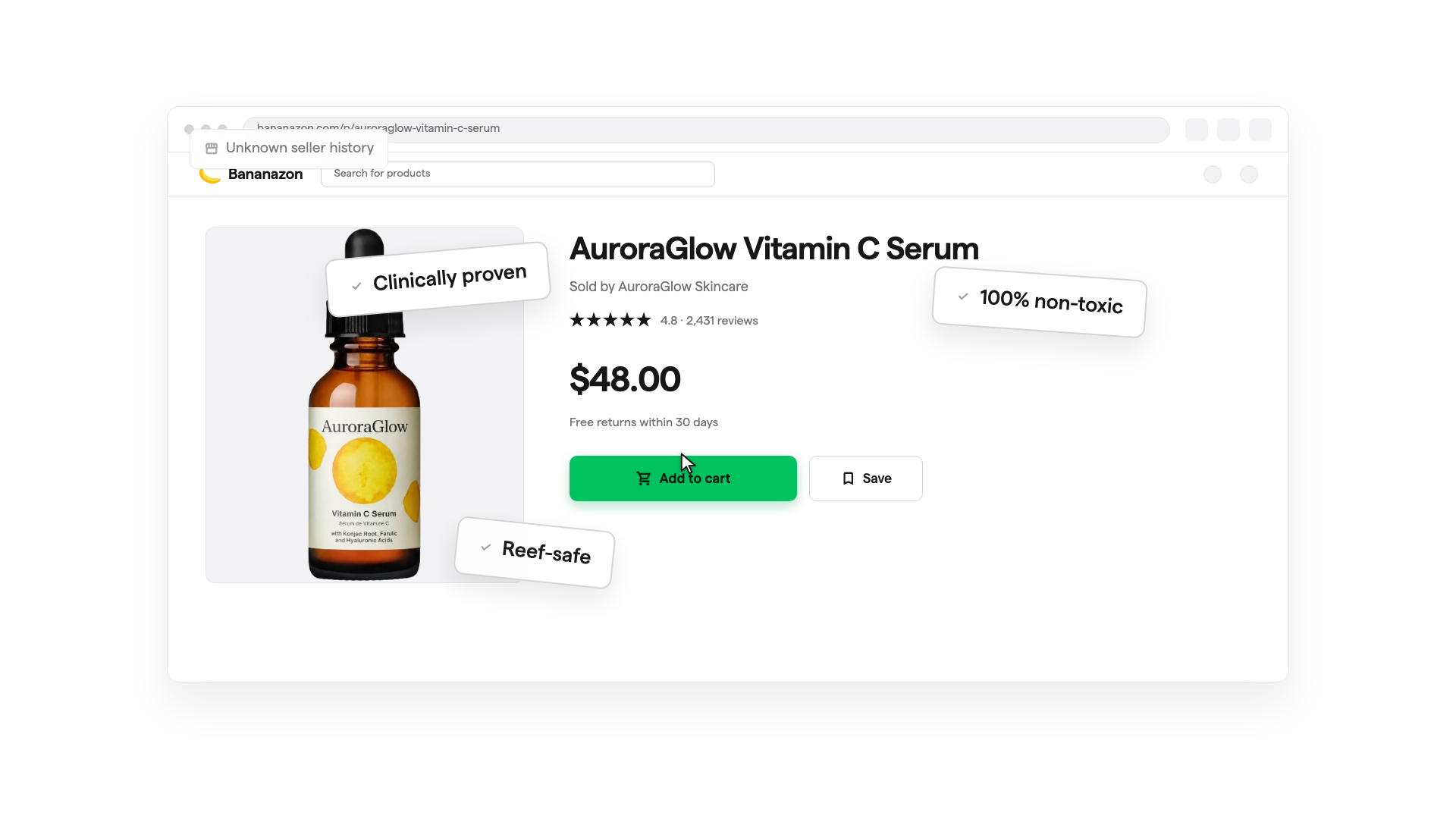
Listings are engineered to convert, not to inform. Descriptions are packed with claims that range from harmless fluff to genuinely misleading: "military-grade," "clinically proven," "cures eczema." Ingredient lists run thirty items deep in tiny print, and almost nobody can tell which ones are allergens, irritants, or restricted abroad. Sellers show up with perfect ratings and zero history you can verify. And every so often, a product that's actively under a government safety recall is still happily on sale.
Consider Maya, a first-time parent in Austin who finds a baby formula supplement on Temu listed as "pediatrician-approved" and "clinically tested," priced suspiciously well within her budget. She has no way to verify those claims, no idea that a similar product from the same brand was recalled six months ago, and no time to cross-reference three government databases before her toddler runs out of formula. She can trust the listing, spend 30 minutes searching with no guarantee she'll find the right information, or skip the product entirely and overpay for a name-brand alternative. Search engines return review pages and ads—not evidence. There was no tool that did the investigation for her and just gave her an answer.
We built Sift to fix that.
What it does
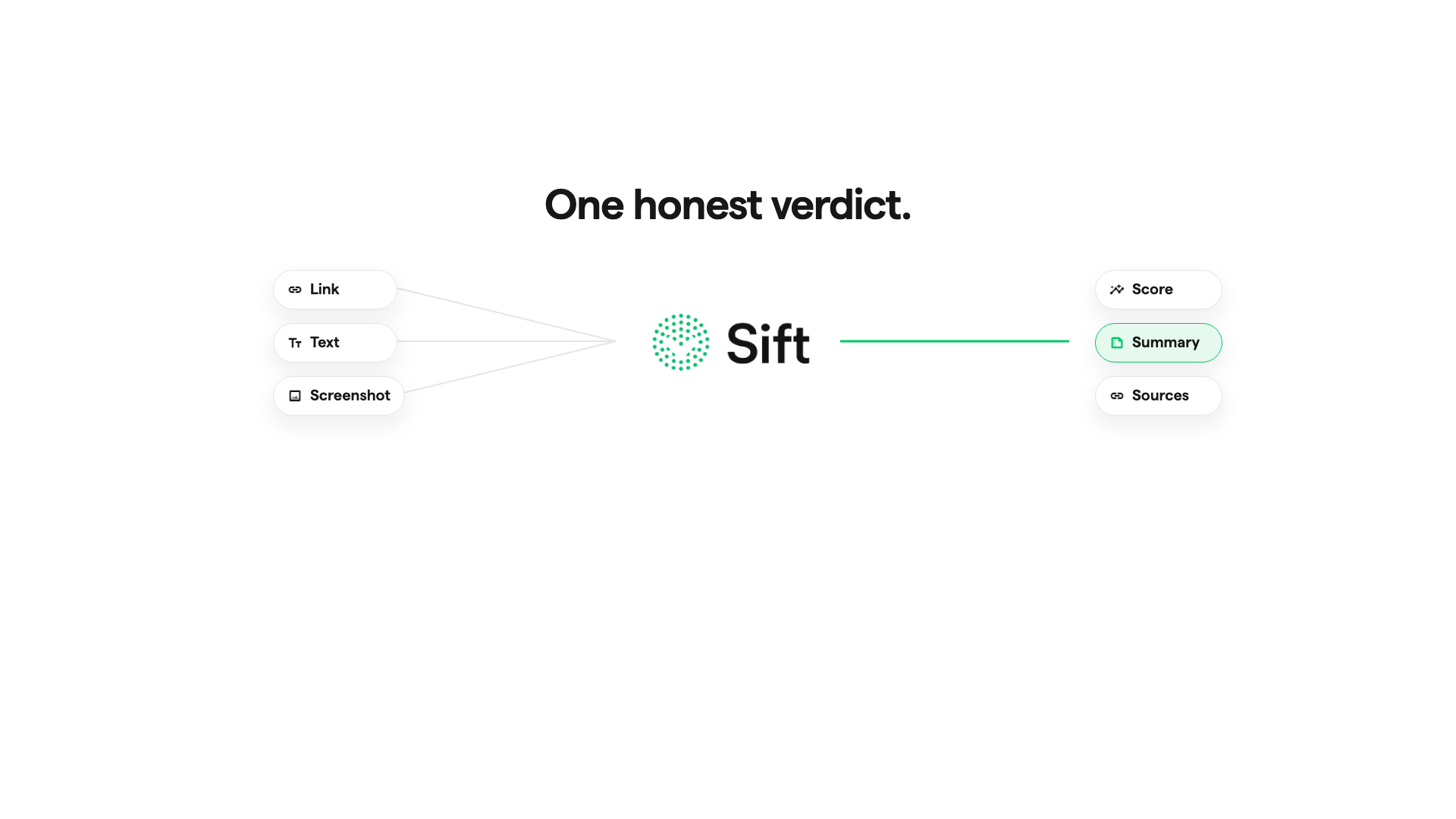
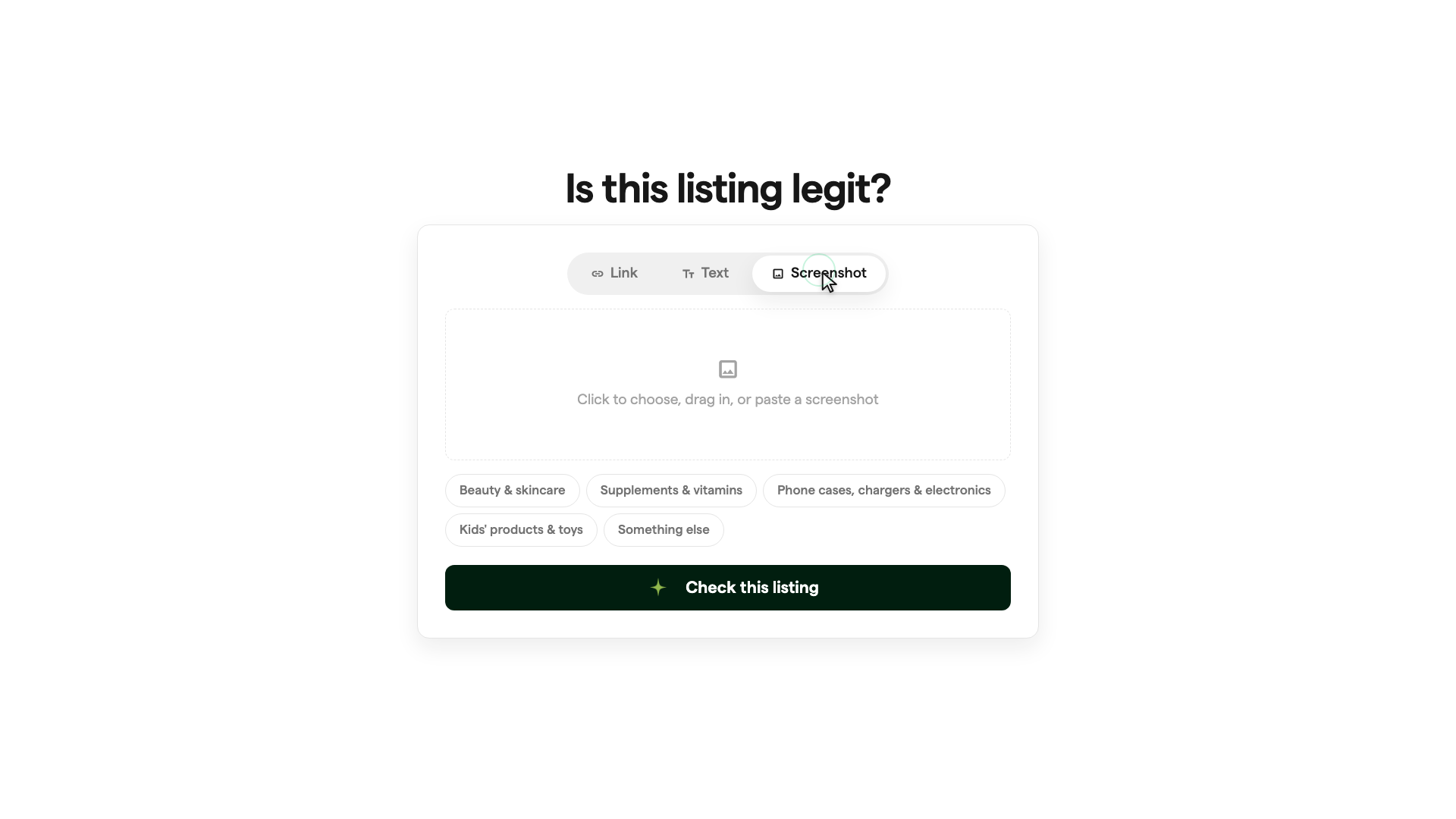
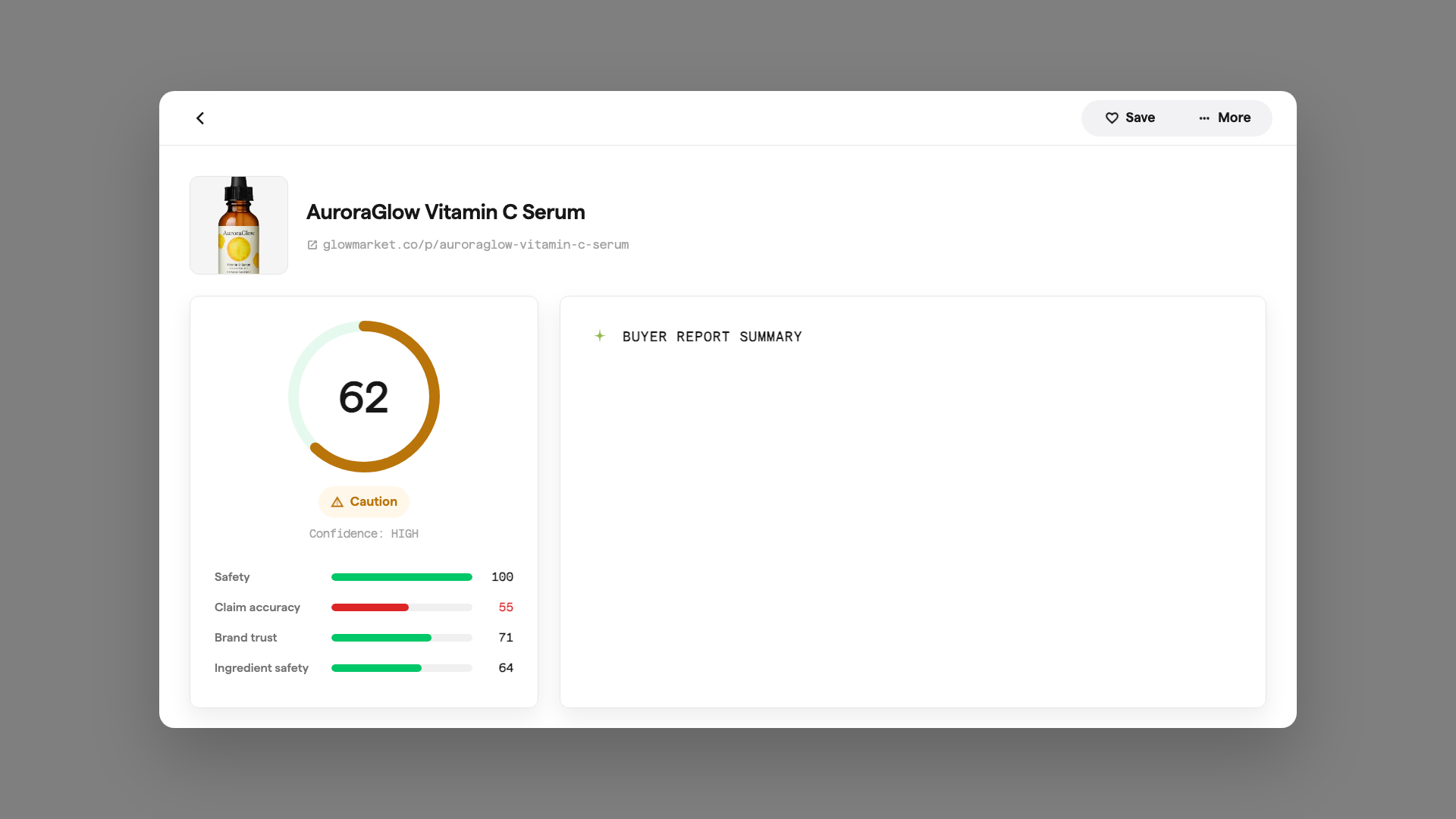
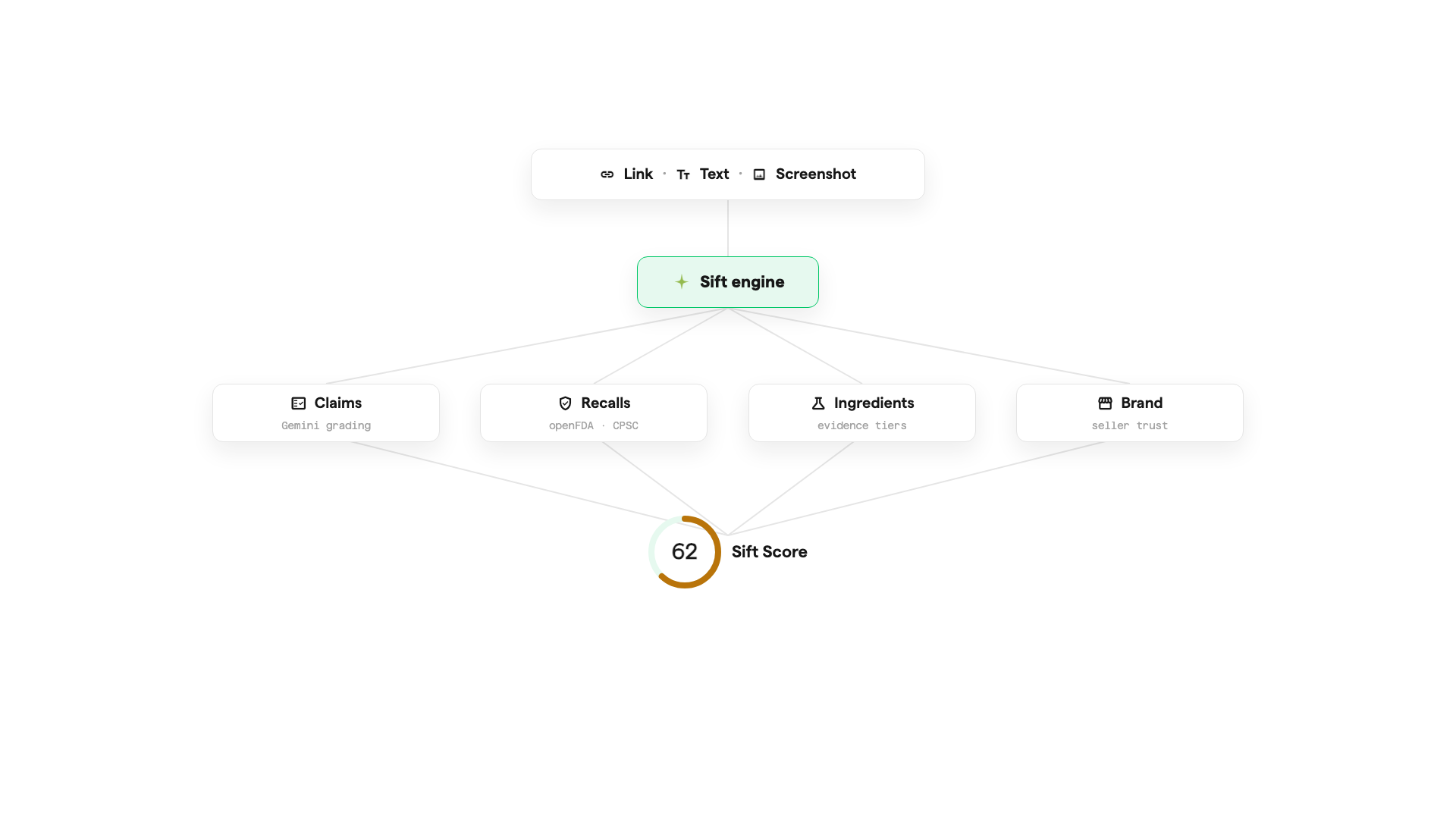
Sift is an AI-powered trust check for anything you're about to buy online. You give it a product link, some pasted listing text, or even a screenshot, and it runs an automated background check, then hands back a single trust score with a plain-English explanation. It's built to do the homework a shopper never has time for, and to inform the decision without ever making it for you.
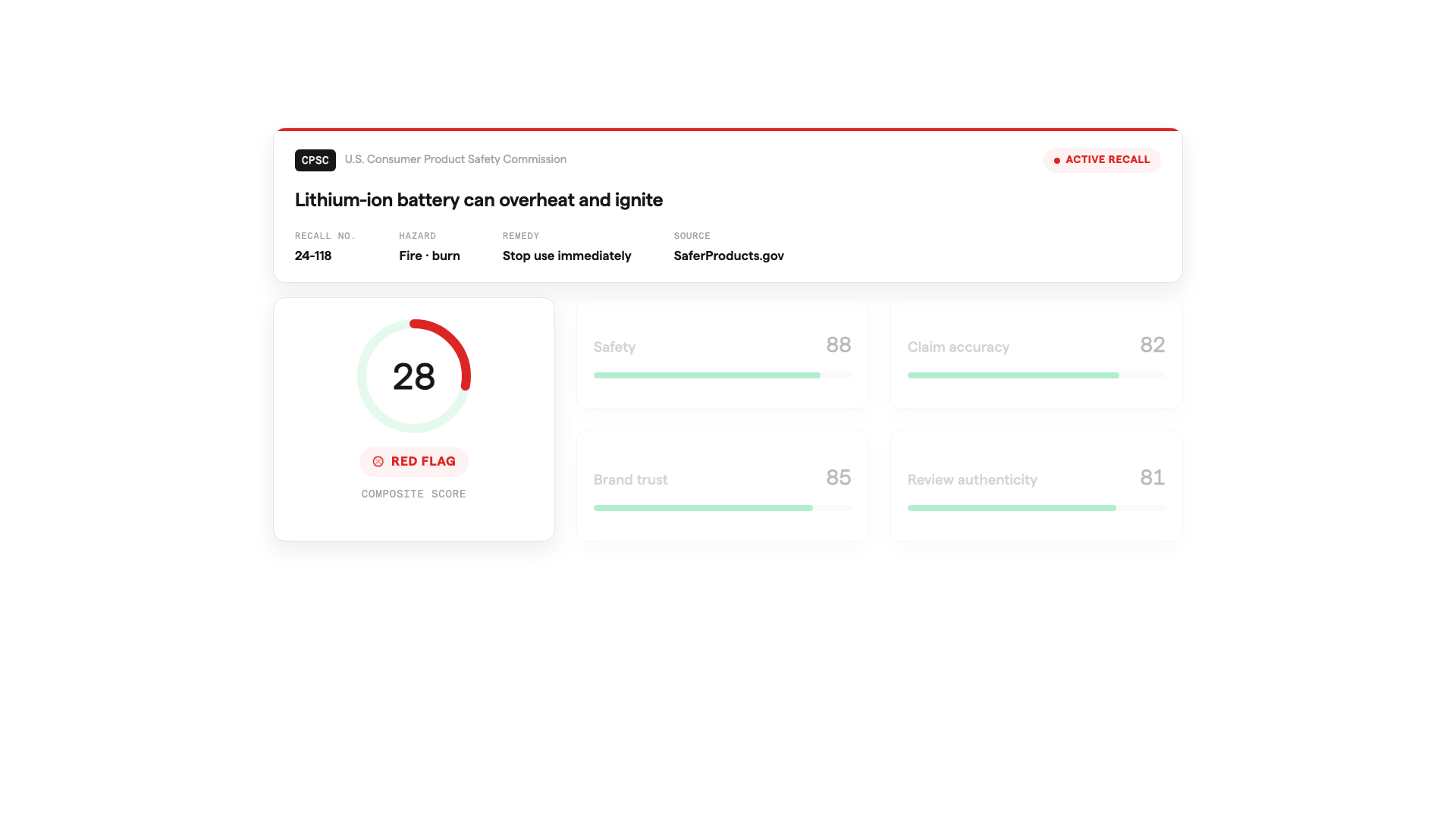
For Maya, that means pasting the product URL and, in under 60 seconds, getting a trust score, a flag on the unverifiable "clinically tested" claim with an explanation of why it couldn't be confirmed, a red banner showing the active FDA recall linked to the brand, and a plain-English summary of the findings. She makes a safer decision in the time it took to open a new tab.
Here's what makes it different:
Any input, one verdict. Paste a URL from Amazon, Temu, TikTok Shop, or anywhere else and Sift reads the live page. Paste raw listing text and it parses that. Or just upload a screenshot—Sift reads the image directly, which is perfect for mobile, where you're already screenshotting things anyway. You can also kick off a scan in one click from the Chrome extension, right on the page you're already viewing.
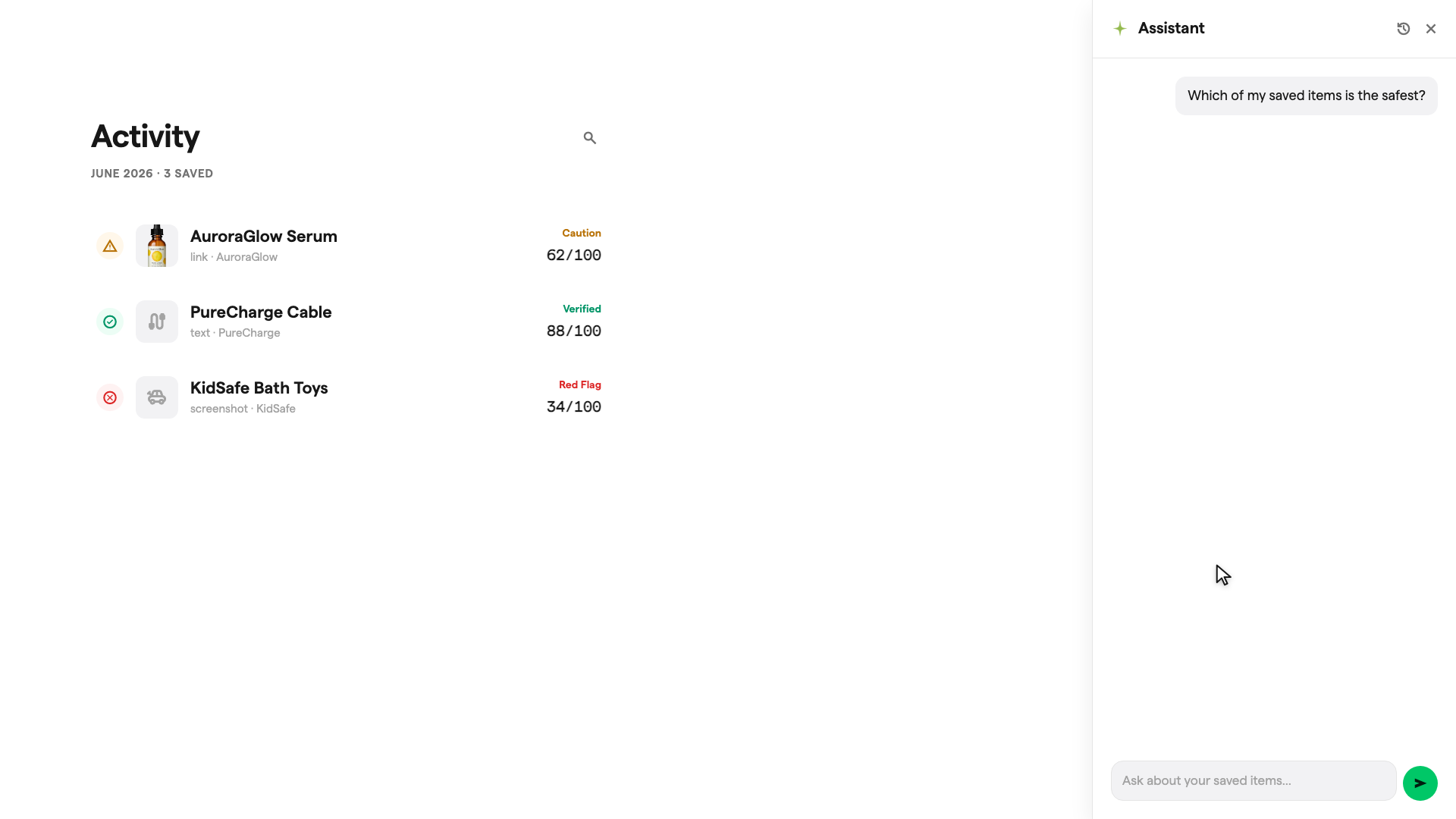
A composite trust score you can act on. Every scan returns a 0–100 score with a clear Verified/Caution/Red Flag verdict, plus a 15-second buyer summary that gives you the bottom line—buy with confidence, buy with caveats, or avoid—in language anyone can read.
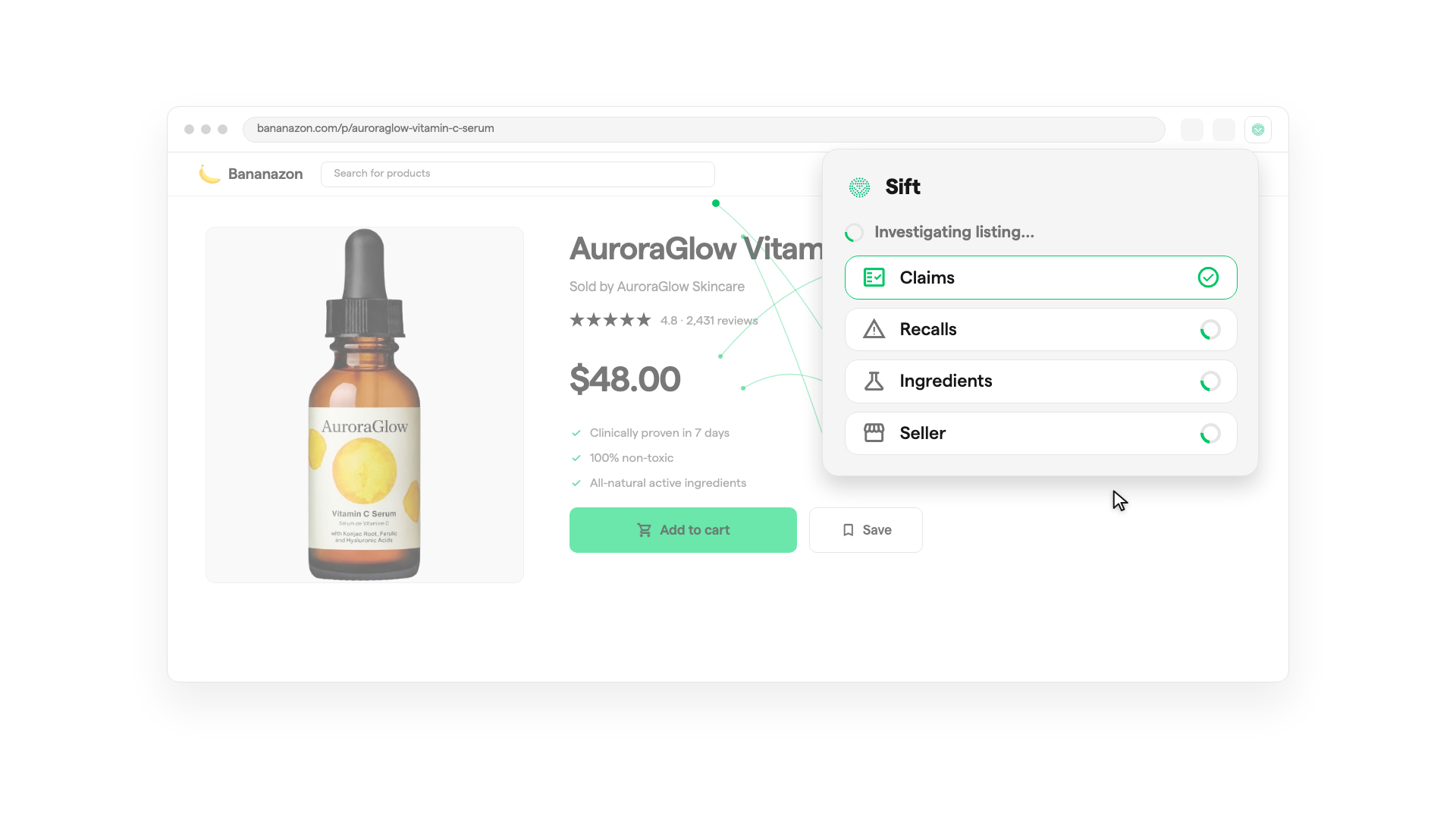
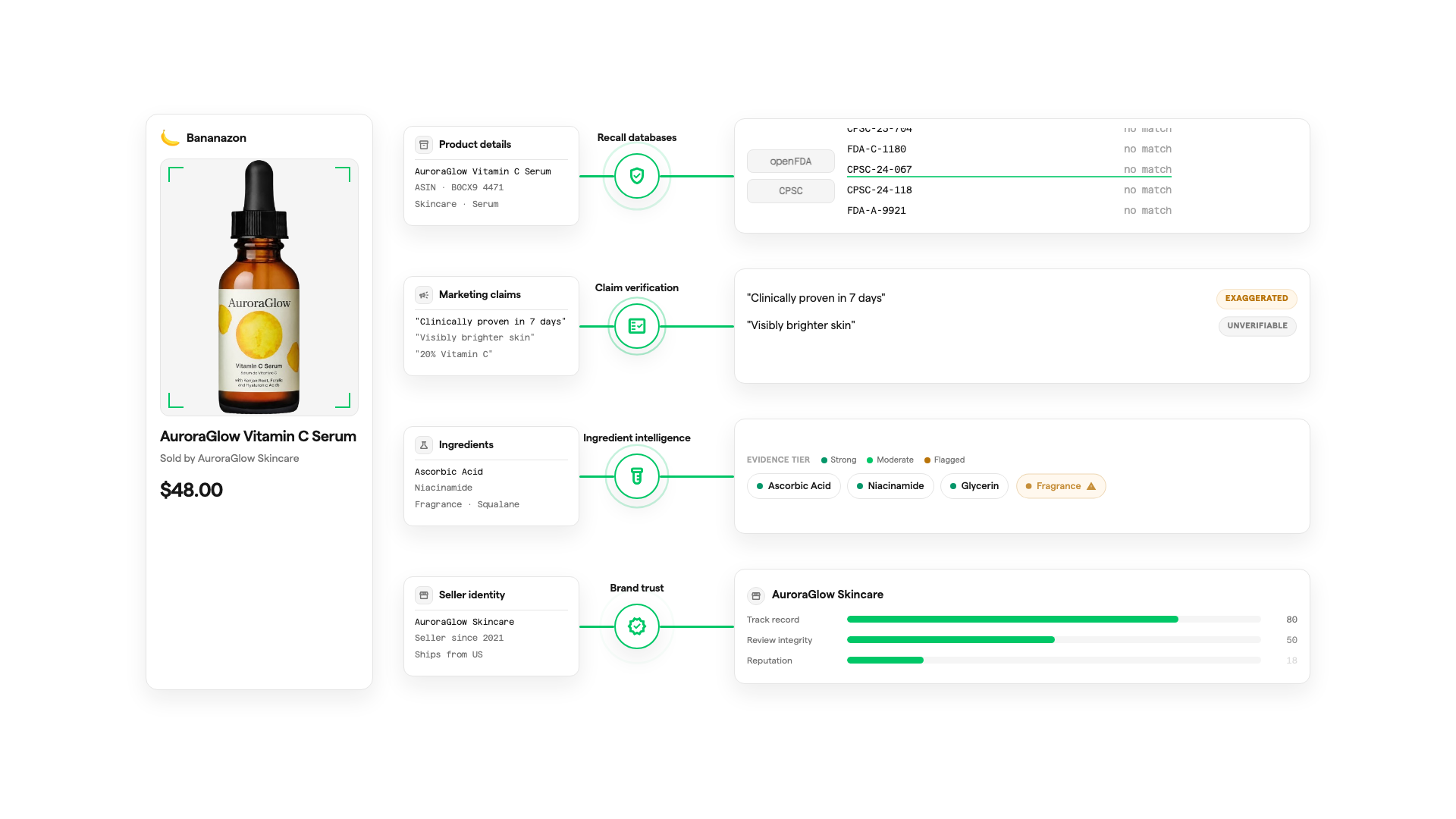
Marketing claims, fact-checked. Sift breaks a listing's description apart into individual, checkable claims and labels each one as true, exaggerated, unverifiable, or a red flag, with a short reason for every call. Empty words meant to inflate the product's worthiness get separated from the real specs.
Live safety-recall checks. Sift cross-references official FDA and Consumer Product Safety Commission data in real time. A confirmed recall is treated as a hard override and is never averaged away by a nice score elsewhere.
Ingredient intelligence. For beauty, food, and supplements, Sift explains what each ingredient actually does, how strong the evidence is for its claimed benefit, and flags concerns like common allergens or substances restricted in other regions. For beauty products it also runs a pore-clogging check, so acne-prone shoppers know if a formula is likely to break them out.
Honest brand and seller trust. Sift reads a seller's reputation and separates proven issues from unresolved allegations—and crucially, it's honest when it simply can't verify an unknown seller, rather than rewarding a blank slate with a fake-high score.
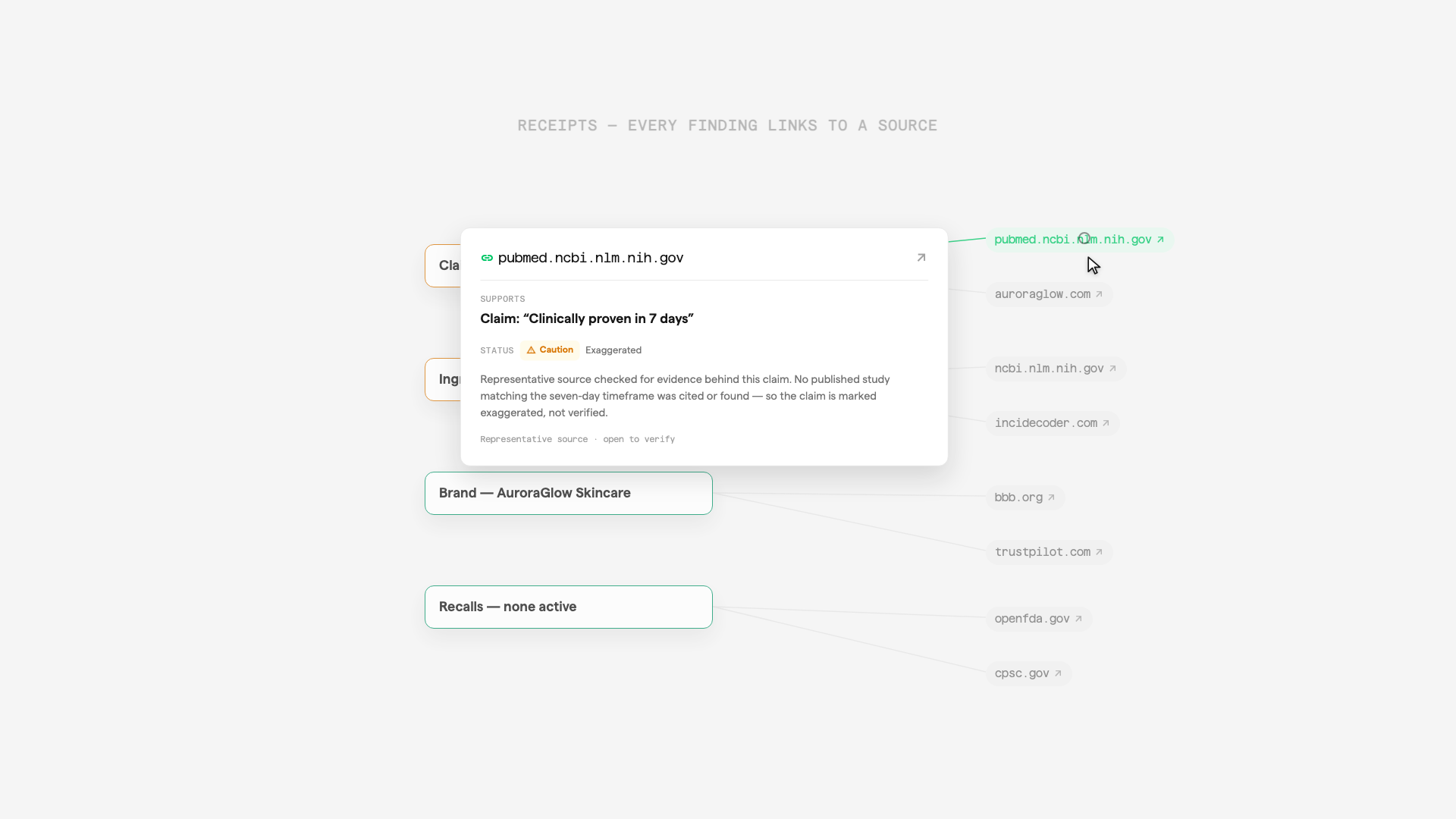
Receipts, not vibes. Every finding links back to a real source, so nothing has to be taken on faith. On top of single scans, Sift saves your history, lets you star the products you care about, and includes a shopping assistant that answers questions grounded only in the items you've actually saved.
How we built it
Sift is a full-stack product built across every surface, all sharing one backend. The web app is live and fully functional and installed as a Progressive Web App. The Chrome extension is approved and live on the Web Store, and the native iOS and Android apps are fully functional and currently awaiting approval on the App Store and Play Store.
Frontend: React + Capacitor + PWA. The interface is a React app with a custom design system, wrapped with Capacitor for the native iOS and Android builds and configured as an installable PWA. The same codebase powers the website, the mobile apps, and the offline-capable installed experience.
Backend: Convex. Convex is our entire backend. It handles the database, the reactive queries the UI subscribes to, the server-side actions that run a scan, file storage for uploaded screenshots, and vector search over a curated evidence corpus. Because queries are reactive, scan history and saved items update instantly across every device.
Auth: Clerk. Clerk manages authentication with email and Google sign-in, securely connected to the Convex backend, including a streamlined sign-in flow built specifically for the native mobile apps.
AI: Google Gemini. Gemini powers the core intelligence: it extracts a clean, structured listing from messy input, reads screenshots directly, decomposes and classifies the marketing claims, analyzes ingredients, scores the brand, pulls in live web sources, and powers the saved-items shopping assistant.
The scan pipeline. When a scan comes in, a single pipeline runs the whole investigation in order—it structures the input, breaks out the claims, checks the recall databases, analyzes the ingredients, scores the seller, and synthesizes everything into one score and a readable summary. The UI subscribes to the scan's live progress, so a multi-step background check feels like one smooth flow. The scoring is deliberately built to be honest rather than flattering: most signals blend into the composite, but safety doesn't—a confirmed recall forces the lowest verdict no matter how good everything else looks.
Extension: Chrome (Manifest V3). The browser extension talks to the exact same backend as the website, so a scan is a scan whether it starts from a pasted link, a screenshot, or one click on a live product page.
Deployment: Vercel + Convex. The web app deploys to Vercel and the backend runs on Convex, with all API keys kept server-side and out of the client entirely.
Challenges we ran into
The hardest problems weren't features—they were trust.
Recall databases are noisy. The official FDA and CPSC databases match on keywords, so searching a common brand word surfaces recalls for completely unrelated products in totally different industries. Since a false recall would wrongly tank a product's score, we couldn't just display raw matches. We built a verification step that double-checks each candidate actually refers to the product at hand, and errs on the side of dropping anything it can't confirm—a missed recall is bad, but a false one shown to a shopper is worse.
Making the AI honest about uncertainty. Our first brand checker happily gave unknown sellers high scores simply because it found nothing bad about them. That's exactly backwards—"no news" is not the same as "trustworthy." We reworked it around explicit confidence, so an unverifiable seller is labeled unverified out loud instead of being quietly rewarded. The same principle shaped our sources: every finding links to a real reference, never a citation the model might invent.
Keeping the AI grounded. Getting a language model to behave like a dependable fact-checker rather than a chatty assistant took real work. We constrained its outputs to strict structured formats, kept it tied to the actual listing and real data, and put guardrails around what it's allowed to assert, so the report stays specific and accurate instead of generic or made-up.
One backend, every surface. Getting a single backend to cleanly serve a website, a browser extension, and native mobile apps—including authentication that works across all of them and a polished native interface with proper dark mode and safe-area handling—was a serious integration effort.
Building for real-world limits. Working within real API rate and quota limits pushed us to design for resilience from the start—caching repeat lookups, retrying transient failures, and degrading gracefully when a service is unavailable rather than just failing the scan.
Accomplishments that we're proud of
We're proud that Sift is a genuinely working product, not a demo. In the time we had, we went from an idea to a real multi-platform app: a live website and installable PWA, an approved and live Chrome extension, and fully functional native iOS and Android builds currently in app-store review—all running on one shared backend.
On the product side, we're especially proud of:
- Building a scan pipeline that takes a messy listing, link, or screenshot and turns it into a single, structured, trustworthy verdict.
- Cross-referencing live government recall data and verifying matches so the safety signal is actually reliable.
- Designing a trust model that's honest by construction—the safety override, the explicit unverified state for unknown sellers, and the refusal to ever fabricate a source.
- Making a multi-step background check feel like one smooth, real-time experience, with history and saved items syncing instantly across devices.
The fact that we built a real product that connects to live safety data, fact-checks marketing copy, and gives shoppers like Maya an honest answer—across web, mobile, and browser—is something the whole team is genuinely proud of.
What we learned
For a trust product, calibration matters more than capability. A confident wrong answer is worse than an honest "we don't know." That single idea ended up shaping everything—the prompts, the scoring, and the interface all bend toward being explicit about confidence rather than sounding impressive.
Fail safe, not loud. In a safety-critical surface, the right default when the system isn't sure is to hold a claim back, not to show it hedged. We learned to design the quiet, conservative path as the default path.
AI integration is an art, not just an engineering task. Getting a model to behave consistently as a fact-checker took far more prompt design and output structuring than we expected. The quality of the experience came almost entirely from how tightly we grounded and constrained the model, not from the model alone.
Constraints make better engineering. Bumping into real API limits early forced us into caching, retries, and graceful fallbacks that made the whole system more robust than it would have been if everything had just worked the first time.
What's next for Sift
- Price and seller-history tracking. Watching pricing and account history over time to catch reset seller accounts and fake-discount patterns—the tactics that are hardest for a one-time scan to see.
- Review-authenticity scoring. Detecting AI-generated and incentivized reviews so the rating you see actually means something. The groundwork for this is already in our data model.
- Broader coverage. Right now our recall and evidence coverage is US-focused. We want to expand to international recall databases and deepen the evidence base behind ingredient and brand findings.
- Community signals. Anonymized, aggregate verdicts so that every new scan quietly benefits from everyone else's—the more people use Sift, the smarter each individual check becomes.
- Real-time checks where people actually shop. In-feed checks for places like TikTok Shop and Instagram, where the buy button sits right next to the hype, plus wider availability across browsers and a native "share to Sift" flow on mobile.
Our goal is for Sift to become the reflex every shopper has before they hit buy—the quick gut-check that turns "I hope this is legit" into "I checked."
Built With
- capacitor
- chrome-extension-manifest-v3
- claude
- clerk
- convex
- cpsc-saferproducts.gov-api
- css
- google-gemini-api
- openfda-api
- react
- react-router
- typescript
- vercel
- vite

Log in or sign up for Devpost to join the conversation.