Inspiration
Nurses often need to observe a patient, check a monitor and document what they see while keeping their attention on care. We wanted to explore how VR glasses could bring that documentation workflow into the nurse’s view.
Sidsen brings this idea to life through Medi, a nursing workflow assistant built around a simple interaction: “Medi, note this.”
What it does
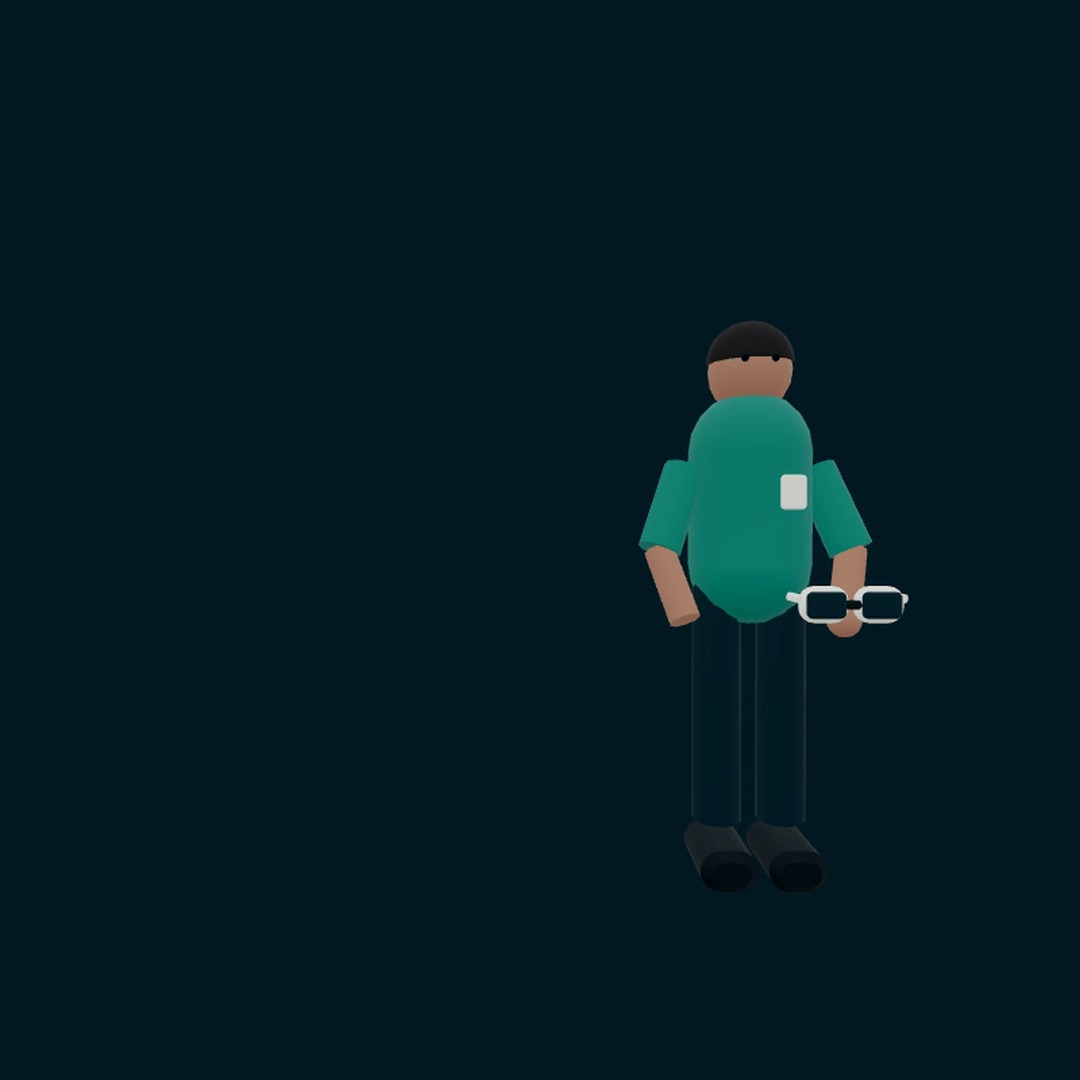
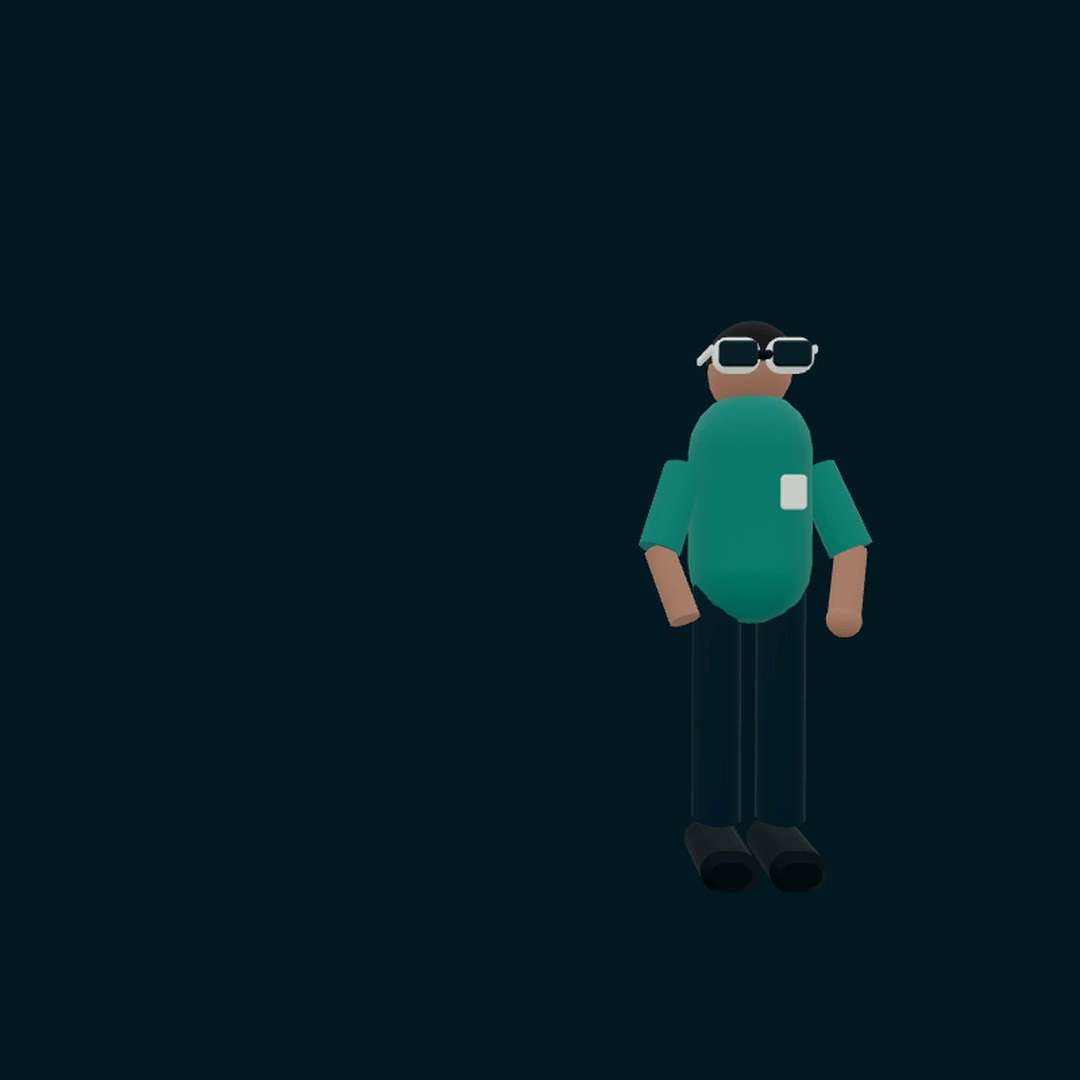
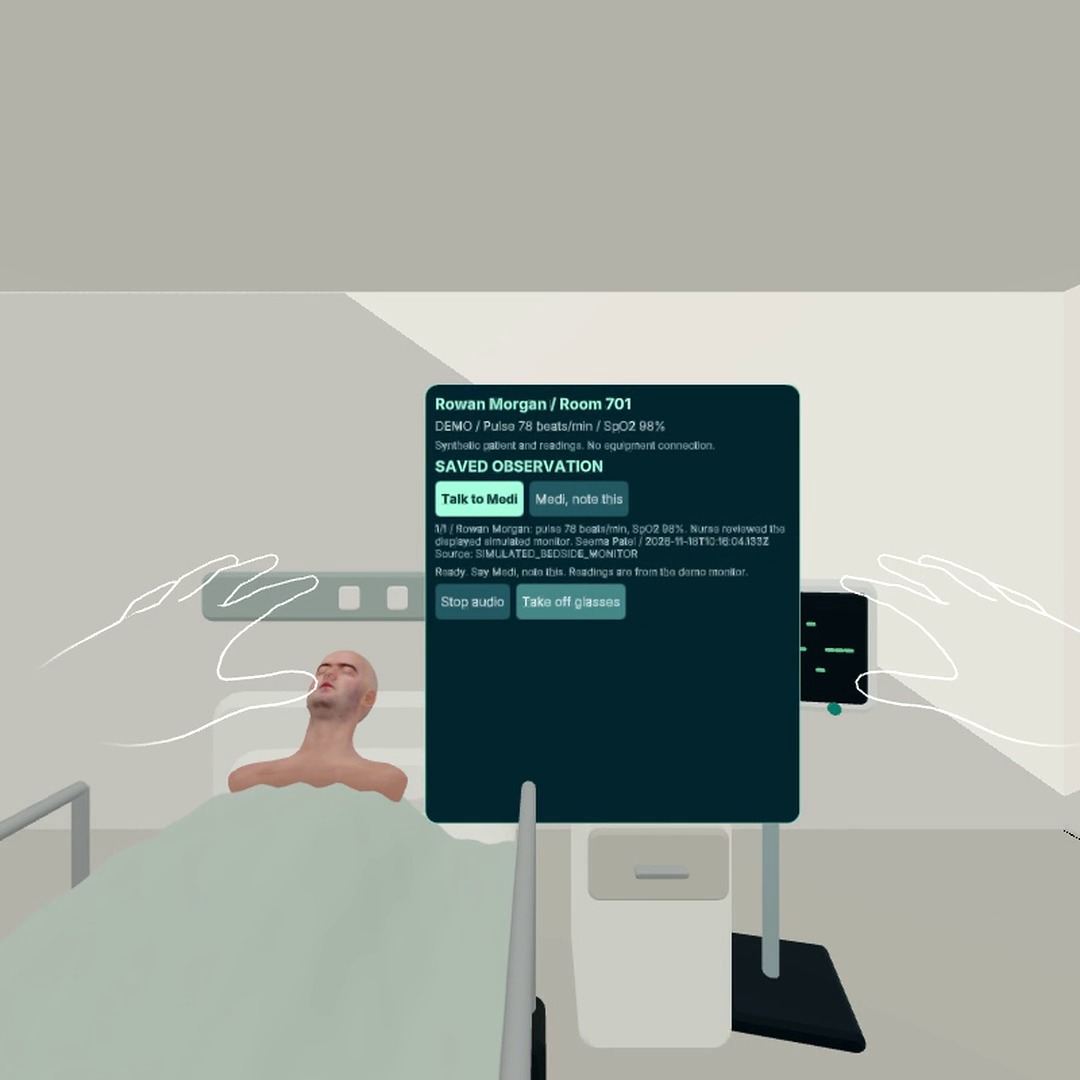
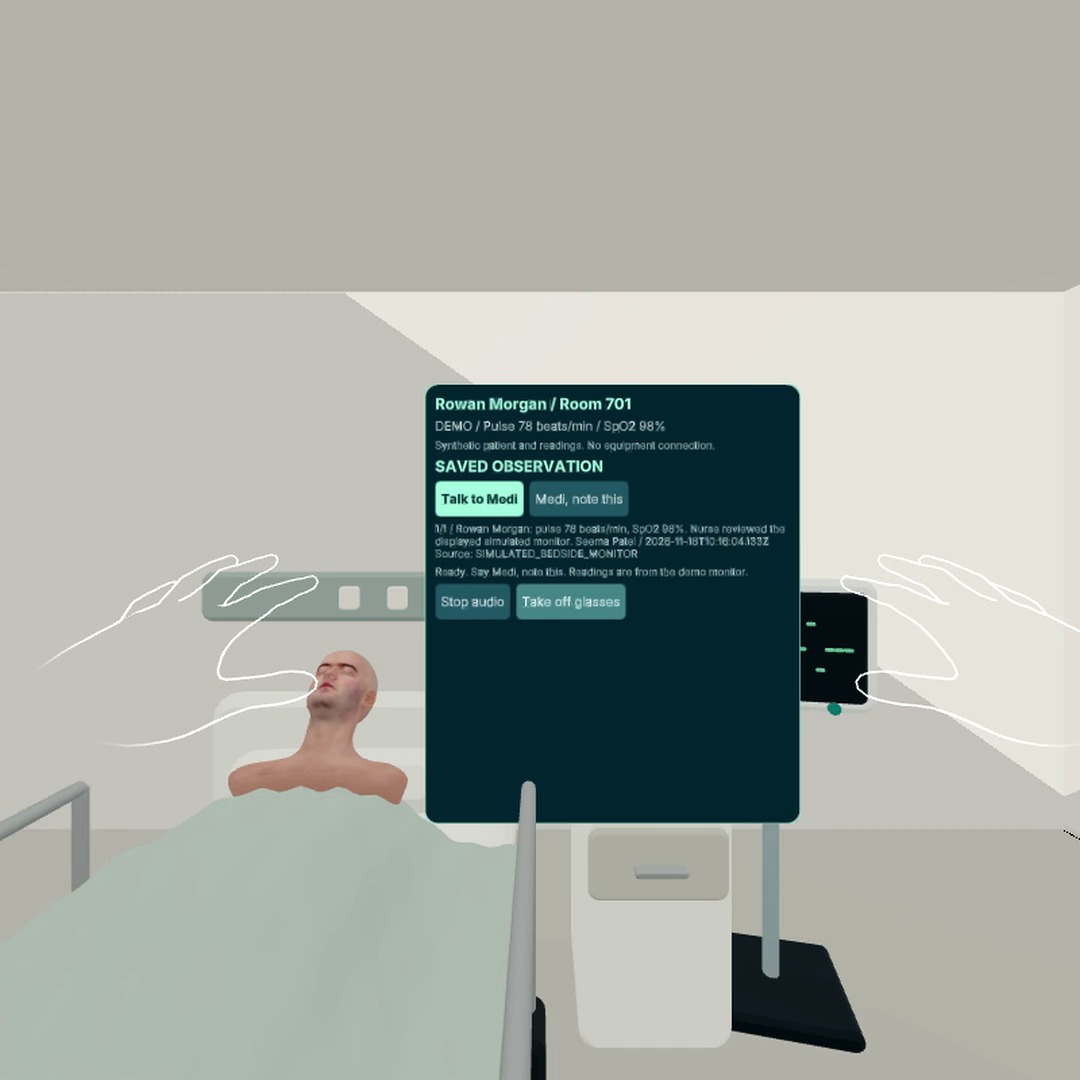
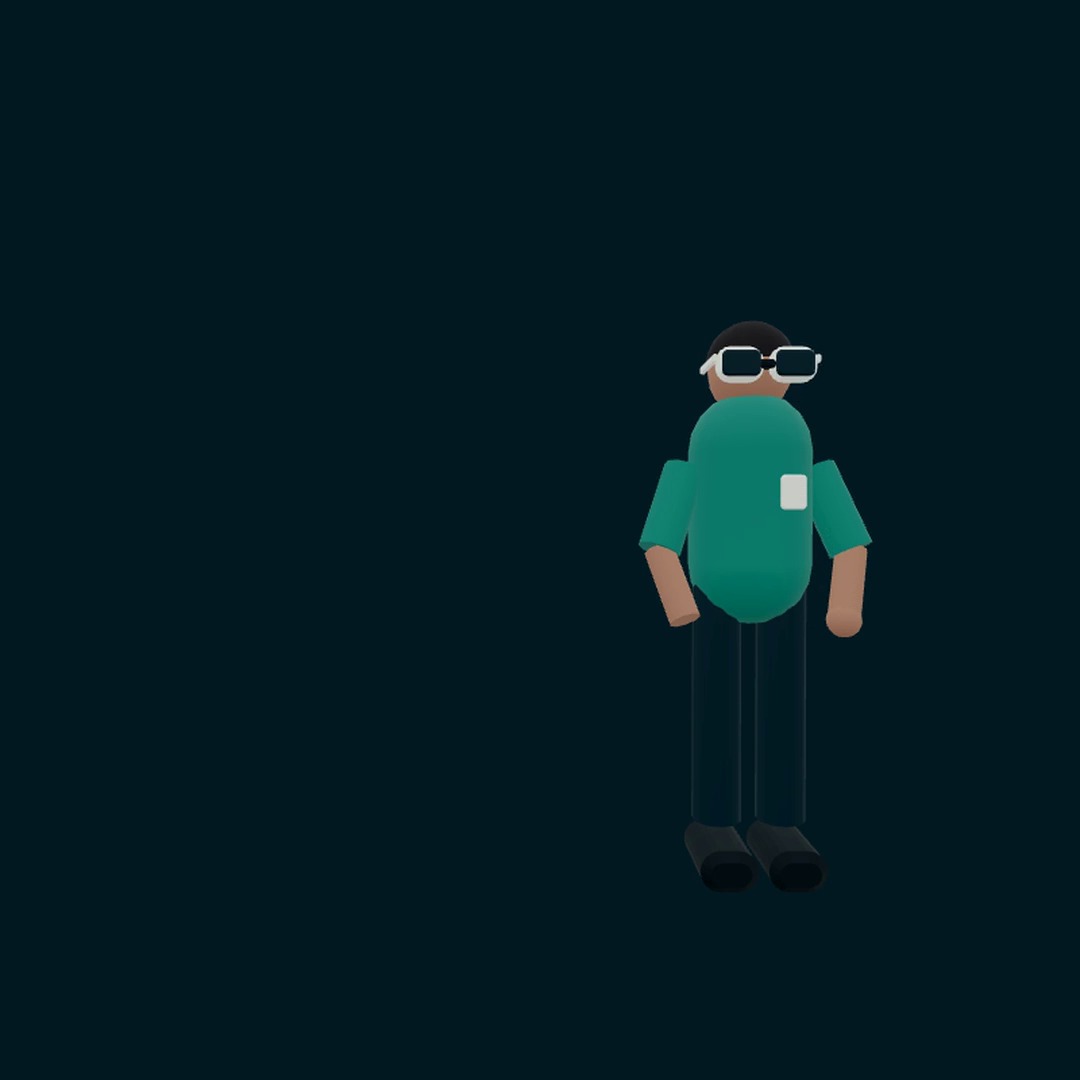
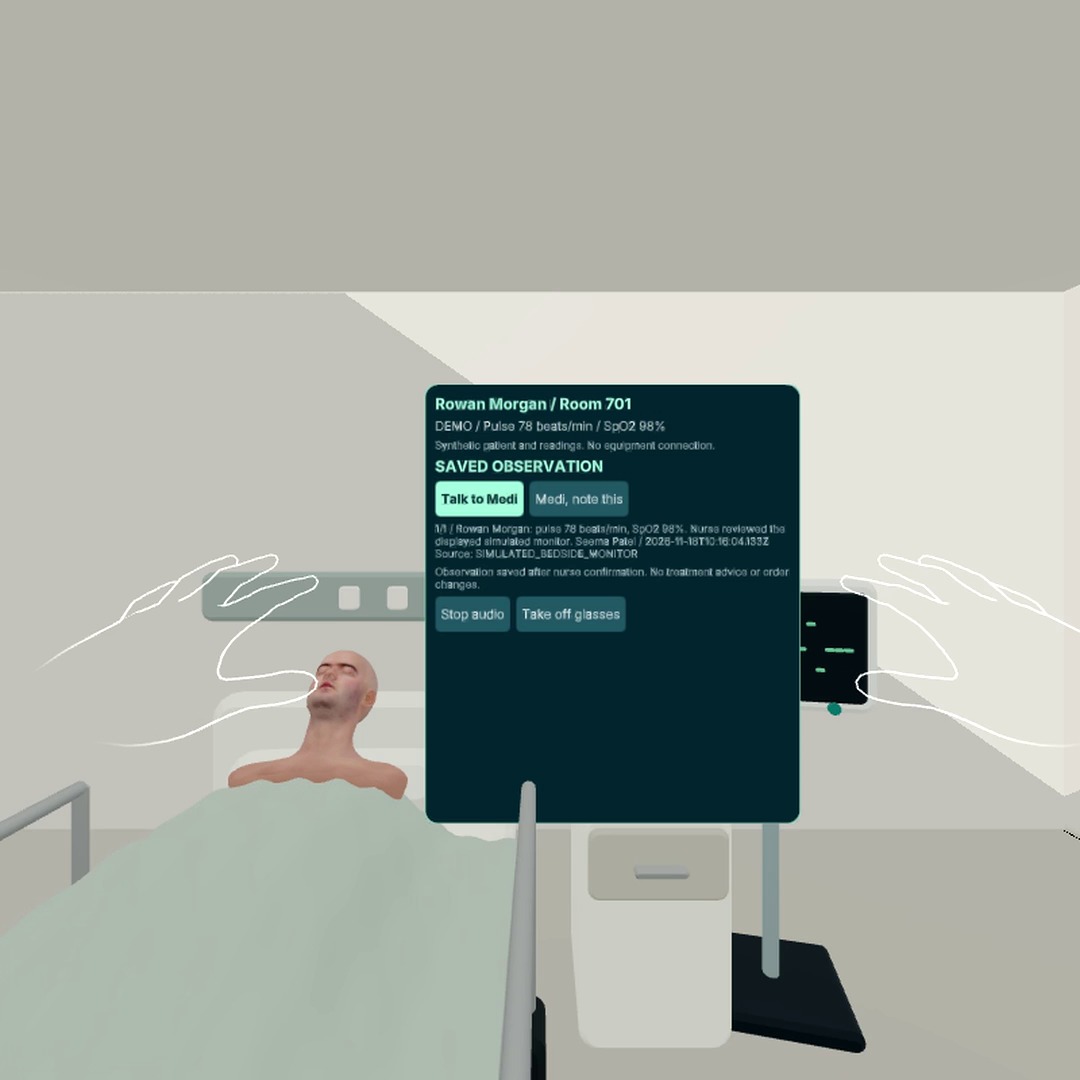
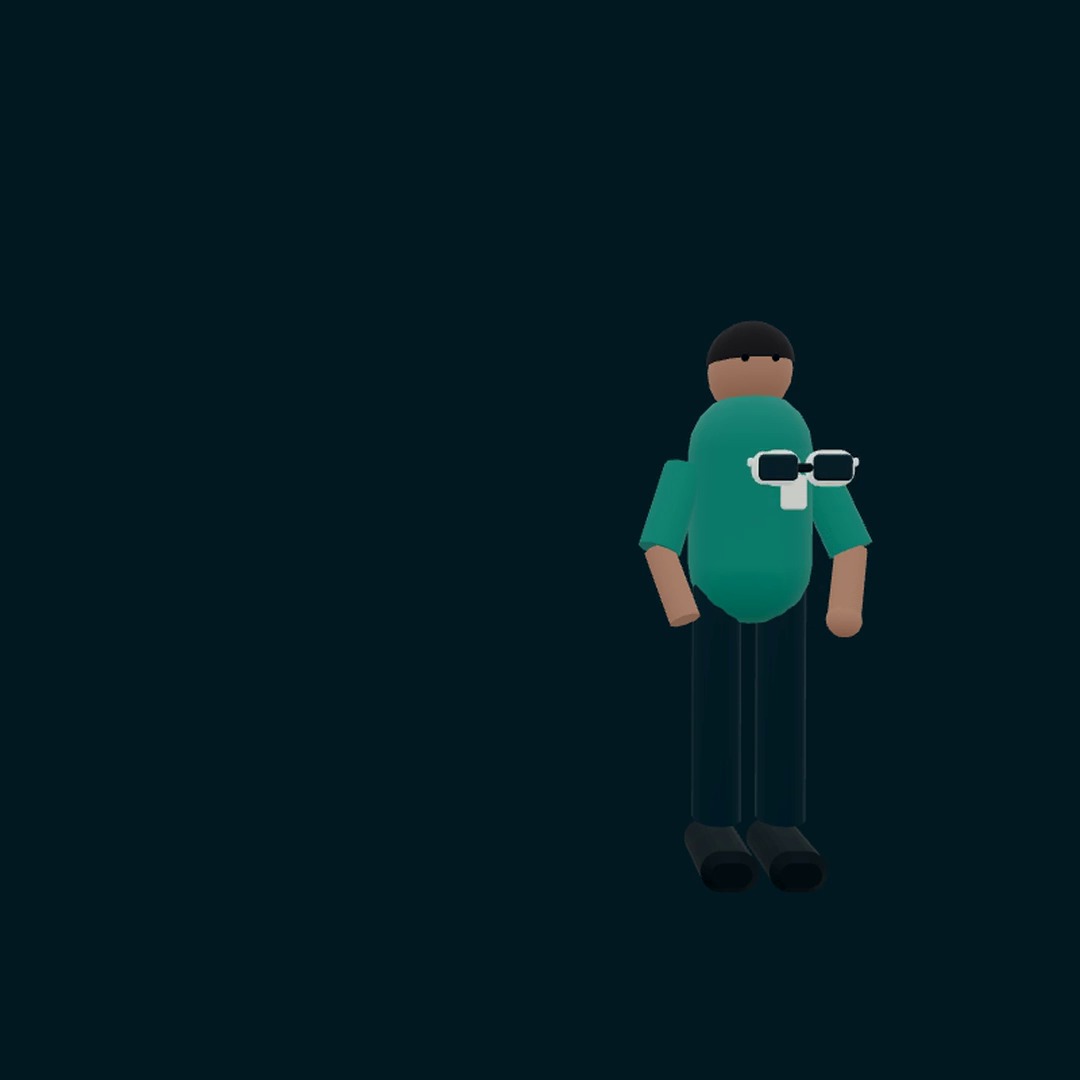
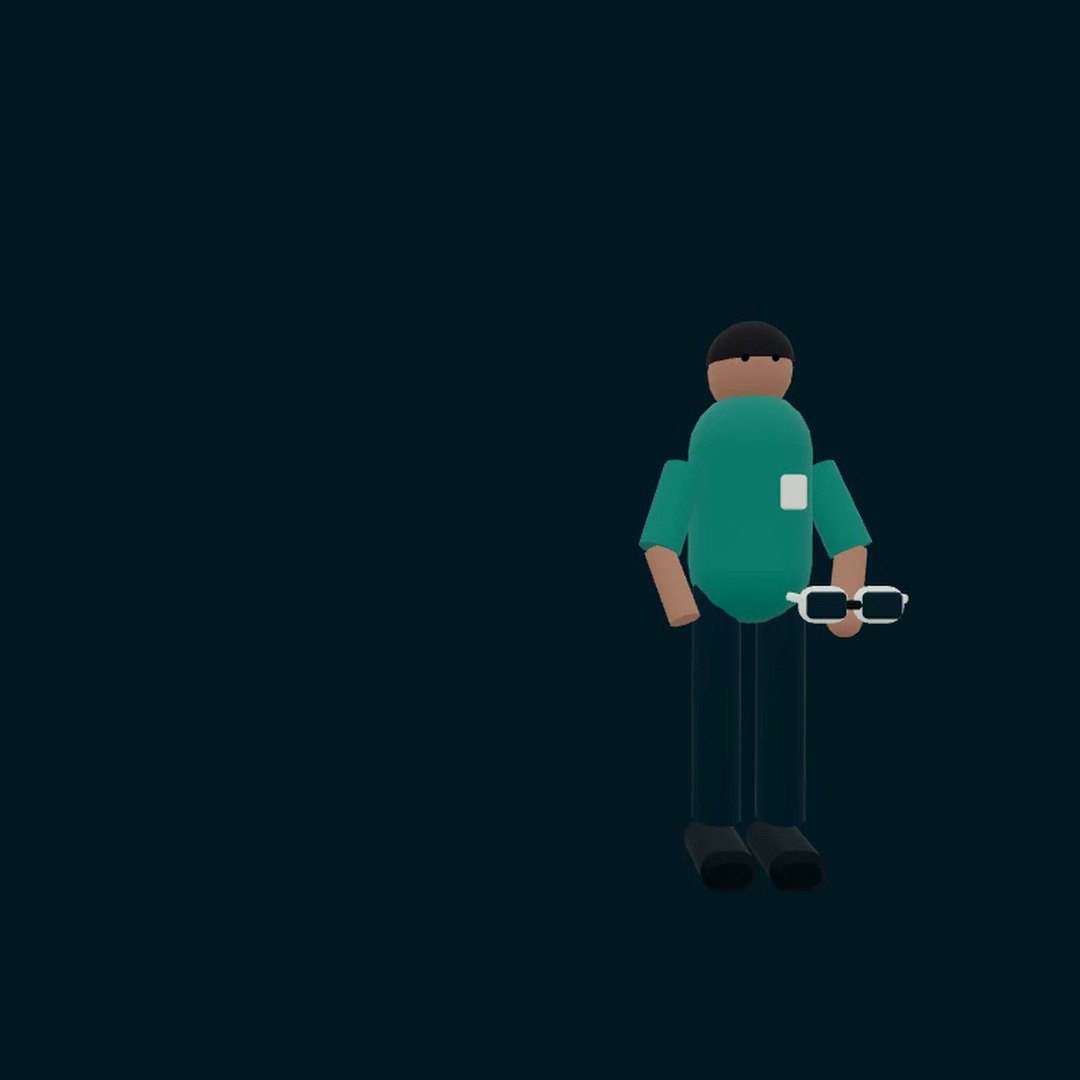
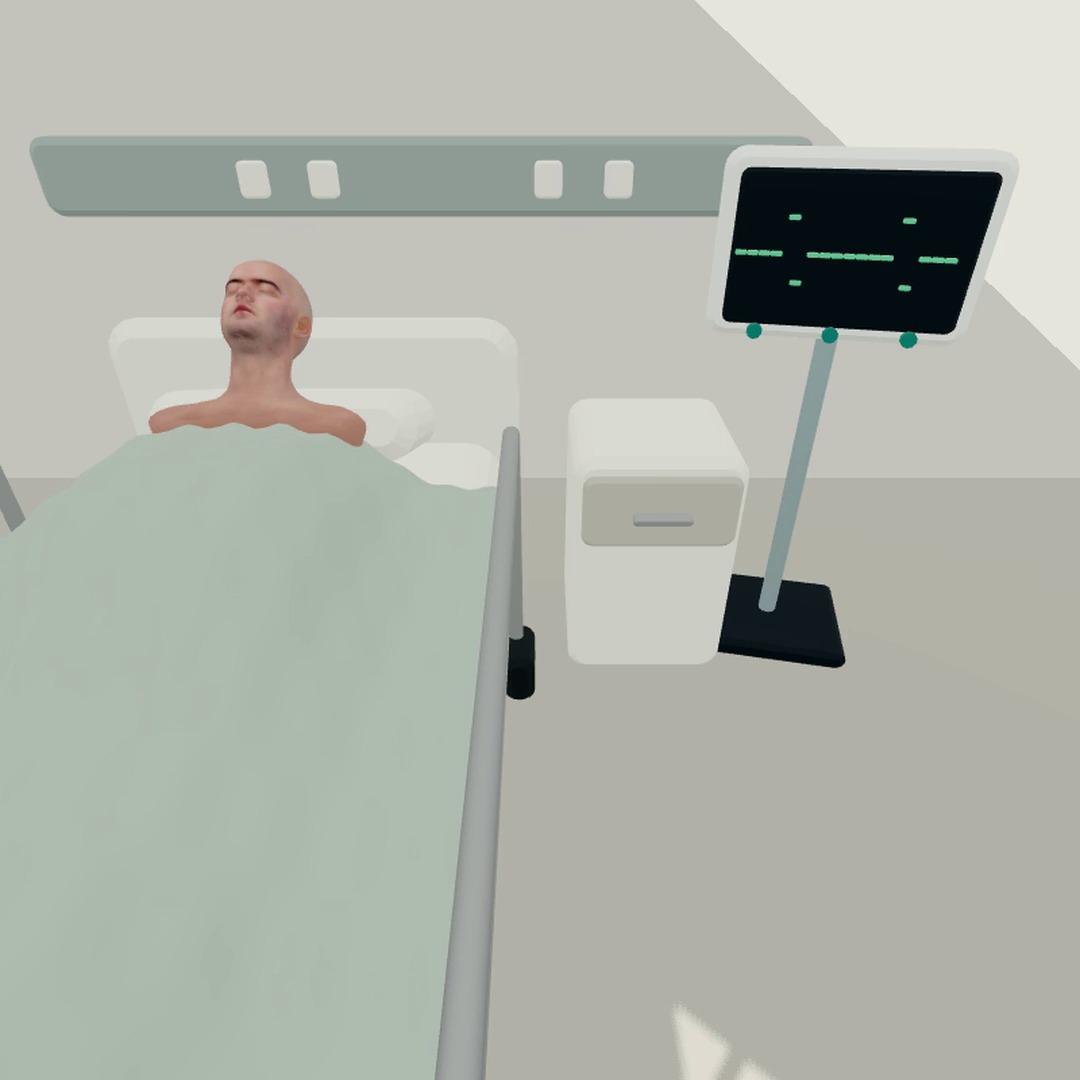
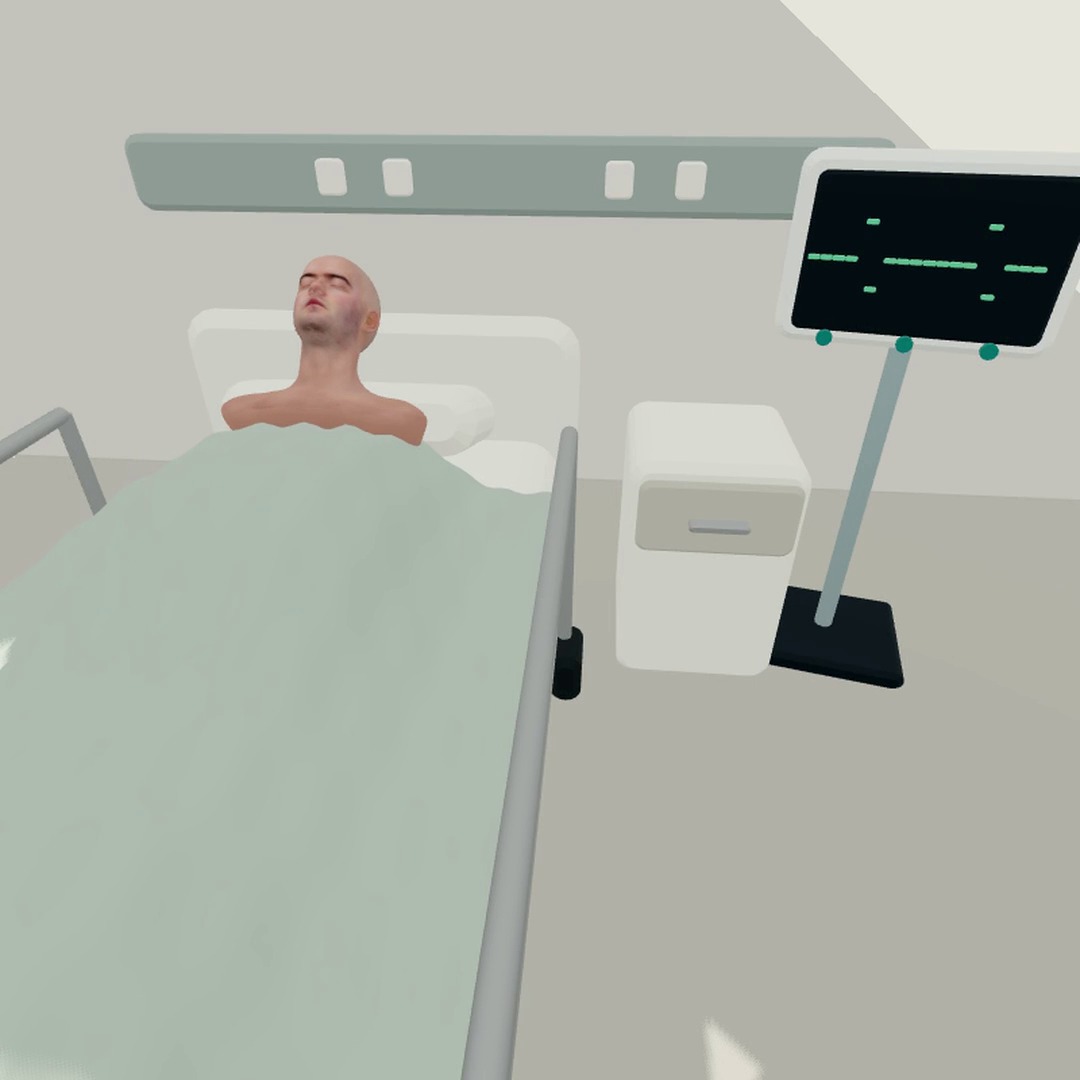
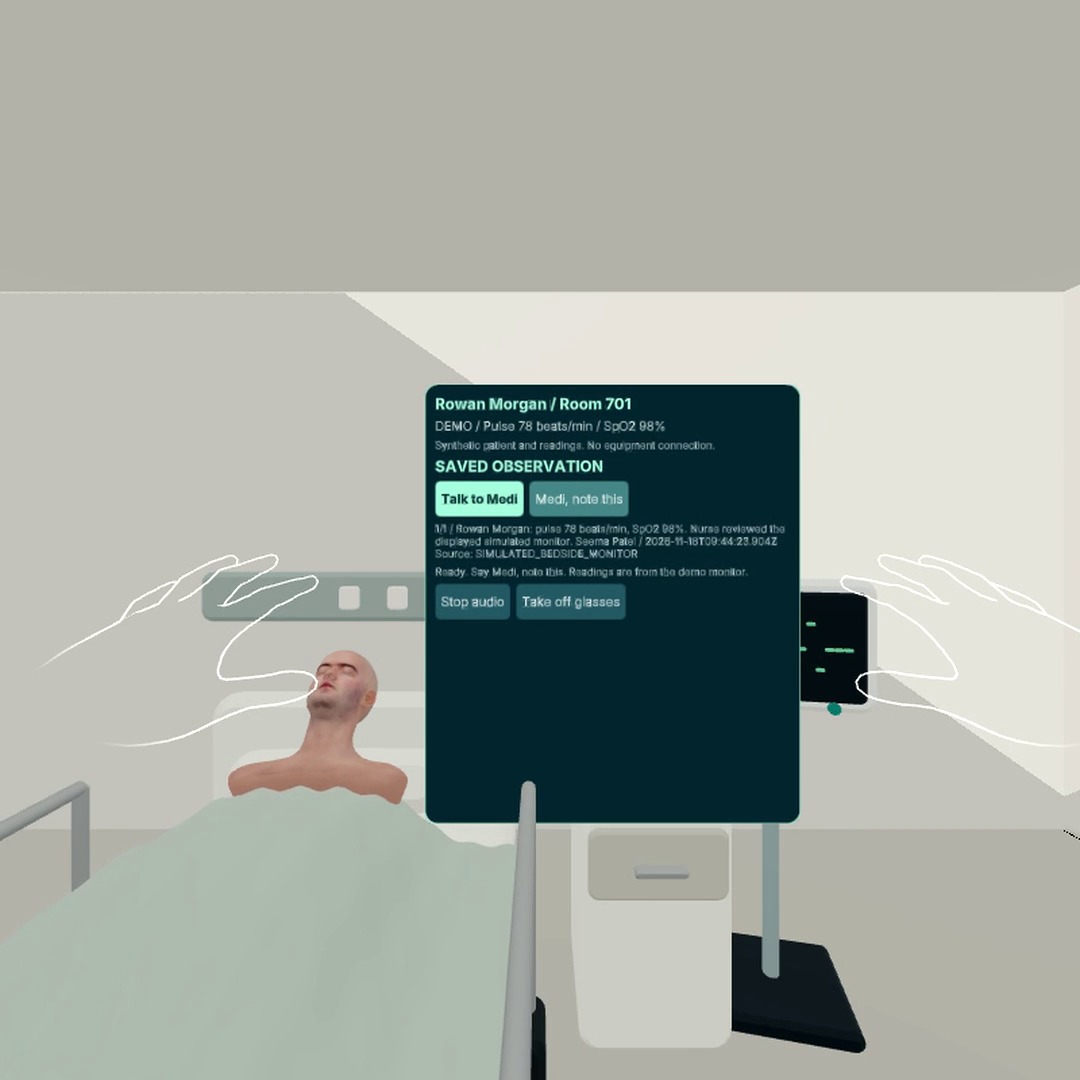
The experience begins with nurse Seema holding her glasses. When she puts them on, the user enters her first-person view of a fictional hospital room with a 3D patient, bed and bedside monitor.
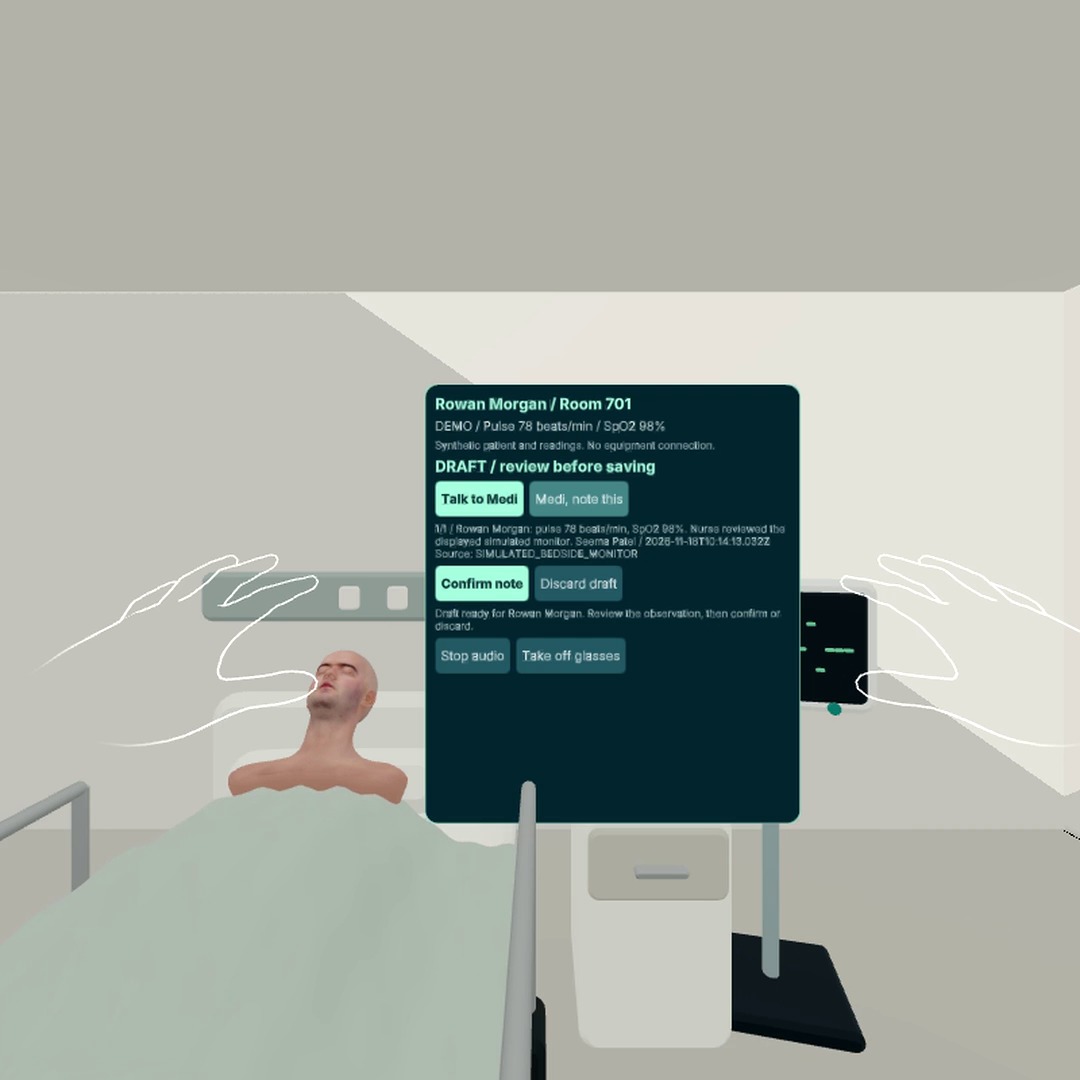
Using gaze and hand controls, the nurse can:
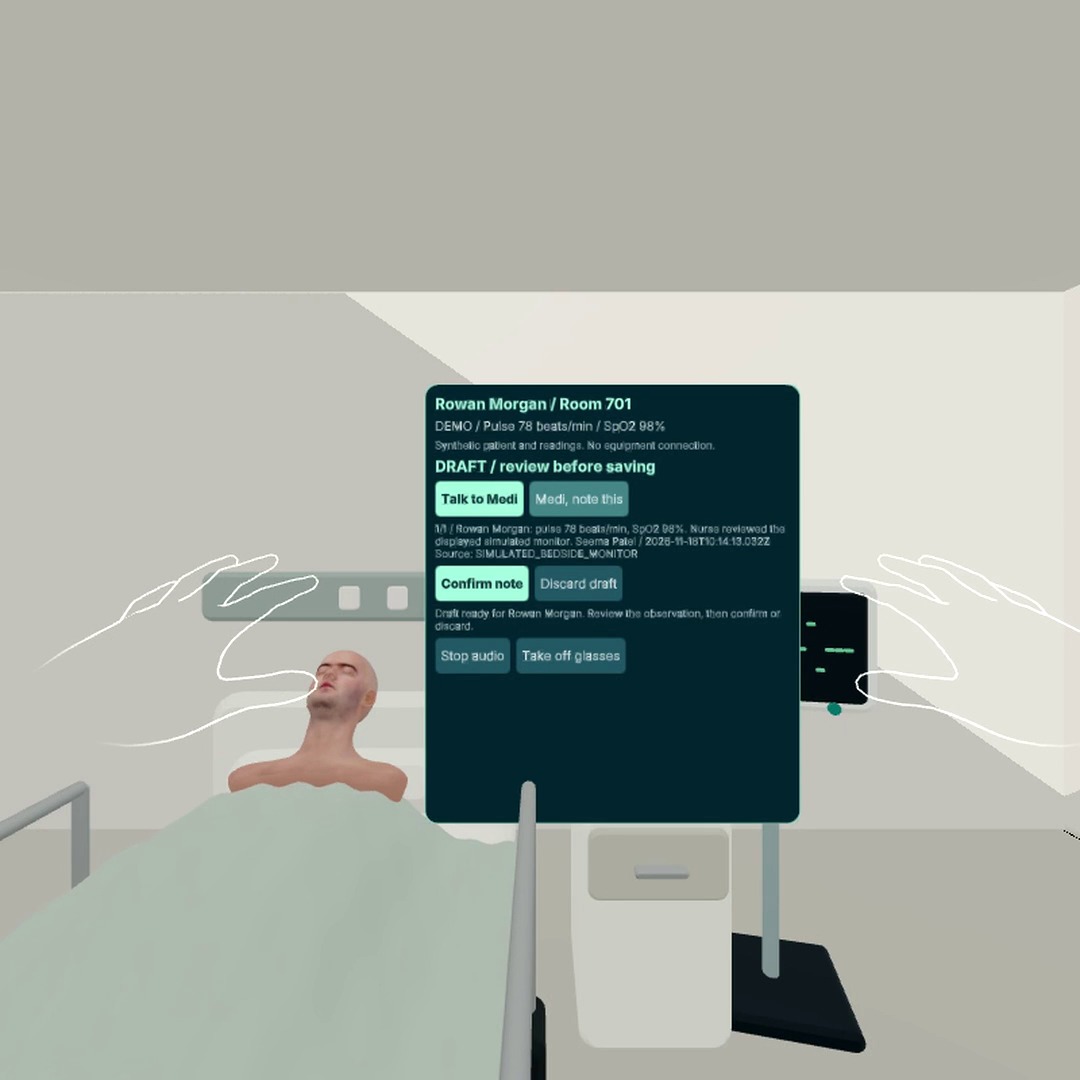
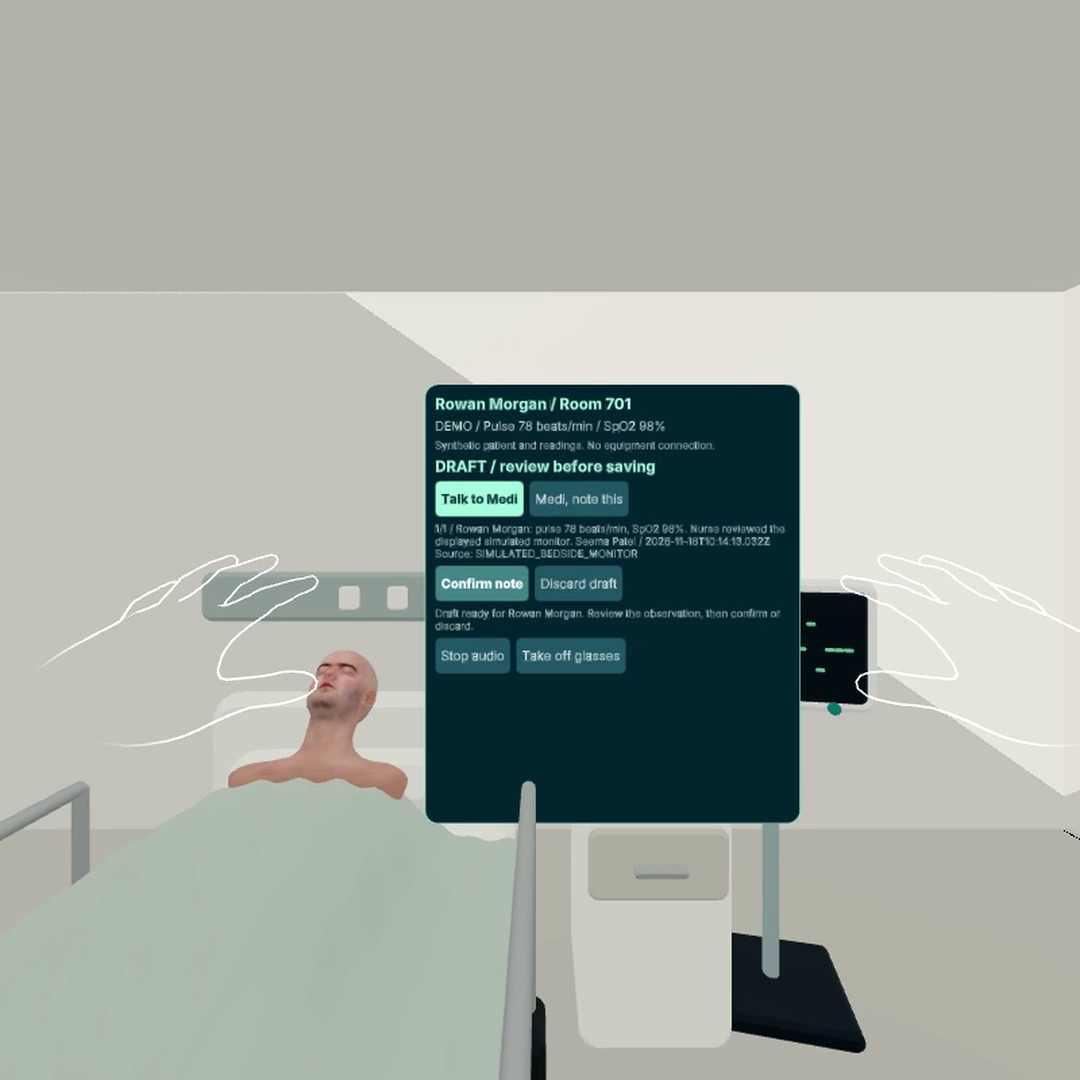
- Prepare an observation from the simulated monitor readings.
- Review the patient identity, readings, units, source and timestamp.
- Explicitly confirm or discard the draft.
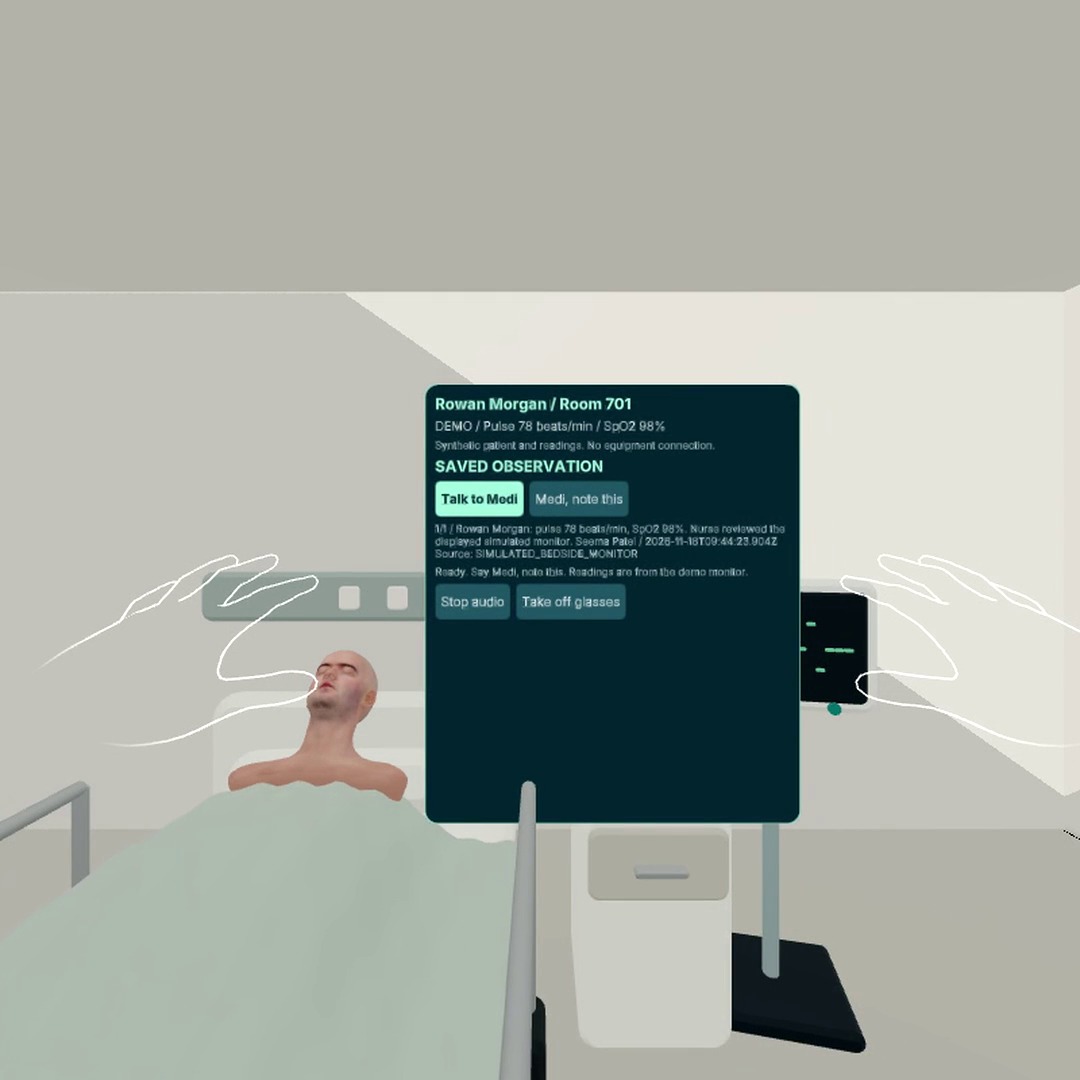
- Reopen the glasses view and retrieve the saved observation.
Medi supports documentation and workflow coordination. It does not diagnose, recommend treatment or modify clinical orders.
How we built it
We built the immersive interface using Meta Immersive Web SDK, Three.js, WebXR and UIKitML. We used the Immersive Web Emulator to develop and test the glasses experience without physical hardware.
The deployed frontend and backend run on Vercel, with a dedicated Neon Postgres database for persistent storage. Companion API requests reach the workflow through Express and Streamable HTTP MCP.
Each accepted mutation commits its session state, retry receipt, workflow checkpoint and audit entry atomically. Our local development path retains SQLite and runs without cloud credentials.
The VR project remains isolated from the original Medi service.
Challenges we ran into
Our biggest challenges were making the patient feel three-dimensional, keeping controls readable within the glasses view and preserving observation state across interruptions.
Deployment introduced another challenge: local SQLite files cannot provide persistent storage inside Vercel functions. We addressed this by adding a dedicated free Postgres database while preserving the local SQLite workflow.
Voice support also depends on browser compatibility and microphone permissions. Physical-glasses behavior and microphone recognition still require device testing.
Accomplishments that we're proud of
We built and deployed a complete observation workflow: enter the nurse’s view, prepare a draft, review it, confirm it and retrieve the saved record.
Live tests verified:
- Explicit nurse confirmation before saving.
- Saved observations returning after reopening.
- Retry handling without duplicate notes.
- Isolation between independent sessions.
- Saved data surviving redeployment.
What we learned
Immersive productivity depends on both clear spatial interfaces and dependable state management.
The nurse must understand what was captured, which patient it belongs to, whether it is a draft and whether saving actually succeeded. Recovery and human review are essential parts of the experience.
What's next for sidsen
Our next priorities are testing on physical glasses, validating microphone recognition, conducting nurse usability studies and improving accessibility and interface readability.
We also plan to replace the identifiable patient scan with a fully fictional asset suitable for the competition’s content requirements.
Our goal is to make bedside documentation more convenient while keeping nurses responsible for every decision.
Built With
- express.js
- gaze-interaction
- hand-tracking
- immersive-web-emulator
- javascript
- meta-immersive-web-sdk
- model-context-protocol
- neon
- node.js
- postgresql
- sqlite
- streamable-http
- three.js
- typescript
- uikitml
- vercel
- vite
- web-speech-api
- webxr
