-
-
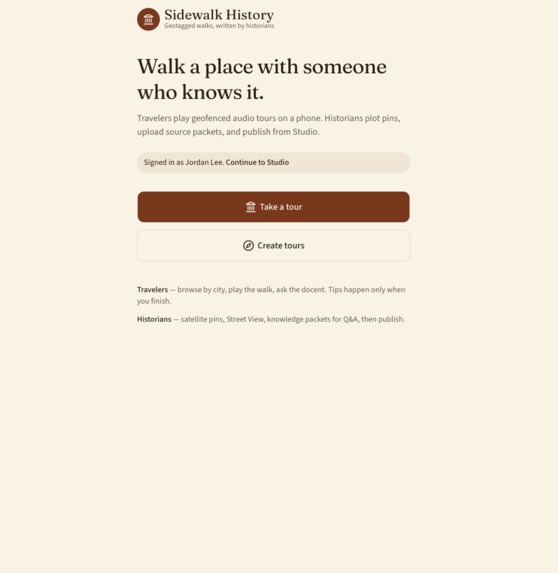
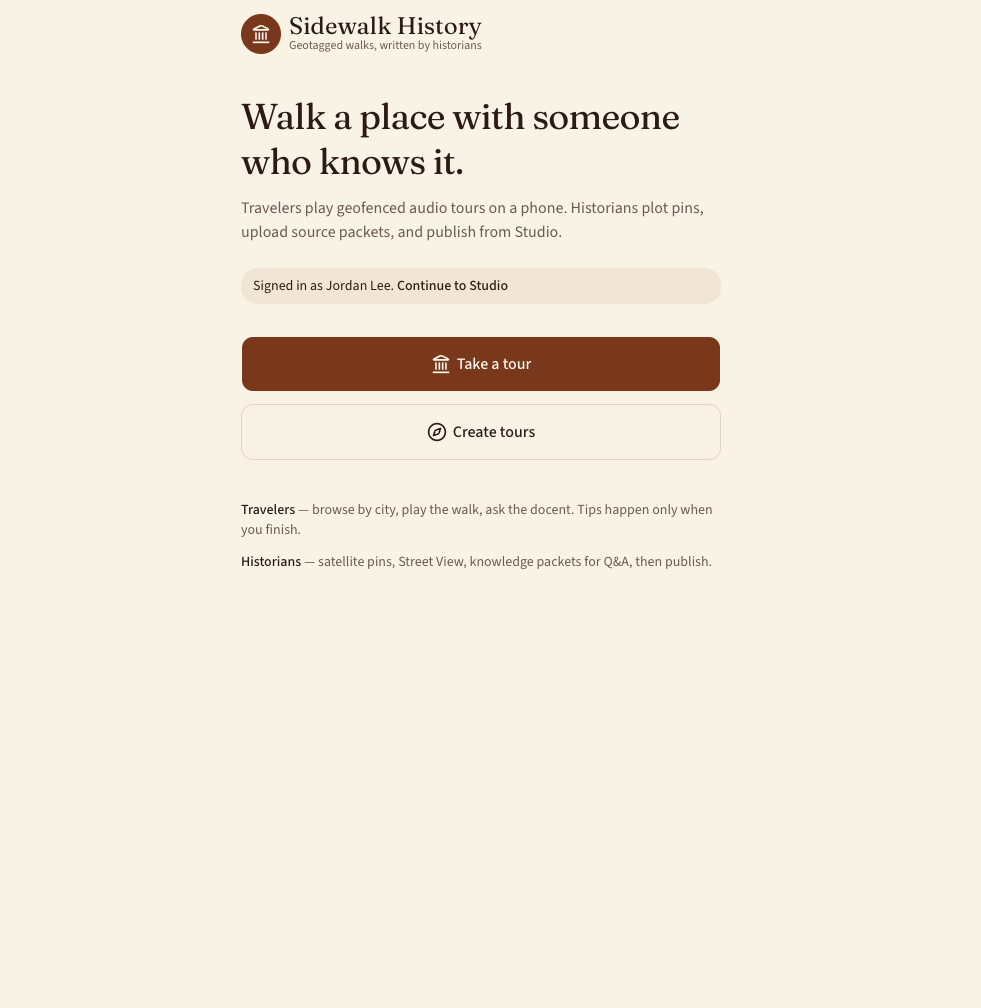
Login Page
-
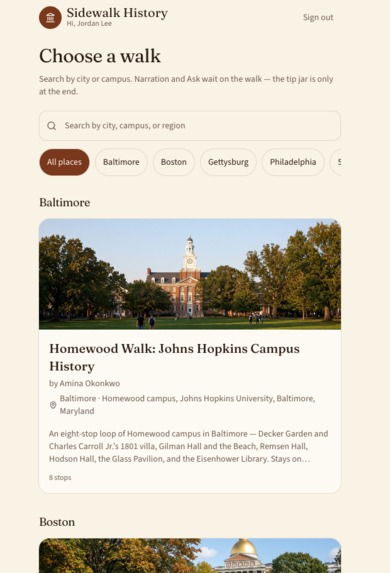
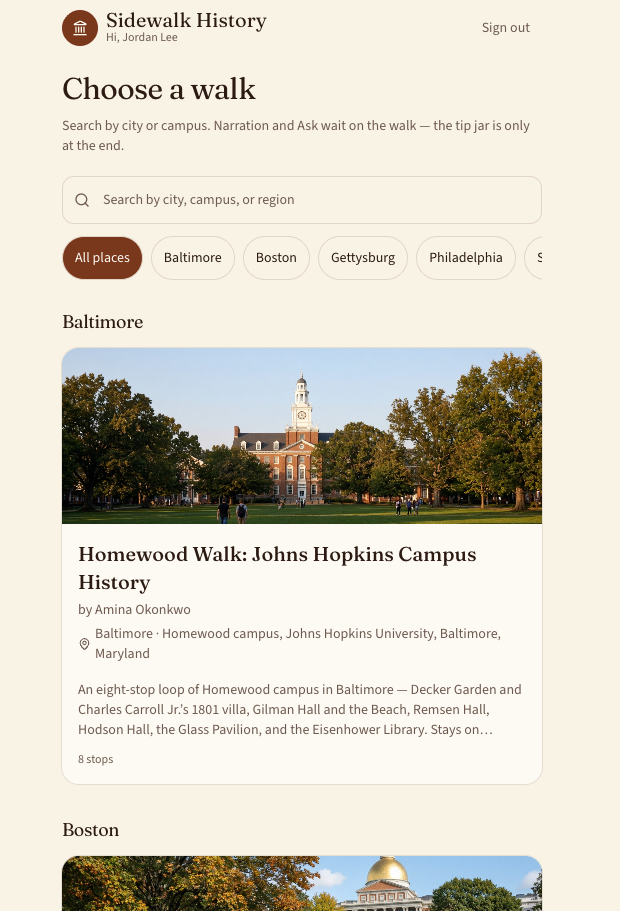
User side landing page
-
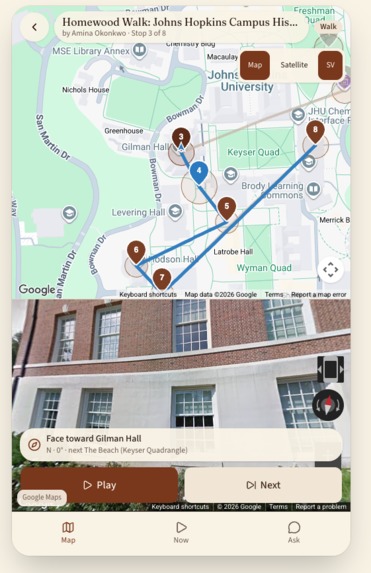
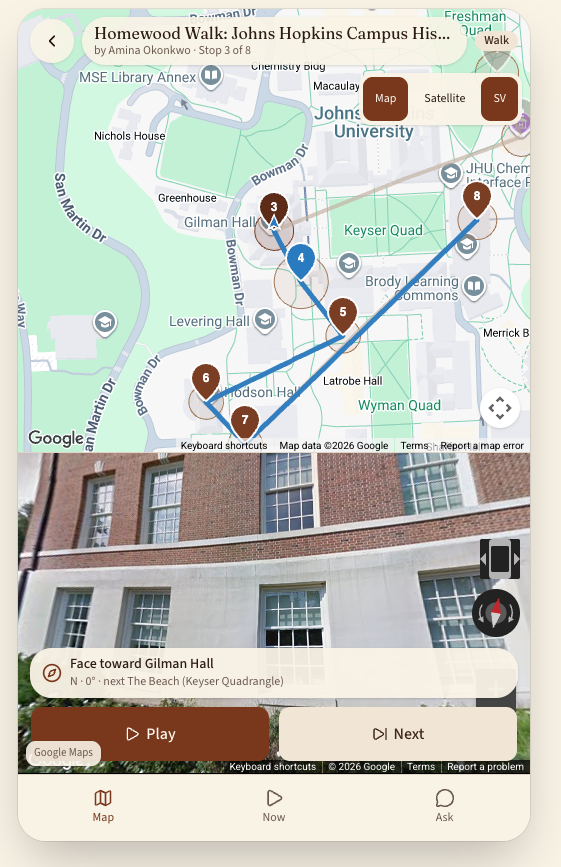
Example of a tour on map with highlighted points and street view
-
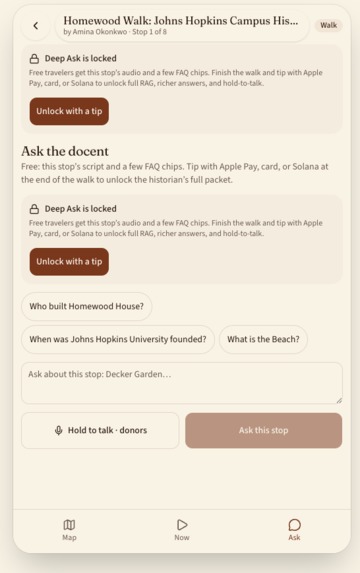
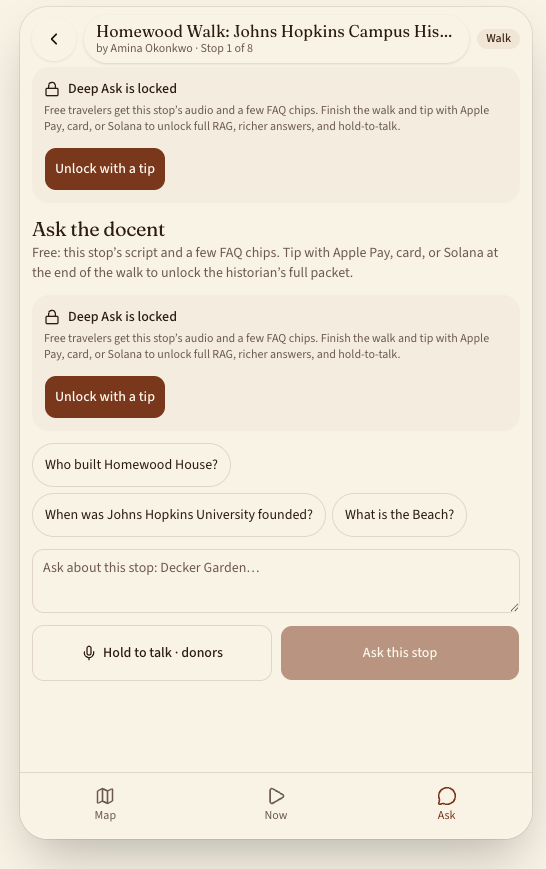
Location for premium AI talking and feedback
-
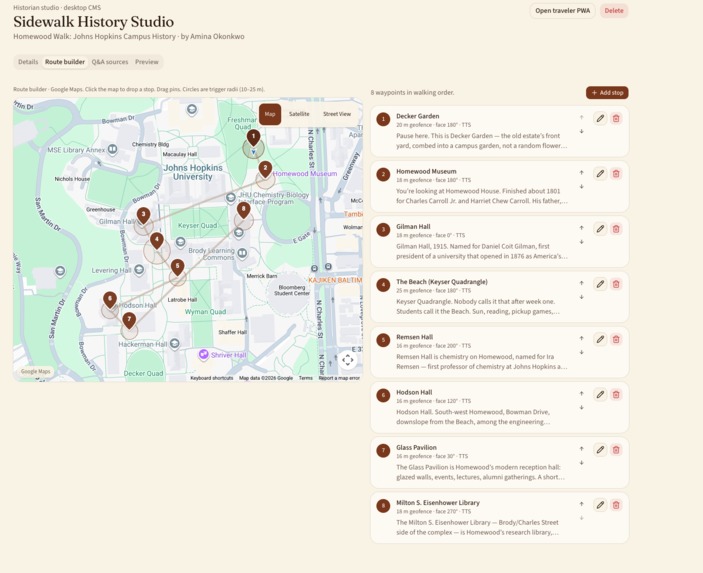
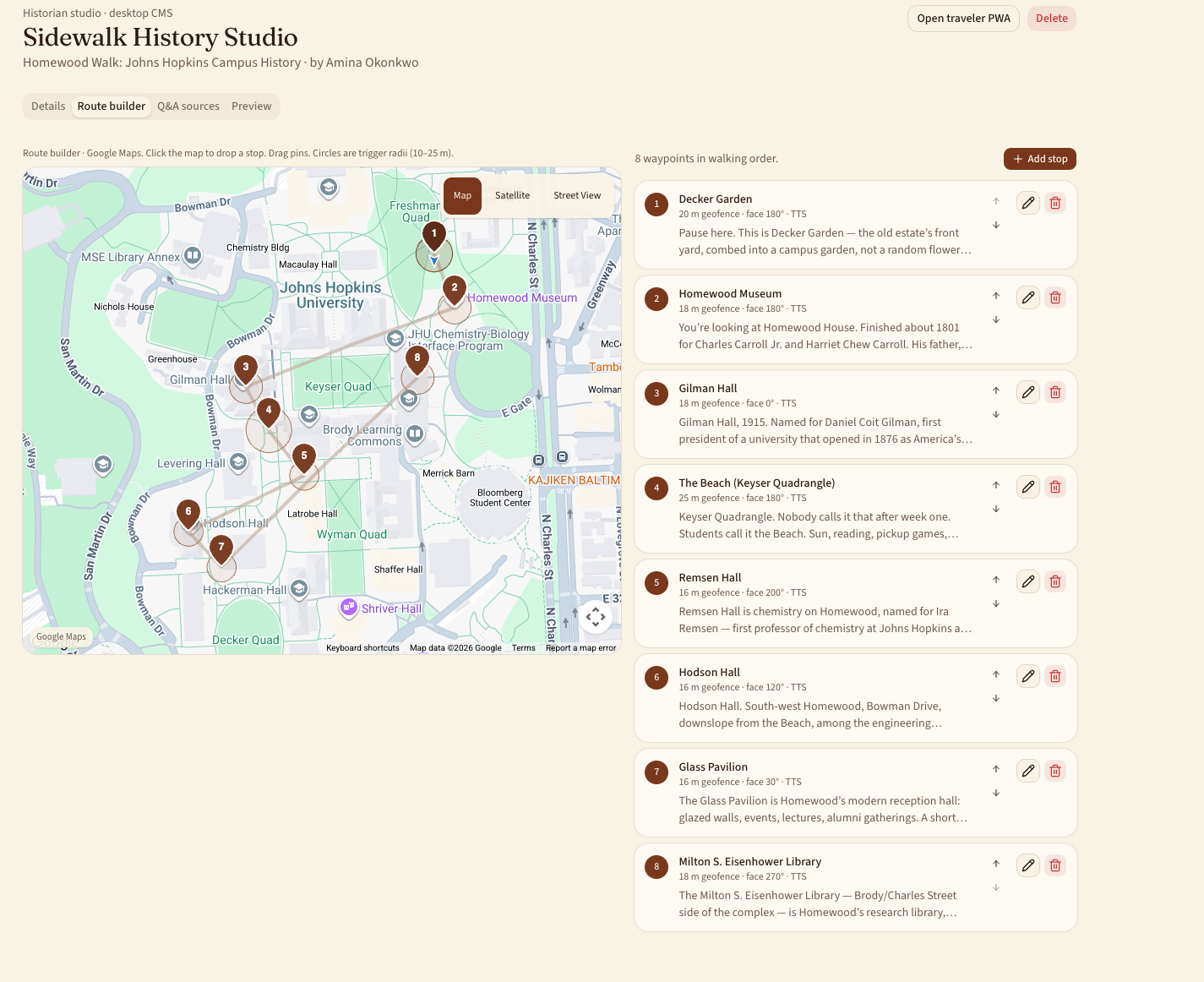
Studio View showing the points and script for each location
-
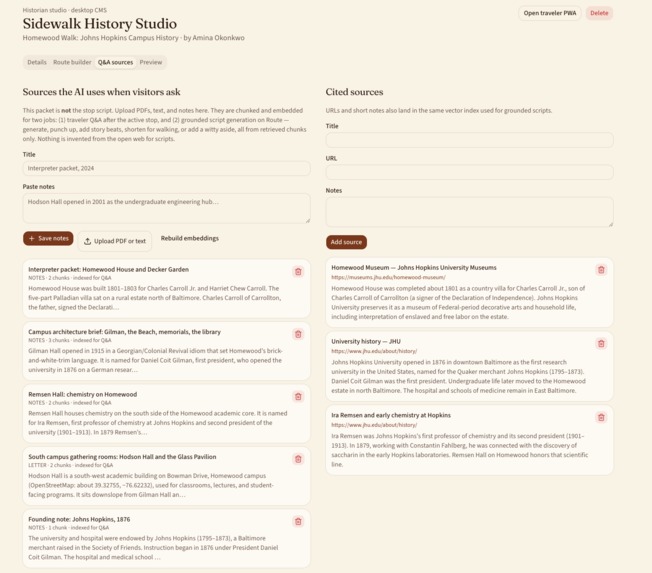
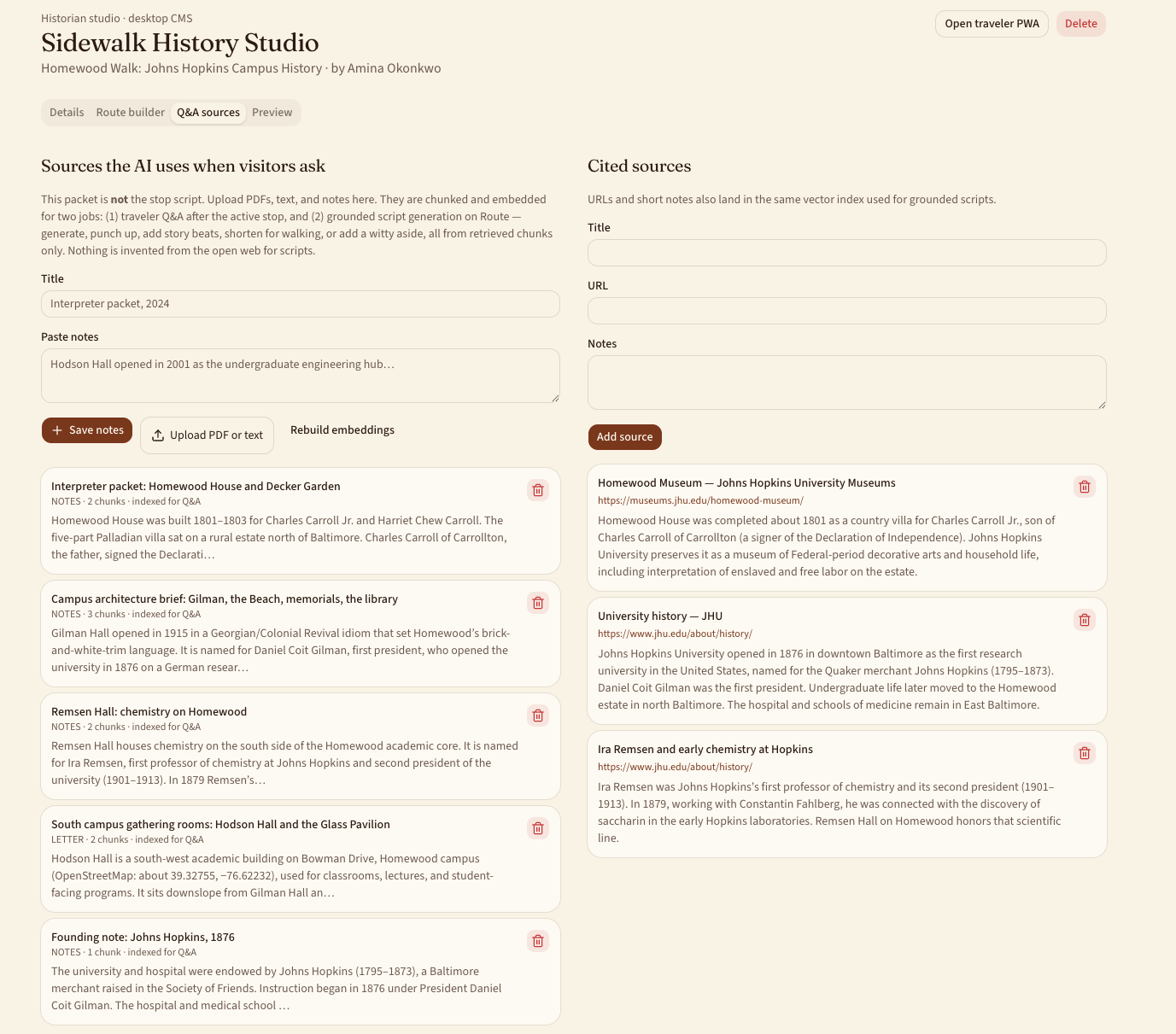
The resources and sources the historian used that AI can look through to answer questions from users
What inspired you
We were inspired by short YouTube history videos where creators dig into a place and make the past feel close. A lot of real-world historical spots get overlooked because there is no museum desk or volunteer tour. The story is still there. It just needs a way to reach people on site. That is why we built Sidewalk History: so historians and smaller organizations can share walks, and visitors can learn while standing in the place itself.
How we built your project
We built Sidewalk History as two apps in one Next.js project: a Studio for historians and a phone-style traveler app. Studio lets creators map stops, use satellite and Street View, upload research, and draft tour audio with AI grounded in their sources. The traveler app uses GPS-triggered narration, on-the-street Q&A, and an end-of-tour tip flow that unlocks deeper AI. We used React and TypeScript for the UI, Prisma with SQLite for data, Google Maps with a Leaflet fallback, xAI Grok for text-to-speech, session-based auth, and Vercel for hosting.
What you learned
We learned how to build a real product with a React / Next.js framework, not just a tutorial page. We learned how to use APIs in a program with environment keys and fallbacks when something is missing. We learned how auth works with sessions, cookies, and role-based routes for travelers vs historians. We also learned how to host a site: deploy to Vercel, set production env vars, debug live issues, and connect a custom domain.
Challenges you faced
Making Studio and the traveler experience feel like two clear products was hard. Keeping AI sounding like a tour guide while staying truthful to sources took iteration. Grok voice failed until we had a valid API key. Demo login broke on Vercel when the production database had no tables. Localhost success was not enough. We also ran into DNS setup between Porkbun and Vercel, and real Apple Pay still needs Stripe keys so we shipped a demo tip unlock for now.
Built With
- google-maps-javascript-api
- leaflet.js
- next.js
- prisma
- react
- solana
- sqlite
- stripe
- tailwind-css
- typescript
- vercel
- xai-grok-tts

Log in or sign up for Devpost to join the conversation.