In a world saturated with endless notifications and digital fatigue, standard productivity tools often exacerbate cognitive load rather than reducing it. Our project, SideQuest, was born from the belief that self-improvement shouldn't feel like a chore. We set out to transform the static, boring "to-do list" into a dynamic, rewarding journey, treating the mind like an RPG character that requires daily maintenance, rest, and strategic challenges to level up.
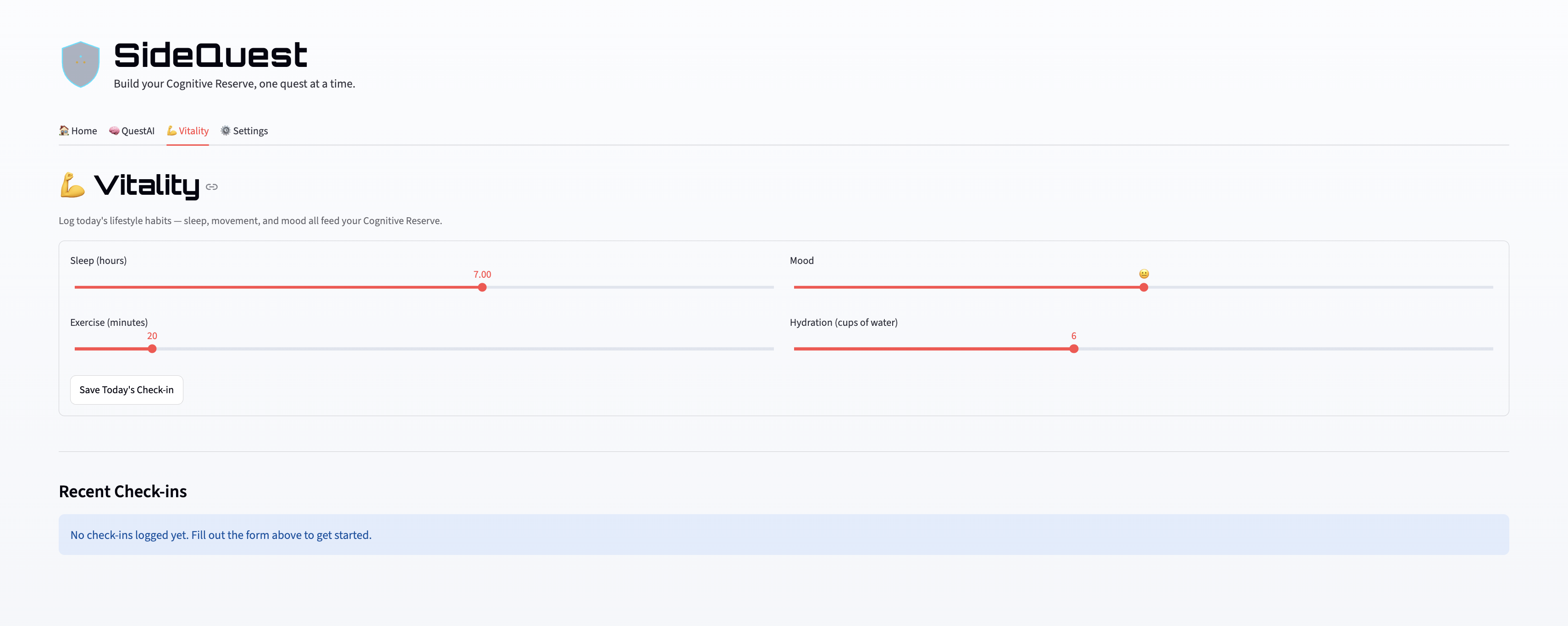
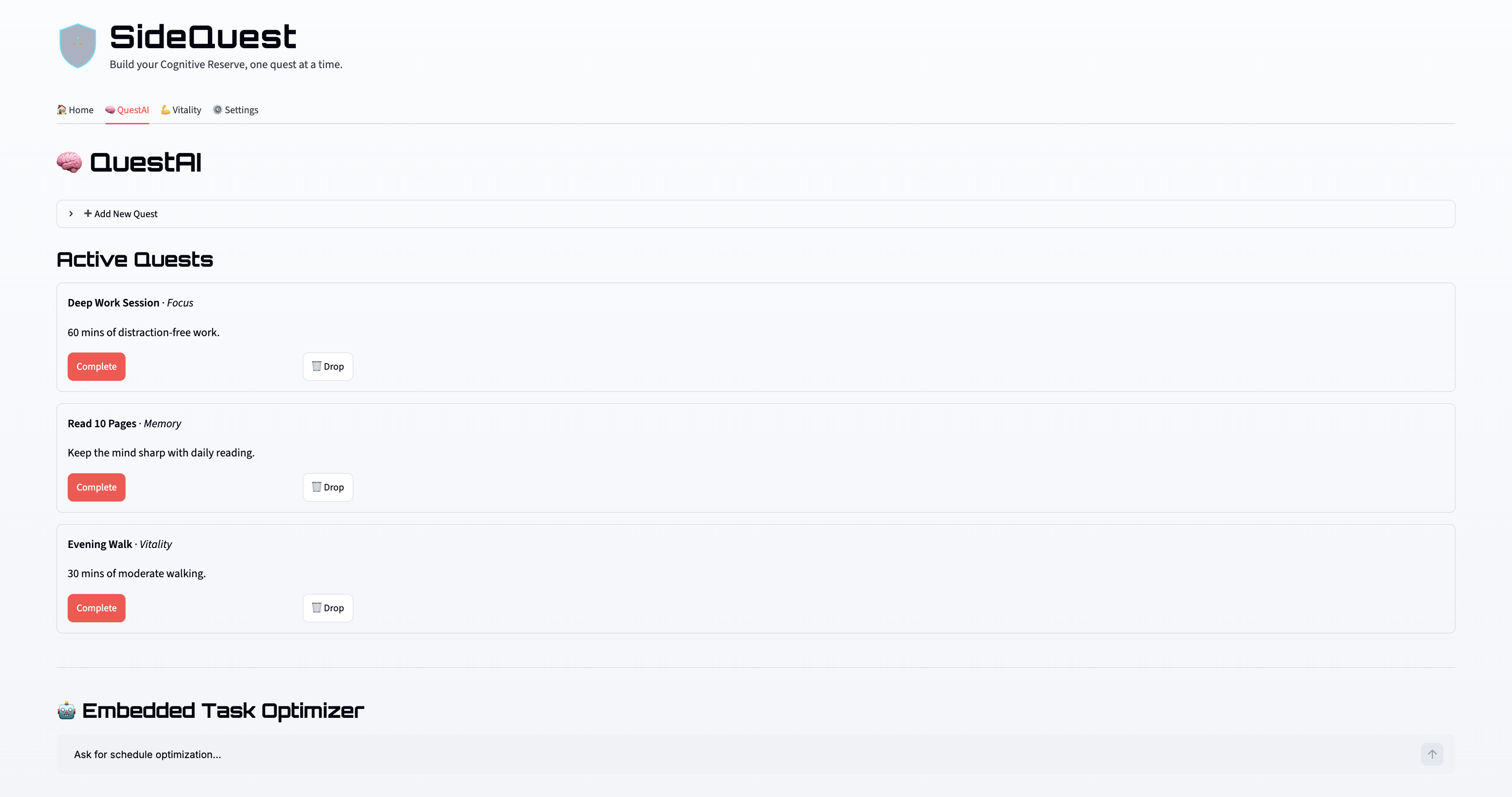
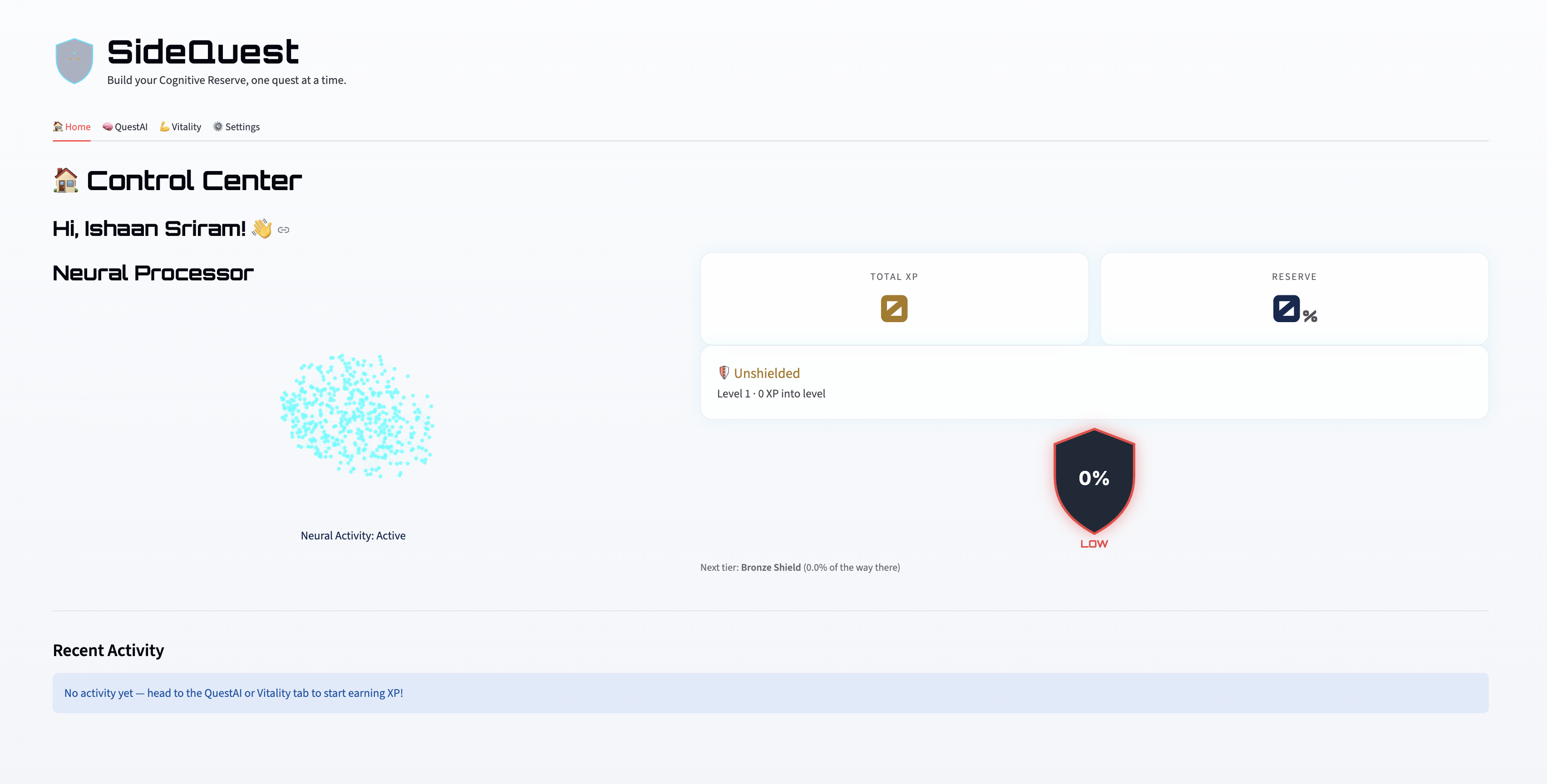
At its core, SideQuest is an AI-powered cognitive management dashboard. It gamifies growth by allowing users to earn XP for completing tasks across focus, memory, and vitality categories. To manage these tasks, we integrated an embedded, privacy-first LLM using llama-cpp, which acts as a personal productivity coach to turn messy to-do lists into optimized schedules. Beyond just task management, the platform visualizes progress through a "Brain Shield" metric and a real-time, 3D neural network representation, while holistic vitality tracking—including sleep, mood, and hydration—helps users see how physical habits directly feed their cognitive output.
We built SideQuest using a Python-first stack, selected for its speed of iteration and powerful data visualization ecosystem. The frontend is powered by Streamlit, heavily styled with custom CSS to achieve a modern "Cyberpunk Glassmorphism" aesthetic. For our AI engine, we utilized llama-cpp-python to run a GGUF model locally, ensuring that user data remains private and the performance remains snappy without external API latency. Visualization is handled by Plotly for the 3D neural point-cloud rendering and custom SVG manipulation for the shield status indicators, all backed by a lightweight SQLite database for reliable data persistence.
The development process was not without its hurdles. Our biggest challenge involved balancing the "Cyberpunk" aesthetic with the inherent limitations of Streamlit’s component system; achieving the desired glassmorphism effect across different browsers required meticulous CSS injections. Additionally, we dedicated significant time to fine-tuning our local LLM prompts, ensuring that the AI could deliver concise, actionable advice while running efficiently on local hardware.

Log in or sign up for Devpost to join the conversation.