-
Home
-
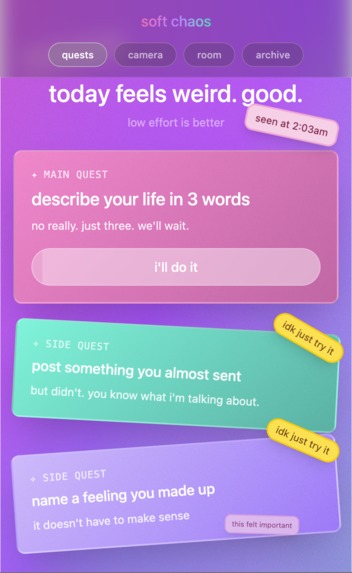
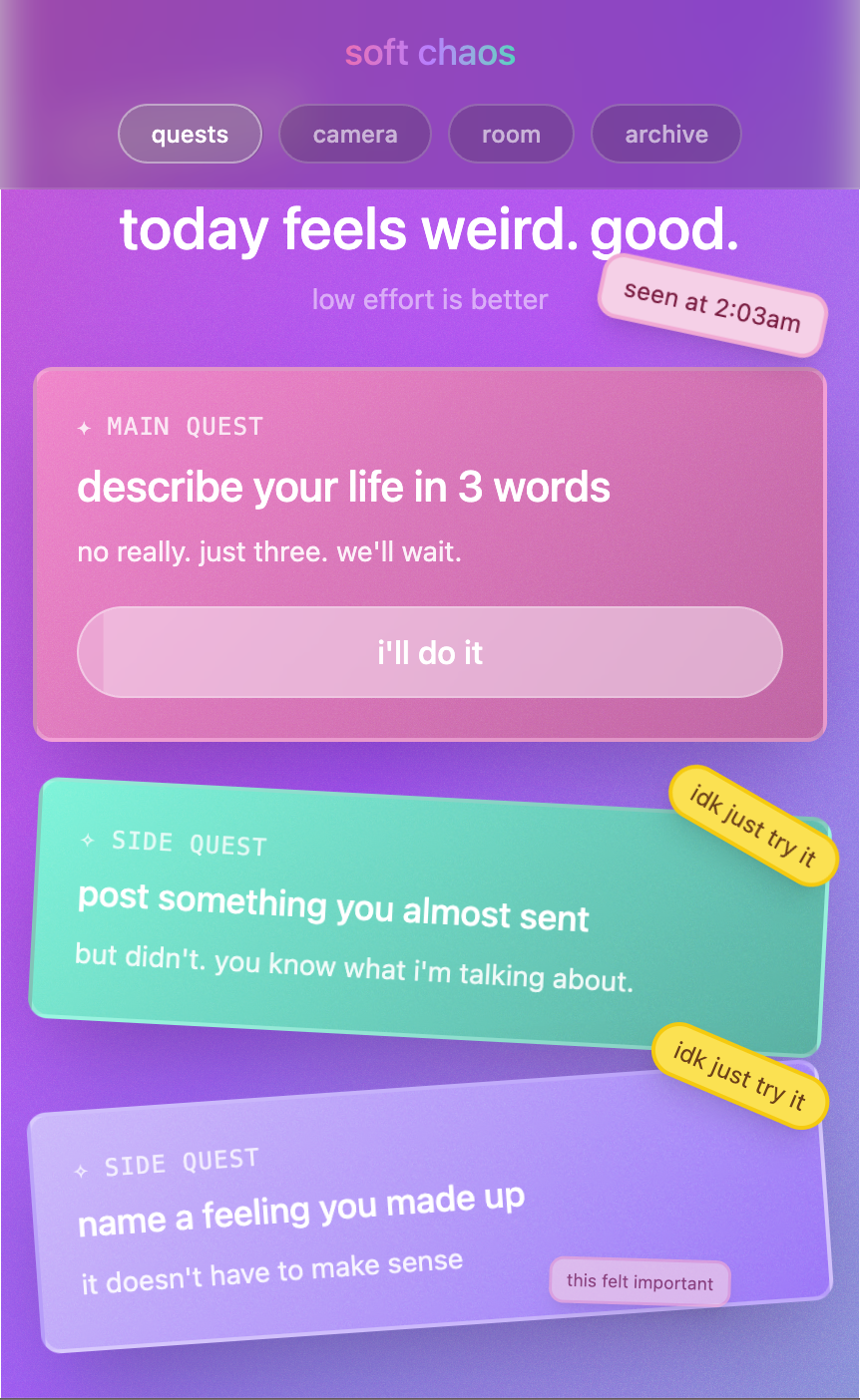
Users get simple prompts instead of a feed, encouraging low-pressure, spontaneous participation.
-
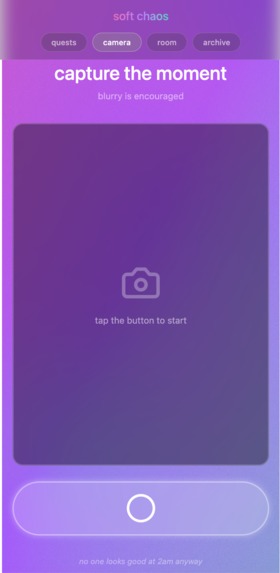
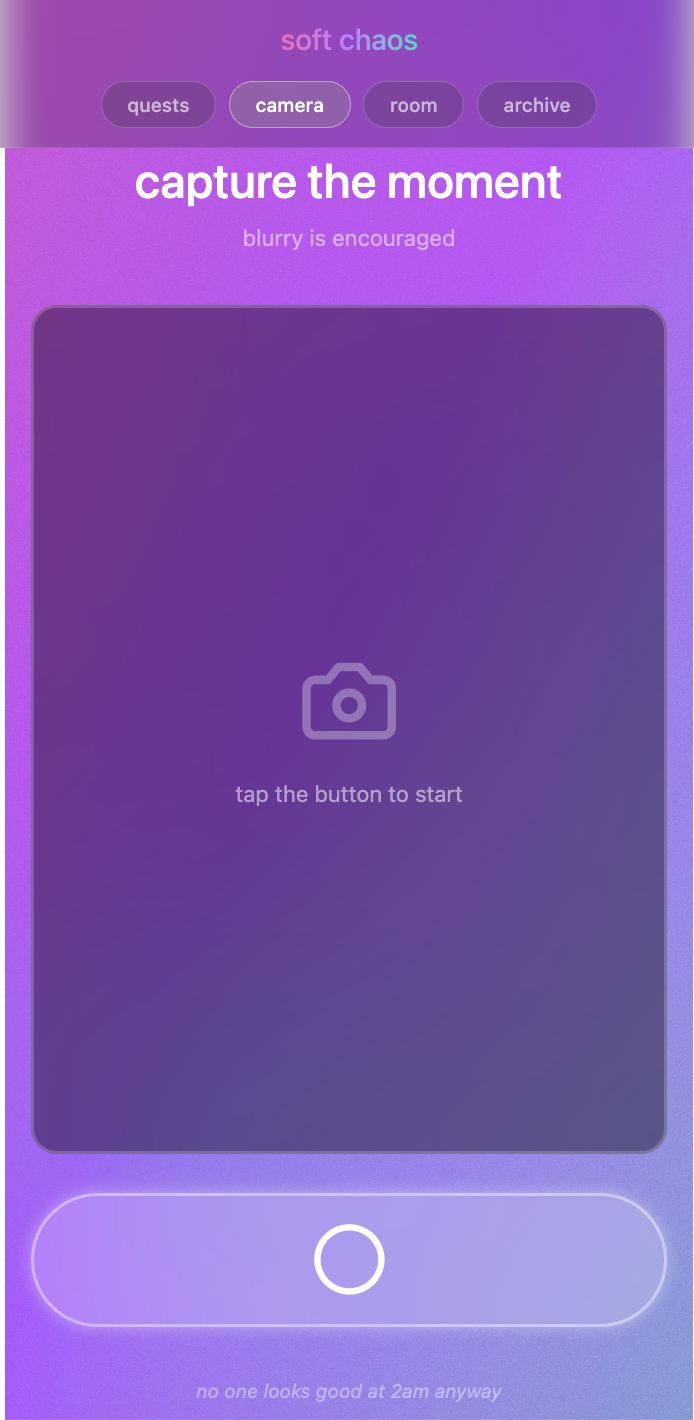
Capture and share raw moments quickly, with a focus on imperfection and ease.
-
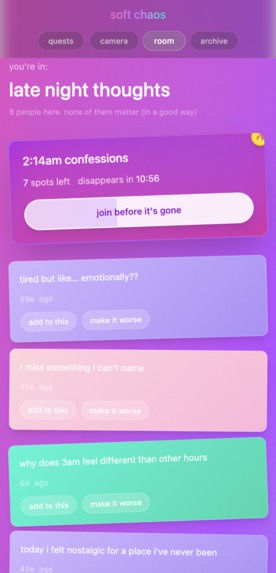
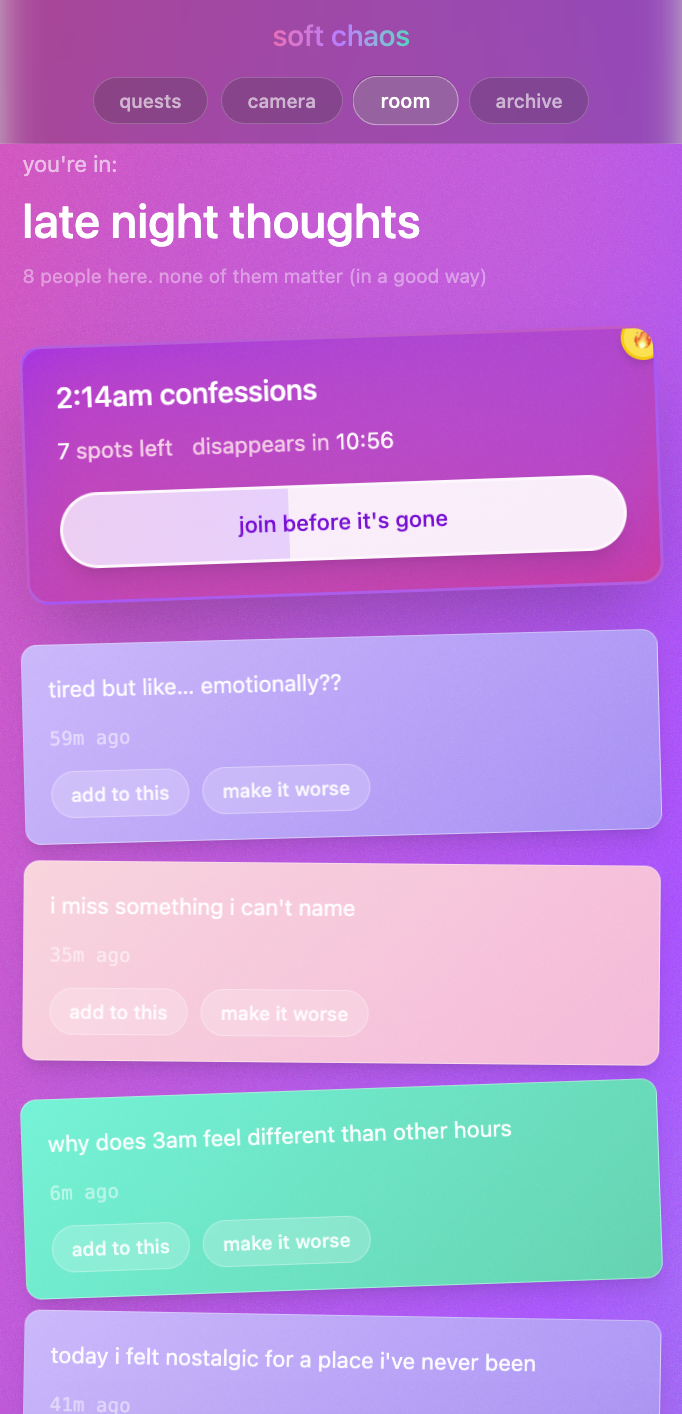
Users join small rooms to build on others’ posts, creating shared, evolving conversations.
-
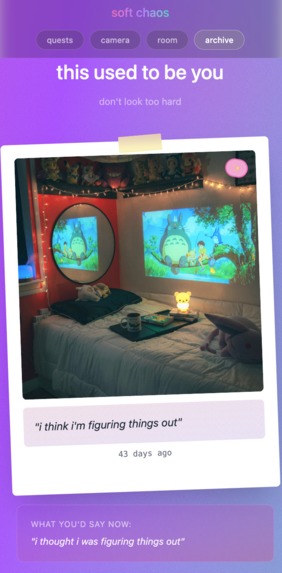
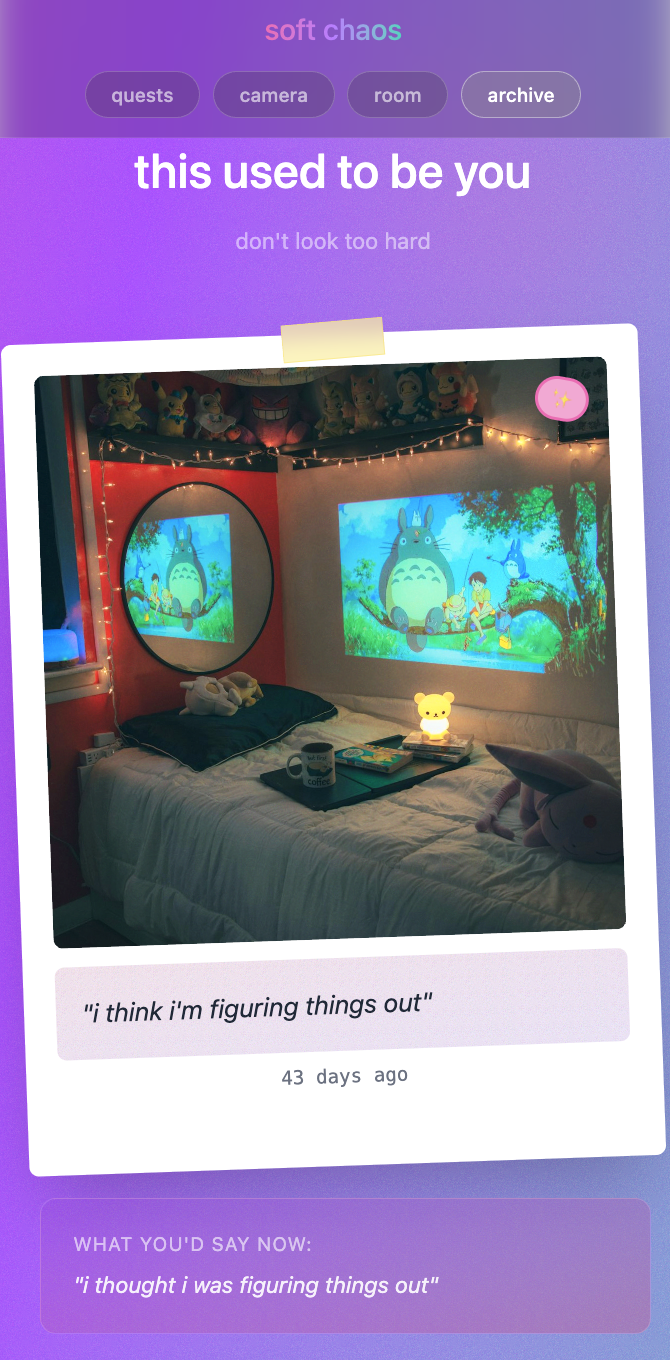
Past posts resurface and are reinterpreted, creating a nostalgic and reflective experience.
Inspiration
In 2016, the internet felt more spontaneous, creative, and human. People posted without pressure, discovered things by accident, and participated instead of just consuming. Today, social media is highly optimized but often feels performative and passive. We were inspired to bring back that sense of low-pressure expression and genuine interaction.
What it does
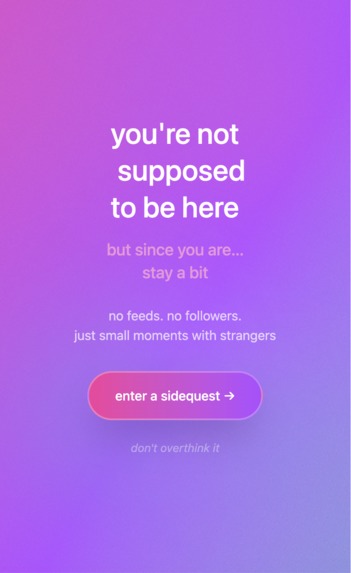
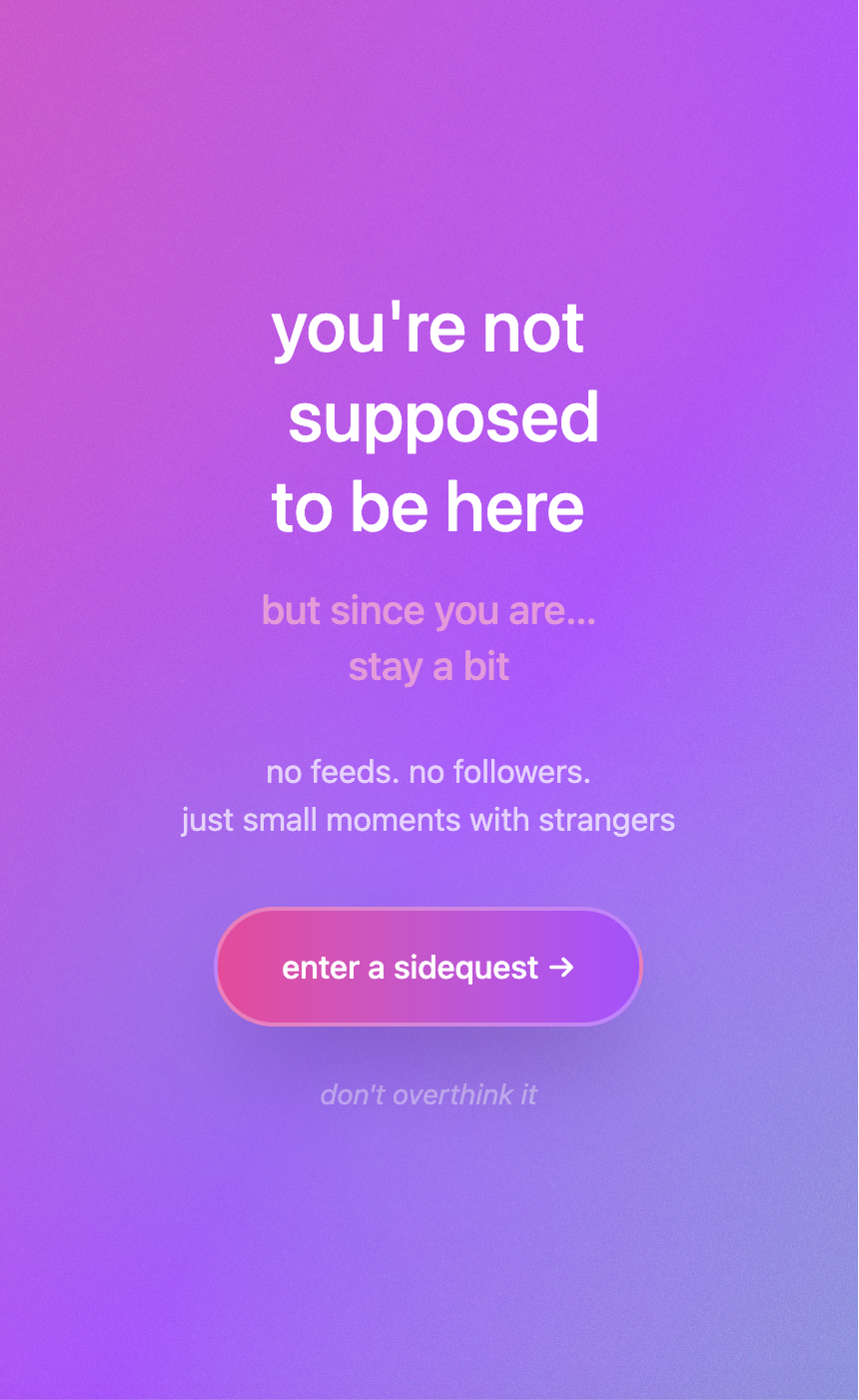
Sidequest is a social app that replaces infinite scrolling with small, shared experiences. Instead of a feed, users receive simple prompts and are placed into small, temporary rooms with others completing the same task. There are no likes or followers—just participation. As users interact, content evolves through collaboration, creating dynamic, shared moments.
How we built it
We designed and developed Sidequest as an interactive prototype using Framer, focusing on a clear, intuitive user flow from prompt to interaction. We built multiple connected screens and used animations and transitions to simulate real-time engagement. Visually, we incorporated a colorful, slightly imperfect 2016-inspired aesthetic to reinforce the product’s core concept.
Challenges we ran into
One challenge was balancing a messy, expressive aesthetic with usability. We also had to simulate evolving, interactive experiences without a backend, which required creative design solutions. Ensuring the product felt both unique and intuitive took multiple iterations.
Accomplishments that we're proud of
We’re proud that Sidequest feels meaningfully different from traditional social media. We created a cohesive, high-fidelity prototype with integrated features that shift users from passive scrolling to active participation, while maintaining a strong and distinctive visual identity.
What we learned
We learned that removing features like likes and feeds can create a more engaging and less stressful experience. We also learned the importance of designing for emotion and interaction, not just functionality.
What's next for SIDEQUEST
Next, we would build out real-time functionality, refine how prompts are generated and matched with users, and test with real users to validate engagement. Our goal is to evolve Sidequest into a platform that prioritizes creativity, participation, and genuine connection.
Built With
- figma
- framer

Log in or sign up for Devpost to join the conversation.