-
-
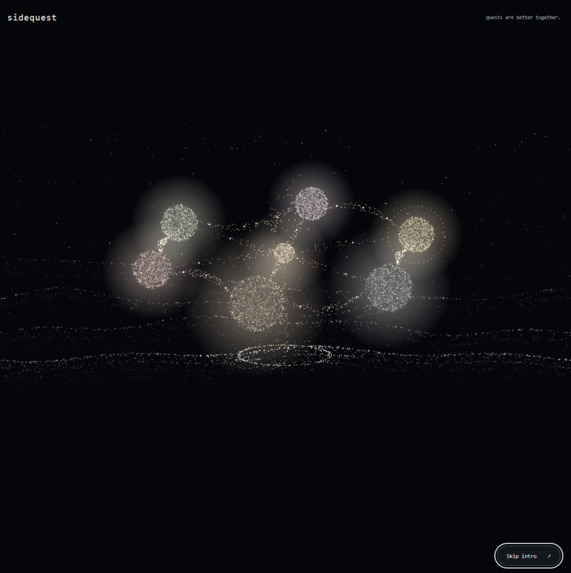
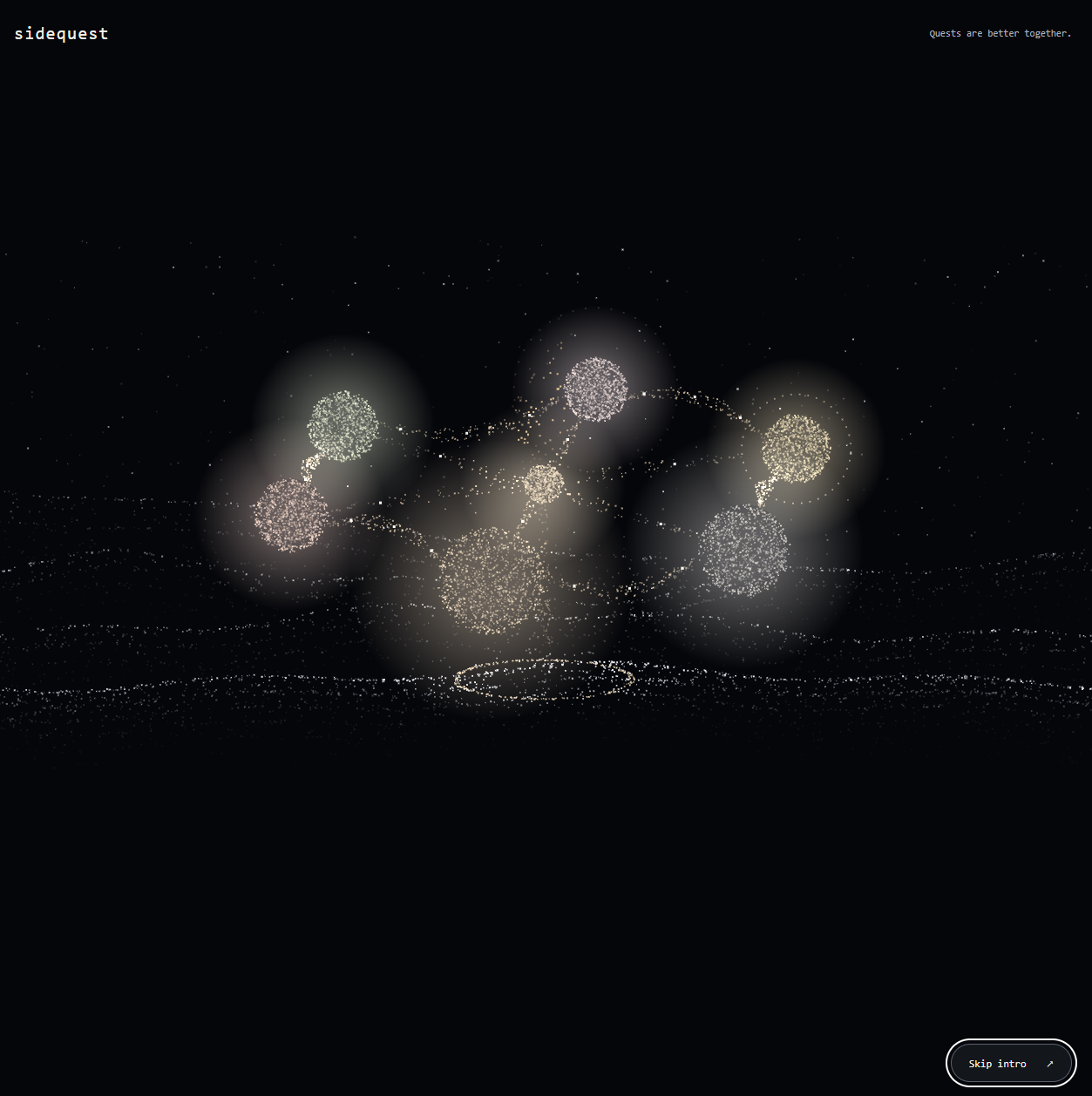
Intro Screen
-
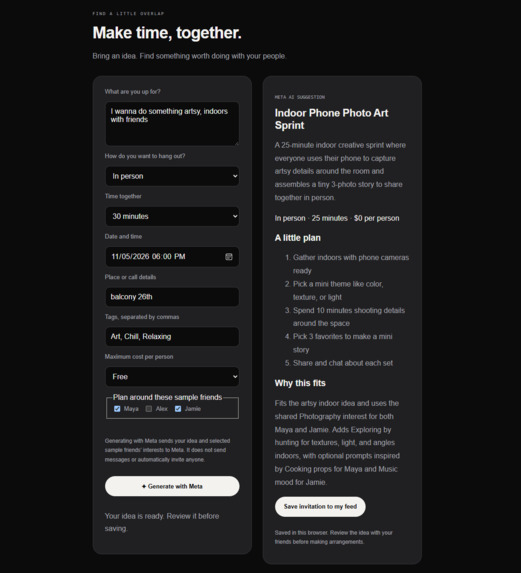
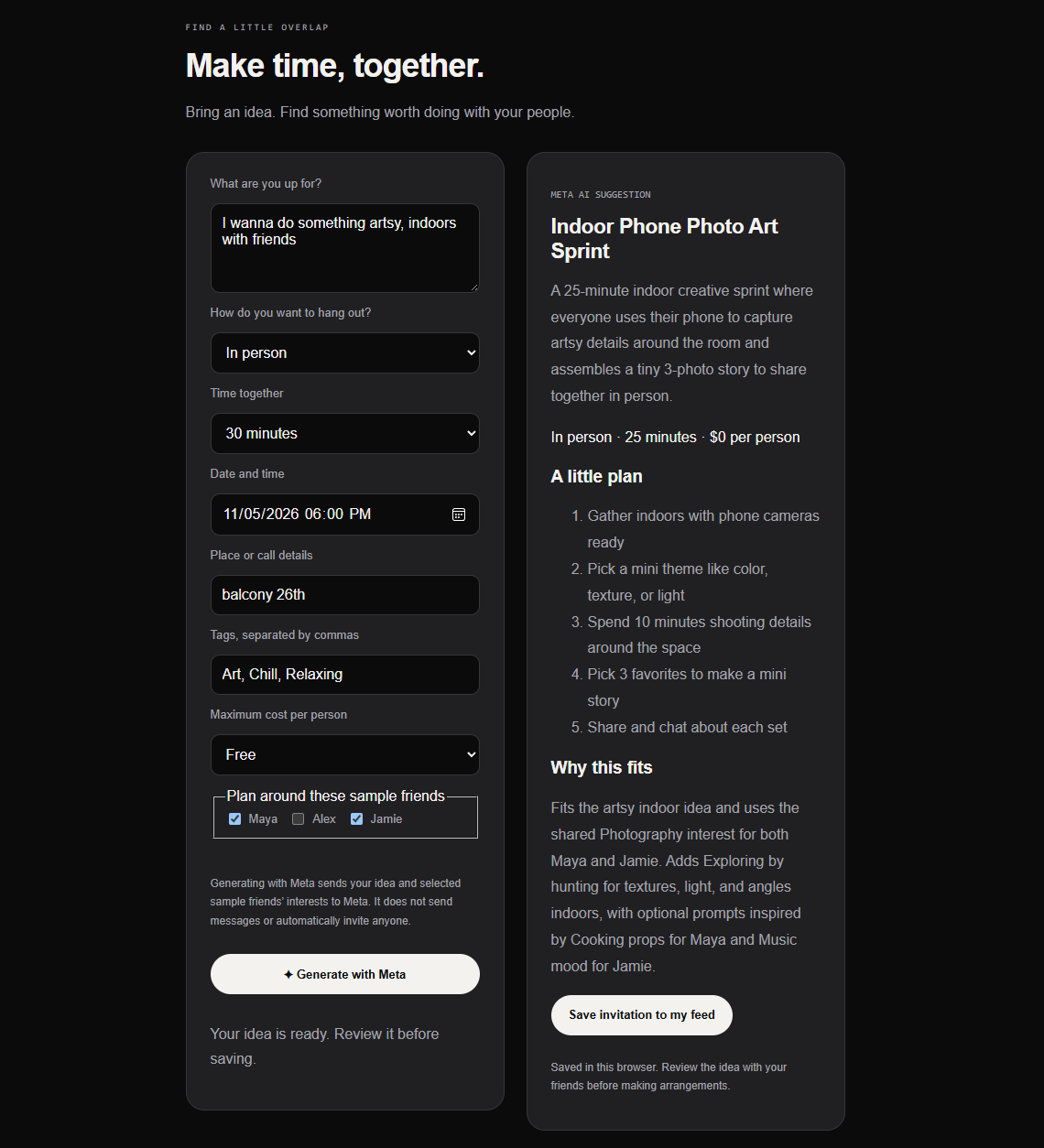
Generating Plans with Meta
-
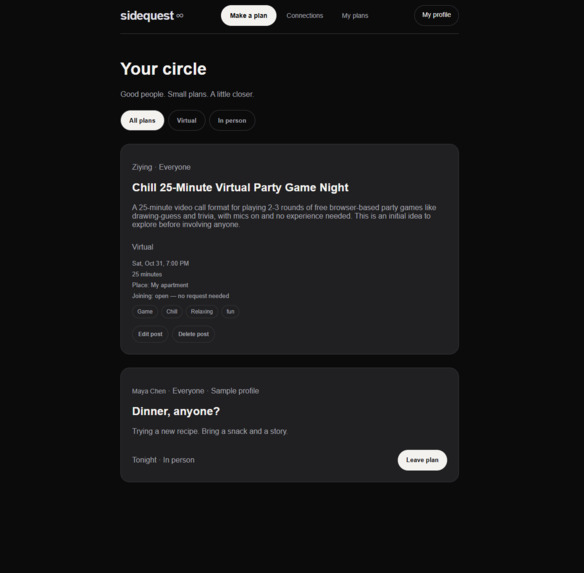
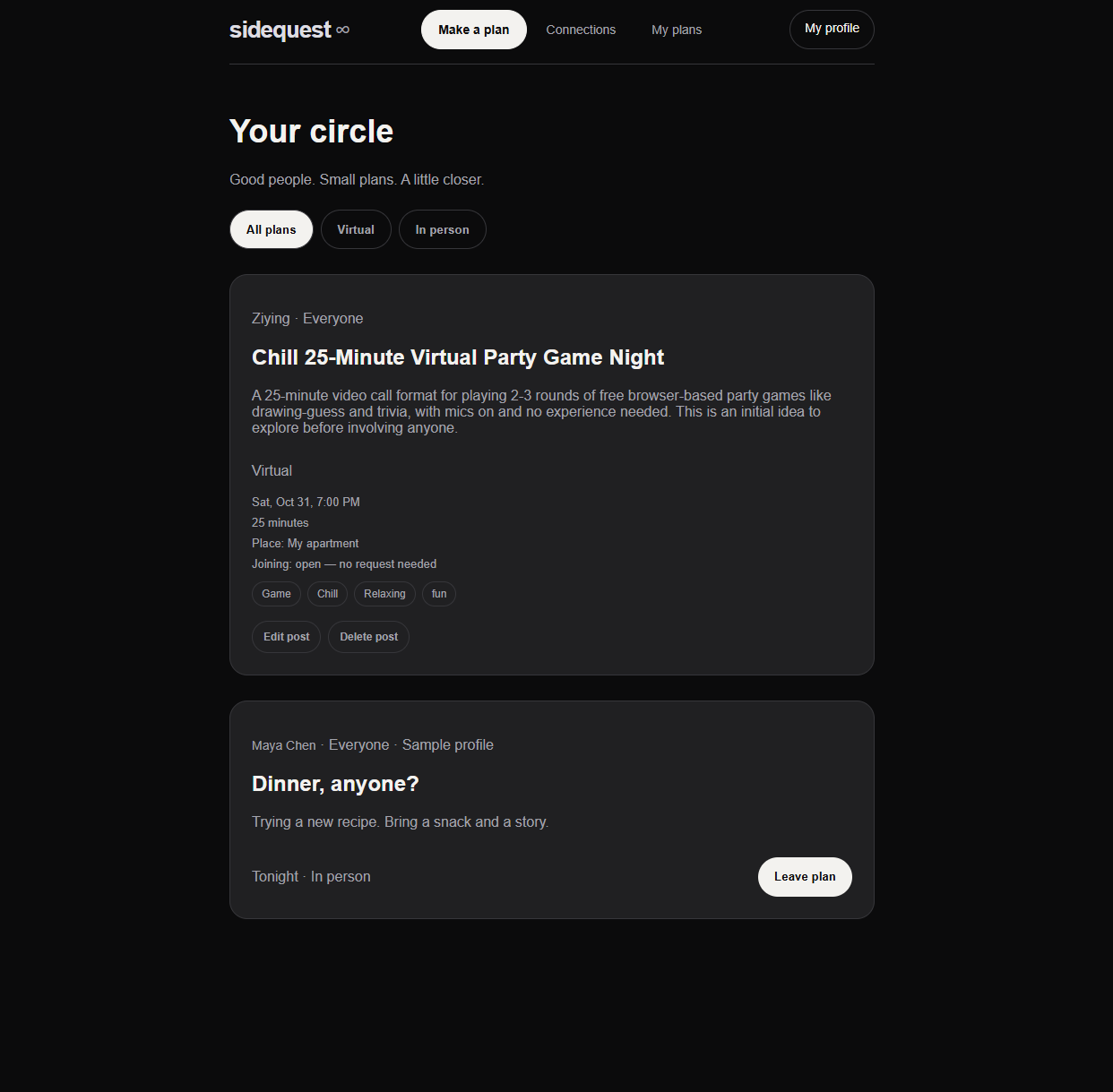
Homepage
-
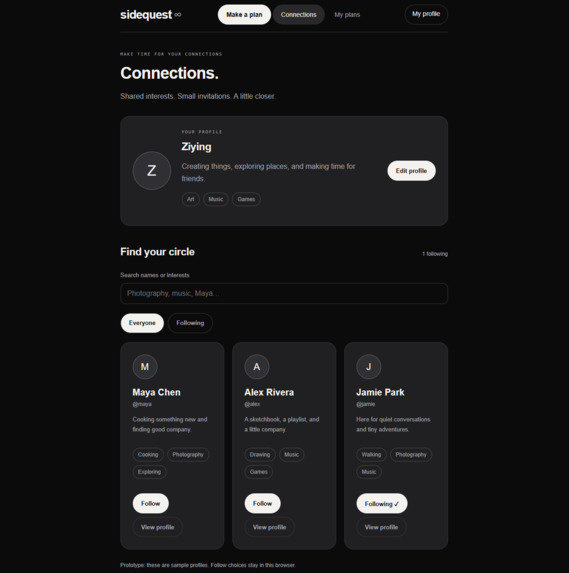
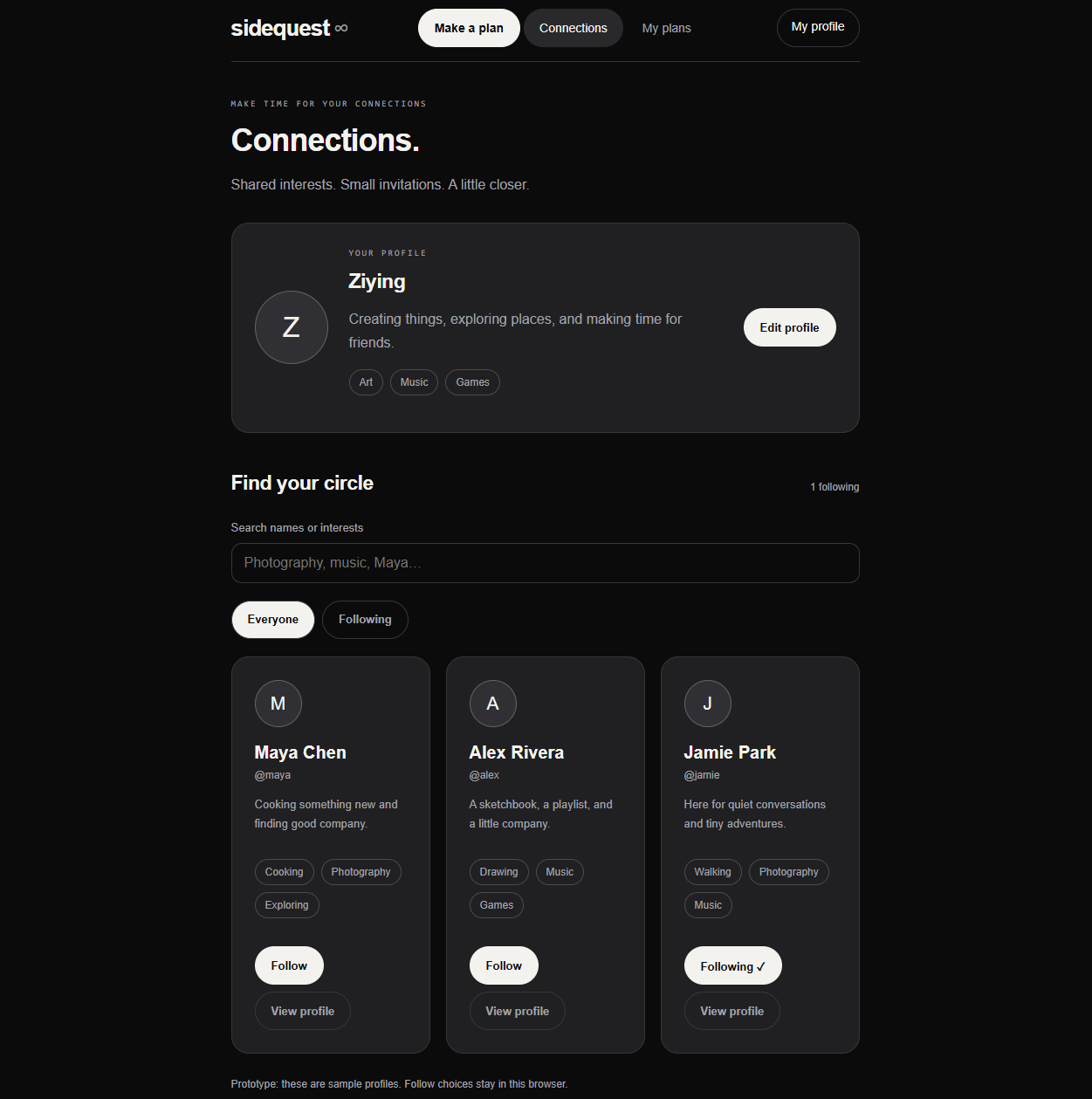
Connections page
-
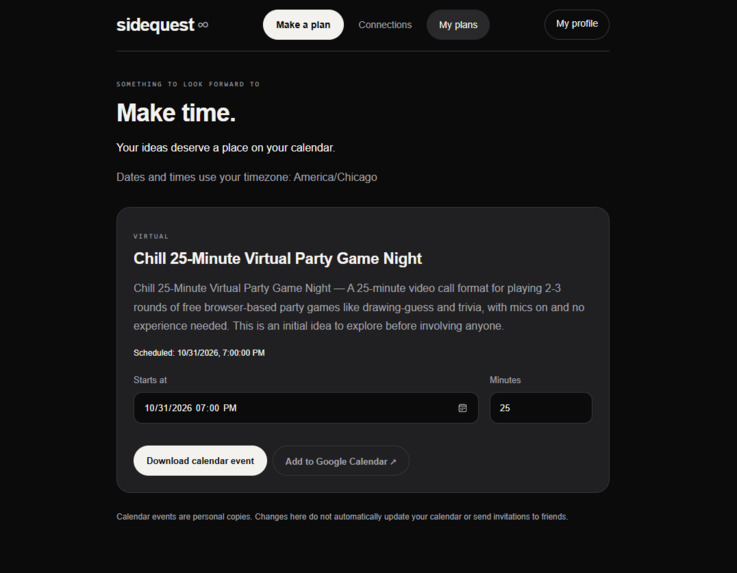
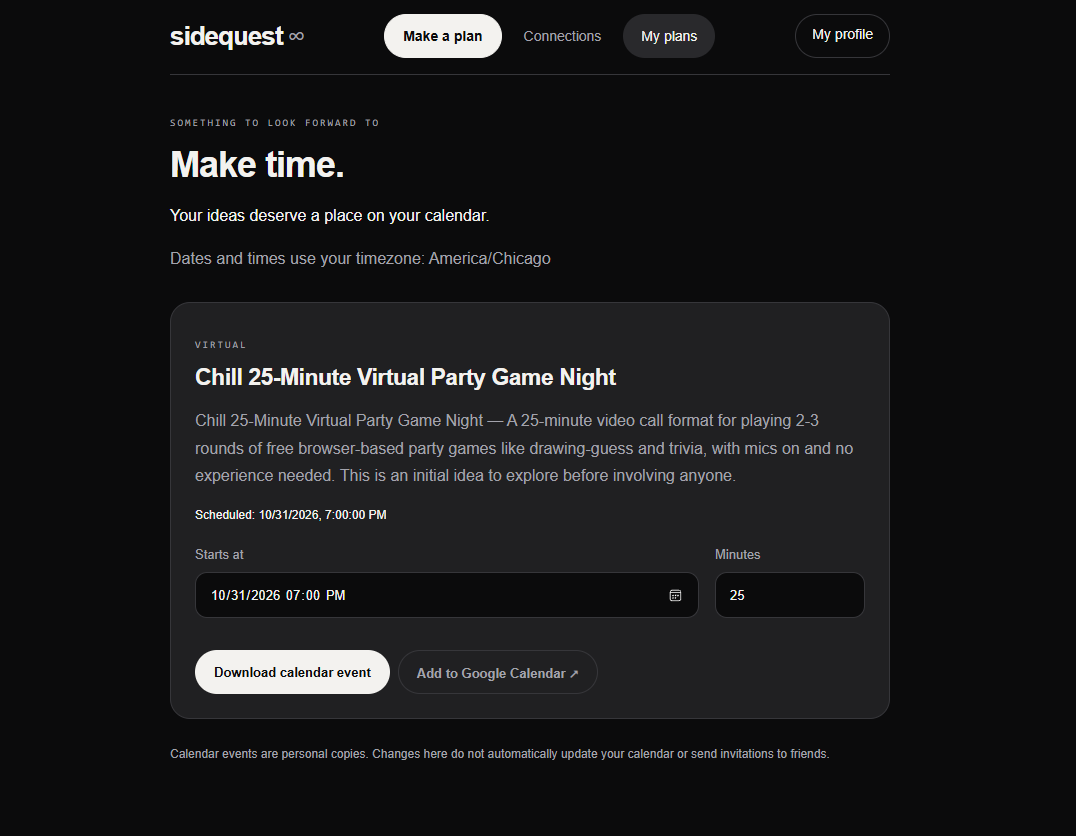
My Plans page
Inspiration
“We should hang out sometime” is easy to say and surprisingly hard to turn into a plan. Different interests, budgets, and schedules can leave people stuck in a group chat instead of spending time together.
I created Sidequest to make this process easier.
What it does
Sidequest is a social planning prototype for small experiences, both virtual and in person. Users can create plans with photos, tags, times, and meeting details, then edit or delete their own posts.
Its Connect feature introduces shared planning rooms. Each participant contributes their interests, ideas, time limit, and budget. Meta AI uses those contributions to propose an activity and explain how each person fits into the experience.
Participants review the proposal and confirm individually. Once everyone accepts, they can export the plan to their calendar. Changing a contribution resets the proposal so everyone can reconsider together.
How we built it
I built Sidequest with HTML, CSS, and JavaScript, supported by a Node.js server. The interface combines a modern dark theme with an animated ASCII introduction.
The prototype uses localStorage for personal feed data and server-side JSON storage for shared planning rooms. Meta API requests run through the server to keep the API key out of frontend code.
I used AI-assisted coding throughout development, while directing the product concept, design choices, feature priorities, and iterative testing.
Challenges we ran into
As a solo builder, my biggest challenge was balancing visual design with functional features under a short deadline. Integrating new features without breaking existing ones required narrowing the scope and testing smaller pieces.
Shared planning also introduced an important question: what happens when someone changes their mind? I addressed this by resetting proposals and confirmations when contributions change.
Accomplishments that we're proud of
I'm proud of shaping an idea about human connection into an interactive prototype with a distinct visual identity.
The most meaningful part is giving everyone a contribution to make. The AI helps combine those contributions, while people keep control over whether the resulting plan works for them.
What we learned
I learned how frontend interactions, server routes, persistent data, and AI requests fit together. I also learned that clear feedback and a reliable core interaction matter more than adding every possible feature.
What's next for Sidequest
The next steps are authenticated accounts, enforced audience permissions, durable database storage, and public hosting for easier multi-device use.
The current prototype uses invitation links for room access and calendar file exports rather than live calendar synchronization. Future versions could add availability sharing, messaging, and reminders with user consent.
Built With
- css
- html
- javascript
- metaapi
- node.js

Log in or sign up for Devpost to join the conversation.