-
-
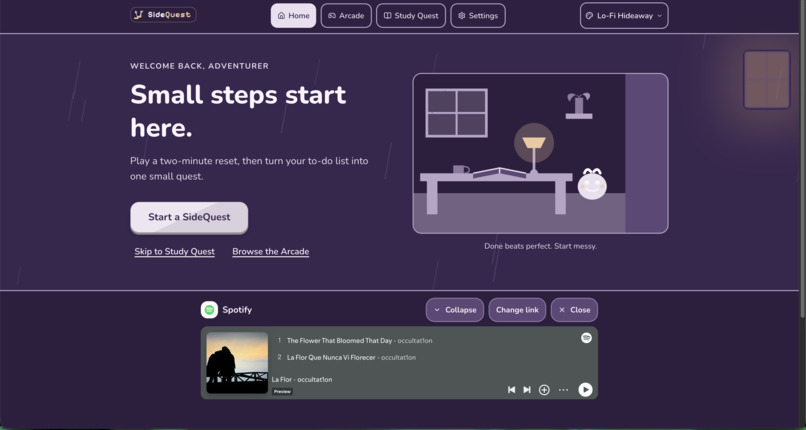
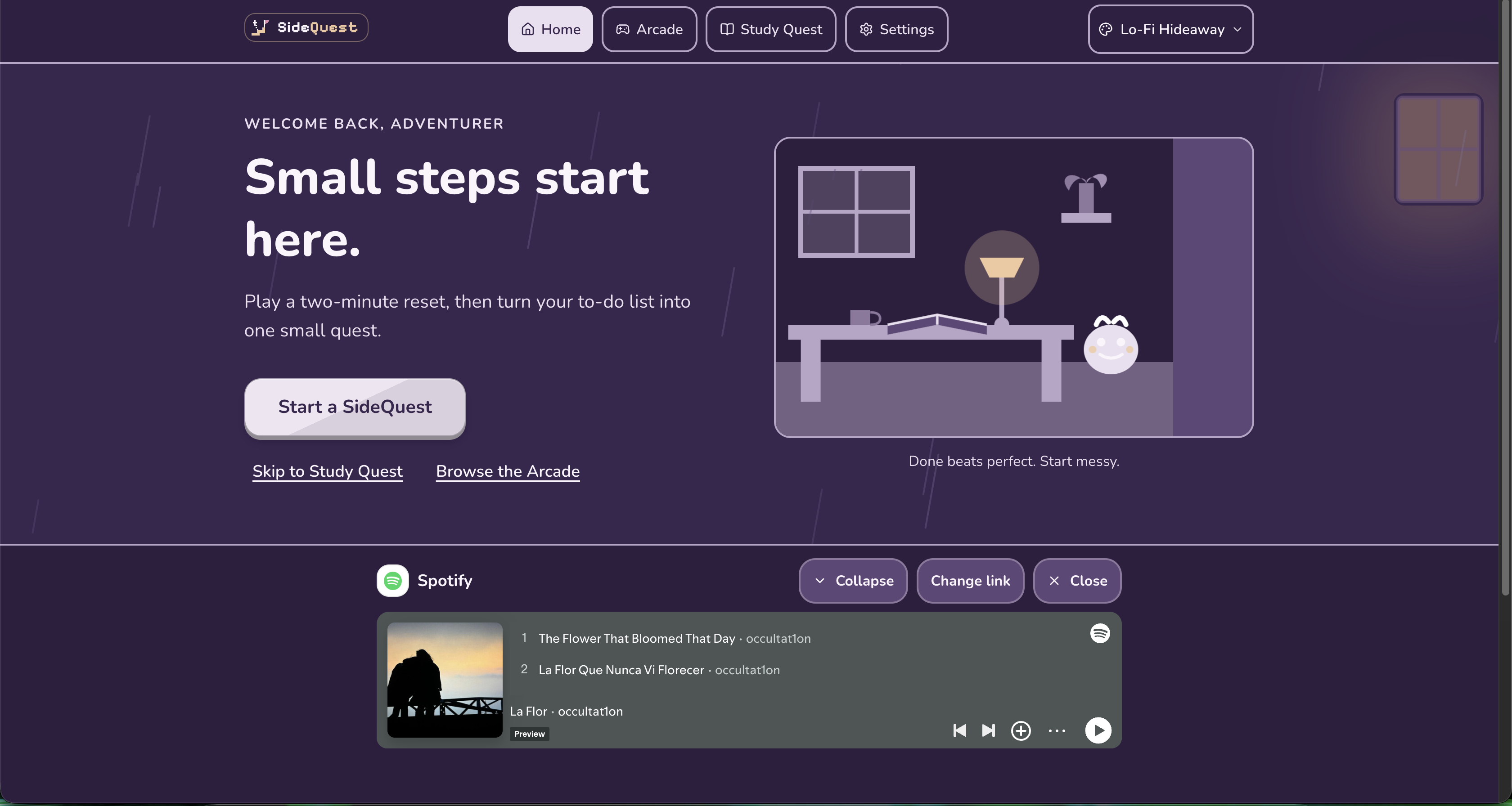
Home Page w/ Lofi Hideaway theme
-
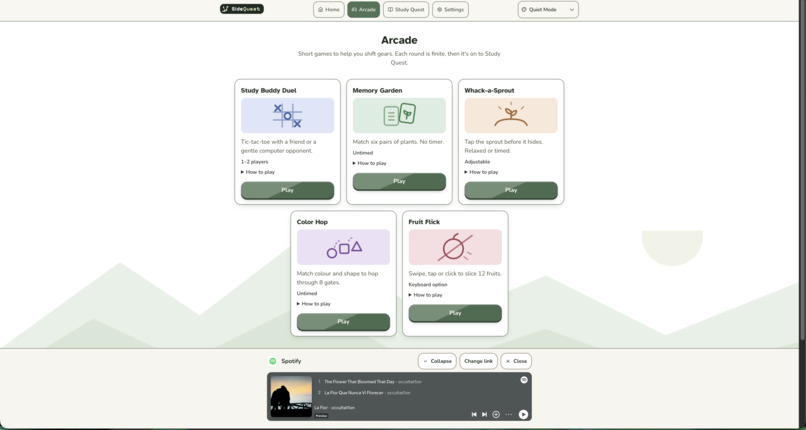
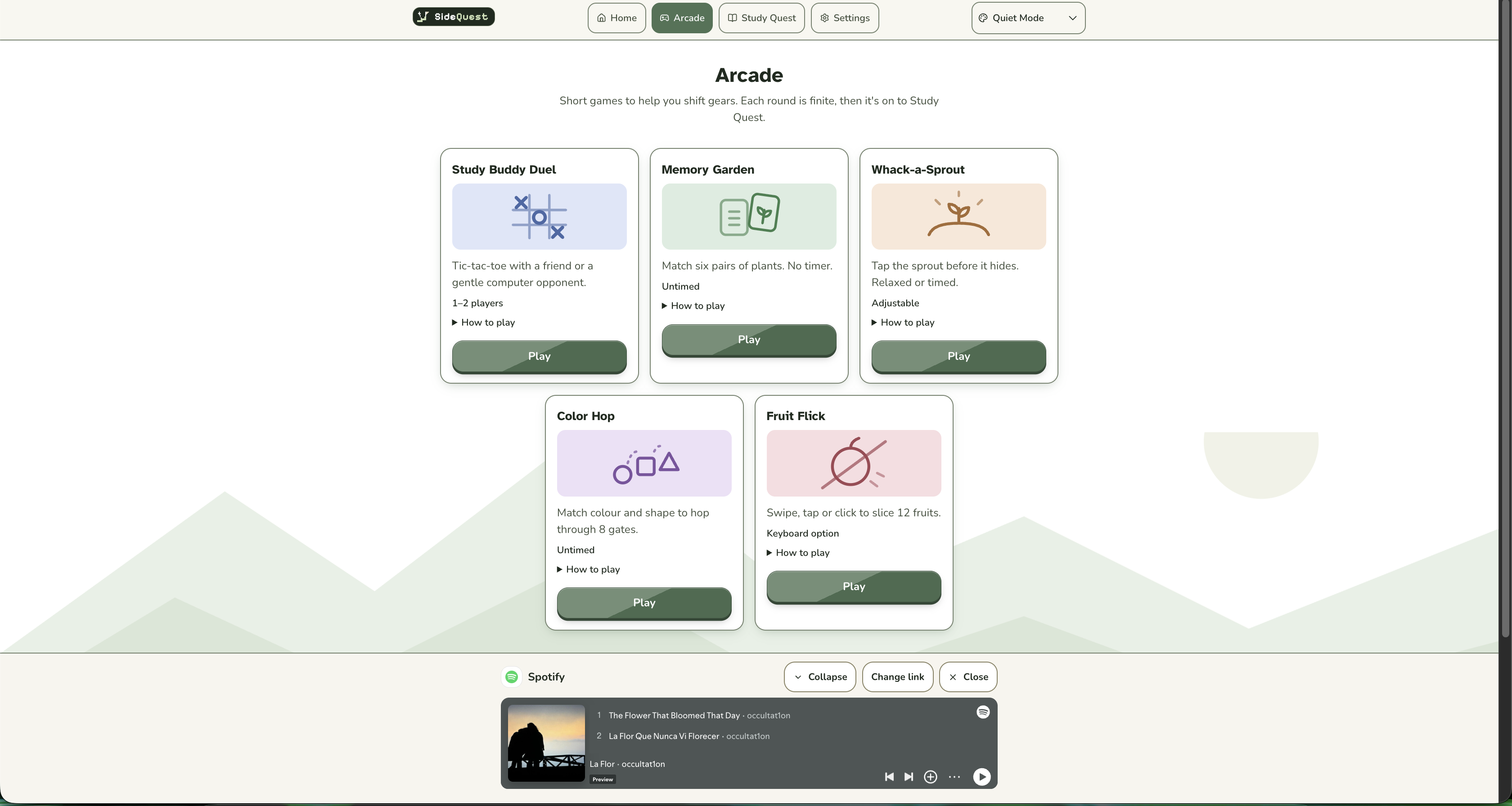
Arcade Page w/ Quiet Mode theme
-
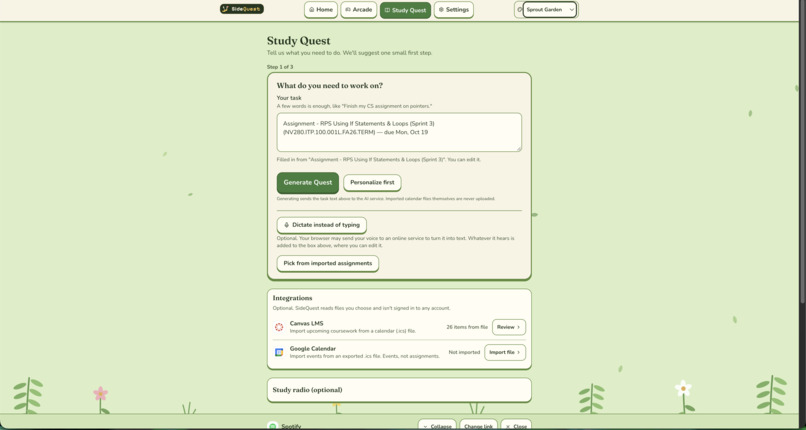
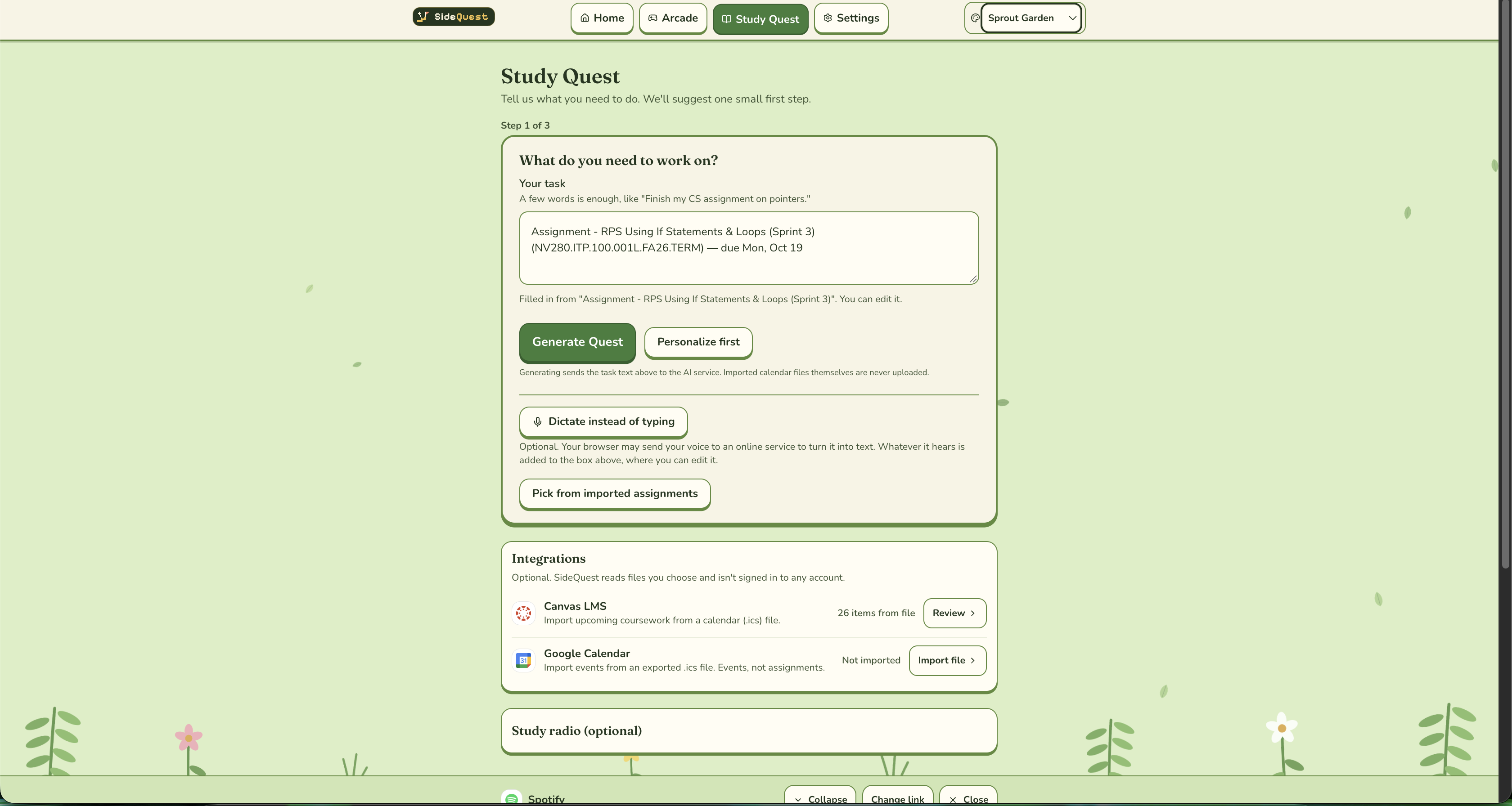
Study Quest Page w/ Sprout Garden theme
-
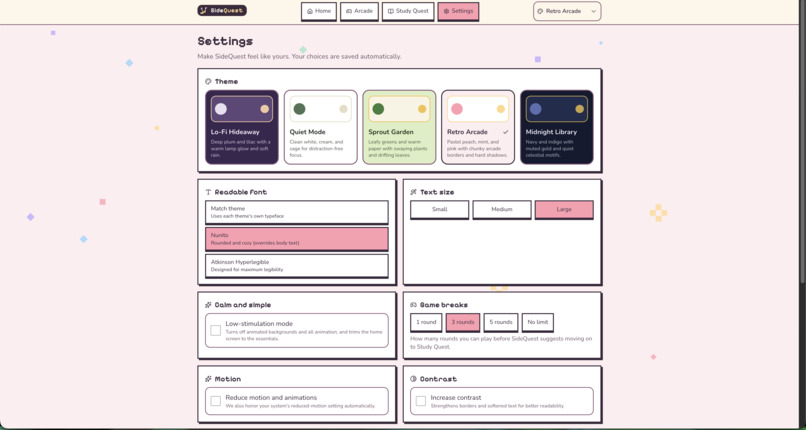
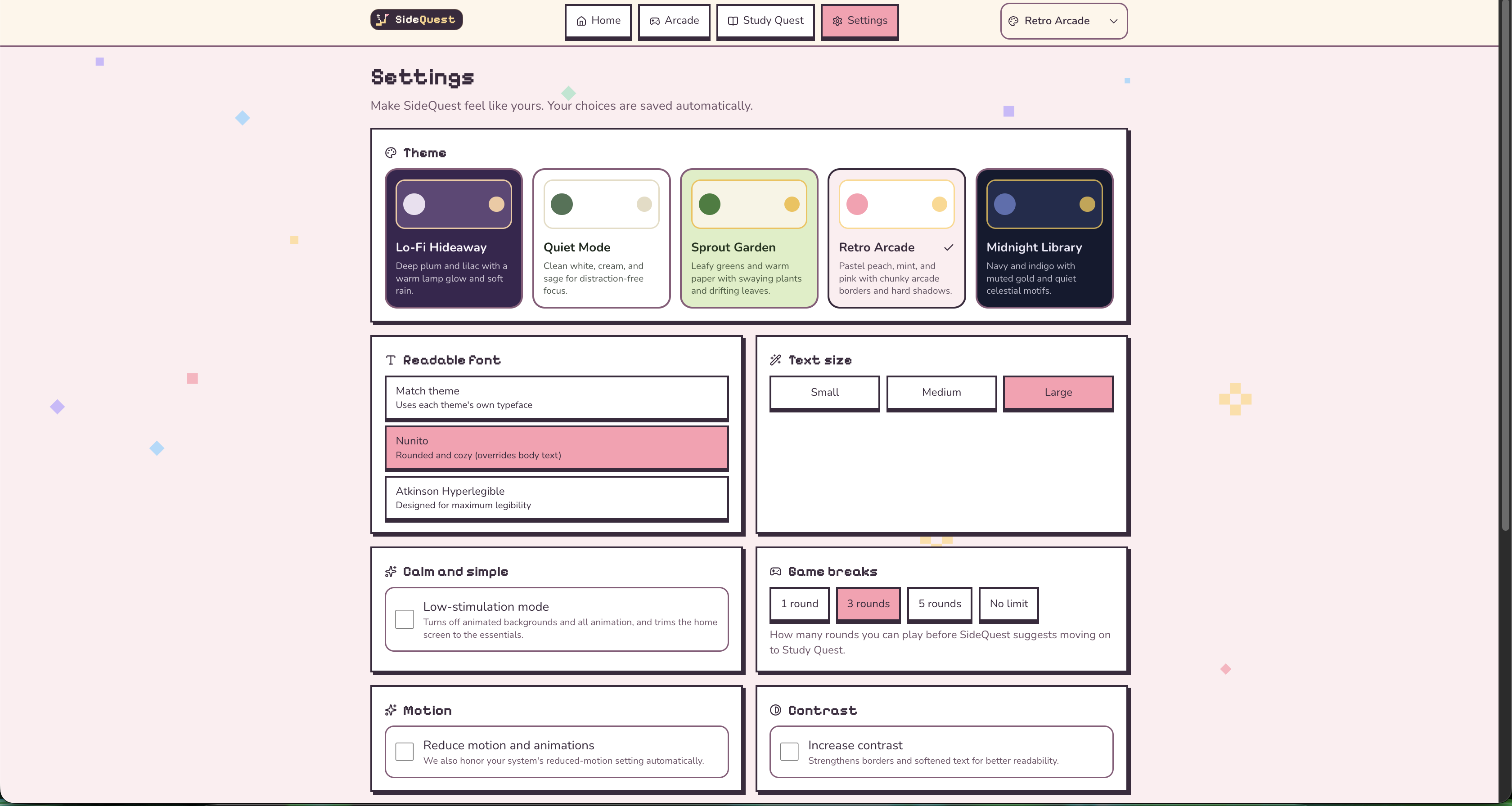
Settings w/ Retro Arcade theme
-
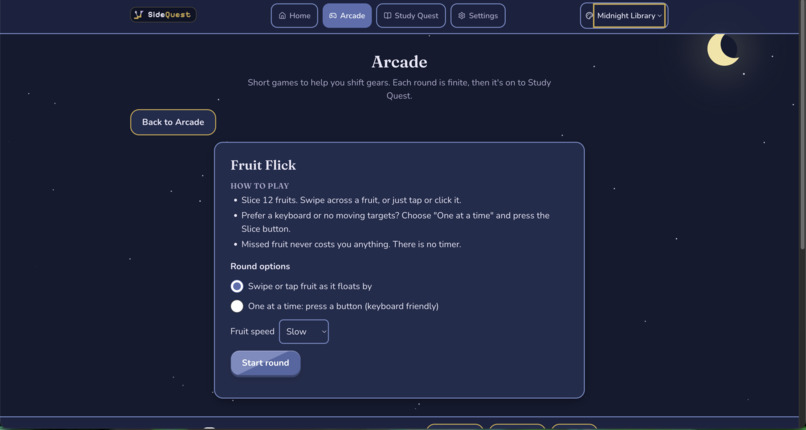
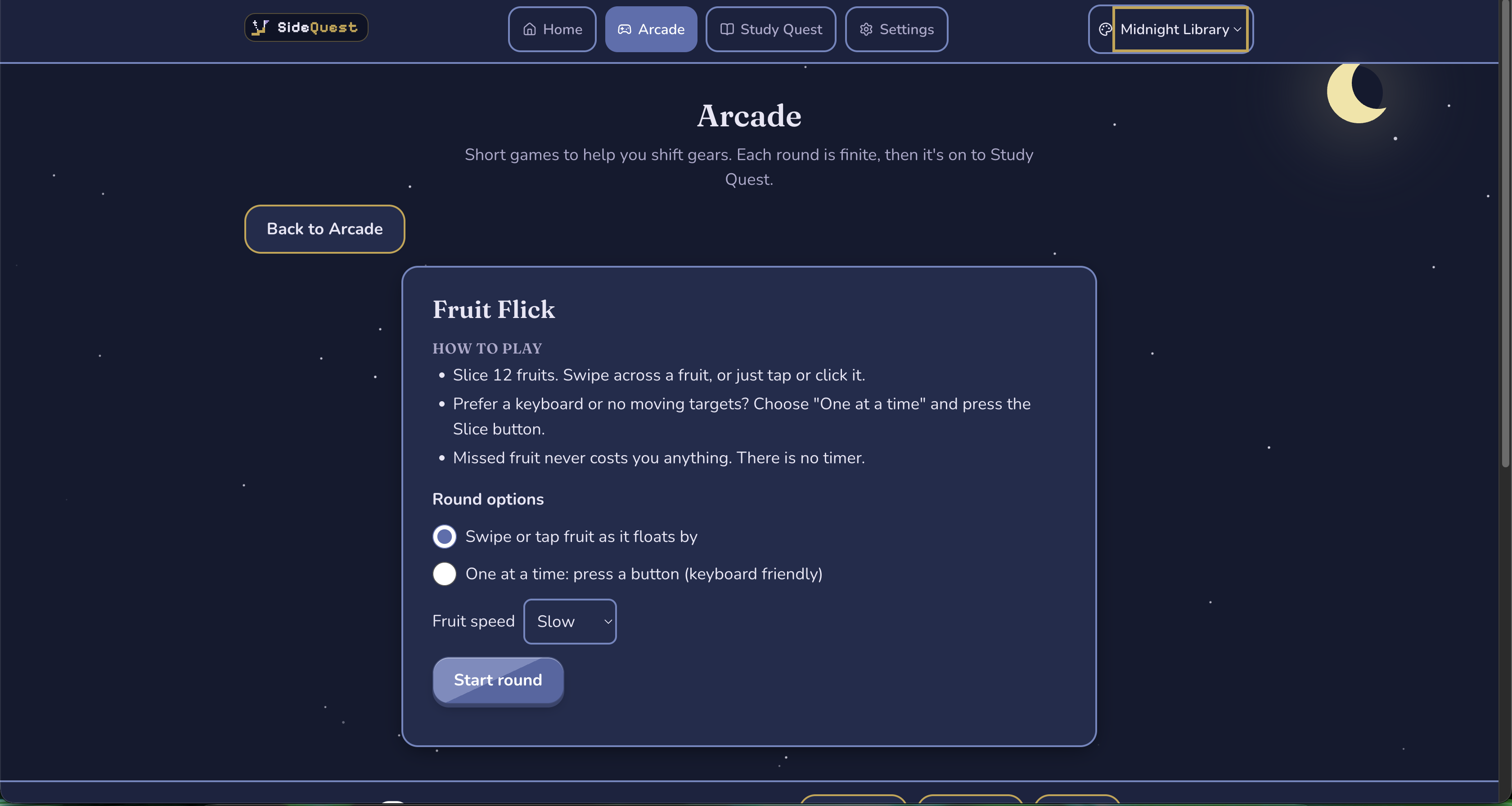
Fruit Flick Arcade Game w/ Midnight Library theme
-
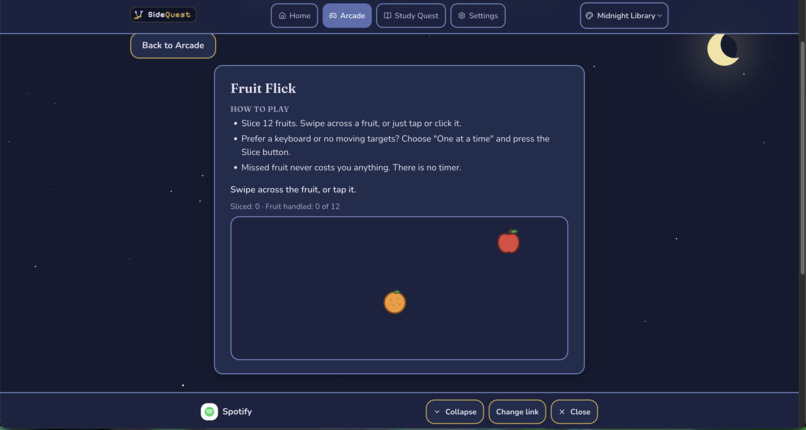
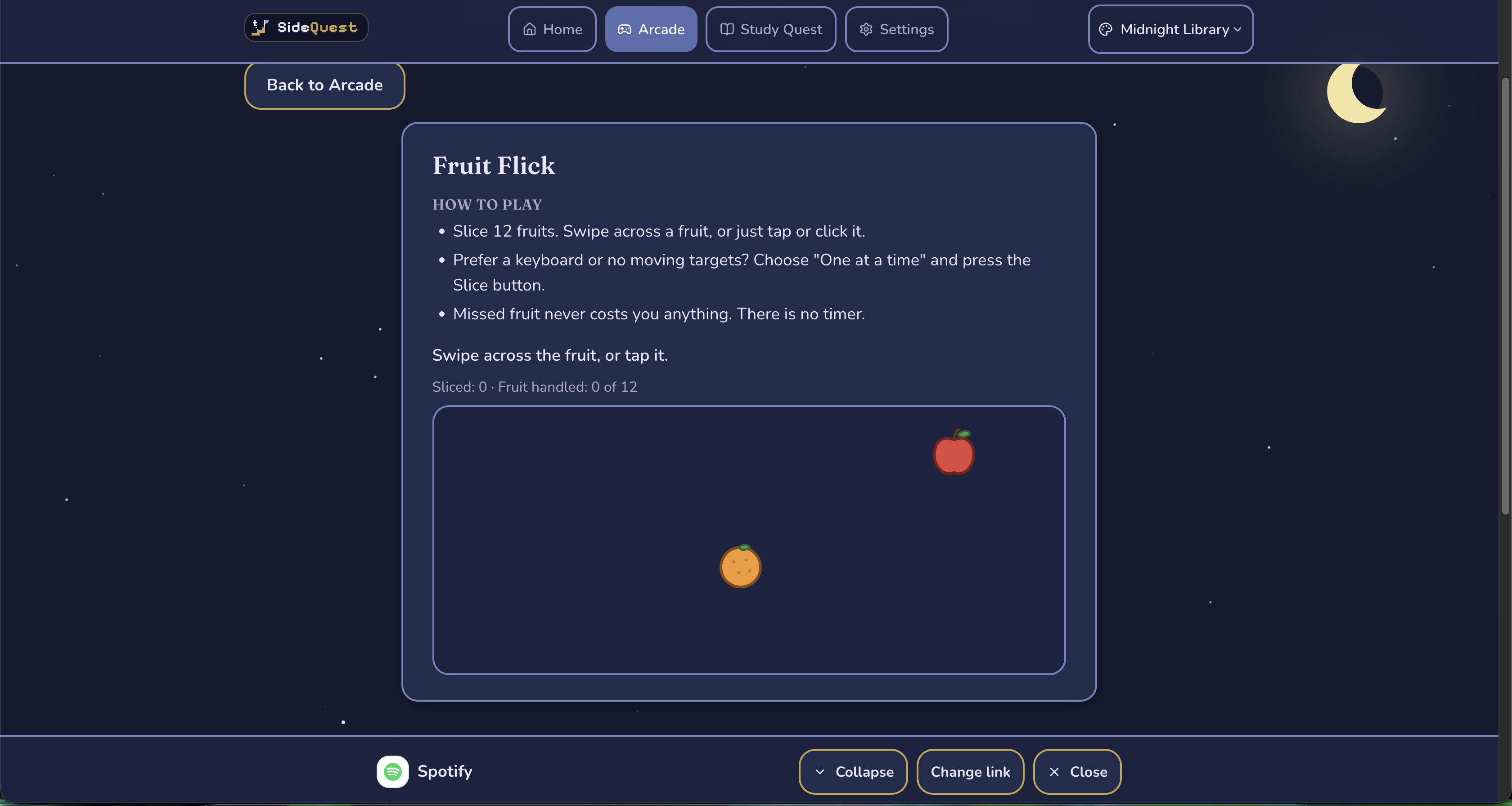
Fruit Flick Game (In Progress) w/ Midnight Library theme
SideQuest — Productivity, One Quest at a Time 🎮
Inspiration
As college students pursuing challenging majors while navigating ADHD, we know how overwhelming it can be to balance assignments, deadlines, extracurriculars, and everyday responsibilities. Sometimes, the hardest part isn't completing an assignment, but managing the overwhelm and actually getting started.
Most productivity apps track what needs to get done, but they don't always address executive dysfunction, time blindness, or task paralysis that many neurodivergent learners face. We created SideQuest because we wanted a productivity tool that works with our busy brains rather than against them. Our goal is to make productivity feel less overwhelming and more rewarding.
What it does
SideQuest is an ADHD-friendly, gamified study companion that helps students turn academic overwhelm into achievable quests. Instead of another endless to-do list, students can ease into productivity through five nostalgic, bite-sized mini-games, including tic-tac-toe, Memory Garden, and Fruit Flick. Games have clear endpoints, encouraging students to enjoy a short reset before transitioning back to studying.
Through our Gemini-powered Study Quest, students describe an assignment, identify what's holding them back, and optionally share their energy level. SideQuest generates a personalized, actionable first step that takes just 1–3 minutes. If they're still stuck, it adapts by suggesting something smaller or different, without guilt or pressure. Students can also import assignments from Canvas or Google Calendar exports to organize and prioritize coursework based on deadlines, difficulty, and estimated effort.
To create a more comfortable study environment, SideQuest includes Spotify playlist, album, and track embeds, built-in ambient audio, and adjustable sound controls. Combined with customizable themes, text sizes, reduced-motion settings, high-contrast options, and a low-stimulation mode, students can personalize their experience to accommodate different sensory preferences and learning needs.
How we built it
We built SideQuest using React, JavaScript, Vite, and Tailwind CSS to create a responsive, game-inspired web application. We integrated the Google Gemini API through a Node.js backend endpoint to generate personalized study quests based on students' tasks, energy levels, and barriers to getting started. We also used ical.js to process exported Canvas and Google Calendar files, allowing students to prioritize assignments without connecting their accounts or uploading their calendar files to a server.
For our study environment, we implemented Spotify's embedded player, allowing students to play their favorite playlists, albums, or tracks directly within SideQuest. We also developed built-in ambient audio, adjustable sound settings, and accessibility-focused interface customization.
We used Git and GitHub for version control and collaboration, alongside AI-assisted development tools such as Claude Code and Google AI Studio to accelerate prototyping, troubleshoot errors, and refine our implementation.
Challenges we ran into
Our biggest challenge was balancing our ambitious vision with Technica's 24-hour time limit. We initially envisioned a comprehensive academic assistant with live integrations, adaptive scheduling, and gamification, but had to prioritize features we could realistically implement. We also encountered technical difficulties integrating frontend and backend functionality, resolving merge conflicts, and ensuring mobile responsiveness.
Another challenge was balancing gamification with accessibility. We wanted SideQuest to feel playful and nostalgic without becoming another distraction, which influenced our decisions to implement finite game rounds, customizable settings, and low-stimulation options. We wanted the games to help students transition into studying, not keep them playing indefinitely.
Accomplishments that we're proud of
We're proud of transforming a problem we personally experience into a deployed web application within 24 hours. We implemented five playable mini-games, Gemini-powered adaptive study quests, calendar-based assignment prioritization, Spotify integration, and customizable study environments, bringing together gamification, accessibility, and practical academic support.
Most importantly, we're proud that SideQuest doesn't simply tell students to be more productive. It meets them where they are, helping them take meaningful steps forward without the pressure of perfection.
What we learned
Building SideQuest taught us that accessibility goes beyond visual design; it's about reducing cognitive overload and creating experiences that accommodate different ways of thinking. We strengthened our skills in frontend and backend development, API integration, responsive design, debugging, Git collaboration, and AI-assisted coding.
What's next for SideQuest
We envision SideQuest evolving into a more personalized academic companion with live Canvas, Notion, and Google Calendar integrations, smarter AI-powered task prioritization, adaptive scheduling, and an expanded collection of mini-games. We want the platform to account for deadlines, task difficulty, student availability, and individual needs to recommend realistic next steps.
We also hope to gather feedback from neurodivergent students to further improve accessibility and usability, making SideQuest more supportive of different learning styles and needs.
Ultimately, we want SideQuest to help students feel more in control of their responsibilities, one little quest at a time.


Log in or sign up for Devpost to join the conversation.