-
-
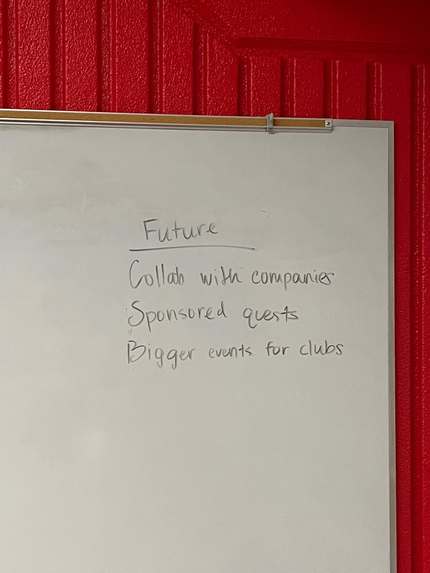
Brainstorm
-
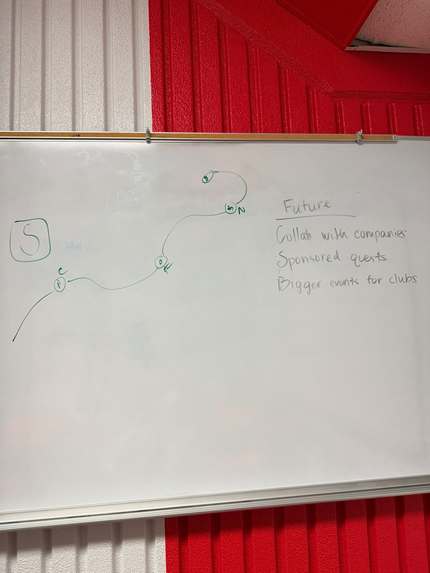
Thumbnail Design
-
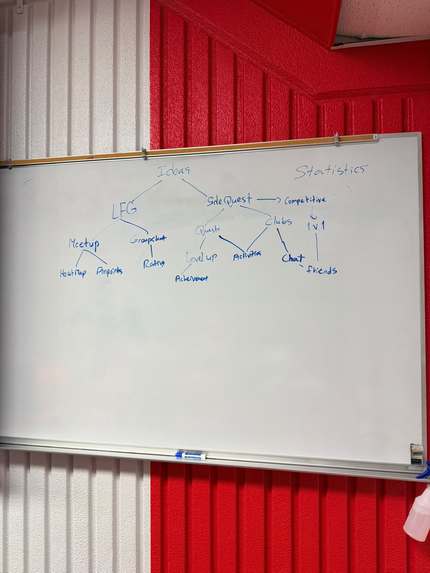
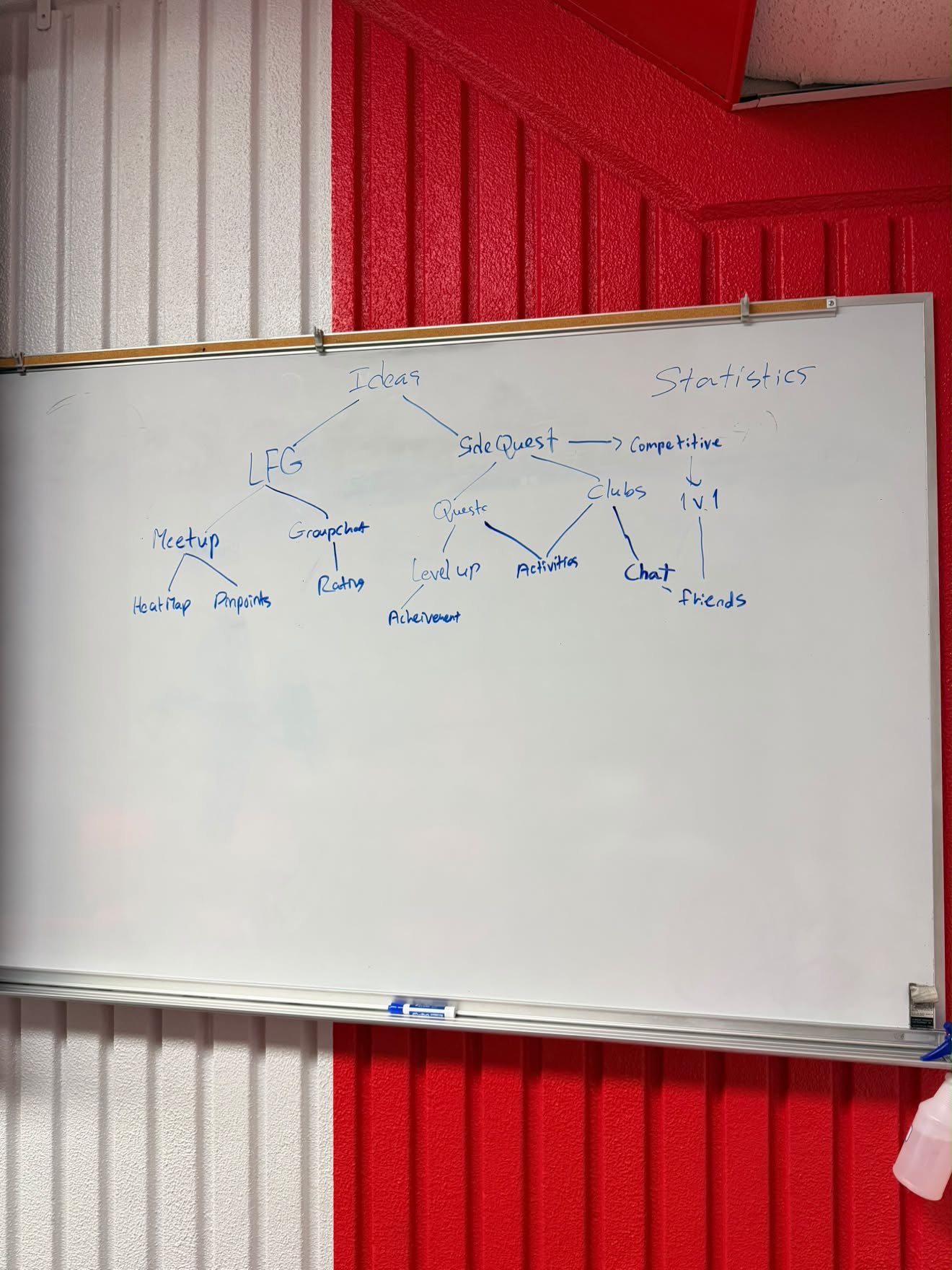
Initial Ideas
-
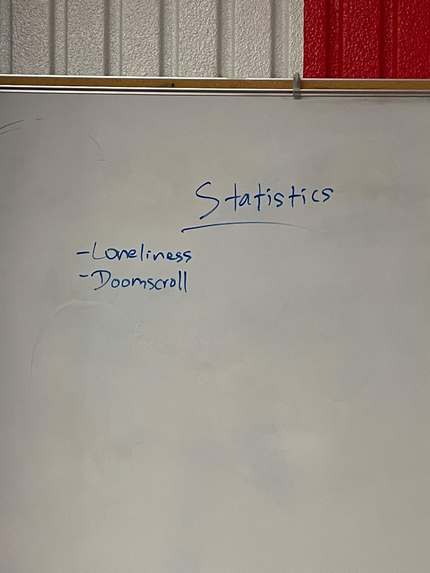
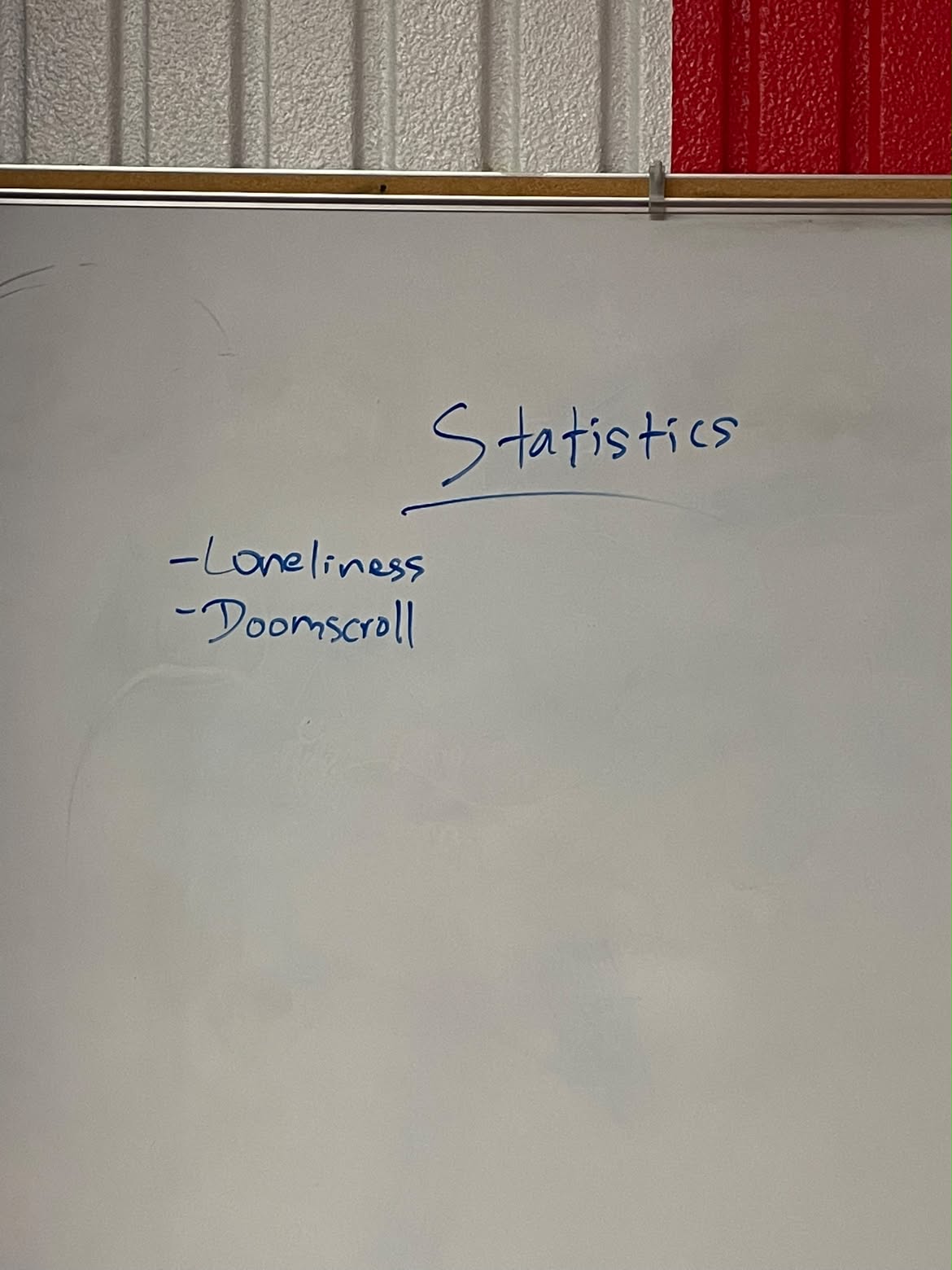
Statistic Ideas
-
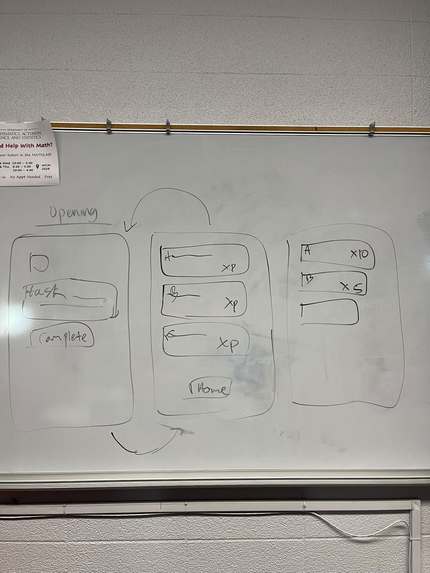
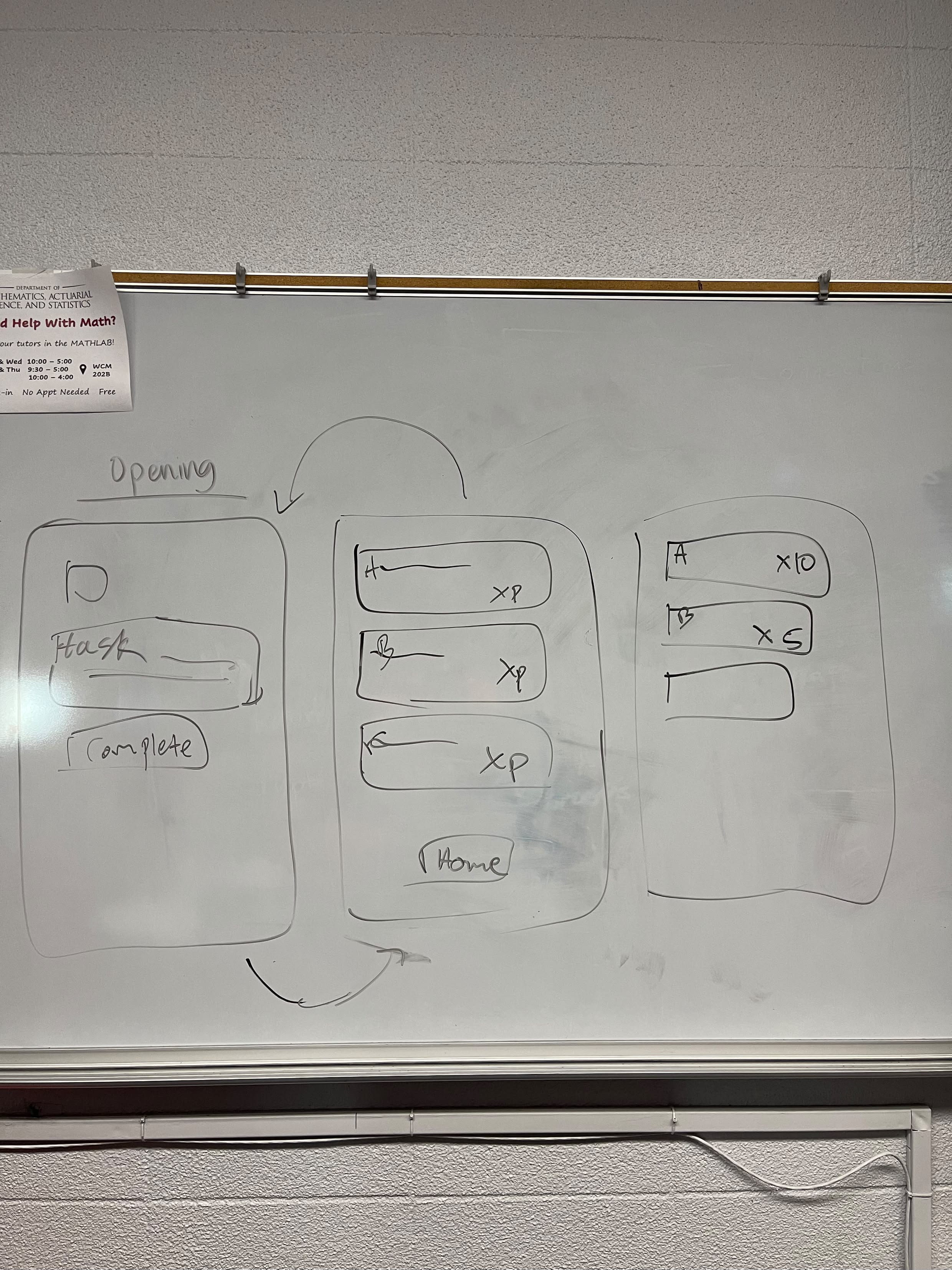
App Layout and Design
-
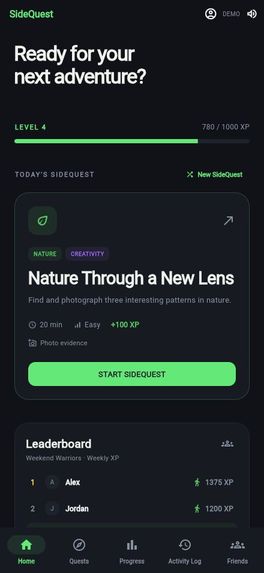
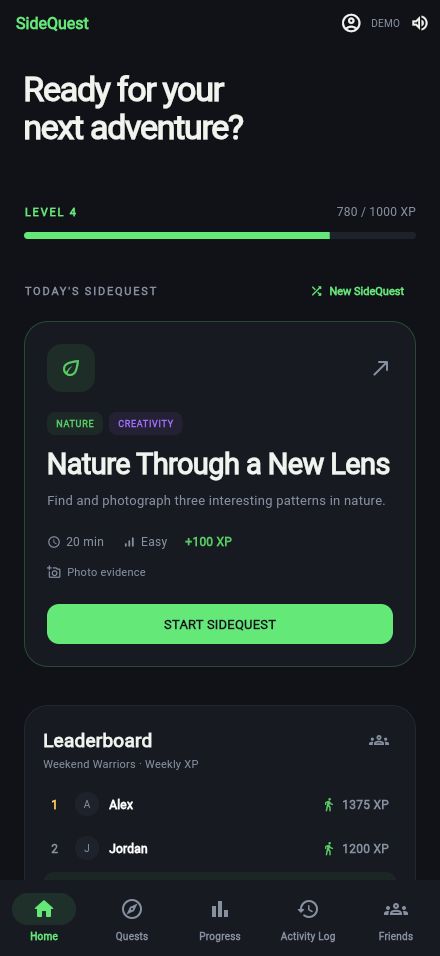
Home Page
-
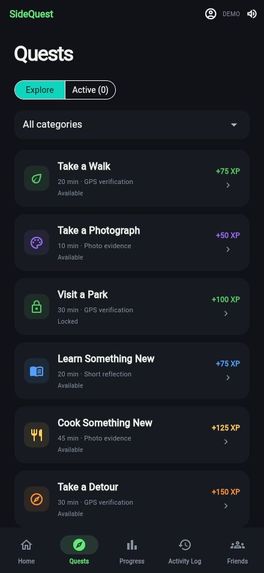
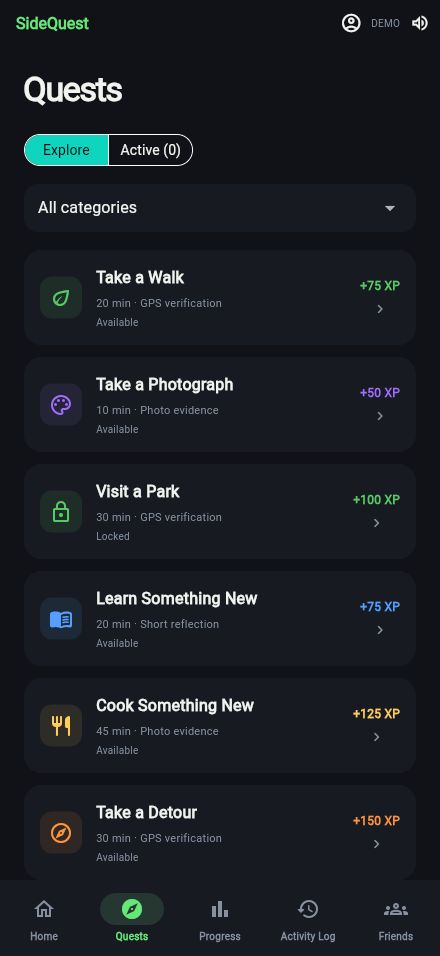
Tasks
-
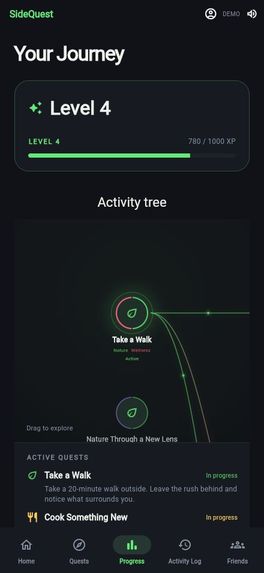
Activity Tree
-
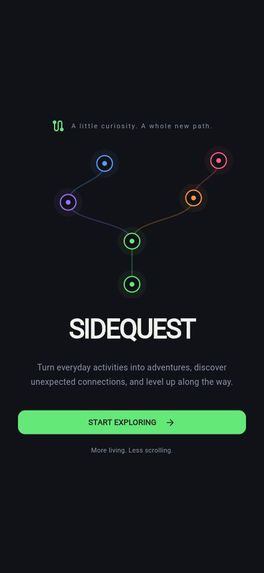
Starting Screen
-
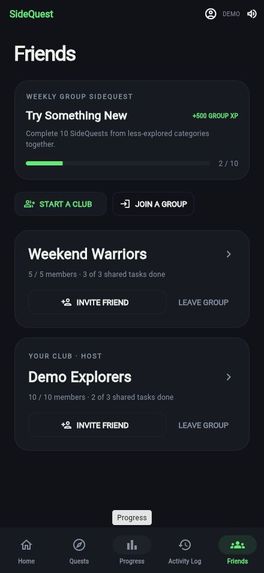
Friends/Club
-
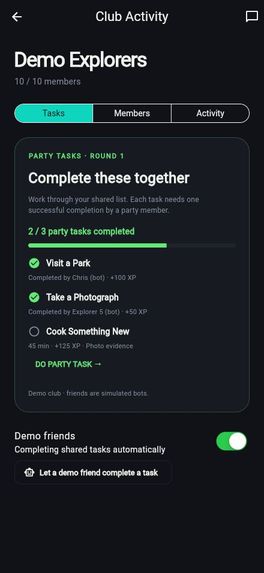
Friend Tasks
-
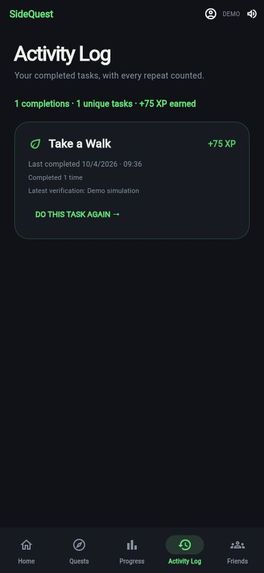
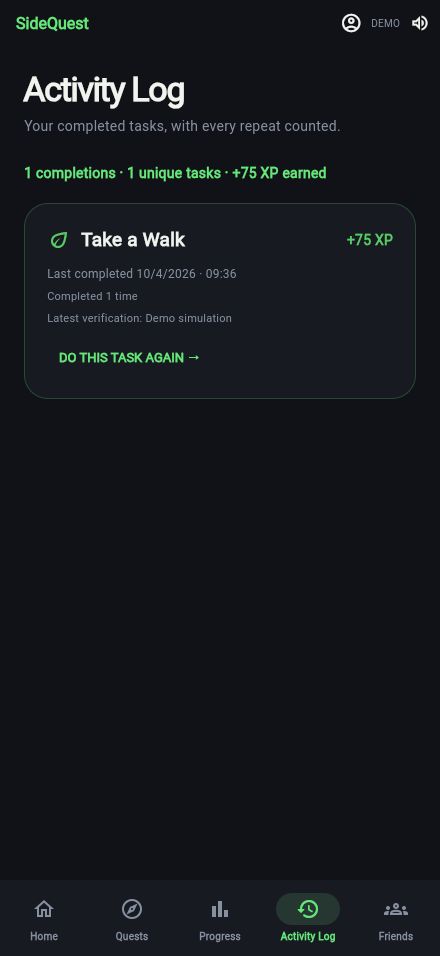
Activity Log
-
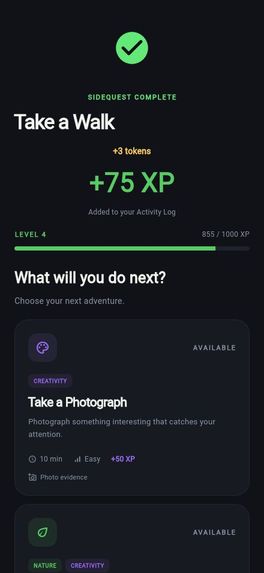
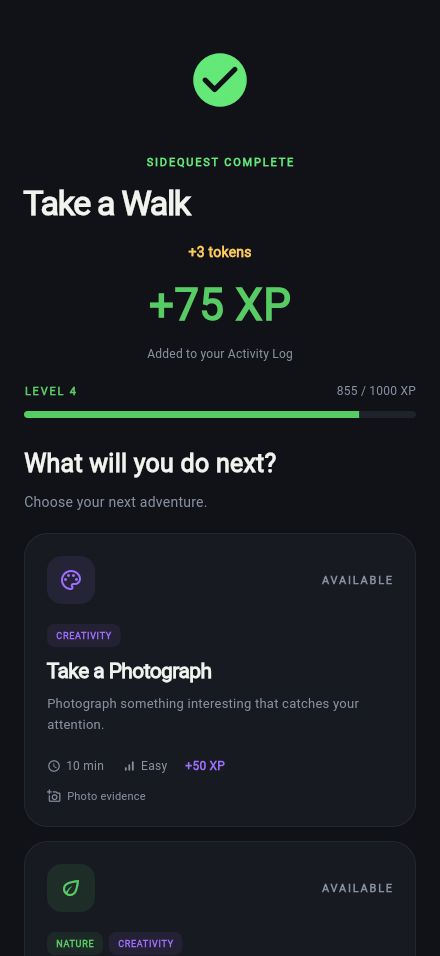
Task Completion
Inspiration
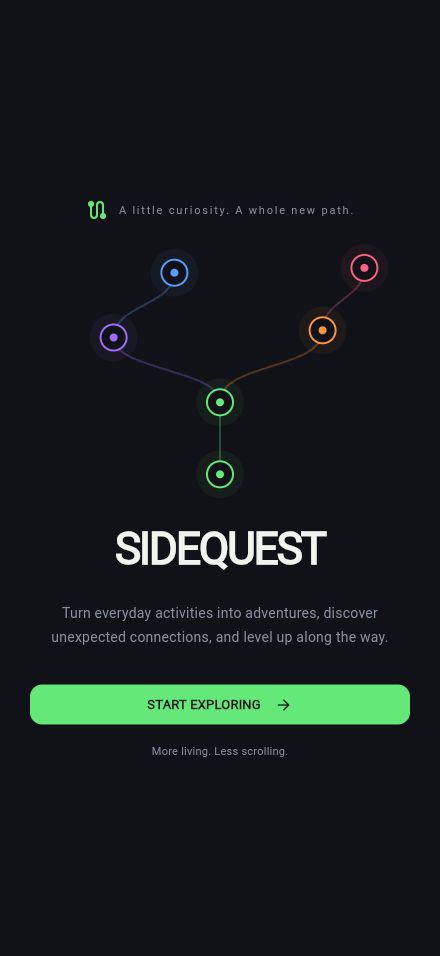
We wanted to turn “I should get out and do something” into a reason to actually do it. Games make progress feel exciting through quests, levels, and shared challenges so we brought that feeling into everyday life. SideQuest encourages people to spend less time scrolling and more time exploring, creating, and connecting.
What it does
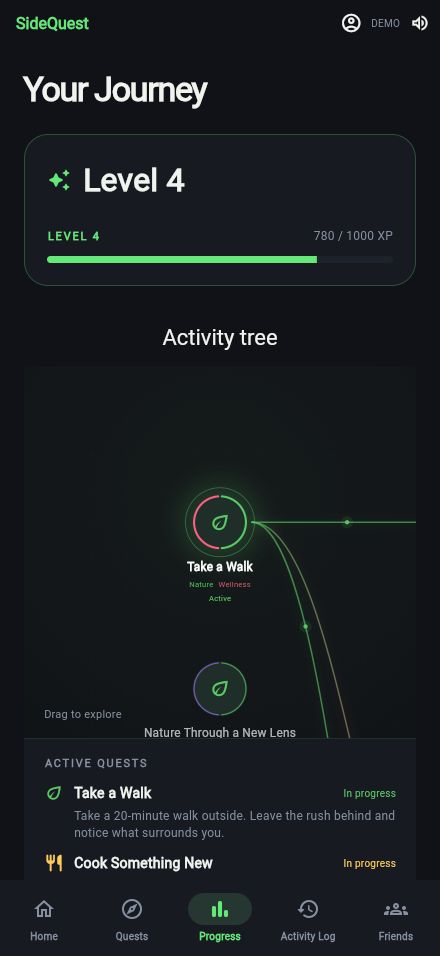
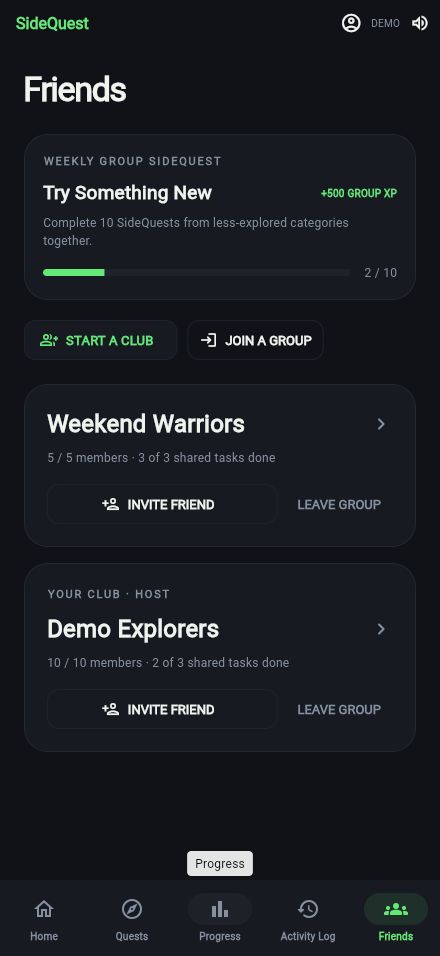
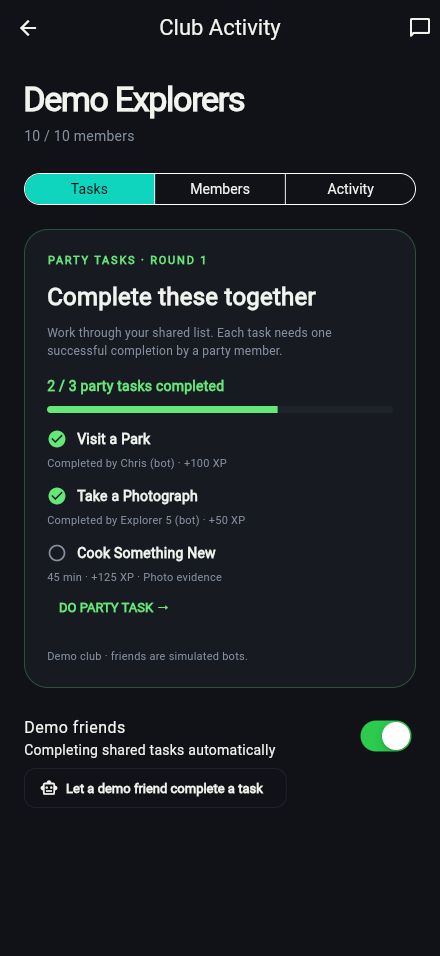
SideQuest turns real-world activities into quests, from taking a walk to cooking something new. We wanted to cater to users that feel it is difficult to simple to complex tasks in day to day life. Users complete tasks, submit photo evidence or track movement with GPS, earn XP and tokens, and unlock connected activities through an interactive activity tree. Friends can form clubs, tackle shared challenges, and chat together. Earned badges appear alongside their names, while a demo rewards catalog shows how tokens could become partner coupons and perks.
How we built it
We built SideQuest using Flutter and Dart, with Firebase for secure accounts and club discovery. For the backend we used Python and Flask. Users complete quests, verify them through GPS, photos, or checklists, and earn XP, tokens, and badges. Gemini AI checks whether photos match the task. We then polished the design, animations, and sound, adding demo friends to showcase teamwork.
Challenges we ran into
We started off exploring the theme of connections through interpersonal relationships, but then kept running into the issue of safety due to unknown human error. We then explored different interpretations of the word "connections" and decided to do literal and figurative meanings. We then thought about how to incentivize our app to engage users and decided on a reward program. We especially had trouble with verification methods of the tasks and how it would determine if they were valid entries or not.
Accomplishments that we're proud of
We are proud of the theme and display of our app. We feel that is it easy to navigate and it is very aesthetically pleasing to the eye. Our photo verification implementation using gemini was a long struggle for us, but we were able to provide a solution that works really well for our app.
What we learned
We learned how to not only just develop an app, but also make it in a way that shows we empathize with our users. We framed it around our own struggles and how we wanted to connect not only with people, but the world itself. We had to think of so many aspects of what makes an app successful since we are usually the users instead of the developers.
What's next for SideQuest
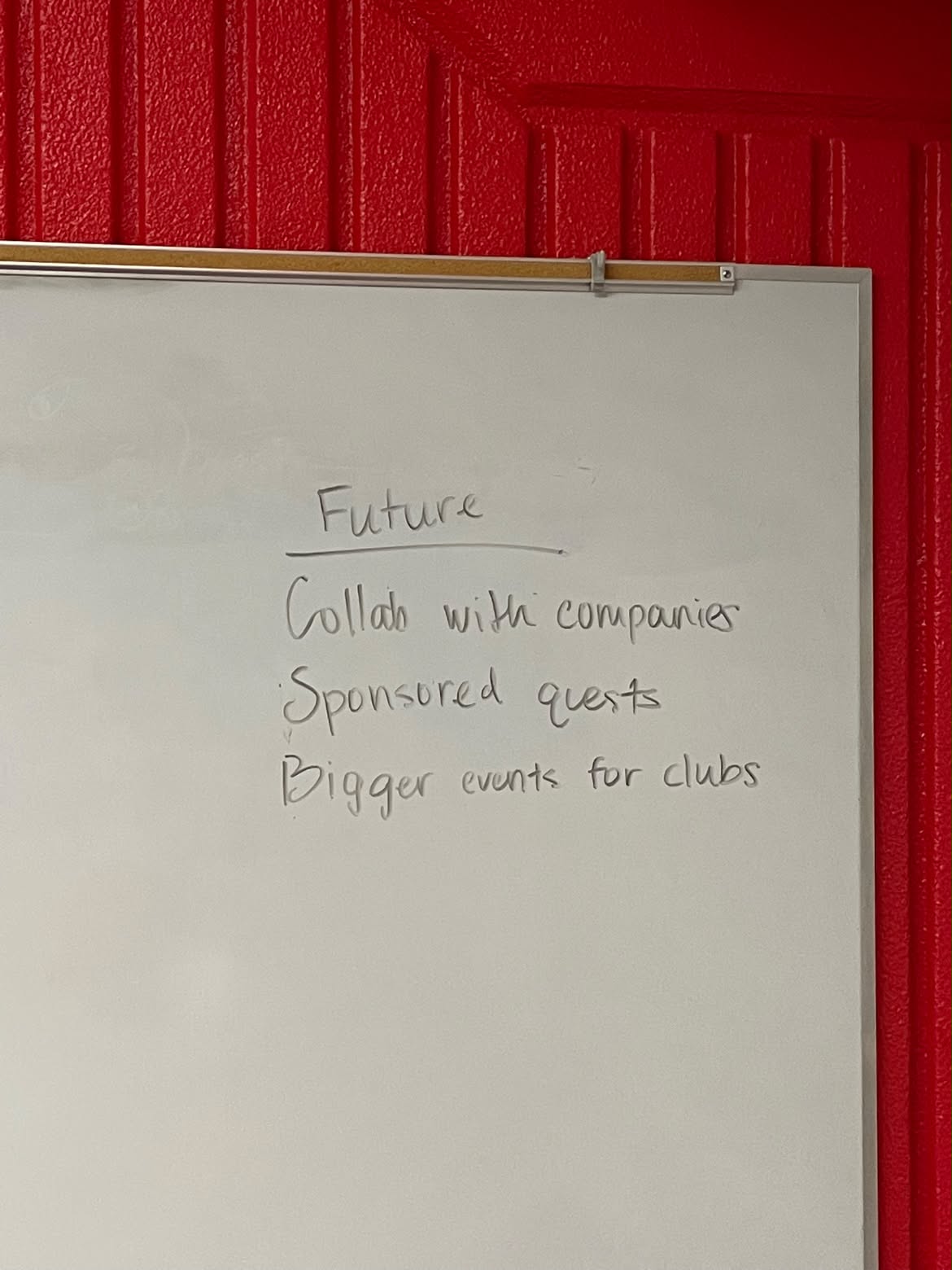
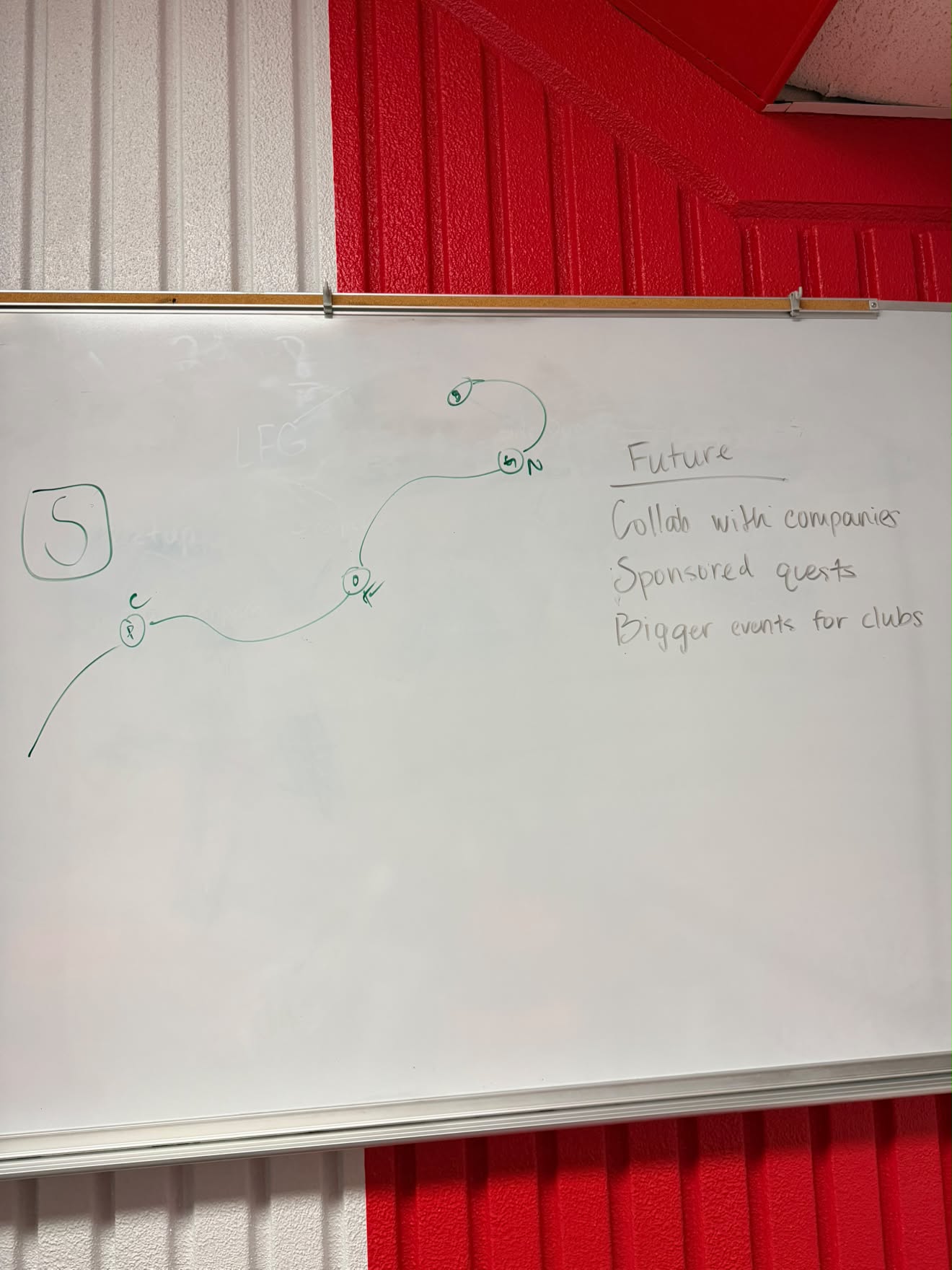
SideQuest has so many potential routes for scalability. Immediate thoughts for the future would be sponsored tasks through local companies, for our club feature we want to make large group tasks available turning small groups into developing communities. SideQuest also has the potential to be implemented into business communities as a way to foster employee relationships. The potential for this app goes as far as our imaginations.

Log in or sign up for Devpost to join the conversation.