-
-
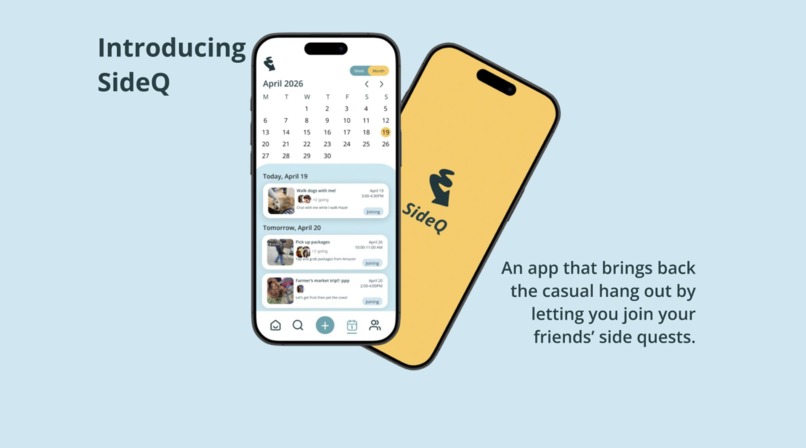
Introduction
-
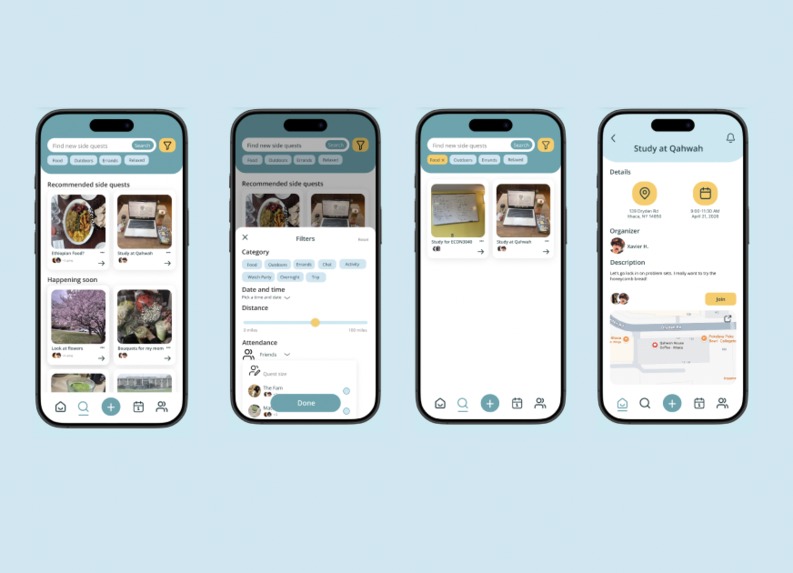
Key Flow 1
-
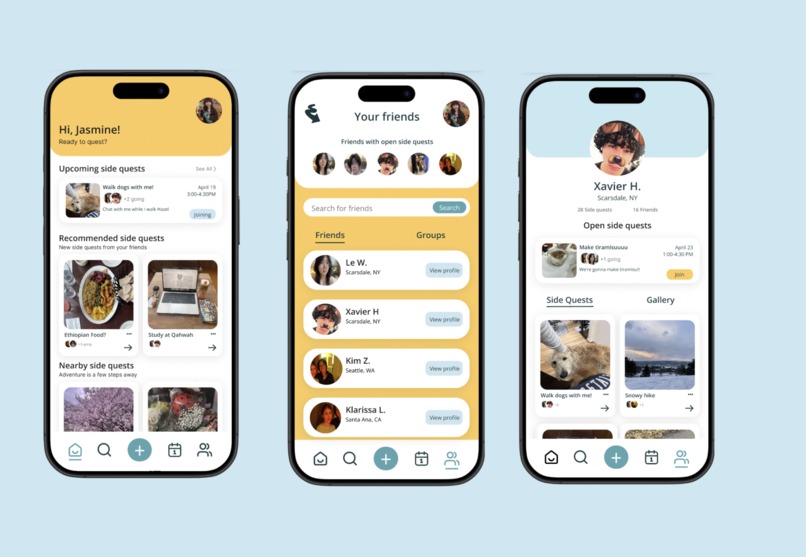
Key Flow 2
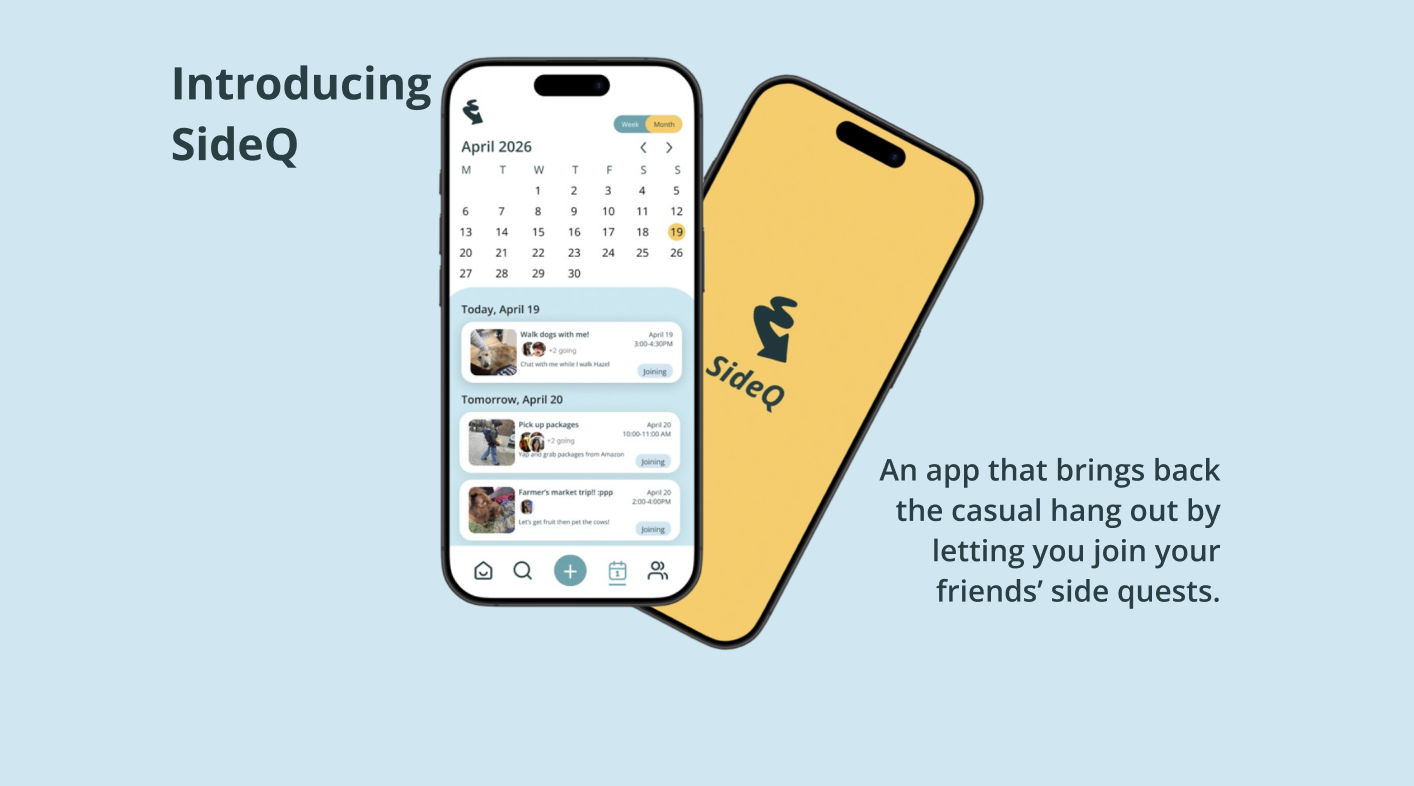
Inspiration
SideQ came from a pretty simple frustration: making plans with friends somehow always takes more effort than the actual hanging out. There was no reason hanging out should be so difficult, messy group chats and a busy schedule, it felt inevitable.
I wanted something easier and more spontaneous. The idea was to reduce friction in the planning stage so people could just enjoy time with their friends. On top of that, I wanted everyday life to feel a bit more fun and a bit more adventurous, like you’re actively doing more in your day.
What it does
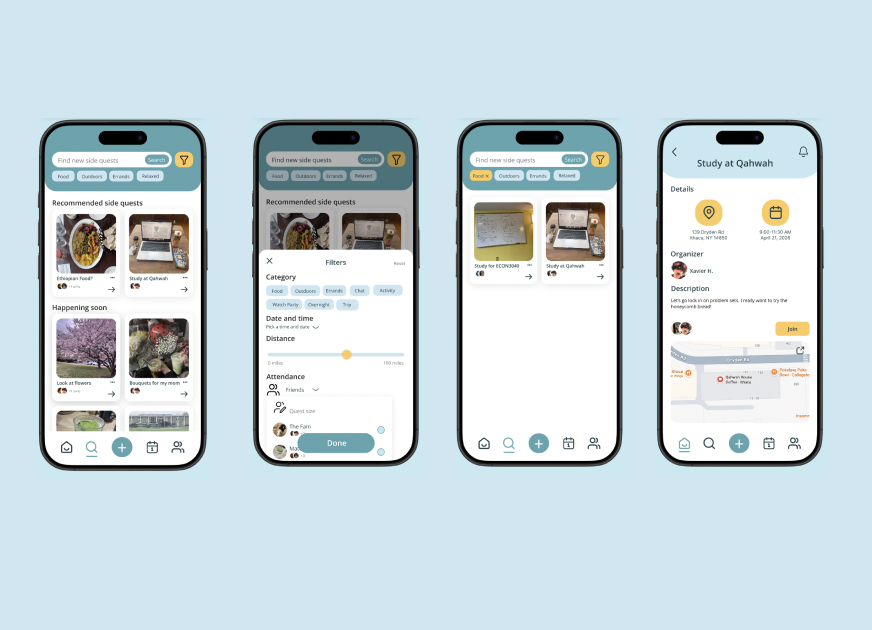
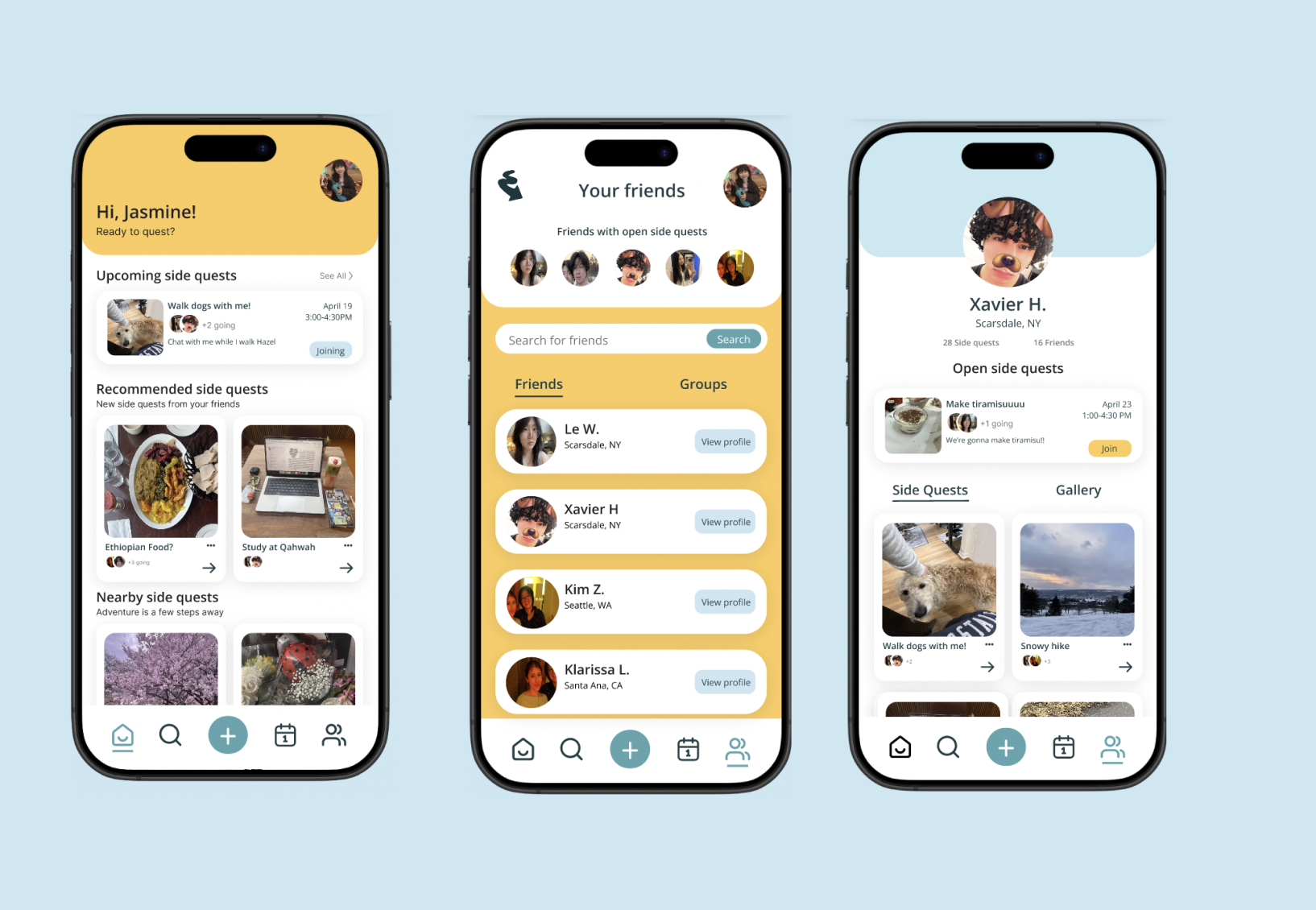
SideQ makes it really easy to see when your friends are free and jump into plans without all the back-and-forth. You can also pull from your own calendar, so people can join whatever you’re already doing.
The main idea is that it reframes everyday life as something you can easily share. Whether you're getting food, running errands, or studying, SideQ aims to let you easily integrate loved ones into your schedule. We call them “side quests” because they’re the small, meaningful moments that bring more joy into your life.
How we built it
I started by trying to understand what was actually annoying about planning with friends. From there, we kept coming back to one goal: to make everything require less effort.
I planned for a playful, sleek design, then built the core features first. Starting with exploring events and calendar syncing. After that, I kept testing and simplifying, refining each flow to include less work for the user.
Challenges we ran into
The hardest part was refining the scope of the project. It’s easy to add features, but much harder to keep everything feeling effortless.
A lot of it came down to how little the user can actually do and still get the same result. That led to a lot of redesigning of flows and removing steps.
Accomplishments that we're proud of
I'm proud that SideQ actually feels like something we’d use in real life, not just a hackathon idea. Each feature was intentionally designed to ensure the user would be able to meet with their friends with little effort.
What we learned
I learned that the reason people don't socialize more isn't that they don't want to. Instead, everyday life presents too much friction for it to happen.
Design-wise, I learned that small changes in framing matter a lot. For example, calling something a “side quest” instead of “making plans” makes the process seem more adventurous and whimsical, prompting users to "side quest" more.
What's next for SideQ
Next, I want to make SideQ even better at facilitating spontaneous plans, whether through using user locations or other methods. I also want to smooth out edge cases and make the whole experience feel more well-rounded.
Built With
- capcut
- figma
- procreate


Log in or sign up for Devpost to join the conversation.