-
-
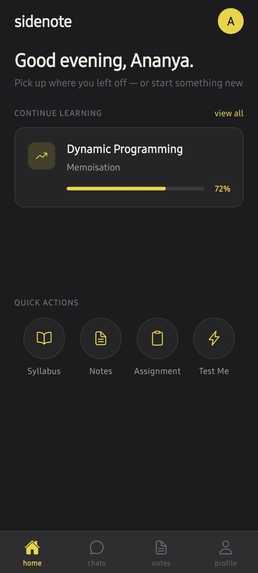
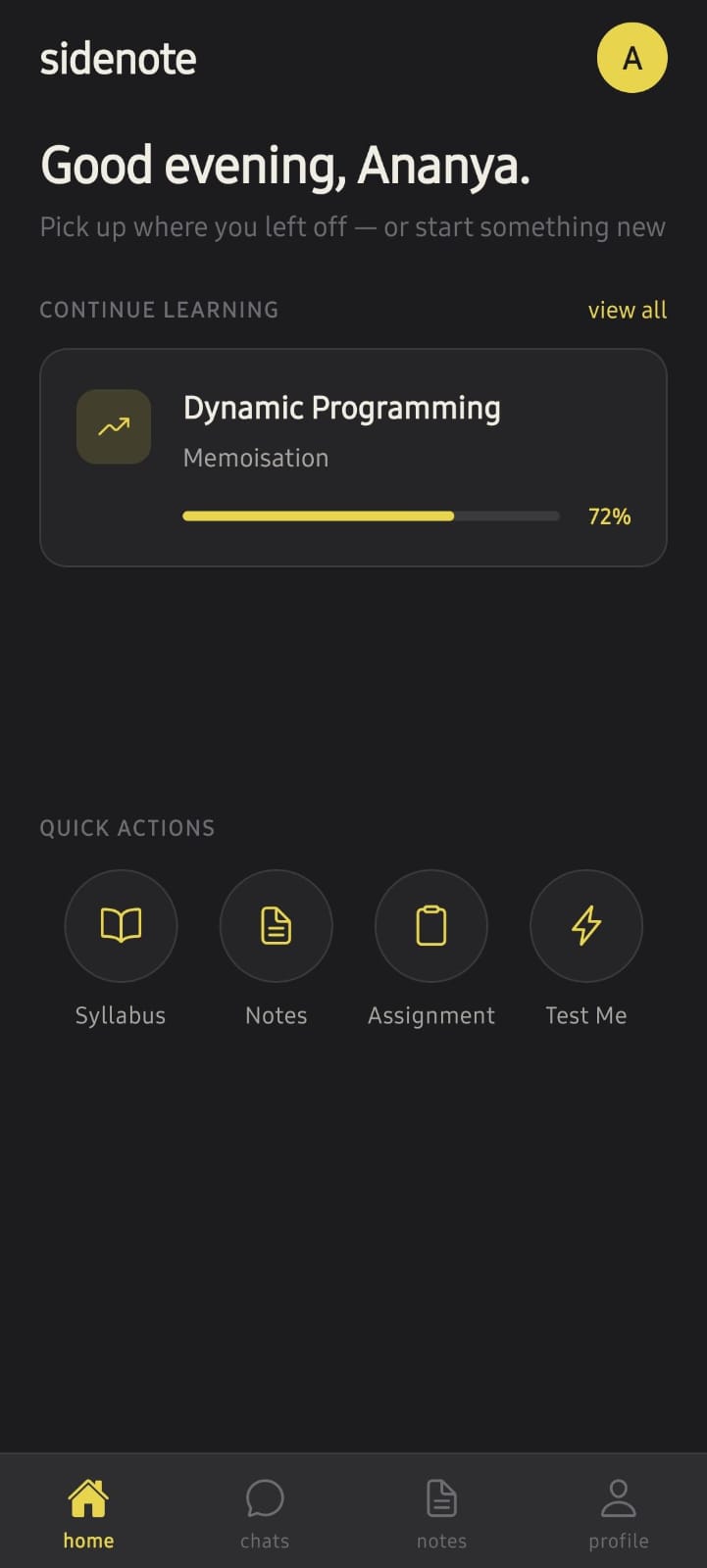
home screen
-
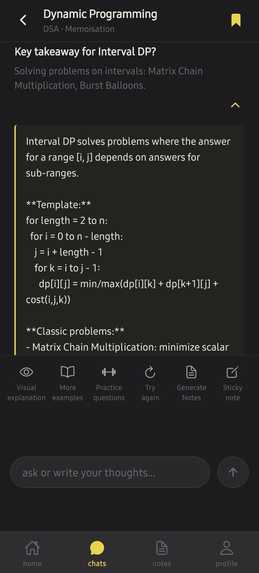
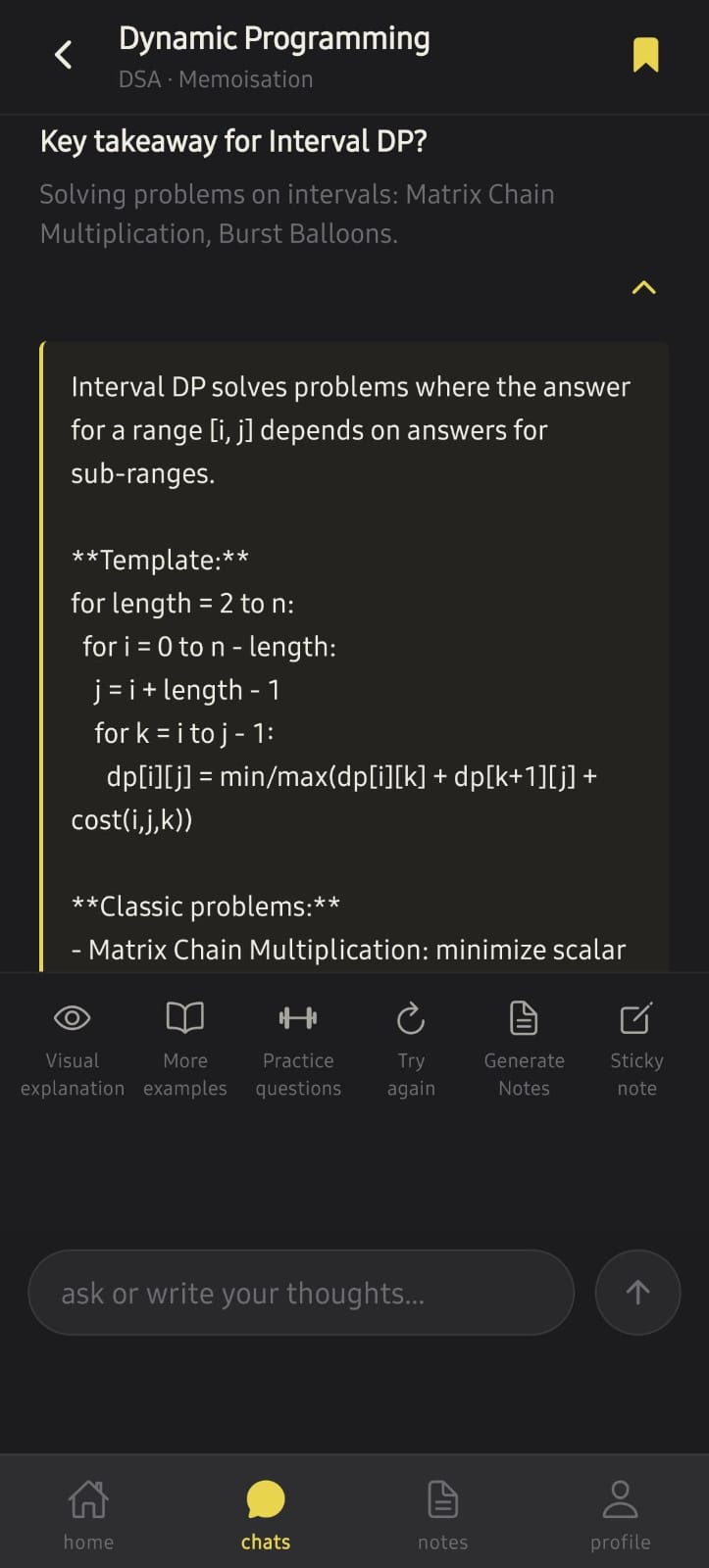
chat screen
-

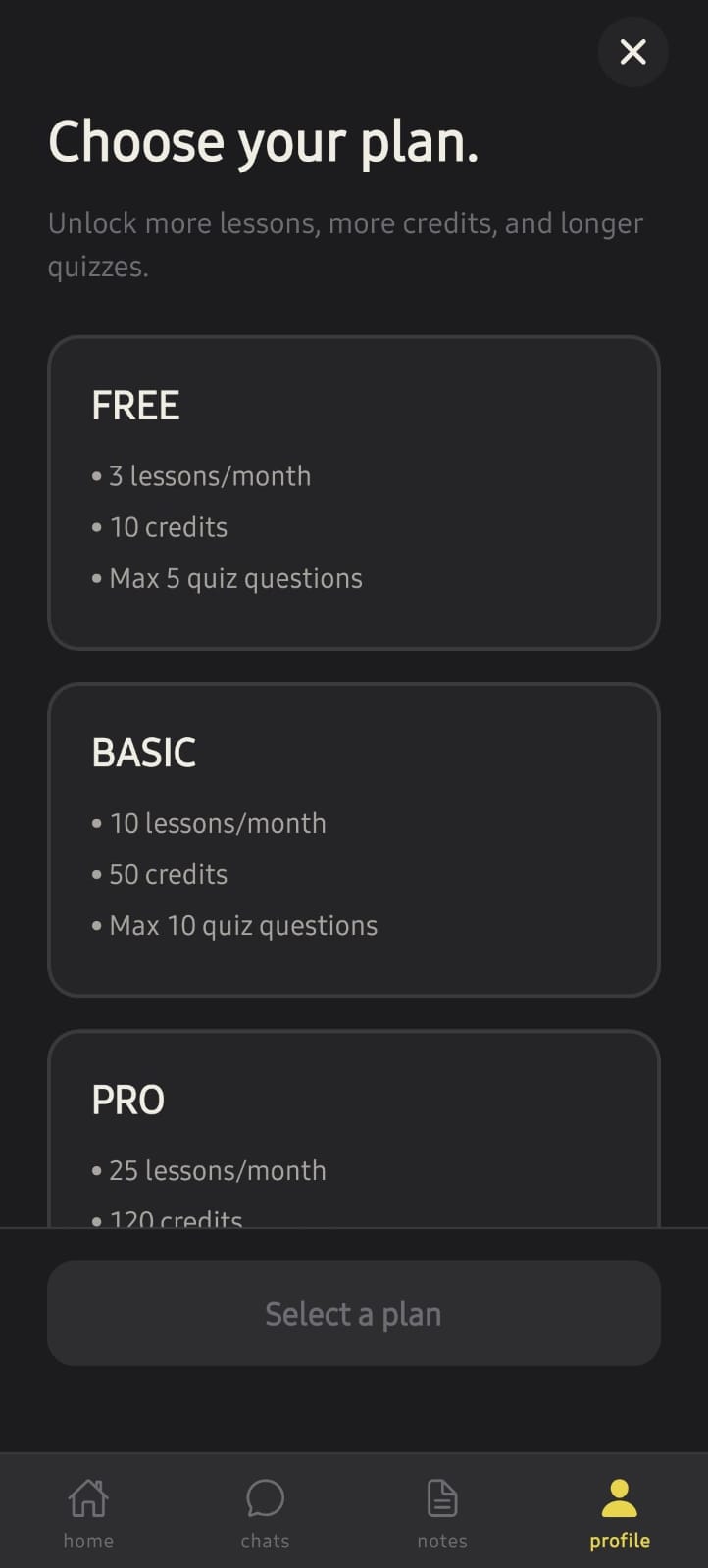
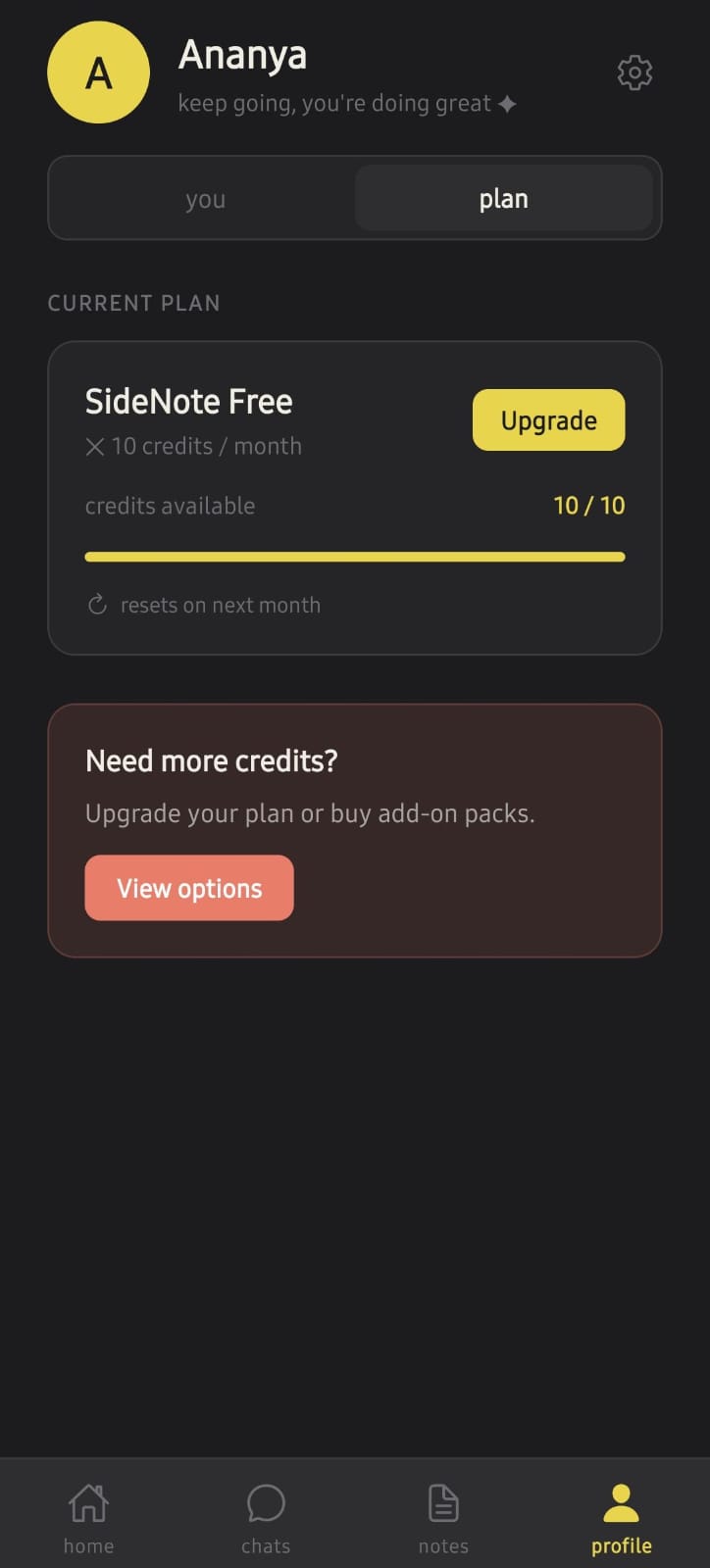
credits plan
-

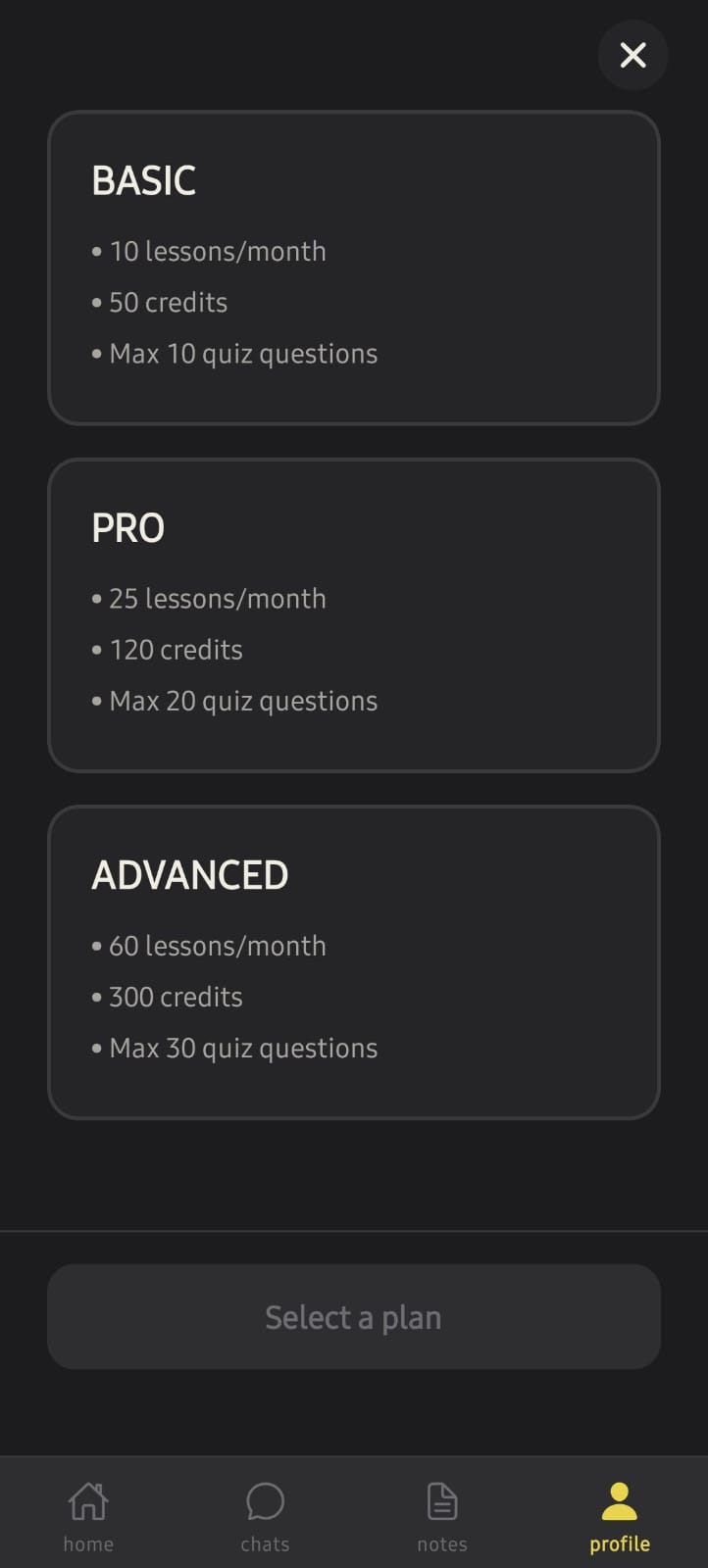
credits plan
-
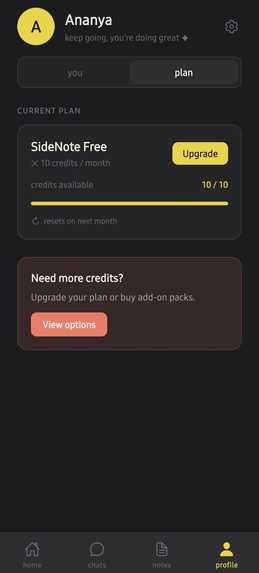
plan details
-
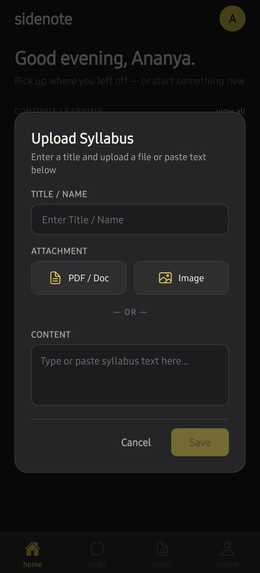
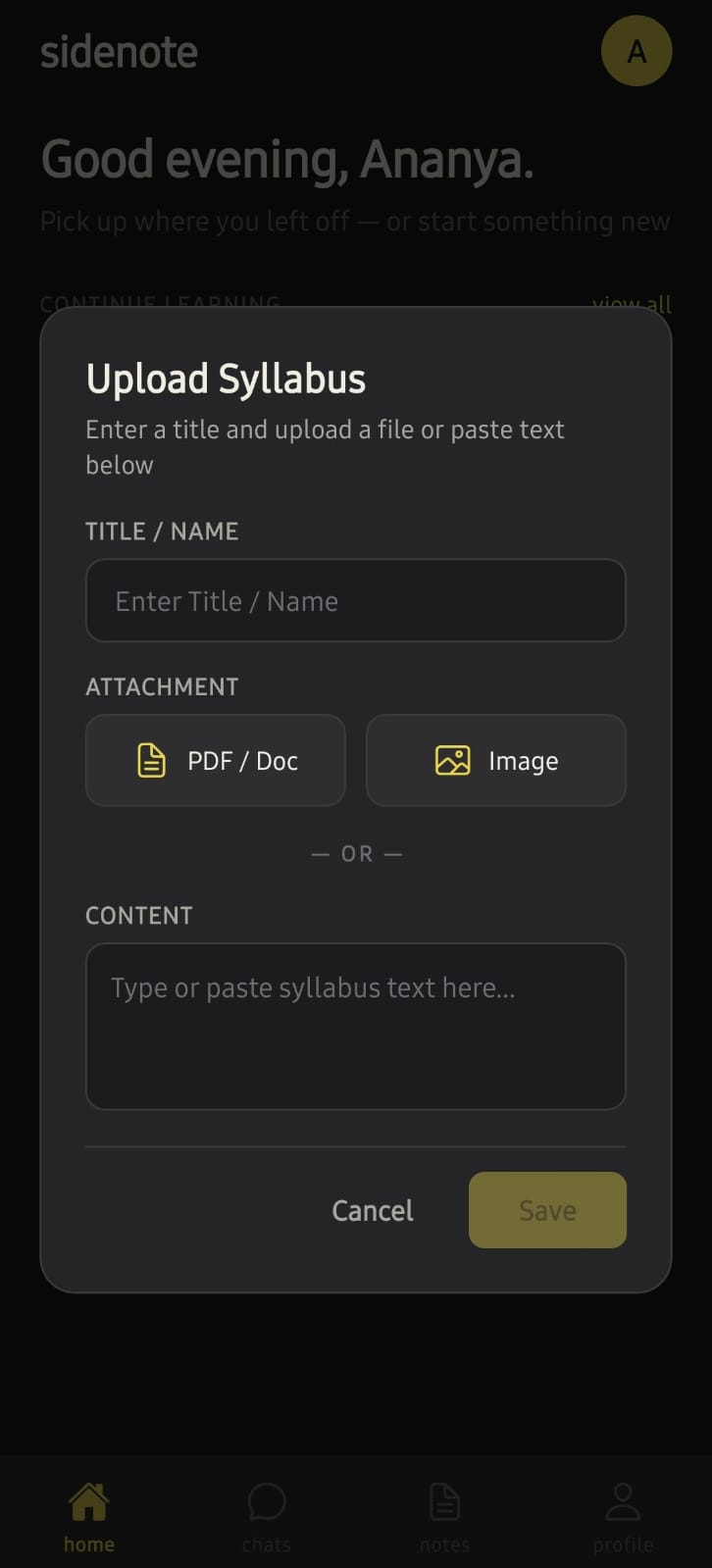
resource upload
-
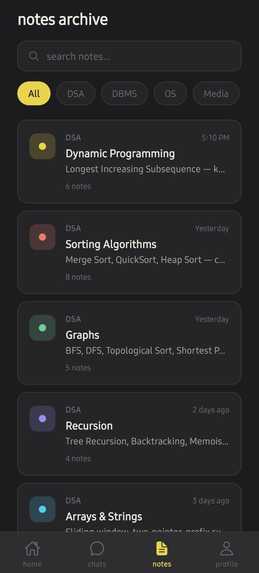
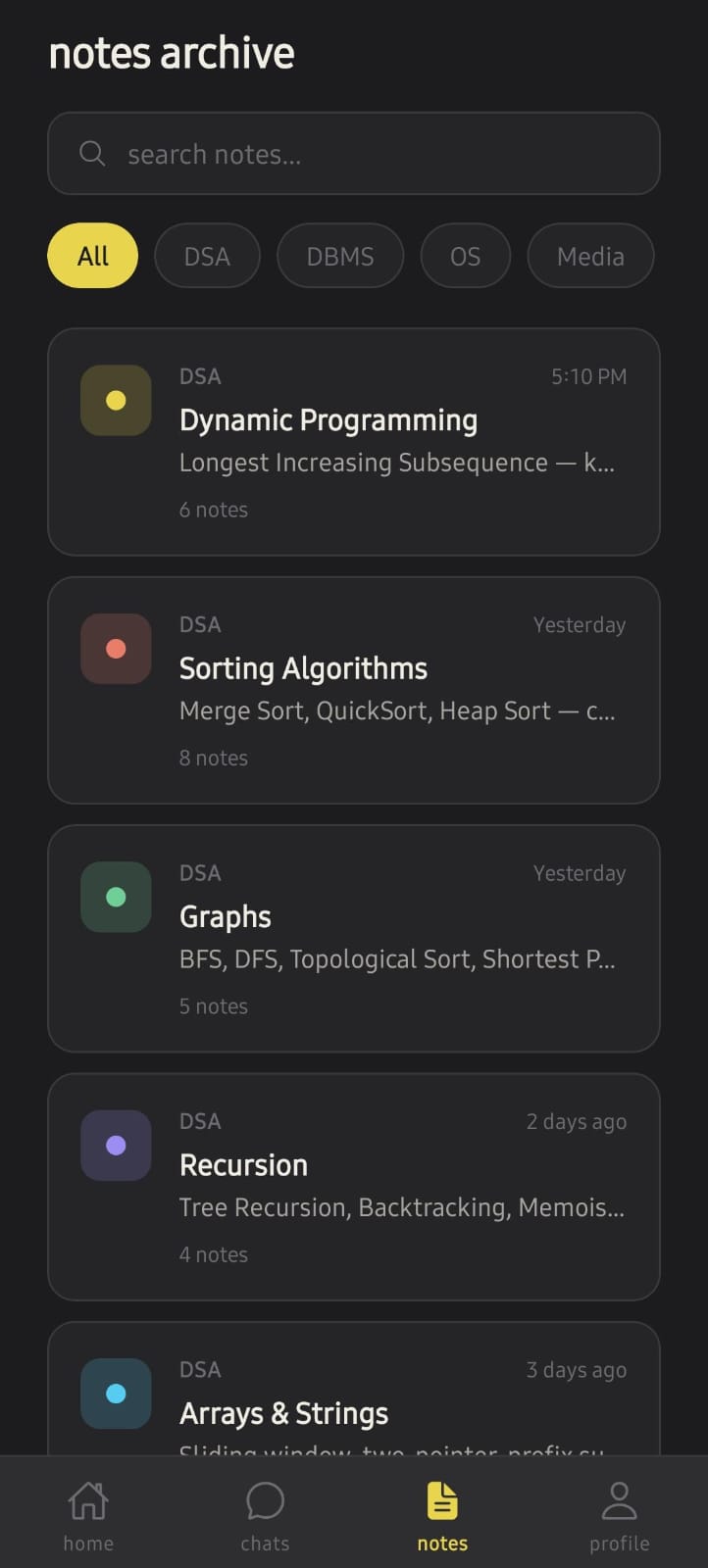
notes archive
-
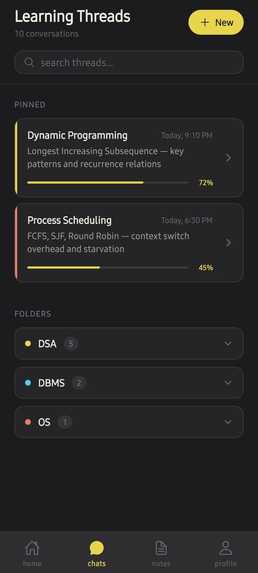
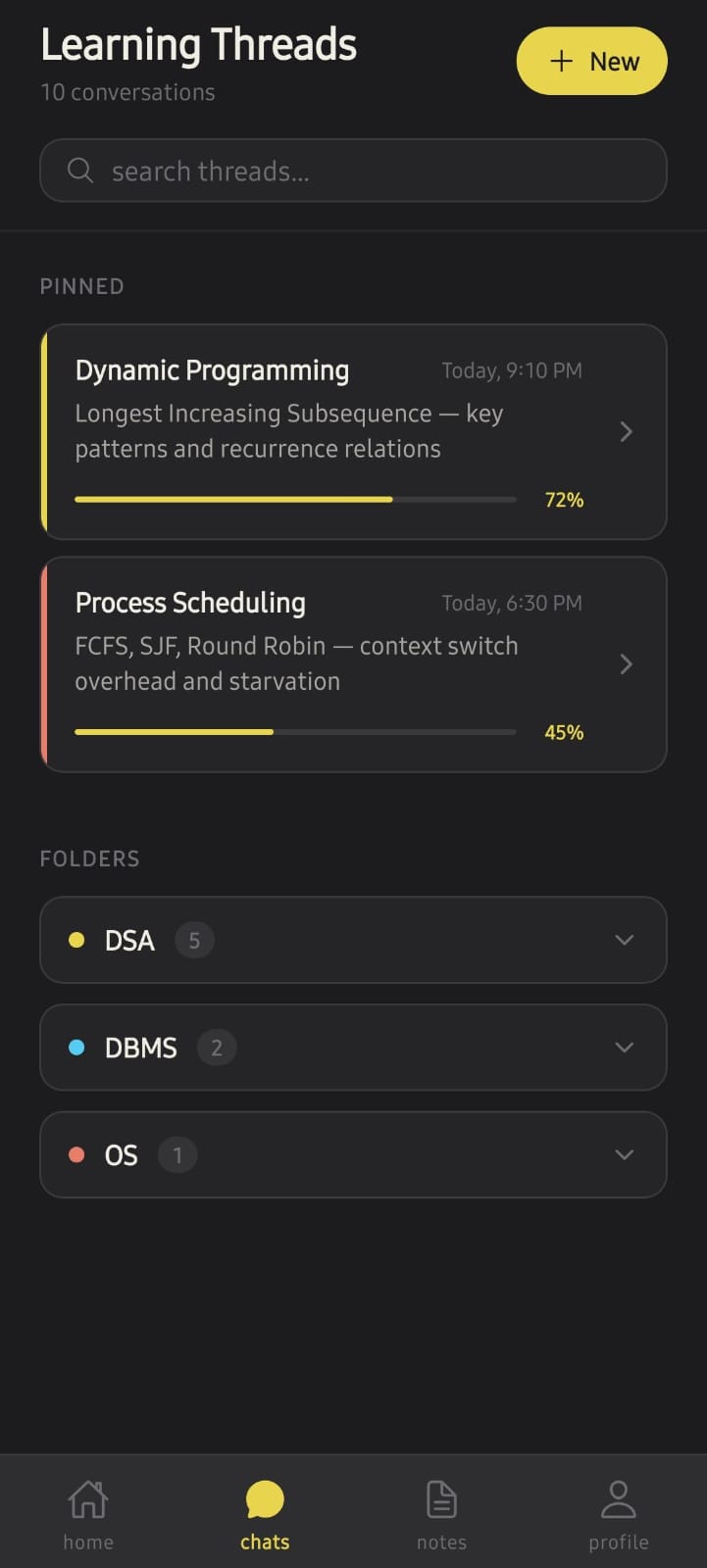
conversation history
-
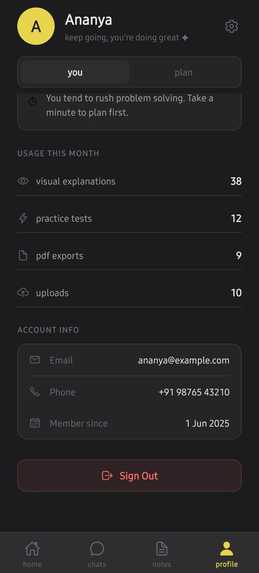
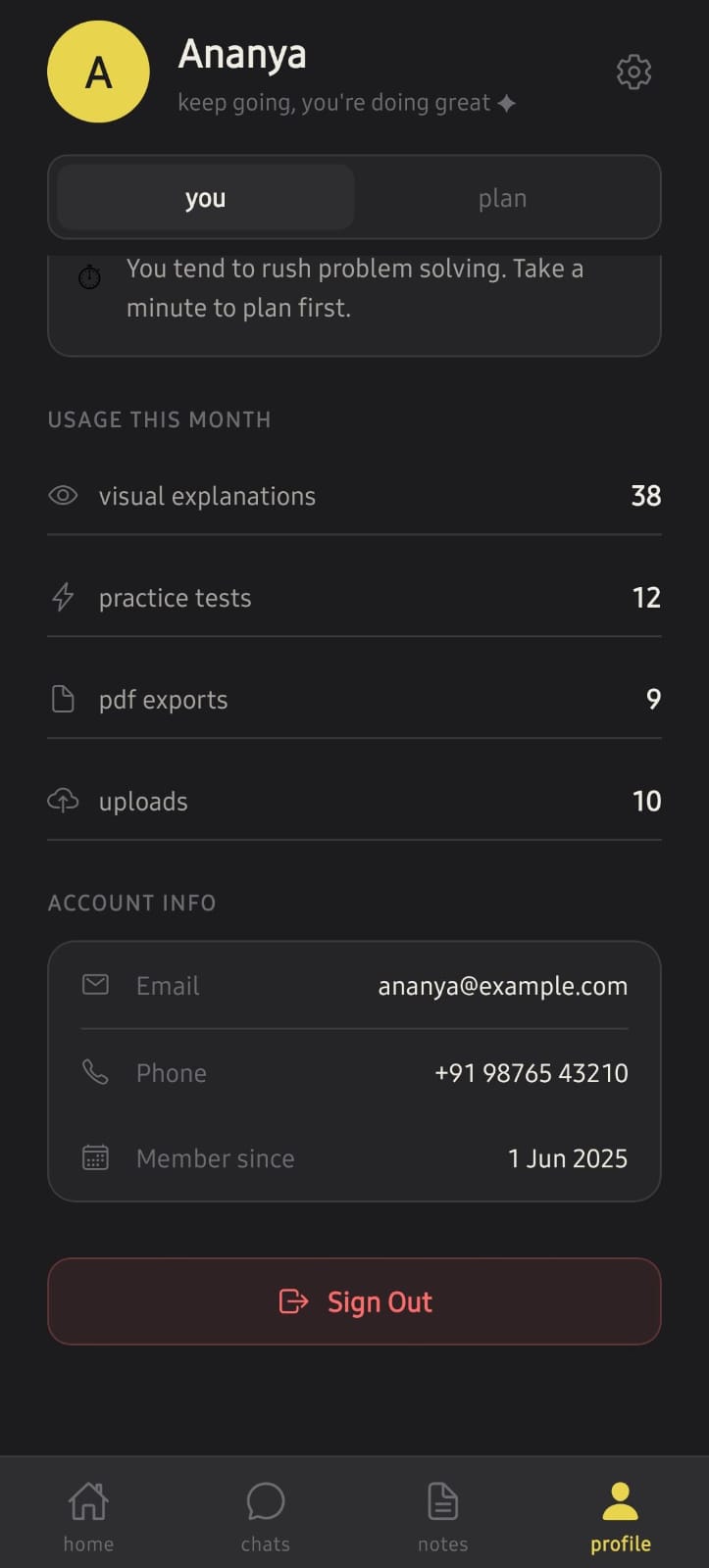
user details
-
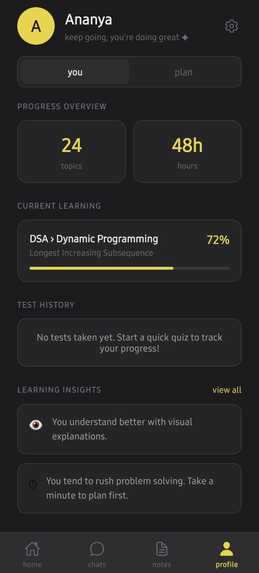
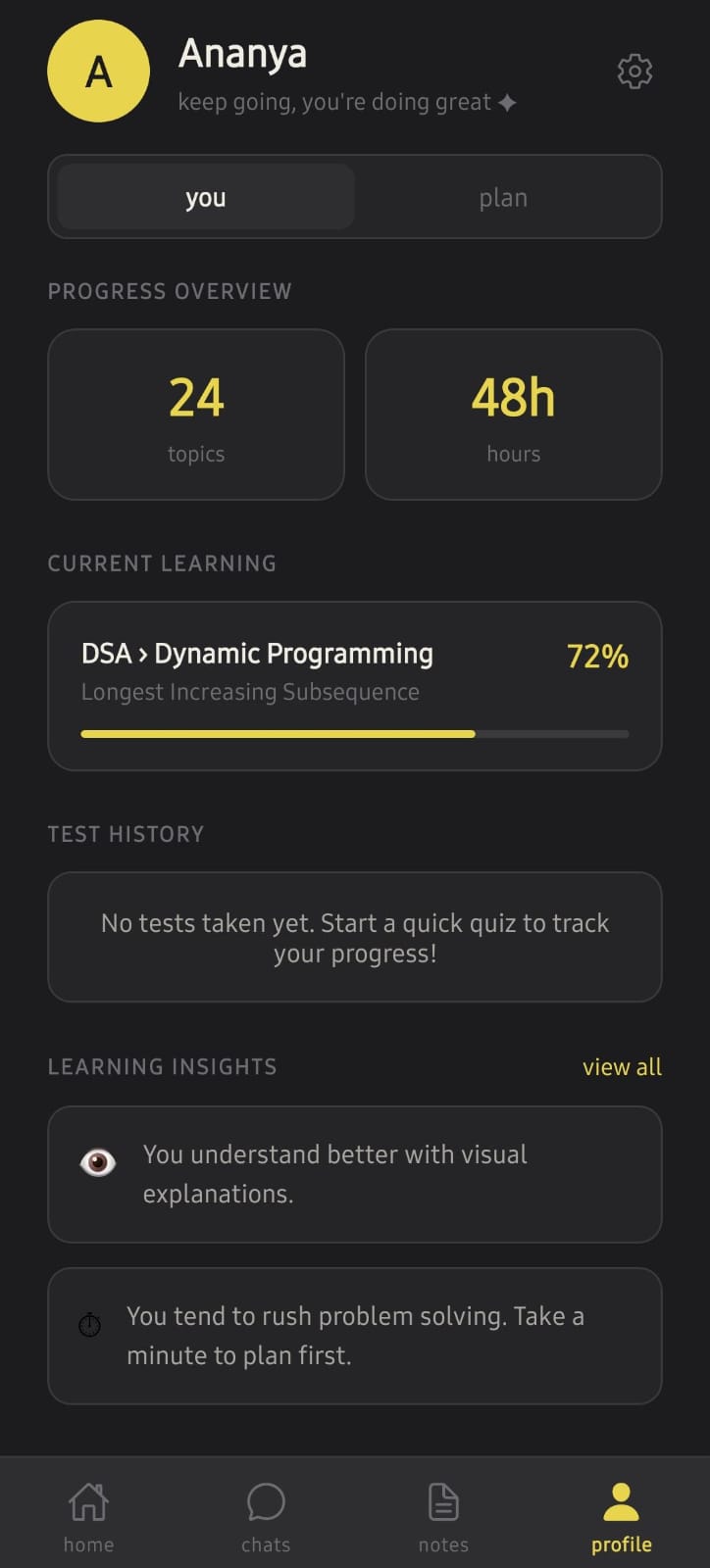
user progress and details
-
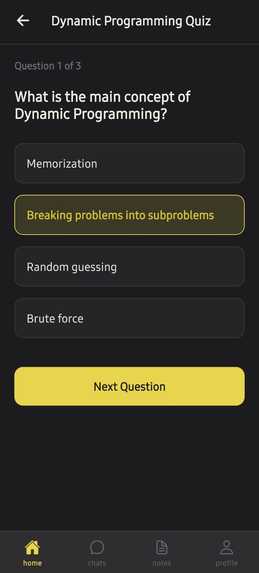
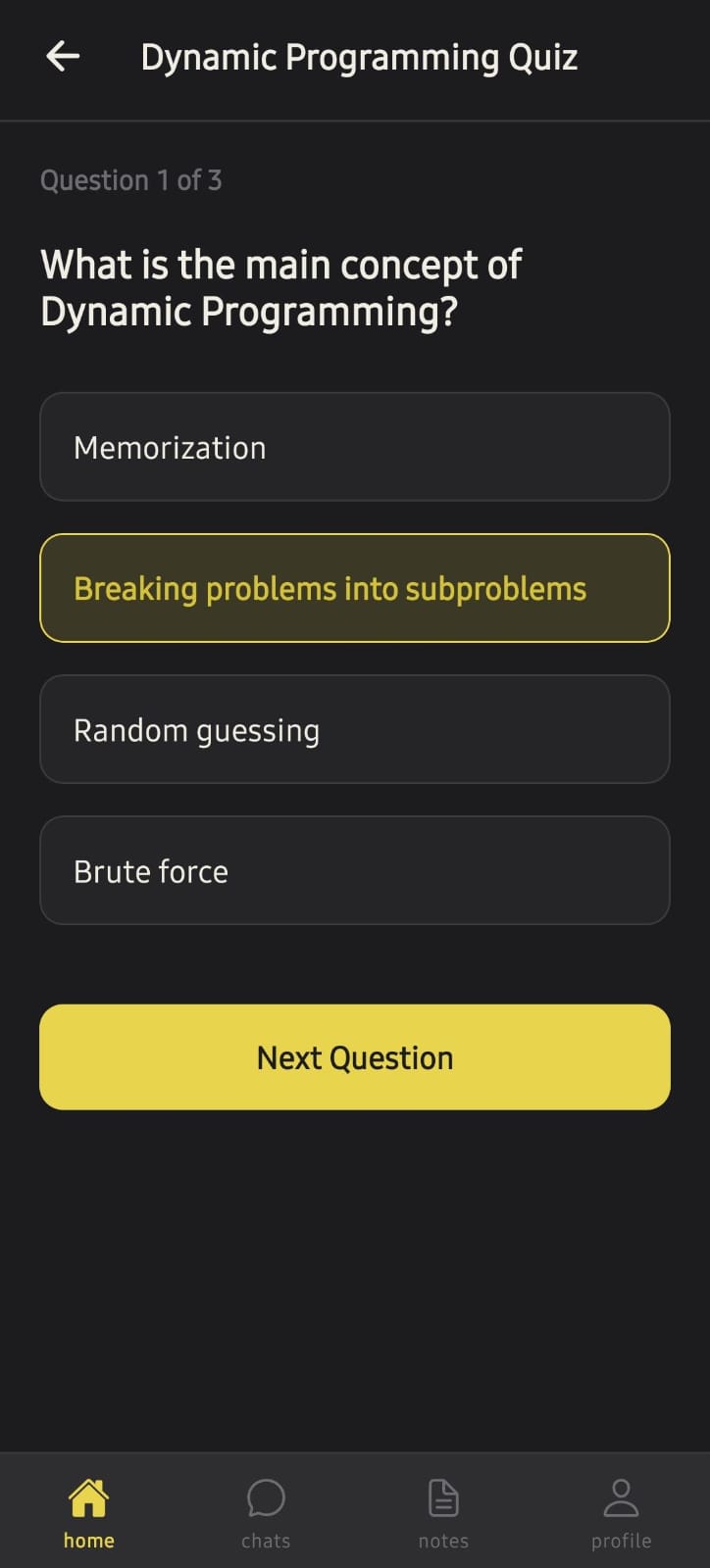
lesson quiz
-
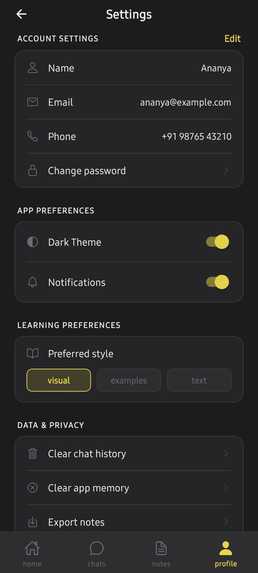
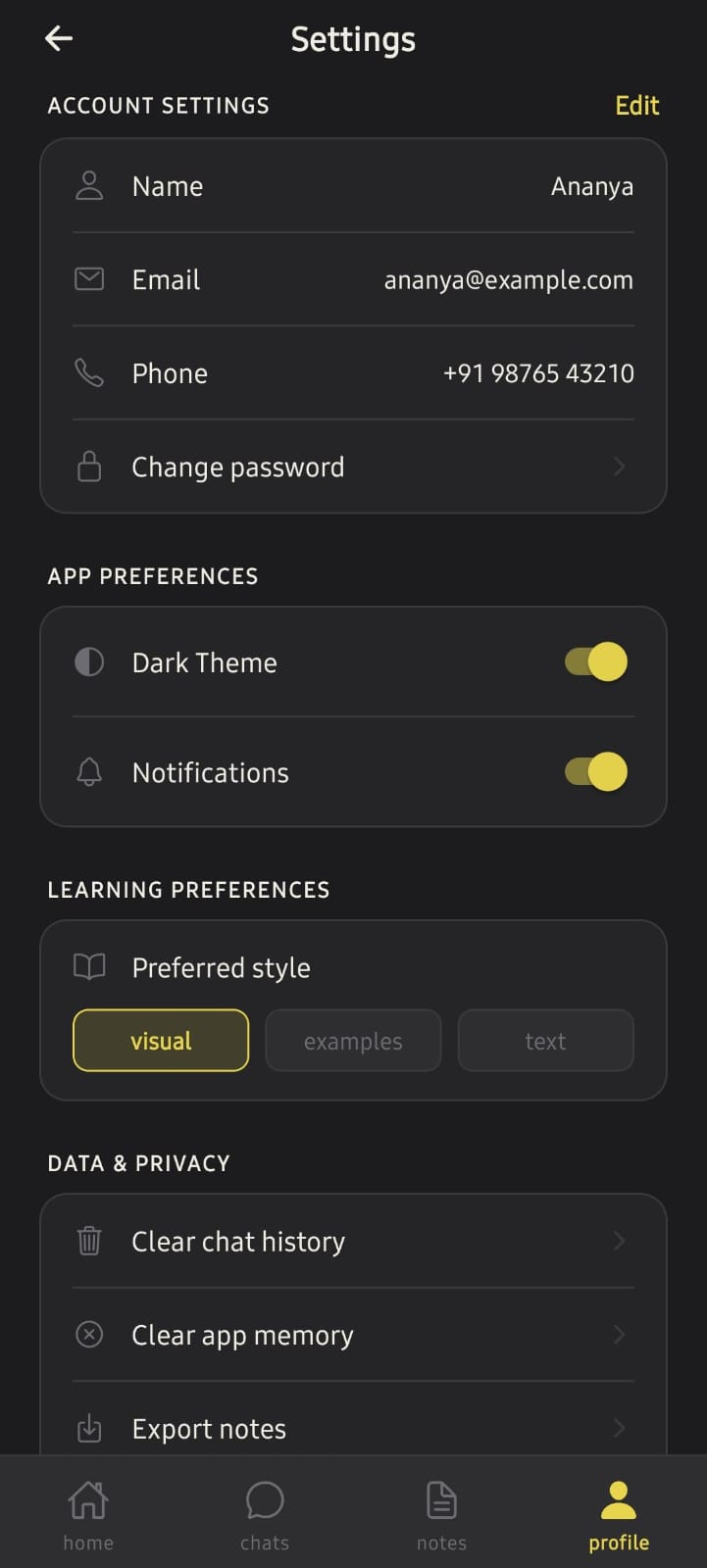
settings
-
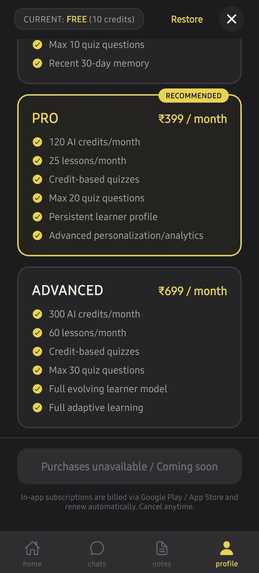
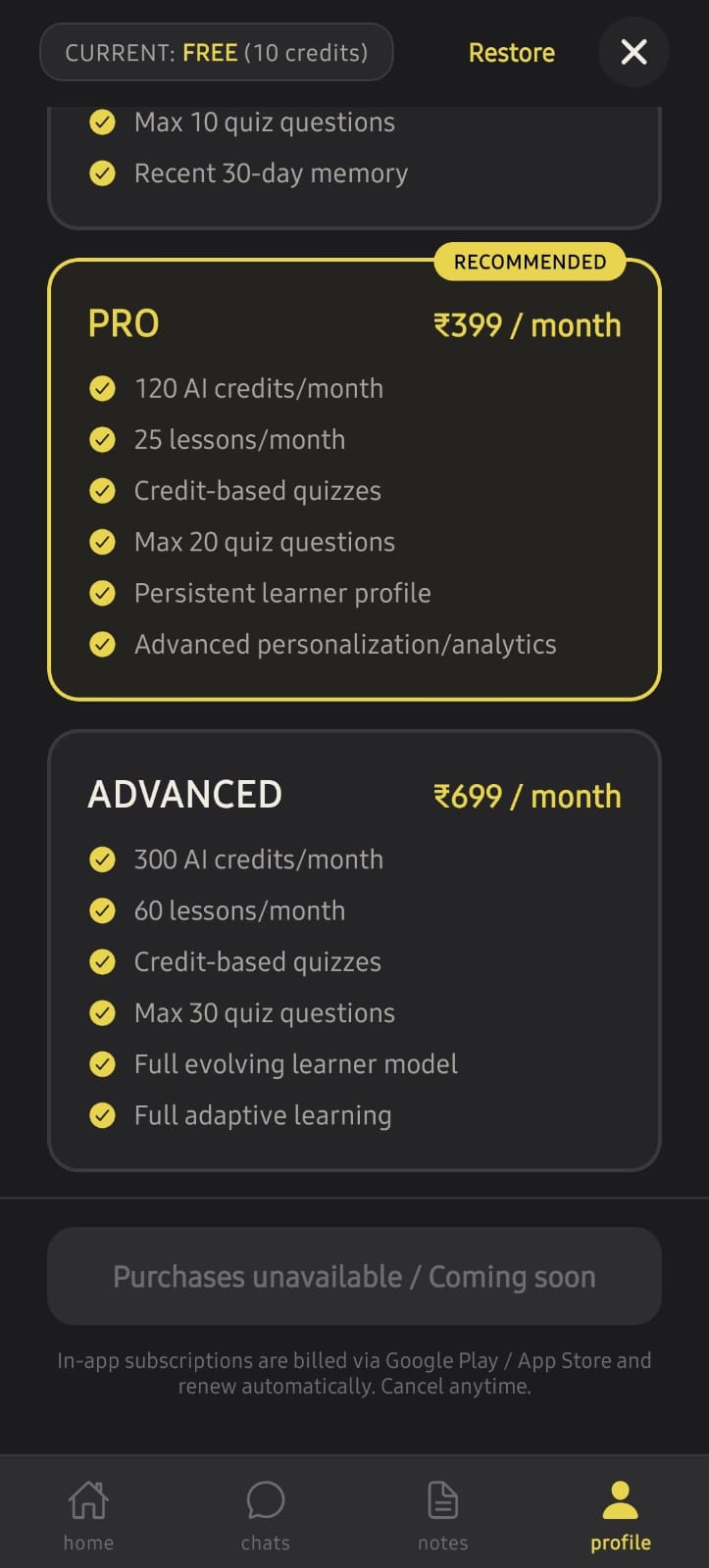
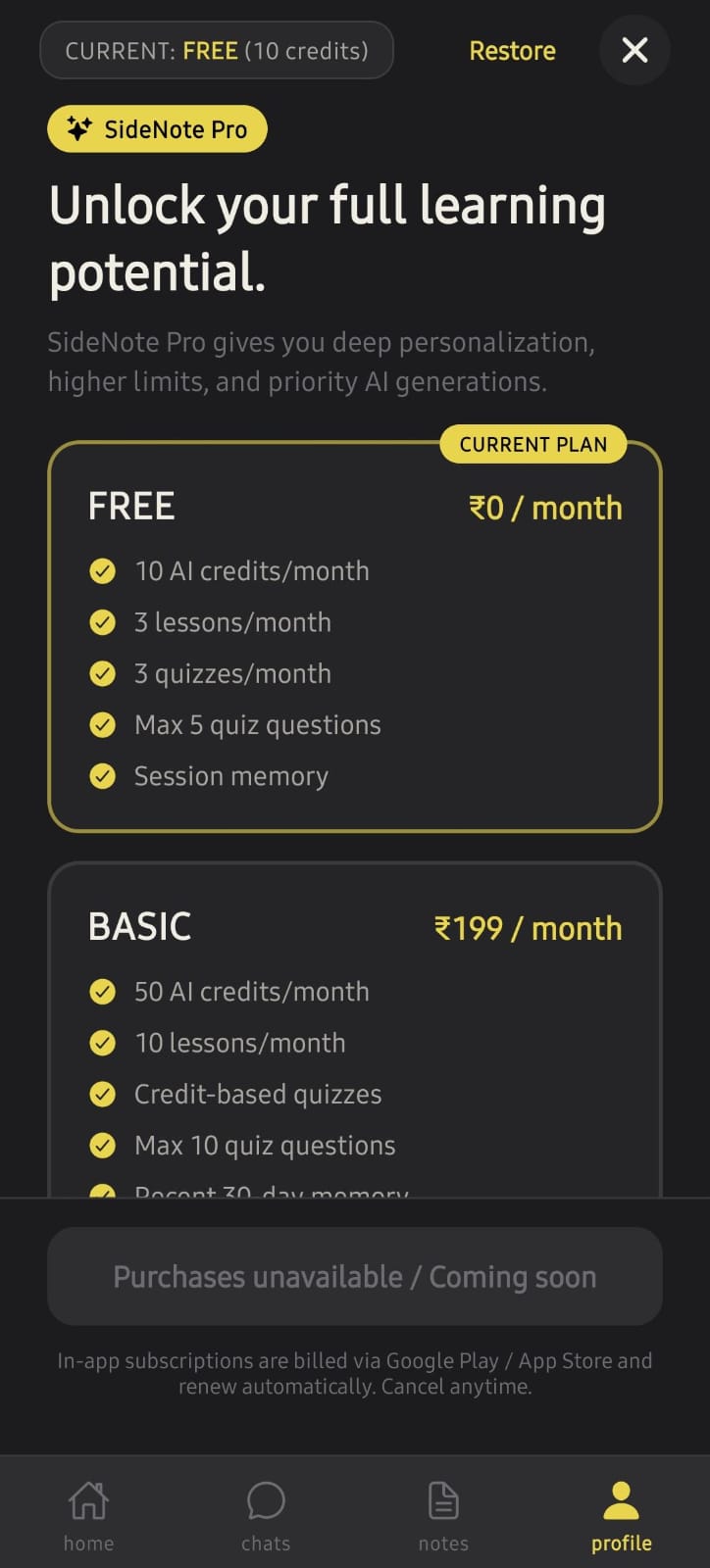
subscription plan
-
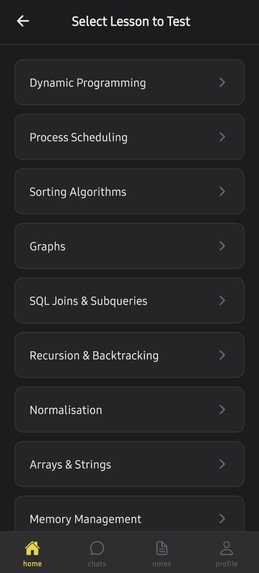
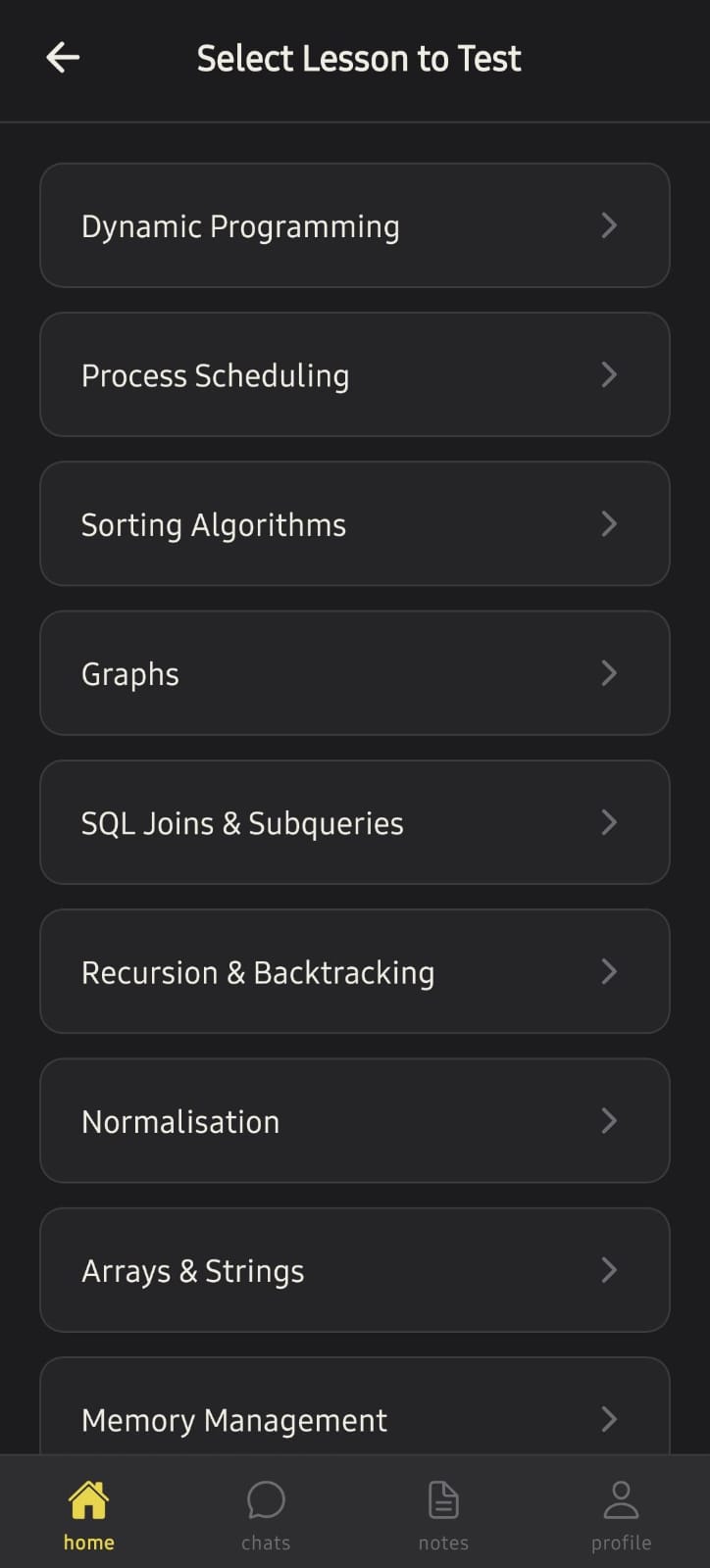
lesson to test from conversations
-

subscription plan
Inspiration
Studying today is chaotic. Students juggle between PDFs, notes, assignments, and random resources, often switching between multiple apps just to understand one concept. Most tools are either passive (just reading) or too rigid, with no real interaction.
We wanted to build something that feels natural—where learning isn’t just consuming content, but actively engaging with it. The idea was simple: what if your study material could talk back, guide you, and adapt to you?
That’s how Sidenote was born.
What it does
Sidenote transforms scattered study materials into an interactive learning experience.
Users can:
- Chat with their study content and get instant explanations
- Practice concepts through contextual questions
- Capture insights using in-chat sticky notes
- Organize learning without switching between apps
Instead of jumping across tools, everything happens in one seamless flow.
How we built it
We built Sidenote as a mobile-first application using:
- React Native (Expo) for cross-platform development
- Backend APIs + AI models to power chat, explanations, and practice
- Supabase for data handling
- RevenueCat for monetization (credits + paywall system)
The core idea was to keep everything modular:
- Chat system for learning flow
- Sticky notes as an interactive layer
- Action buttons for guided learning (practice, notes, etc.)
Challenges we ran into
- Backend integration issues: Handling real-time uploads and API communication across devices was tricky, especially with network constraints.
- State management in chat: Ensuring messages, notes, and actions stayed in sync without breaking flow required careful handling.
- Mobile performance: Features like draggable and resizable sticky notes needed optimization to work smoothly on mobile.
- Build and deployment issues: Setting up APK builds and resolving environment/config issues took significant effort.
What we learned
- Building for mobile requires constant trade-offs between performance and features
- A smooth demo experience is as important as the actual functionality
- Monetization should feel natural, not forced
- Small UX details (like sticky notes) can significantly improve user engagement
What’s next
We plan to:
- Improve backend reliability and real-time syncing
- Enhance personalization in learning
- Expand note and archive features
- Refine the monetization system for real-world use
Built With
- ai-api
- javascript
- node.js
- react-native
- rest-api
- revenuecat
- supabase
- typescript

Log in or sign up for Devpost to join the conversation.