-
-

-

Set a Budget w/o device frame
-
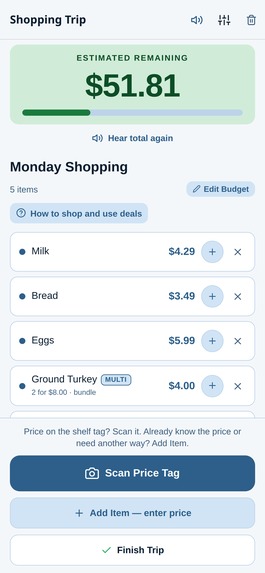
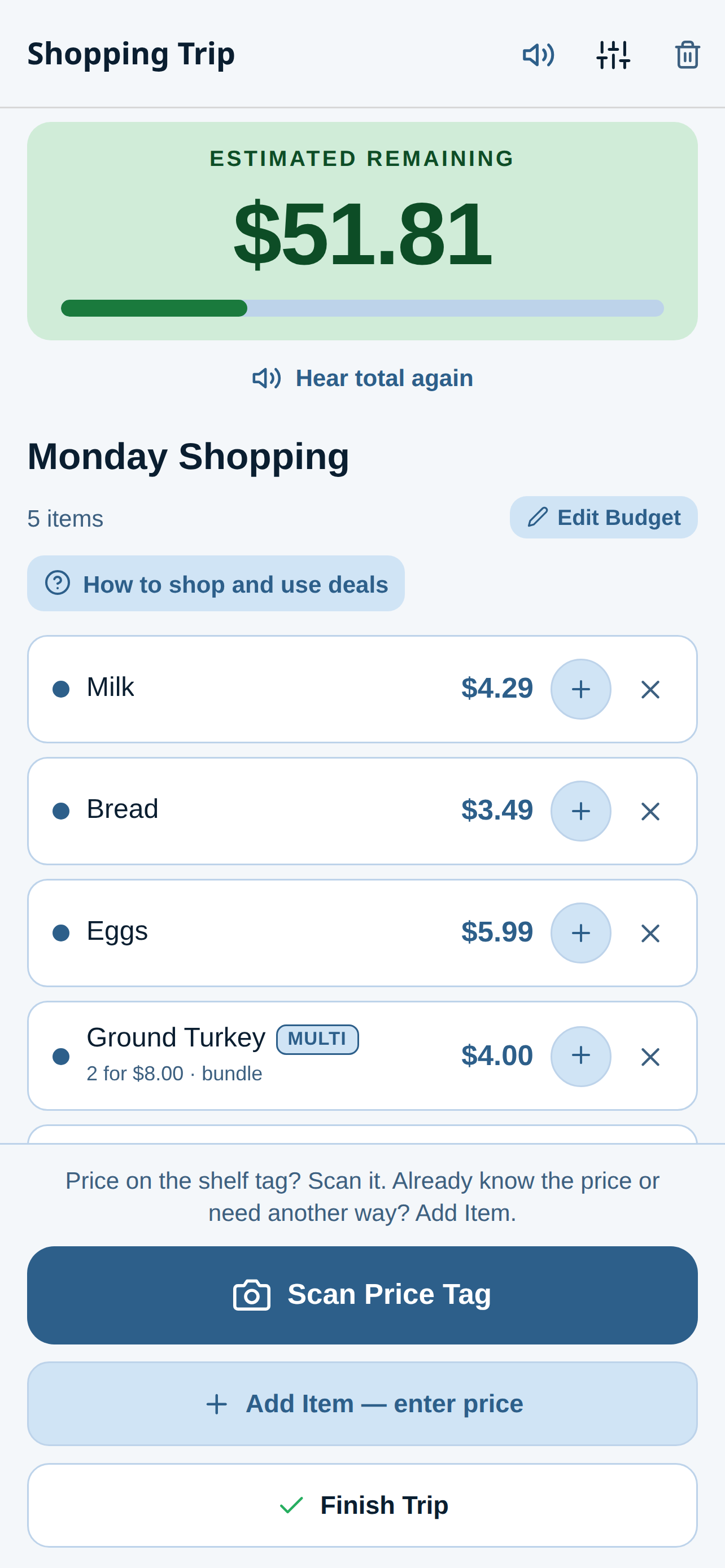
In trip sample w/o device frame
-
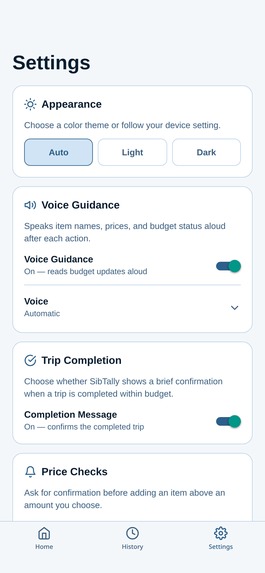
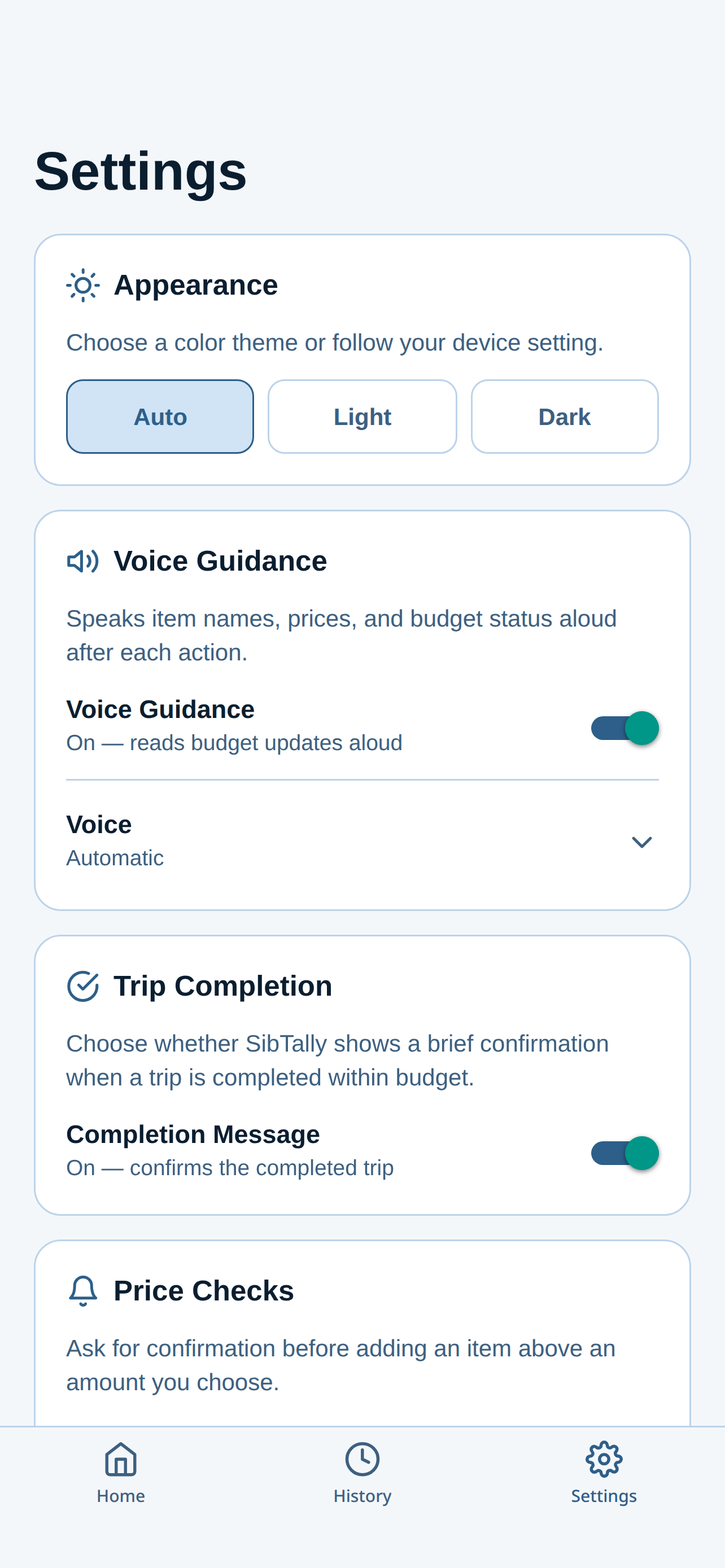
Settings w/o device frame
-
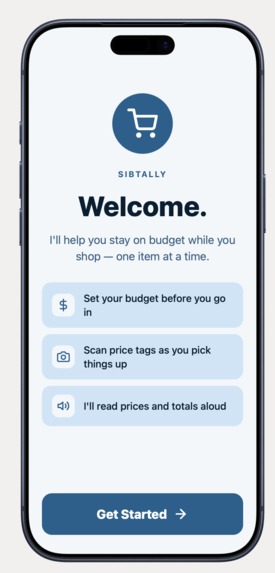
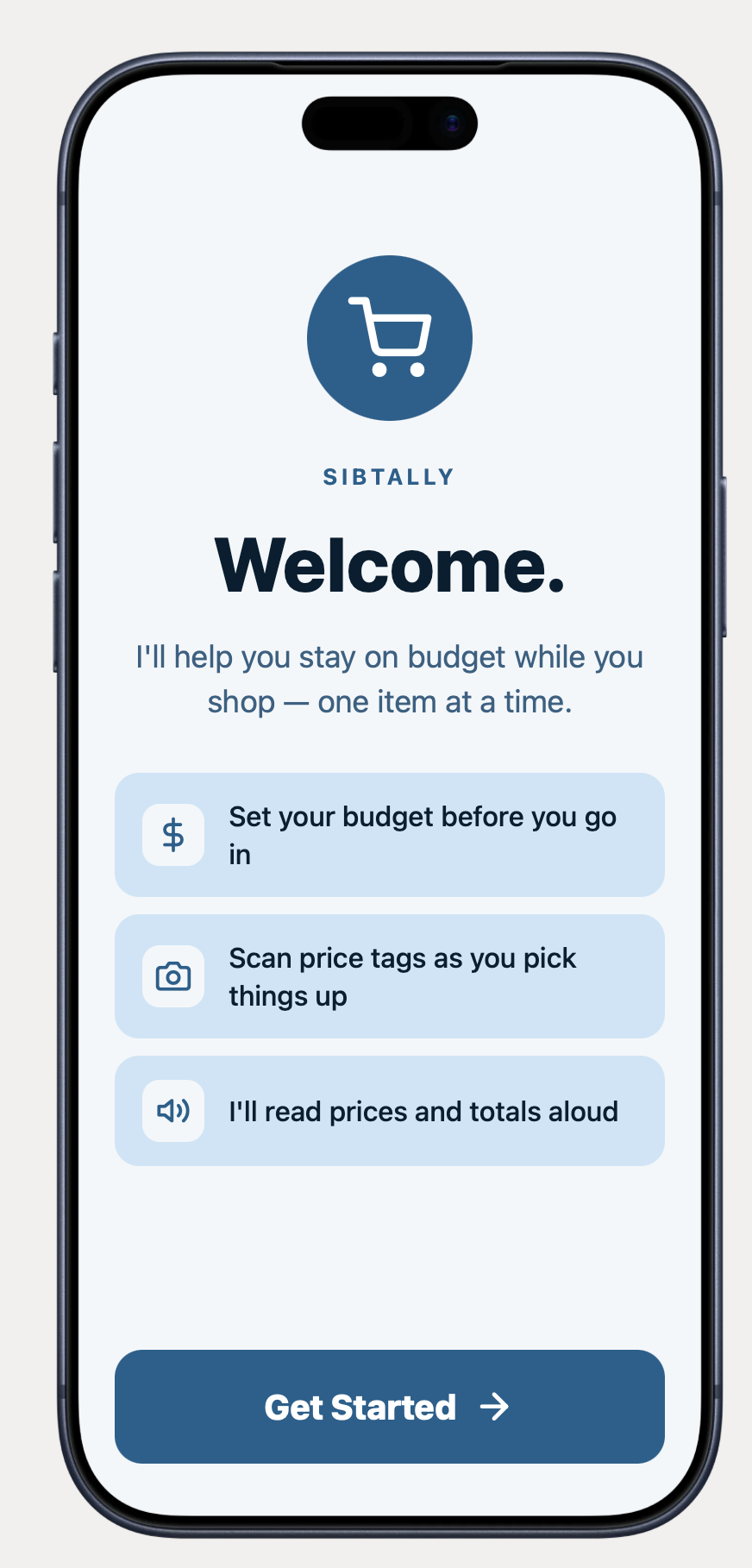
Welcome Screen
-
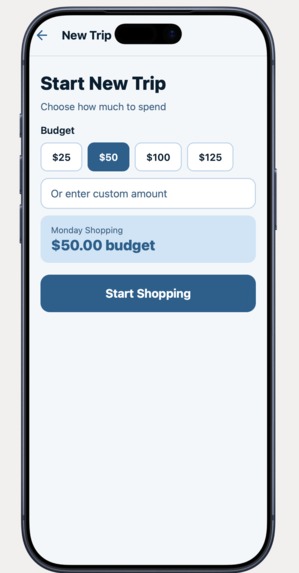
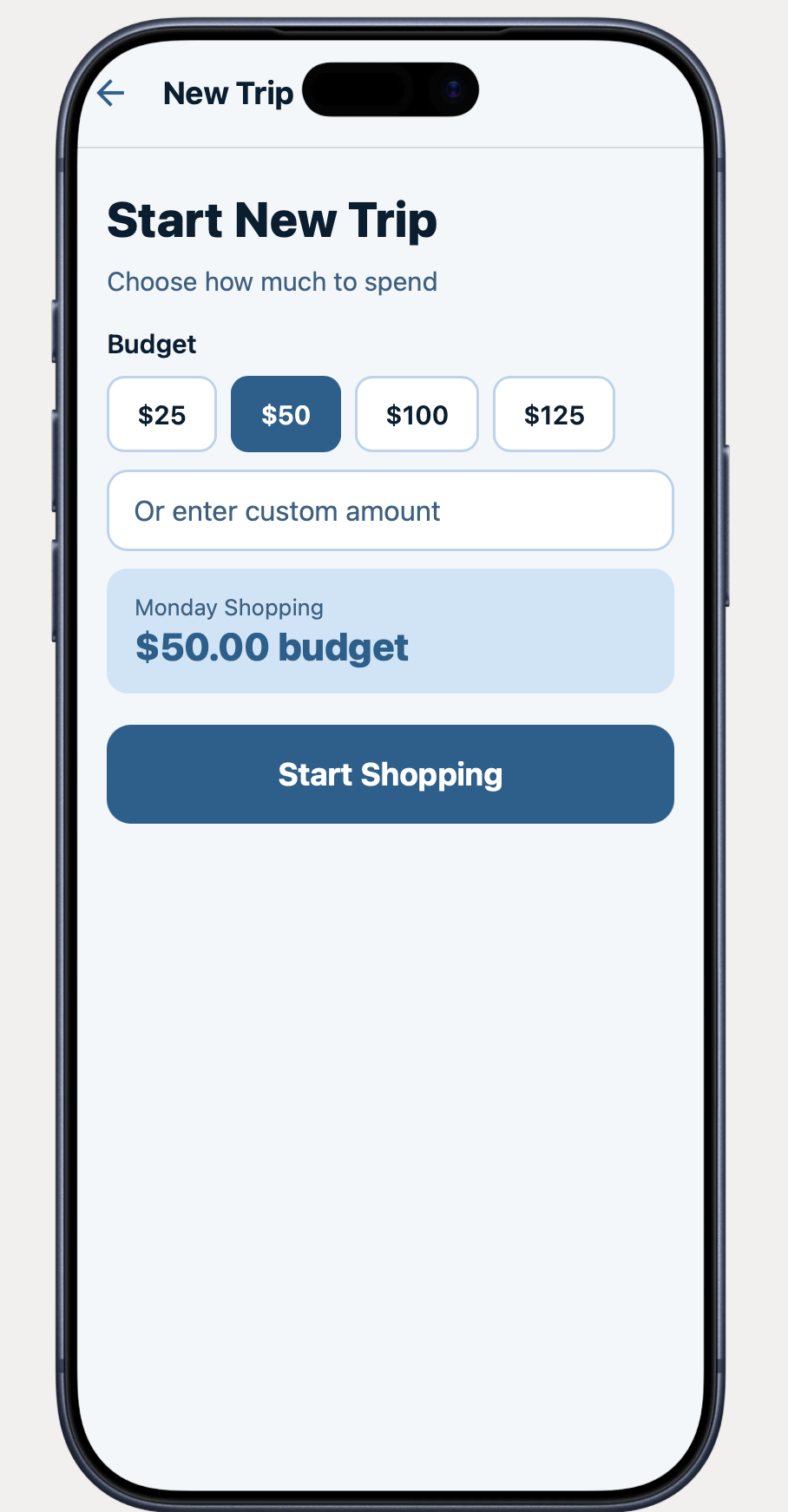
Set a Budget Page
-
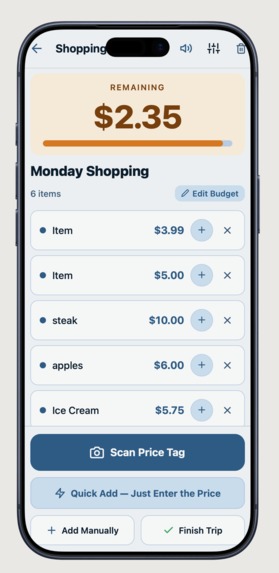
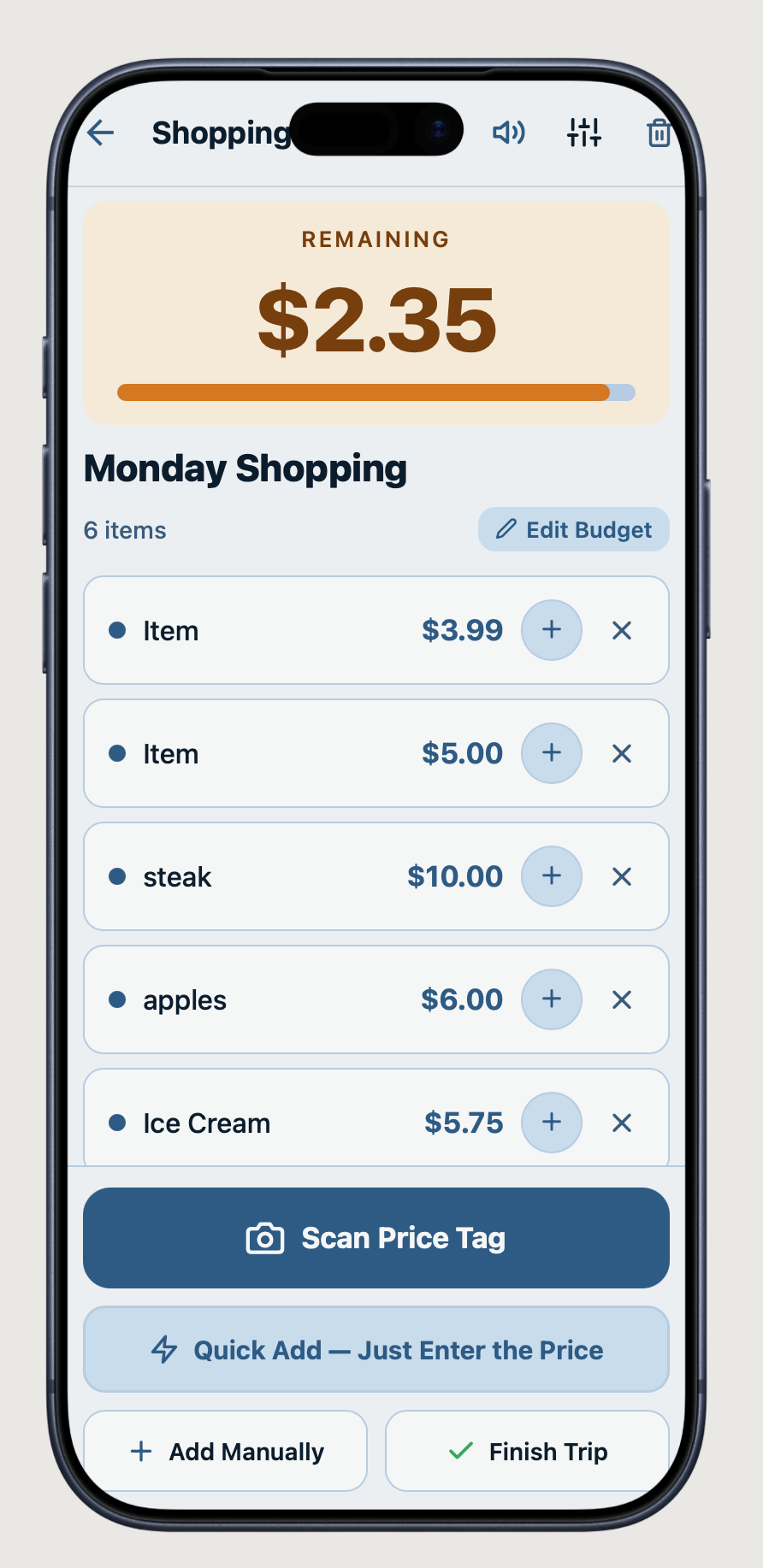
In Trip Sample


Inspiration
My sister has an intellectual and developmental disability. Shopping isn't hard for her, it's a favorite pastime, but the math is. She'd fill a cart, get to the register, and only find out she was over budget when her card was declined. Then she'd hand items back with a line behind her and a frustrated cashier. The alternative was letting a sibling or caregiver do the math, which took away her independence.
While the math is hard for her visual and verbal cues are ok. How could I give her some independence back so she could enjoy her pastime without feeling like an aide, sibling or caregiver was breathing down her neck to say no or you can't afford that.
What It Does
Set a budget. Scan a price tag or type the price. The running total and remaining budget update, and the app reads them aloud.
A color bar shows the trip at a glance: green on track, yellow close, red over. Always paired with spoken and written amounts, so nothing depends on seeing color. SibTally estimates tax, reads deals off the tag, and asks before adding an unusually expensive item.
The decision to put something back happens in the aisle now, not at the register, and it's hers.
How I Built It
I'm not a developer. With Replit my idea came to life. Dropped in a PRD and modified over time to get it where it is today.
Replit Agent built the working app. Expo, React Native, TypeScript, Gemini for reading price tags, RevenueCat for subscriptions. Accessibility shaped the build, not the polish: large touch targets, scalable text, high contrast, voice guidance, confirmation steps. No account needed to start a trip.
Challenges
My first scans took over 30 seconds which made the app difficult to use. I took photos of real shelf tags, went back to Replit Agent, and kept iterating until we got them down to about 3–4 seconds. I'm still tuning it.
Manual entry uses fixed cents, so typing 500 gives $5.00. A missing decimal is the exact error the app exists to prevent.
Voice quality. The first version sounded robotic. Initial fix made it worse. The real problem was a hardcoded voice setting that should have been reading the device's own, overriding whatever voice a user had already set up. Was able to get this fixed, updated, and released.
Keeping SibTally affordable is another challenge. Some supported iPhones can read certain price tags on-device; other phones need an online AI scan, which costs money to run. I’d like to lower the price without taking away the basic budgeting tools people need.
Pricing
Free: 50 AI scans a month, unlimited manual entry. Paid: $12.99 a year for 600 AI scans per month. Nothing is locked behind the paywall, it only raises the ceiling. The people who need a budgeting tool most have the tightest budgets.
My first sale came from a call where I was recruiting testers. I offered a free subscription and they said no, they'd buy it. They purchased before the call ended!!
What's Next
The challenge isn’t adding features; it’s staying simple as SibTally grows. People with intellectual and developmental disabilities have different support needs. I want to make the amount of guidance adjustable without turning the app into a settings menu that’s hard to use.
I’d also like to learn from families, caregivers, group homes, and support organizations. The goal is to support shoppers’ independence and reduce pressure on the people helping them.
Shop with confidence. SibTally keeps track. RevenueCat Peace Prize, Replit's Idea to Income, Noise Most Viral App
Built With
- gemini
- react
- replit
- typescript

Log in or sign up for Devpost to join the conversation.