
Inspiration
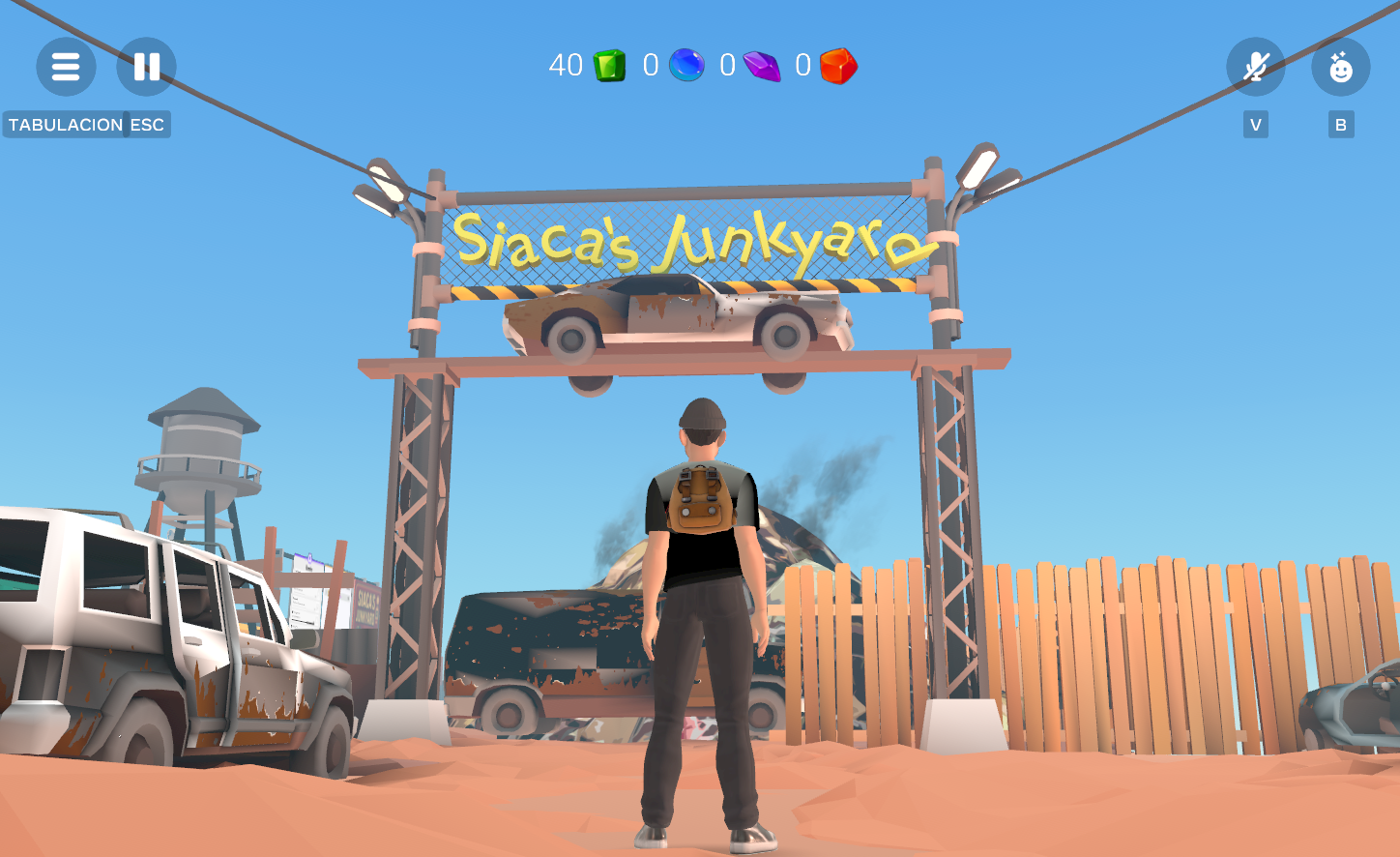
From childhood, we learn to value things if we take care of them. But often, it's necessary to learn to work hard to make our dreams a reality. One of those dreams is owning a vehicle. That's why, while waiting for the opportunity to get a new car, we sometimes have to repair the one we drive every day, and junkyards can be a good place to find good deals. There are also scenarios where our parents give us our first car; an automotive gem that needs many repairs. Based on these everyday experiences, Siaca Junkyard Tycoon was born.
What it does
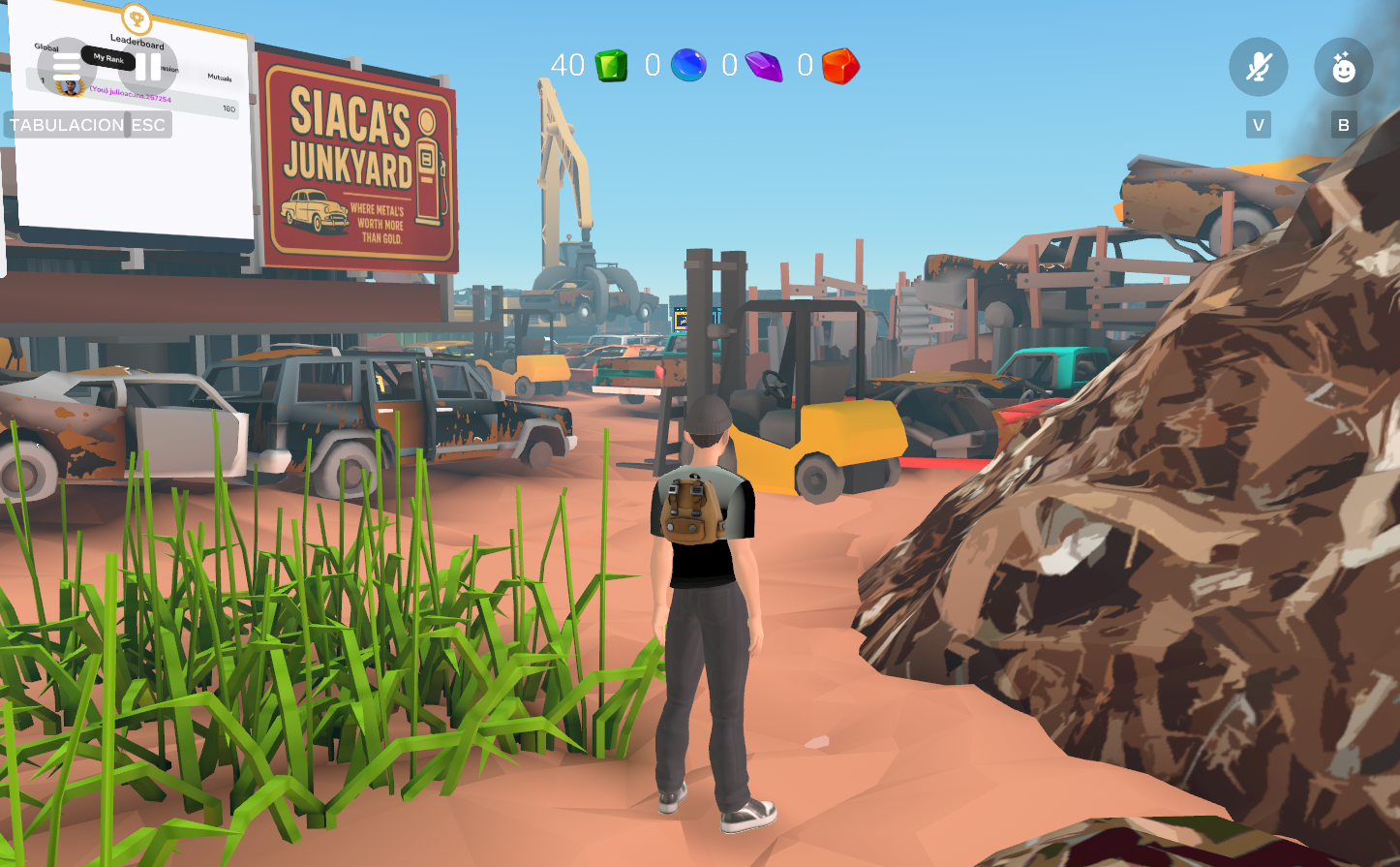
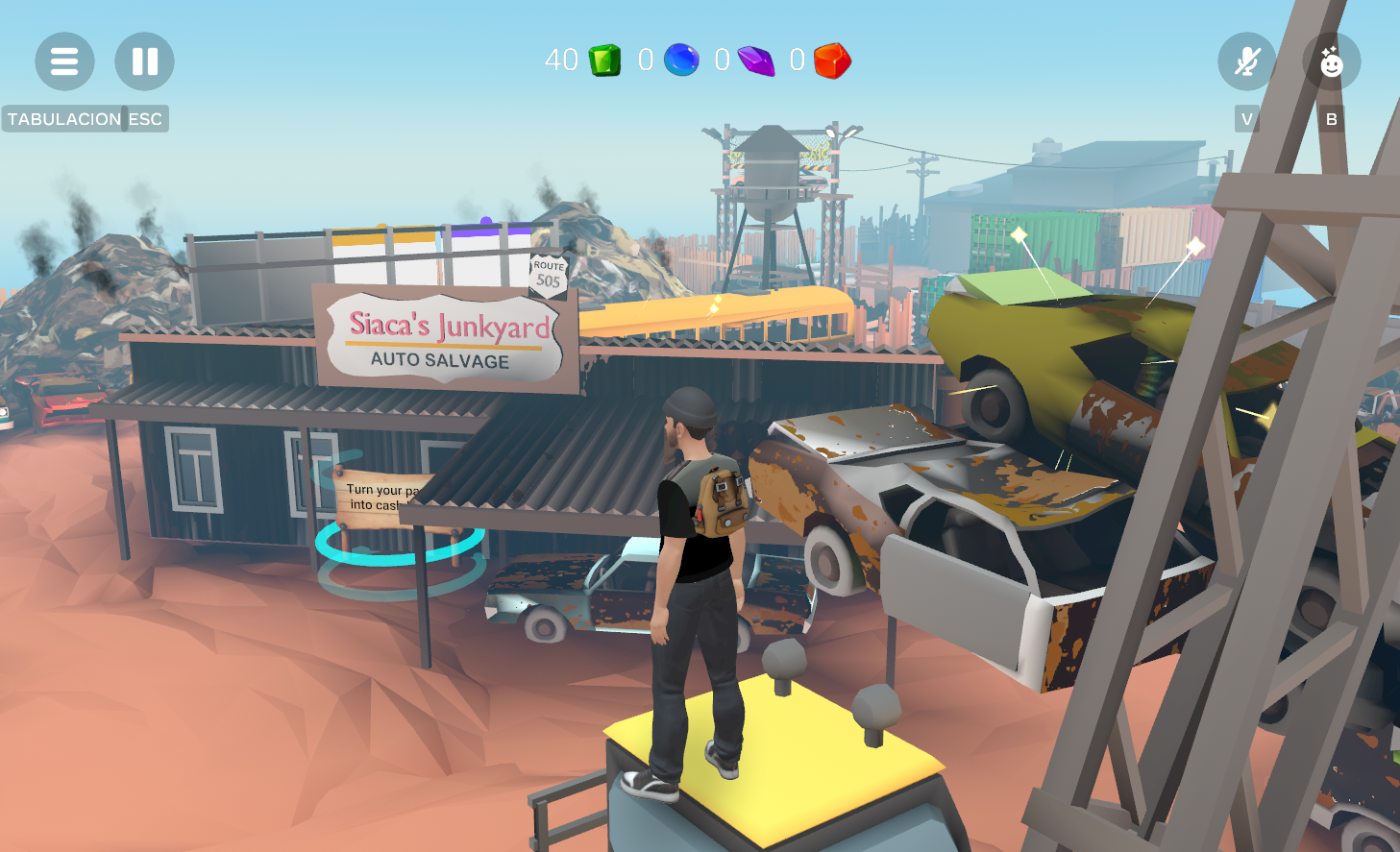
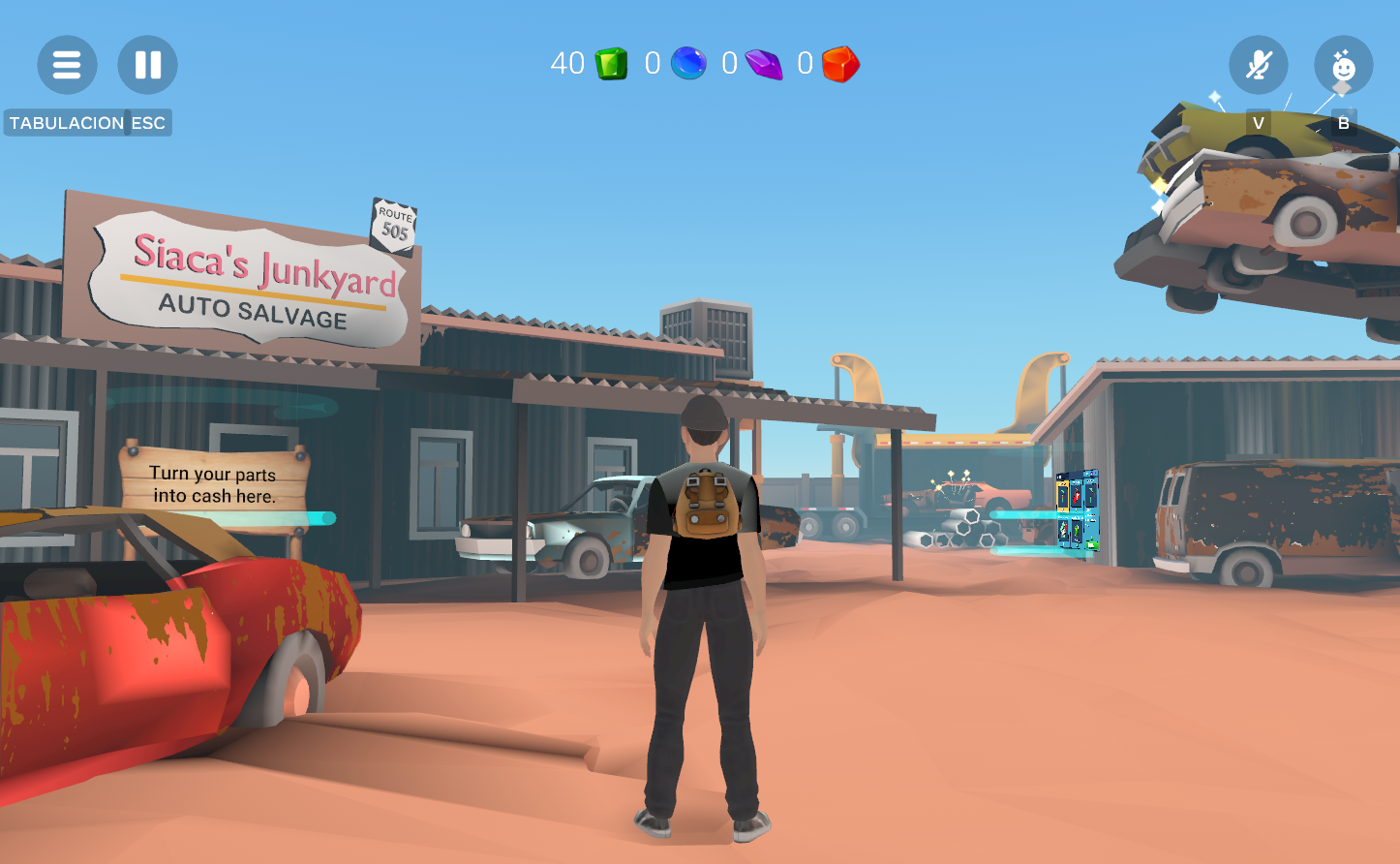
In Siaca Junkyard Tycoon, the player chooses an axe at the start of the game. Then, they must go to the area where all the vehicles are and look for those with a spark. These vehicles indicate to the player that they can start hitting them to discover the vehicle part they will obtain. Different vehicles provide the player with different parts. In this case, if the player wants to obtain the reward, they must choose a different colored axe. To do this, there are several interfaces on the map that tell the player which axe color to select before going to the vehicle and using it. If the player finds that a vehicle turns blue or purple when hit, they must find out how to select that axe color to obtain the engine part reward. Otherwise, even if they hit the vehicle with a green axe (which is the one the player is given), they will not earn points if the bar at the top indicates that it is blue, purple, or even red.
How we built it
A selection of low-poly models was made to meet the requirements regarding the number of vertices and polygons allowed in Horizon. Each model placed in the scene uses a single texture, which helps us manipulate the objects we place in the scene. Several scripts control the process of providing the player with a different colored axe. In addition, the vehicle size had to be mapped to ensure a collision between the axe used by the object and the vehicle it would strike. Numerous triggers were used to activate the scripts, and changes were also made to the interface.
Several VFX elements were added to indicate to the player which vehicles should be struck, and as a reward, they will obtain an engine part. This part can be exchanged at a specific location within the world.
Challenges we ran into
One of the challenges was incorporating textures with two different materials into a single 3D model. We had to make modifications considering Horizon World's established format for metallic, opaque, and transparent textures. Another problem was the coordinate system, as our models in Blender have a specific orientation, but when imported into Horizon World, the coordinate system changes, requiring adjustments to each of our models.
Accomplishments that we're proud of
Creating user interfaces Using different textures for 3D models Developing a Script Manager that controls certain mechanisms within the game. Transforming a real-world scenario into a social game where no risks or dangers can exist.
What we learned
There are several types of materials that can be used in a 3D model, and it's important to follow the standard naming conventions when importing them into the Horizon editor. Having a good visual interface is very important because it helps guide the player. Many real-world situations can be transformed into a creative space for sharing experiences with other players.
What's next for Siaca Junkyard Tycoon
Incorporate new challenges that allow players to earn more money. Create a catalog of automotive parts that should be collectible so that the player can assemble their own vehicle. In this sense, we are thinking of creating a kind of grid where the player can see the collection of vehicles available to them. Add certain movements to the machines in the world.
Add the option to operate a forklift in first person where the player can move a vehicle from one position to another and receive a reward for completing this task.


Log in or sign up for Devpost to join the conversation.