Inspiration
Most Bitcoin remains idle, earning no yield despite the explosion of DeFi opportunities on other chains. Moving BTC into DeFi today is complicated, it requires bridging, wrapping, connecting new wallets, and manually interacting with yield protocols. I wanted to make this process as simple as sending Bitcoin. That’s why we built Shuttle (a one-click bridge from Bitcoin to Starknet yield strategies.)
Demo Video: YouTube video quality might be low — watch in better quality here: https://www.loom.com/share/516ade566cf44f93a0e2af8e9c99aeb0
What it does
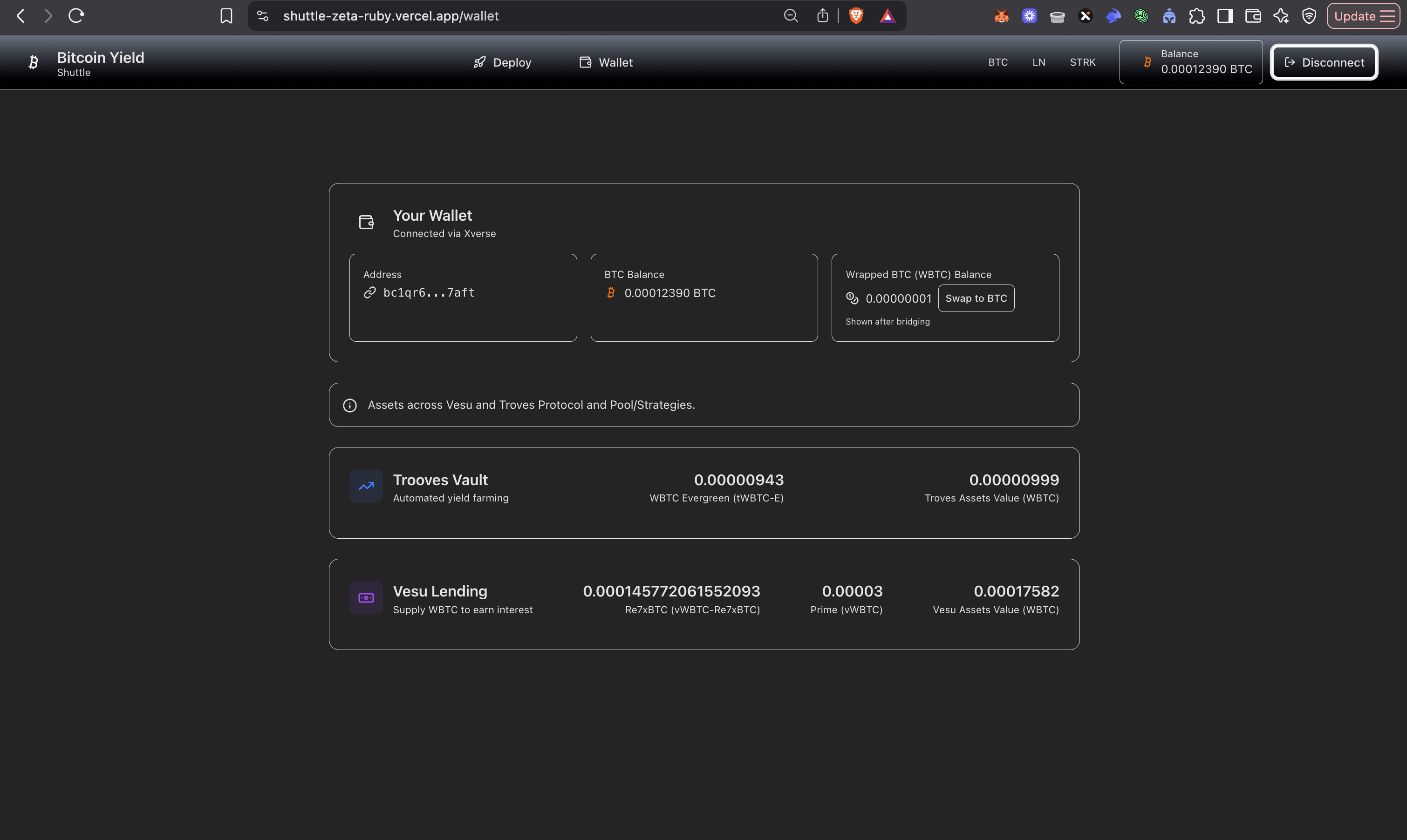
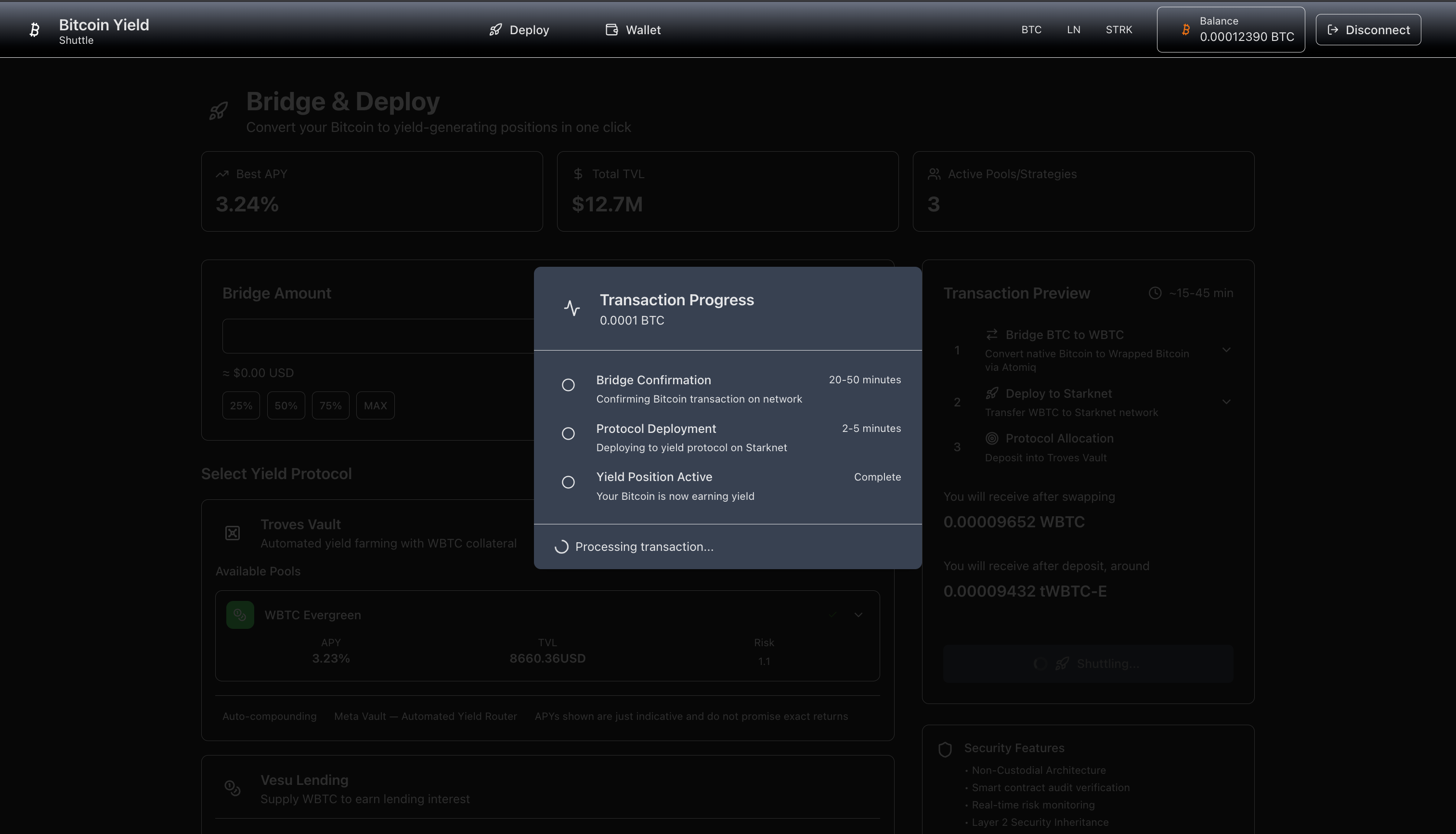
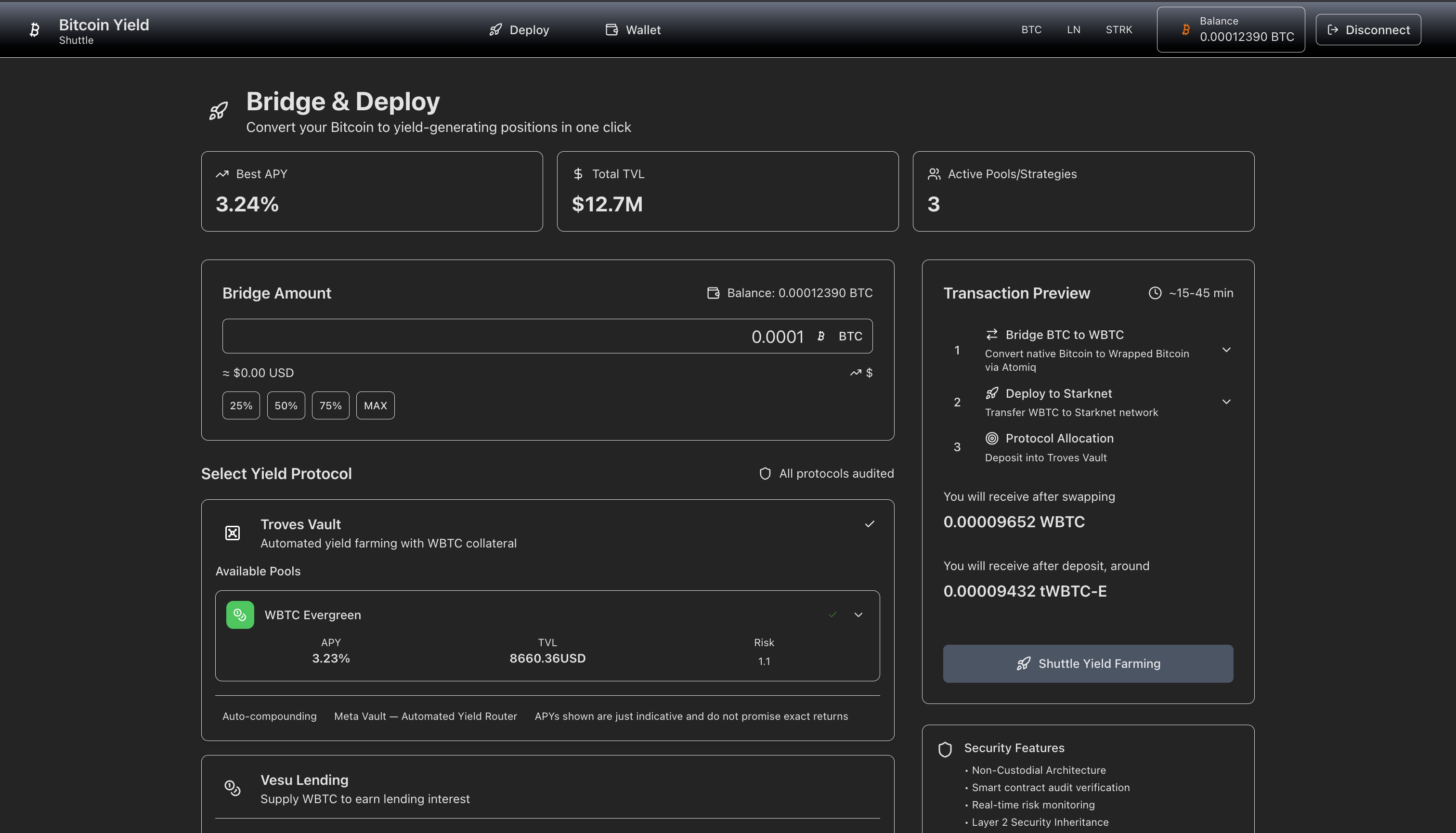
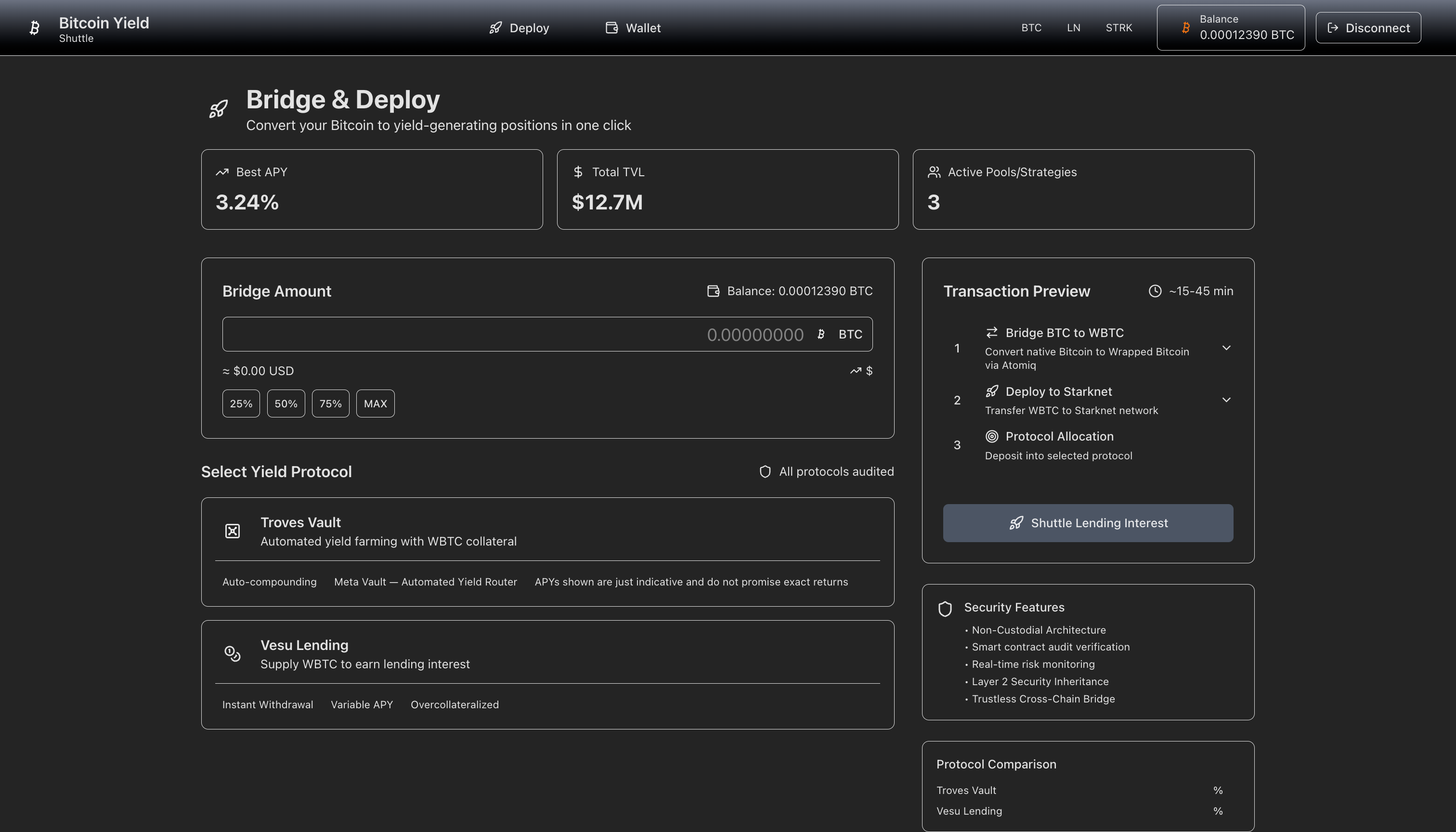
- Bitcoin Yield Shuttle allows users to deposit native BTC (via Bitcoin L1) and automatically deploy it into Starknet yield protocols like Troves, or Vesu. It abstracts away all the complexity, bridging, wrapping (to WBTC), and depositing into a single flow.
- Users simply connect their Xverse wallet, choose a protocol and strategy/pool, and Shuttle handles everything behind the scenes.
How we built it
I combined three major building blocks: i. Xverse Wallet for onboarding Bitcoin users seamlessly. ii. Atomiq SDK for handling BTC => WBTC and vice versa cross-chain swaps and transfers to Starknet. iii. Cairo smart contracts on Starknet that automatically deposit the WBTC into yield protocols pool/strategy (starting with Troves and Vesu).
The frontend is built in React + Tailwind + Vite + Starknet.js, orchestrating multi-step transactions into one smooth user experience.
Challenges we ran into
- Integrating Bitcoin-native wallets (like Xverse) with Starknet smart contracts required custom signing logic and bridging coordination.
- Handling cross-chain state updates, ensuring swaps completed successfully before yield deposits triggered, was non-trivial.
- Interacting with contracts written in cairo was a little bit hard, coming from a solidity field.
- Started out development on testnet, before few restrictions with troves deployed on mainnet and xverse not supporting starknet sepolia. Had to get some mainnet BTC and Starknet and moved development to mainnet.
- Multi calls execution failing at some points.
Accomplishments that we're proud of
- Successfully built an end-to-end working prototype where BTC is swapped, bridged, and deposited into Starknet yield all from a single flow.
- Established integrations with Troves strategies, Vesu V2 markets, and Atomiq SDK.
- Designed a user-friendly interface that feels simple and accessible even for Bitcoin-only users.
- Developed a modular architecture ready to onboard new yield strategies and assets from Troves and Vesu V2.
What we learned
- Building across Bitcoin and Starknet ecosystems requires bridging not only assets but design philosophies. UTXO vs. account-based models.
- Abstracting complexity for users while maintaining transparency is key for adoption.
- Cairo and Starknet are maturing fast, with thoughtful contract structuring, you can achieve powerful automation.
- User trust depends on security-first architecture, minimizing approval scopes, verifying bridges, and enforcing on-chain validations.
What's next for Shuttle
- Expand to support multi-asset yield strategies (e.g., WBTC/USDC, WBTC/STRK) through Troves and new Vesu V2 pools.
- Add support for Nostra DeFi Protocol.
- Integrate BTC Lightning support to allow instant deposits from Lightning wallets.
- Implement on-chain performance tracking and portfolio analytics for yield positions.
- Add a fee mechanism (0.5–1% per investment flow) to generate sustainable revenue for development.
- Apply for Starknet Grants to extend development and deepen integrations with ecosystem partners.
Built With
- atomiq
- cairo
- javascript
- tailwind
- typescript
- vite
- xverse

Log in or sign up for Devpost to join the conversation.