-
-
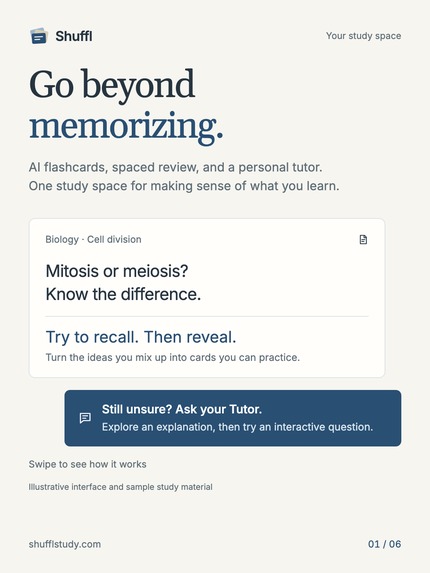
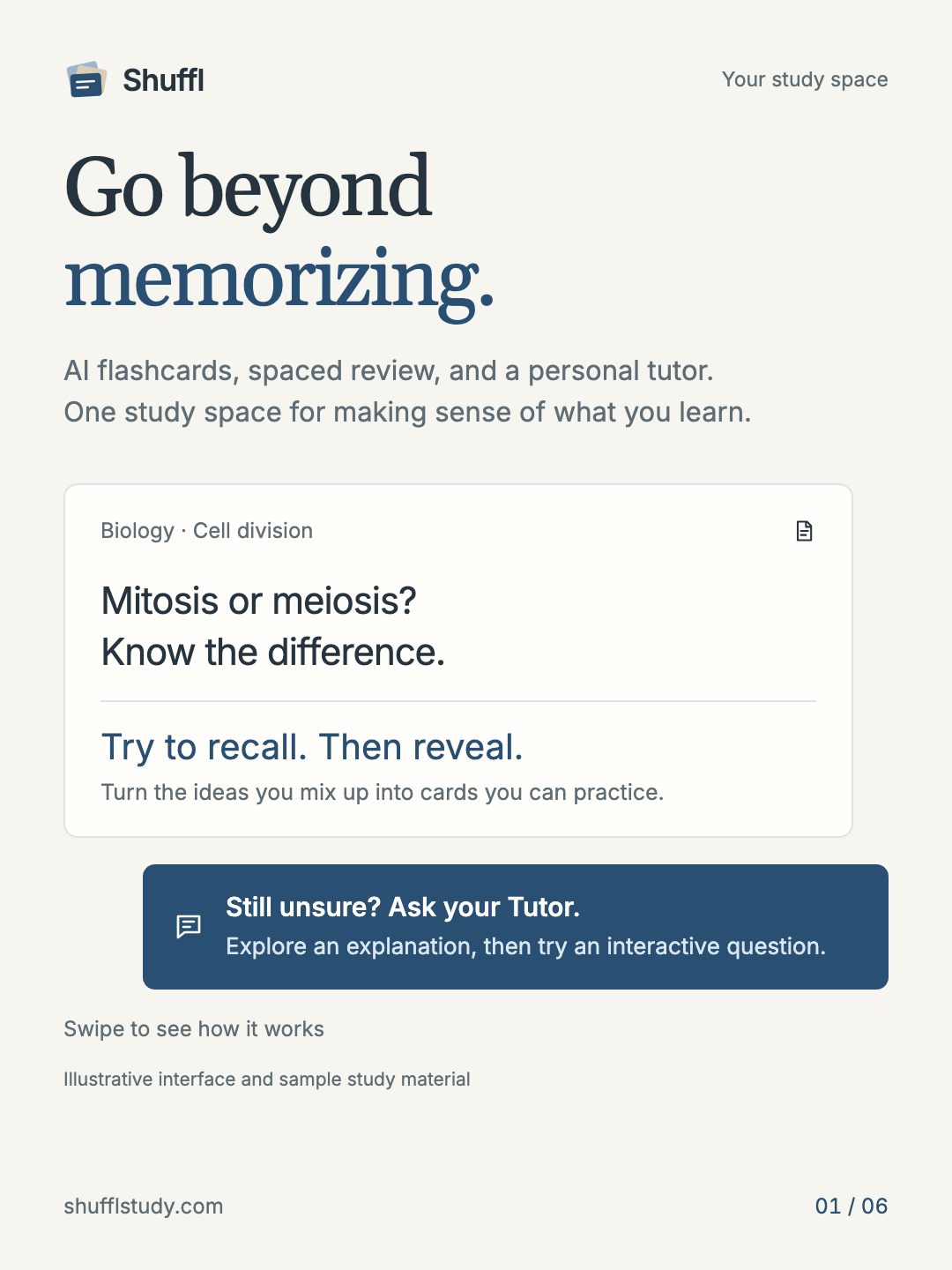
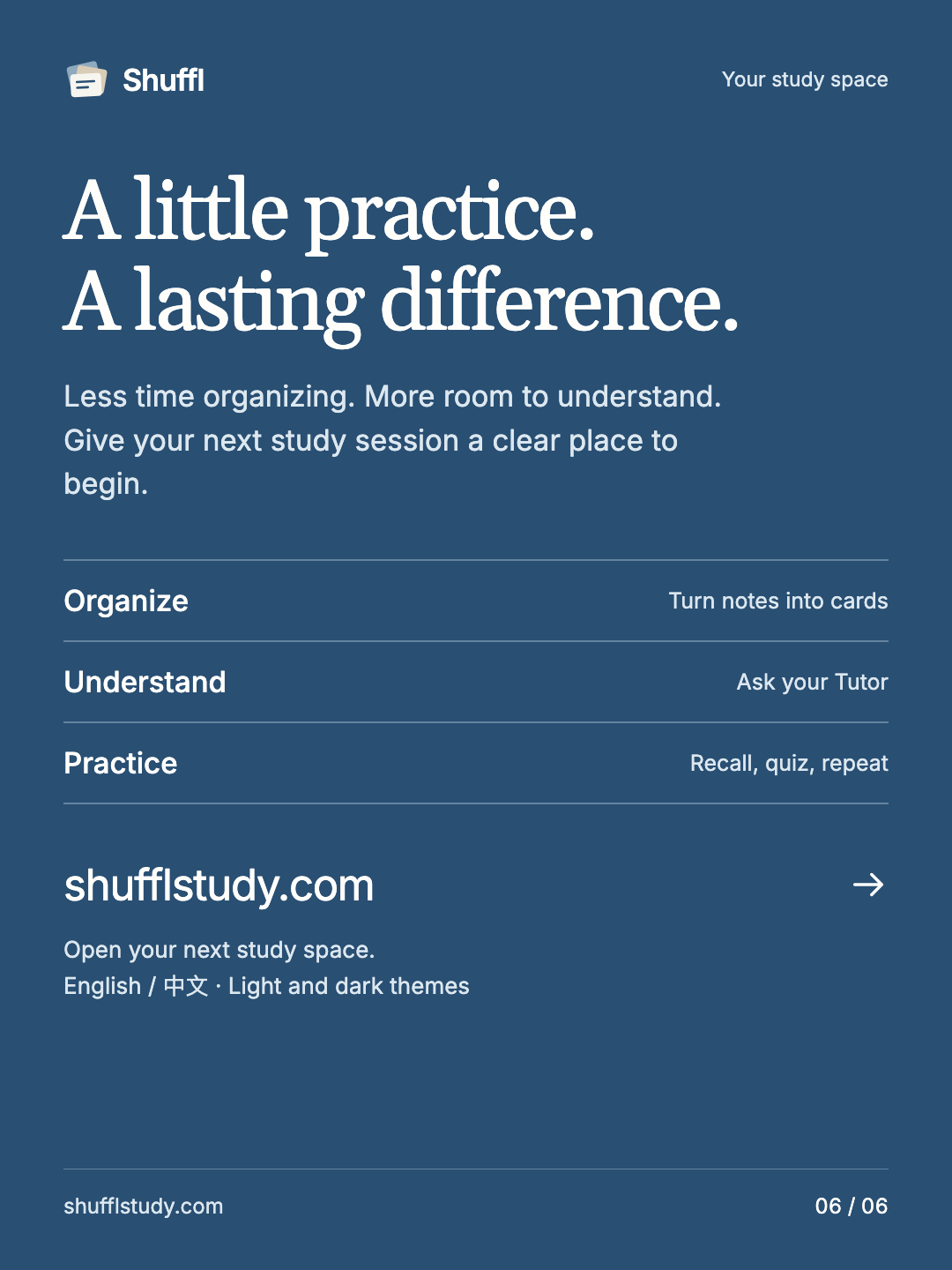
Go beyond memorizing. Build understanding with a little practice each day.
-
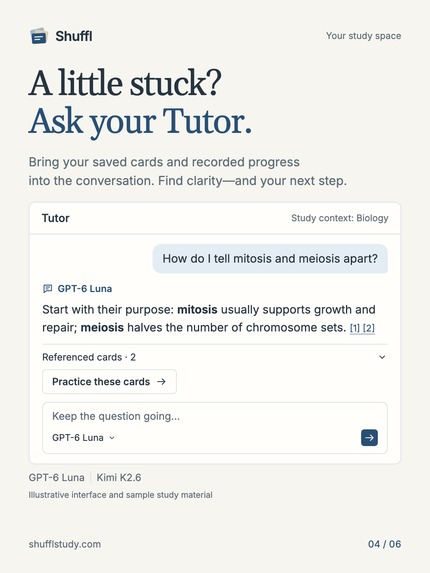
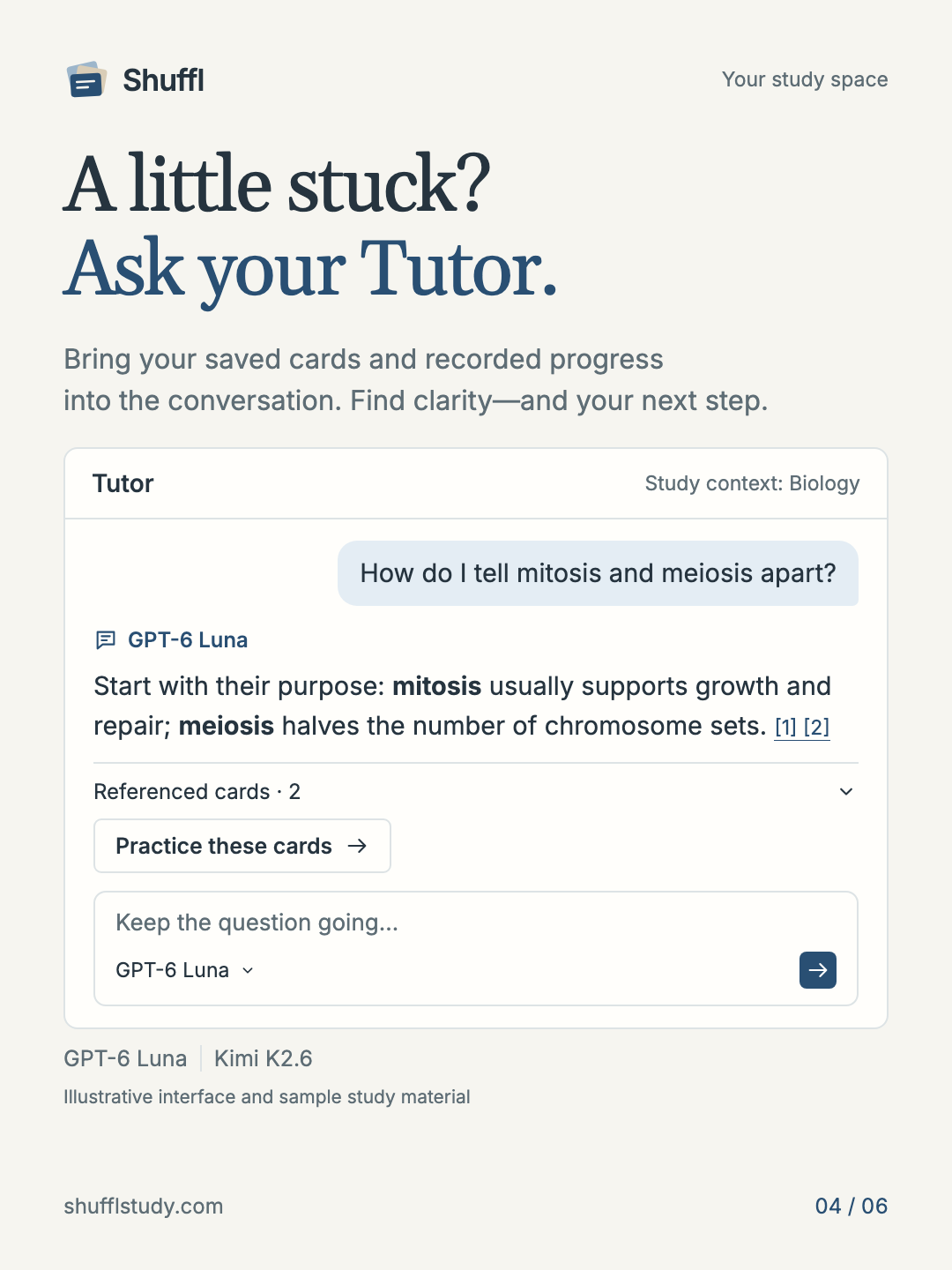
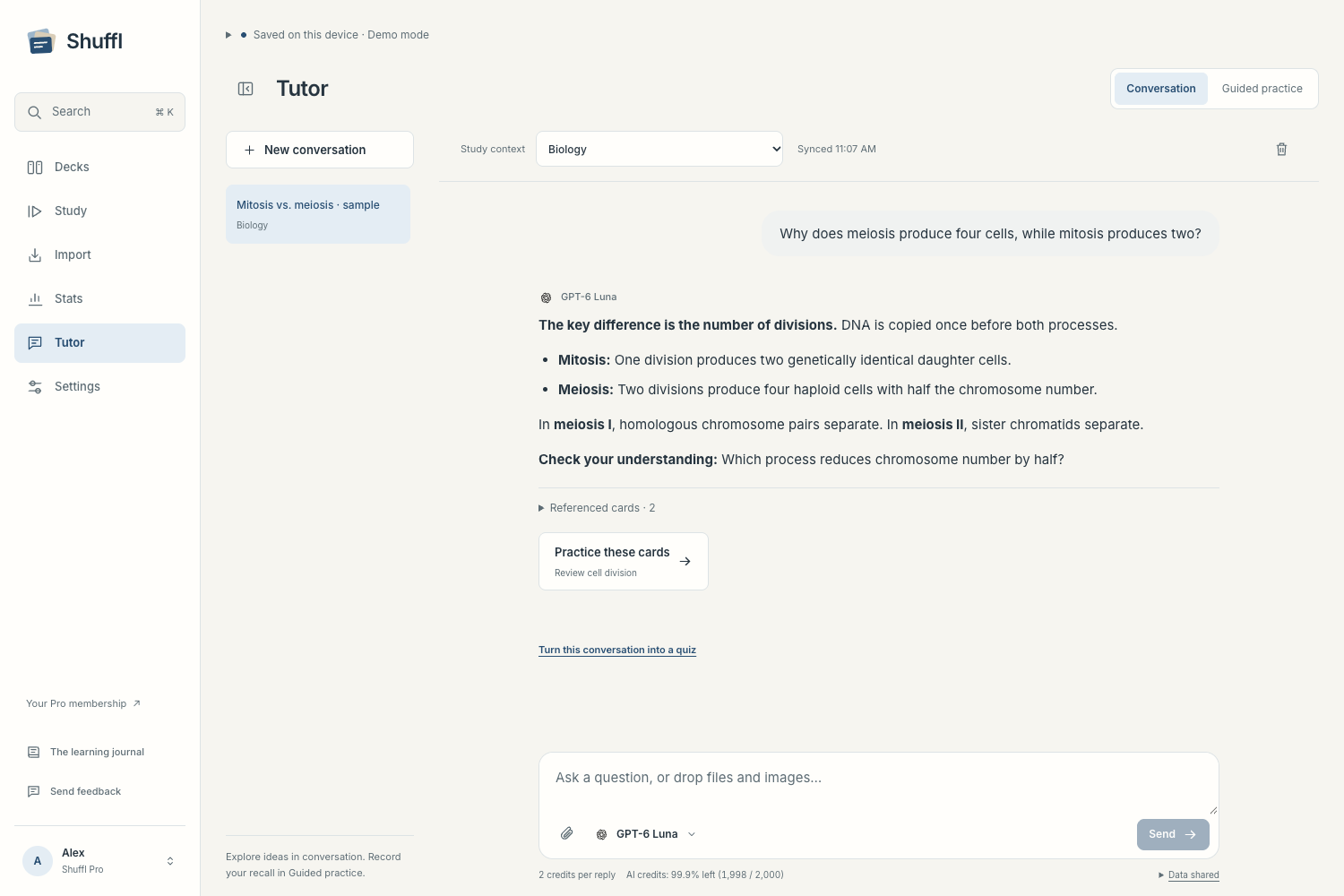
Ask your Tutor when a concept needs a clearer explanation.
-
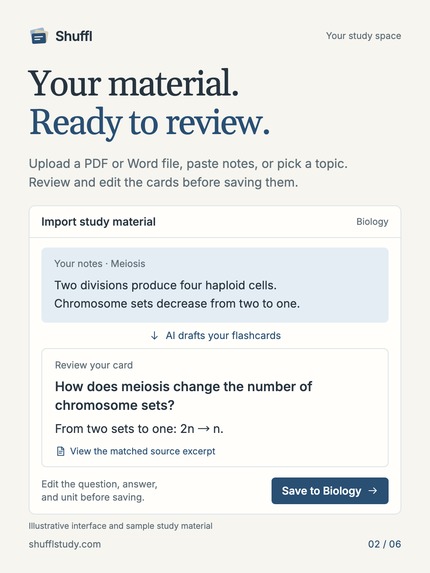
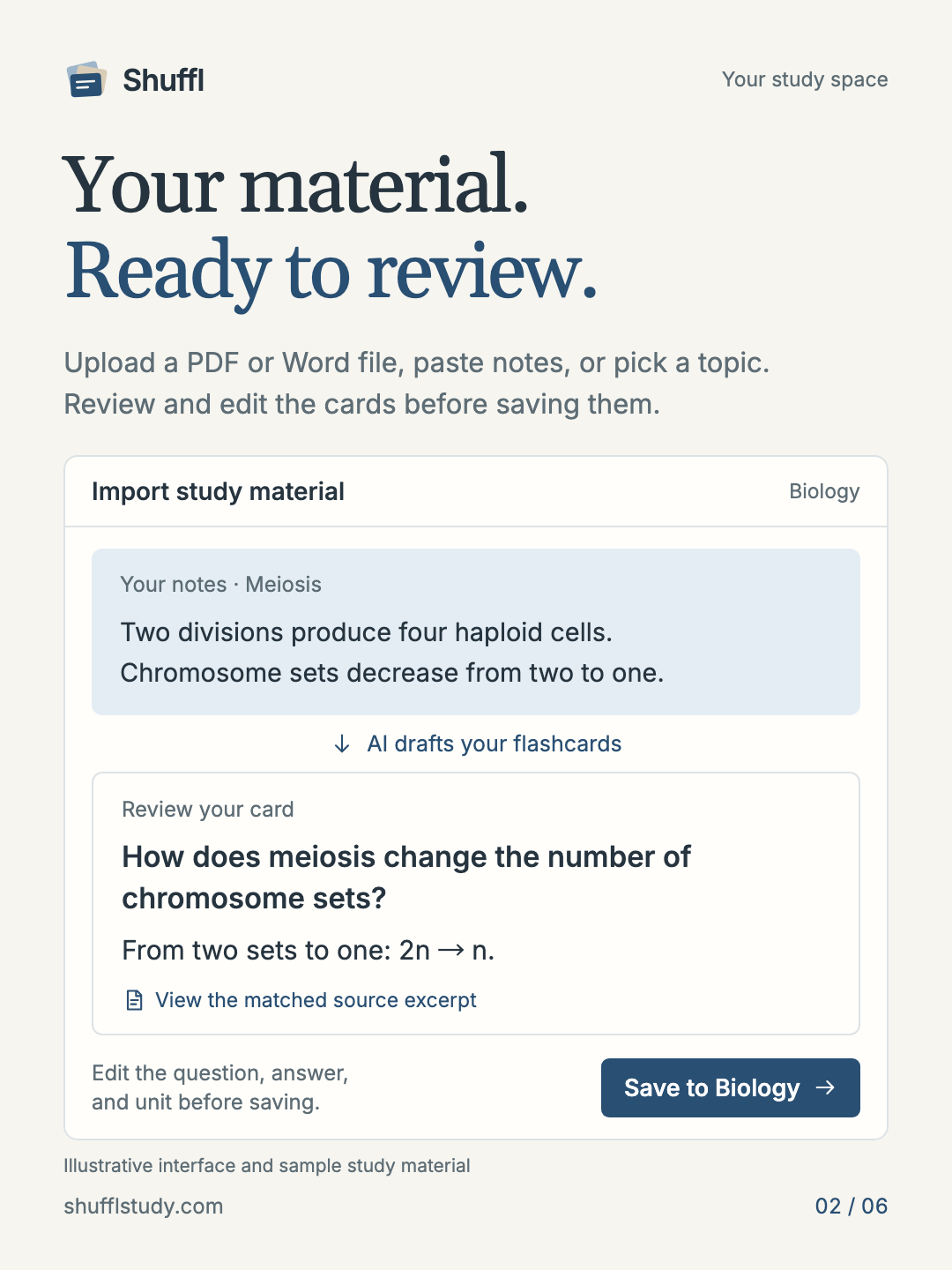
Turn your notes into flashcards you can review and edit.
-
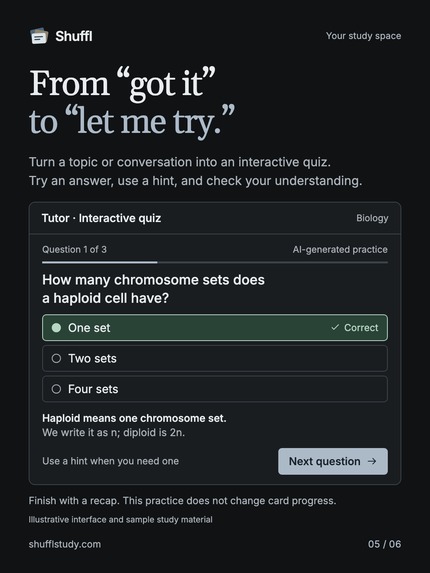
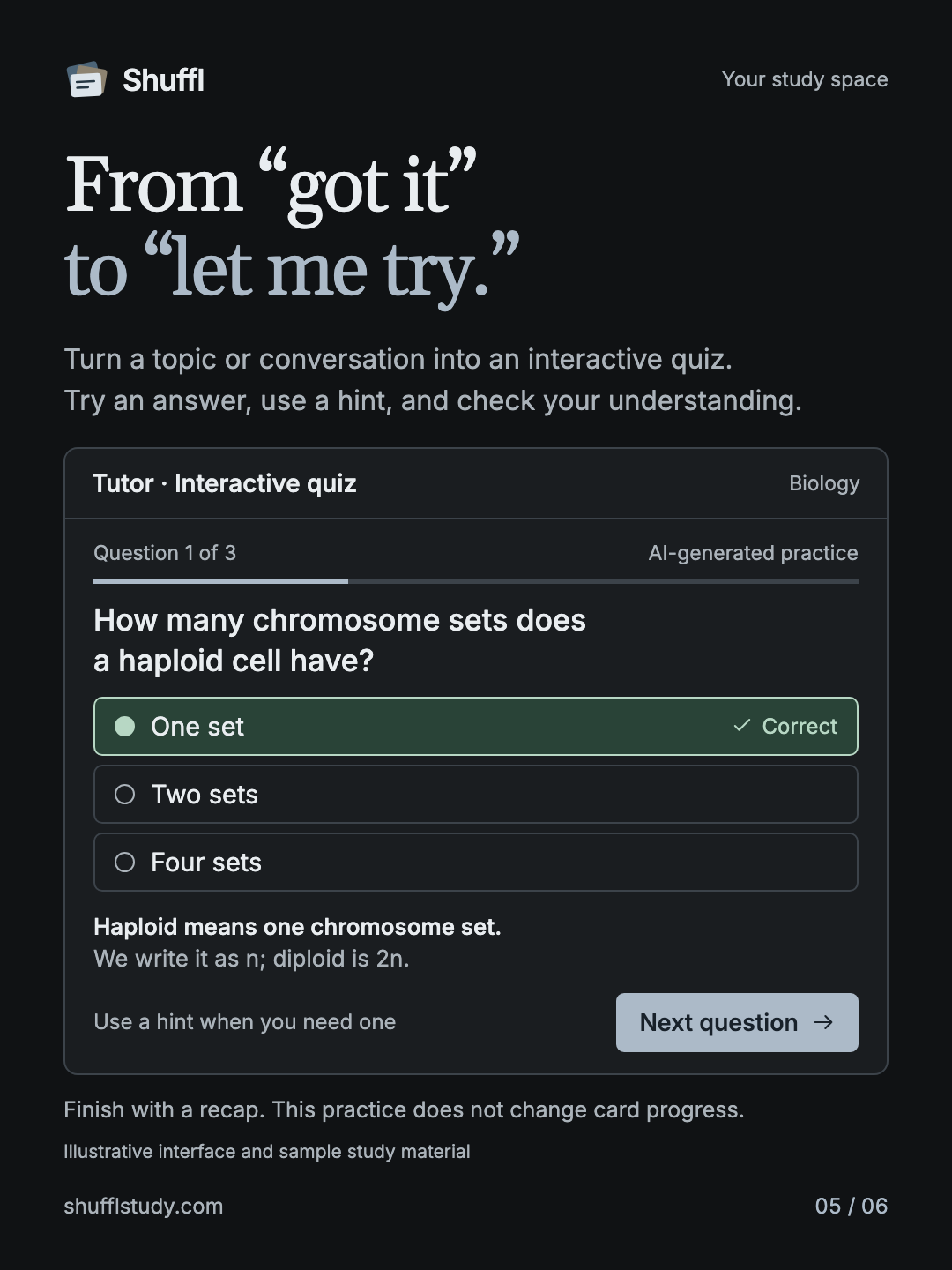
Check what you know with a quiz, then practise what you missed.
-
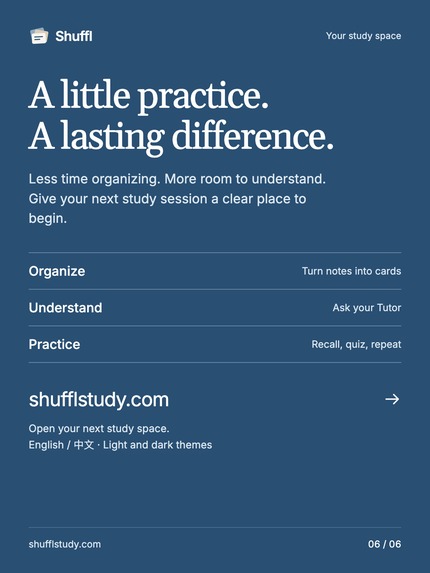
A little practice. A lasting difference. Try Shuffl at shufflstudy.com.
-
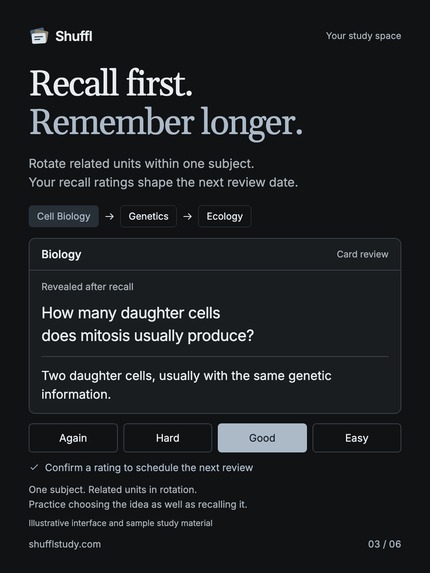
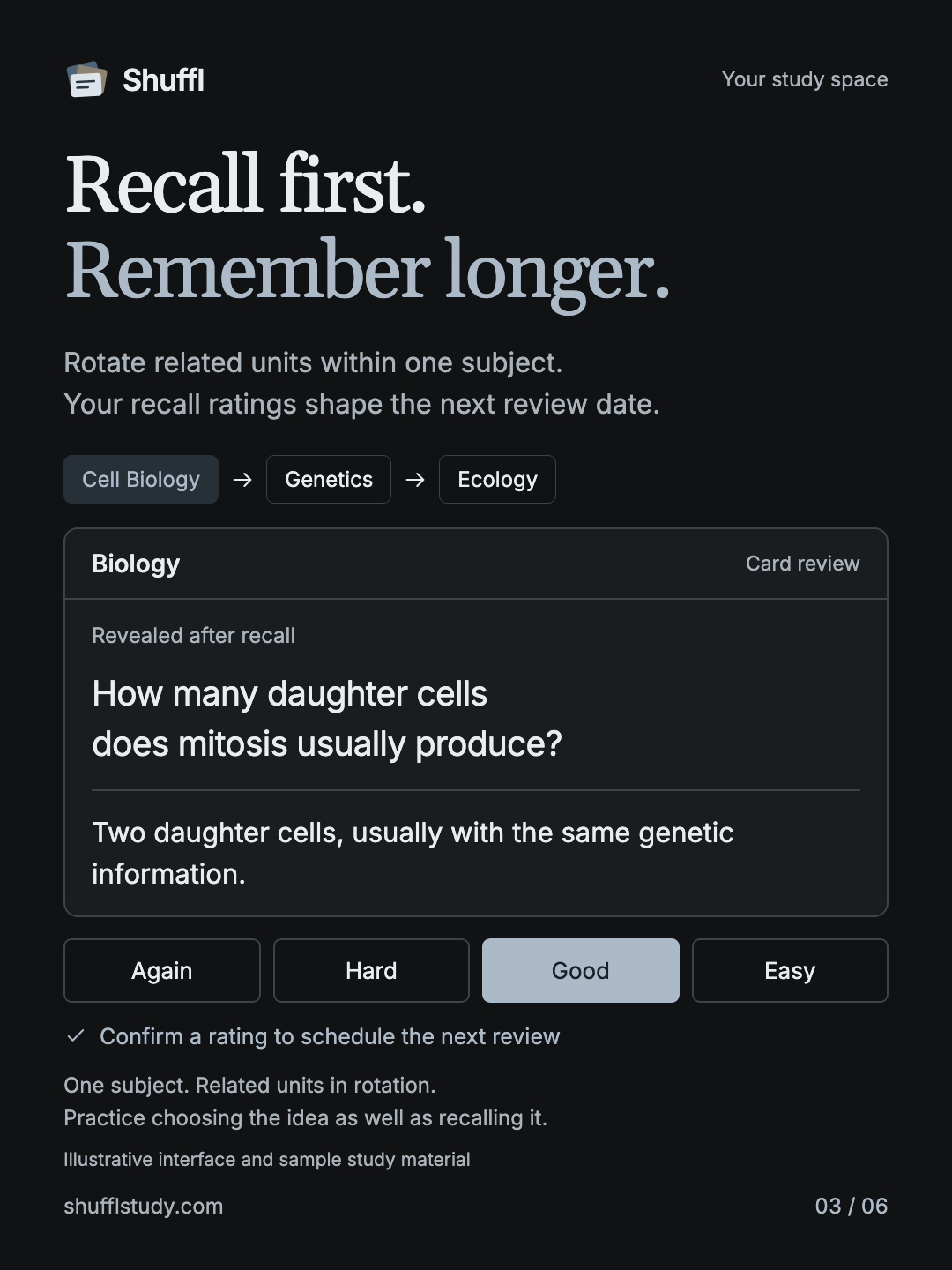
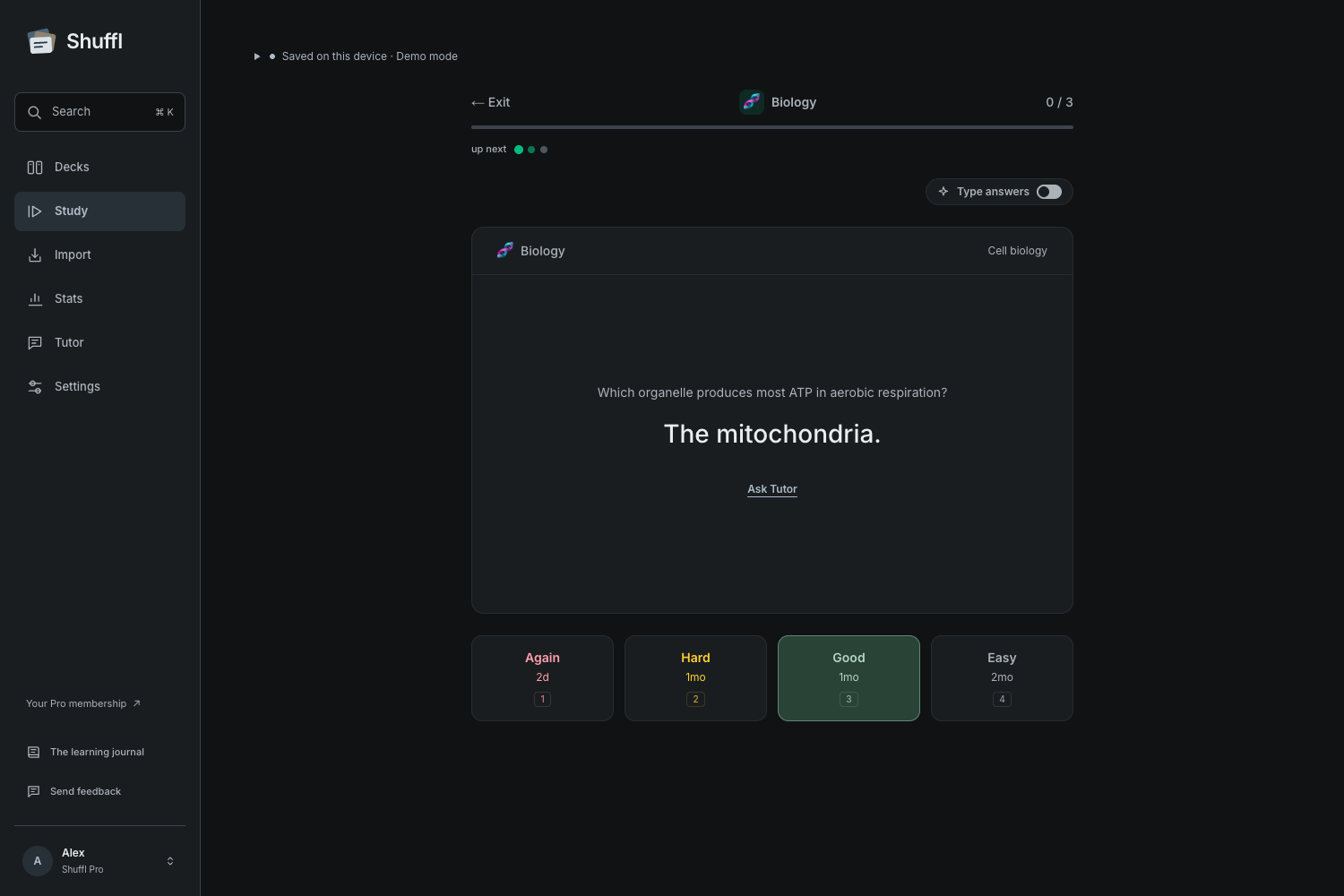
Recall the answer before revealing it, then come back when it is time to review.
-
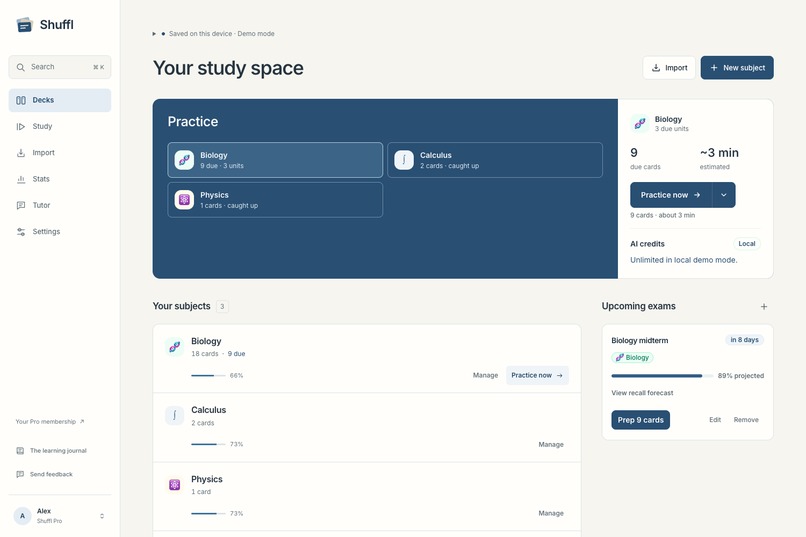
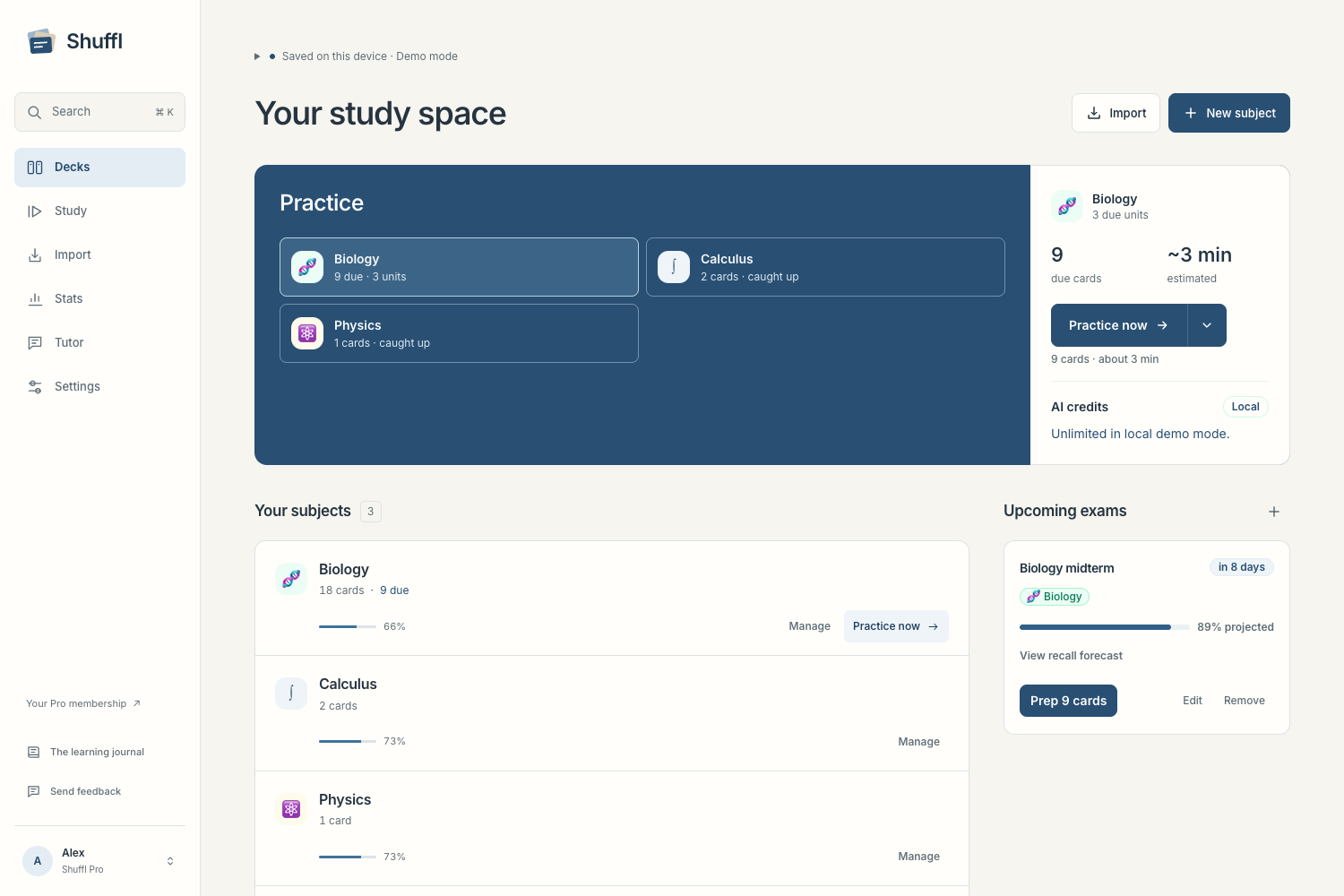
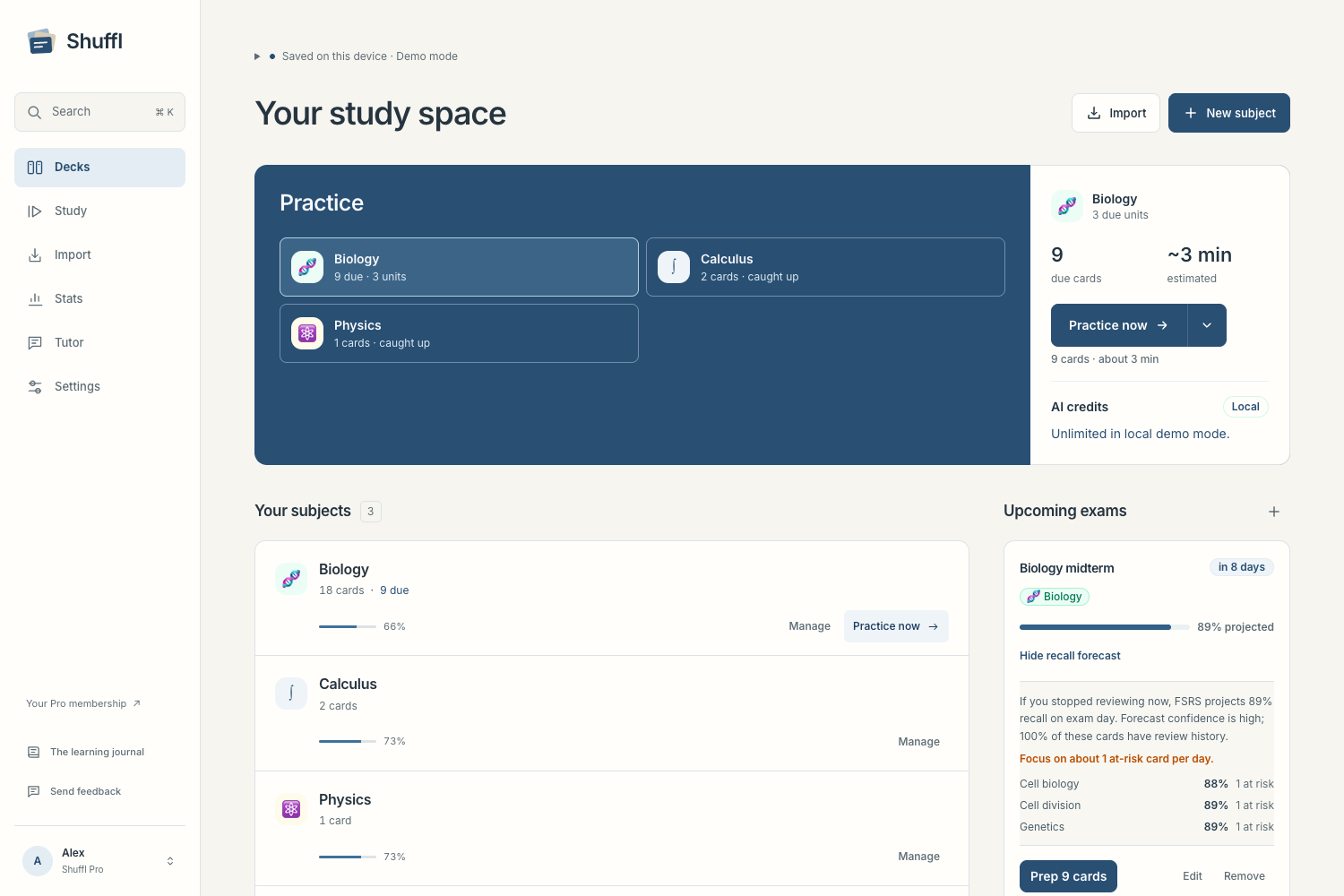
Your subjects, units, and daily reviews in one place. Sample Biology data.
-
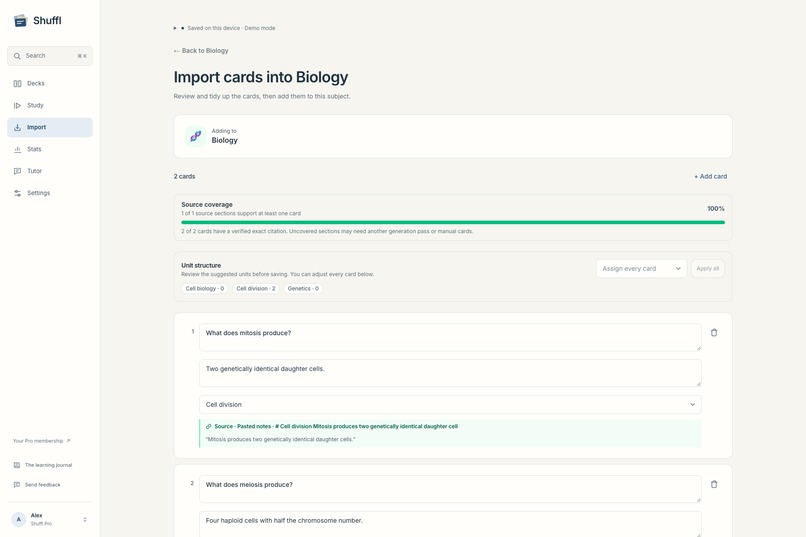
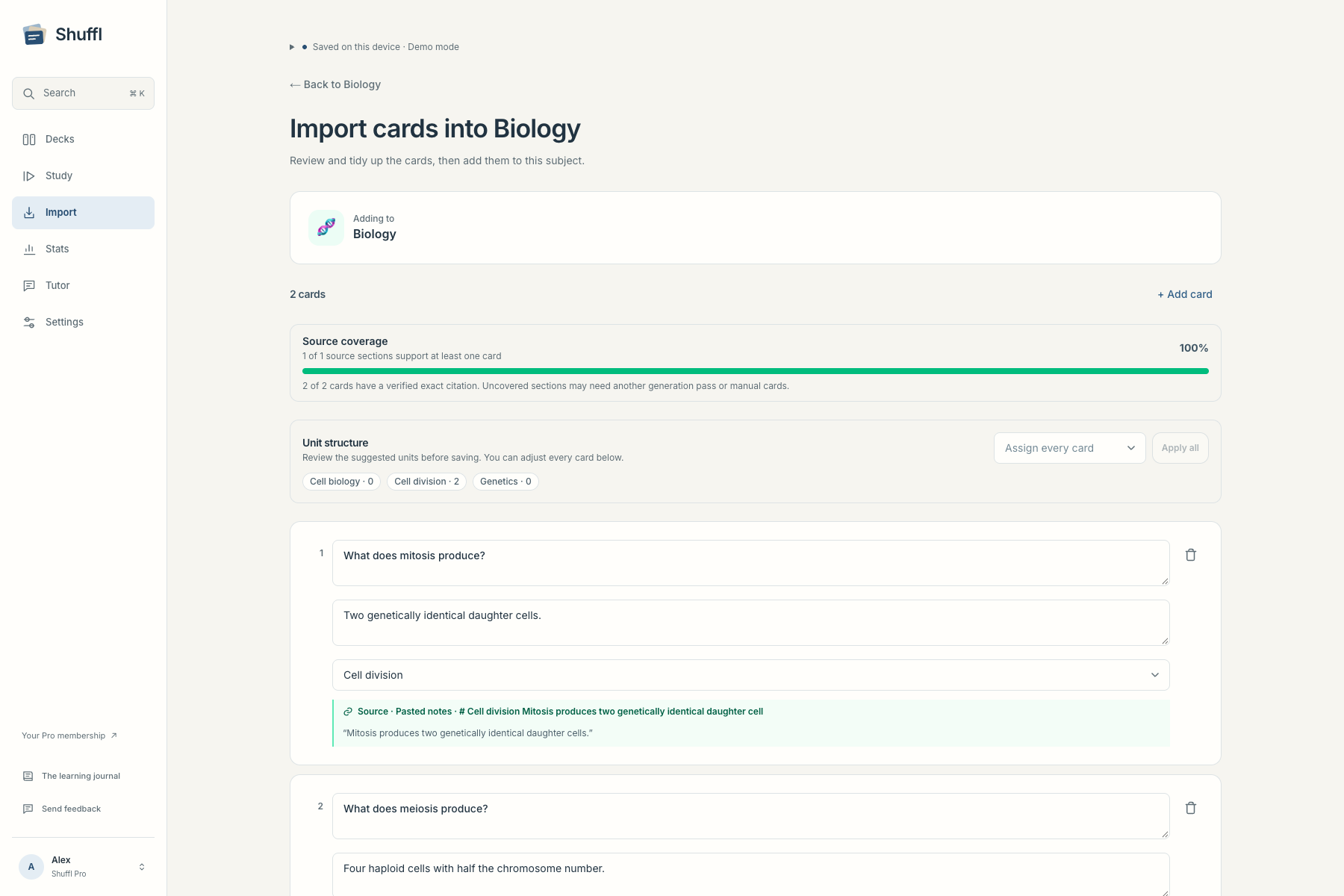
Review and edit flashcards before saving, with source excerpts you can check. Sample Biology notes.
-
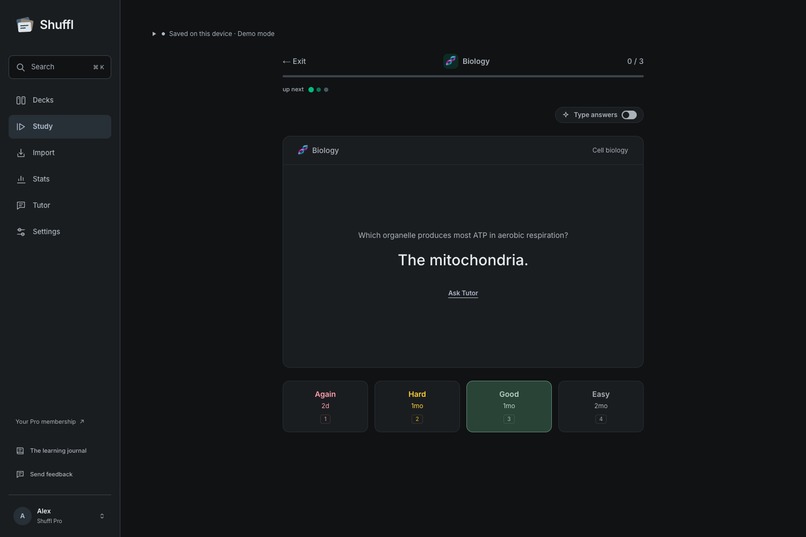
Recall the answer and rate how well you remembered it. FSRS schedules the next review. Sample Biology session.
-
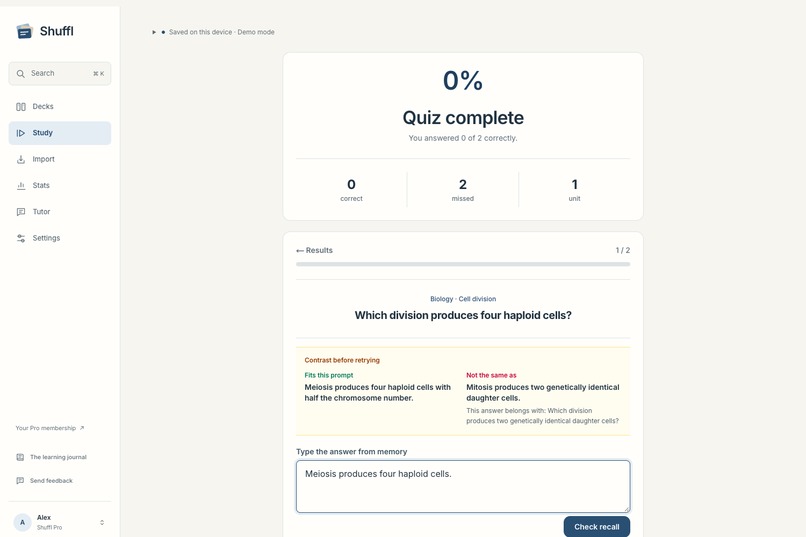
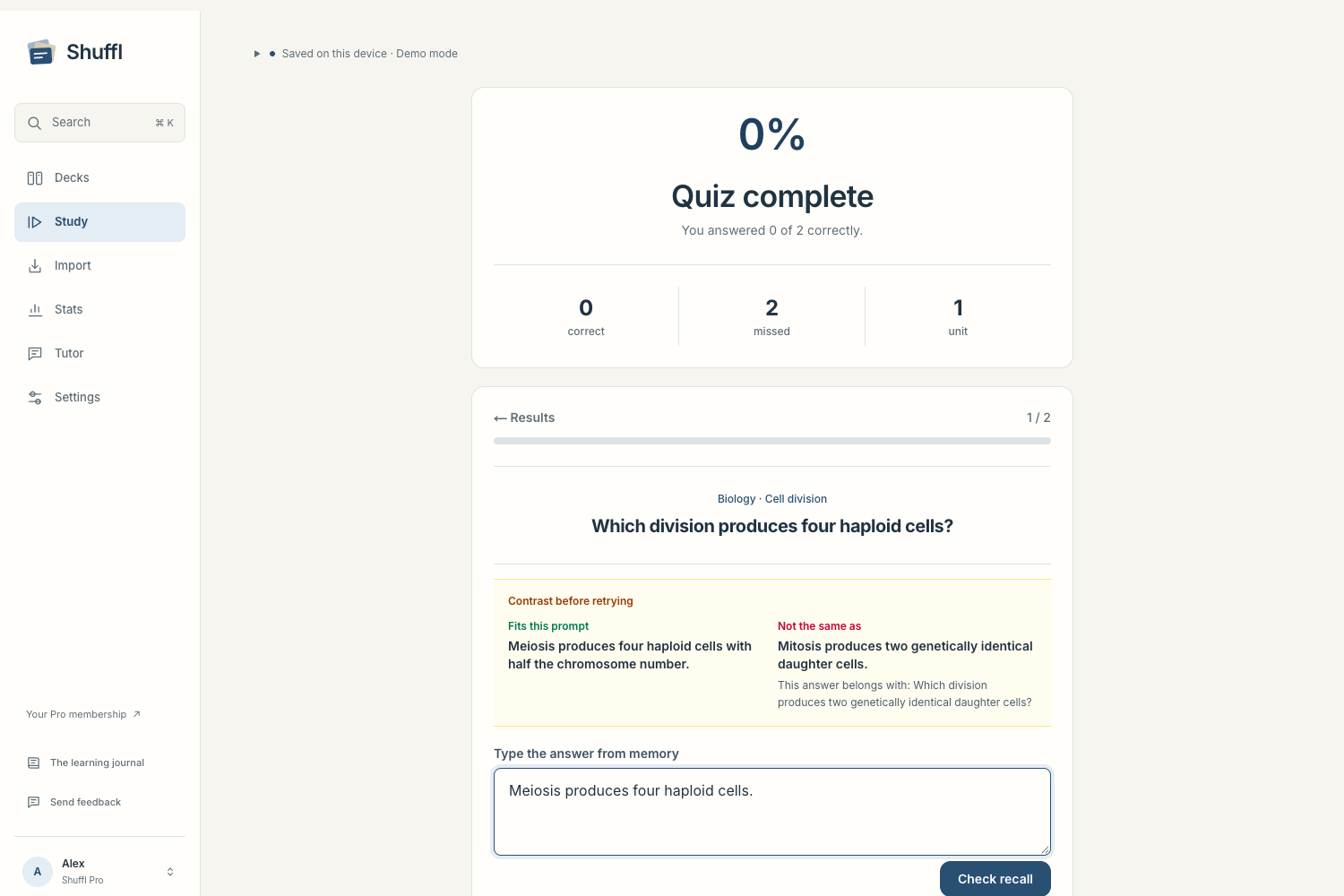
Learn the difference between similar concepts, then type the answer from memory. Sample Biology quiz.
-
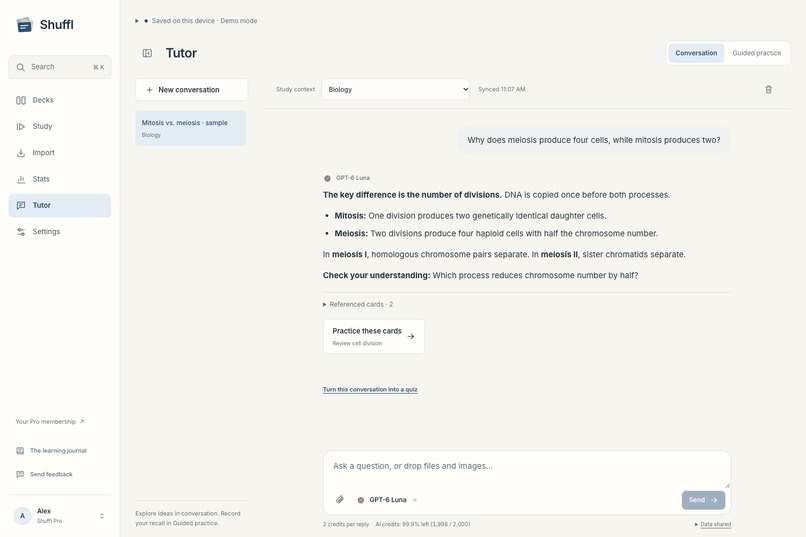
Ask follow-up questions and get help understanding your cards. Example Tutor conversation.
-
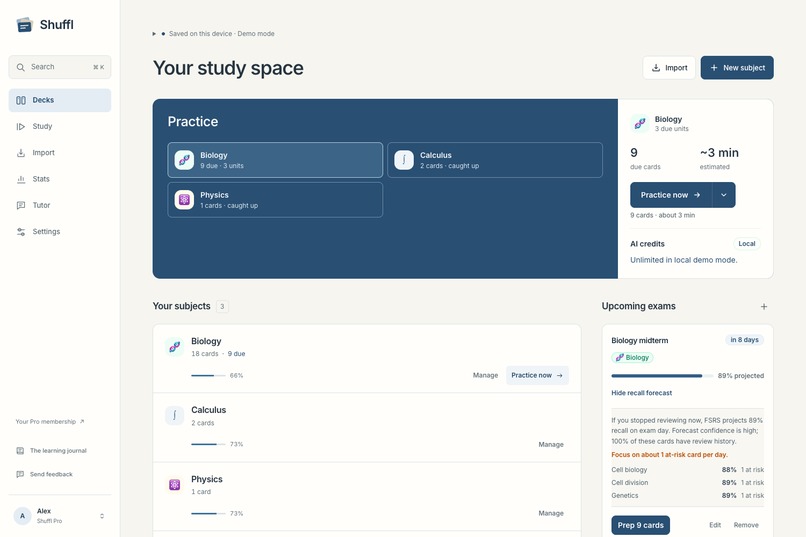
See your estimated recall for exam day and which units need more practice. Based on sample review data.
Try Shuffl
Access code for PRO: SFL1-Y3KT-6TWC-R6JK-LQCH-W
Use this beta invite code for PRO access.
Inspiration
Reading notes can make a subject feel familiar, but familiarity does not always translate into the ability to explain it from memory. Students also face another challenge: deciding what to study next when several related topics need attention.
I created Shuffl to make that decision easier. My aim is to turn existing study material into a daily practice routine that helps learners recall information, distinguish similar concepts, and revisit material at appropriate intervals.
What it does
Shuffl converts notes, documents, and images into AI-generated draft flashcards that learners can review and edit before saving. Material is organized by subject and unit, keeping each study session focused.
Its learning loop combines:
- Active recall: Retrieve an answer from memory before revealing it.
- Spaced repetition: FSRS adjusts review intervals based on each card’s review history.
- Interleaving: Mix related units within a subject, with sequencing informed by learning progress and observed concept confusions.
- Targeted practice: Address incorrect quiz answers through comparison drills and typed recall.
- AI tutoring: Receive explanations when an answer or concept is unclear.
- Exam preparation: View estimated recall for an upcoming exam date.
Generated cards can include verified source excerpts, allowing learners to inspect their connection to the original material. Shuffl supports desktop and mobile browsers, English and Chinese, and local storage with account-based cloud synchronization.
How I built it
I developed the application using Next.js, React, and TypeScript, with Tailwind CSS for styling and Zustand for client-side state management. Supabase provides authentication and PostgreSQL-backed cloud storage. I also used Codex for some of the frontend and backend development and Claude Code for marketing features. AI is only used for developing some parts of this project. I have done all the brainstorming, planning, and decision-making; it represents my own original work.
I integrated FSRS to schedule individual cards and built a separate session engine to sequence units within a subject, accounting for due material, weak cards, and recorded concept confusions.
I built an import pipeline that extracts content from supported documents and prepares images for AI processing. AI-generated cards pass through a review stage before entering a learner’s collection. I integrated AI providers for card generation and tutoring, and added source-matching logic to verify cited excerpts against the imported text.
Challenges I ran into
One of my main challenges was making interleaving useful. Selecting related material required coordinating review schedules, subject structure, and the learner’s progress.
AI generation introduced another challenge: a plausible flashcard can still be vague or unsupported. I added editable previews and source-excerpt verification to make generated content easier to evaluate.
I also had to support varied document formats, preserve study progress across interrupted sessions, and coordinate local persistence with cloud synchronization.
Accomplishments I’m proud of
I brought importing, card creation, review scheduling, quizzes, and tutoring together into a single study workflow.
I am particularly proud of the confusion drills, which turn incorrect answers into signals that guide future practice. Shuffl can present two commonly confused concepts together, ask learners to distinguish them, and follow up with typed recall.
I designed the interface to support this complex workflow through clear subject organization, responsive layouts, and coordinated light and dark themes, creating a calm and consistent study environment.
What I learned
I learned that producing study material and designing effective practice are distinct tasks. Additional flashcards become valuable when learners can assess their quality and understand what to practice next.
I also recognized the importance of separating review timing from session sequencing. Scheduling determines when a card is due, while sequencing determines how it fits into the current study session.
What’s next for Shuffl
I aim to strengthen quality checks for generated cards, make source coverage easier to interpret, and provide clearer explanations of why particular material is prioritized.
I also plan to explore more comprehensive exam-planning tools, deeper progress analytics, and shared study workflows for teachers and groups.
Built With
- next.js
- node.js
- react
- supabase
- typescript
- vercel
