Inspiration
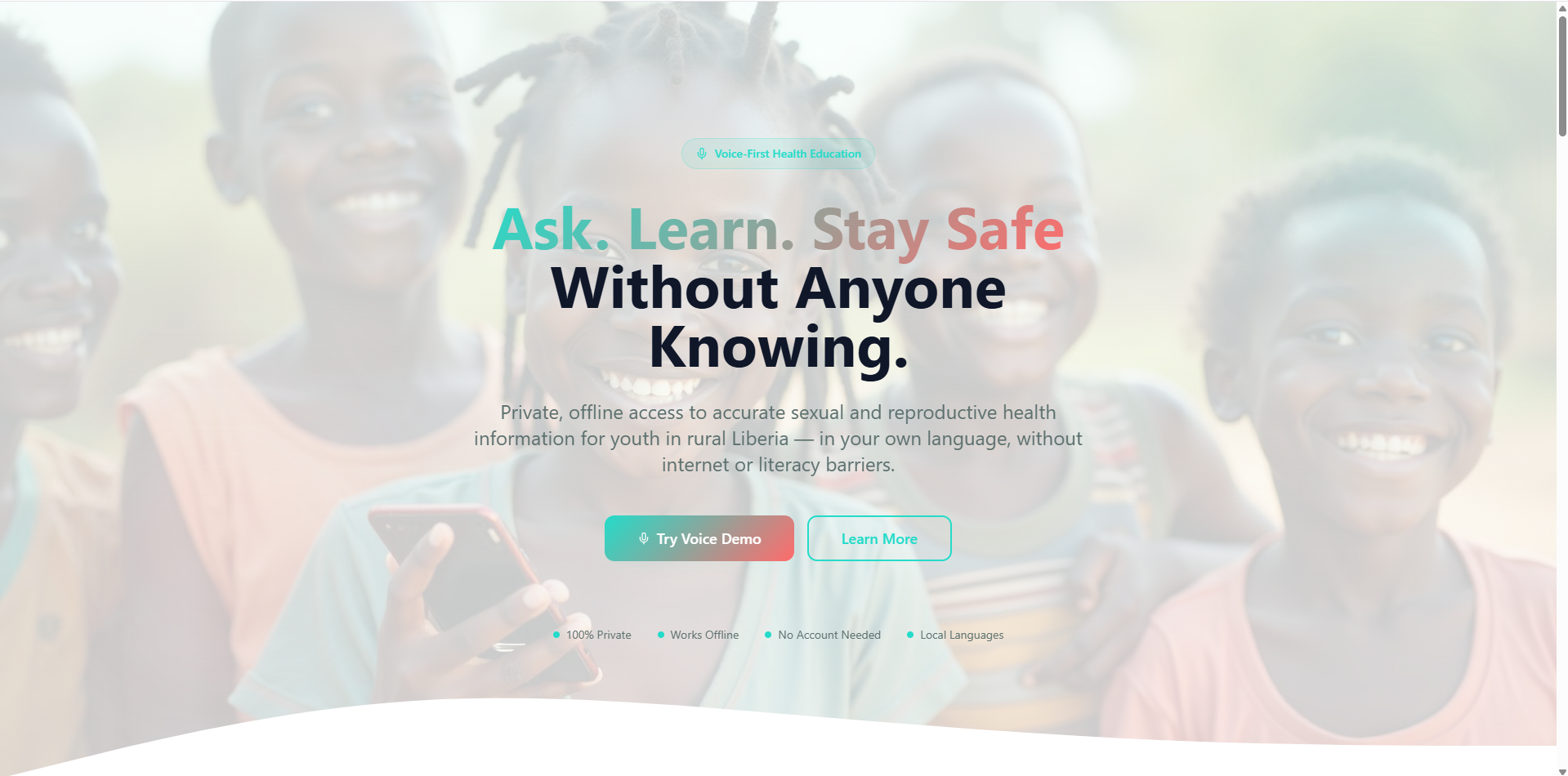
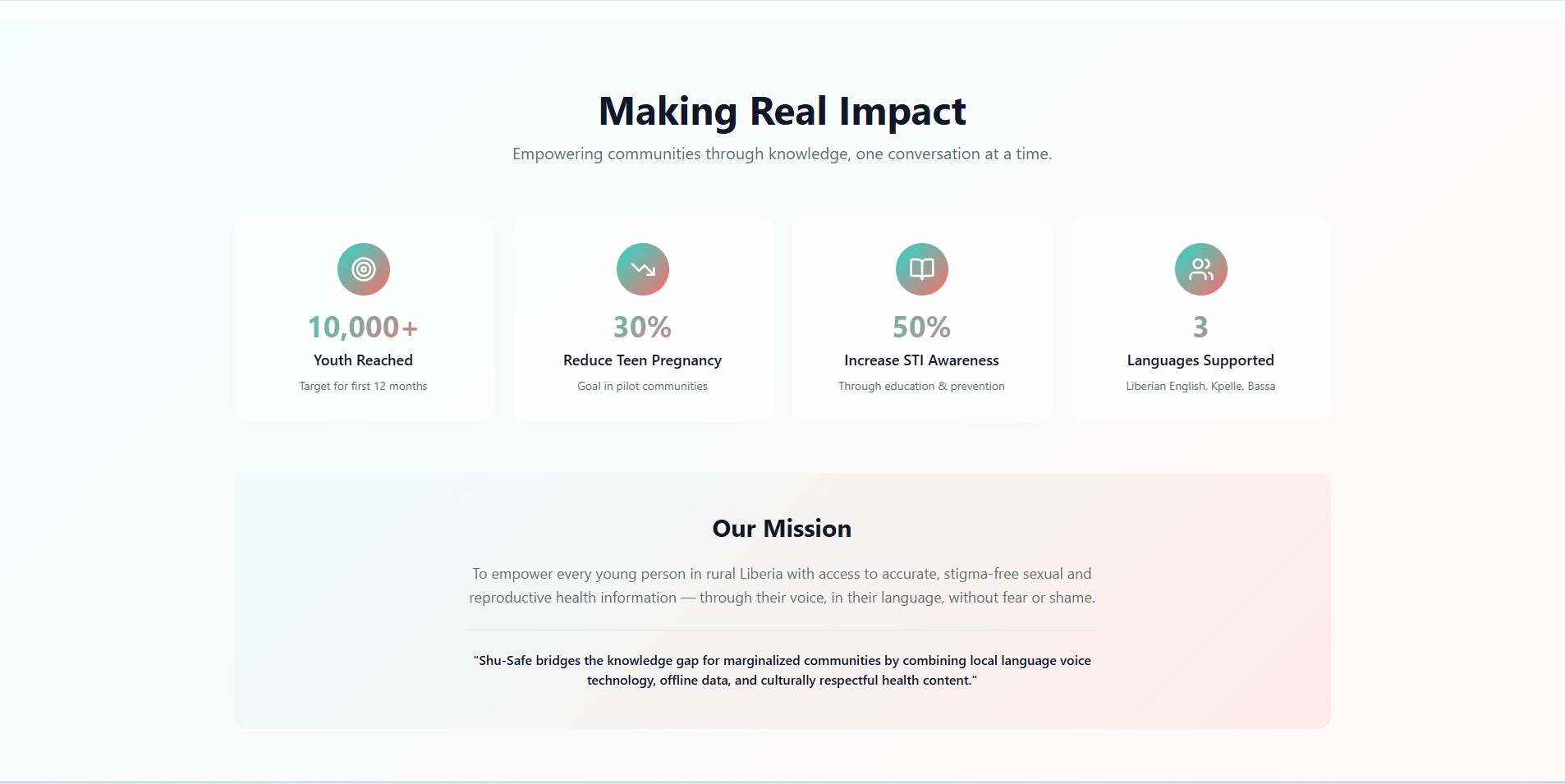
In rural Liberia, thousands of young people face daily barriers to accessing accurate sexual and reproductive health information. Internet is unreliable, literacy rates are low, and social stigma makes open conversations nearly impossible. We were inspired by this gap — the idea that health information should not depend on literacy, privilege, or connectivity. We wanted to build something private, voice-first, and completely offline, giving youth the power to ask sensitive health questions safely in their own languages.
What It Does
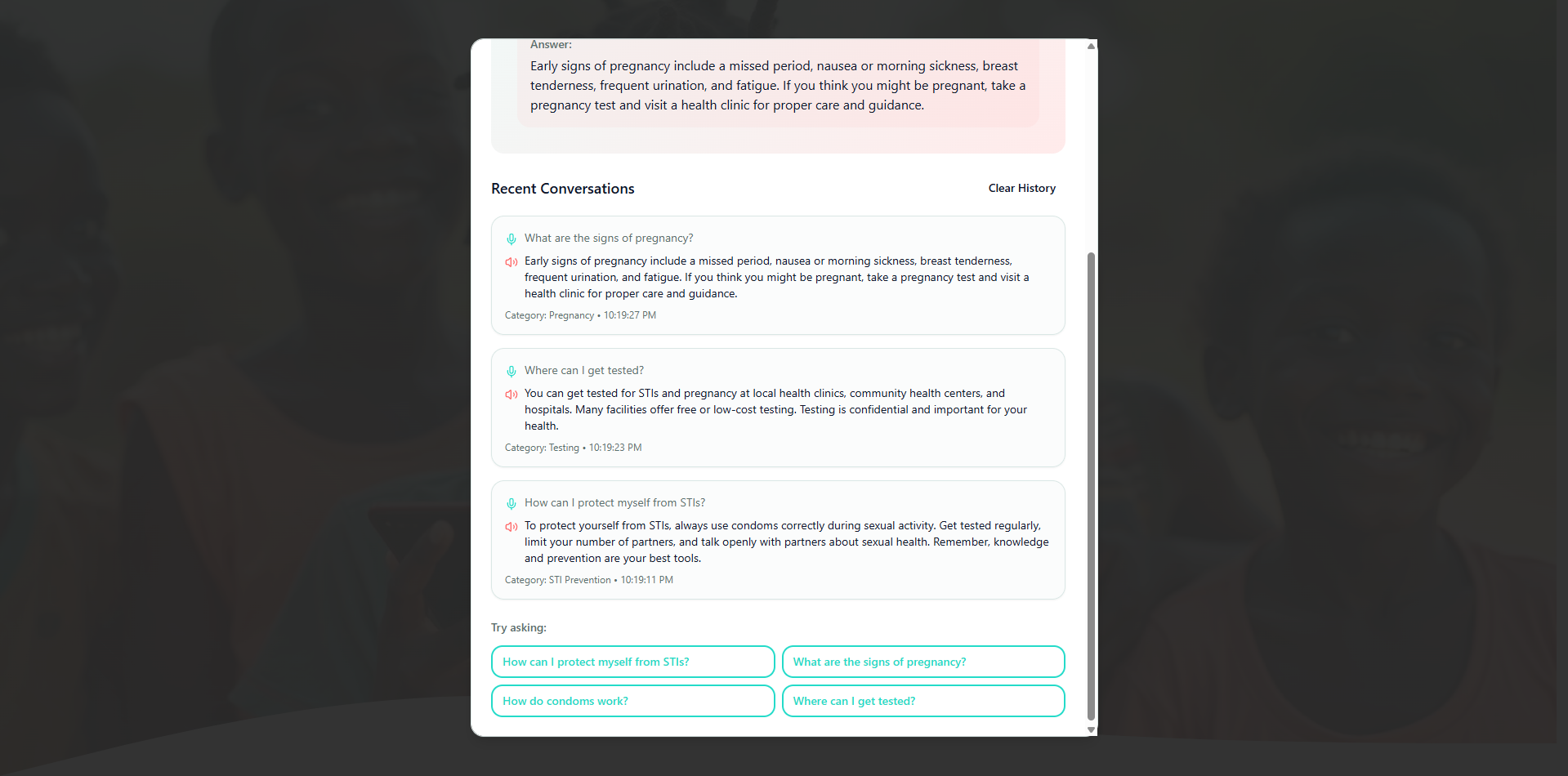
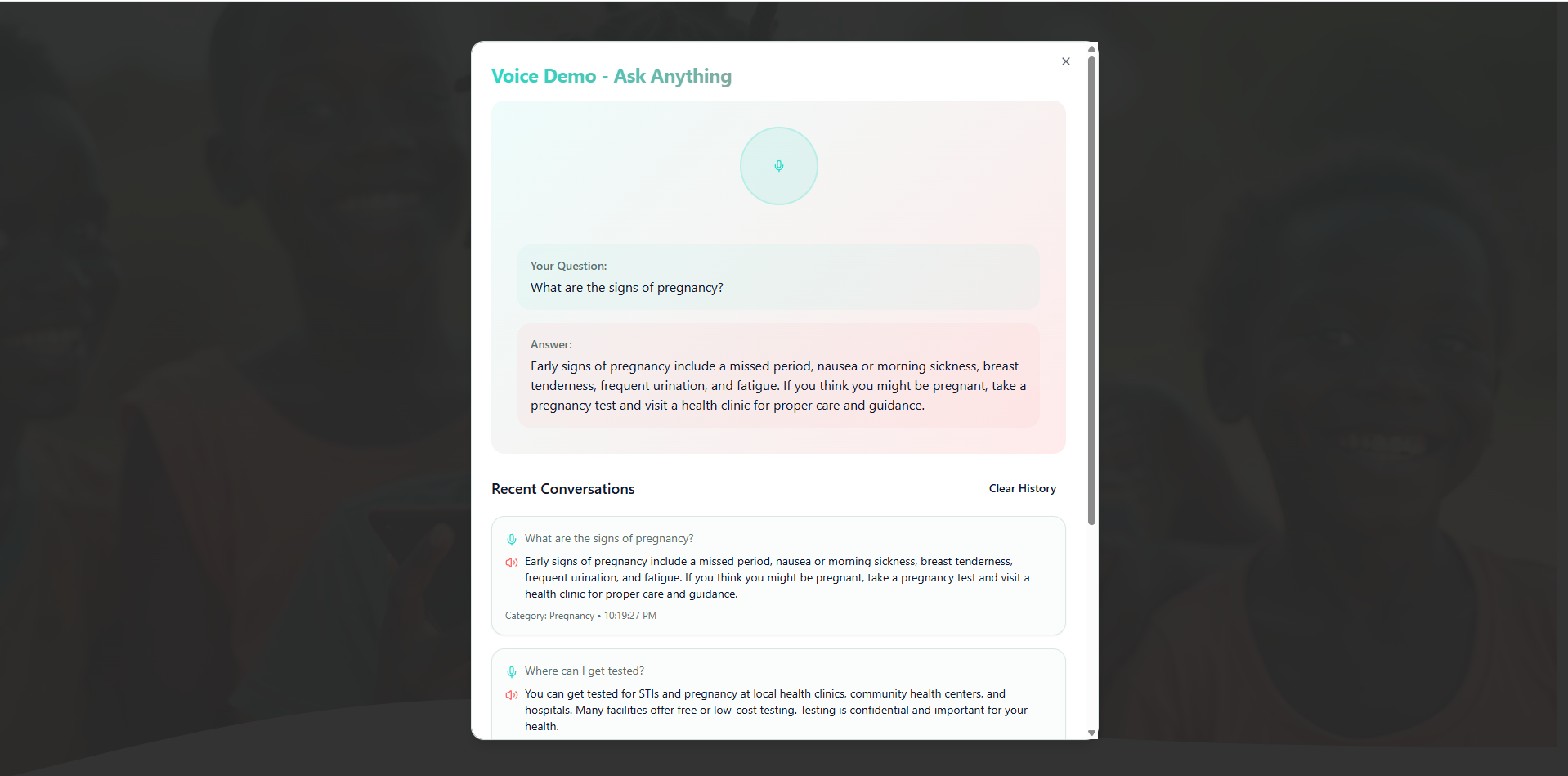
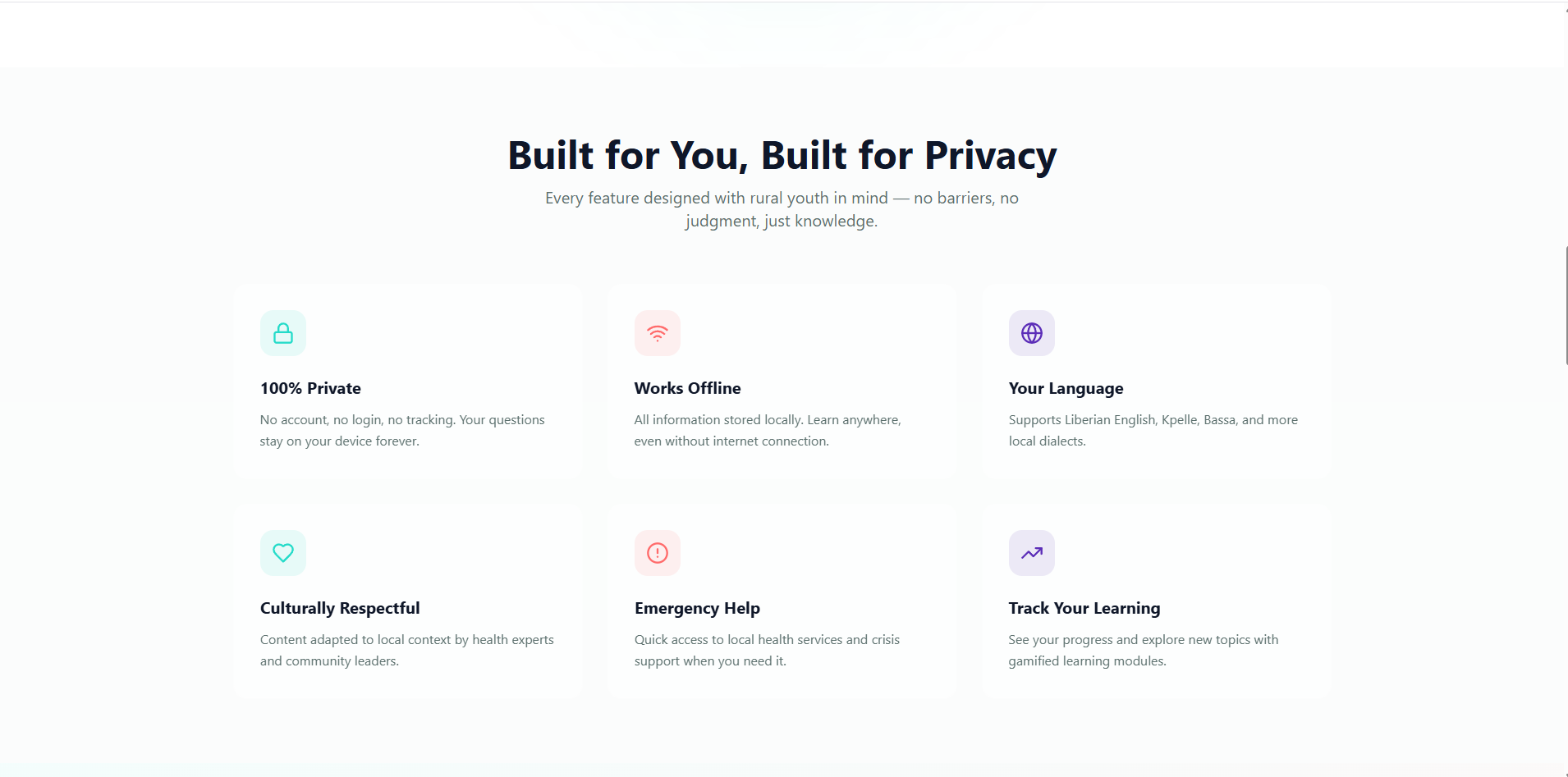
Shu-Safe is a voice-based, offline mobile assistant that lets young users: Ask questions in local languages (Liberian English, Kpelle, Bassa, etc.) Receive instant, spoken answers — accurate and culturally respectful Stay completely private — no accounts, no internet, no tracking It bridges the knowledge gap for marginalized youth and helps reduce misinformation, unsafe practices, and stigma.
How We Built It
We used React Native for the mobile interface and Vosk for offline speech recognition, paired with eSpeak / Mozilla TTS for text-to-speech. The app runs fully offline, storing preloaded question-answer pairs in SQLite, with optional syncing via Firebase when connected. We designed it to be lightweight, multilingual, and privacy-first — all queries stay on the device. A small SMS fallback system (via Twilio) allows emergency help requests to local health centers. Challenges We Faced
Ensuring voice accuracy with diverse Liberian accents and dialects. Balancing privacy with analytics — how to measure impact without collecting personal data. Designing a system that works on low-end Android phones with limited storage. Creating culturally appropriate health content that feels local, not foreign or judgmental. Each challenge pushed us to simplify, localize, and design responsibly.
What We Learned
We learned that technology alone doesn’t solve health gaps — empathy does. By involving youth leaders, local nurses, and linguists early in the process, we realized that listening to communities first builds trust faster than any codebase.
What’s Next
Expand to more dialects (Bassa, Lorma, Gio). Add a local analytics dashboard for health NGOs. Integrate voice-guided mini-quizzes to reinforce learning. Partner with U ICEF and local ministries for official pilot programs.

Log in or sign up for Devpost to join the conversation.