
Inspiration
ShowUp.ai was born from a simple but frustrating reality: students don’t fail because they lack ability, they fail because they don’t show up. We saw ourselves and classmates skip lectures, not intentionally, but because there was no immediate consequence. The cost of missing class, lower grades, and lost tuition value is. So we asked Ourselves: What if attendance had real, immediate stakes? What if showing up wasn’t just expected, but rewarded? What if skipping class had a tangible cost right now, not weeks later?
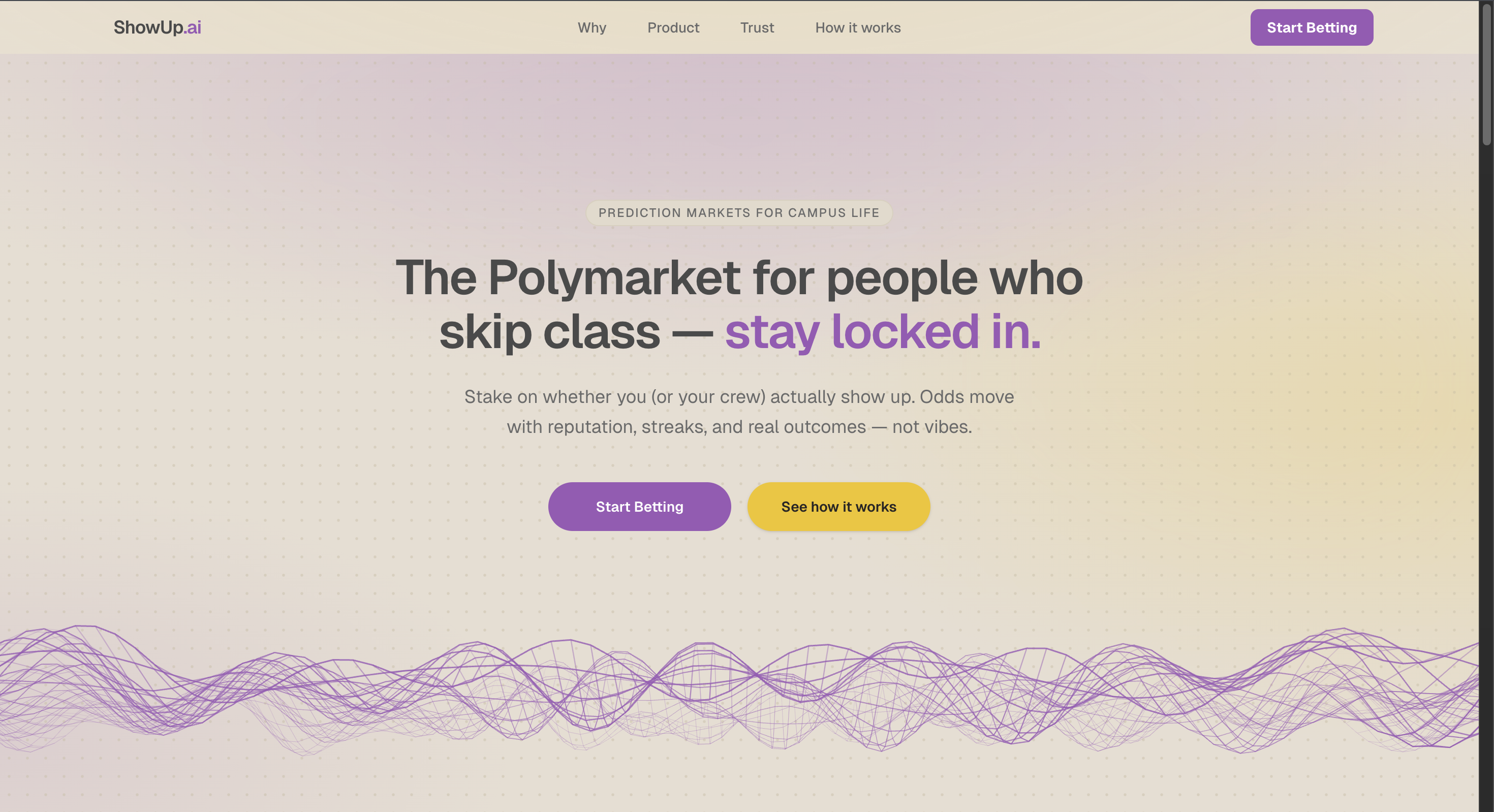
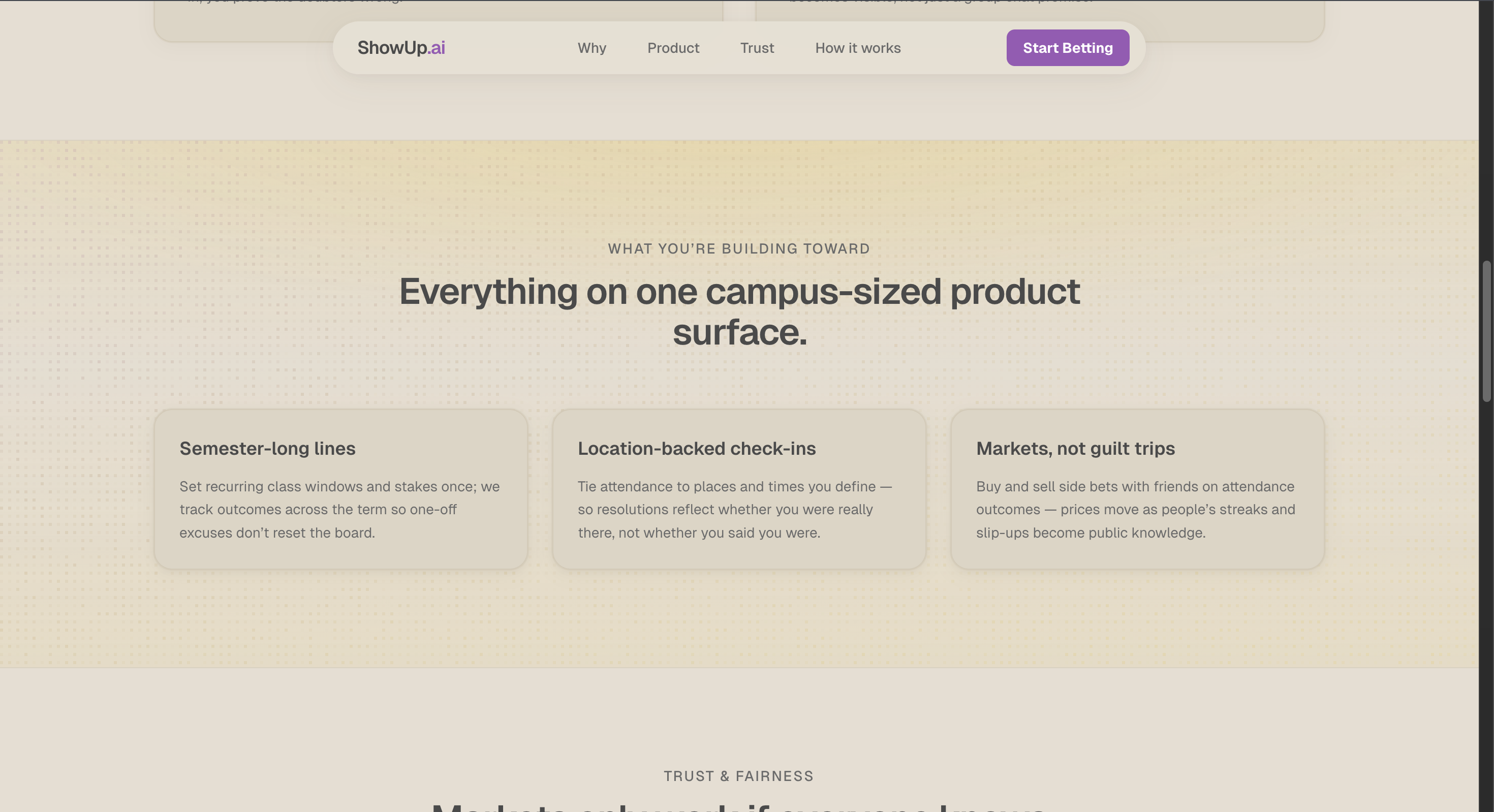
ShowUp.ai transforms attendance from a passive requirement into an active, high-stakes commitment, where your discipline directly impacts your wallet.
What it does
ShowUp.ai is a gamified attendance platform that turns academic consistency into a financial system.
Students “bet” on their own discipline, for example: “I’ll attend every Calculus class this month.”
From there, the platform enforces accountability through:
📍 Geocoded Check-ins — Automatically verify attendance based on location 💰 Financial Incentives — Earn money for consistency, lose it every time you skip 📊 Real-time Analytics — Track ROI, streaks, and attendance behavior 🤖 AI Coaching — Personalized nudges based on subject, timing, and habits 📈 Performance Dashboard — Visualize trends, progress, and financial impact
At its core, ShowUp.ai leverages behavioural psychology, especially loss aversion to create a system where showing up becomes the easiest and most rewarding choice.
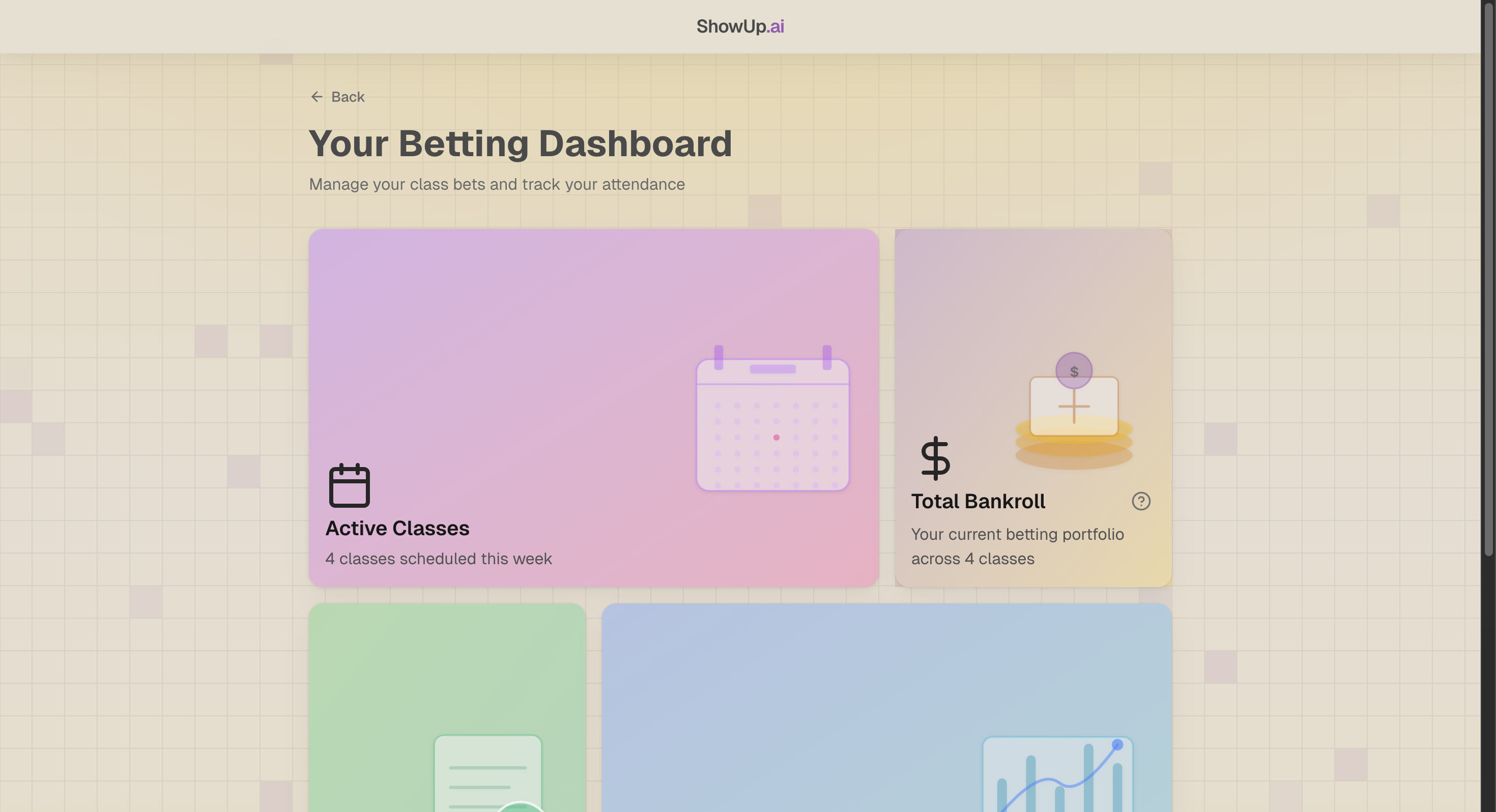
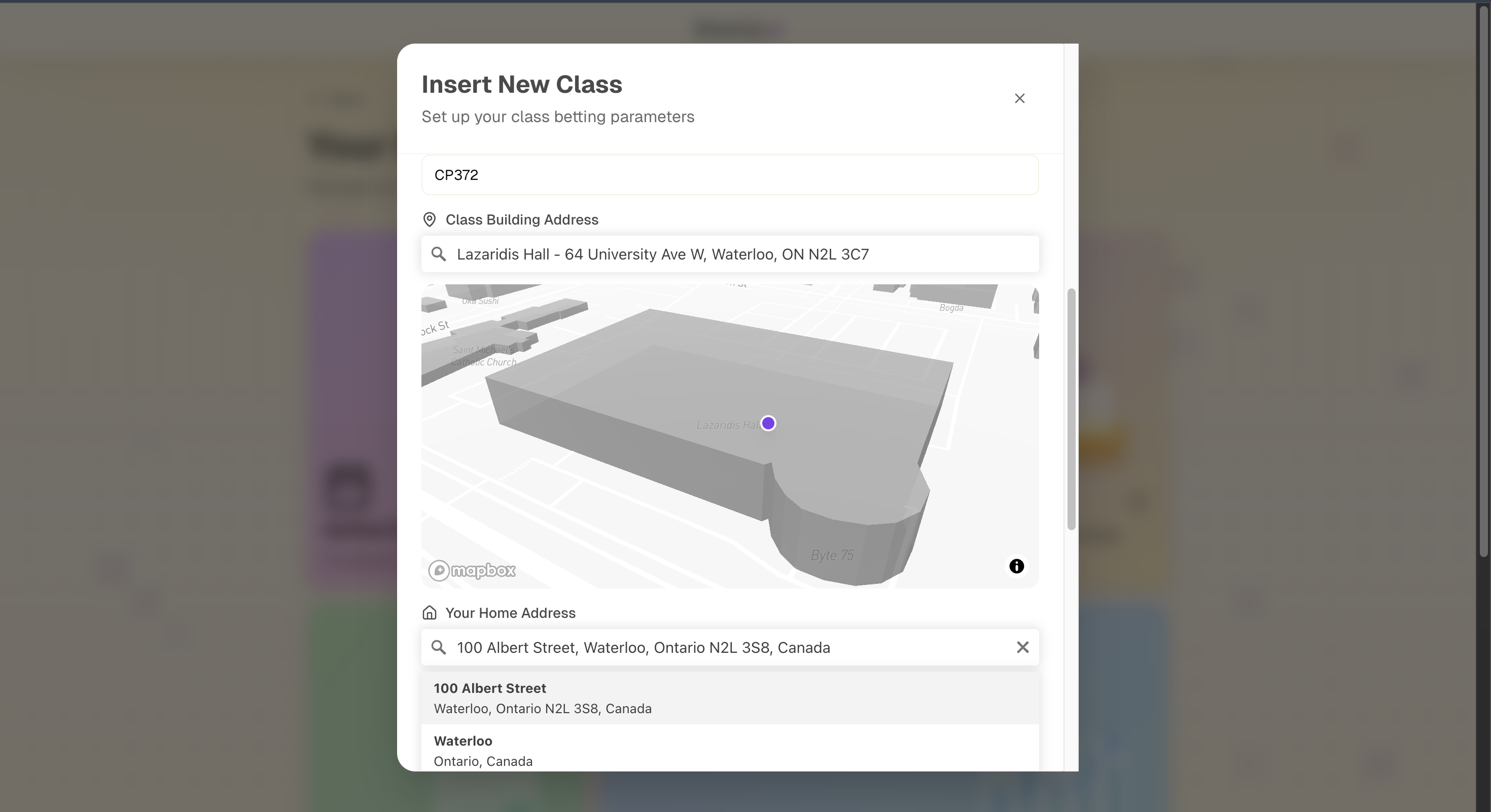
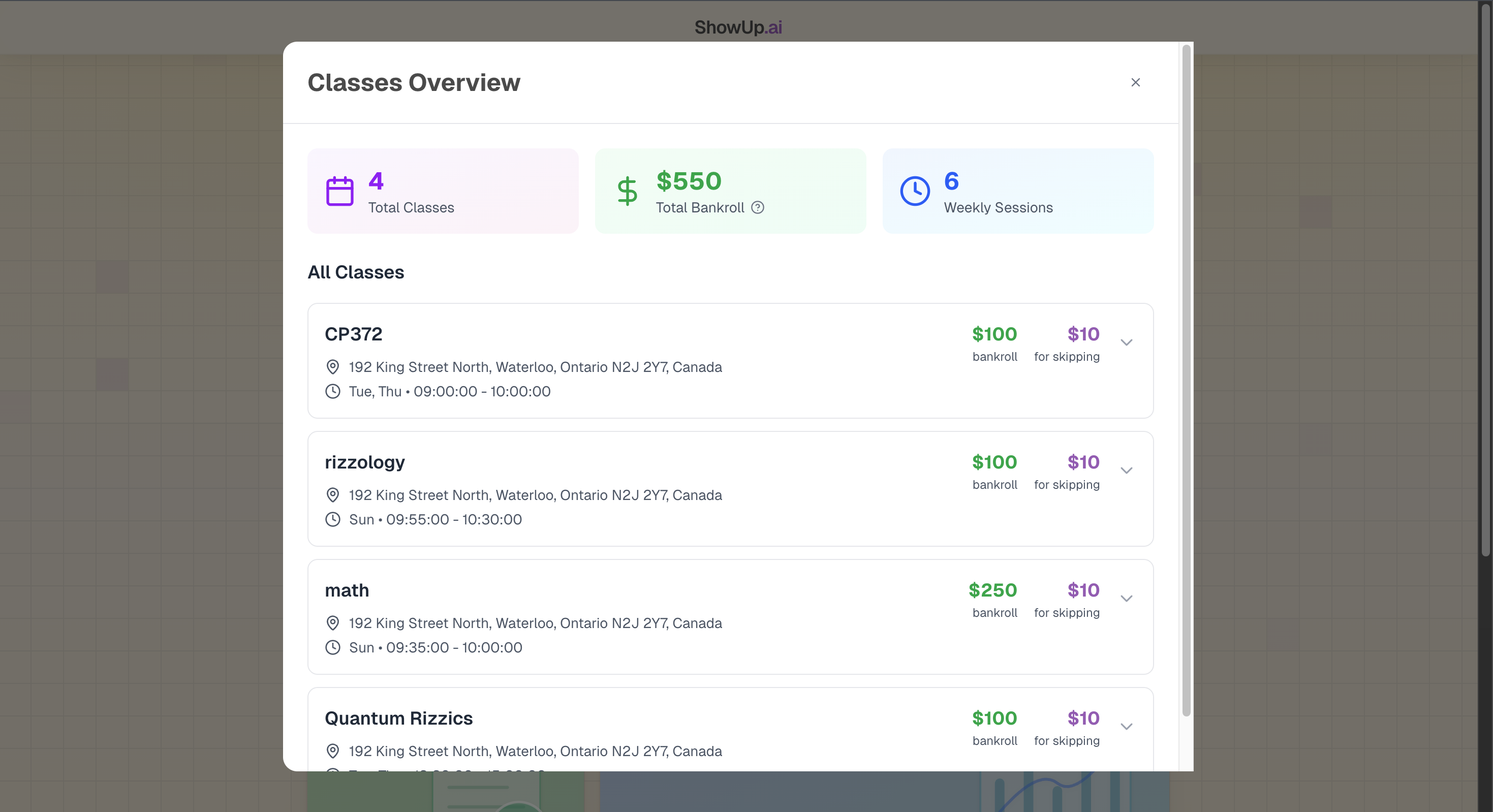
Once a user creates an account, they gain access to a personalized dashboard where they can set up their classes. For each class, the user inputs key details such as location, schedule, and their home base. This information allows the system to intelligently determine whether the user is attending class as planned. At the scheduled class time, ShowUp.ai uses geolocation to verify attendance. If the user is not detected within the designated class area, the system automatically deducts a predefined loss amount from their active bet creating immediate, tangible accountability for missed sessions.
How we built it
Frontend:
Next.js (TypeScript) for scalable, type-safe development Tailwind CSS + custom design system for a clean, modern UI
Backend & Database Infrastructure:
Supabase for real-time database + authentication Mapbox API for geolocation and geofencing
📍 The Location & Geocoding System
The Core Problem was that we needed to verify students are actually in class, not just clicking a button from their dorm room.
How We Solved It:
We plugged into Mapbox's API mapping system to turn addresses into exact GPS coordinates. When a student adds "Physics Building, Room 203", Mapbox converts that to precise latitude/longitude points.
The app then continuously monitors the student's phone/web location using the browser's GPS. When they're within 50 meters of their classroom, they can check in. We use the Haversine formula (fancy math) to calculate the exact distance between where the student is and where their class is. If they're close enough, the check-in button activates.
The Technical Flow:
Student adds class → Mapbox converts address to GPS → Store in database Student arrives at class → GPS tracks their location → Calculate distance to classroom Within 50 meters? → Check-in button turns green → Student confirms attendance All verified → Bankroll updates in real-time
Challenges we ran into
Technical Challenges:
- Achieving reliable geolocation accuracy without draining battery or compromising privacy
- Managing complex real-time state across dashboards, modals, and analytics
Integration Challenges:
- Implementing geofencing across inconsistent campus layouts
- Handling real-time synchronization with multiple concurrent users
- Structuring a scalable, reusable component system
What we learned
During this hackathon, we learned how to design and build a scalable, full stack real-time geo/financial application by leveraging TypeScript and SQL. We gained hands-on experience optimizing real-time geospatial systems to ensure they remain performant and responsive, while also handling the complexities of geolocation features, including permission management and fallback strategies. From a product perspective, we discovered the power of behavioral psychology, particularly loss aversion as users are more motivated to avoid losses than to pursue equivalent gains.
What's next for ShowUp.ai
Looking ahead, we see ShowUp.ai evolving beyond a web platform into a fully integrated, mobile-first experience. Developing native iOS and Android applications will allow users to conveniently check in to classes.
We also envision expanding the financial aspect of the platform by exploring ways to responsibly grow user deposits. For example, funds placed into bets could be passively allocated to low-risk markets, allowing users to potentially earn small returns simply by staying consistent with their attendance. This adds another layer of incentive, where showing up not only prevents losses but can also generate gains over time.
On the social side, introducing competitive and collaborative features will further enhance engagement. Users could participate in leaderboards, track performance against friends, and even create group bets where accountability becomes shared. This social dynamic transforms attendance from an individual task into a community-driven experience, increasing motivation through both competition and support.


Log in or sign up for Devpost to join the conversation.