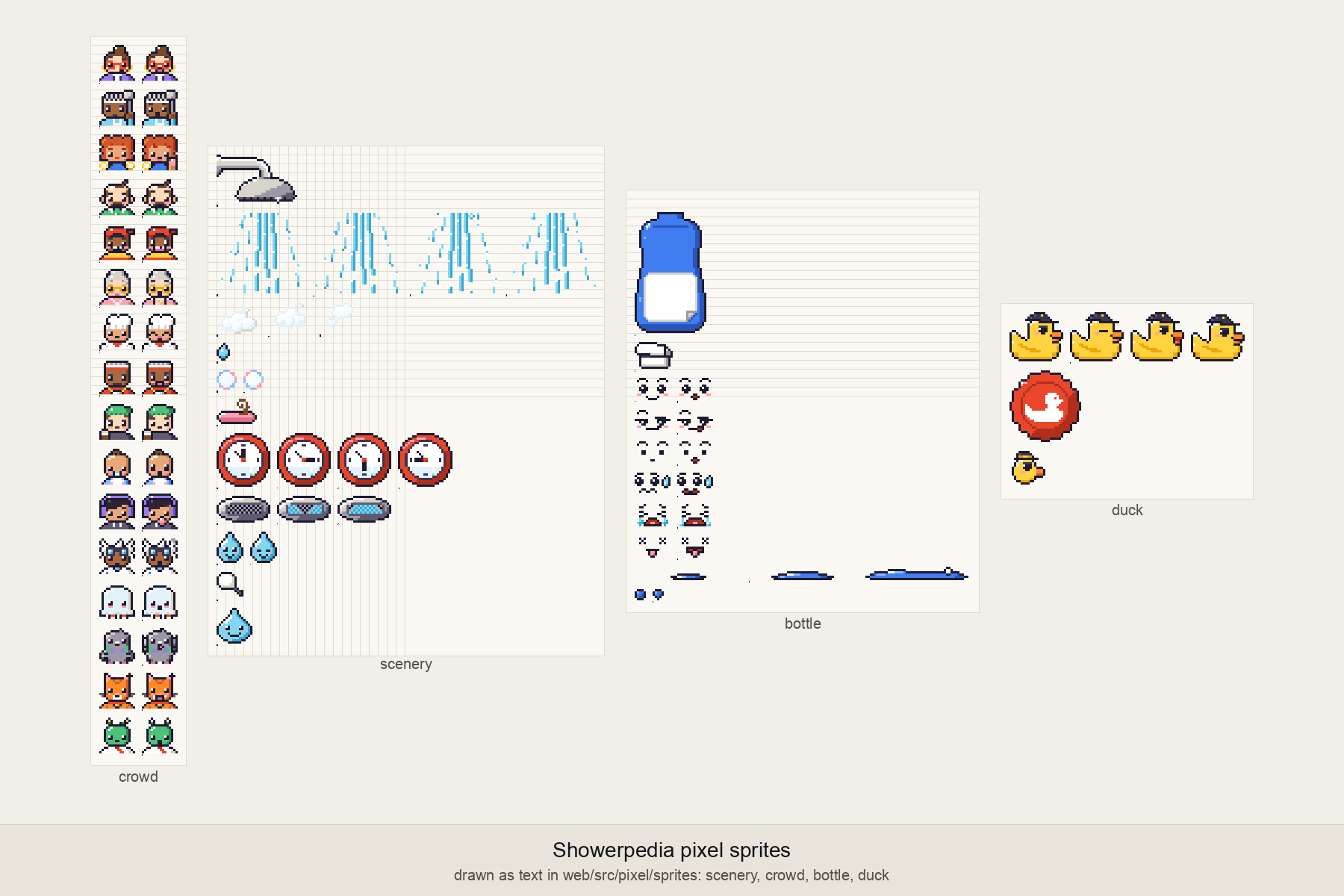
SHOWERPEDIA
Tagline: Turn shower thoughts into rabbit holes.
Inspiration
Everyone has a thought in the shower they are curious about. Could a human remember every second of their life? Would the planet move if everyone jumped at once? Five minutes later it is gone, and the few that survive get a search box, three tabs and a closed laptop. We wanted a place where a shower thought gets the treatment a real question deserves: researched by more than one pair of eyes, answered honestly, and connected to the weirdest true thing next to it. And since a whole room has these thoughts, we wanted the room to see all of them at once. Our first build answered all of that and looked like a Wikipedia article. So we rebuilt it as the place where the thought happened: a shower stall you stand in, and everything happens in it.
What it does
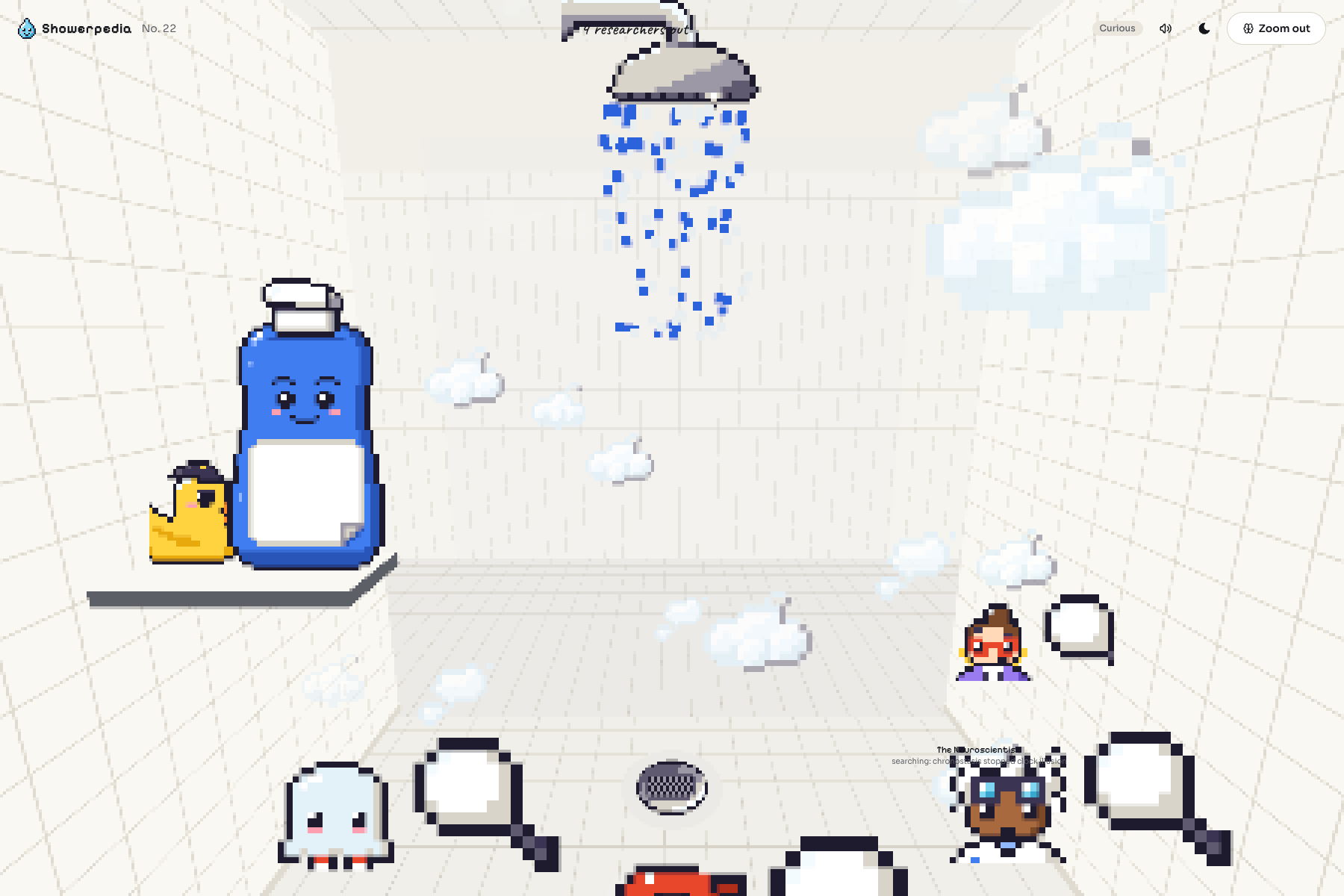
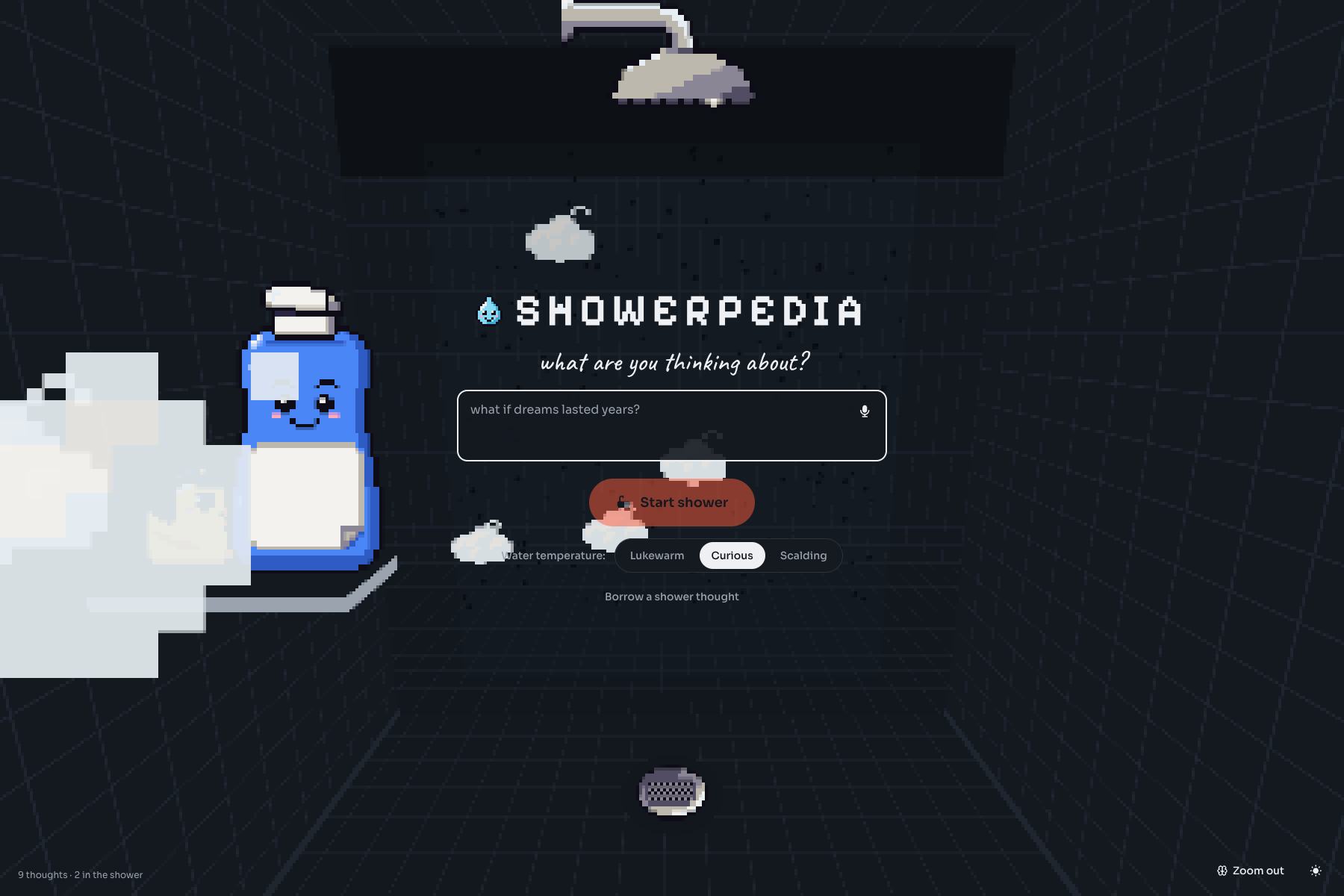
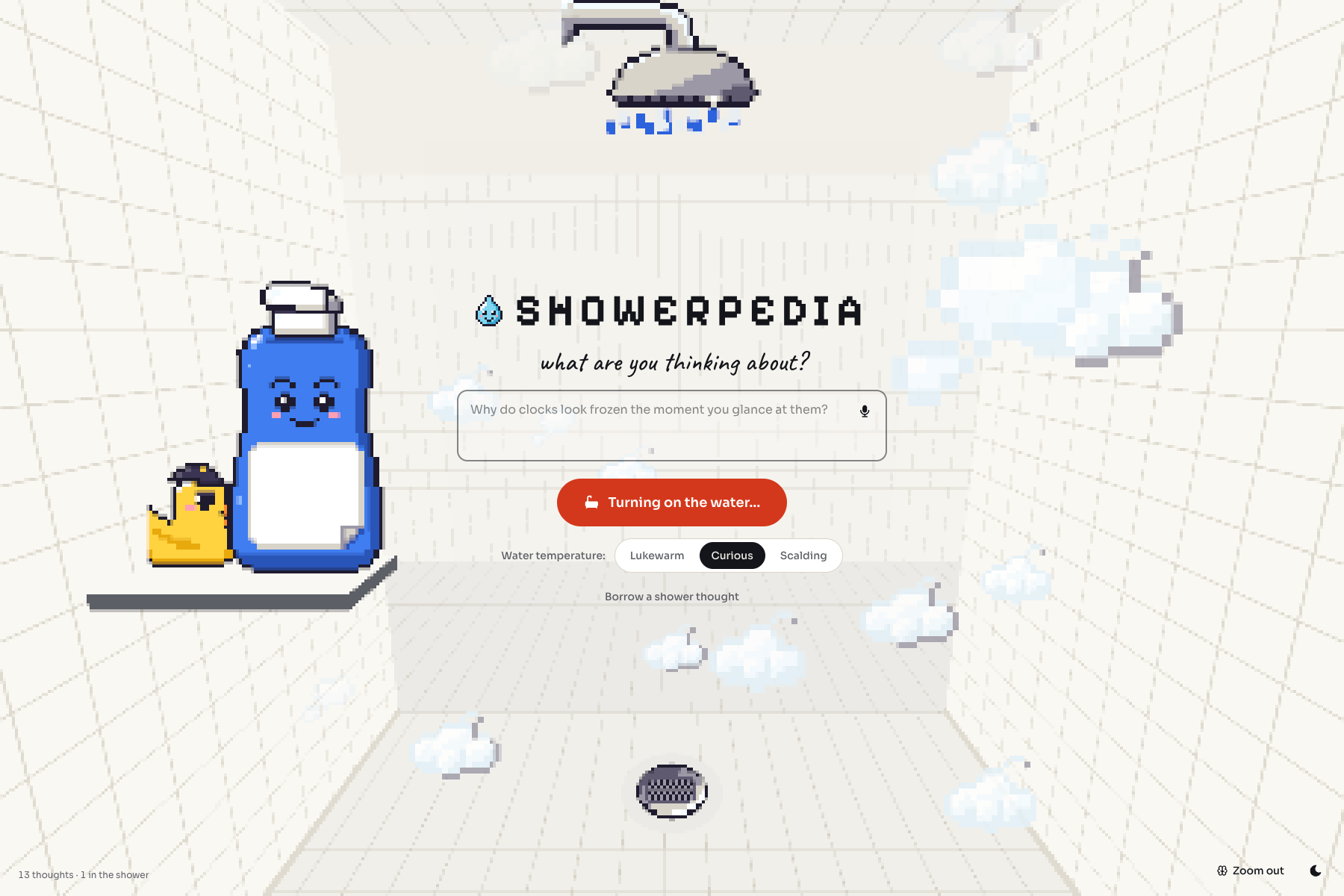
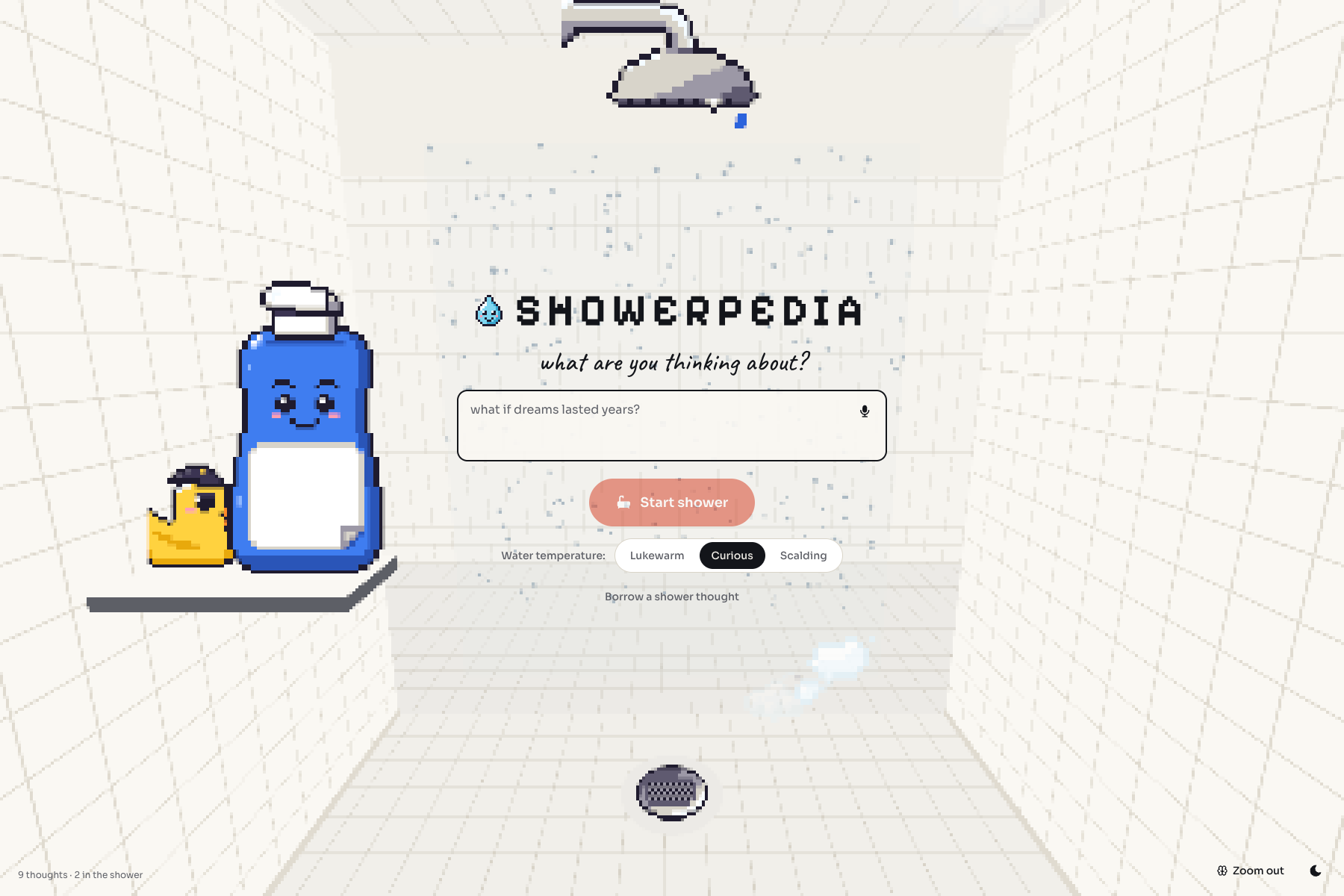
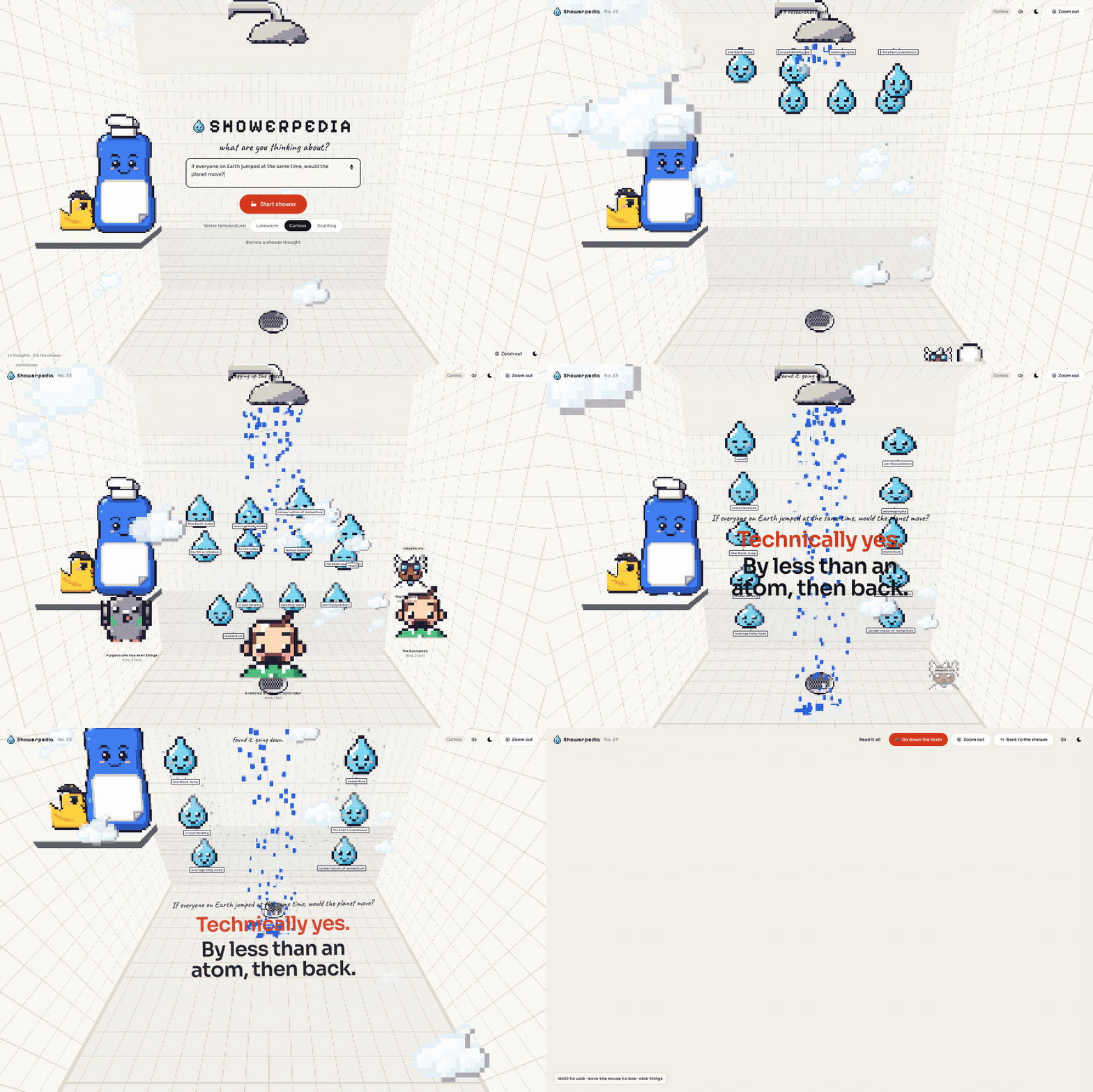
The screen is a shower stall from the inside: tiled walls, a shower head, a shelf with the mascot bottle and its duck, a drain in the floor, and the glass door in front of you. Over the glass, one line: what are you thinking about? You type the thought you had under the water and press Start shower.
- The water turns on, then the steam rises. The thought is carved into the condensation in handwriting, as if by a finger. Drag on the glass and you wipe it; it fogs back over.
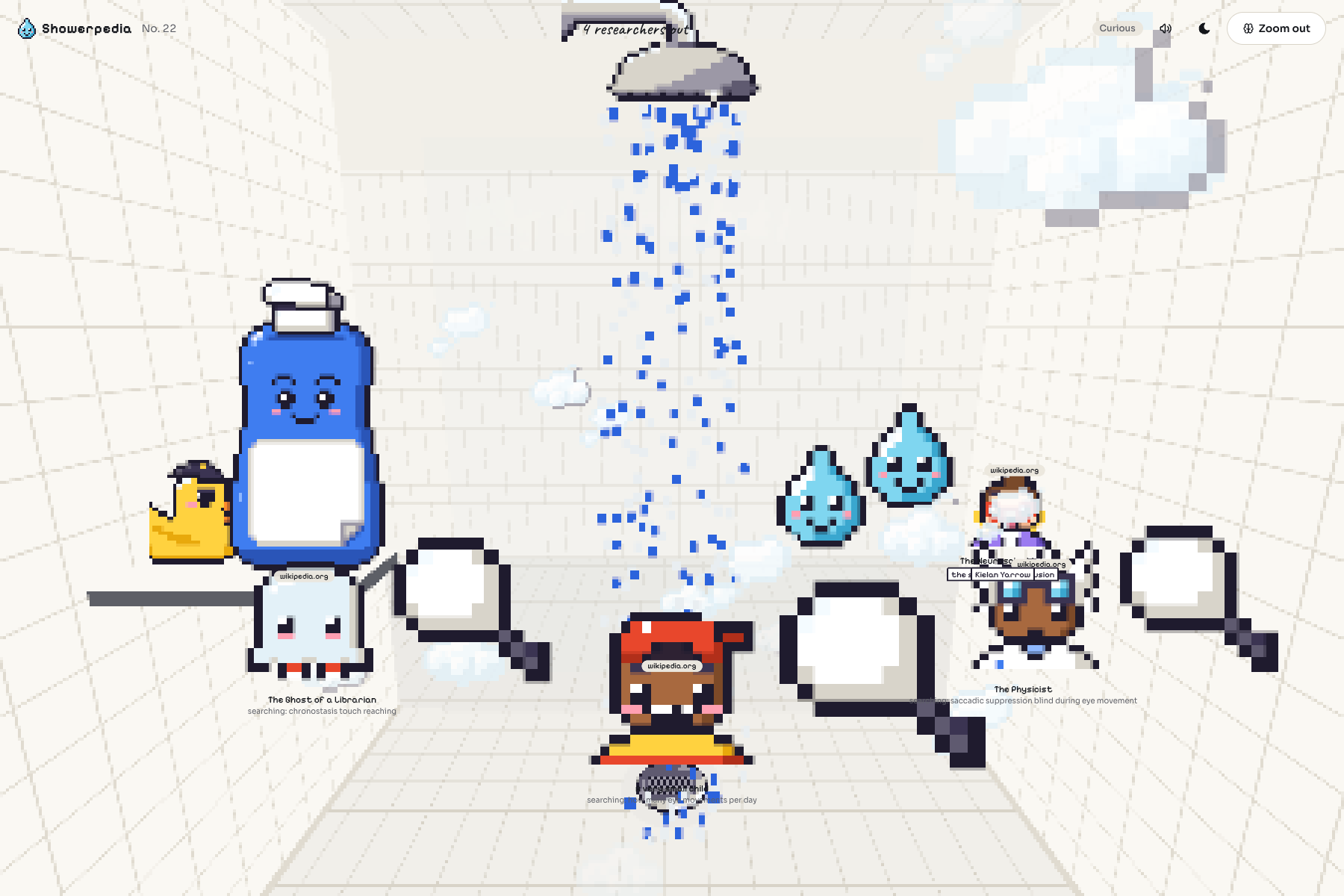
- A curiosity swarm spawns: four or five tiny pixel researchers float up through the steam, each with a persona (The Neuroscientist, A retired air-traffic controller, A pigeon who has seen things) and a live status line. They search in parallel, and source chips drift up from them as they find things.
- Every concept a researcher brings back flies from the researcher to the glass and lands as a droplet with a face, wearing the concept's name.
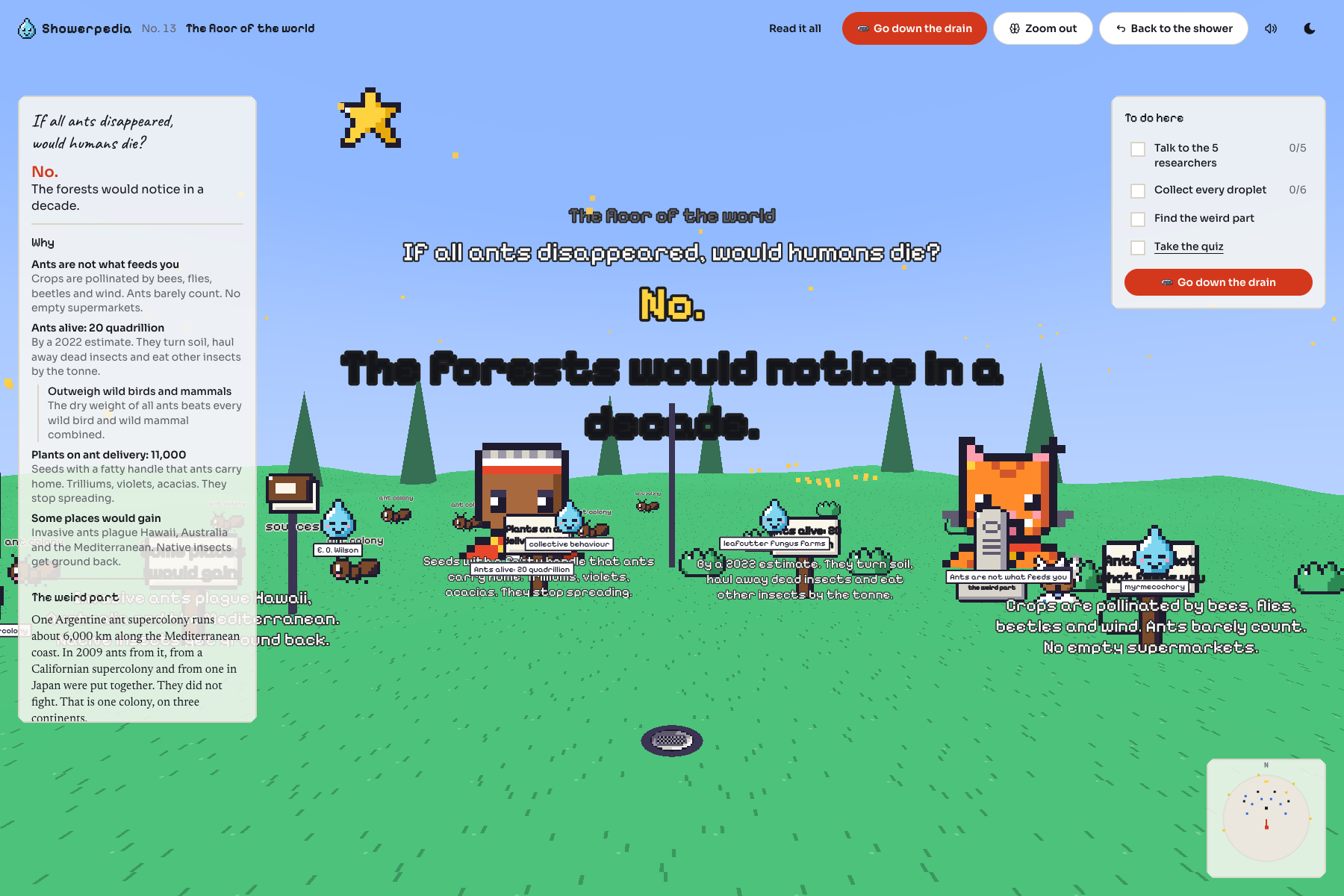
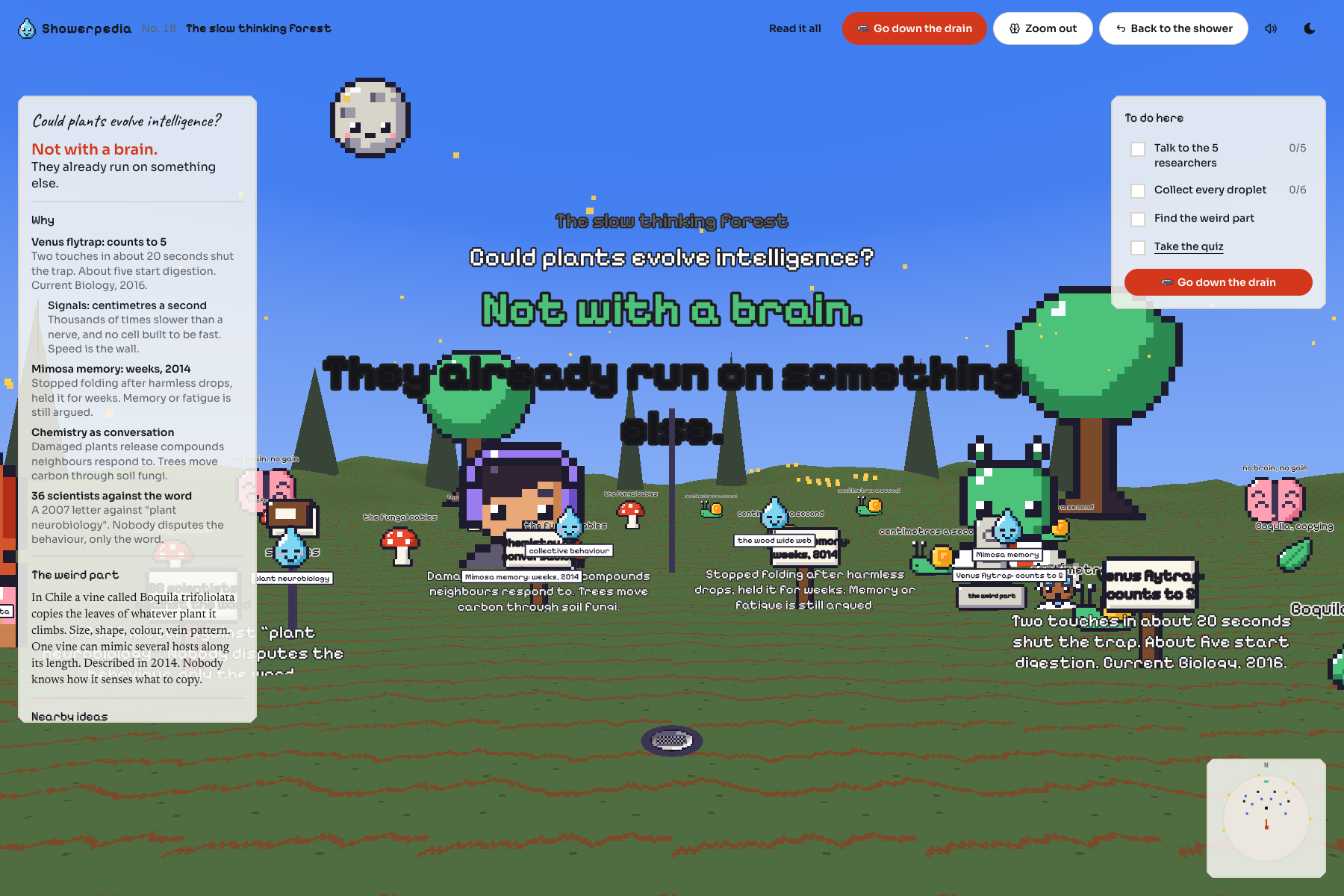
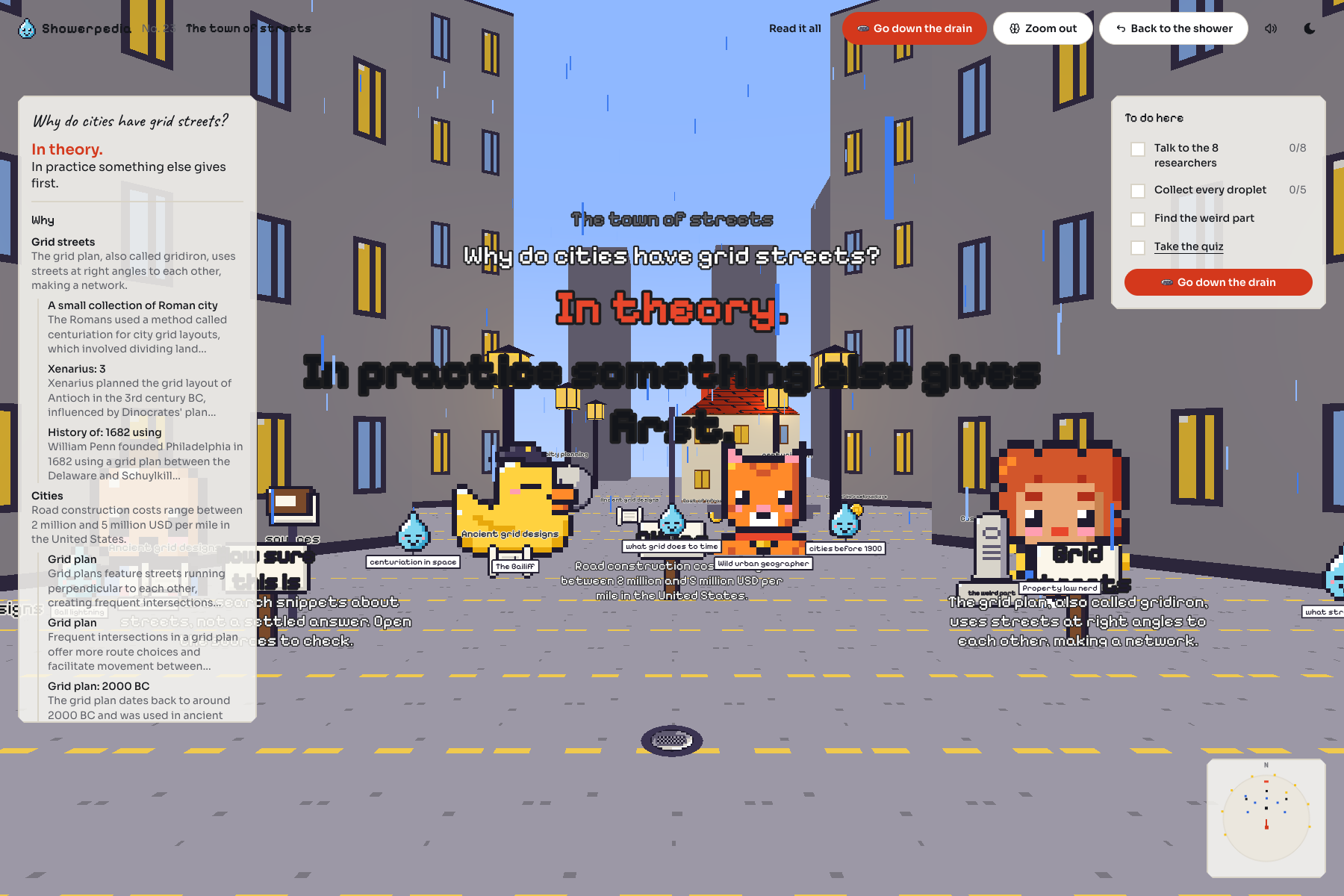
- The page lands on the glass: a window is wiped clear in the fog and the answer is written in it. A two-line Short answer in huge type (the literal answer, then the honest turn), Why as a pipe diagram with real numbers, The weird part (written to be read out loud), Related droplets and Sources.
- Click a droplet on the glass and it splashes open into its own page, one level deeper. The trail on the left is the rabbit hole so far, drawn as a pipe.
- Press Go down the drain and the camera dives into the drain, through the pipe, and comes up in the next stall, on the weirdest topic that is legitimately connected to it, with one sentence naming the link.
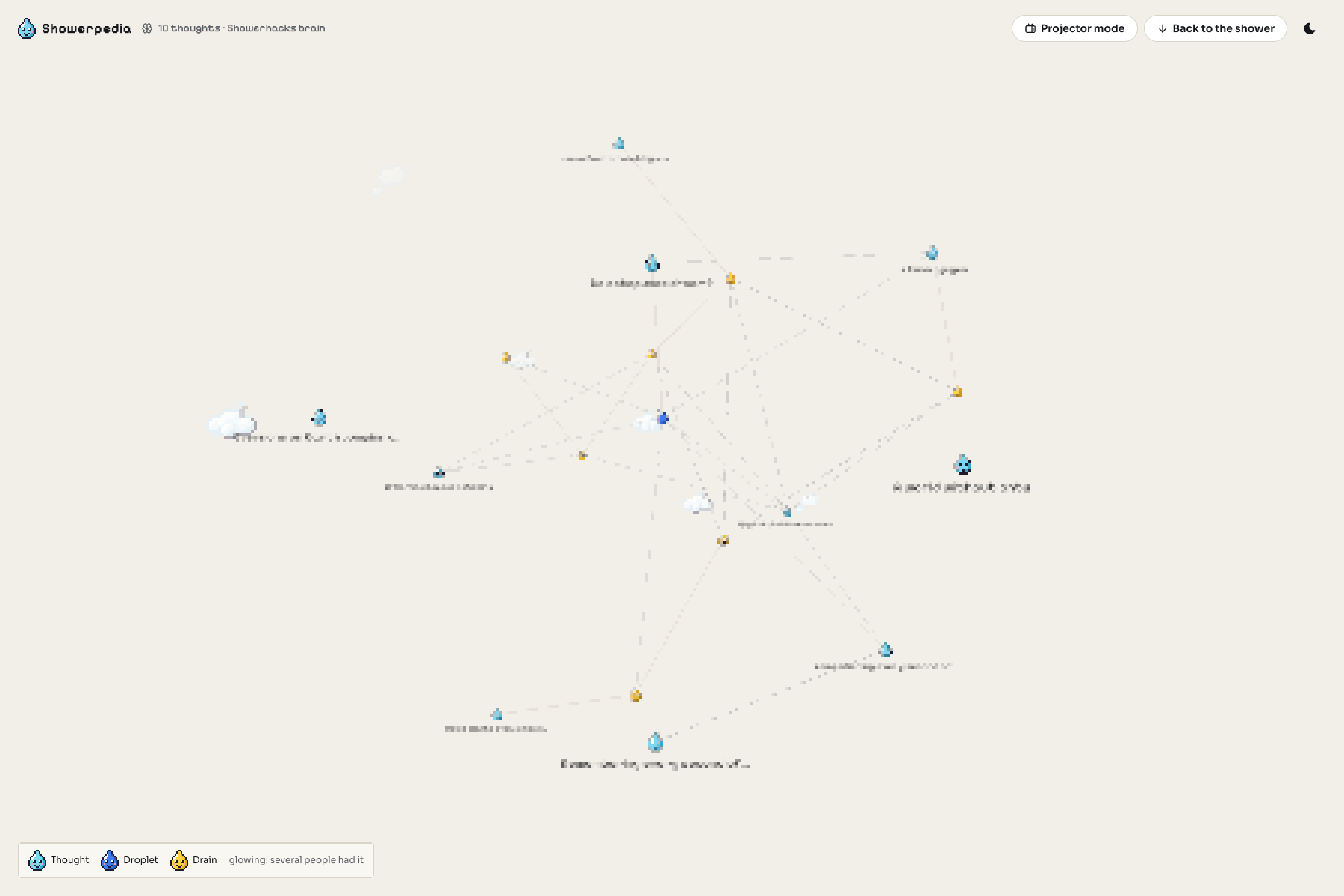
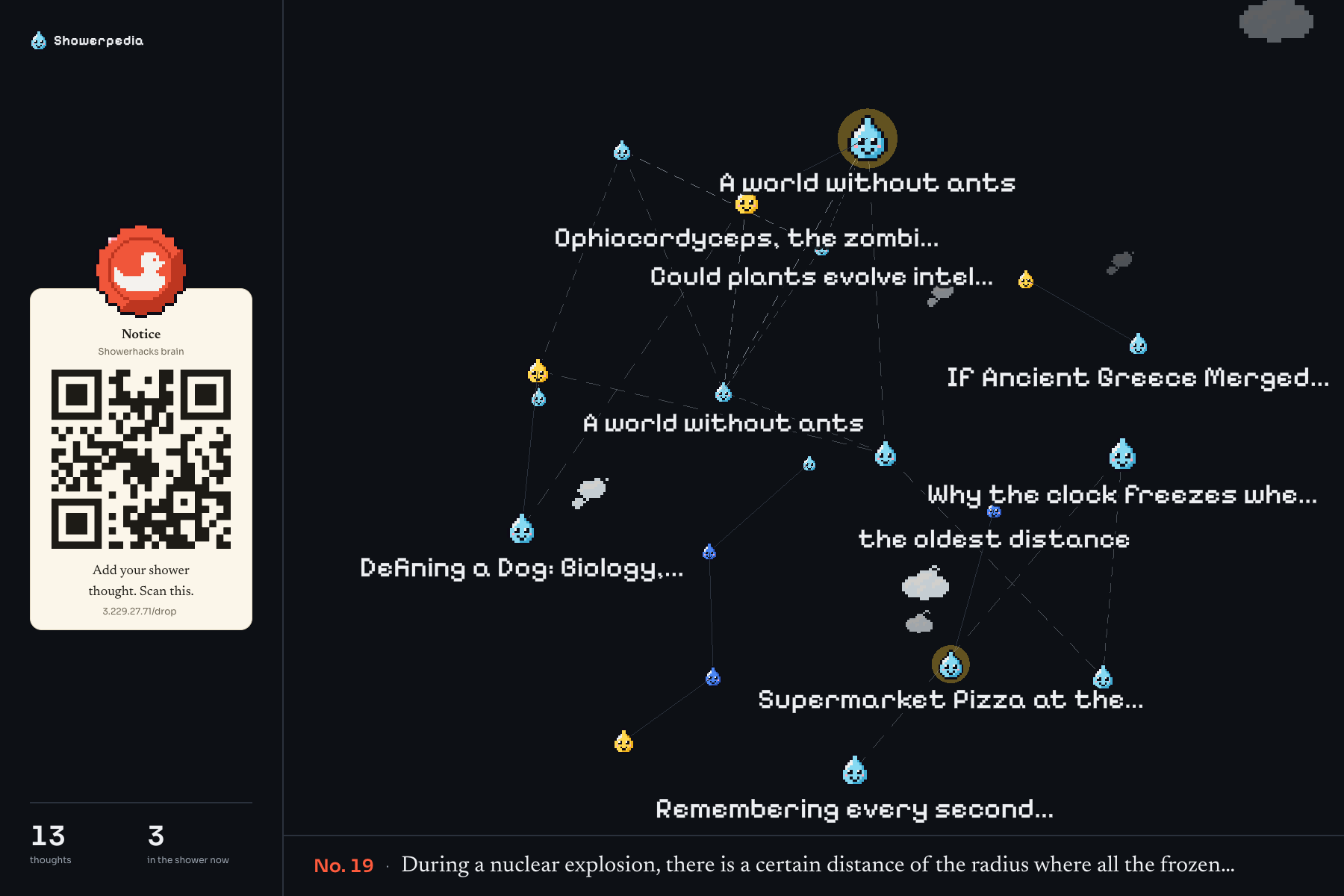
- Press Zoom out and the camera rises through the ceiling into the brain: every thought the room submitted today, floating as droplets in the steam, linked by threads. When two people independently have the same thought, the node grows and glows instead of appearing twice. Click a stranger's thought next to yours and the panel names the concepts the two share.
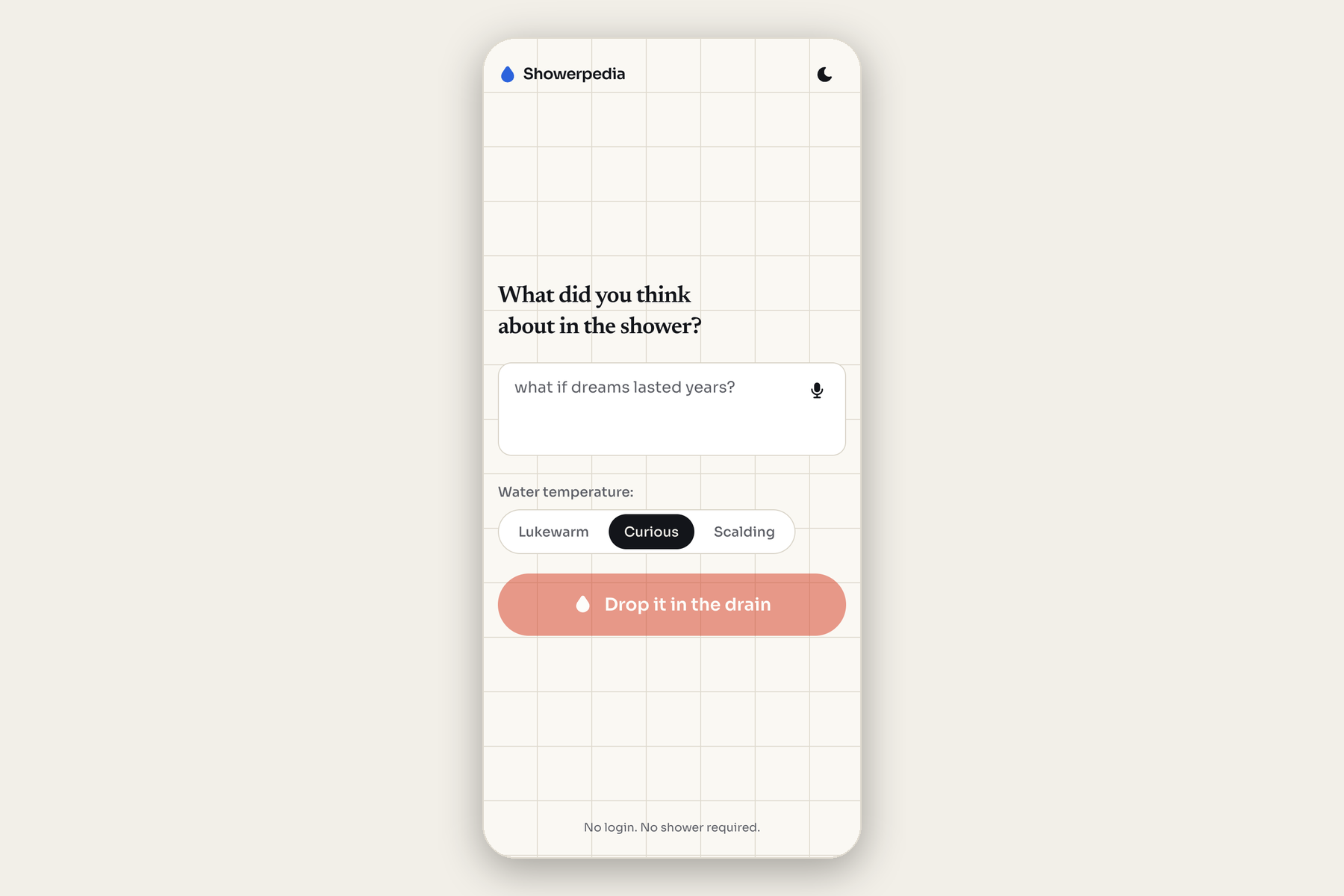
- A projector mode shows the brain slowly turning, with a QR code, so the room keeps feeding it from their phones all day.
Three water temperatures, Lukewarm, Curious and Scalding, decide how many researchers go out and how weird the droplets and the drain get.
How we built it
The swarm is awesome! A planning call turns the thought into personas and search queries. Each researcher then runs in parallel: real search (Wikipedia always, Firecrawl when a key is set), then one structured model call that turns the snippets into facts with source indexes and short concepts. A synthesis call writes the page from those facts and their sources. We also used Featherless for the research swarm. Moss is used for the semantic brain.
What we learned / Challenges
Making a live demo survive bad venue wifi: the whole path has to land even when every model and search call fails, without the audience seeing an error, and a refresh mid-research has to pick up exactly where it left off. Making a swarm of parallel model calls feel alive instead of like a spinner: real status lines, real source chips, droplets that take off the moment a concept arrives. Making a 3D scene look like the same pixel world the sprites come from, without a single texture file. Keeping the reading in the DOM while the world is 3D, so the page stays legible and the glass stays wipeable around it. Merging the room's thoughts without a model: catching "the same thought in other words" without gluing unrelated thoughts together.
We learned that making AI feel alive is less about making more model calls and more about exposing what each agent is actually doing. We also learned that designing for failure from the beginning made the demo much more resilient.
What's next
Real embeddings behind the semantic memory interface, a brain that spans more than one event, and a waterproof button in an actual shower.

Log in or sign up for Devpost to join the conversation.