-
-
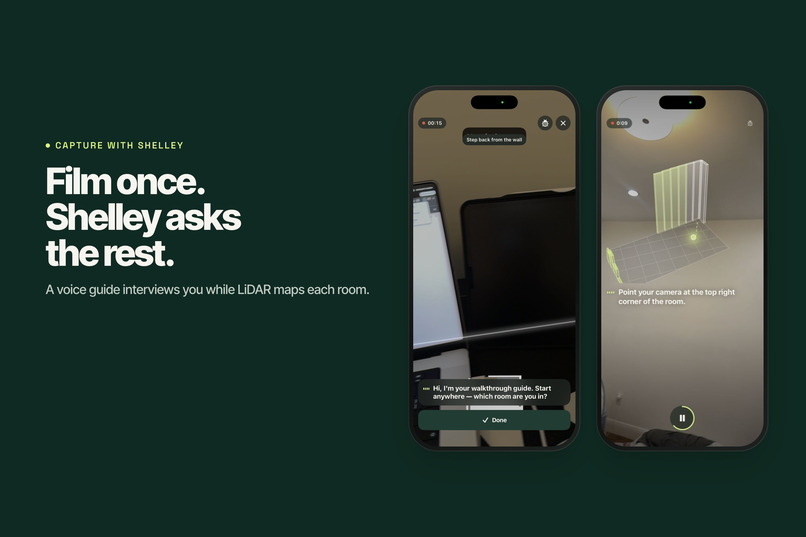
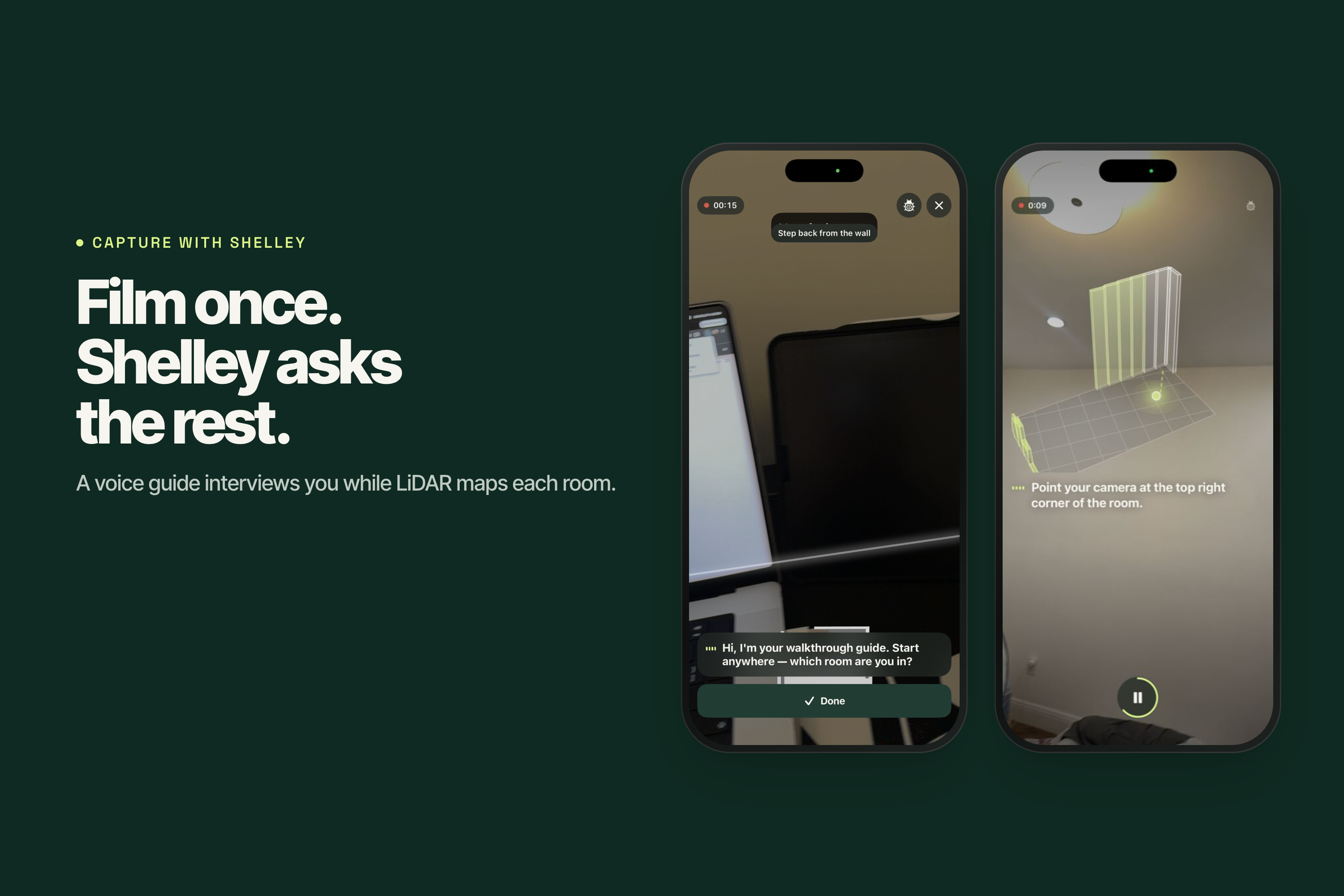
"Shelley" walks the real estate lister through on capturing their property while also interviewing them to save time.
-
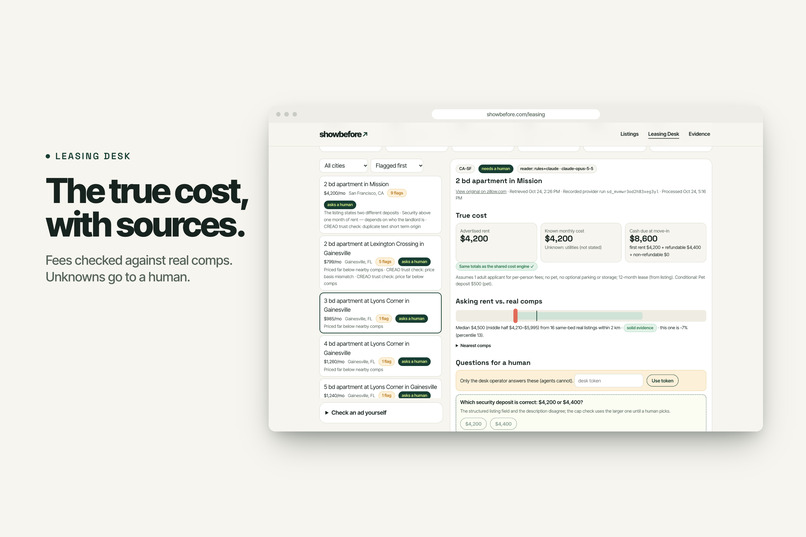
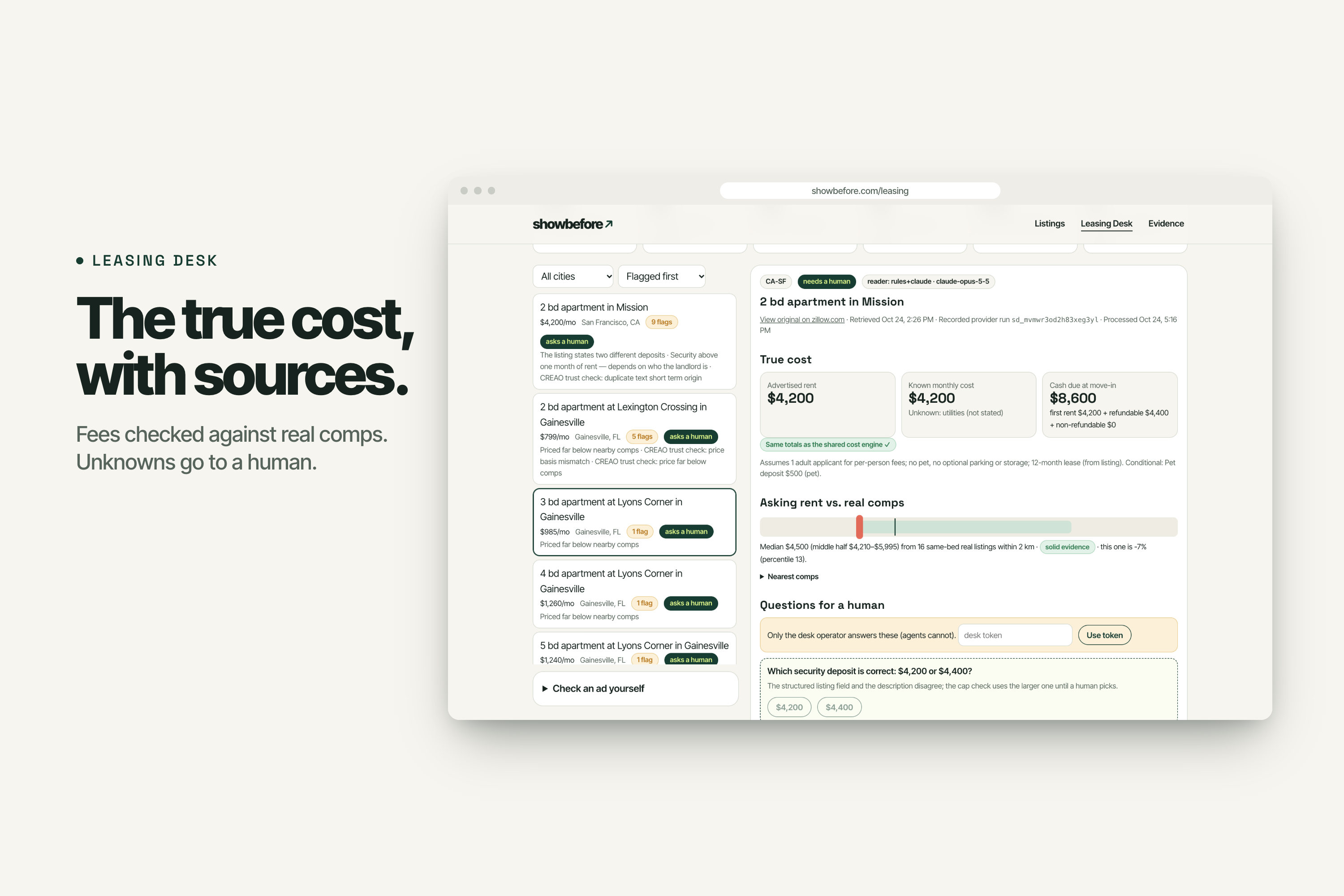
Our "Leasing Desk" is a breakdown of monthly cost, move-in cash, rent vs. real comps, and fees.
-
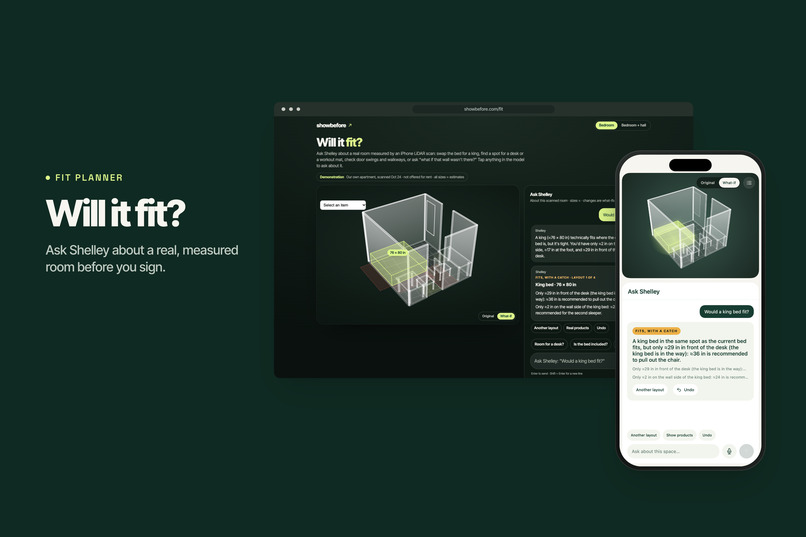
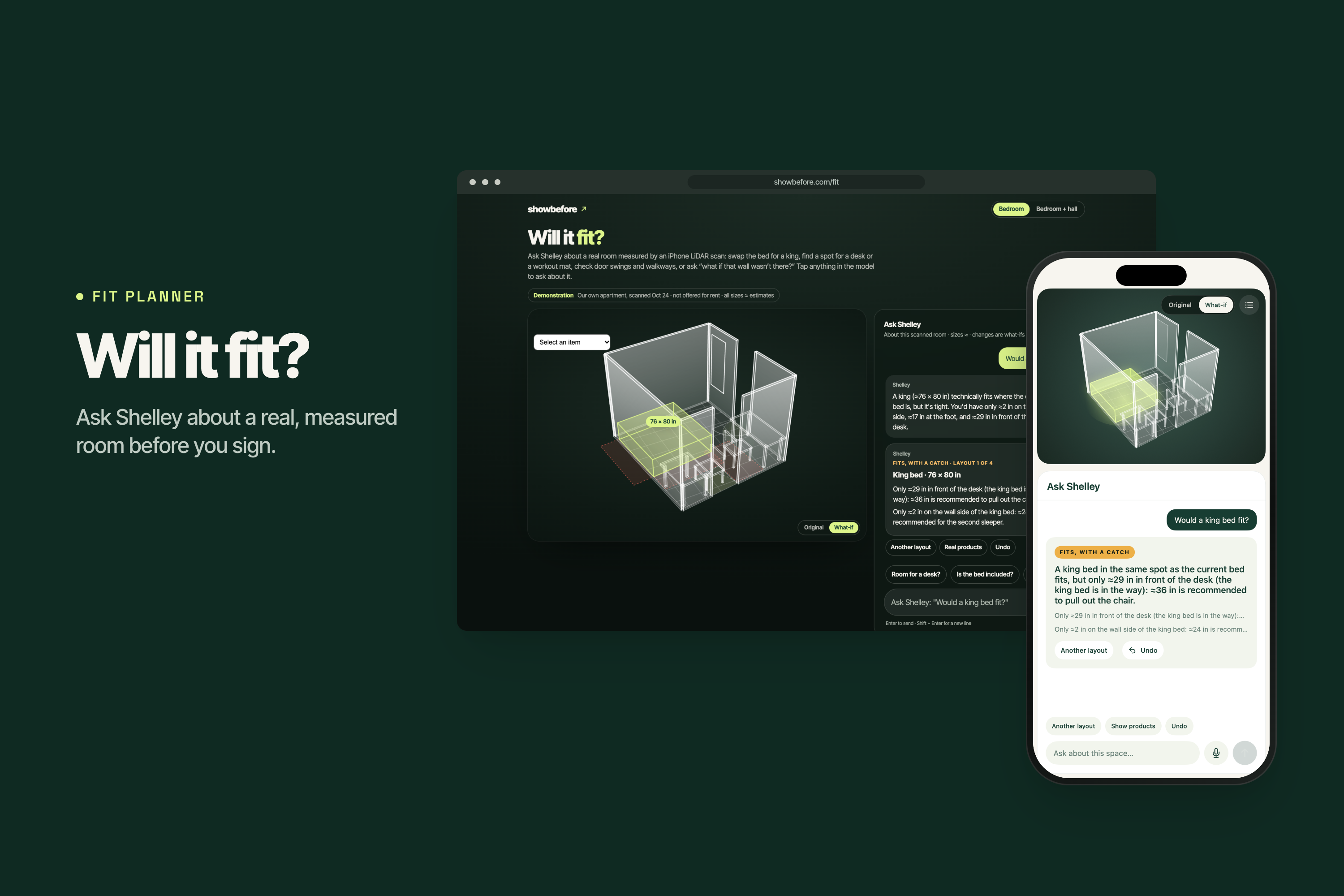
Our web and iPhone interface showing if your scanned furniture is predicted to fit in a particular floorplan.
-
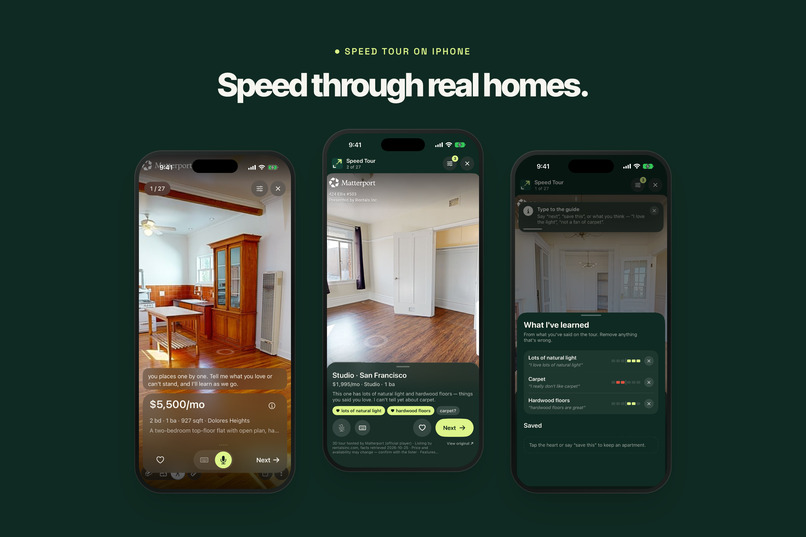
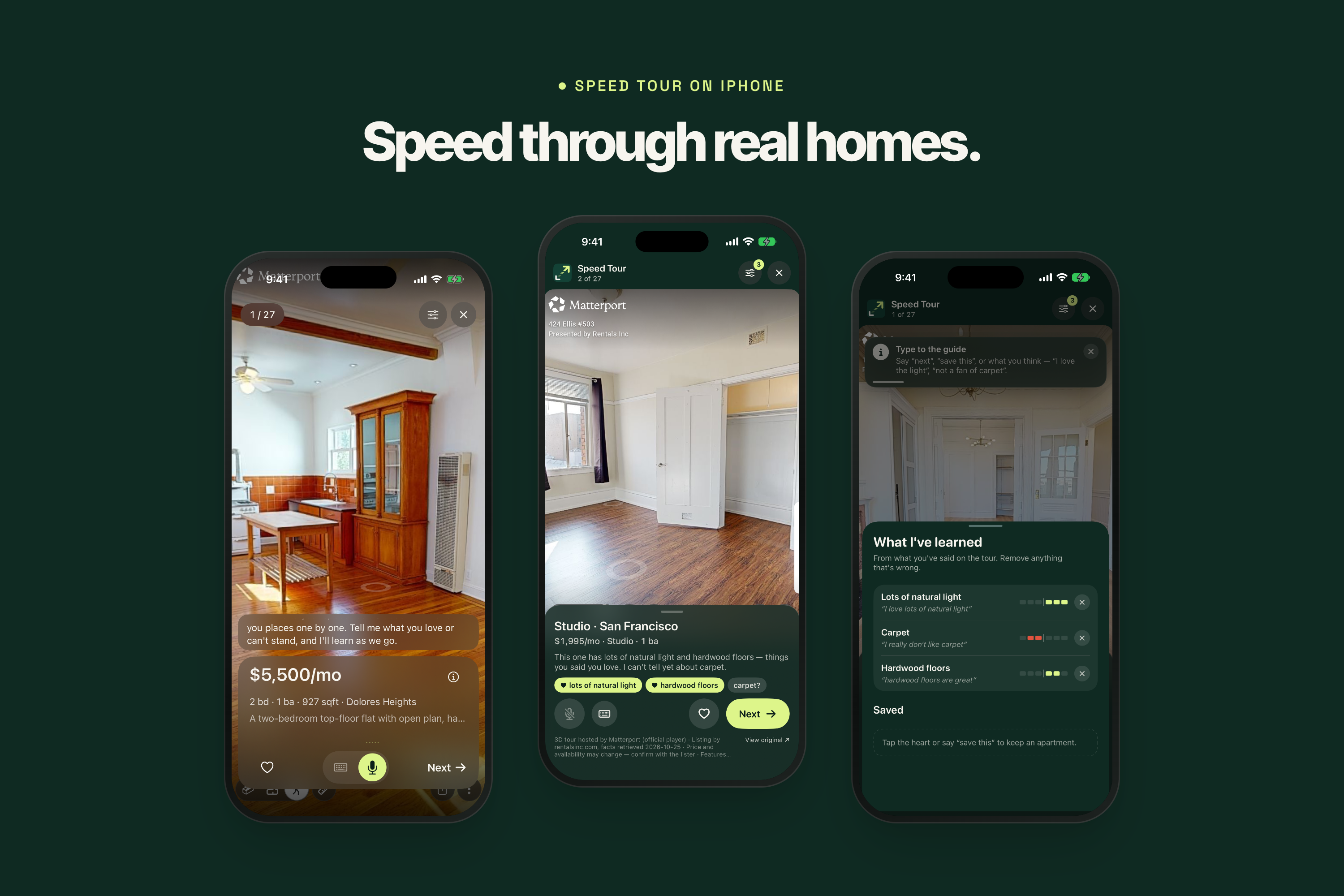
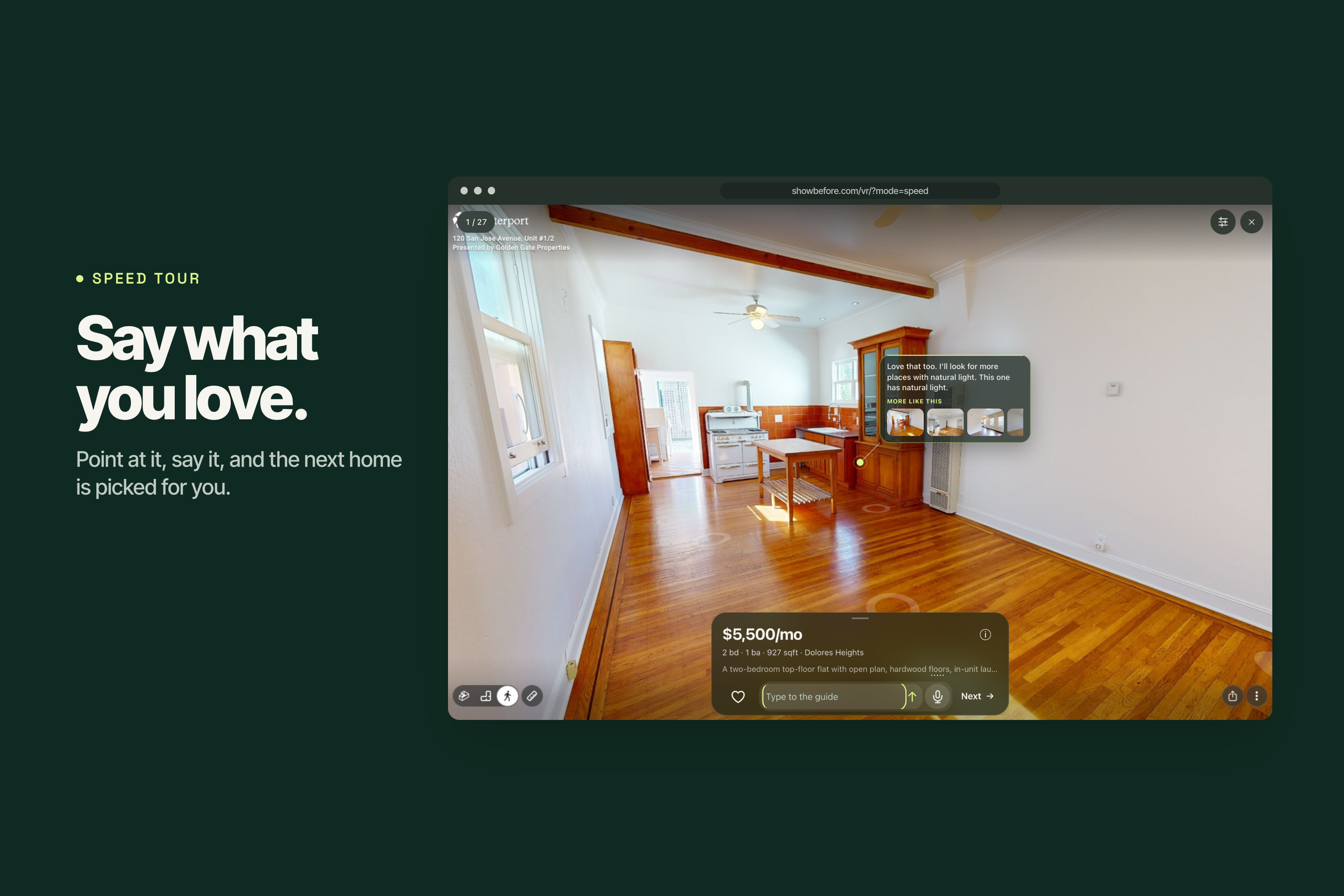
Our "Speed Tour" interface is designed to understand user preferences over time and quickly transport users to a new apartment w/ a 3d model
-
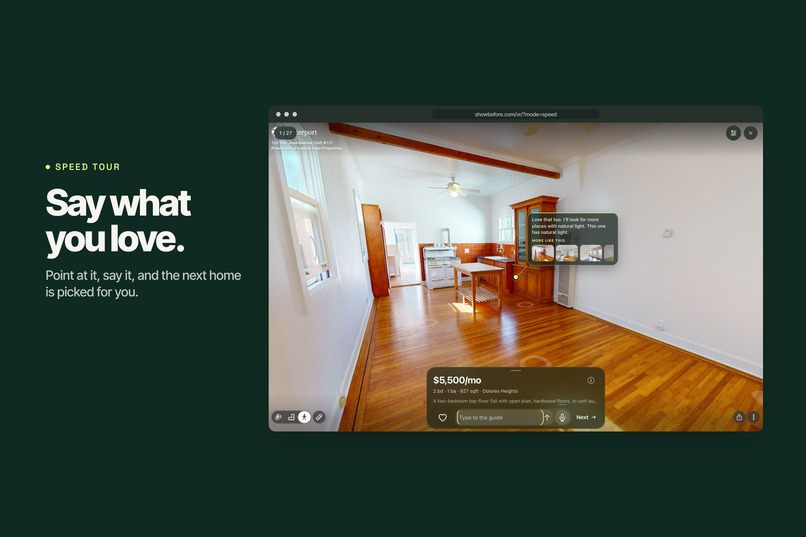
Our "Speed Tour" Interface acknowledging a user's dislike and tagging it.
-
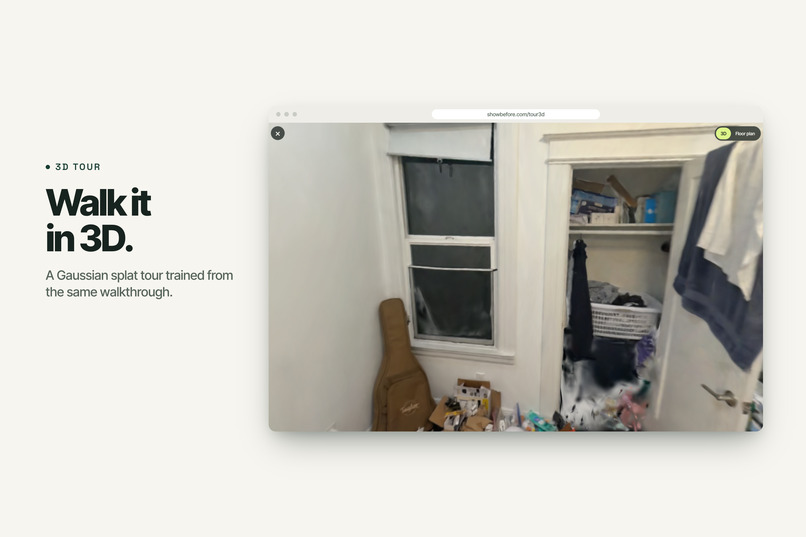
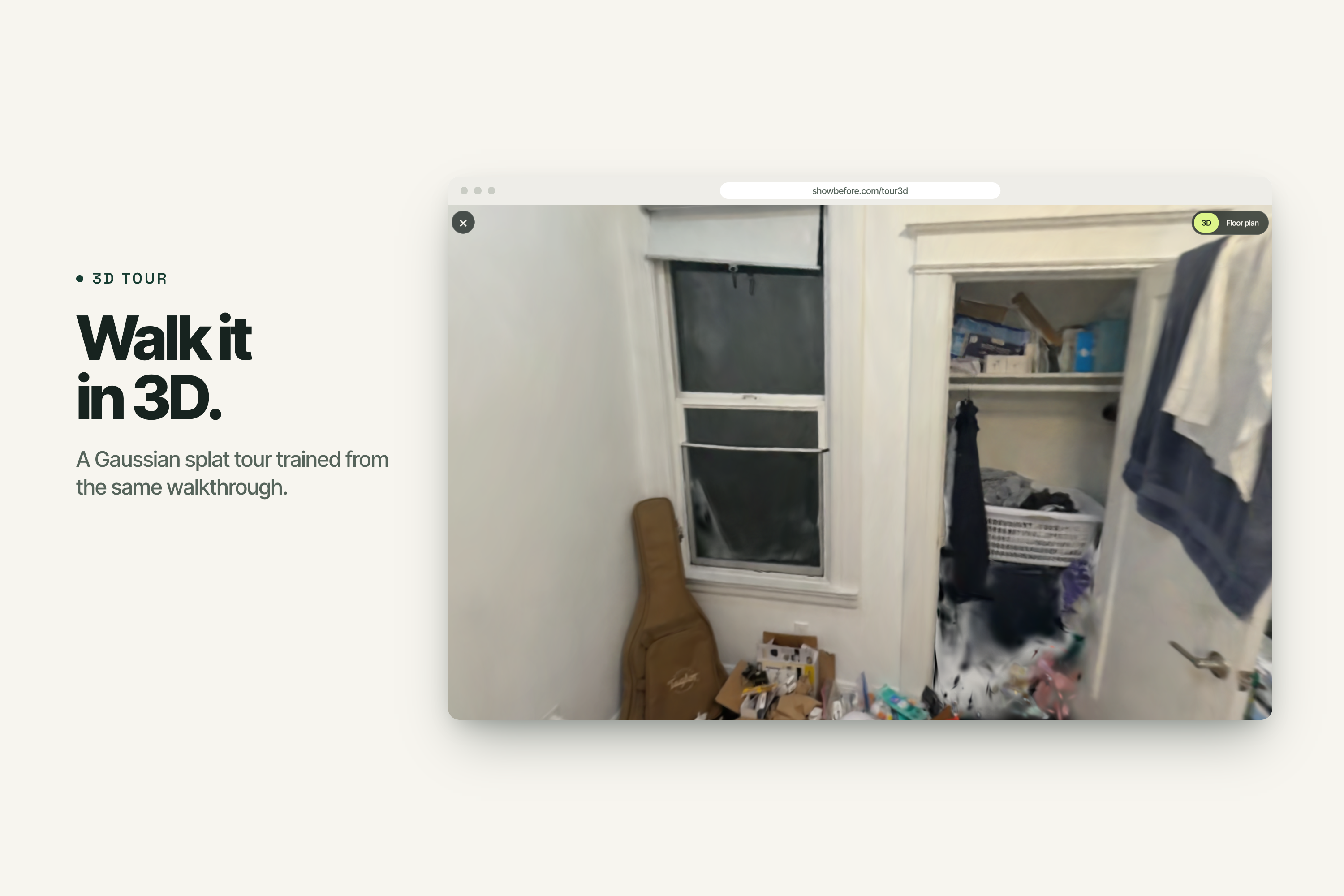
An example of a nice gaussian splat created from our video (not a nice room though)
-
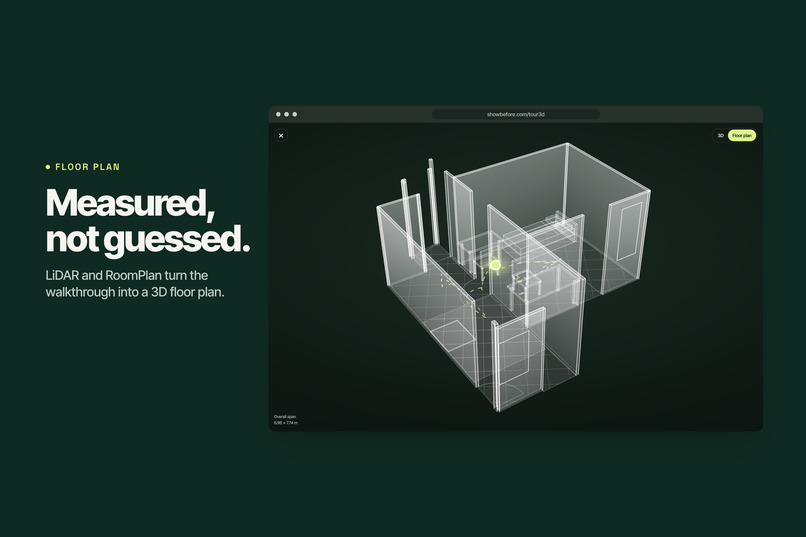
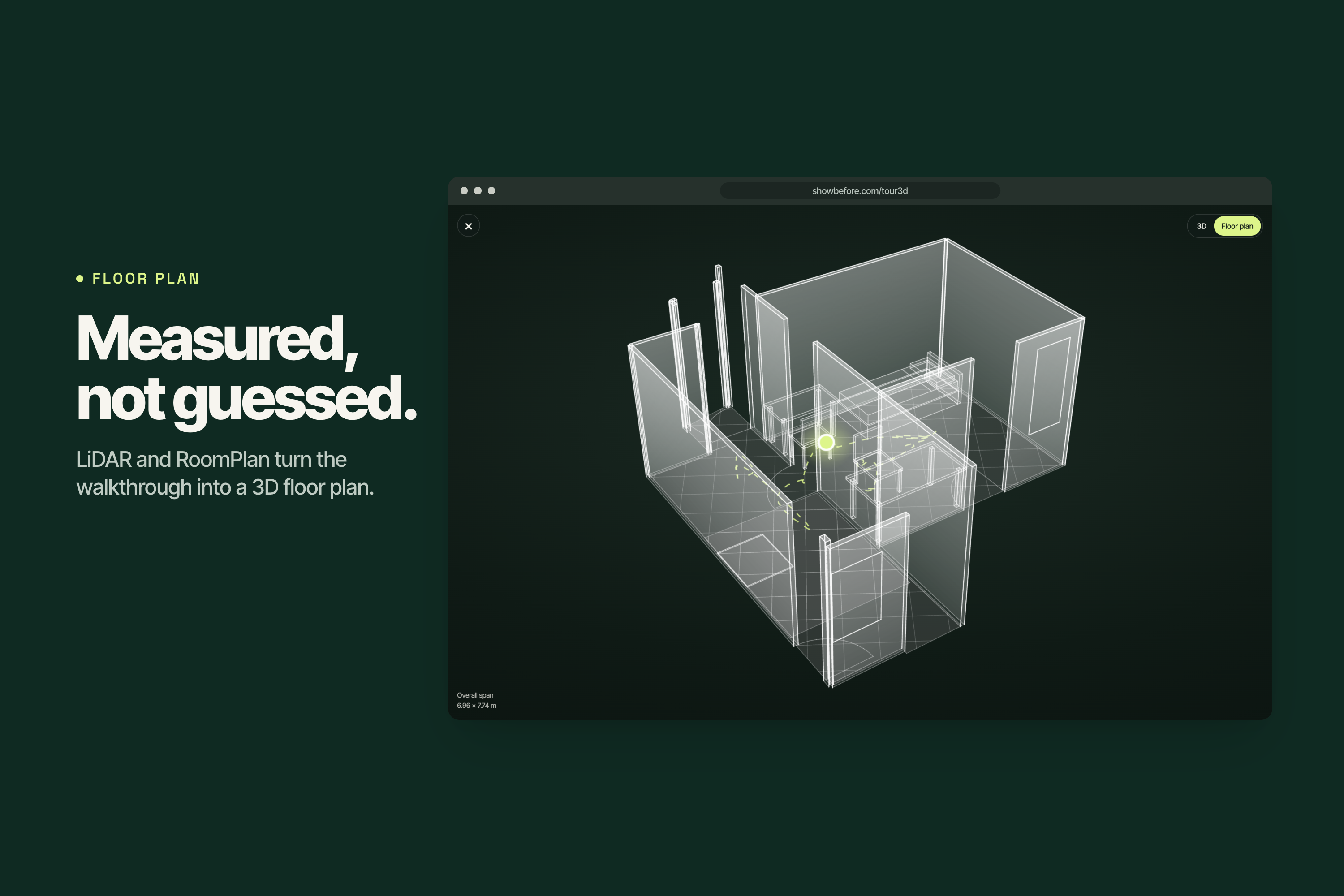
An estimated floor plan built automatically from the iPhone's LiDAR scan during a single walkthrough.
-
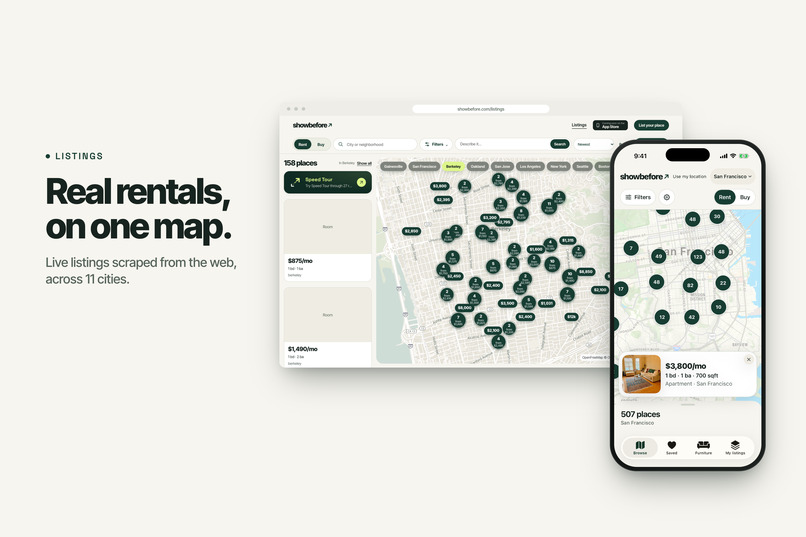
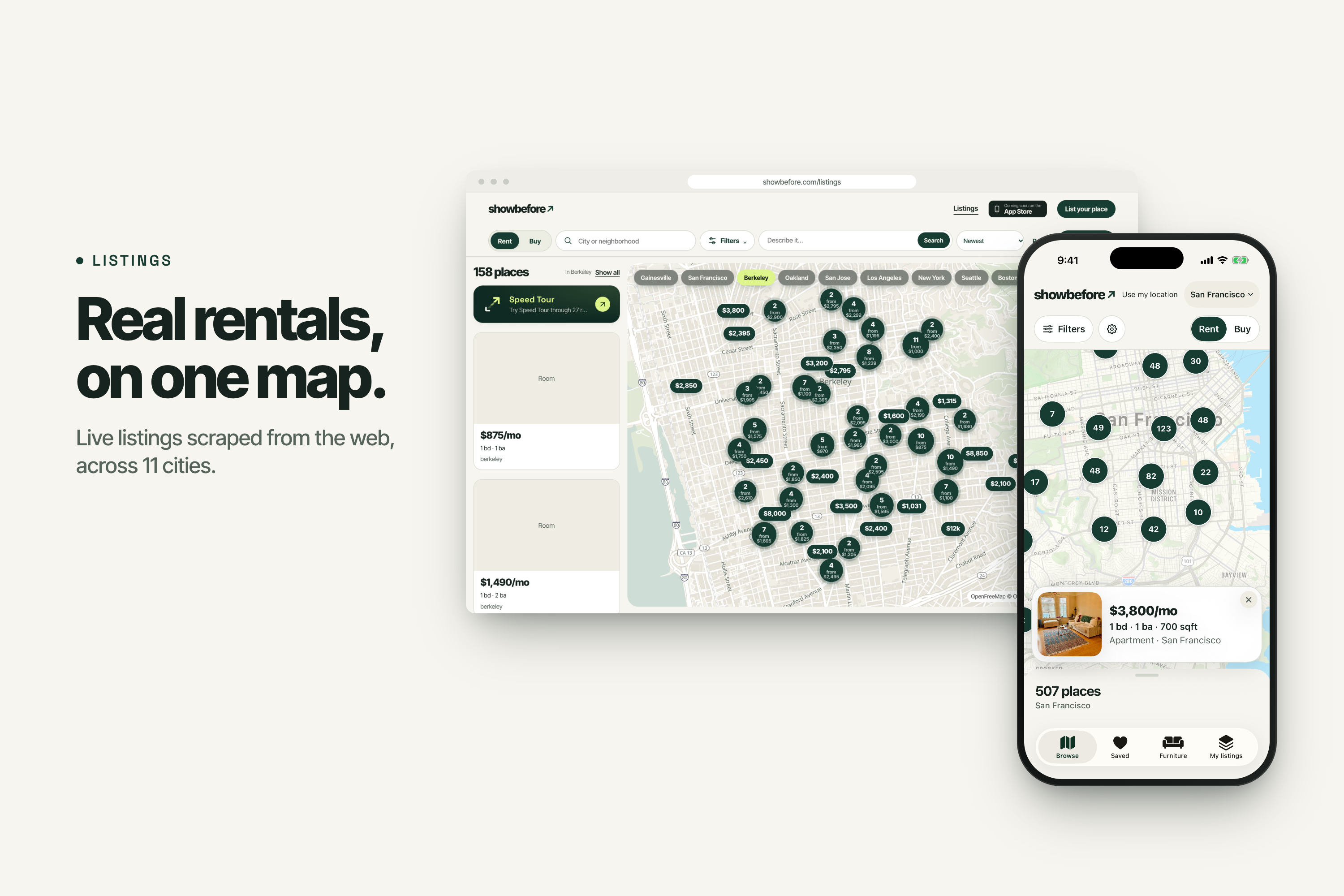
Our "Listings" map of real public rentals in 11 cities, pulled with Bright Data and our Apify actor.
-
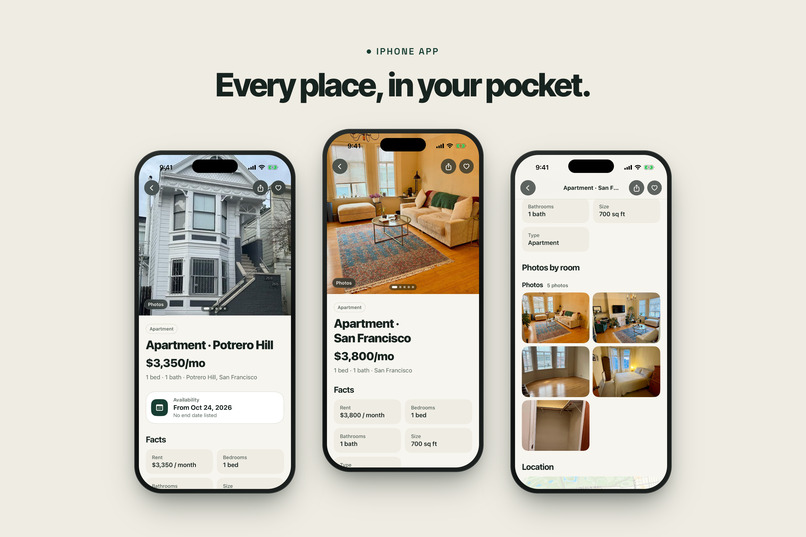
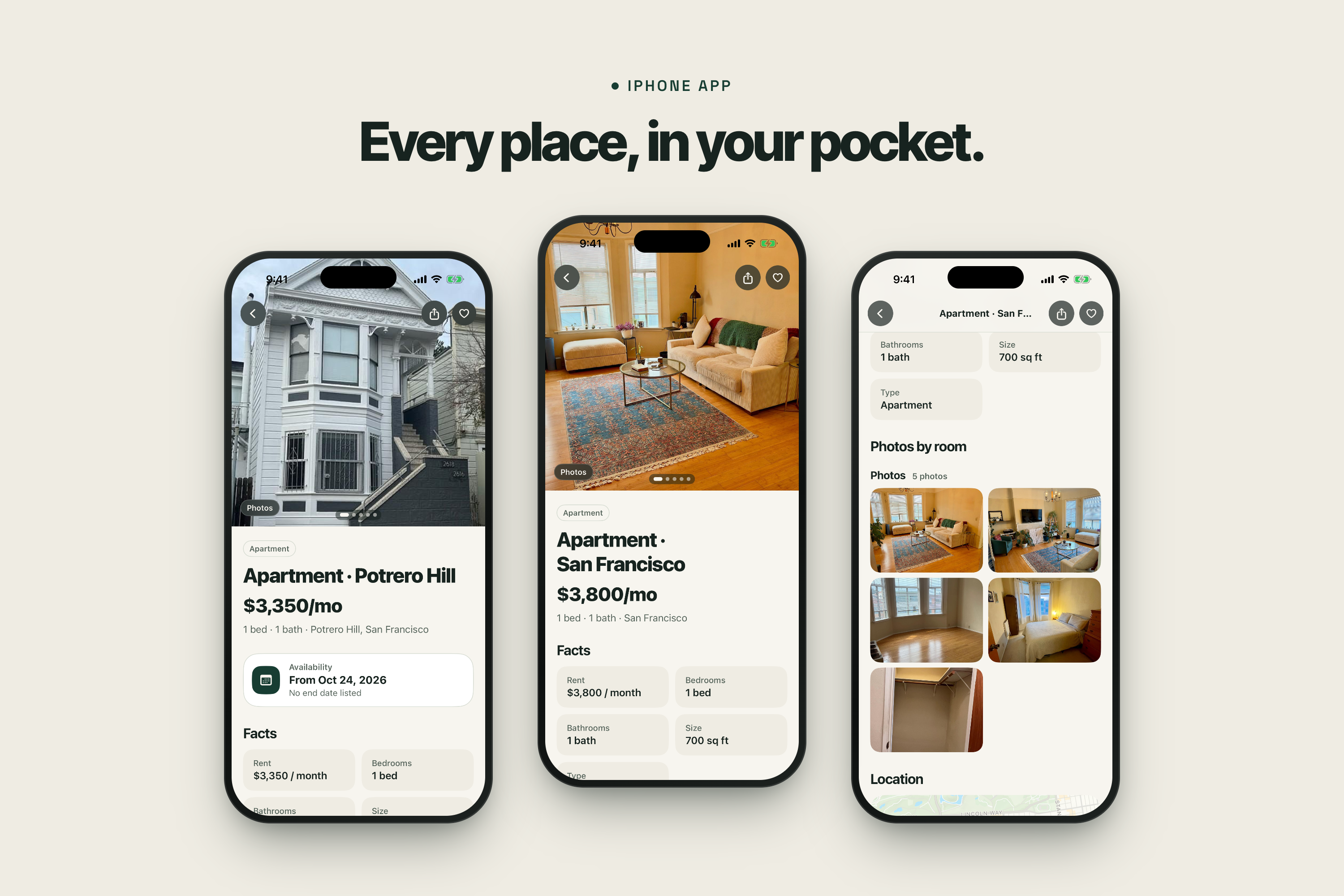
A listing on our iPhone app
-
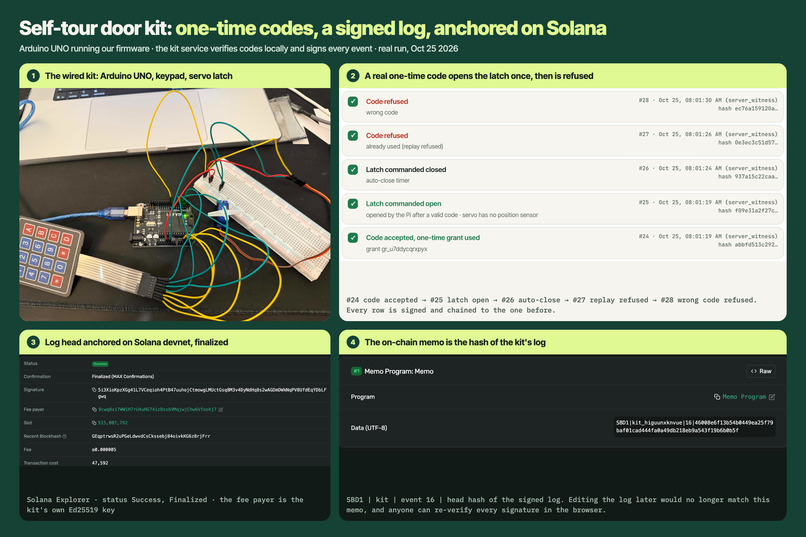
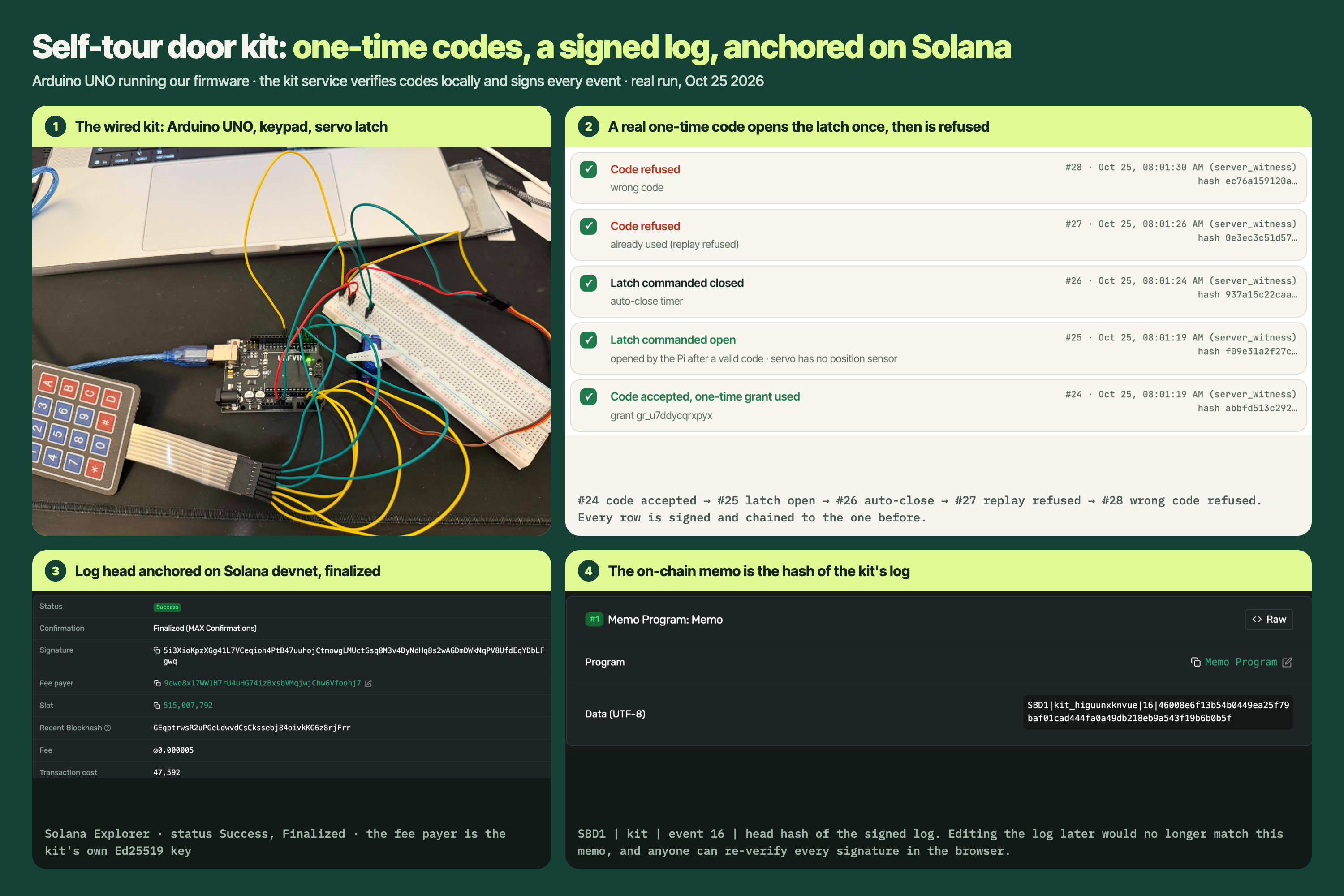
A (very simple) proof of concept for a Solana blockchain-secured servo (for unlocking doors for an open house)!!
Inspiration
Renting places out and finding places to rent online is a pain in the buttocks. We had to do both and we think we can make sexy online real estate listings more accessible.
Unfortunately, to make a good listing, you generally have to:
- Walk around and take 10+ photos
- Type up several paragraphs about how your place is great
- Hire a Matterport photographer for $200+
- Answer questions online and pretend to be happy (online)
And to rent...
- Look at 10+ photos and the floor plan
- Compare apartments that have scans while others don't
- Bounce between ChatGPT/Claude and Zillow constantly
We want a listing platform where listing takes no chair time and where hunting is a joy!
What it does
Show Before turns one iPhone walkthrough into an ordered photo gallery, a measured floor plan, a listing description, a narrated highlight video, and a 3D tour. Our voice guide, Shelley, interviews the lister while they film so that an agent can have the context needed to write a listing. When the camera sees something like a bed or a TV, Shelley asks about it ("Just confirming, is the TV included?").
Listers follow the arrows on the screen to guide them to a nice scan of their place while we interview them with the most common questions renters have about apartments of their type.
Renters can also scan their own furniture with the iPhone and save it to their account, with a photo and its measured size. Then they can drop their couch, bed or desk onto any Show Before floor plan in 2D or 3D to see whether it fits, with walls, doors and clearances checked live, and preview it inside the listing's photos (clearly labeled as an AI preview).
Renters can ask questions about the apartment through our "Speed Touring" feature, which shows many apartments while Shelley talks to them and learns their preferences. Speed Touring and our 3D tours are built on WebXR, so they open in the browser of any VR headset (Meta Quest, Apple Vision Pro and others) with nothing to install, and they also work on a phone or laptop.
How we built it
Our biggest priority is building something both sides can trust. Every fact in a listing links back to the exact moment the lister said it, and anything we don't know stays marked as unknown.
We wanted to make the renting and listing process as seamless as possible, so we focused on getting as much information as we can with every input from the user.
For example, when a user mentions how they hate "that" in our Speed Touring function, we drop a marker on the spot they were looking at, save it as a preference with how strongly they said it, and use it to pick the next apartment to show. If we still have to show a place with that thing, Shelley says so up front.
On the lister side, the phone uses LiDAR, RoomPlan and ARKit to build the floor plan live while "Shelley" asks questions. An object detector running on a cloud GPU spots furniture and appliances, and a turn manager decides when it is polite to ask about them.
Here is how each sponsor's technology fits into Show Before:
- Anthropic (Claude): Claude turns the lister's spoken answers into facts with exact quotes, then writes the description and video script only from those facts. Haiku 5.5 writes live drafts while the lister films, Sonnet 5.5 writes the final listing, and Claude also powers renter Q&A and understands what renters love and hate in Speed Touring.
- Cartesia: Shelley is a Cartesia Managed Agent with Sonic voices and client tools. She saves facts, hides private rooms and asks about what the camera sees, using short-lived tokens our server mints, and the same setup voices the Speed Touring guide.
- Moss: Moss runs hybrid search over real listings in milliseconds and ranks the next apartment in Speed Touring. We're extending it to index each renter's loves and hates (with the snapshot of what they pointed at) so the next apartment is picked by what they actually reacted to.
- Apify: Our own Apify Actor normalizes real rental listings into clean facts for comps and search across 11 cities.
- Bright Data: The Web Scraper API and Web Unlocker pull real Zillow listings, price comps and listing photos, and help flag photos reused across sites by scammers.
- SpacetimeDB: SpacetimeDB syncs co-touring live, so a renter in a headset and a friend on a laptop see the same apartment and markers.
- Meta (Quest): The tours run in WebXR on the Meta Quest 3, where a renter can point at something, say "I hate that", and leave a marker in the room.
- CREAO: A saved CREAO agent runs a listing trust check through its API trigger, and the result shows on the listing.
- Factory (Droid): Factory Droid runs automated listing audits as background jobs that check each claim against the evidence.
- Microsoft Agent Framework: An evidence reconciliation agent built on Agent Framework compares listing claims with the captured facts.
- Hyphenate: Leasing Desk acts as a leasing analyst for small property managers, flagging questionable fees with sources and sending unknowns to a human.
- Visa: The Fit Planner checks whether real furniture fits the measured rooms and shows real products with prices, so renters can plan their move and spending before they sign.
- Solana: The door kit's tamper-evident access log is anchored on Solana devnet through the Memo program.
Underneath, Cloudflare Workers, D1 and R2 run the backend. The tours run on WebXR, so any headset with a web browser can open them (we tested on the Meta Quest 3), and a Raspberry Pi and Arduino door kit handles self-tours with a signed access log.
Papers and methods we used
- 3D Gaussian Splatting (Kerbl et al., SIGGRAPH 2023), trained with the gsplat library (Ye et al., 2024) from the phone's own camera poses, for the photoreal 3D tour.
- OWLv2, open-vocabulary detection (Minderer et al., "Scaling Open-Vocabulary Object Detection", NeurIPS 2023), to spot the furniture and appliances Shelley asks about. We also benchmarked YOLOE for segmentation outlines.
- Grounding DINO (Liu et al., ECCV 2024) + SAM 2 (Ravi et al., 2024) to find and cut out clutter, then LaMa inpainting (Suvorov et al., "Resolution-robust Large Mask Inpainting with Fourier Convolutions", WACV 2022) to clean listing photos. Every edit is checked with SSIM (Wang et al., 2004) so nothing outside the clutter changes.
- π³ / Pi3X feed-forward 3D reconstruction (Wang et al., 2025) for video-only listings in our scene navigator, which lets an agent teleport around a home and cite the exact frame it saw.
- LSD line segment detection (von Gioi et al., 2010) and the ARKit gravity vector to straighten photos so walls stay vertical.
- SigLIP image embeddings with a small pairwise (Bradley-Terry style) ranker trained on Claude's preferences to pick the best photo per room.
- Viterbi decoding over a hidden Markov model to keep room labels stable as you walk between rooms.
- dHash perceptual hashing to catch listing photos reused across sites, a common rental scam.
- Ed25519 hash chains for the door kit's access log, with the head posted to Solana devnet through the Memo program.
Challenges we ran into
- Shelley kept hearing her own voice and answering herself. We had to add echo cancellation and a speaking queue so she waits for the user to answer.
- Putting the phone down made the scan lose track and stack two copies of the same room. We now pause the scan and pick the same room back up instead.
- AI photo cleanup loved to invent furniture. One model added a side table that was never there, so we only remove clutter we can verify and label every edited photo.
- Deciding when a room is actually done. Our first version declared a room finished while we were pointing at a desk.
- The Gaussian Splatting models came out very ugly! Handheld phone video has motion blur, the camera keeps changing its exposure, and our captures have no depth, so our first model only scored 17 dB PSNR on frames it never saw. We experimented with per-image color correction for the exposure changes, anti-aliased splats (Mip-Splatting), MCMC-style densification, estimated depth as a guide for flat walls, and dropping blurry frames, and we measured every change against held-out frames instead of trusting our eyes.
Accomplishments that we're proud of
- Shelley asks about what the camera sees, highlights it in AR, and saves the answer (somewhat) well at this point!
- Certified walkthroughs!! A listing can prove it was captured in person with our app, which makes stolen-photo scams (commonly found on Craigslist) much harder.
What we learned
- Claude Opus 5.5 is EXCELLENT at multi-tasking and driving multi-platform development.
- Voice AI is really hard to time. Failing to wait before talking in some cases can ruin the experience.
What's next for Show Before
We'd love to tidy the vibe-coded code base to make this into something we can share on the app store! There's also a ton of places we can improve the UI/UX experience and the order in which Shelley asks questions. We're also in negotiations with an entrepreneurship group in our college town (Gainesville, Florida), who might be able to help us find initial users.
One of the things we're really excited about is our Speed Touring feature. Learning what people love and hate from a quick "ugh, not that" and indexing those examples is something we've been implicitly doing through ChatGPT/Claude for a while, and we're hoping it saves people time and money.
Built With
- apify
- arduino
- arkit
- bright-data
- cartesia
- claude
- cloudflare-workers
- creao
- factory-droid
- gaussian-splatting
- javascript
- lidar
- meta-quest
- microsoft-agent-framework
- moss
- python
- pytorch
- raspberry-pi
- roomplan
- solana
- spacetimedb
- swift
- swiftui
- three.js
- webxr

Log in or sign up for Devpost to join the conversation.