-
-
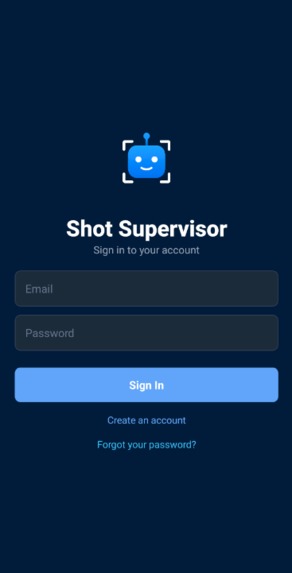
User authentication!
-
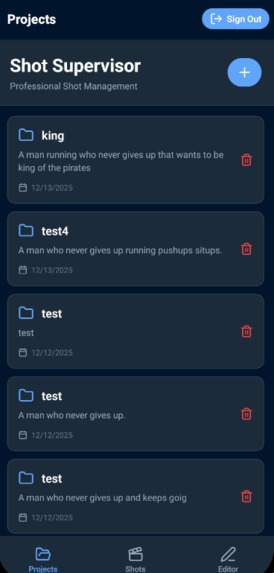
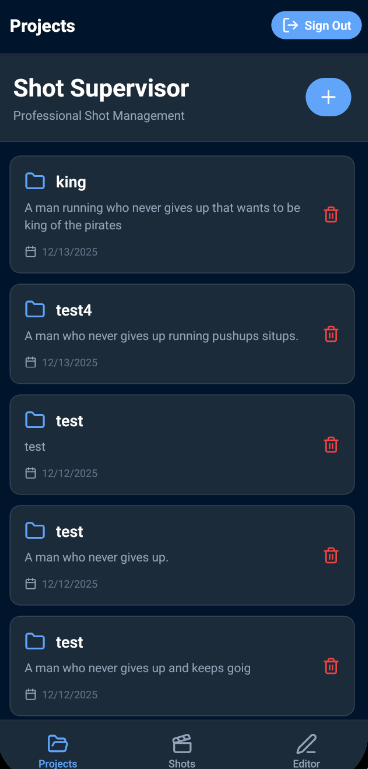
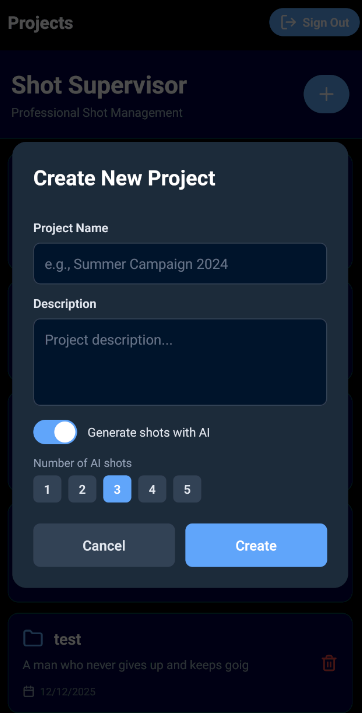
Create a project!
-
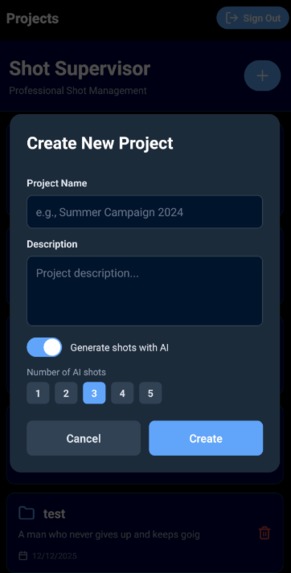
Utilize AI to generate images based on the project description in a story timeline
-
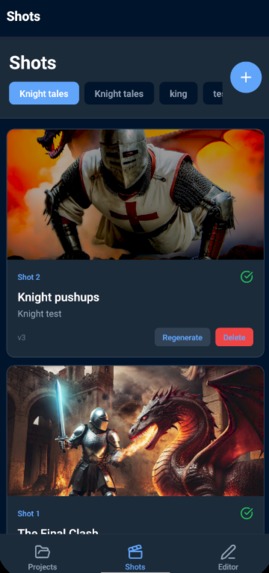
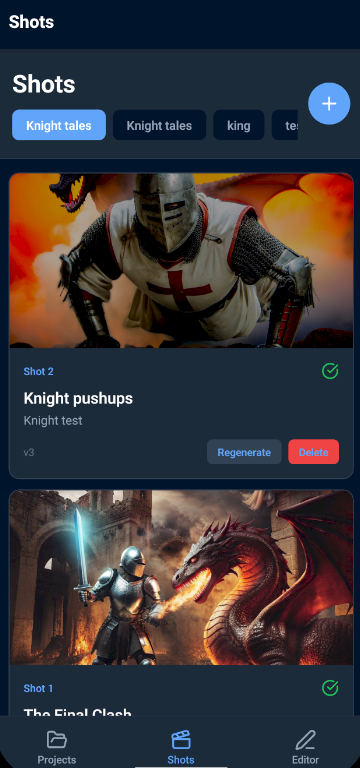
Keep all your shots in one place per project!
-
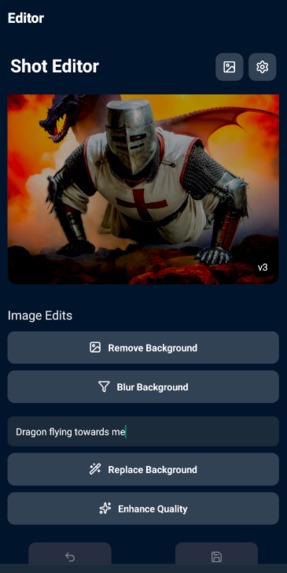
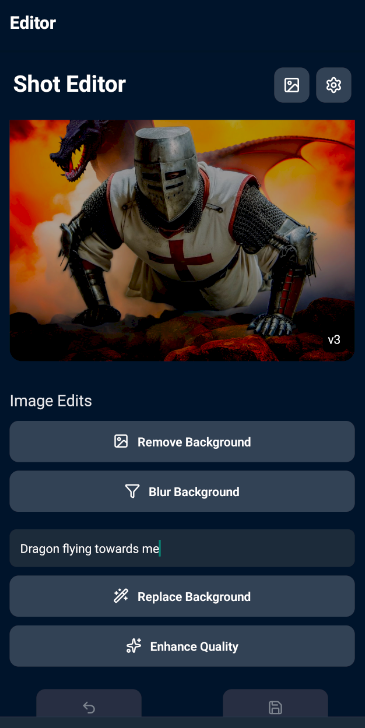
Use BRIA's API to make changes to image in seconds!
-
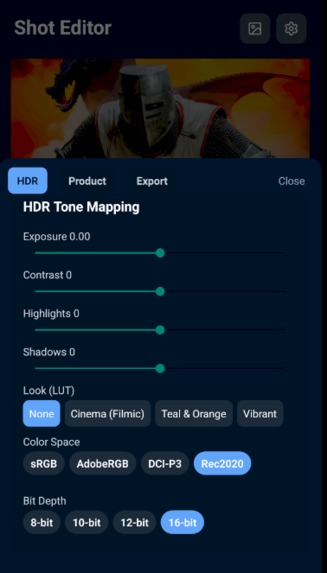
HDR control over images!
-
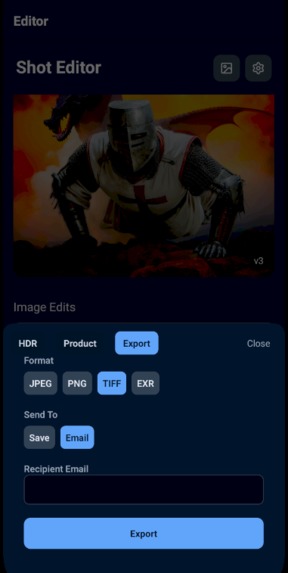
Export capabilities!
Inspiration
Shot Supervisor was inspired by a real gap in professional visual production workflows: the disconnect between creative intent and technical execution. Today, creators often jump between tools, prompts, exports, and manual tweaks just to keep shots consistent across a project. Prompt-based generation is powerful, but unpredictable, and it breaks down quickly when precision, repeatability, or professional standards like HDR, bit depth, and color space matter.
Bria FIBO’s JSON-native, deterministic control felt like the missing piece. Instead of fighting prompts, I wanted to build a director-style mobile tool where shots are planned, generated, edited, and exported with production-grade control—anywhere, on a phone.
What it does
Shot Supervisor is a mobile production companion for planning, generating, editing, and exporting shots with AI—designed for professional creative workflows.
The app is organized into three core tabs:
Projects
- Create a project with a name and description.
- Optionally generate up to 5 AI-generated shots automatically using an LLM-driven breakdown of the project description.
- Generated shots are structured to maintain consistency across a project.
Shots
- Each project contains multiple shots.
- Create shots with a title, description, and generation prompt.
- Generate images using Bria FIBO.
- Attach a reference image from the camera roll or take a photo directly in-app to guide generation.
- Regenerate shots while preserving intent and structure.
Editor
- Edit any generated shot using professional-grade tools:
- Background removal
- Background replacement via prompt
- Blur background
- Quality enhancement
- Advanced edit toggles:
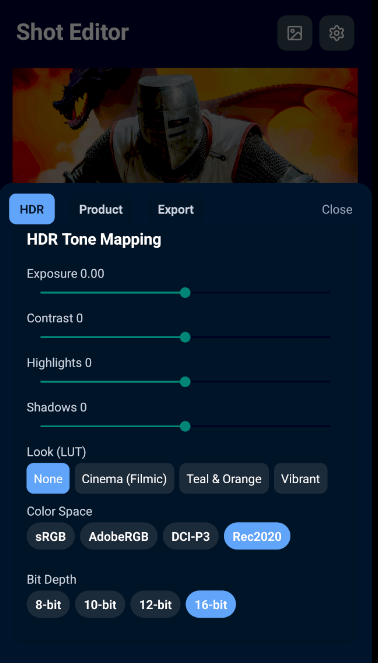
- HDR controls (custom endpoint): exposure, contrast, highlights, shadows
- LUTs: None, Cinema (Filmic), Teal & Orange, Vibrant
- Color Spaces: sRGB, AdobeRGB, DCI-P3, Rec2020
- Bit Depth: 8, 10, 12, 16-bit
- Product editing via Bria Product API
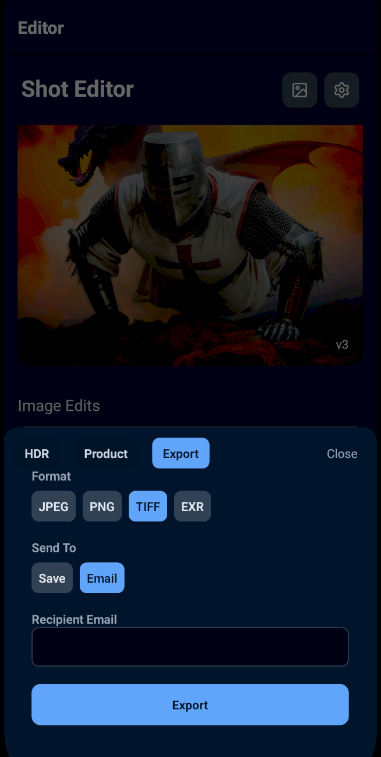
- Export final assets:
- Save to device or email delivery
- Formats: JPEG, PNG, TIFF, EXR
This turns a phone into a portable shot planning and post-production tool, not just a generator.
How I built it
- Bria FIBO APIs
- Image generation
- Editing APIs
- Product APIs
- JSON-native controllability
- Structured parameters for predictable, repeatable outputs
- HDR, bit depth, and color space controls highlight FIBO’s pro-grade strengths
- Custom Vercel-hosted endpoints (for security and flexibility):
bria-generatebria-editbria-productexport-hdrhdr-tone-mapemailllm-breakdown(uses DeepSeek-V3 to convert project descriptions into structured shot plans with bria's generate API)
- Supabase
- Authentication
- Project and shot database
- Mobile-first UX
- Designed for speed, iteration, and on-set usage
- Camera integration for real-world reference images
By separating generation, editing, and HDR processing into modular endpoints, the system is scalable, secure, and production-ready.
Challenges I ran into
- Designing a professional editing workflow on mobile without overwhelming the user.
- Balancing creative freedom with structured, deterministic control.
- Integrating HDR and high bit-depth workflows in a way that feels intuitive rather than technical.
- Building custom HDR endpoints to extend beyond default API constraints while remaining compatible with Bria’s pipeline.
- Time constraints of a hackathon—some components were started but not fully polished.
Accomplishments that I'm proud of
- Built a true professional-grade mobile tool, not just a demo.
- Showcased Bria FIBO’s strengths:
- JSON-native control
- High bit depth
- HDR workflows
- Deterministic, repeatable generation
- Combined AI planning (LLM breakdown) with structured image generation.
- Created a scalable, secure backend architecture suitable for enterprise use.
- Delivered an end-to-end workflow: concept → generation → edit → export.
What I learned
- Professionals don’t want better prompts—they want better controls.
- FIBO’s structured generation unlocks workflows that simply aren’t possible with prompt-only models.
- HDR, color space, and bit depth matter deeply in real production environments.
- Mobile can be a serious creative platform when paired with the right abstractions.
- JSON-native generation pairs extremely well with agentic and automated pipelines.
What's next for Shot Supervisor
Planned improvements
- Real-time HDR preview
- Shot consistency auditing across projects
- Histogram-based photo editing
- MCP-powered Bria chat for conversational edits
- Video support
- Refactoring (move supabase client-side envs fully server-side)
- Particle-based splash screen polish
Some components are visible in the codebase but unfinished due to hackathon time limits—these are already in progress.
Built With
- fibo
- javascript
- react-native
- supabase
- typescript
- vercel

Log in or sign up for Devpost to join the conversation.