-
-
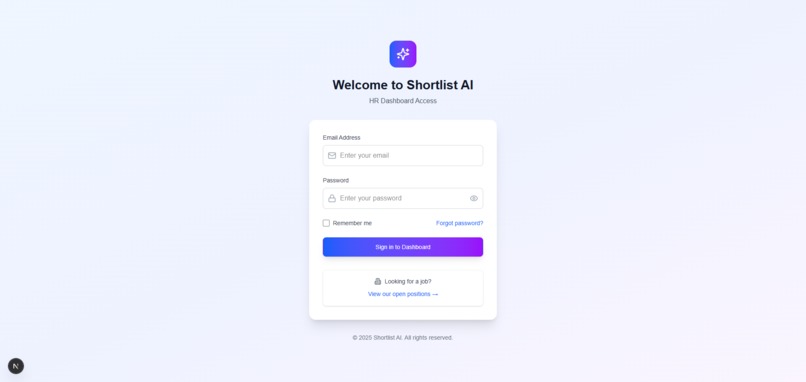
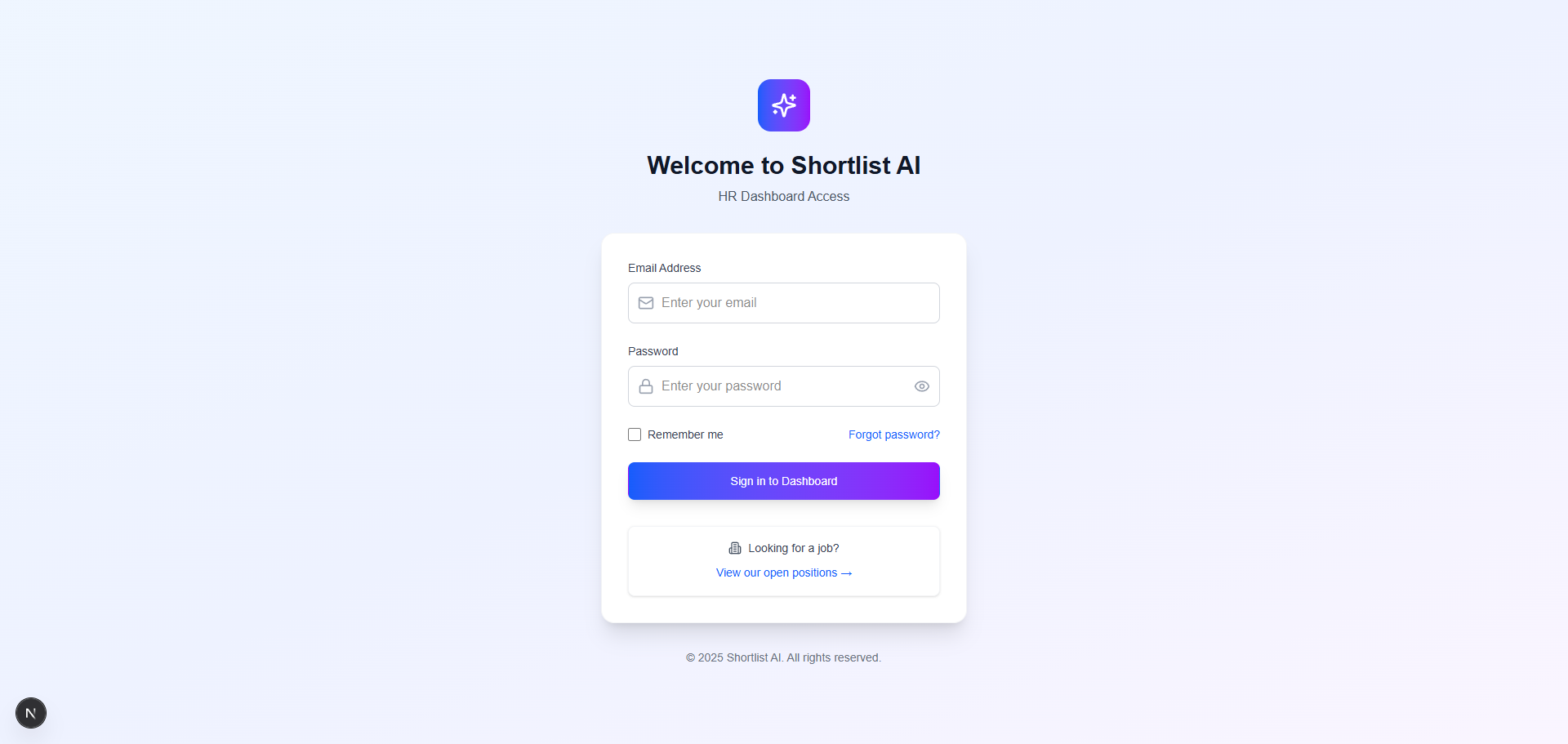
Login Screen for HR Dashboard
-
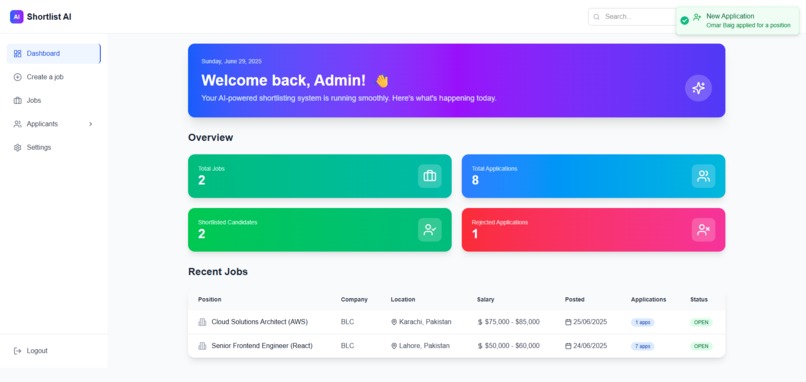
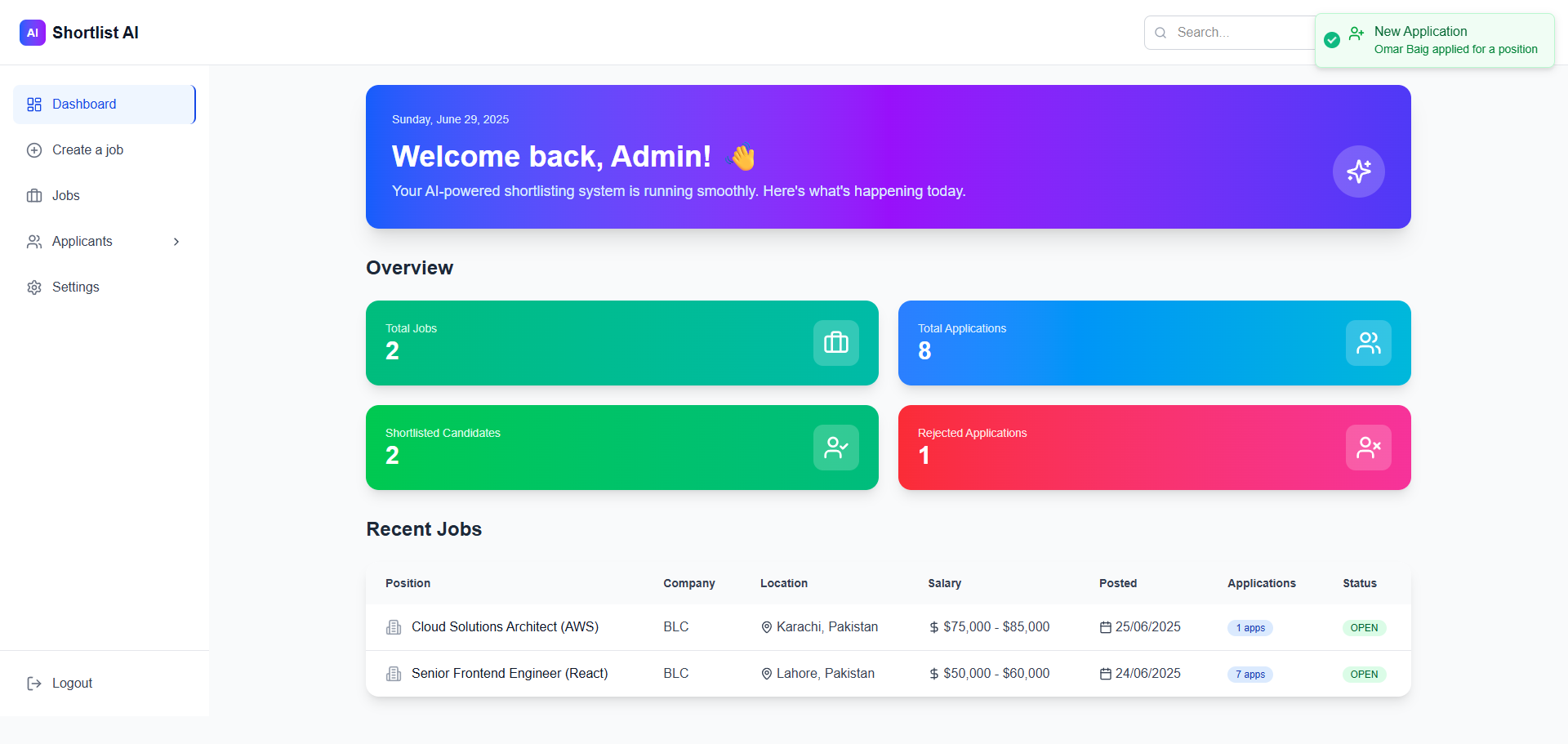
Dashboard Overview
-
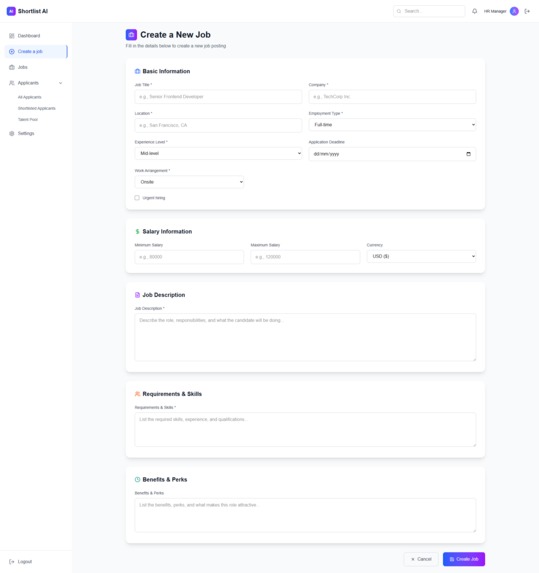
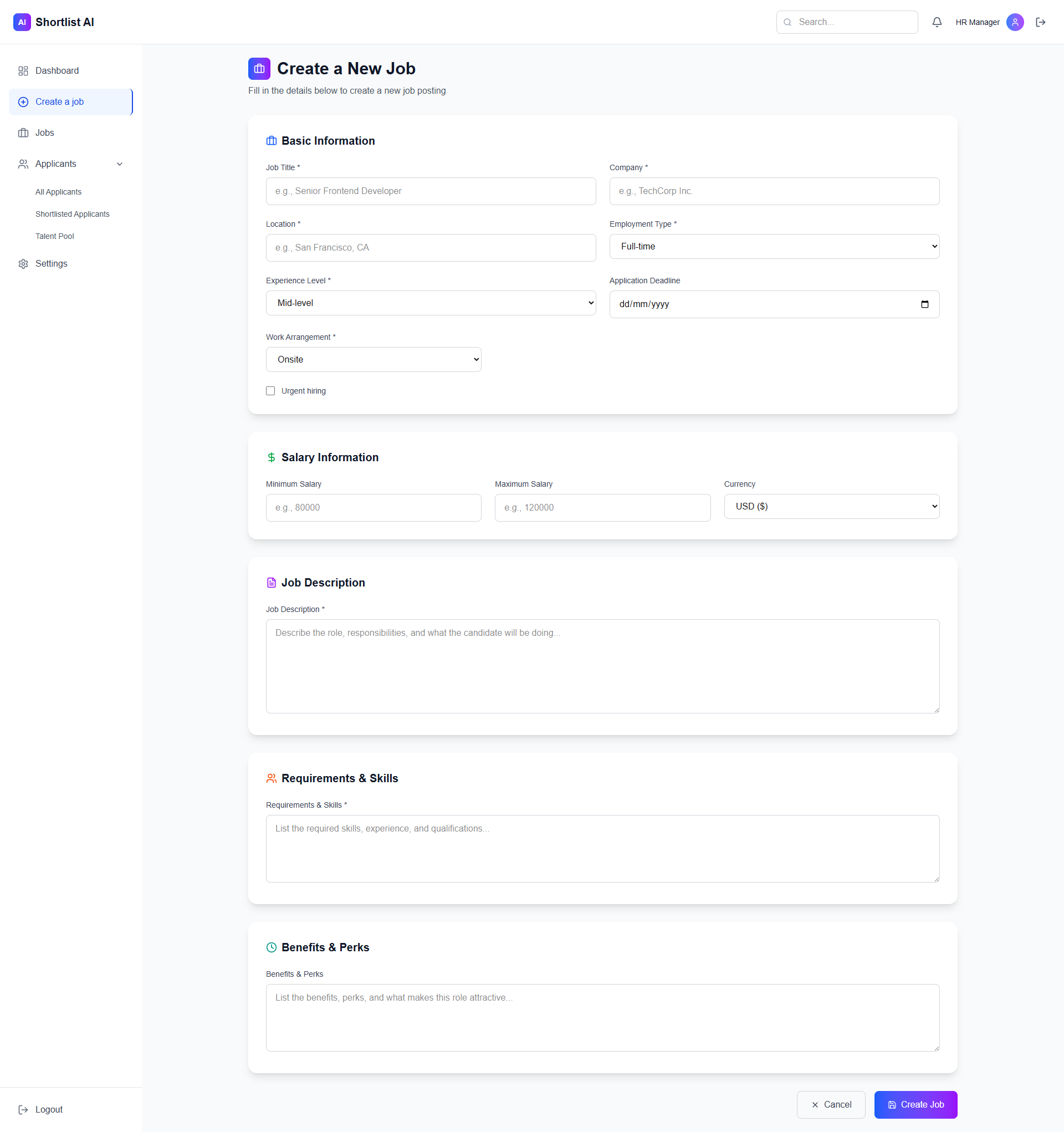
Dashboard Create a Job Page
-
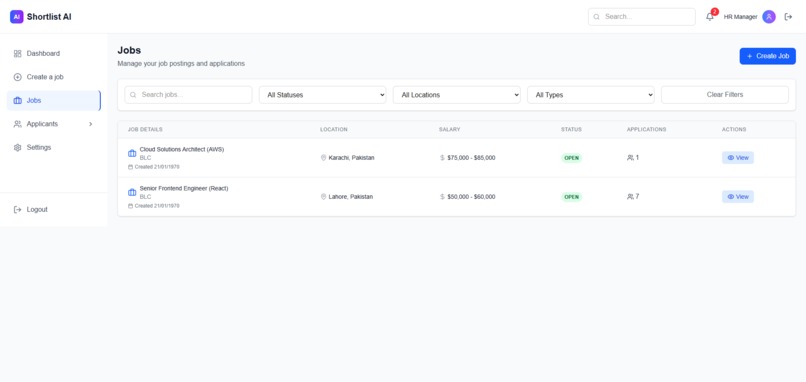
List of Jobs
-
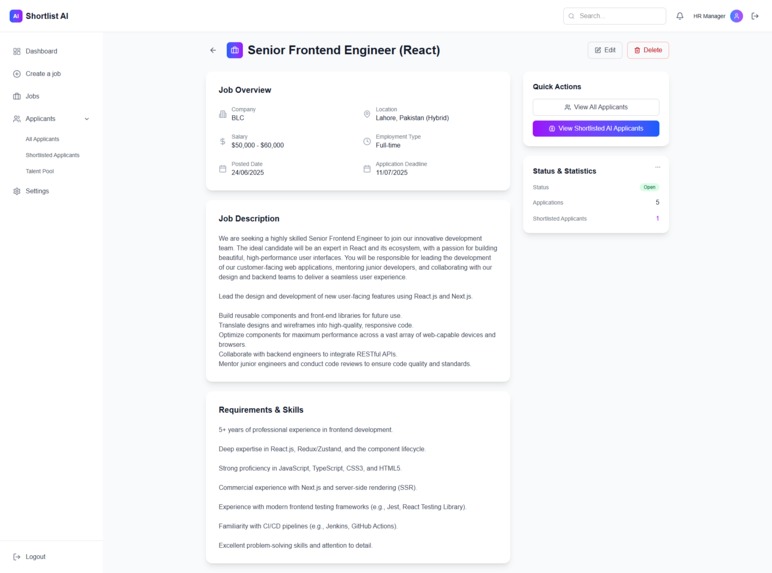
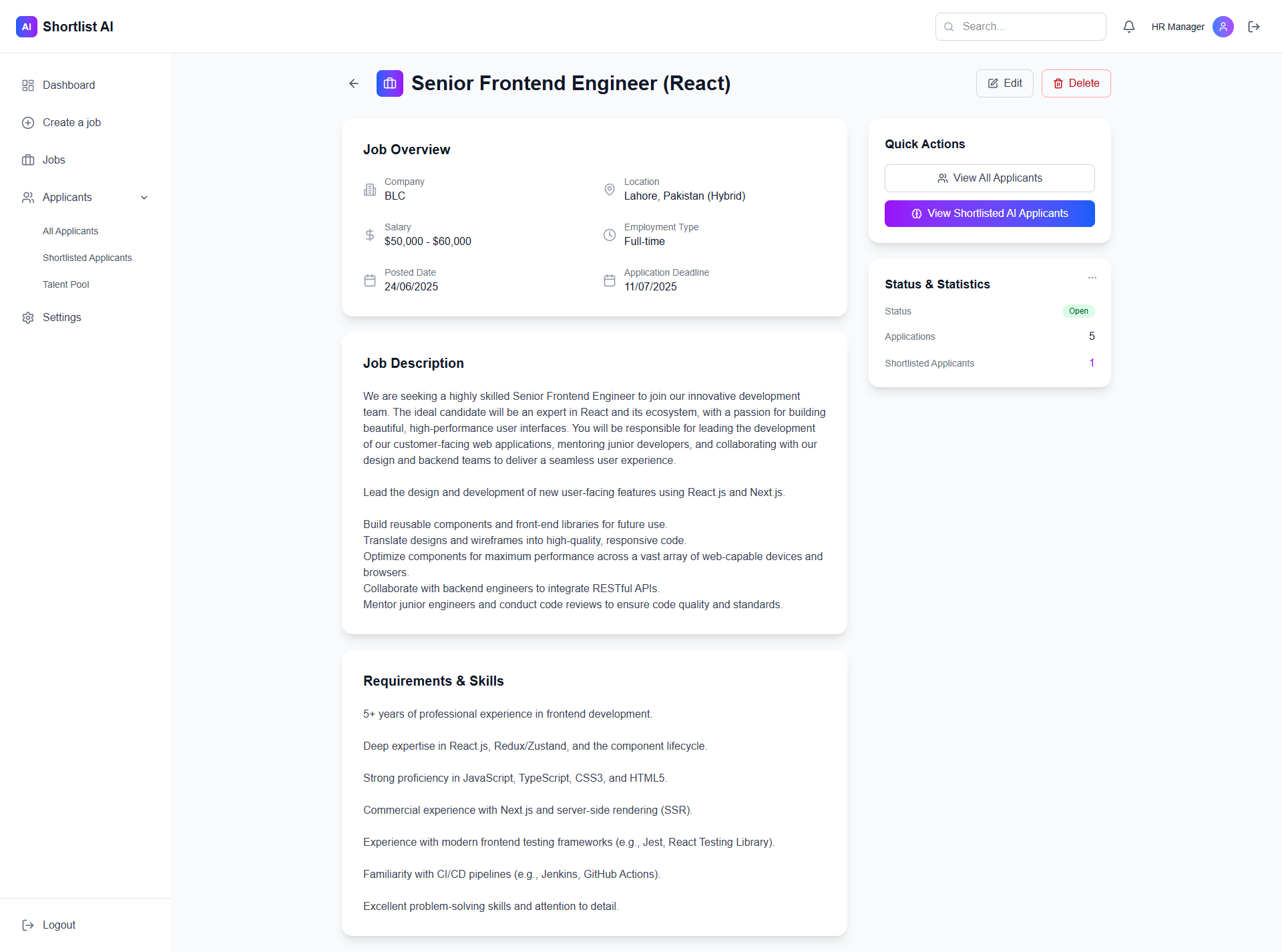
Dashboard Job Detail Page
-
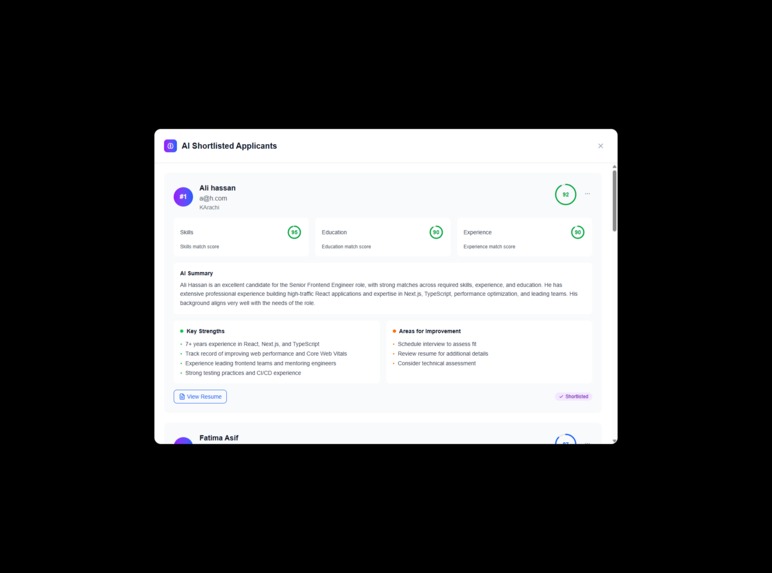
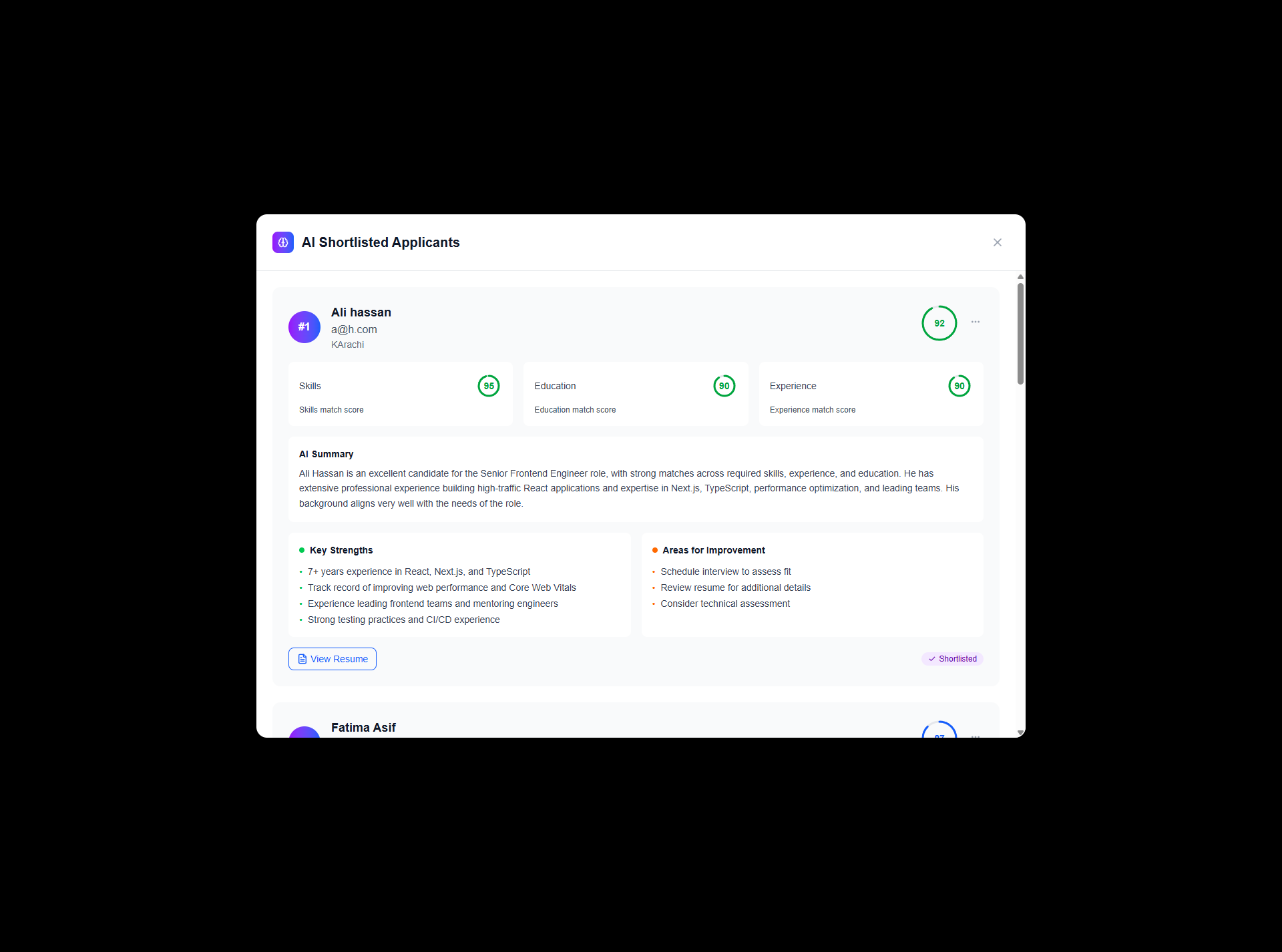
Ai Analysis of Applicants for a job
-
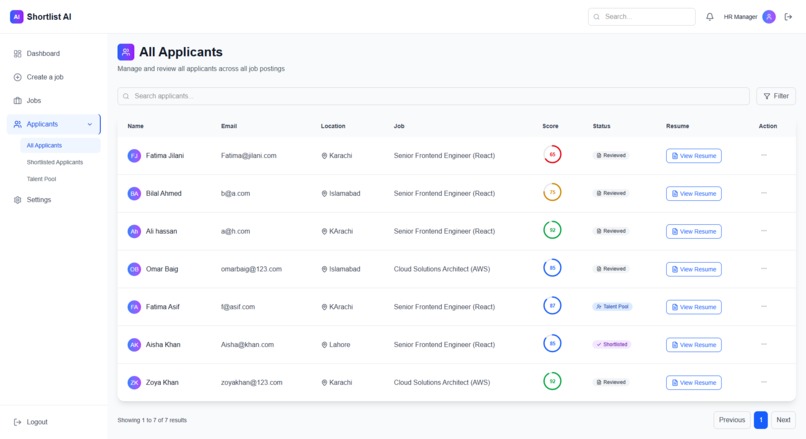
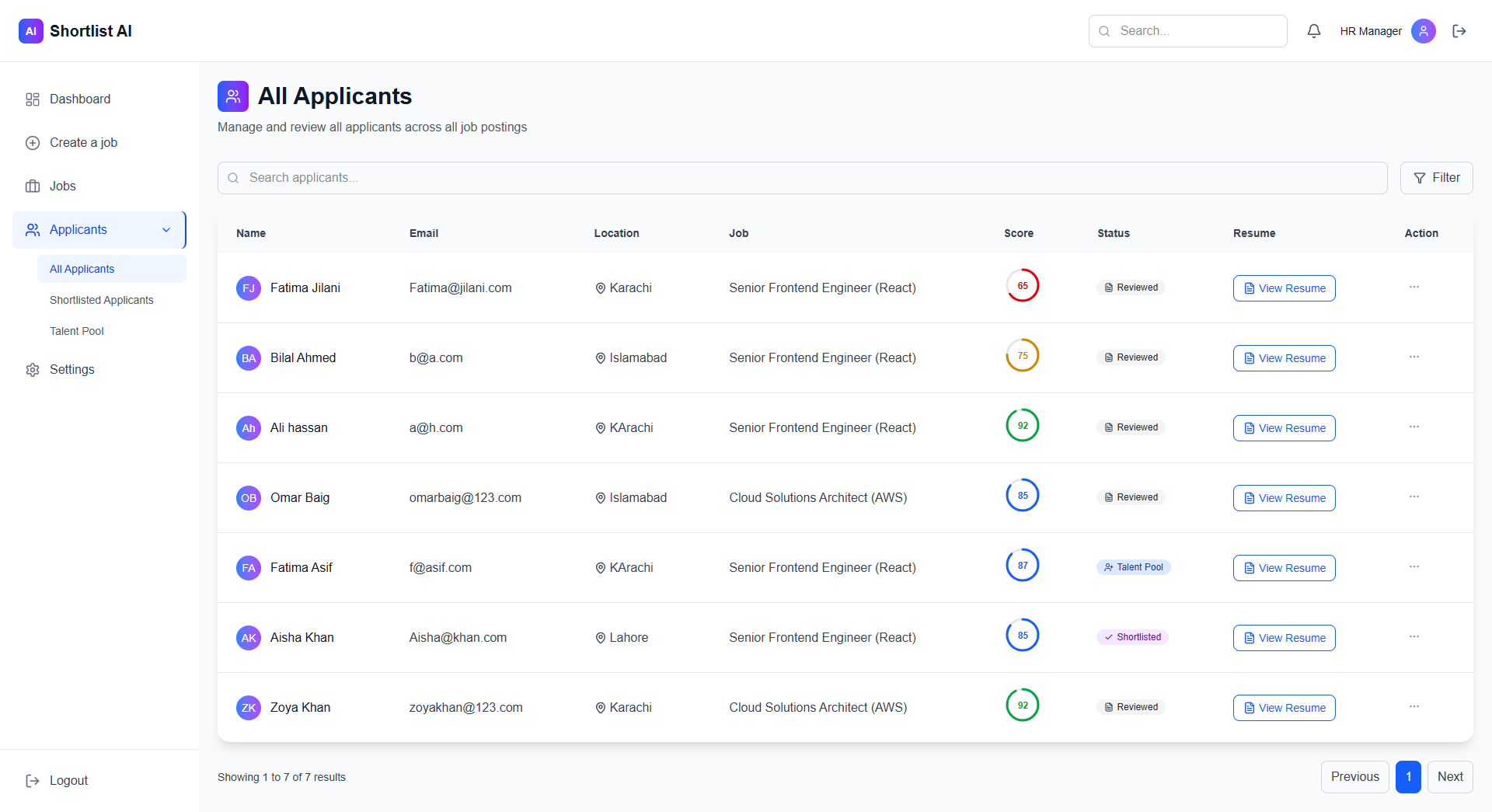
List of All Applicants
-
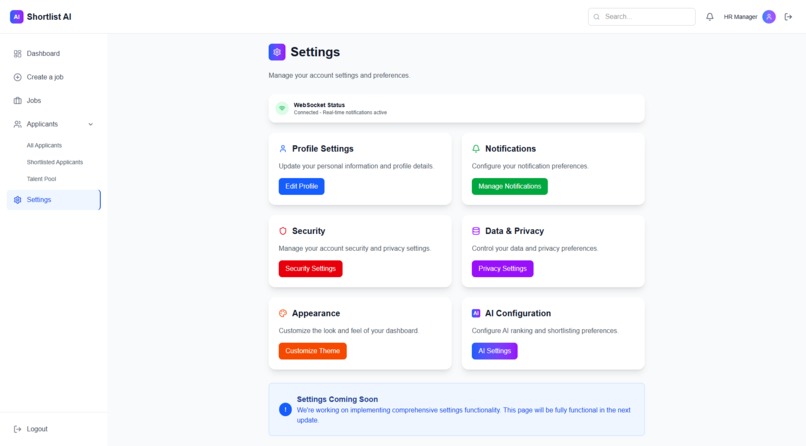
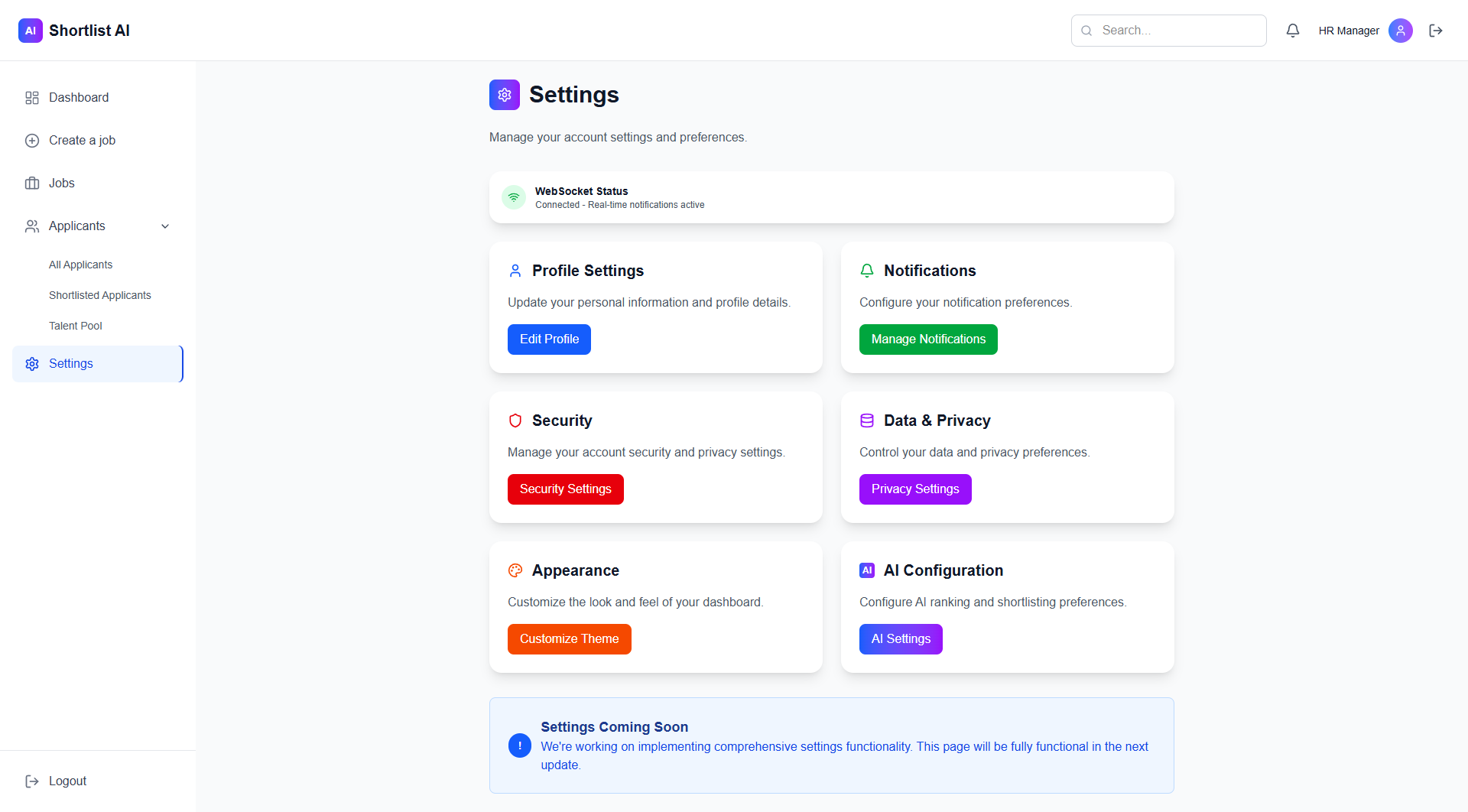
Dashboard Settings
-
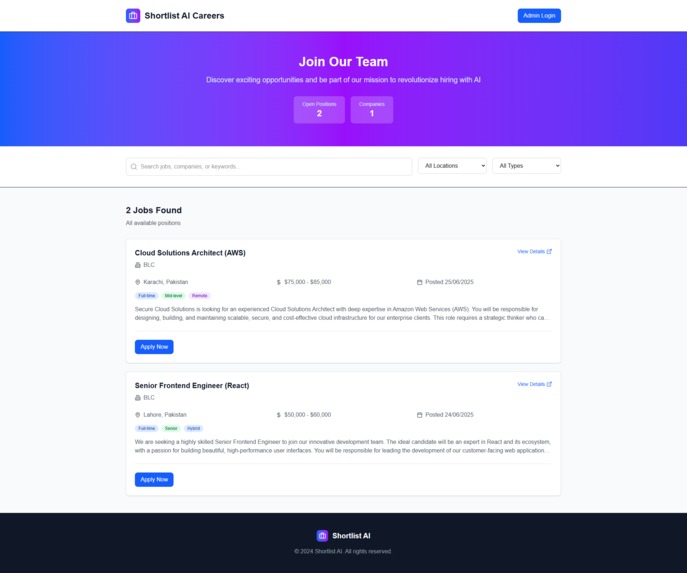
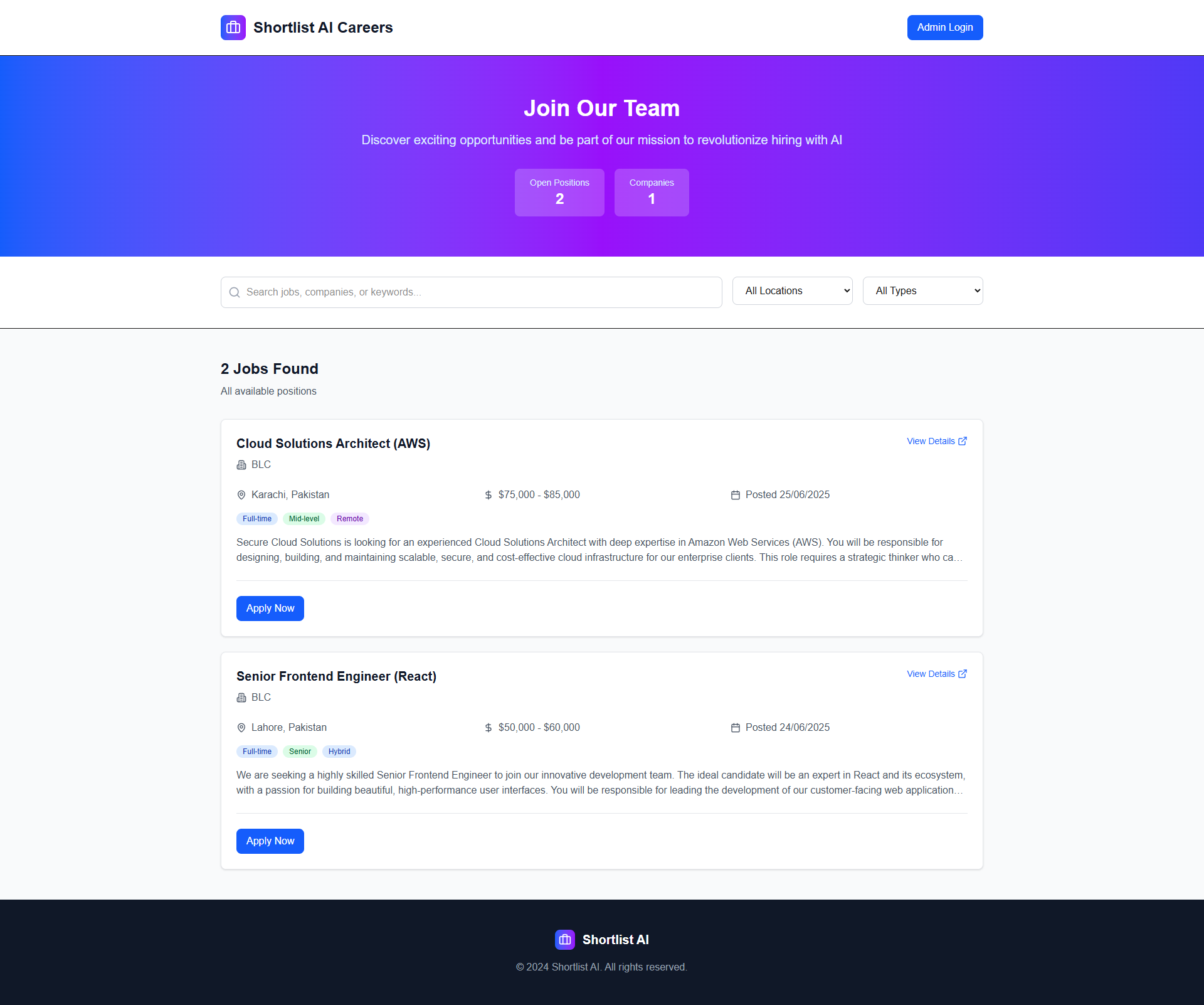
Careers Page with list of Jobs
-
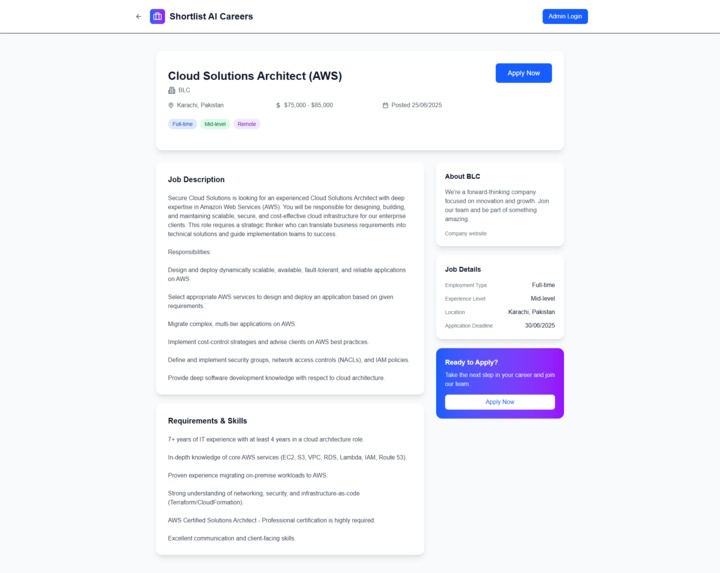
Careers Job Detail Page
-
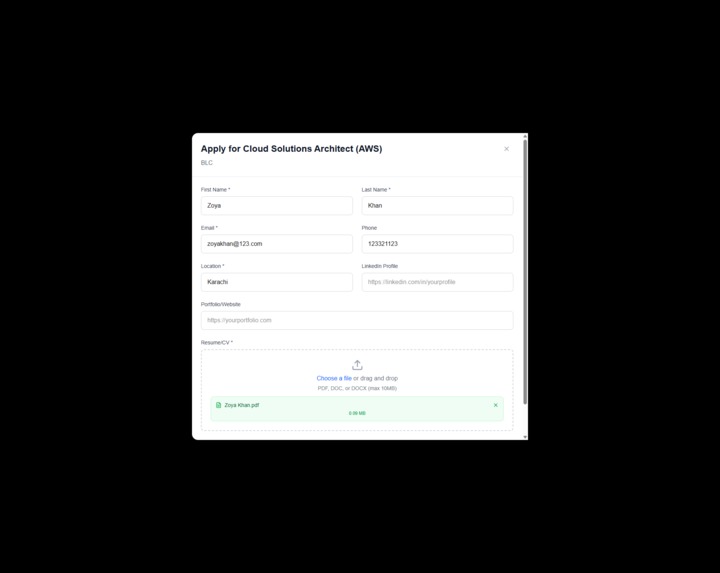
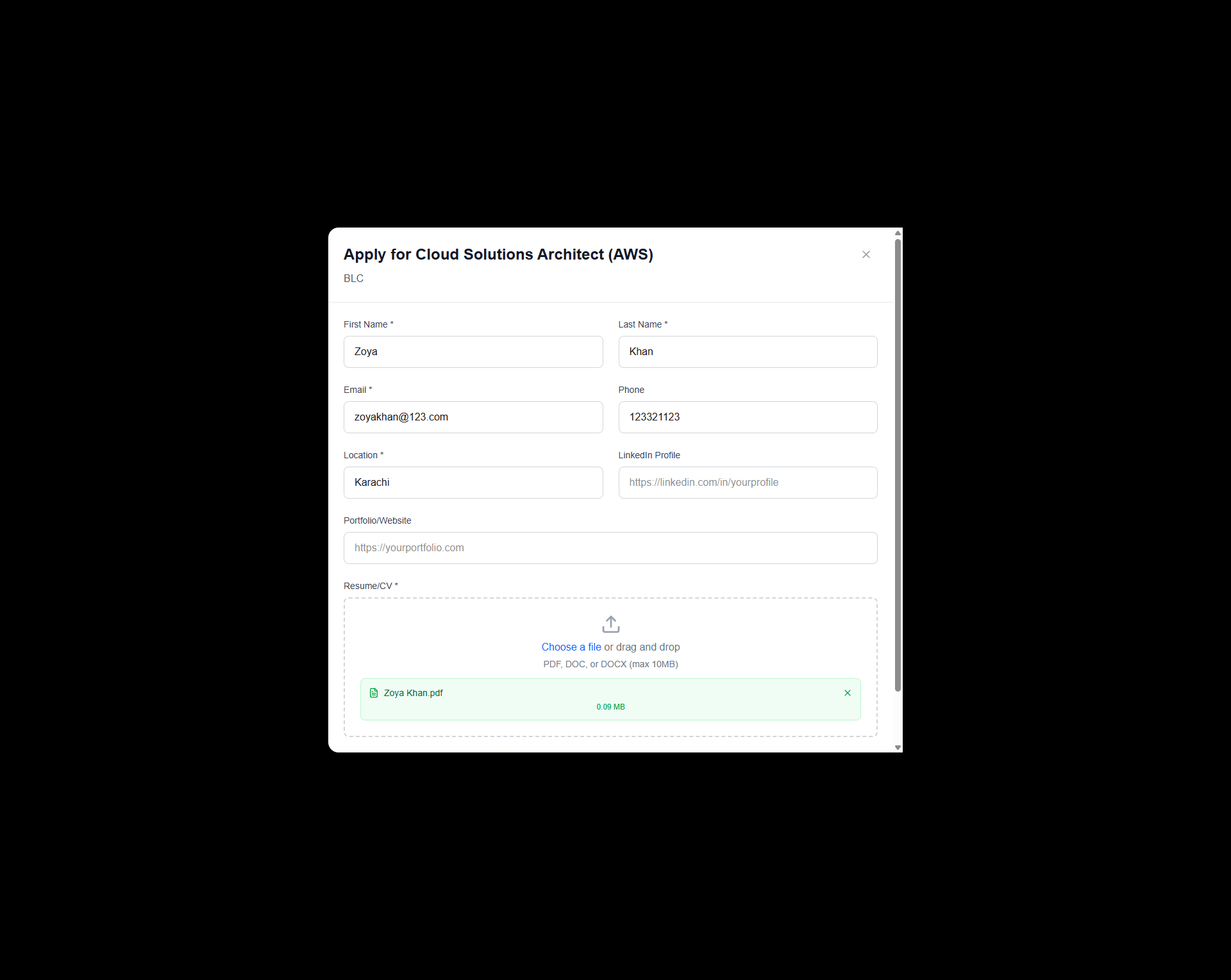
Form for applying for a Job


Inspiration:
Having recently graduated from the AWS re/Start program, I was incredibly motivated and eager to apply the cloud computing skills I had learned to a practical project. Just as I was looking for a challenge, I received an email from Devpost about this AWS Hackathon and knew it was the perfect opportunity.
The biggest challenge was deciding what to build. I wanted to create something that would solve a genuine, real-world problem. I discussed this with a close friend who works on HR systems, and he described the immense challenge recruiters face when manually screening hundreds of resumes for a single opening. That conversation sparked the idea for Shortlist AI. We thought it would be incredibly cool and valuable to develop a system that uses AI to help HR professionals process applications, rank candidates intelligently, and make their hiring process faster and more efficient.
What it does:
Shortlist AI transforms the recruitment workflow. For HR managers, it provides a secure admin dashboard where they can post new job openings and manage the entire applicant pipeline. When a new candidate applies, their resume is automatically analyzed by our AI engine, which generates a detailed report including an overall match score, a breakdown of how well their skills, experience, and education align with the job description, and a qualitative summary of their strengths and weaknesses. This allows recruiters to instantly identify top-tier candidates. The dashboard also features real-time notifications, a centralized view of all applicants across all jobs, and the ability to update a candidate's status with a single click.
For job seekers, Shortlist AI offers a clean, accessible portal to view open positions and submit their applications through a simple form, ensuring a smooth and positive candidate experience.
How we built it:
I chose to build Shortlist AI on a fully serverless architecture using a suite of powerful AWS services. This approach ensures the application is scalable, resilient, and cost-effective, as you only pay for the compute time you use.
The core logic runs on AWS Lambda, which is triggered by events from both Amazon API Gateway (for user actions from the frontend) and Amazon S3 (for new resume uploads). For the AI-powered analysis, I used AWS Textract to extract text from resumes and Amazon Bedrock to perform the intelligent scoring against the job description. All application data and files are stored securely in Amazon DynamoDB and S3, while a WebSocket API on API Gateway pushes real-time notifications to the dashboard.
Challenges we ran into:
Building this project was an incredible learning journey. The biggest challenge was debugging the complex chain of permissions between the various AWS services. Ensuring that a Lambda function had the correct IAM permissions to pass a role to Textract, which in turn needed permission to publish to an SNS topic that another Lambda was subscribed to, was a difficult but rewarding puzzle to solve. This process required a deep dive into IAM policies, resource-based policies, and service trust relationships. Another significant challenge was architecting the asynchronous, event-driven workflow using S3, SNS, and multiple Lambdas, which required careful state management to track a resume's journey through the analysis pipeline.
Accomplishments that we're proud of I am incredibly proud of building a complete, end-to-end serverless application that solves a tangible business problem. A key accomplishment was successfully architecting a decoupled, asynchronous workflow. A resume upload triggers a chain reaction of multiple AWS services (S3, Lambda, Textract, SNS, Bedrock, DynamoDB) that work together seamlessly without direct dependencies. I am also proud of integrating a real-time notification feature using a WebSocket API, which makes the application feel modern and dynamic. Finally, successfully engineering the prompts for Amazon Bedrock to return consistent, structured JSON data was a major achievement that bridged the gap between raw AI power and a functional software application.
What we learned:
This project was a practical, hands-on masterclass in serverless architecture and AI integration. I learned not just the theory but the practical application of core AWS services. The most significant learning was in IAM, where I moved beyond basic permissions to understand the nuances of execution roles, service roles, resource-based policies, and the iam:PassRole action, which is critical for service-to-service integration. I also gained invaluable experience in designing event-driven systems, using services like S3 and SNS to trigger Lambda functions and pass data between them asynchronously. Finally, I learned a great deal about prompt engineering—the art and science of instructing an AI like Amazon Bedrock to perform a specific task and return data in a predictable, machine-readable format.
What's next for Shortlist AI:
The current platform is a powerful foundation, and there are many exciting features planned for the future. The immediate next step is to enhance the AI capabilities further. I plan to integrate Bedrock to automatically generate tailored interview questions based on the identified strengths and weaknesses in a candidate's resume. Another key feature will be to implement a CI/CD pipeline using AWS SAM or Serverless Framework to automate the deployment of the backend Lambda functions and infrastructure. For enhanced security and enterprise readiness, I plan to move the backend resources into a VPC **and implement **Dead-Letter Queues (DLQs) to make the asynchronous workflow even more robust against errors.
Built With
- amazon-api-gateway-(rest-&-websocket)
- amazon-bedrock
- amazon-cognito
- amazon-dynamodb
- amazon-sns
- amazon-web-services
- amplify
- aws-amplify-js-library
- aws-lambda
- aws-textract
- boto3-(aws-sdk-for-python)
- css
- html
- javascript
- next.js
- python
- react
- tailwind
- typescript

Log in or sign up for Devpost to join the conversation.