
Inspiration
The inspiration behind Shorterhand came from our desire to preserve and modernize the art of shorthand writing (specifically Gregg shorthand) by integrating it with today's digital tools. After all, physical note-taking is proven to be better than type-based note-taking for learning and memory retention. Many people, including but not exclusive to students, journalists, and medical professionals would benefit from rapid note-taking, but few have access to tools that would make shorthand accessible or personalized. We wanted to bridge this gap by creating an app that utilizes text= to create shorthand dictionaries tailored to the user's vocabulary.
What it does
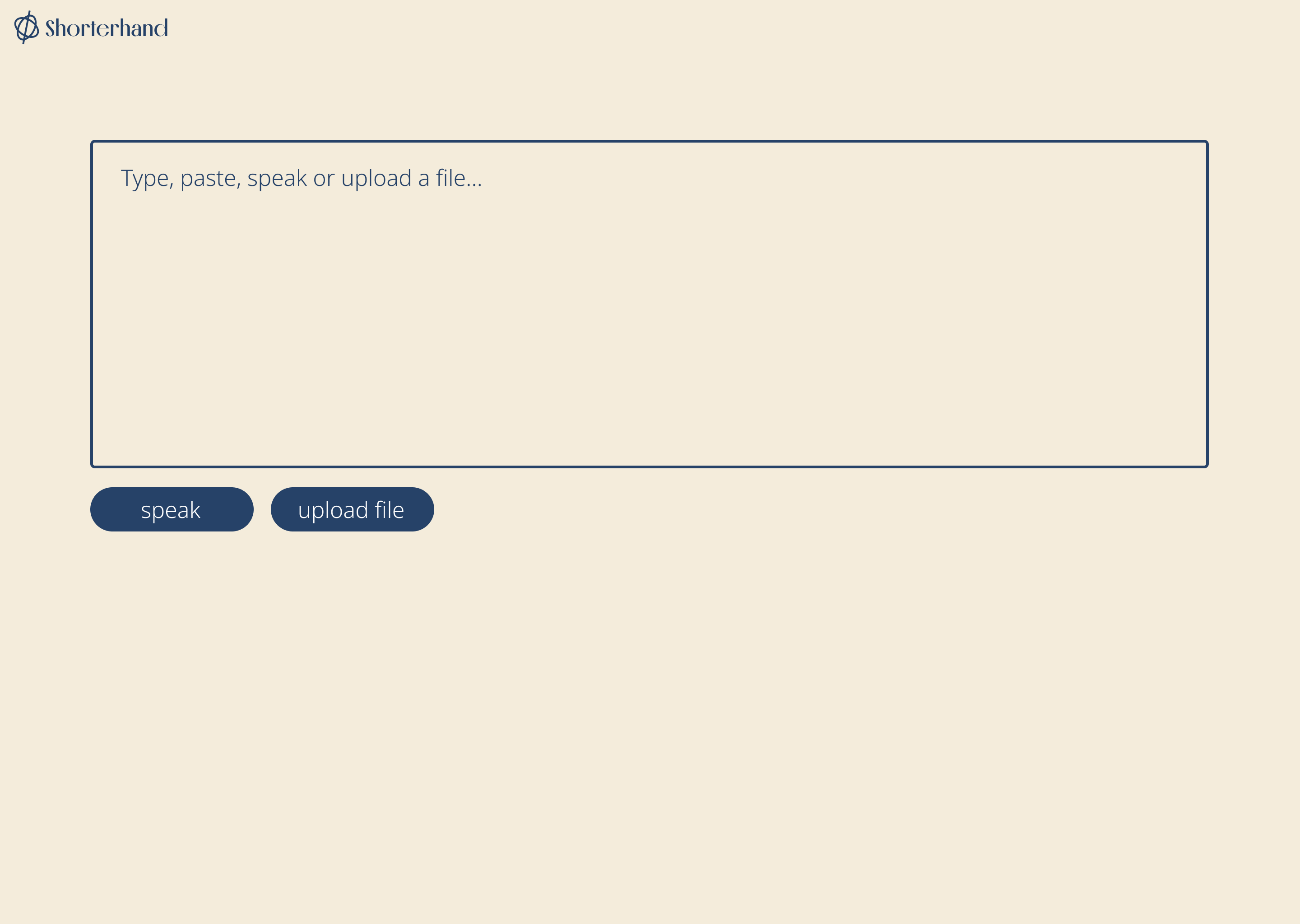
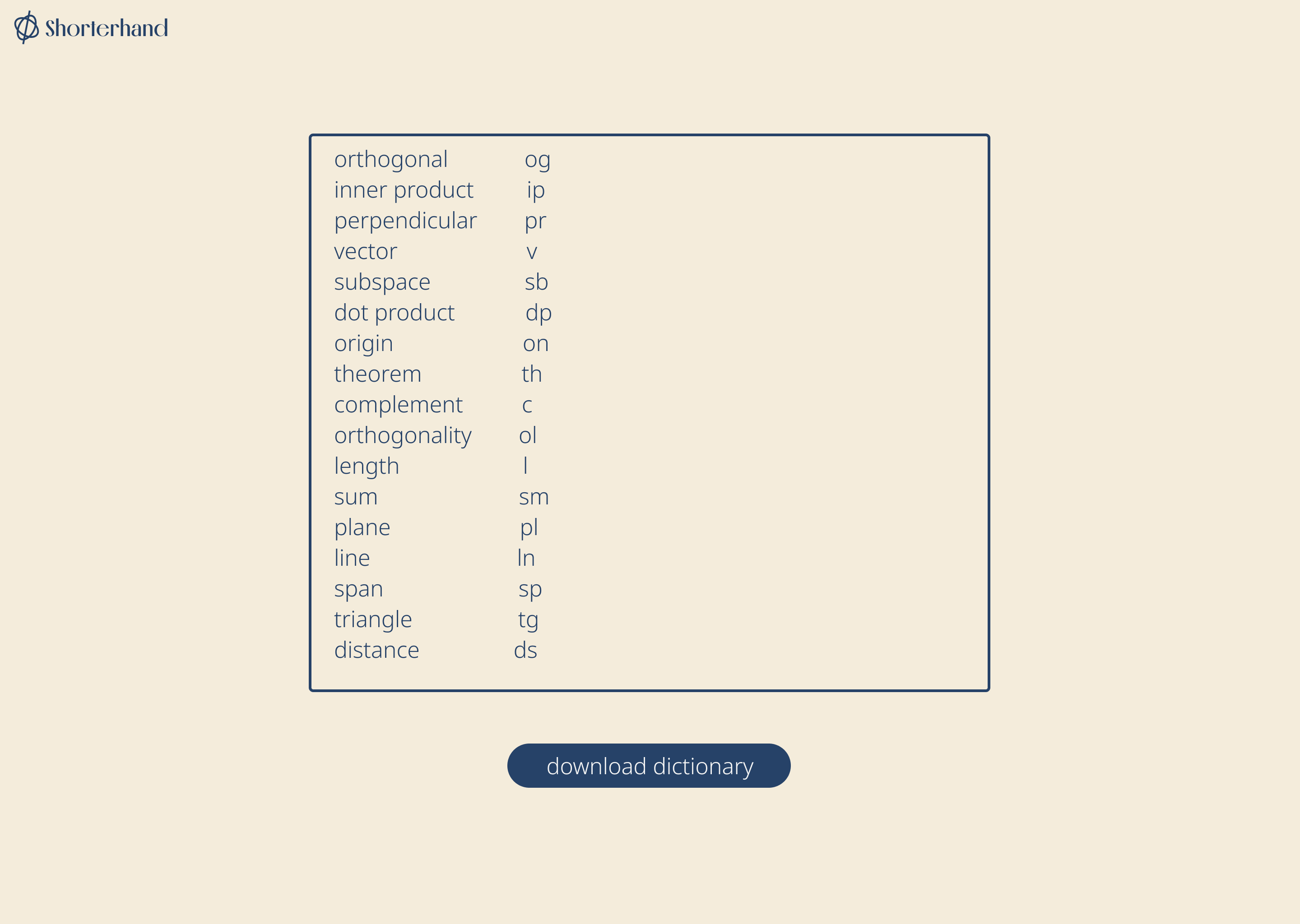
Shorterhand is a platform that takes in inputs via typed text. It examines the input for relevant words and maps them to their corresponding Gregg shorthand representations, personalized for each user in a visual shorthand dictionary.
How we built it
Frontend
We used React for a responsive, interactive frontend that handles textual inputs. Tailwind CSS helped us build a clean, minimalistic layout quickly. This setup integrates with our backend, allowing users to generate personalized shorthand dictionaries in real time with a modern, intuitive interface.
Backend
We built our backend using Python and a custom Fetch.ai agent, which analyzes input content to identify trends and suggest personalized, relevant keywords. The backend returns Gregg shorthand image mappings, enabling dynamic and tailored dictionary generation based on user inputs.
Challenges we ran into
Understanding how to structure an AI agent and integrating it with our frontend implementation took time and experimentation.
Accomplishments that we're proud of
- Developing an AI agent that intelligently evolves with the user
- Creating a functional prototype that weaves together frontend and backend
What we learned
- How to create a multimodal pipeline using modern AI APIs
- The fundamentals of working with an agent framework
- How to think about user personalization through data input trends
What's next for shorterhand
- Mobile app: Build a mobile version to allow for greater shorthand accessibility
- Advanced learning agent: Creating a more advanced learning agent to not just suggest shorthand but also teach users shorthand progressively
- Multi-language support: Expand to include shorthand systems in other languages beyond English
- Multimodal: Integrating other data types such as speech-to-text and images.
Built With
- css
- fetch
- javascript
- nextjs
- python
- react
- tailwind


Log in or sign up for Devpost to join the conversation.