-
-

search any products
-
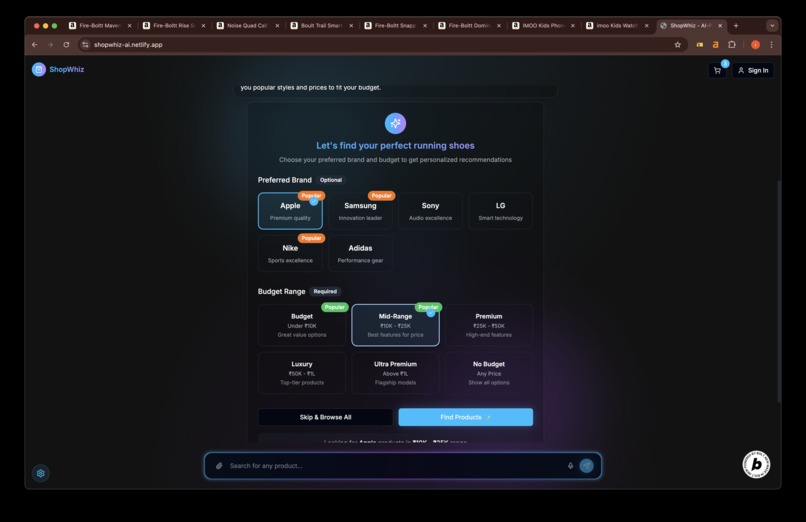
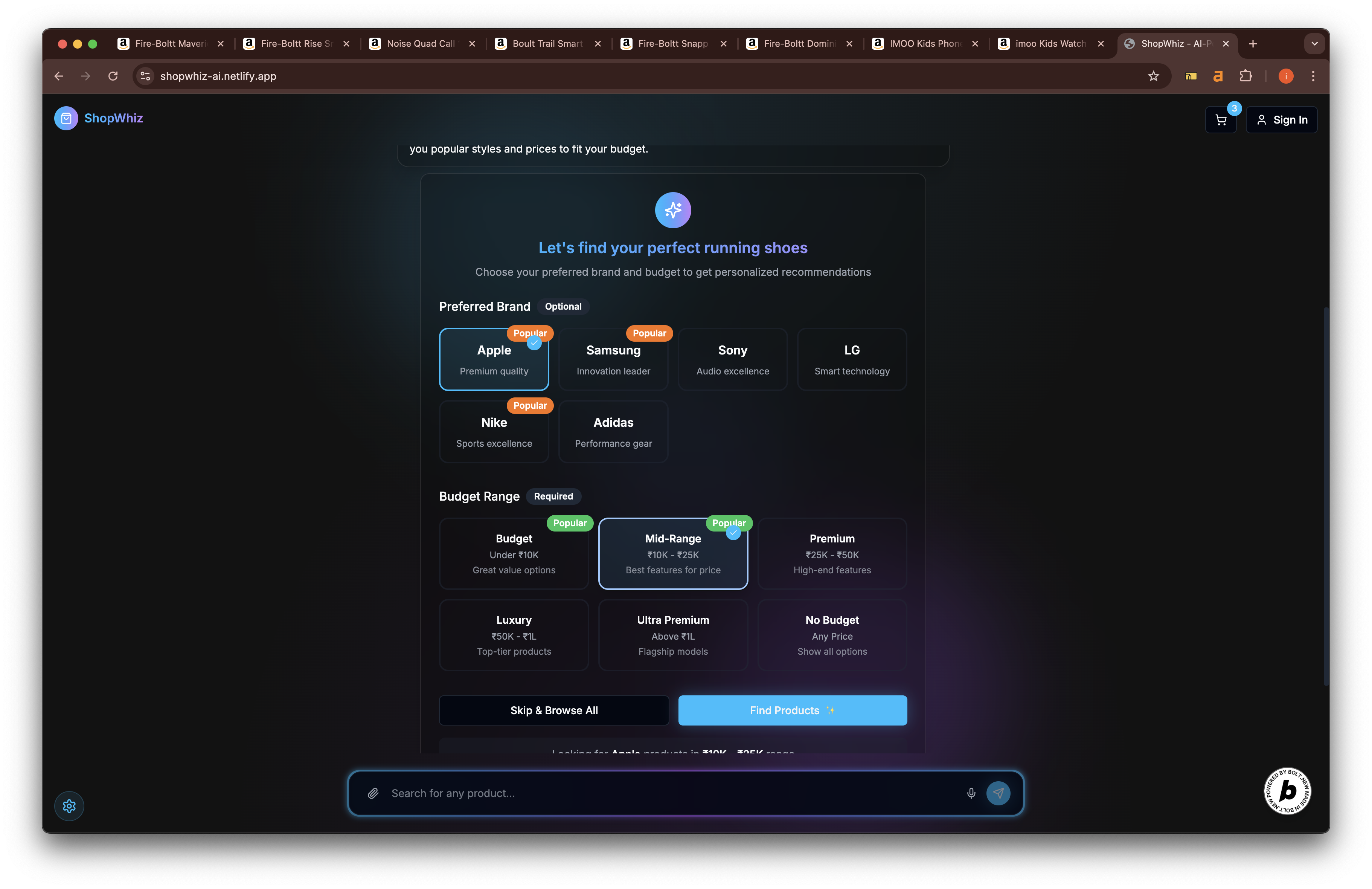
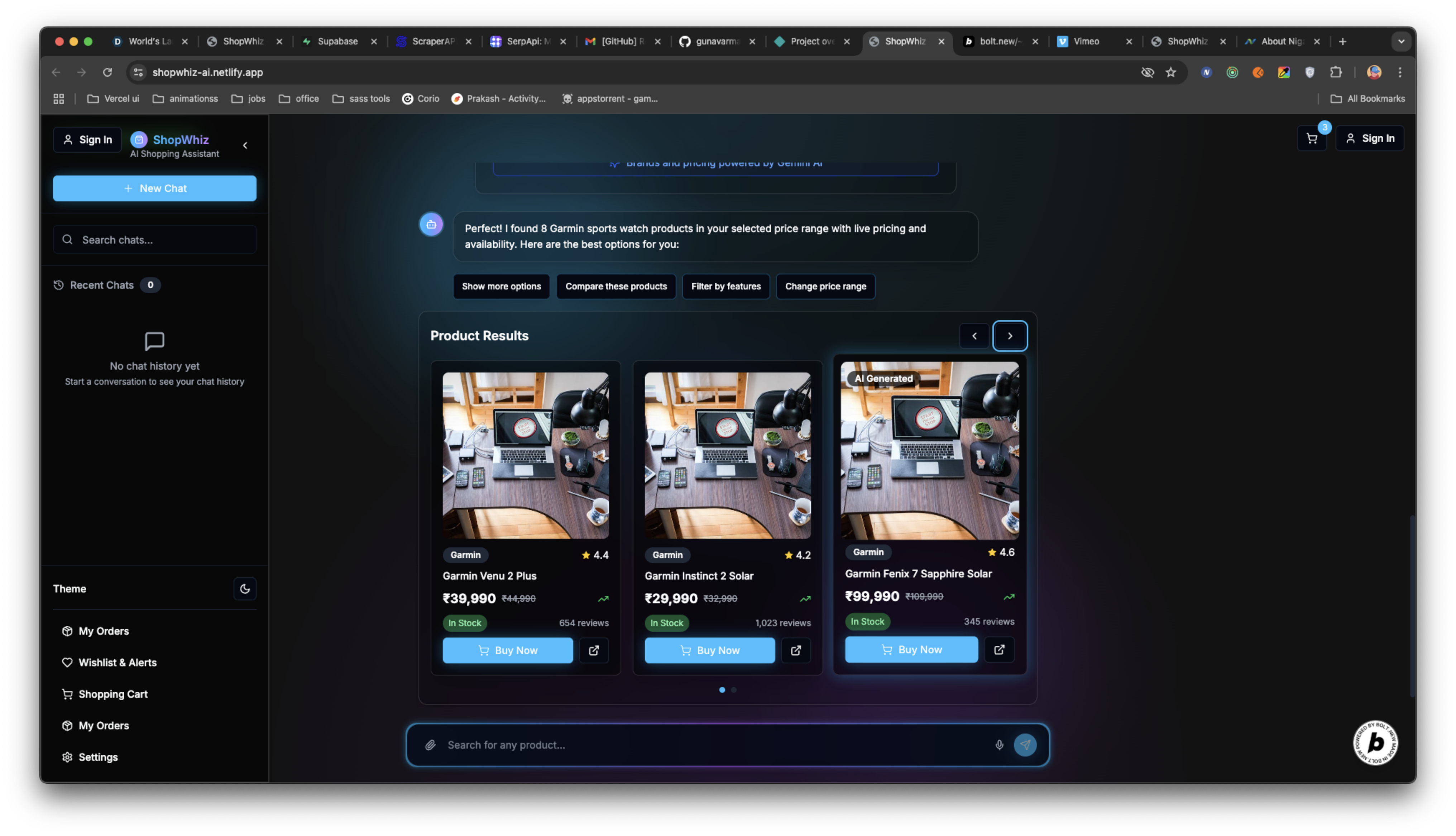
AI gives product and price recommendations
-
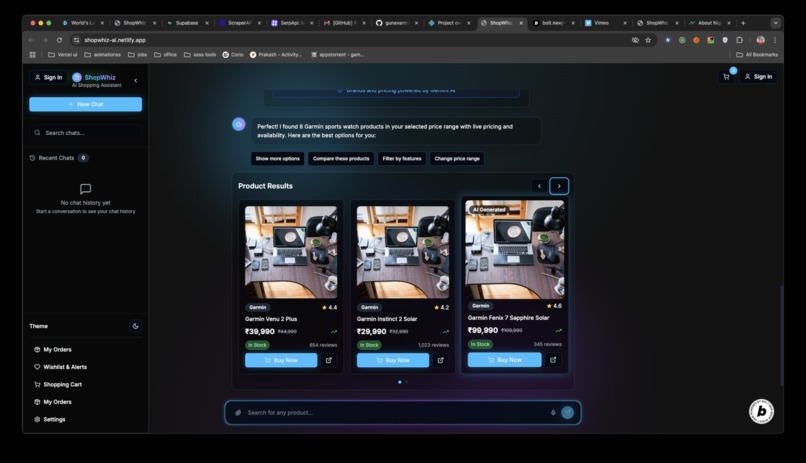
you can get the AI recommended products
-

product details and reviews and videos
-

you can see the realtime reviews
-

product pros and cons
-
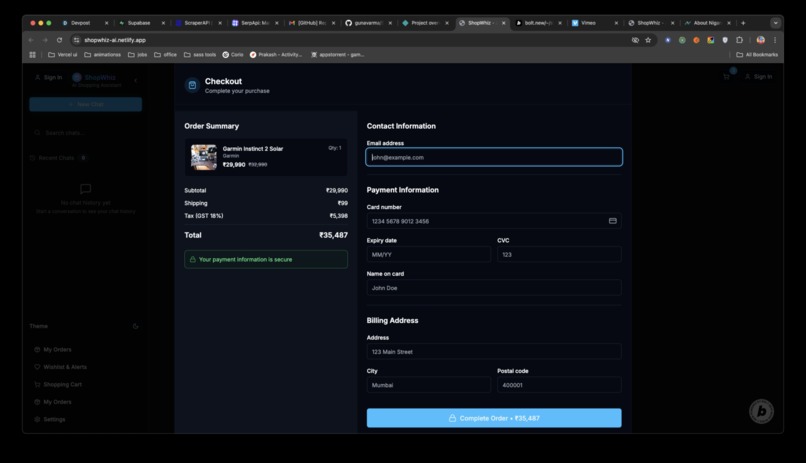
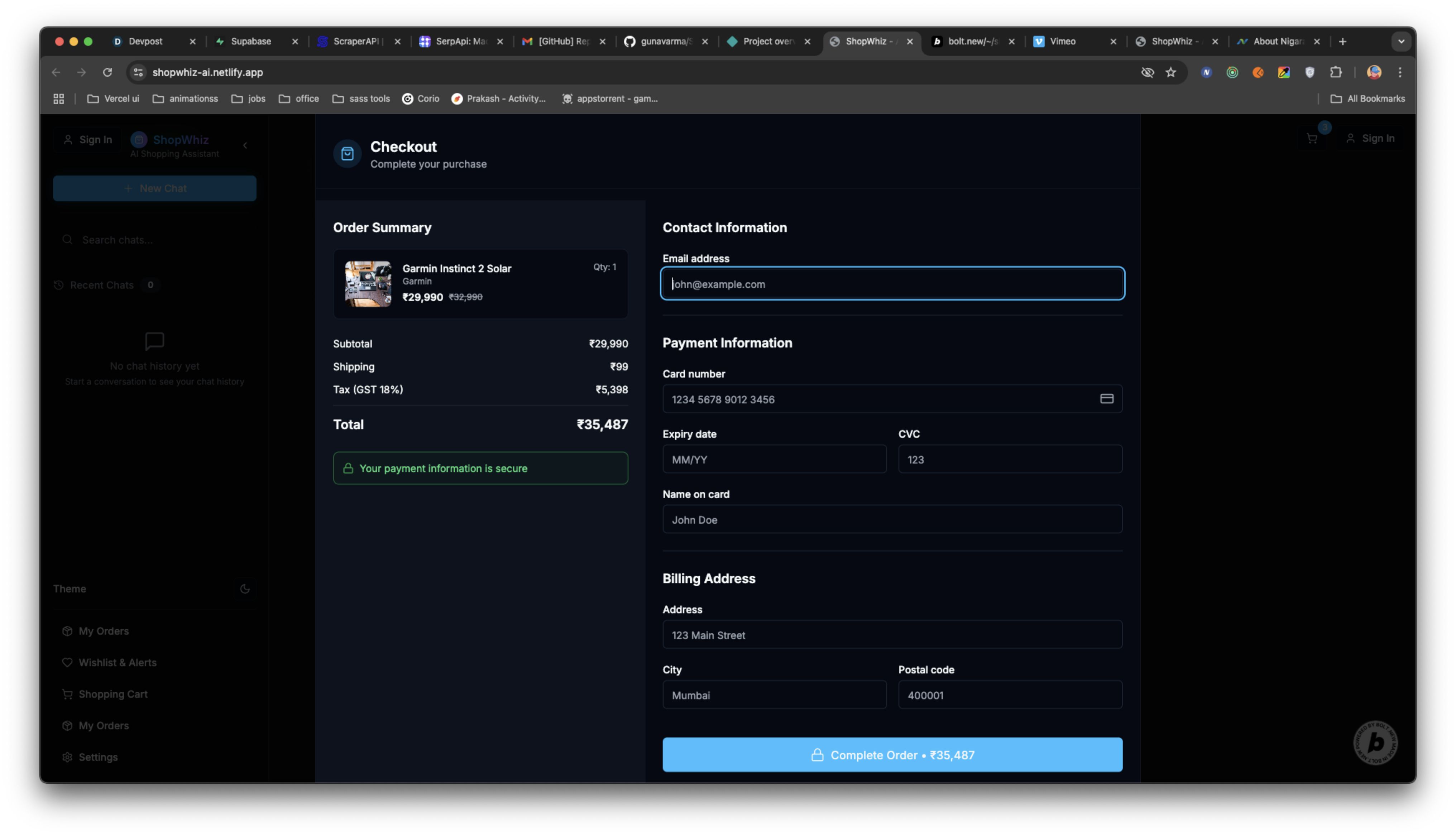
placing a order screen




Inspiration
The inspiration for ShopWhiz stemmed from a common frustration with traditional online shopping: the overwhelming amount of information, the difficulty in finding truly relevant products, and the lack of personalized guidance. We envisioned a smart assistant that could understand natural language queries, provide instant, accurate product information, and even offer tailored recommendations—much like a knowledgeable sales associate in a physical store.
The power of large language models like Gemini, combined with the ability to fetch live market data, presented an exciting opportunity to bring this vision to life.
What It Does
ShopWhiz is an AI-powered shopping assistant that provides a dynamic and personalized online shopping experience. It allows users to:
- Search for products using natural language: Simply ask what you're looking for, and ShopWhiz will understand.
- Access real-time product data: Get live prices, availability, and reviews from Google Shopping and Amazon India.
- Receive AI-enhanced recommendations: Benefit from intelligent product descriptions, pros/cons analysis, and personalized suggestions.
- Engage in interactive product discovery: Use quizzes to narrow down preferences and find the perfect item.
- Manage shopping activities: Track orders, maintain a wishlist with price alerts, and manage a shopping cart.
- Compare products: Get AI-generated comparisons to help make informed decisions.
How We Built It
Building ShopWhiz was an iterative process, focusing on integrating cutting-edge AI with robust data infrastructure.
- We chose Next.js for server-side rendering and API routes to handle both frontend and backend logic.
- The UI was built with Tailwind CSS and
shadcn/uicomponents for a clean, responsive design. - The intelligence behind ShopWhiz is powered by Gemini AI. Through advanced prompt engineering, we enabled Gemini to:
- Understand complex queries
- Generate detailed product descriptions
- Provide pros/cons
- Create sample reviews
- We integrated ScraperAPI to fetch live data from Google Shopping and Amazon India.
- To handle rate limits or failures, we created a robust AI fallback mechanism for realistic, generated product info.
- Supabase handles:
- User authentication
- Chat history
- Wishlists and carts
- Order tracking
- We used Row Level Security (RLS) to secure user-specific data.
Challenges We Ran Into
- API Reliability & Rate Limits: ScraperAPI sometimes failed or hit limits, so our fallback system was essential.
- AI Response Consistency: Gemini occasionally deviated from expected formats. We added strict parsing/validation.
- Performance Optimization: Real-time data added latency, so we built loading states and optimized fetching.
- Supabase RLS and Migrations: Setting up secure RLS policies and managing schema migrations was complex.
- Dynamic Content Generation: Keeping the UI clean with auto-generated product data was a design challenge.
Accomplishments That We're Proud Of
- Seamless AI + Real-Time Integration: Merging Gemini's intelligence with live data from scraping APIs.
- Robust Fallback System: AI-generated product data ensured continuity even during rate-limiting or failures.
- Conversational Interface: Built a user-friendly interface that makes product discovery feel natural.
- Complete Shopping Features: From auth to order tracking, ShopWhiz includes core e-commerce functionality.
- Personalized Discovery: Interactive quizzes and AI selectors help users get tailored recommendations.
What We Learned
- API Orchestration: Mastered integrating Gemini, ScraperAPI, and Supabase for a cohesive backend.
- Handling Live Data: Learned strategies for latency, consistency, and fallback of real-time data.
- Prompt Engineering: Tuned Gemini prompts to ensure quality and structure in AI outputs.
- Scalable Architecture: Designed for dynamic, fast content generation with a responsive UI.
- User Experience: Focused on making the chat experience intuitive and powerful.
What's Next for ShopWhiz AI
Enhanced Personalization: Implementing deeper user profiling, behavioral tracking, and context-aware AI to deliver even more precise recommendations based on individual tastes, budgets, and shopping patterns.
Voice Input Support: Introducing voice-based search and interaction to enable hands-free shopping and improve accessibility for users across devices.
Multi-language Support: Expanding support for regional languages across India and beyond, making ShopWhiz more inclusive and user-friendly for diverse audiences.
Advanced Comparison Tools: Developing interactive comparison features that allow users to select and prioritize specific attributes (like battery life, warranty, delivery speed) across multiple products.
Integration with More Retailers: Scaling the scraping system and API integrations to include a wider variety of online marketplaces, niche e-commerce stores, and brand-direct sites.
Proactive Smart Alerts: Implementing AI-powered notifications for:
- Price drops
- Stock changes
- Seasonal deals
- New arrivals in categories the user follows
Native Mobile App: Launching feature-rich mobile applications for iOS and Android to offer a consistent and fast shopping experience on smartphones and tablets.
Daily Grocery & Household Essentials: Expanding ShopWhiz’s capabilities to include daily groceries, personal care, cleaning supplies, and other household essentials, enabling users to complete all their regular shopping needs in one platform.
Second-Hand & Refurbished Products: Introducing dedicated support for second-hand and certified refurbished items across electronics, furniture, appliances, and more—helping users discover sustainable and budget-friendly alternatives with quality assurance and trust indicators.
Built With
- framer
- gemini
- lucide
- next.js
- scraperapi
- shadcn/ui
- stripe
- supabase
- tailwind
- typescript

Log in or sign up for Devpost to join the conversation.