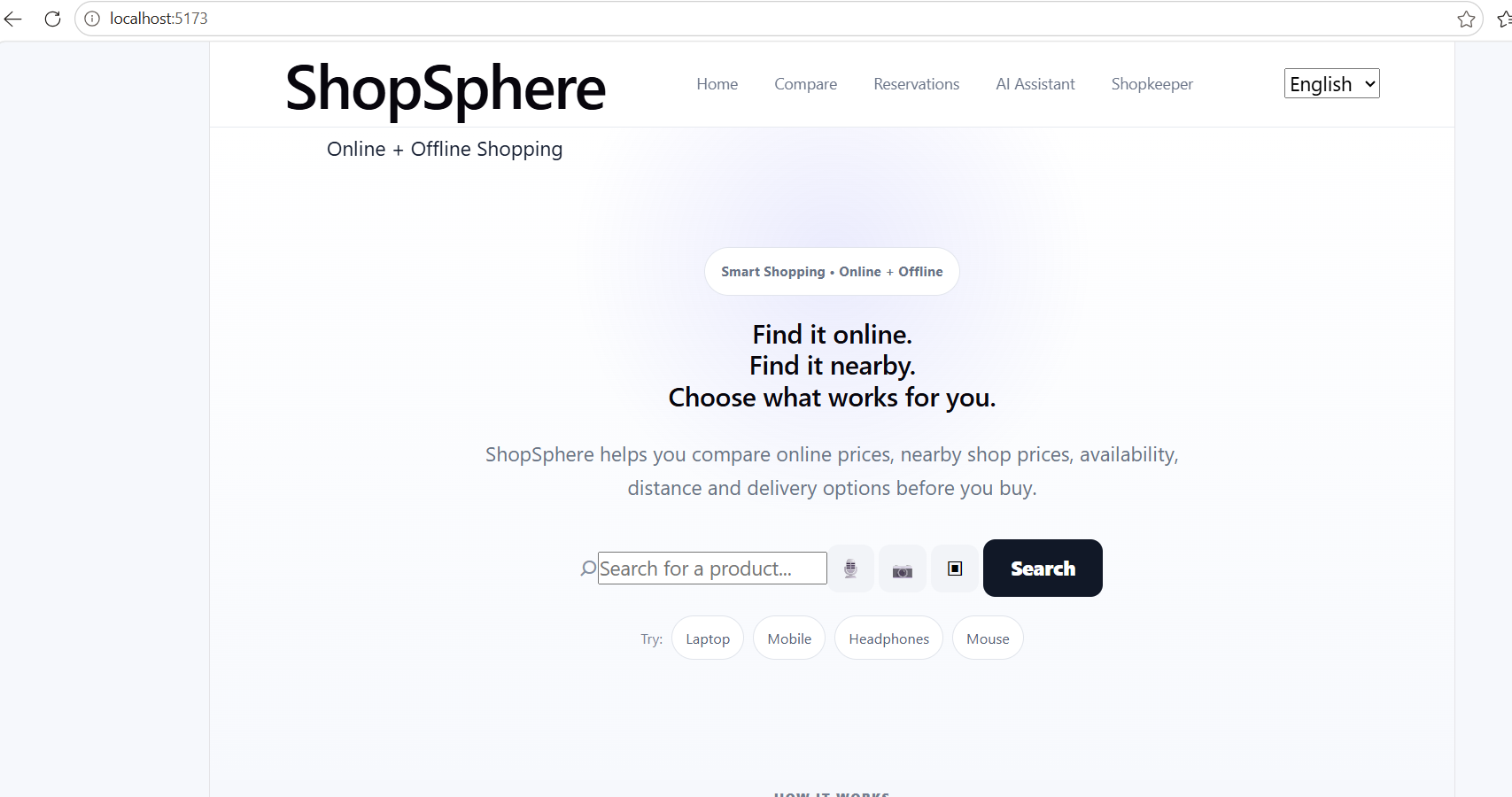
ShopSphere — Connecting Online and Local Shopping
Inspiration
The idea behind ShopSphere came from a simple, everyday shopping problem: sometimes, we need a product urgently, but finding the right place to buy it is not always easy.
Online shopping offers convenience, but delivery can take several days. On the other hand, visiting physical stores without knowing whether a product is available can waste valuable time. Customers may also want to see a product's actual colour, inspect a laptop, or compare options in person before making a purchase.
These situations inspired me to explore a platform that brings online shopping options and nearby physical stores together, helping customers make more informed shopping decisions.
What It Does
ShopSphere is a shopping platform concept designed to connect online product discovery with nearby physical shopping options.
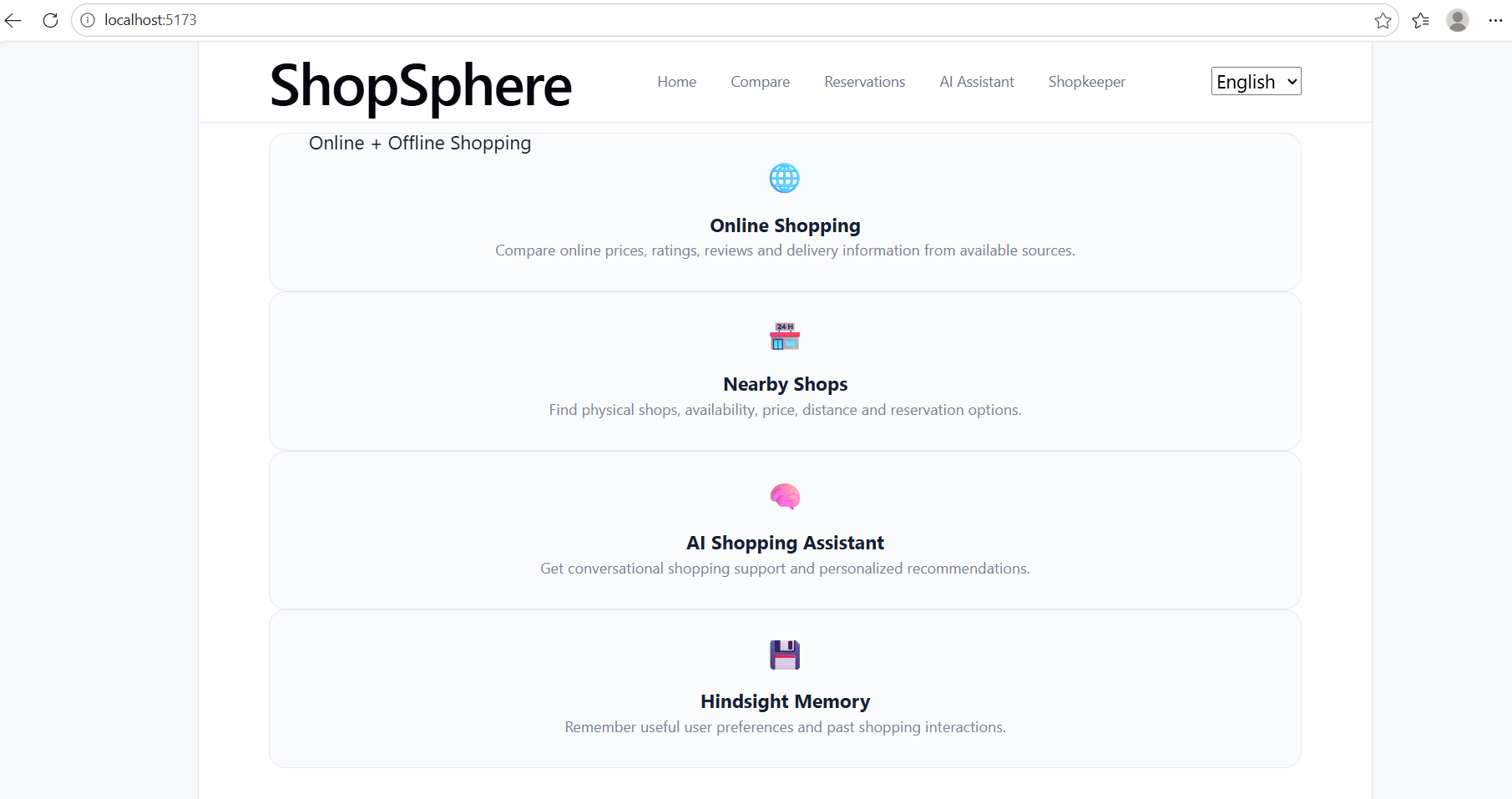
The goal is to help customers search for products, explore online purchasing options, discover nearby shops, and compare their choices before deciding how to shop.
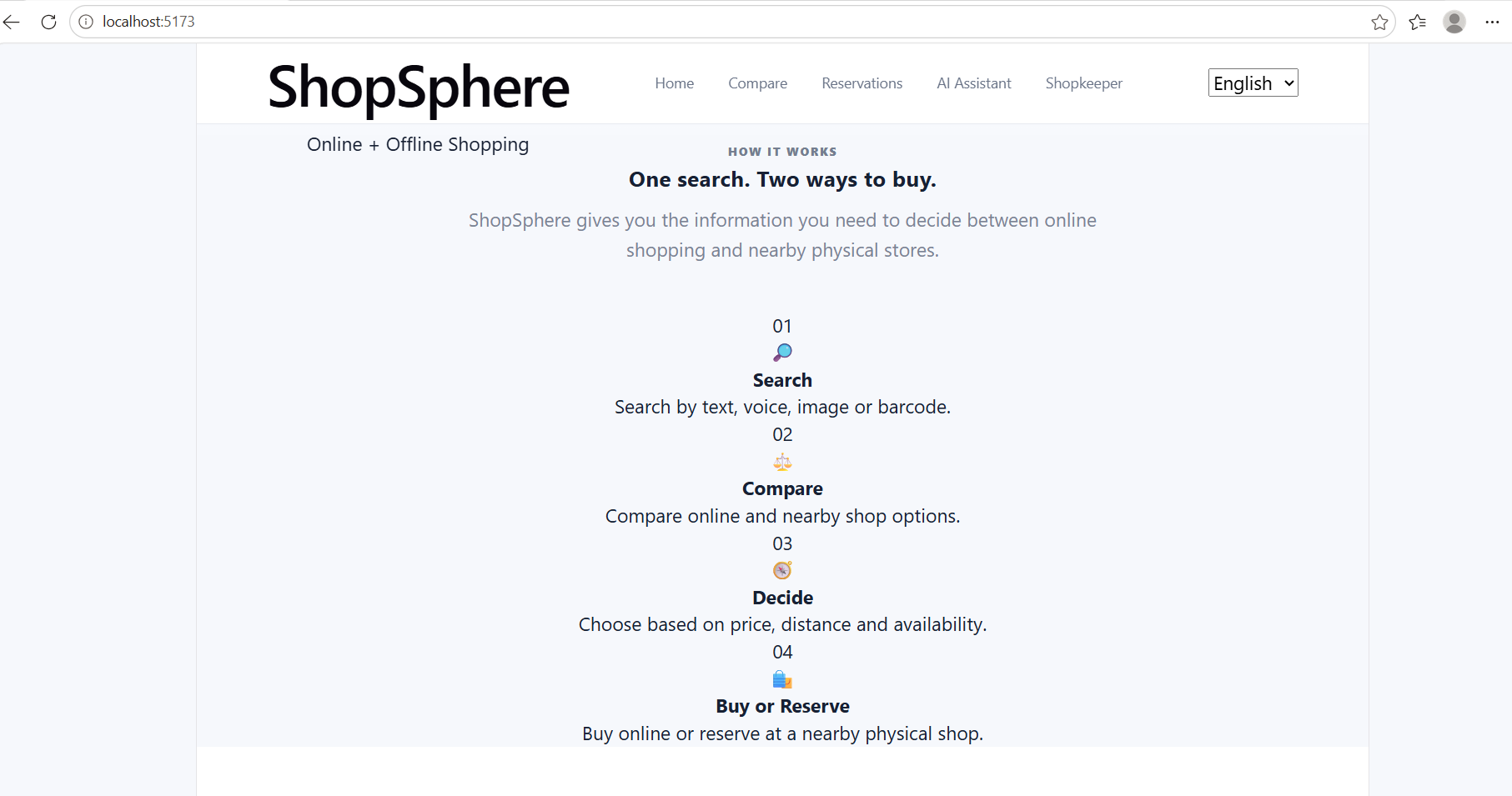
The intended experience follows a simple journey:
Search → Compare → Decide → Buy Online or Visit a Local Store
Where supported, the platform also aims to let customers reserve products at participating local stores.
ShopSphere does not force customers to choose one shopping method. Instead, it explores how both options can be brought together so customers can choose what works best for their needs.
The current prototype is partially implemented, and some features still require further development and testing.
How I Built It
I developed ShopSphere independently using React and Vite for the frontend and Node.js with Express for the backend.
As a second-year B.Tech student specializing in Computer Science and Engineering (AI & ML), I am still learning software development. I used AI development tools to help me understand unfamiliar technologies, work through implementation problems, and develop my prototype while continuing to learn.
My approach was to start with the core shopping problem and build toward a platform that can support product discovery and comparisons between online and local shopping options.
I also explored Hindsight, a memory technology introduced in an earlier hackathon context, to understand how an application could retain and recall useful information from previous interactions. Personalized shopping experiences are a potential application of this idea, but the complete memory-powered experience is not yet implemented.
Challenges I Faced
Building ShopSphere independently while learning software development has been a valuable but challenging experience.
- Learning unfamiliar technologies: Understanding how the frontend and backend work together required me to learn new concepts while developing the application.
- Connecting different components: Turning a shopping idea into a working prototype involves more than creating an interface. Different parts of the application need to work together reliably.
- Managing time: Balancing development with college classes, assignments, and semester examinations required me to manage my time carefully.
- Working within my current experience: As a beginner, I had to approach unfamiliar problems step by step and use AI development tools as learning support rather than assume I already knew how to implement everything.
These challenges helped me understand that building a useful application is an iterative process involving learning, implementation, testing, and improvement.
What I Learned
Working on ShopSphere has helped me understand how a real-world problem can be translated into a software project.
I have been learning how frontend and backend technologies fit together, how to use AI development tools to support my learning, and how to approach unfamiliar technical problems more systematically.
Exploring Hindsight also introduced me to the idea of application memory: retaining relevant information from previous interactions and using it to provide more context-aware experiences.
Beyond the technical aspects, this project has taught me the importance of identifying a clear user problem, prioritizing essential functionality, and being honest about what a prototype can currently do.
What's Next
My next goal is to improve the existing prototype, test its core functionality, and develop the features needed to make the shopping experience more useful and reliable.
I also want to explore how memory can support more context-aware interactions while ensuring that customers remain in control of their shopping decisions.
ShopSphere is an ongoing learning and development project, and I hope to continue improving it into a platform that helps customers discover and compare online and local shopping options more easily.


Log in or sign up for Devpost to join the conversation.