💡 Inspiration
Setting up a premium e-commerce storefront is traditionally a massive headache. It takes days of configuring databases, wrestling with UI libraries, and writing boilerplate code just to get a functional shop off the ground. I wanted to eliminate this barrier to entry. ShopSpell was inspired by the idea that creating a high-end, performant online store should be as magical and instantaneous as casting a spell—allowing entrepreneurs to focus on their vision and products rather than the underlying infrastructure.
🎯 What it does
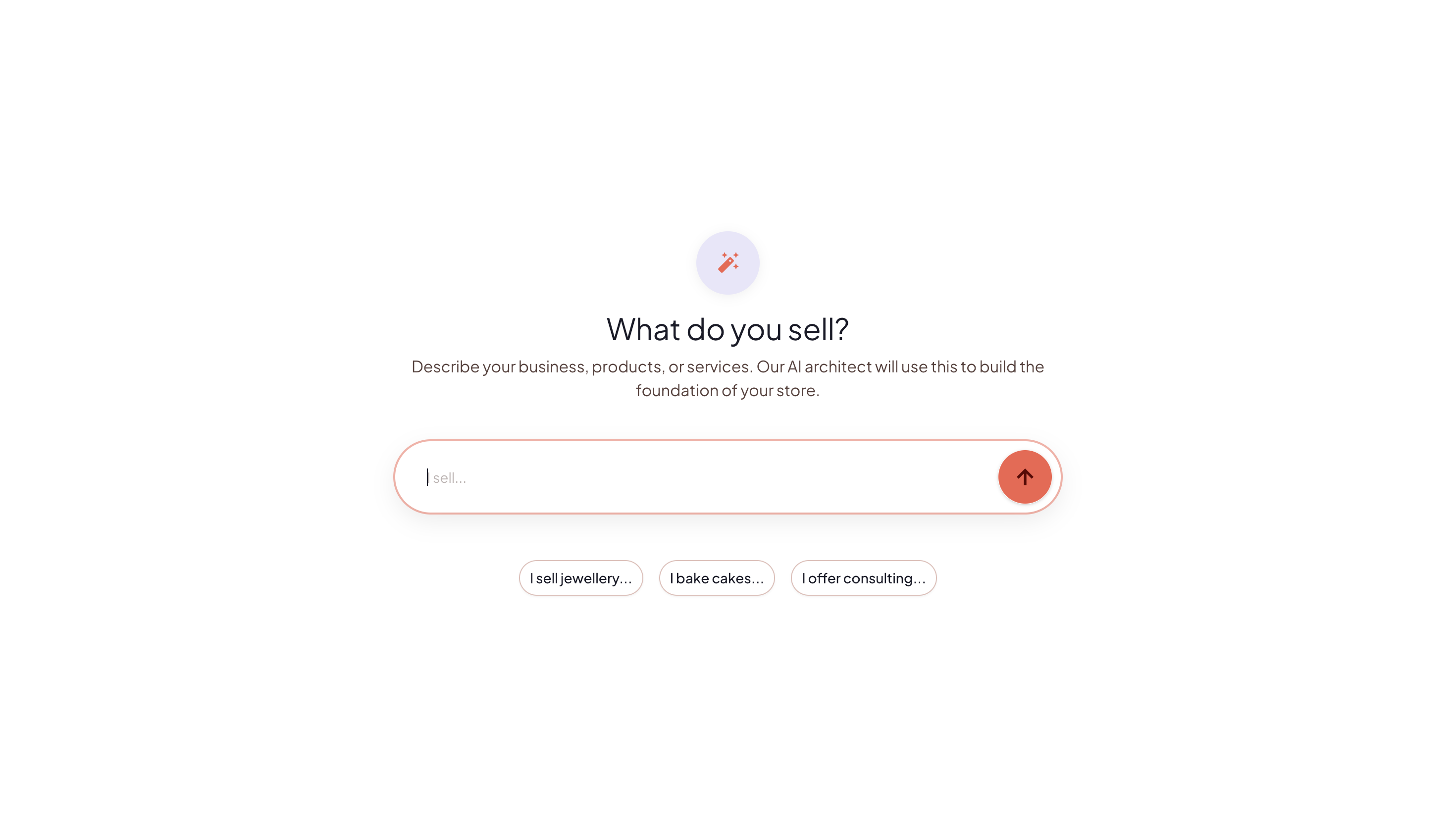
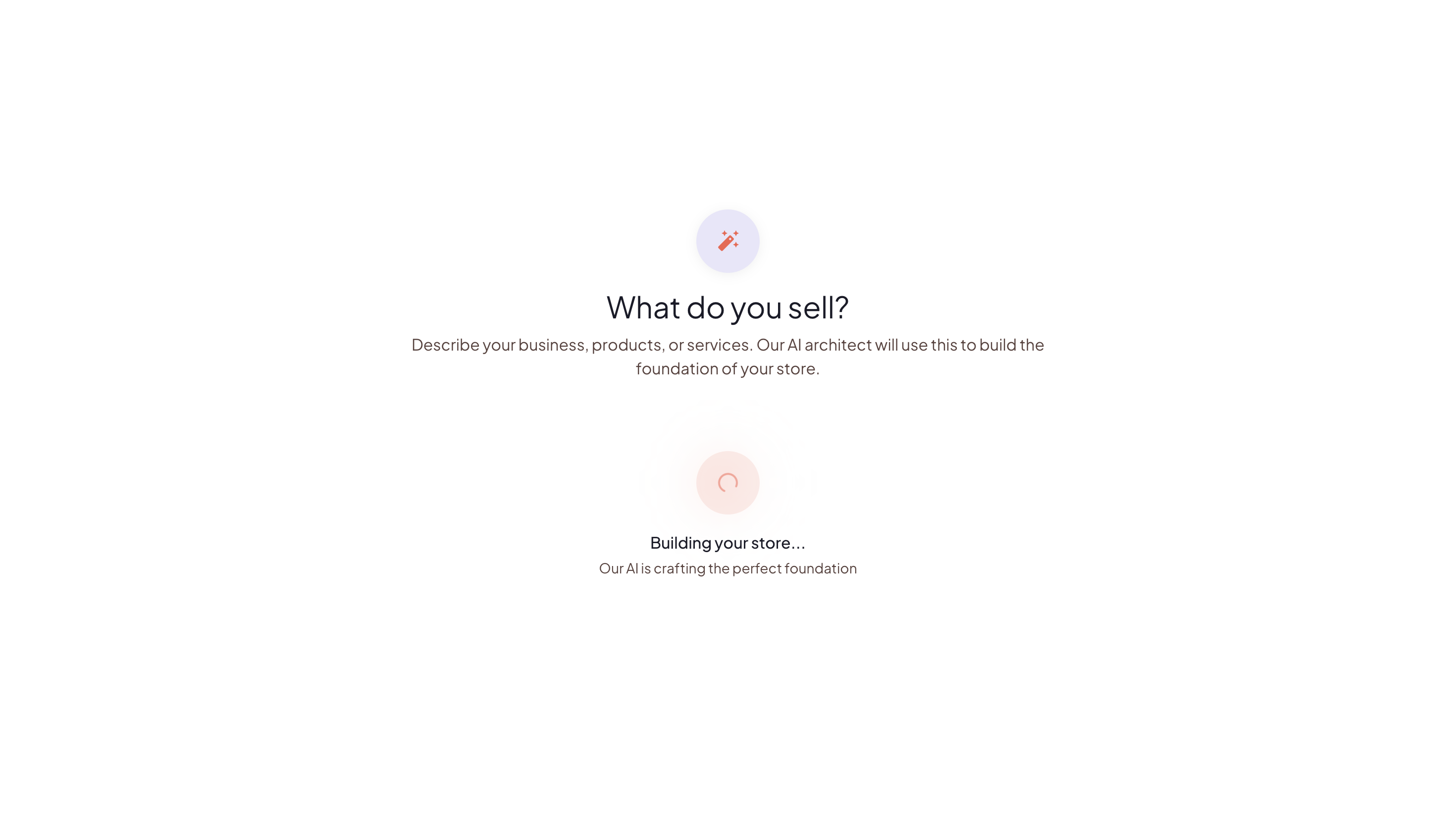
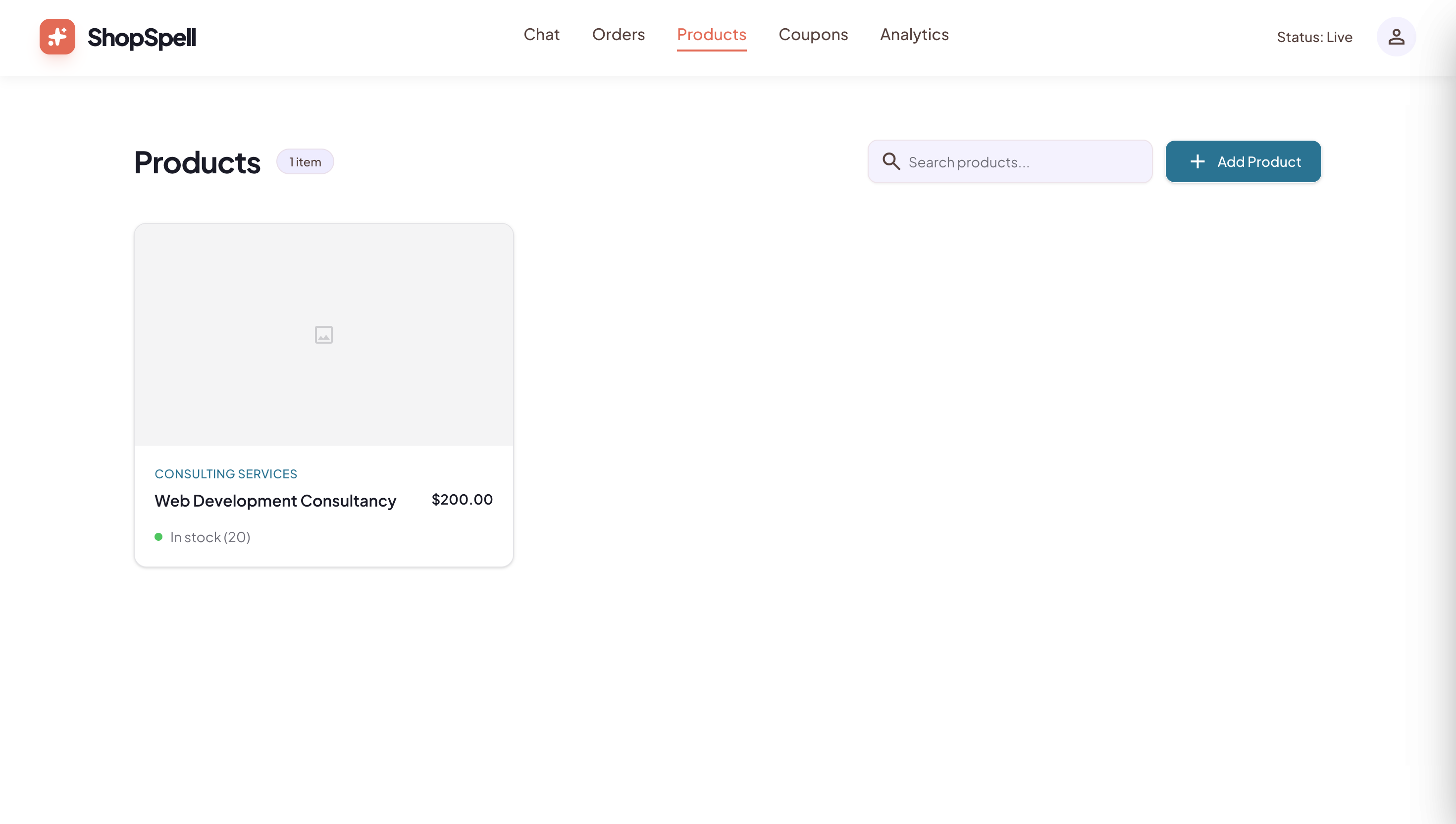
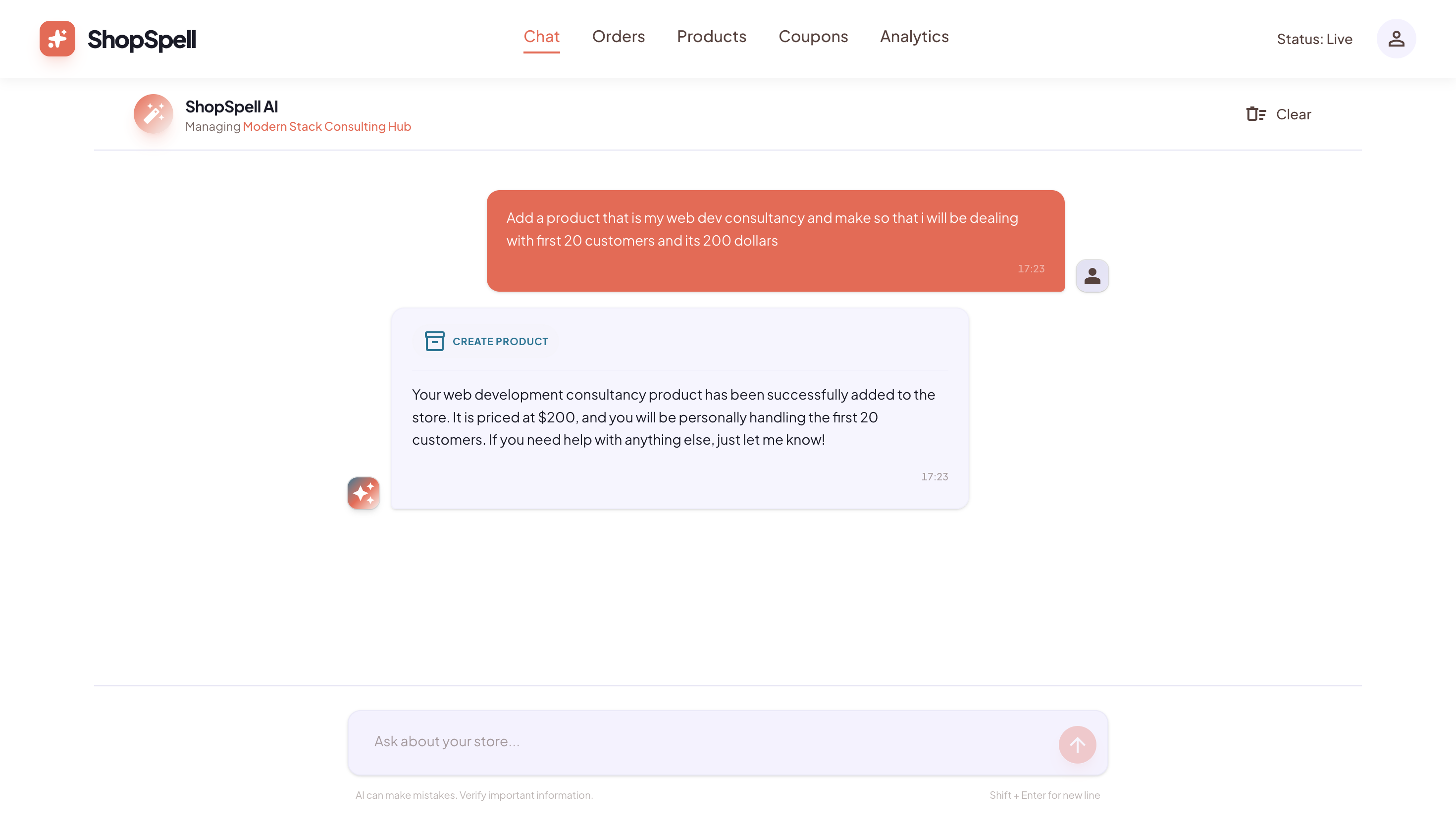
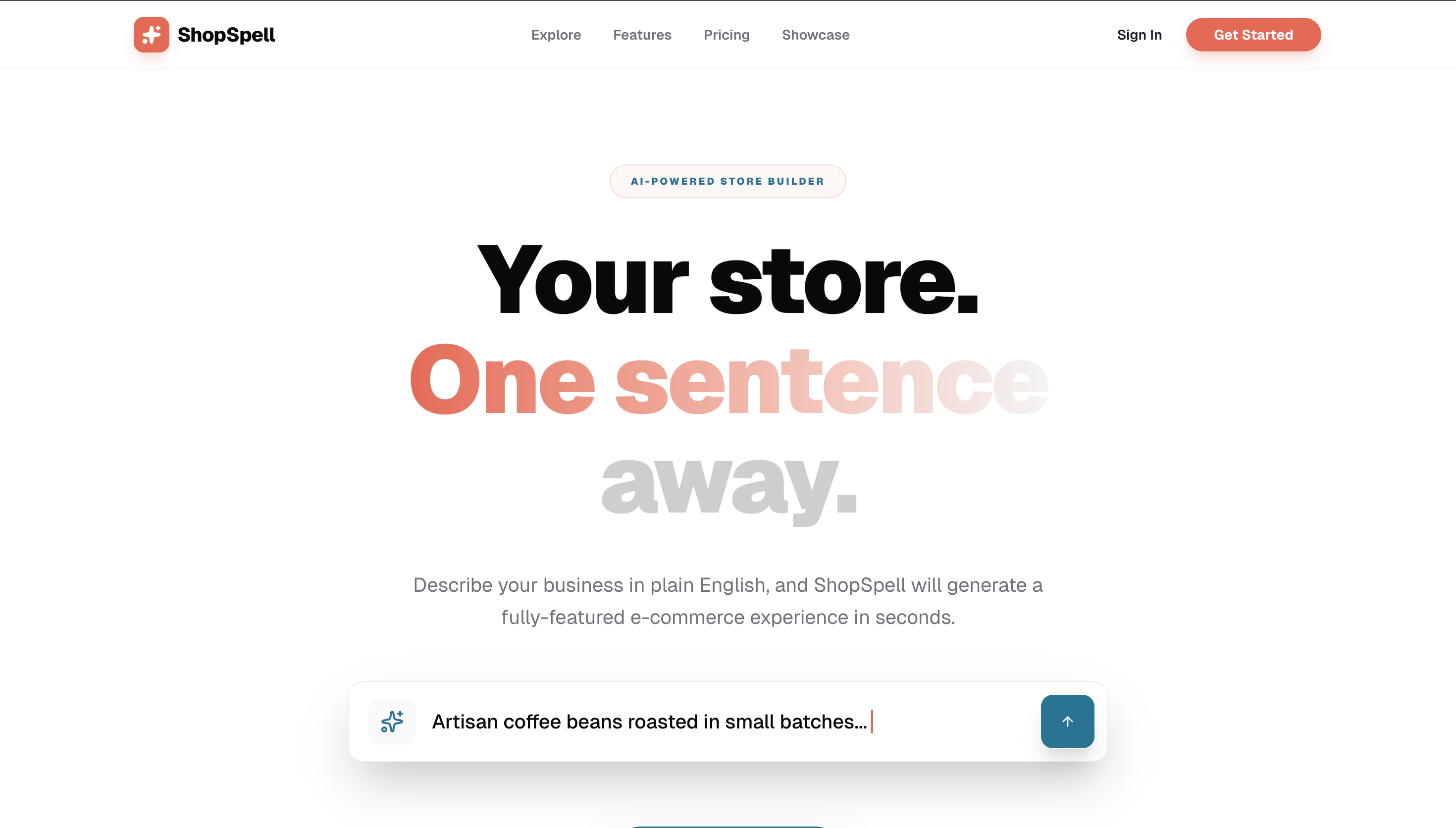
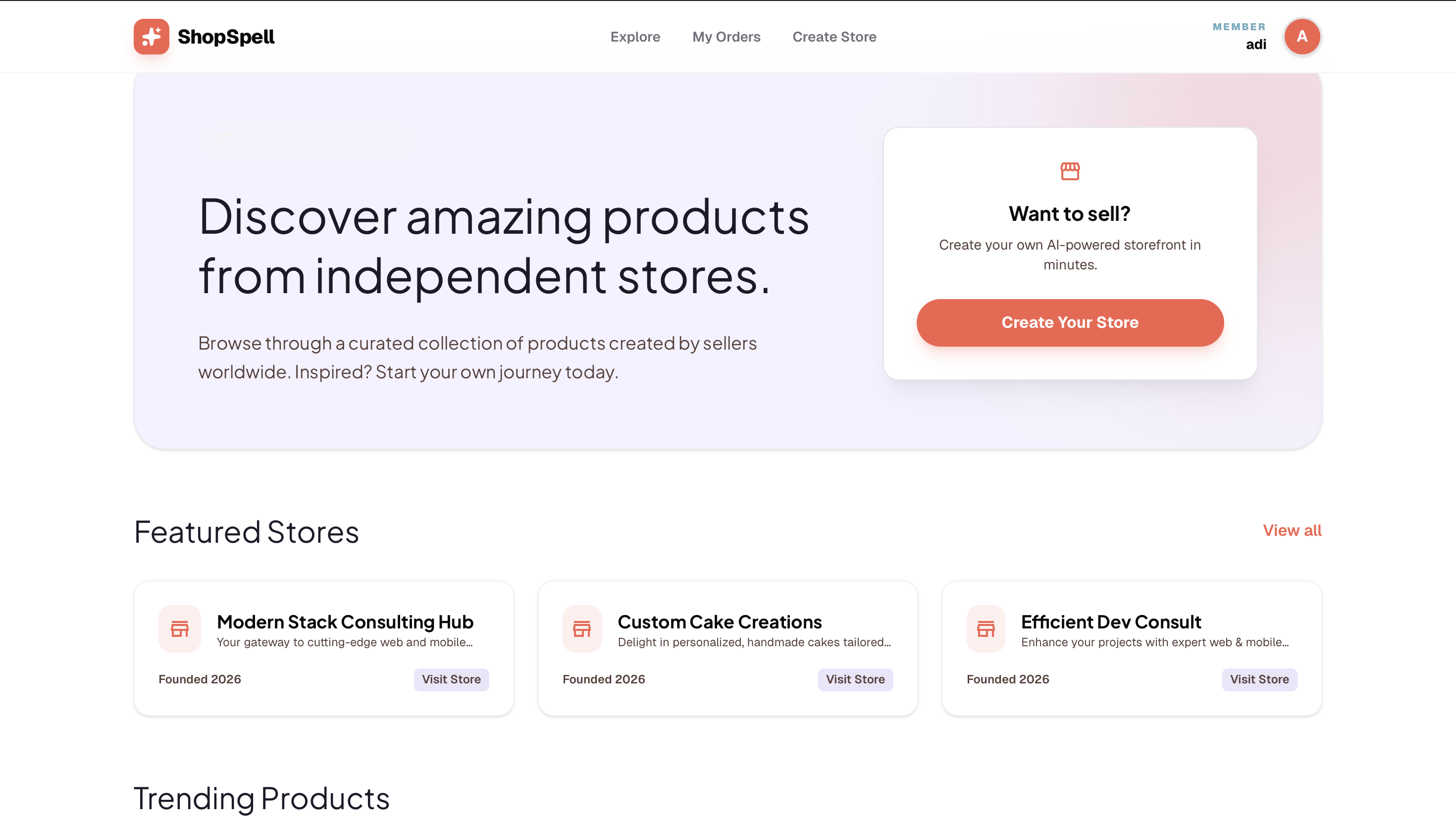
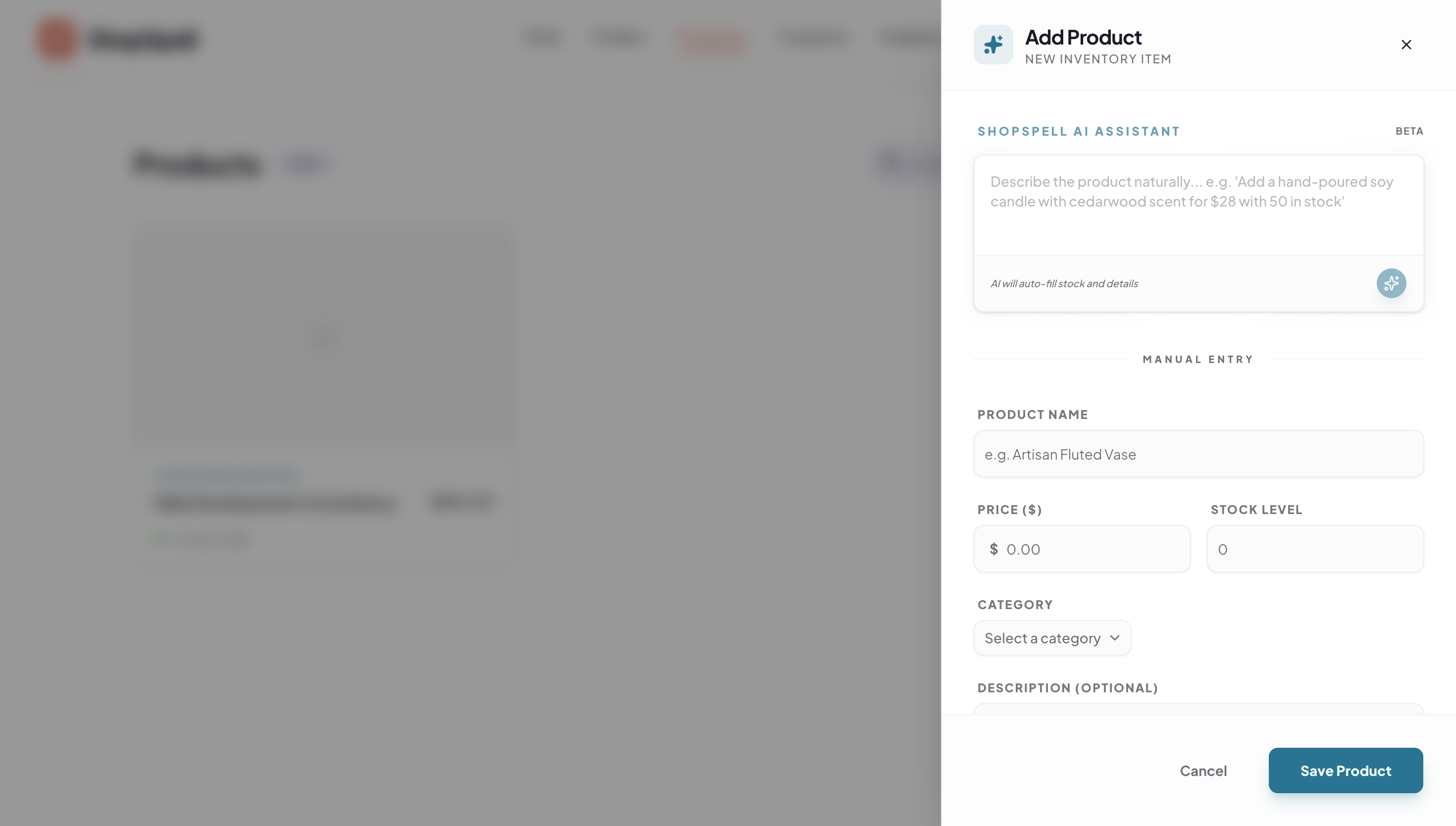
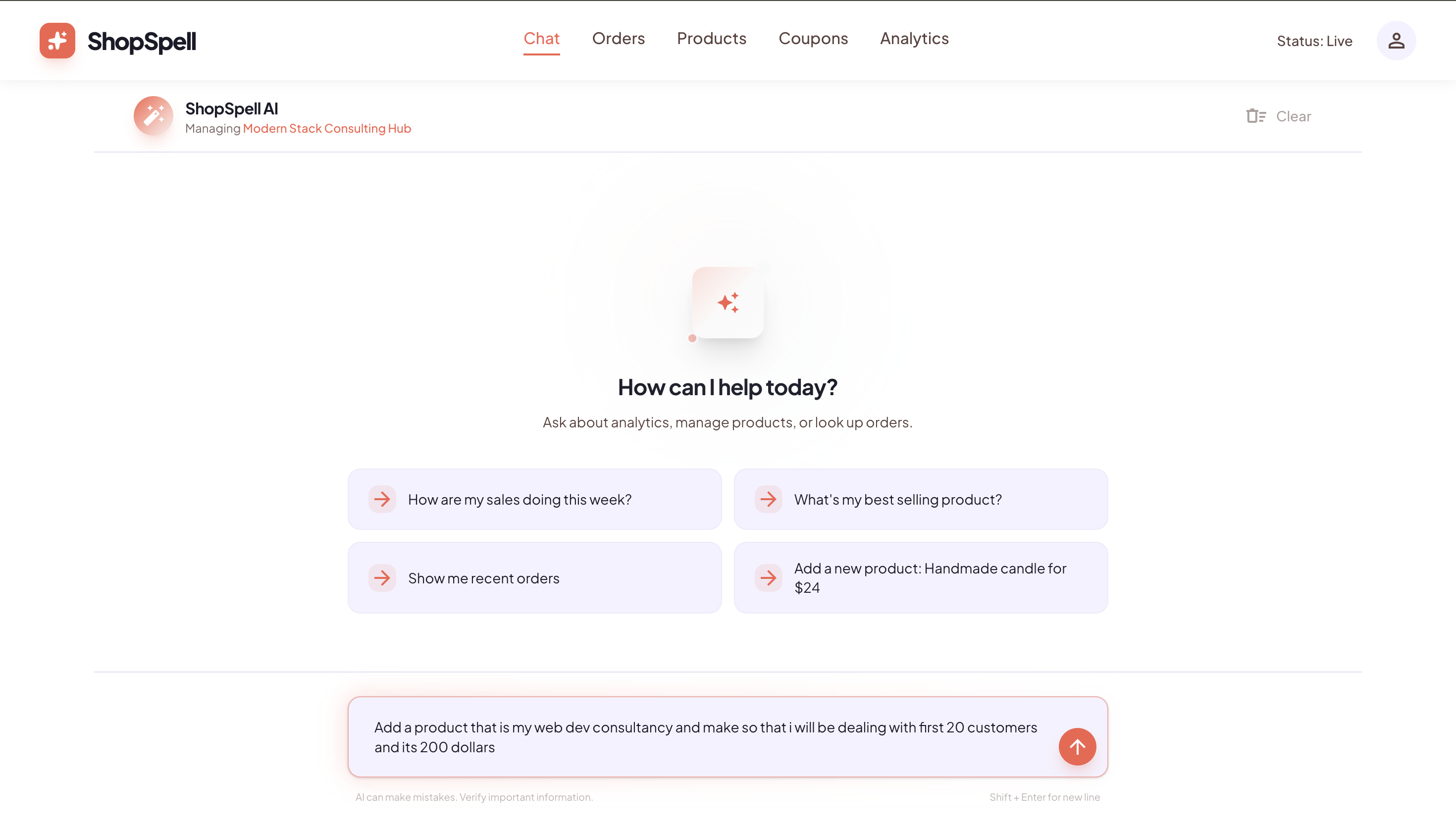
ShopSpell is an end-to-end e-commerce engine that transforms a simple idea into a fully fleshed-out storefront. It handles everything from generating initial layouts and mock products using AI to managing a secure, streamlined checkout flow.
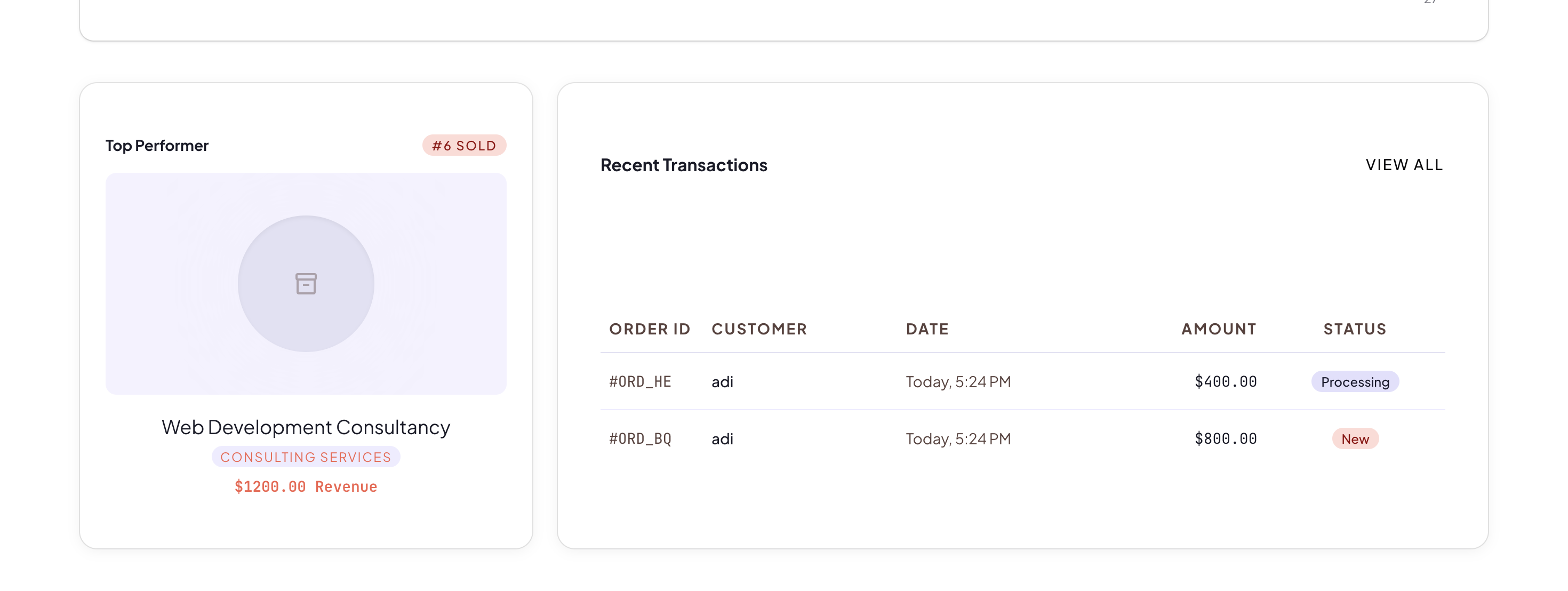
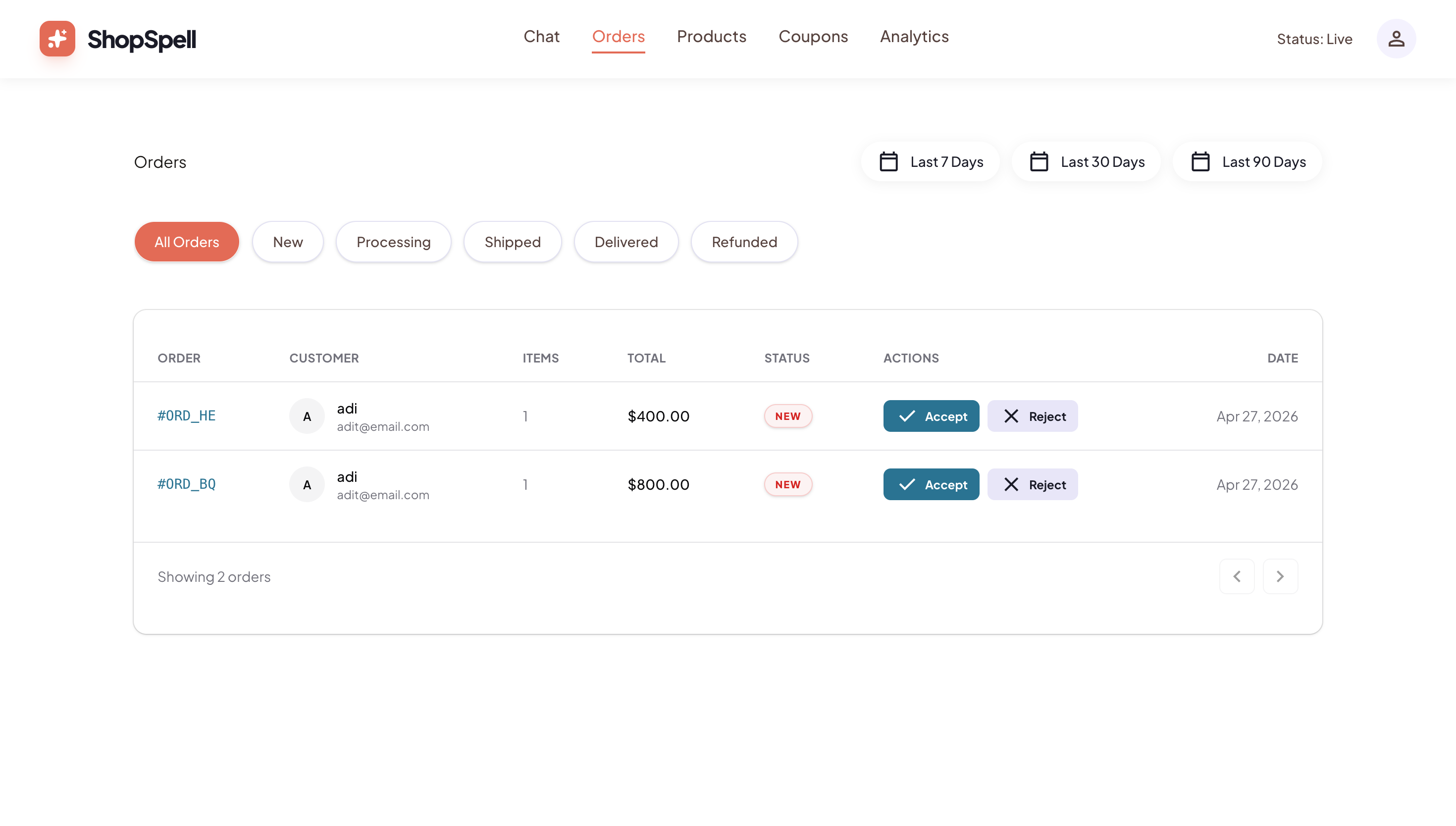
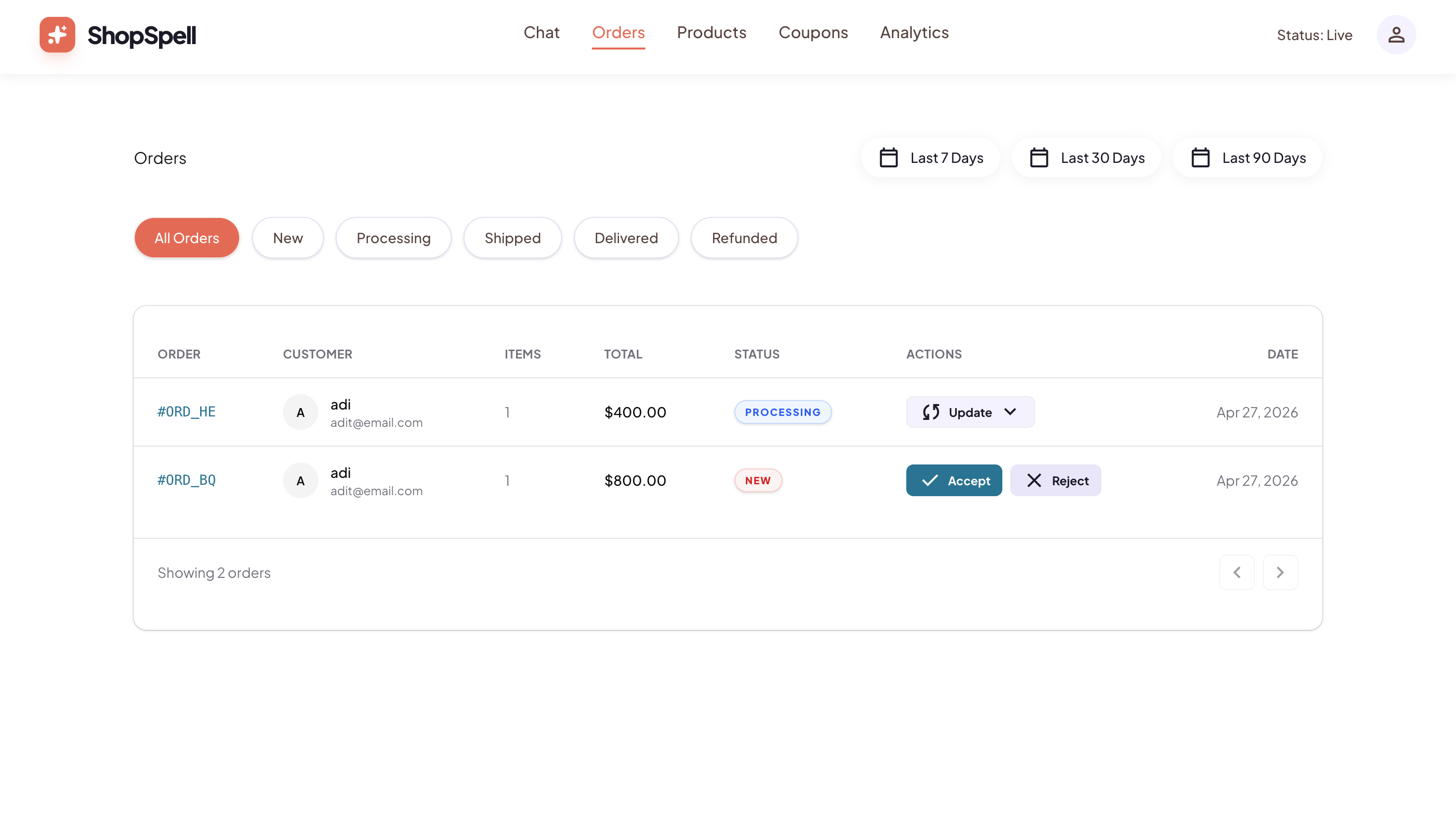
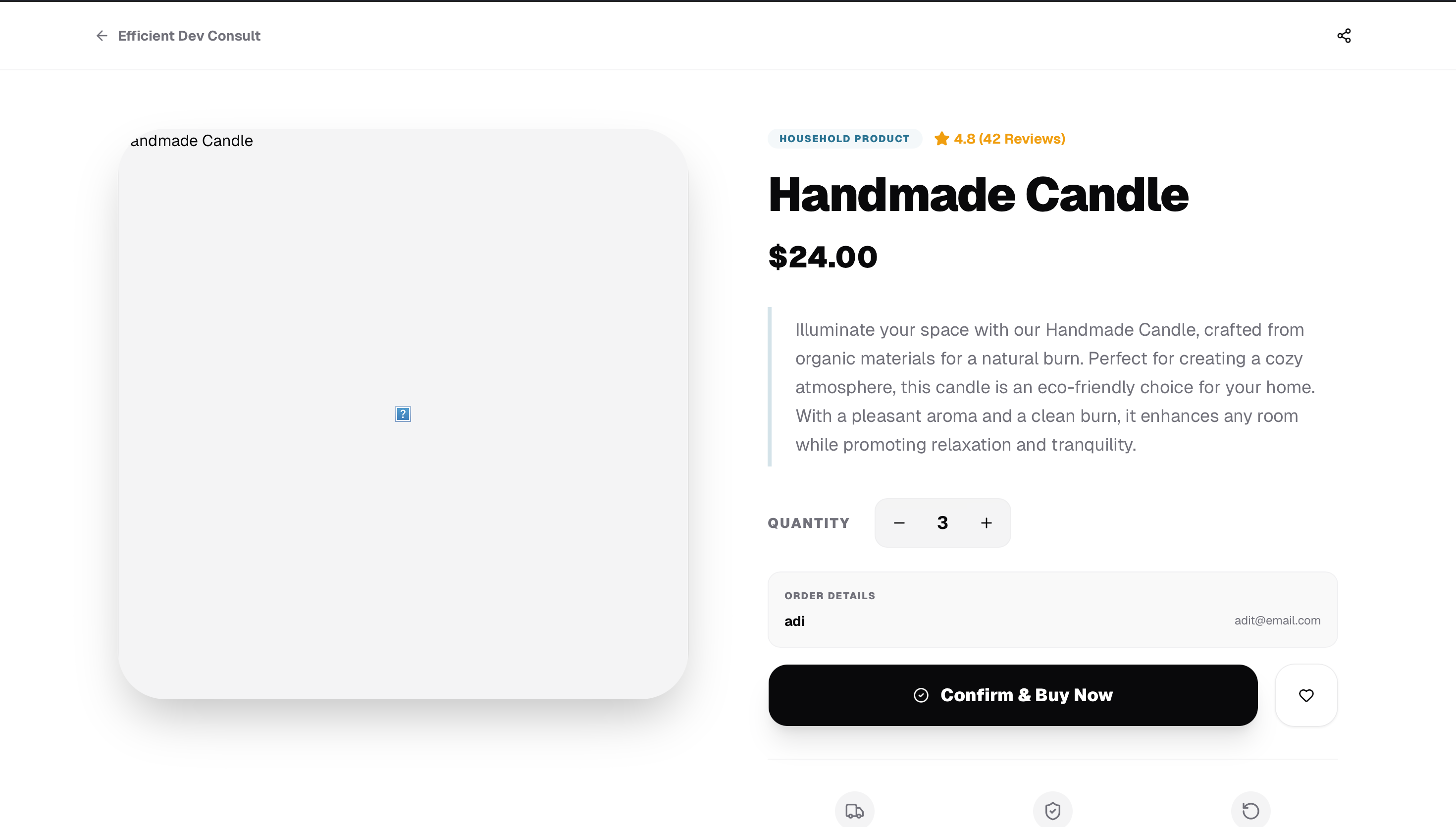
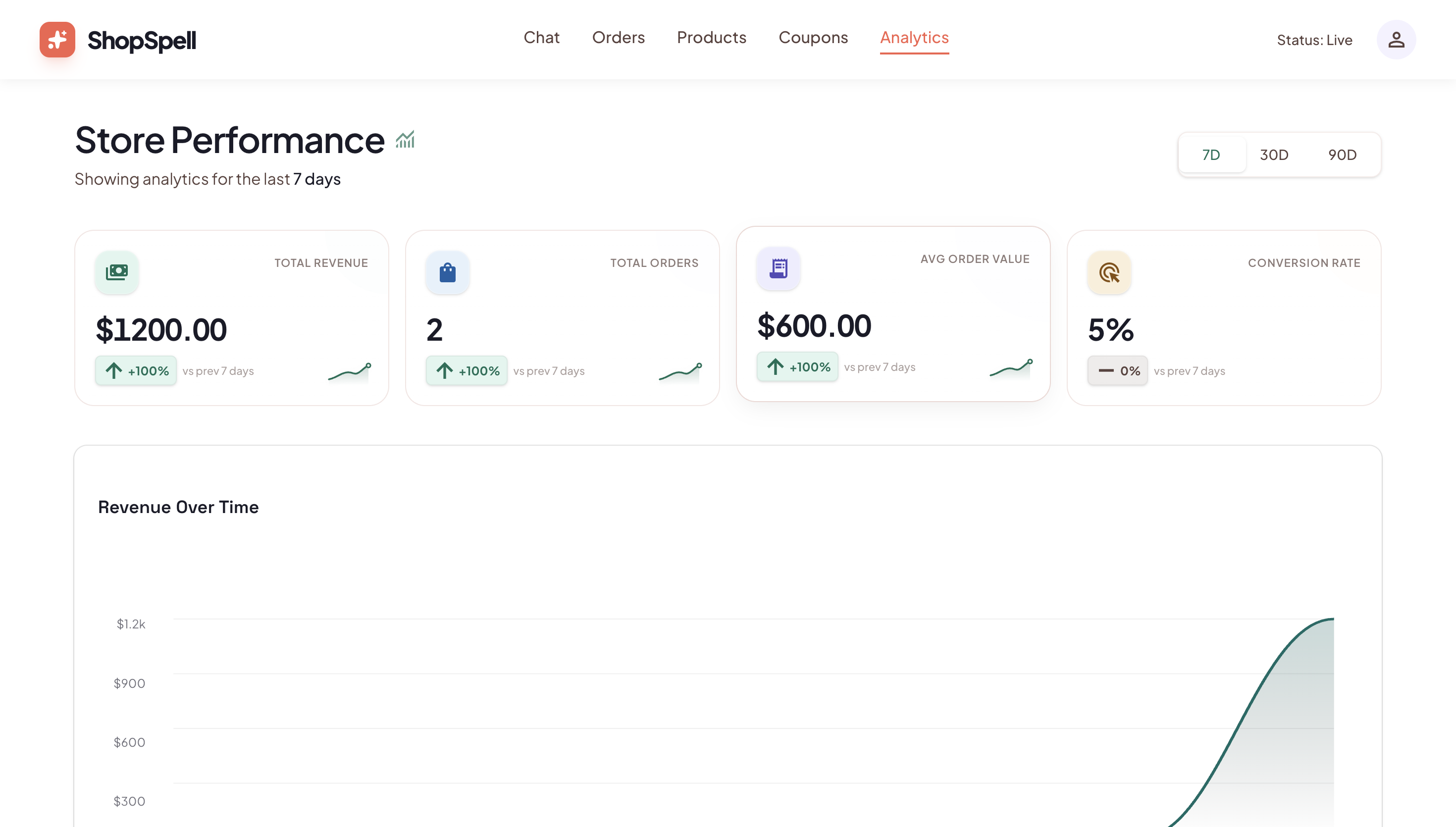
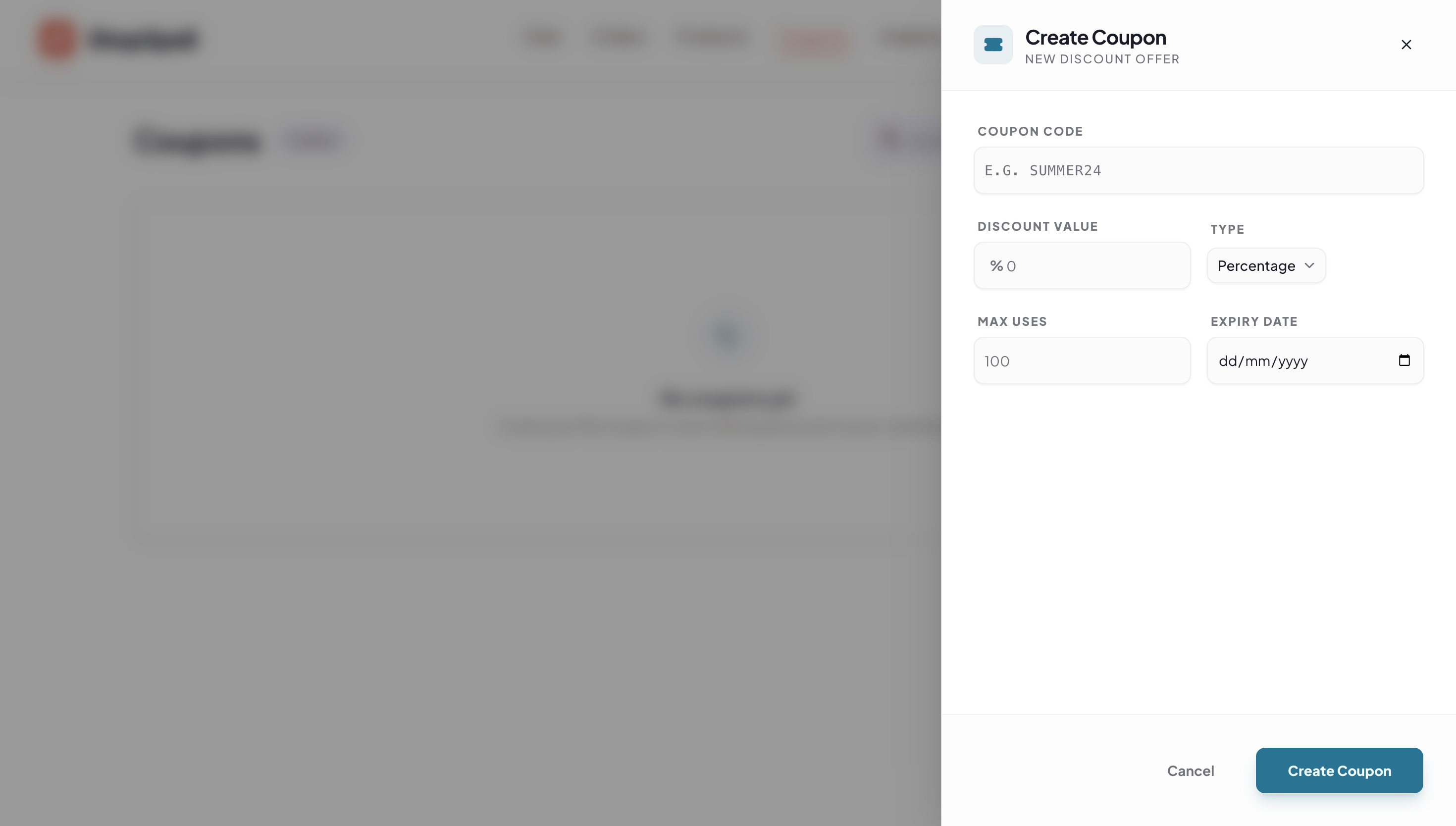
For store owners, it provides a powerful dashboard with dynamic revenue charts to track analytics, manage inventory, and update order statuses (Processing, Shipped, Delivered) with a single click. For buyers, it offers a beautifully animated, highly responsive shopping experience with a dedicated "My Purchases" portal to track all their orders across the ShopSpell network.
⚙️ How I built it
I architected ShopSpell around modern web standards, prioritizing end-to-end type safety, modularity, and speed.
- I used Next.js 15+ with the App Router and Turbopack for lightning-fast server-side rendering and routing.
- My backend relies on PostgreSQL paired with Drizzle ORM for blazing-fast, type-safe database interactions.
- To connect the frontend and backend, I integrated tRPC alongside TanStack Query, ensuring that my data fetching is completely type-safe from the database schema right down to the React components.
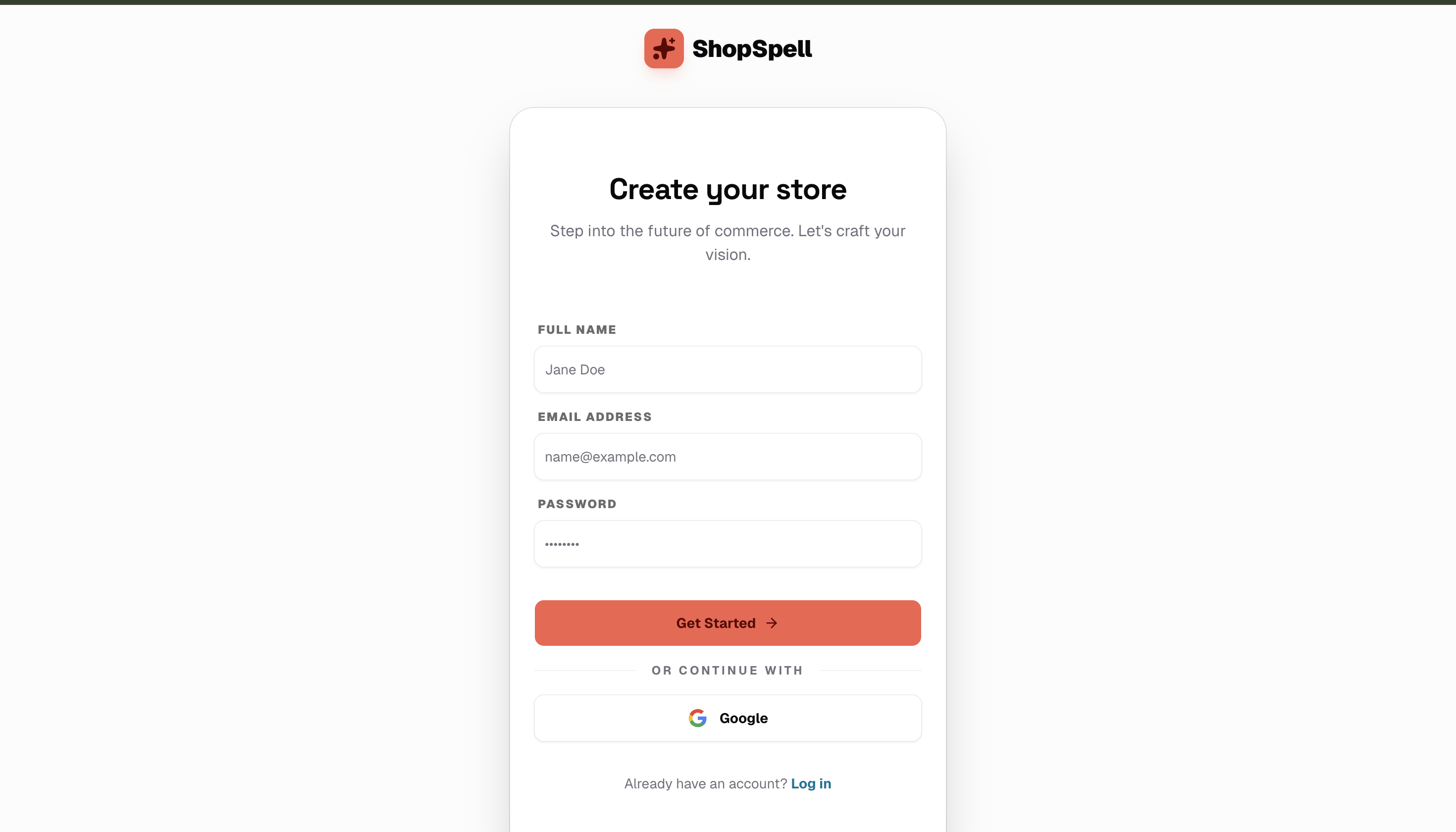
- For the UI, I combined Tailwind CSS with Shadcn/UI, adding custom glassmorphism effects and micro-animations to achieve that premium feel. Authentication was streamlined using Better-Auth.
🚧 Challenges I ran into
Building a truly modular and type-safe full-stack application solo comes with its hurdles. One major challenge was seamlessly integrating tRPC within the Next.js App Router paradigm, ensuring server components and client components communicated efficiently without breaking type safety.
Additionally, handling the dynamic generation of storefronts required managing complex state and potential loading delays gracefully. I tackled this by heavily optimizing my TanStack Query implementation and utilizing skeleton loaders. Finally, perfecting the glassmorphism UI while maintaining high frame rates and accessibility took extensive tweaking in Tailwind.
🏆 Accomplishments that I'm proud of
I am incredibly proud of the seamless, "instant" feeling of the store creation process. Building a custom dashboard that feels like a native desktop app—complete with dynamic micro-animations—was a huge win for the user experience. Above all, achieving strict end-to-end type safety across the entire application—meaning a database schema change instantly flags frontend errors—makes the codebase highly resilient, which is a massive advantage when maintaining a project as a solo developer.
📚 What I learned
This project was a deep dive into advanced full-stack architecture. I strengthened my understanding of Next.js 15's caching mechanisms and Server Components. I also learned how powerful tRPC is for developer velocity once the initial architecture is established. Furthermore, designing the premium UI taught me a lot about managing complex state without sacrificing performance or visual fidelity.
🚀 What's next for ShopSpell
The magic is just beginning. My primary focus for the next iteration is transforming ShopSpell into a fully customizable visual engine. I plan to build an intuitive, drag-and-drop frontend interface that empowers merchants to dynamically manipulate their storefront UI, rearrange layout blocks, and seamlessly upload custom images without writing a single line of code.
Alongside this custom shop builder, I plan to integrate robust payment gateways like Stripe to handle real financial transactions. Finally, to give merchants total control on the go, I am exploring building a companion mobile application natively using Flutter to interface directly with the existing backend infrastructure.
Built With
- nextjs
- openai
- postgresql
- typescript

Log in or sign up for Devpost to join the conversation.