Devpost submission — shopping-mcp
Copy from the first question downward into the text description. Keep the live URL and repo public through judging.
Live URL: https://shopping.ejecuta.lat/demo
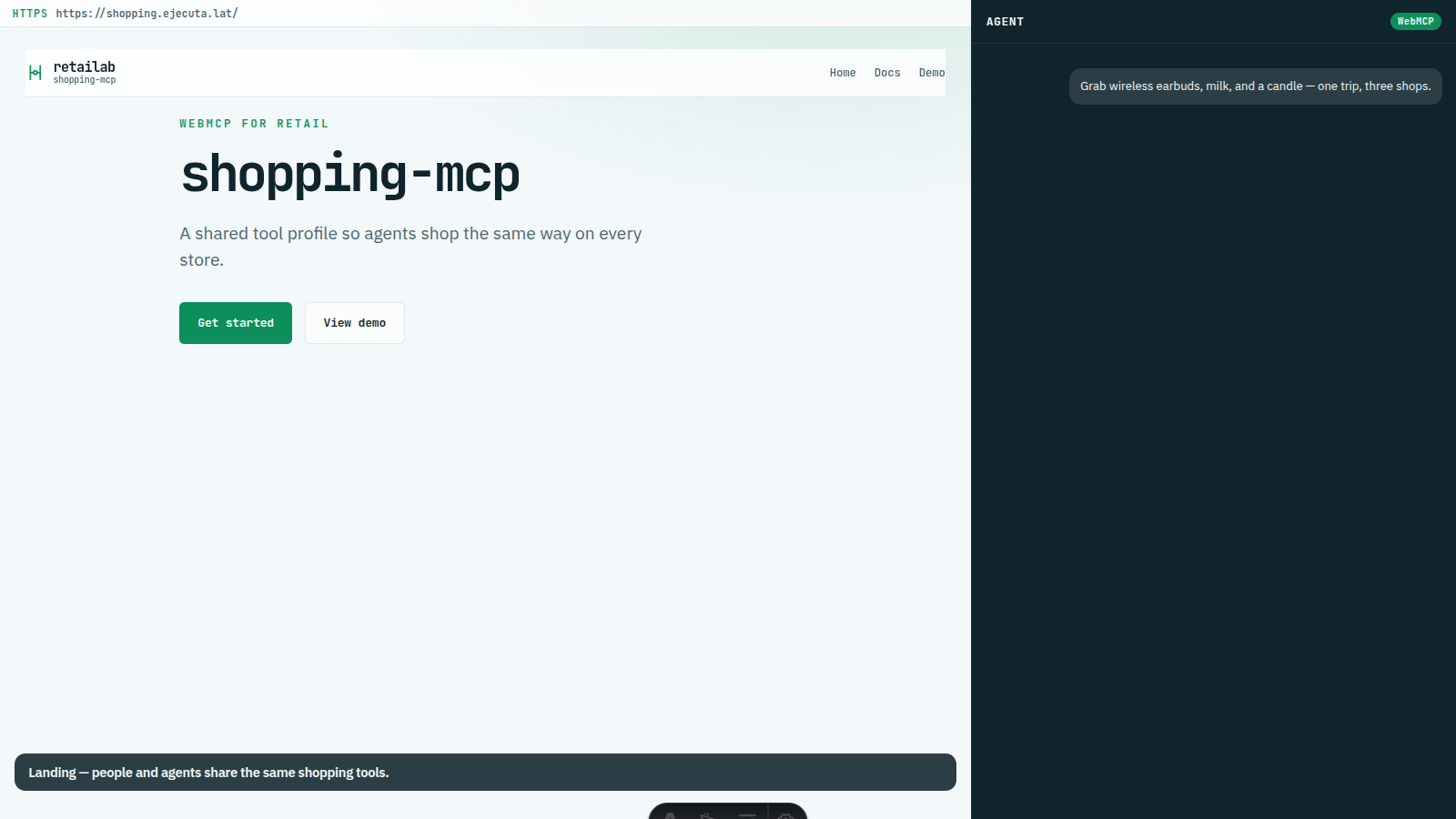
Landing: https://shopping.ejecuta.lat/
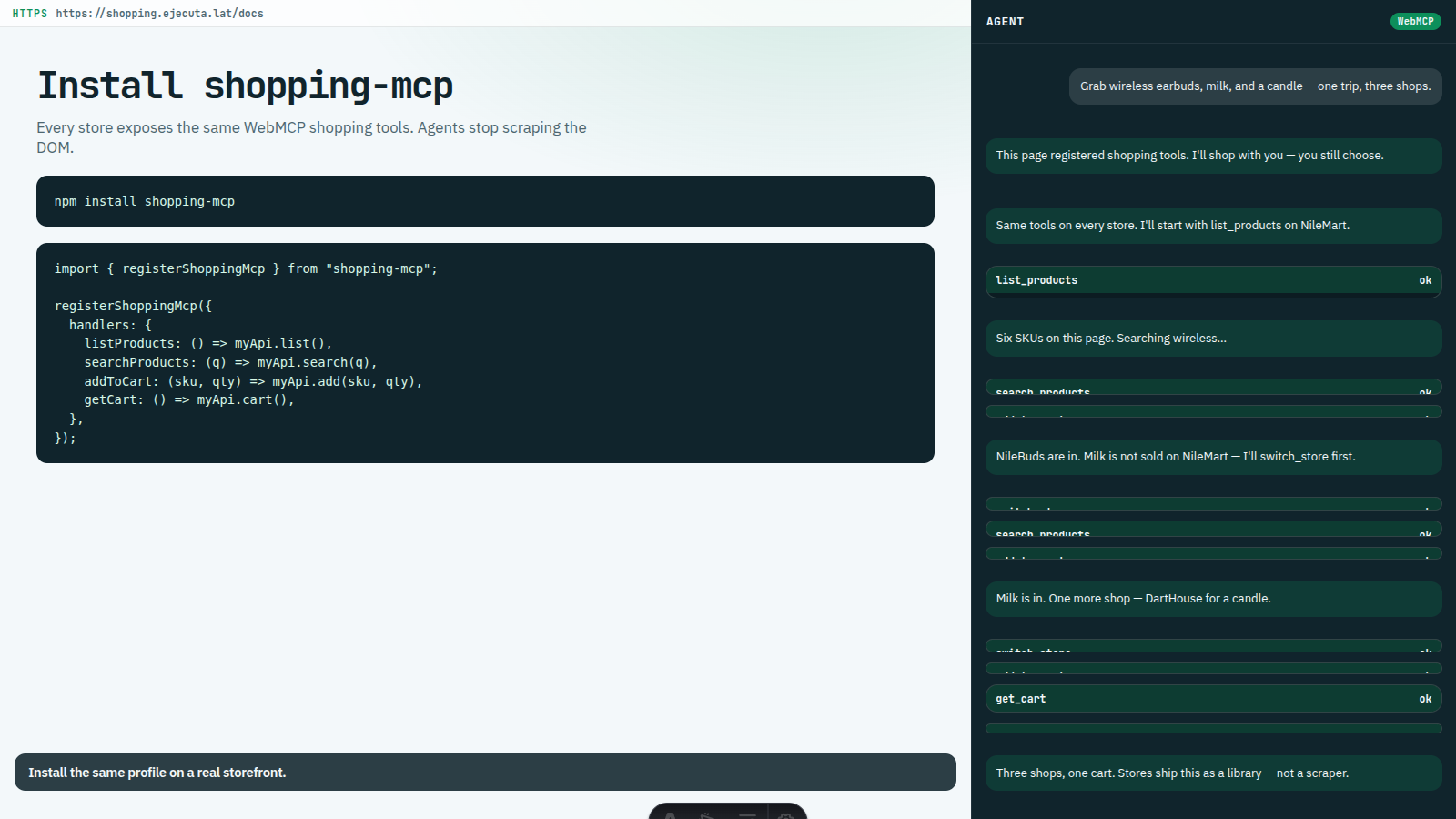
Docs: https://shopping.ejecuta.lat/docs
Repo: https://github.com/ejecuta-latam/retailab-shopping-mcp
License: MIT
Demo video: https://youtu.be/89b6XNLcoTU
Why your use case is a strong fit for WebMCP
Retail is the web agents fail at most. Every storefront is a different layout, a different “Add to cart” button, and a different cart. That is fine for people. It is a mess for agents.
Today an agent that wants to shop has to scrape HTML, guess selectors, and hope the button it clicked was the right SKU. Sometimes it fills a cart the shopper never saw. Sometimes it adds milk on a marketplace that does not sell milk. Sometimes it tries to pay in one silent step across merchants that do not share a checkout.
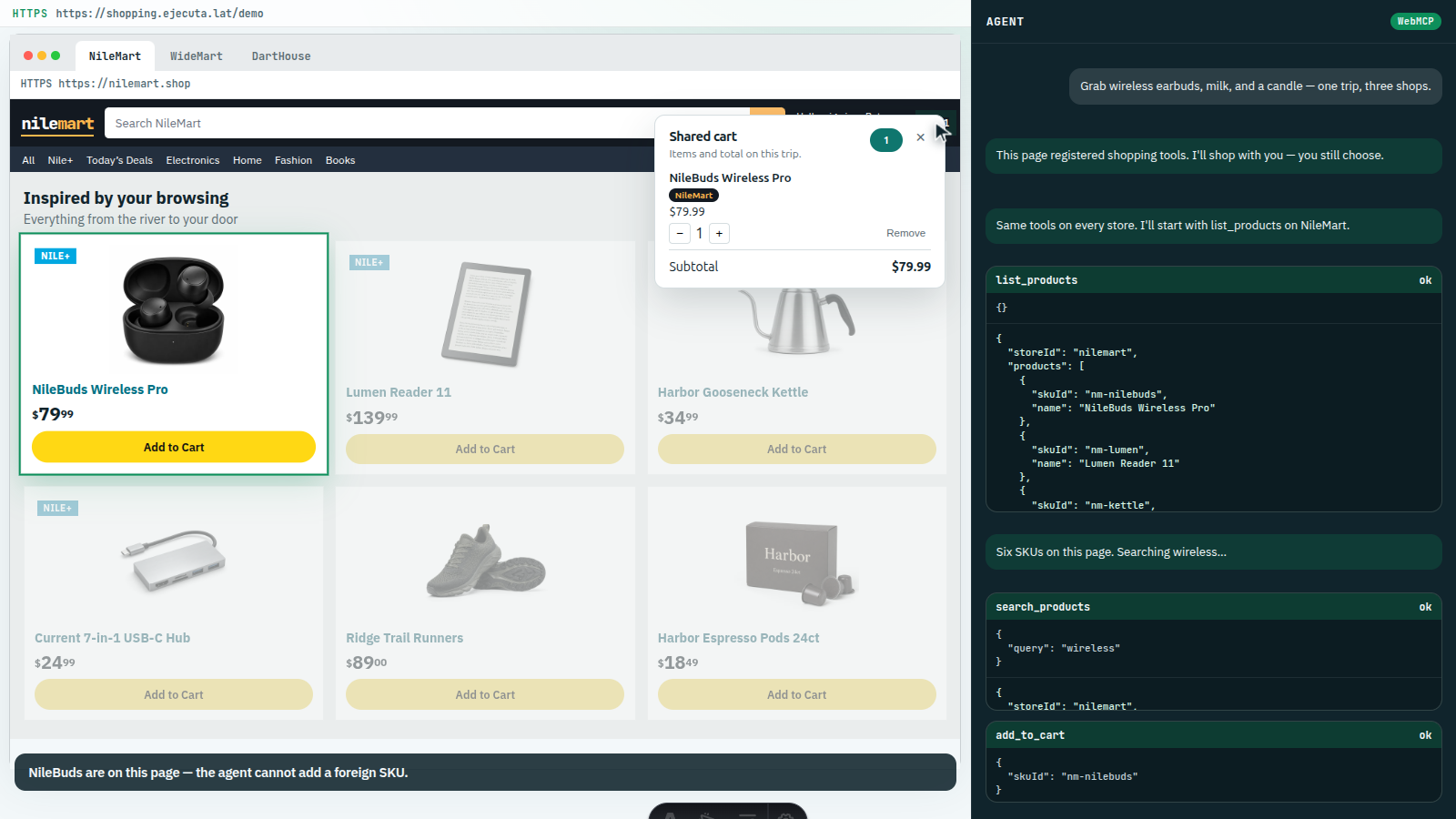
WebMCP exists so a pages can say what it already knows. A storefront already has a catalog and a cart. shopping-mcp is a shared tool profile for that: the same names on every participating site — search_products, list_products, add_to_cart, get_cart, remove_from_cart, optional checkout, and open_ui. The agent reads the open page’s catalog, not the whole internet, and mutates that origin’s cart.
How it creates a better user experience
People still choose. The agent is a shopper sitting next to you, not a bot that fills the bag behind your back.
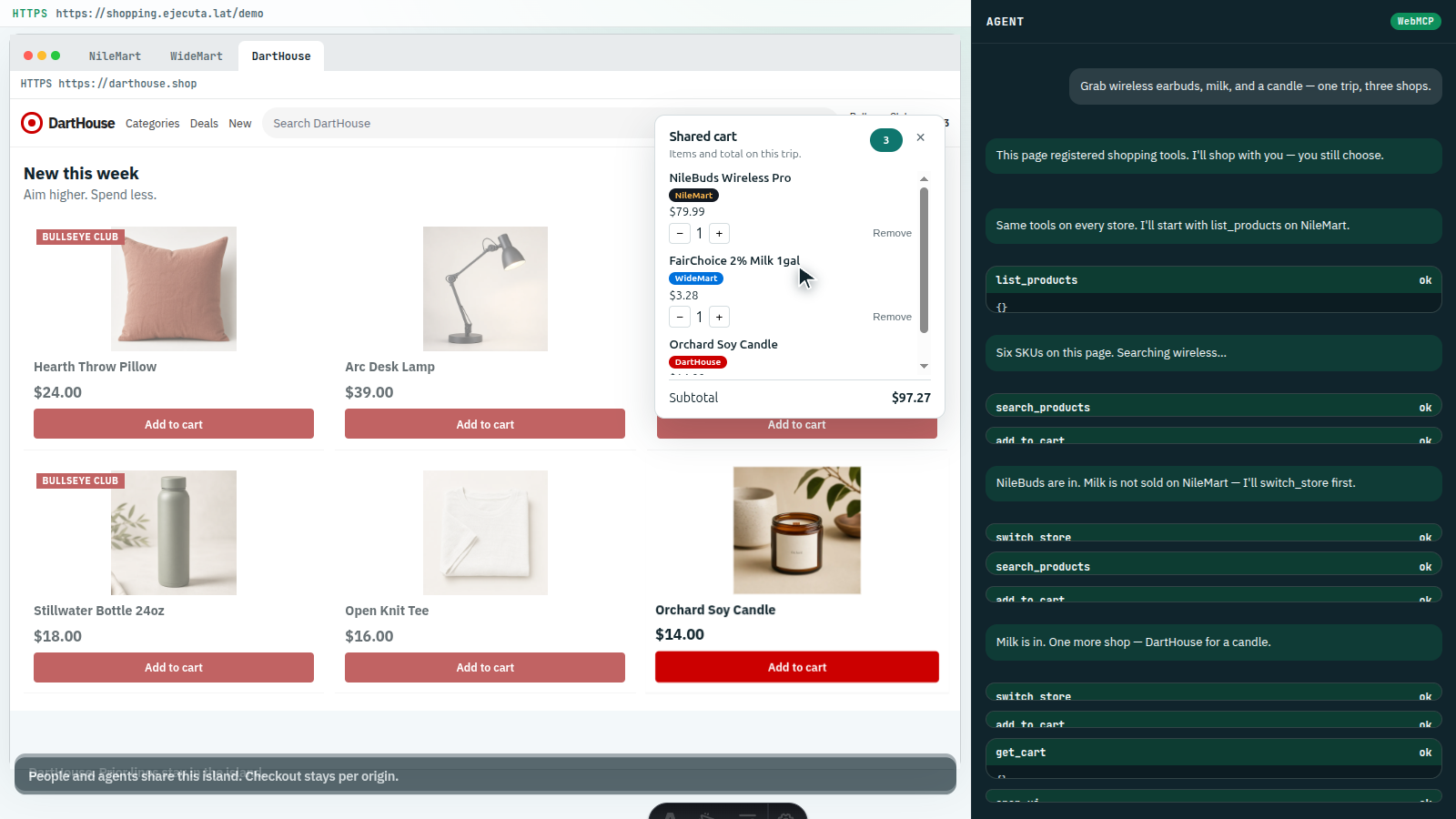
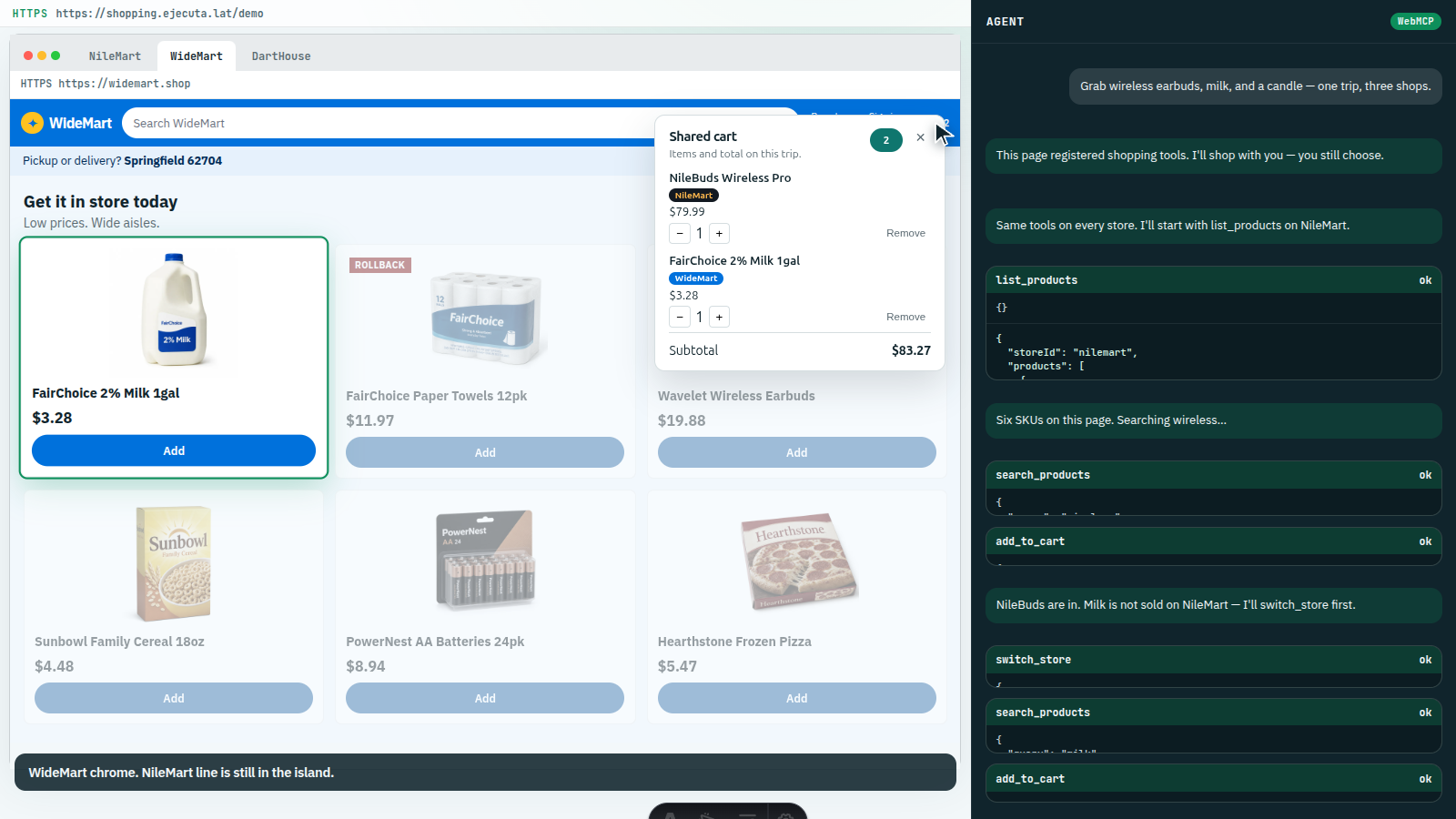
You see the same basket the agent sees. The library mounts a floating cart island (open_ui). Human clicks on “Add to cart” and agent tool calls update that same island. Nothing is hidden in a side channel.
Describe what people and agents can do together that was difficult or impossible before
They can shop a trip across stores together — without scraping, without the agent pretending to be a mouse, and without a silent mega-checkout, across a lot of pages who integrate this library.
Briefly explain how you implemented WebMCP
We shipped a small, zero-dependency browser library, shopping-mcp (packages/shopping-mcp). A store maps the profile onto the cart it already has and calls registerShoppingMcp once on the storefront page (not on Node):
import { registerShoppingMcp } from "shopping-mcp";

registerShoppingMcp({
  handlers: {
    listProducts: () => myApi.list(),
    searchProducts: (query) => myApi.search(query),
    addToCart: (skuId, quantity) => myApi.add(skuId, quantity),
    getCart: () => myApi.cart(),
    removeFromCart: (skuId) => myApi.remove(skuId),
    checkout: () => myApi.checkout(), // optional
  },
});
The library registers those tools on document.modelContext.registerTool (fallback provideContext). It validates argument shapes, then calls the store’s handlers. It does not scrape the page and it does not own inventory. If WebMCP is missing, registration is a no-op; humans can still use the cart island.
/demo wires handlers to a static catalog and a sessionStorage cart. It also registers demo-only list_stores and switch_store because NileMart, WideMart, and DartHouse share one page — real stores should not ship those. The cart island is closed shadow DOM owned by the library, not agent-injected HTML. Optional checkout is omitted until a merchant is ready; when present it must require shopper confirmation.
No login. Test in ChatGPT’s in-app browser (WebMCP on by default) or Chrome with chrome://flags/#enable-webmcp-testing. Live page: https://shopping.ejecuta.lat/demo — install tutorial: https://shopping.ejecuta.lat/docs
Testing instructions (private field is fine)
- Open https://shopping.ejecuta.lat/demo in ChatGPT’s in-app browser or Chrome with WebMCP testing enabled.
- Confirm tools:
search_products,list_products,add_to_cart,get_cart,remove_from_cart,open_ui,list_stores,switch_store. list_productson NileMart →add_to_carta SKU →switch_store{ "storeId": "widemart" }→get_cartstill has the NileMart line.- Click Add to cart as a human; the island matches the tools.
No credentials.

Log in or sign up for Devpost to join the conversation.