Inspiration
We wanted to implement a solution for this task that takes very few resources. Hence we did not call any external API and the model was built on top of a embedding model. Our model aims to be small and effiecient while maintaining accuracy.
What it does
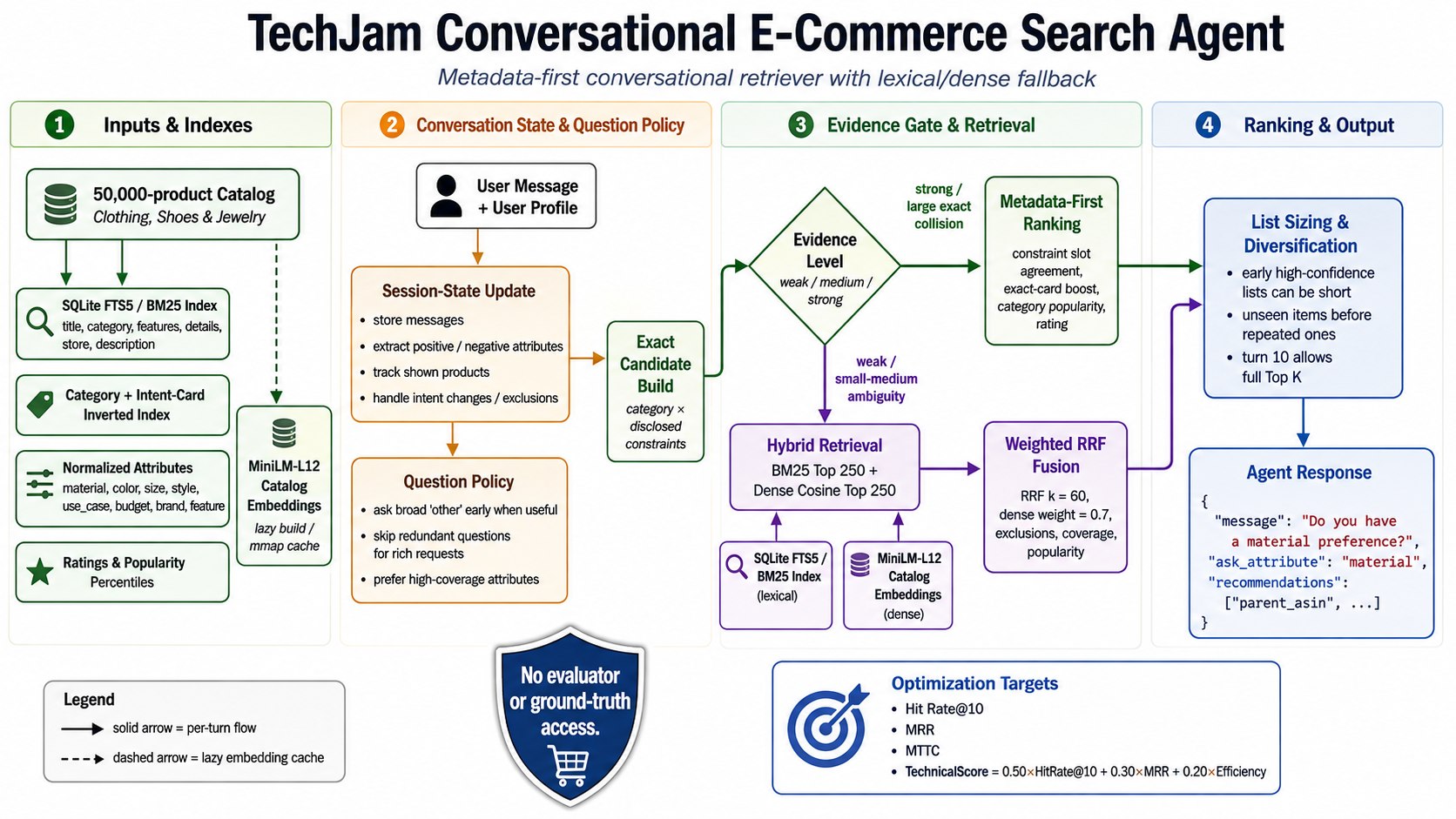
It tokenises the user message and generates soft and hard constraints while retrieving products using BM25 and Dense Cosine search criteria and finally sorted by factors contributed by the constraints
How we built it
We did multiple ablation experiments to discover critical information during retrieval process. Our model was then built using the results and inferences from the experiment
Challenges we ran into
At first we built this model purely on a BERT however during testing we discovered a lot of information was lost. We then slowly transitioned into more advanced sentence transformer models. We also avoided using a LLM to reduce cost
Accomplishments that we're proud of
We have managed to achieve a high technical score of 0.948 during our testing process. We have also improved the robustness and the model maintains high performance during stress testing.
What we learned
We learnt how to use ablation experiments to discover new avenues to improve our model and how to make good use of various resources available to us such as coding agents to assist with the heavy lifting of the coding process. This competition taught us a lot on solving real world problems and gave us a new understanding of the constraints faced by companies in the real world
What's next for Shopping Copilot: AI Conversational Search
Our current model is overfitted to the data that we used. In the future, we aim to have the chatbot be more "human-like" in its interactions. We will also like to generate the recommendation sentence automatically in the future


Log in or sign up for Devpost to join the conversation.