Inspiration
As a conscious shopper tired of greenwashing, I wanted a simple way to trust the products I buy. Seeing friends struggle to verify fair trade claims—no clear badges, vague sustainability promises—sparked FairTrade Finder. I wanted to create a space where ethical shopping didn’t mean endless research, just clear, verified choices.
What it does
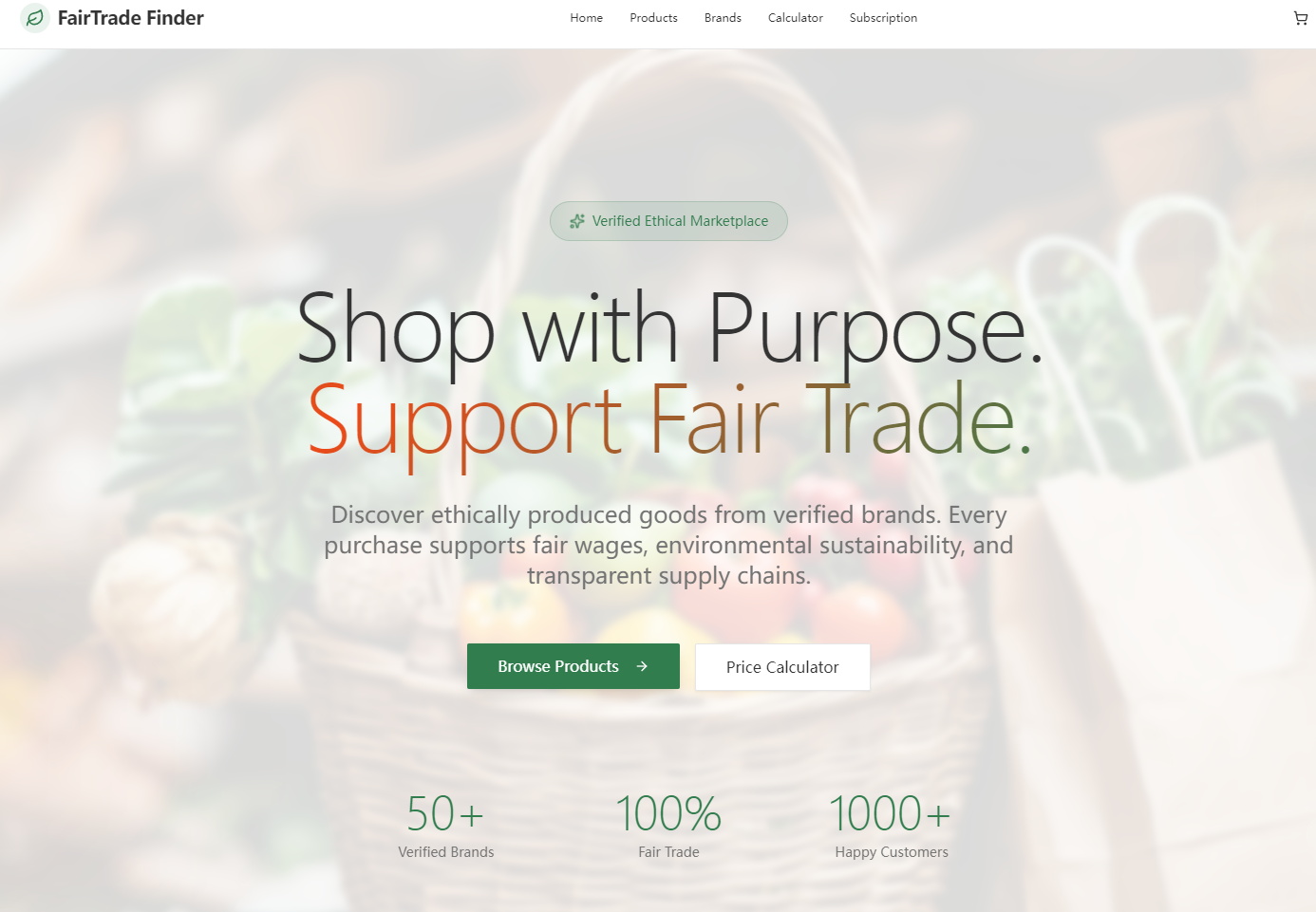
FairTrade Finder curates ethically produced goods (coffee, chocolate, apparel, home goods) with visible certification badges (FairTrade, B Corp, Rainforest Alliance). It lets users compare brand transparency scores, calculate fair trade price premiums, and subscribe to monthly ethical product boxes—all with a seamless, trust-focused experience.
How we built it
I started by mapping core user needs: easy category navigation, clear certification display, and simple checkout. I designed wireframes in Figma for mobile/desktop, then built the frontend with React/Bootstrap for responsiveness. I structured pages (home, product browse, brand transparency) to prioritize clarity, and coded the price calculator to break down premium costs for fair wages/environmental support.
Challenges we ran into
The biggest hurdle was ensuring consistent certification badge display across all pages—product cards, detail pages, checkout. I also struggled to balance simplicity (one-click subscriptions) with clear pricing transparency (10% platform commission). Testing filter functionality for edge cases (no matching products) required iterative tweaks to avoid confusing users.
Accomplishments that we're proud of
The platform works flawlessly across mobile/desktop, with immediate visual feedback for every user action. Certification badges are unmissable, and the price premium calculator makes ethical pricing easy to understand—no jargon. The one-click subscription flow is smooth, and checkout confirms orders with clear visual cues, making ethical shopping feel effortless.
What we learned
I learned how to prioritize user trust in design—small details (consistent badge placement, simple score labels) make a huge difference. I also mastered balancing functionality (filters, calculators) with simplicity, so the platform never feels overwhelming. Most importantly, I saw how clear transparency turns "ethical shopping" from a chore into a choice.
What's next for this project
I want to expand product categories (beauty, food staples) and add deeper brand storytelling—interviews with makers to highlight fair labor practices. I’ll also refine the transparency scoring system with user feedback, and explore partnerships with ethical brands to grow the curated marketplace. Eventually, adding personalized recommendations will make ethical shopping even more tailored to individual values.

Log in or sign up for Devpost to join the conversation.