-
-
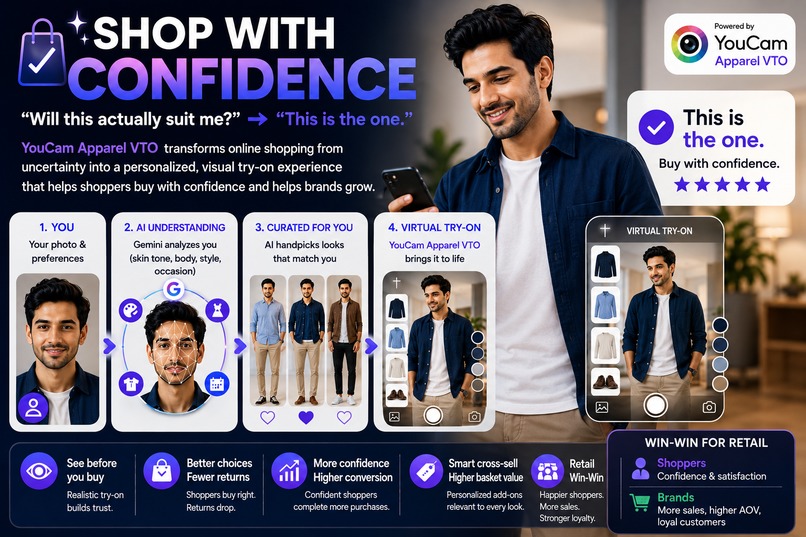
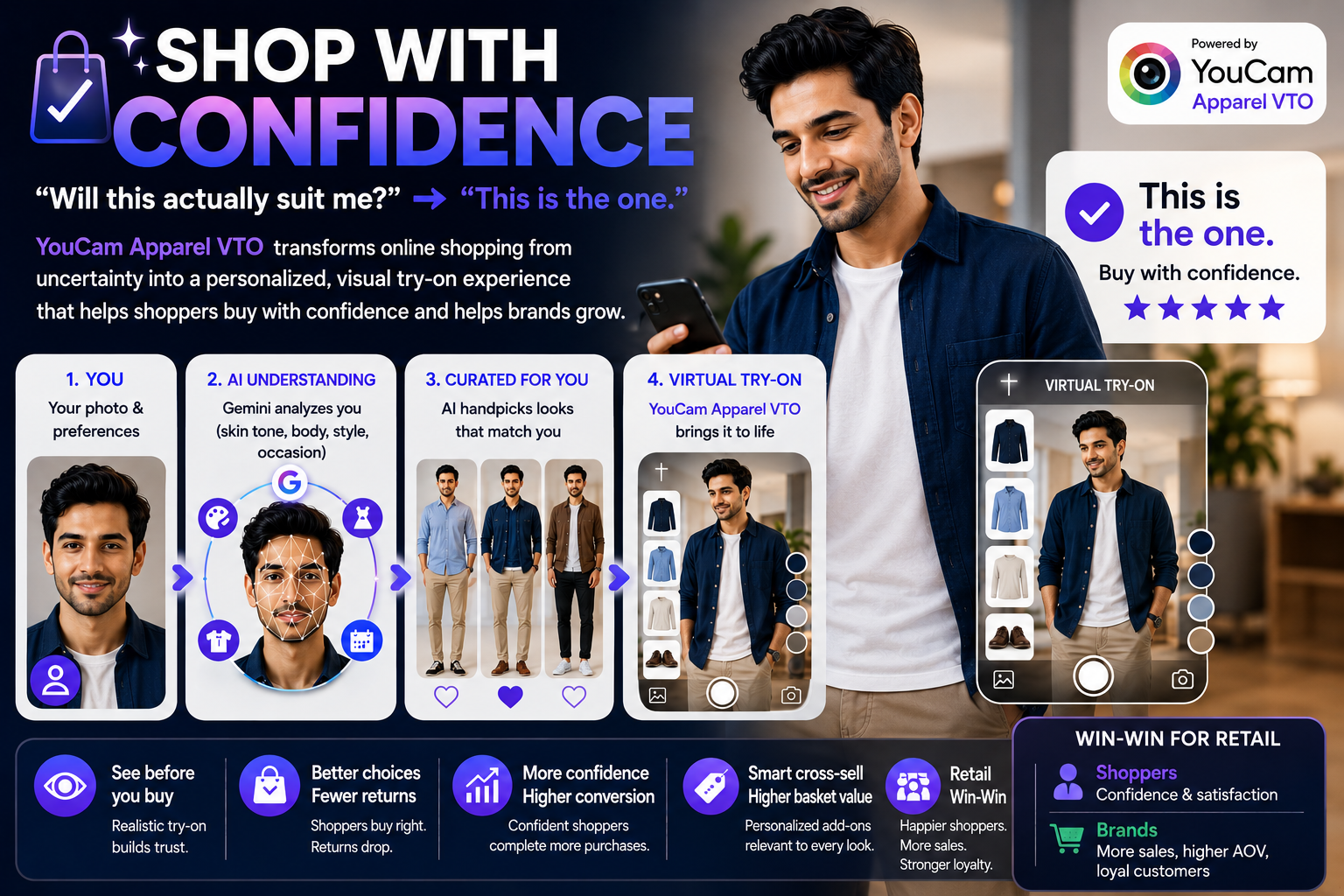
Shop with Confidence — turning “Will this actually suit me?” into a more confident, visual shopping decision with YouCam Apparel VTO.
-
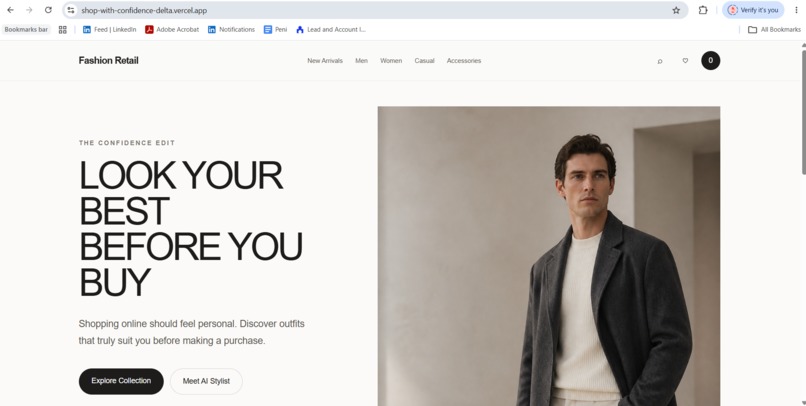
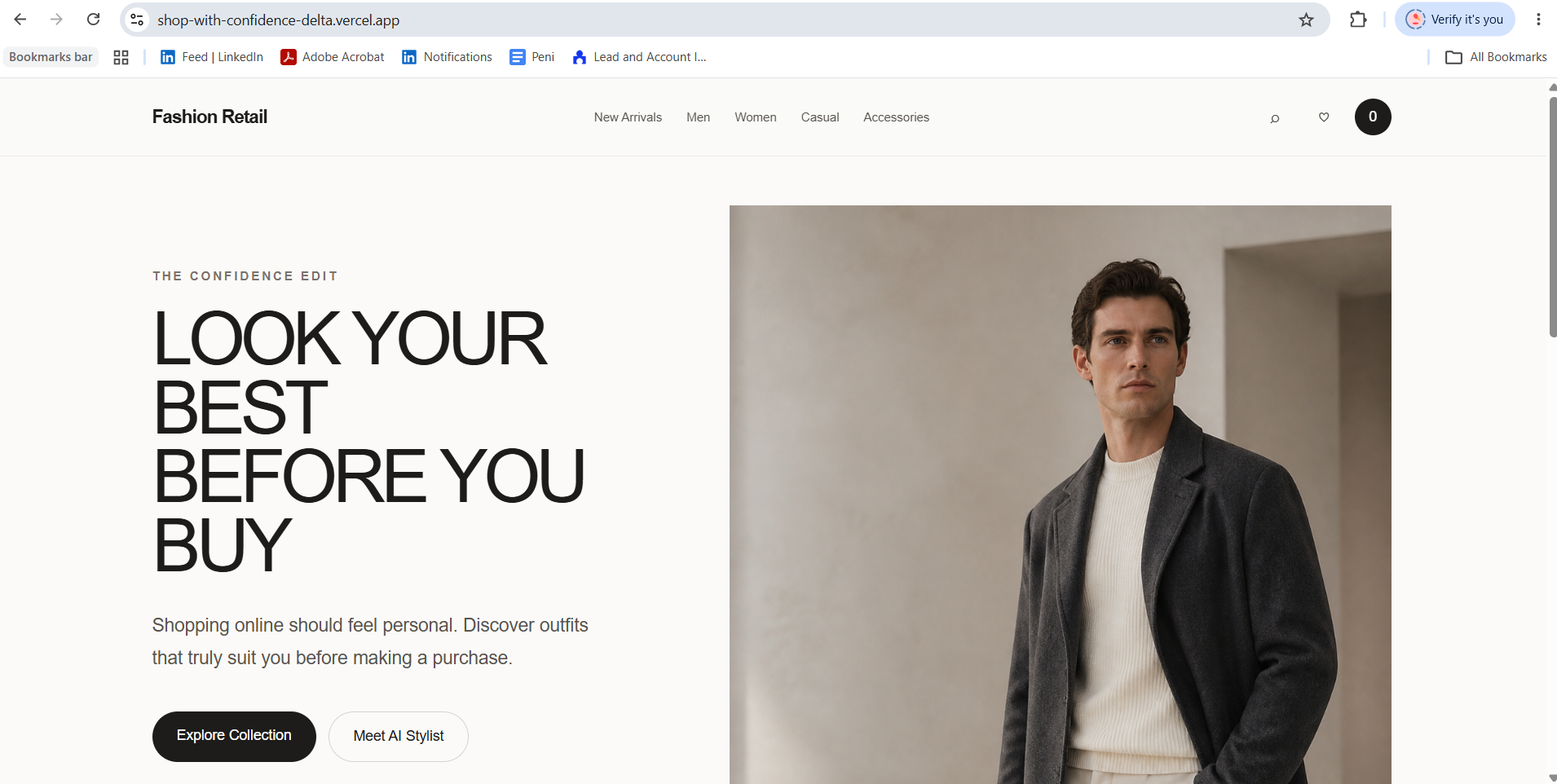
A fashion retail experience designed around confidence — moving beyond endless browsing toward a guided shopping journey.
-
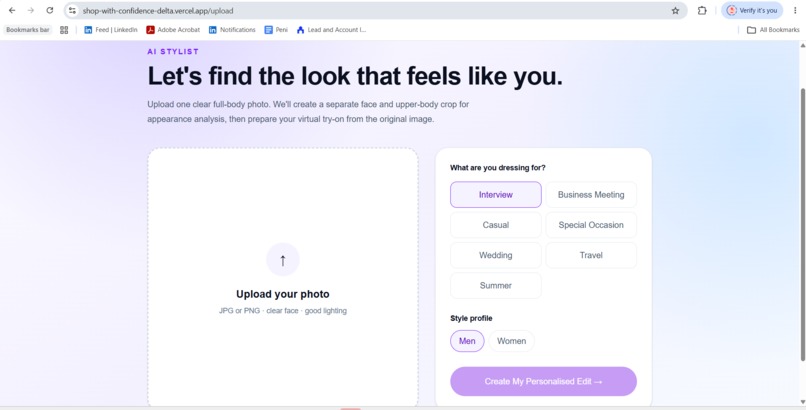
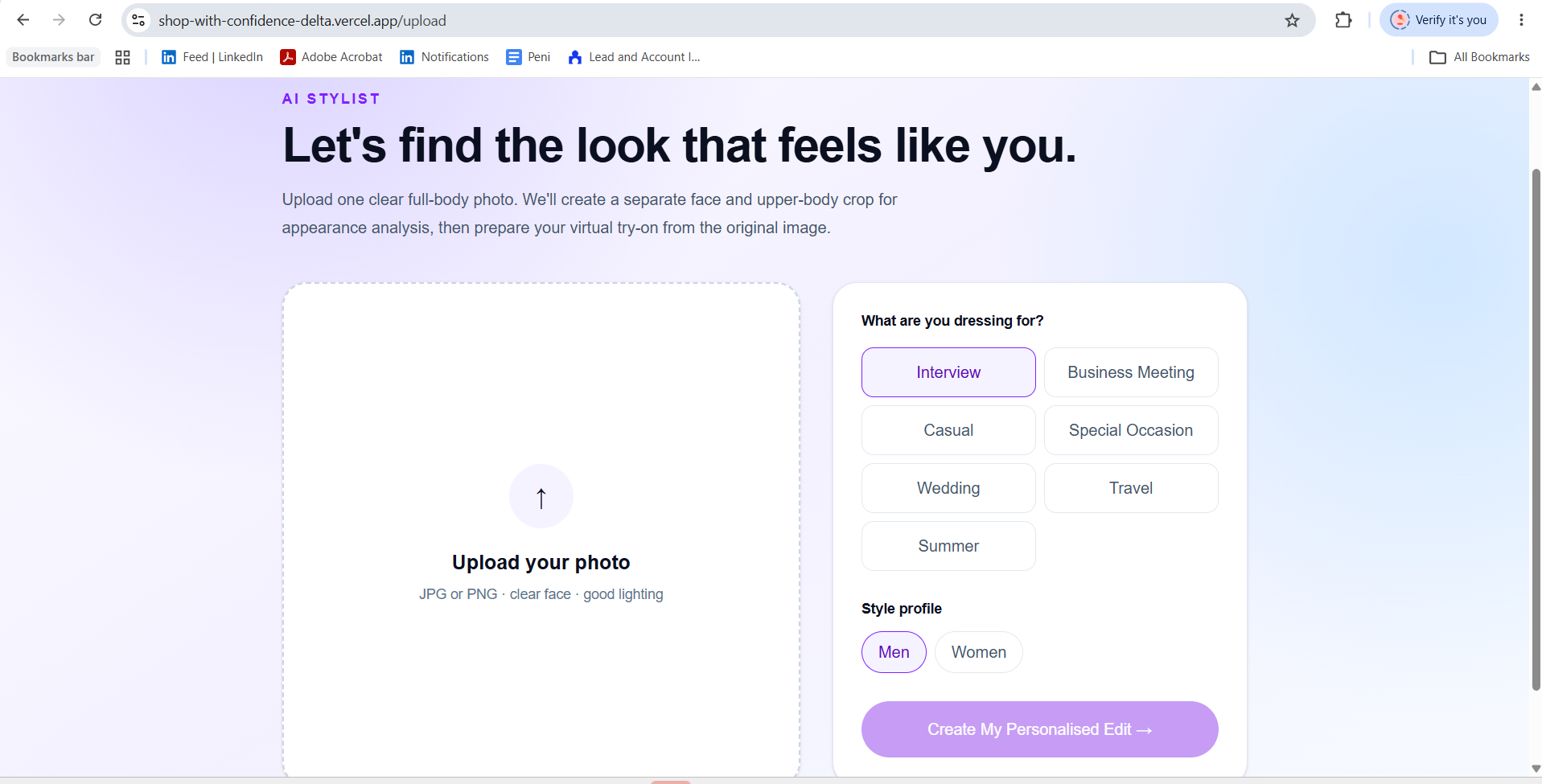
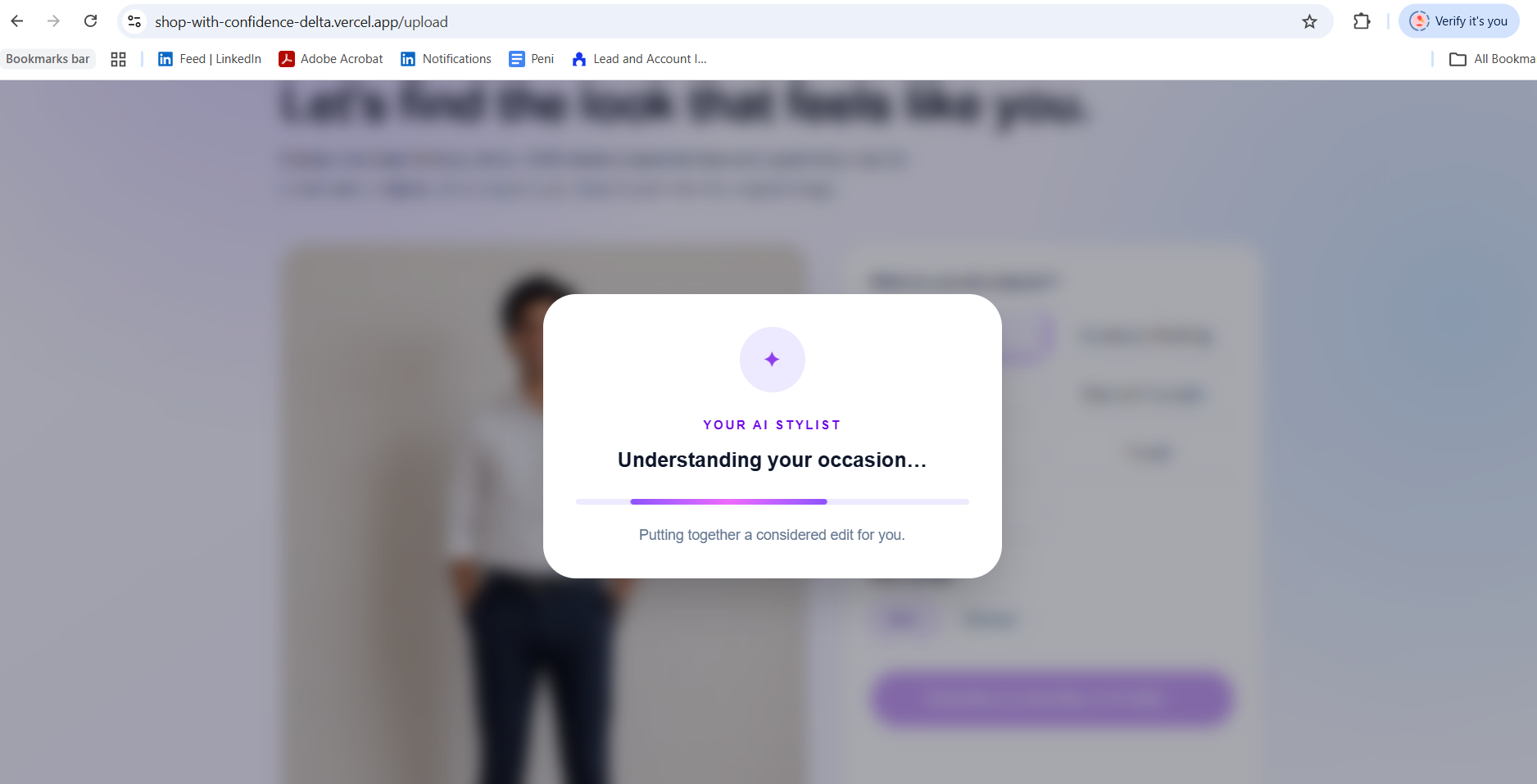
Meet the AI Stylist — the starting point for a more focused, occasion-aware shopping experience.
-
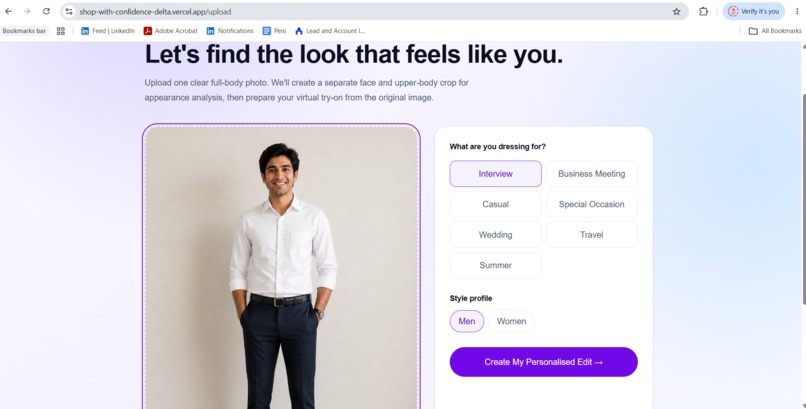
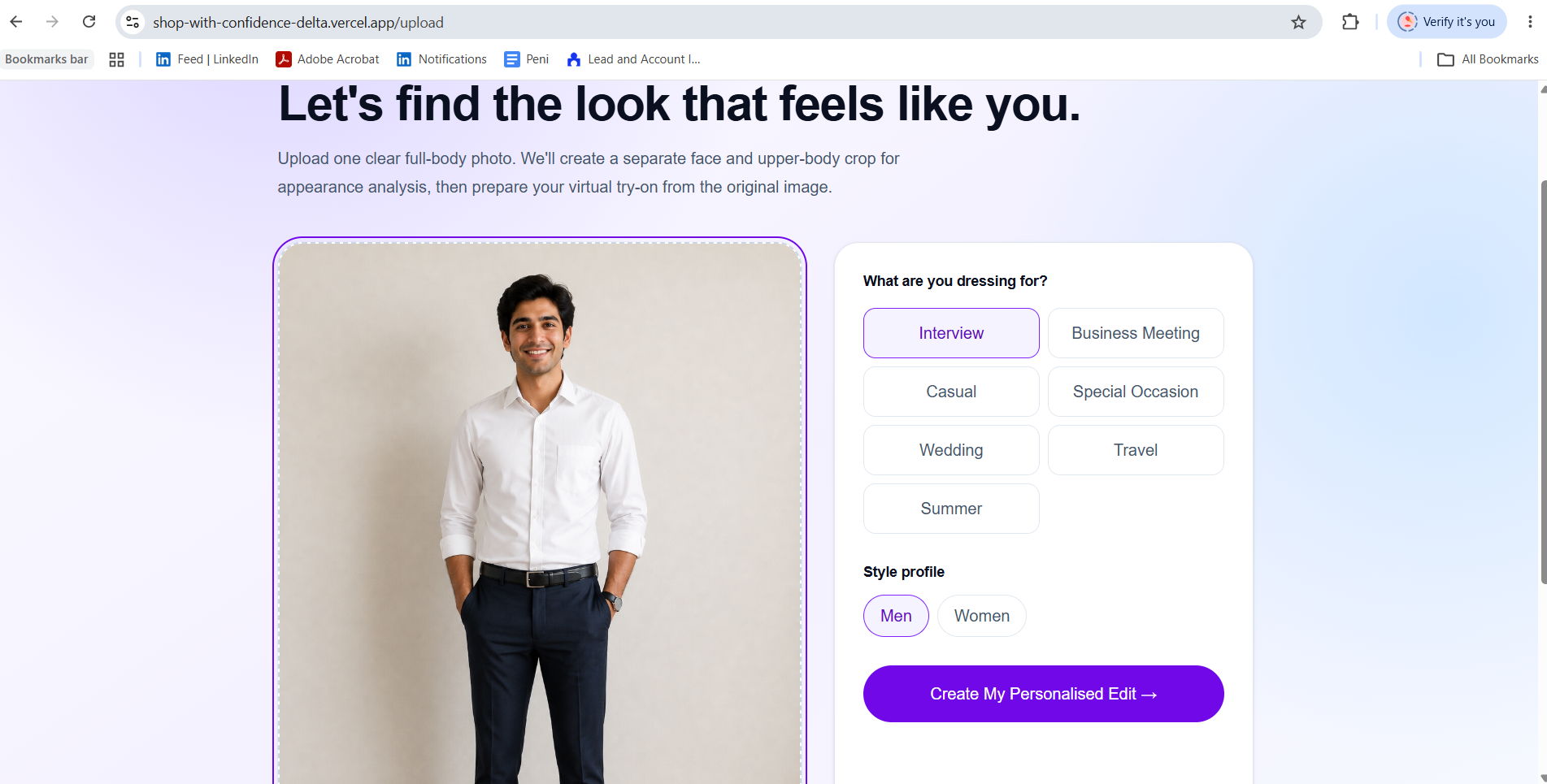
Start with the shopper and the occasion — a full-body photo provides the visual input, while the selected occasion adds the context .
-
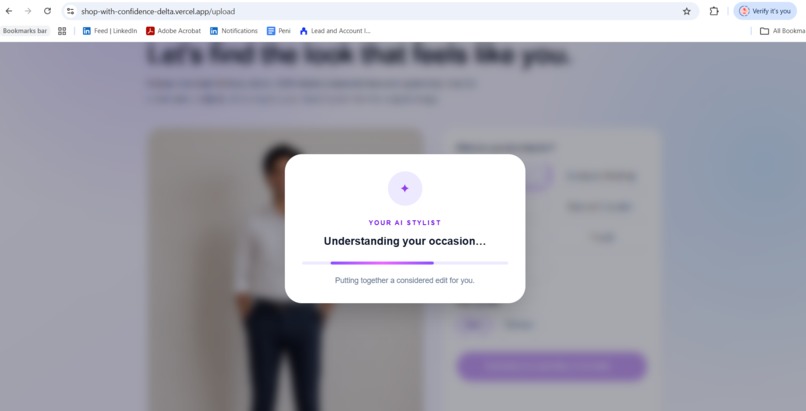
From intent to shortlist — shopper context moves through the recommendation workflow to identify focused choices.
-
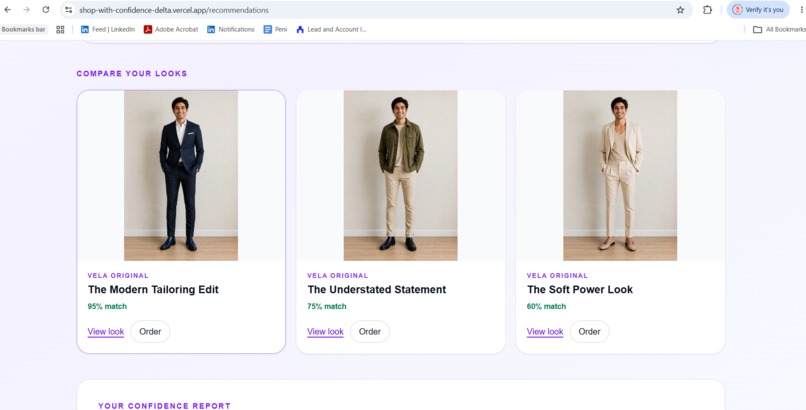
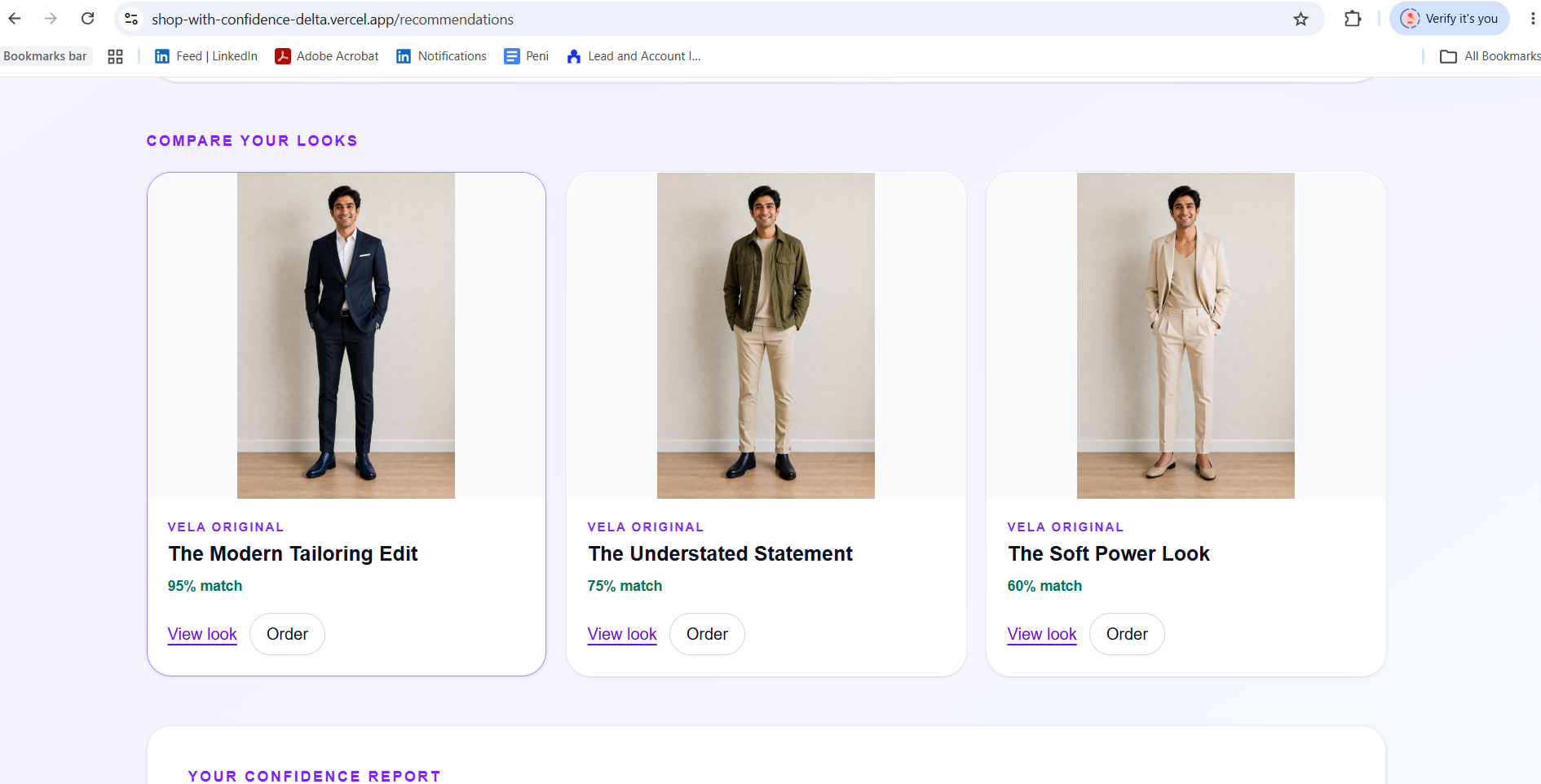
Three focused recommendations instead of another overwhelming product grid — giving the shopper a clearer place to start.
-
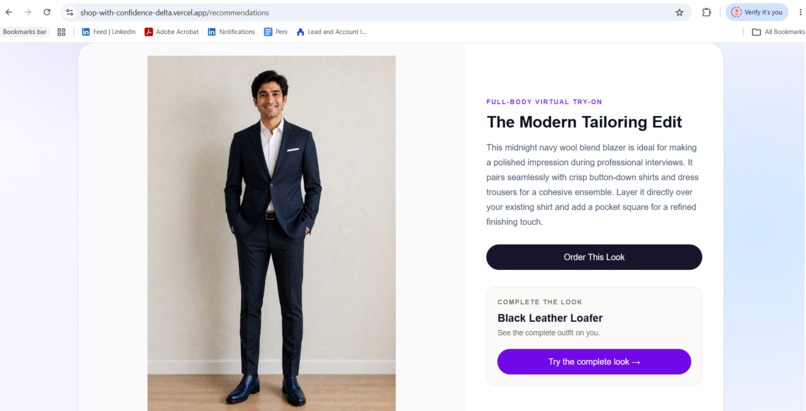
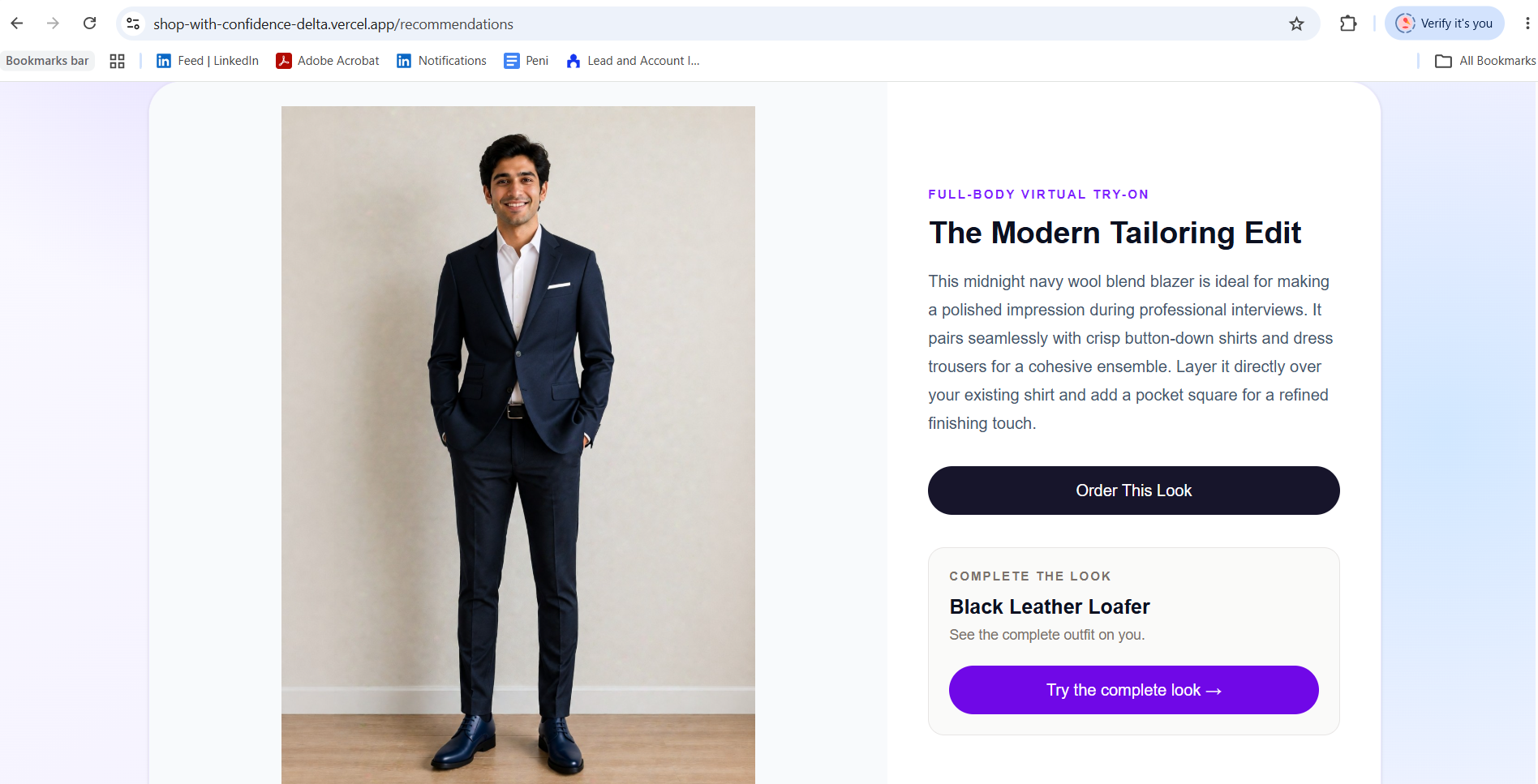
Recommendation reasoning — giving the shopper clear context behind the suggested looks and why they fit the selected occasion.
-
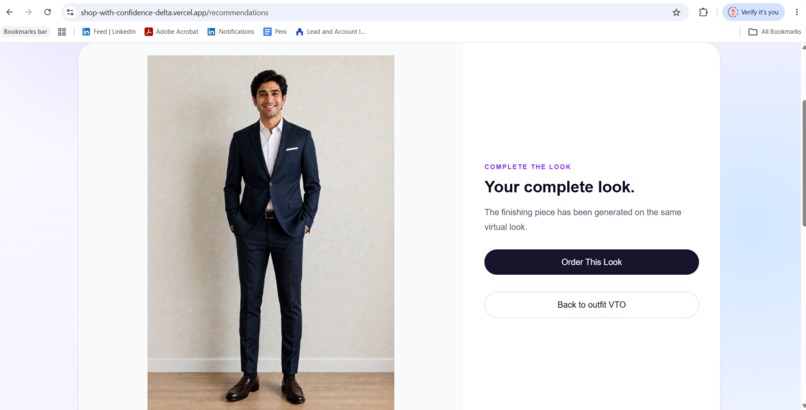
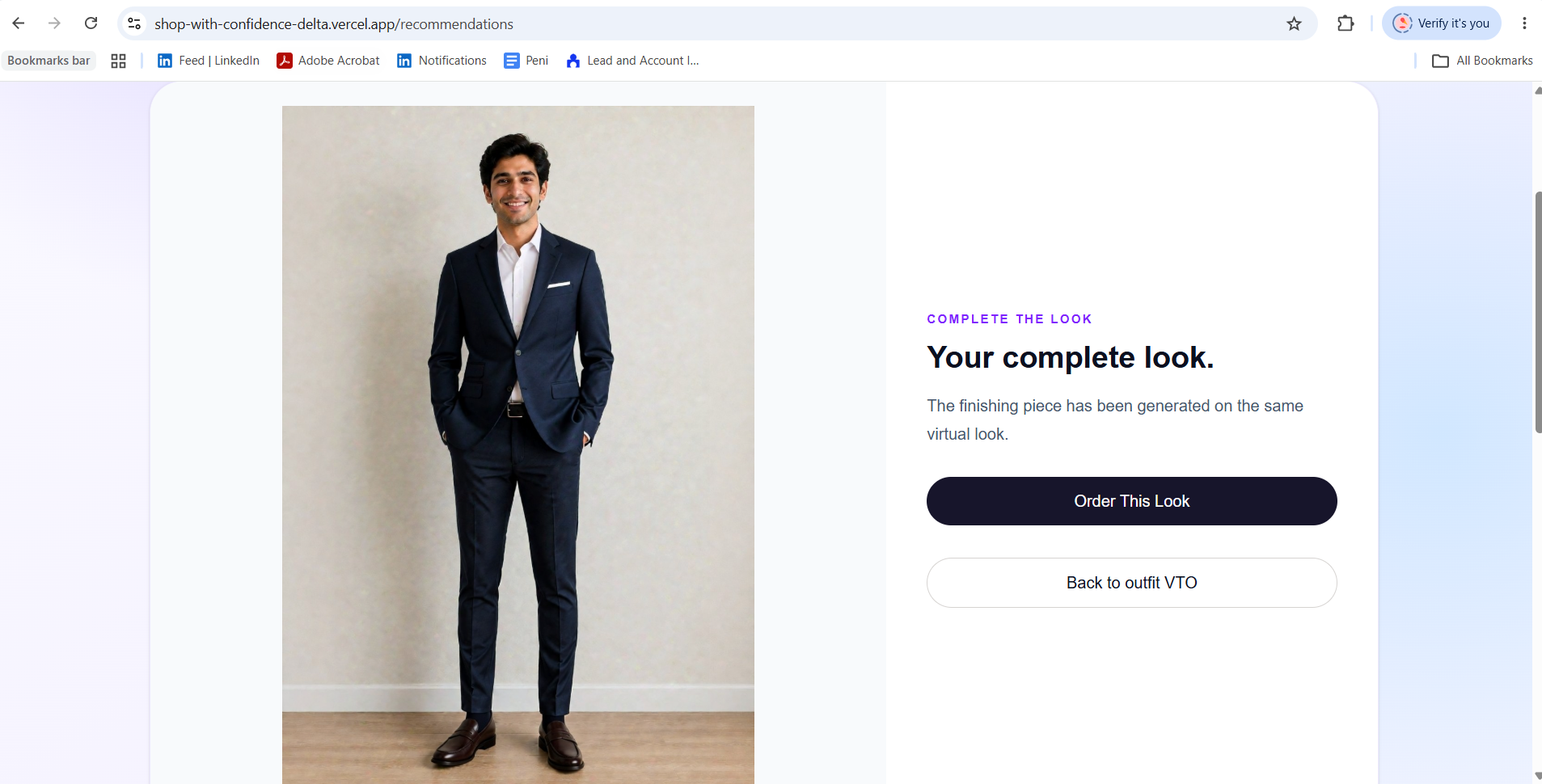
Complete the Look — the chosen outfit becomes context for a relevant complementary product instead of a generic “People also bought” .
Shop with Confidence
From “Will this actually suit me?” to “This is the one.”
Online fashion has solved access to choice.
It has not fully solved confidence in that choice.
Every online shopper knows the moment: you find something you like, your finger reaches for Buy Now — and stops.
Not because there aren't enough options.
Because of one simple question:
“Will this actually suit me?”
That moment inspired Shop with Confidence.
We didn't want to build virtual try-on as another button on a product page.
We built the shopping journey around the moment YouCam Apparel VTO turns uncertainty into visual confidence.
💡 Inspiration
Traditional e-commerce is optimized for discovery.
Search. Filter. Sort. Compare. Repeat.
But giving shoppers more products does not necessarily make the purchase decision easier.
A shopper may browse hundreds of items, compare colors, read reviews and look at professional model photography — yet still struggle to imagine the one thing that matters most:
“What will this look like on me?”
This uncertainty creates friction exactly where retailers want confidence: near the purchase decision.
That gave us our product question:
What if virtual try-on were not an isolated feature, but the confidence layer at the center of a personalized shopping journey?
That became Shop with Confidence.
👗 What We Built
Shop with Confidence is a personalized fashion-shopping experience built around YouCam Apparel Virtual Try-On (VTO).
The journey is intentionally simple:
Understand → Curate → Try On → Decide → Complete the Look
A shopper:
- Uploads a photo.
- Selects the occasion they are shopping for.
- Receives three focused, contextual product recommendations.
- Understands why each recommendation may work for that occasion.
- Chooses a look.
- Experiences that garment through YouCam Apparel VTO.
- Evaluates the visual result on themselves.
- Moves toward purchase with greater confidence.
- Discovers complementary products that can complete the chosen look.
The recommendation layer helps answer:
“What should I consider?”
YouCam Apparel VTO answers the decisive question:
“What does this choice look like on me?”
That second question is the moment our entire experience is designed to reach.
⭐ The Confidence Moment: YouCam Apparel VTO
Recommendations can narrow hundreds of products into a few relevant choices.
AI can reason about an occasion and available catalog options.
But those outputs are still recommendations.
The shopper ultimately wants to see.
That is where YouCam changes the experience.
With YouCam Apparel VTO, the shopper moves beyond viewing a garment on a catalog model and can visualize the selected product on themselves.
It bridges the gap between:
Discovery → Consideration → Visualization → Confidence → Purchase
For Shop with Confidence, VTO is not an enhancement after the shopping decision.
It is part of how the shopper makes the decision.
🛍️ The Customer Journey
1. Start with the shopper, not the catalog
Most e-commerce experiences begin by asking:
“What product do you want to browse?”
We begin with the shopper and their intent.
The shopper provides a photo and an occasion.
Those two inputs begin the personalized journey.
2. Reduce choice overload
Our supporting reasoning layer combines the occasion with the available product catalog to identify relevant choices.
Instead of returning another long grid of products, Shop with Confidence produces three focused recommendations.
The objective is not:
More choice.
It is:
More relevant choice.
3. Explain the recommendation
A recommendation becomes more useful when the shopper understands why it was suggested.
The experience therefore presents contextual reasoning alongside the shortlisted products.
This helps move the shopper from browsing to consideration.
But we deliberately do not treat an AI recommendation as proof that a garment will suit someone.
That is where VTO becomes essential.
4. Turn recommendation into visual confidence
The shopper selects a recommended garment and launches YouCam Apparel VTO.
The shopper image and selected apparel asset enter the YouCam VTO workflow.
YouCam processes the virtual try-on and the result is returned to the shopping experience.
The customer is no longer making the decision using only:
- catalog photography,
- recommendation text,
- imagination.
They can evaluate the selected garment on themselves.
This is the moment where:
“Maybe this will work.”
can become:
“This is the one.”
👟 Complete the Look: Cross-Sell with Context
We also wanted to explore what happens after the shopper gains confidence in the primary product.
Once a shopper chooses a look, the experience now has valuable context:
- the selected garment,
- the occasion,
- the direction the shopper has chosen.
That creates a natural opportunity for complementary products such as footwear or accessories.
Traditional cross-sell often feels like:
“People also bought…”
Our product direction is:
“This completes the look you just chose.”
The distinction is important.
The goal is not simply to display more products.
It is to make the next recommendation relevant because of the decision the shopper has already made.
For the shopper, that can mean easier outfit completion.
For the retailer, it creates a natural opportunity for additional revenue and higher basket value without turning the experience into unrelated advertising.
🤝 One Journey. Value on Both Sides.
Shop with Confidence is designed around value for both the shopper and the retailer.
For shoppers
Greater purchase confidence
VTO provides visual information that traditional catalog browsing cannot.
Less choice overload
Instead of navigating endless products, shoppers receive a focused consideration set.
More relevant discovery
The shopping occasion helps guide which products are considered before VTO.
Better-informed decisions
The shopper combines contextual recommendation with visual try-on before making the final choice.
More meaningful complementary suggestions
Cross-sell is connected to the look the shopper has chosen rather than presented as unrelated promotion.
For retailers
Potential for stronger conversion
The experience addresses uncertainty close to the purchase decision.
Potential for fewer avoidable returns
Better-informed visual decisions may reduce purchases made with expectations that do not match the shopper's intended look.
Opportunity for higher basket value
Once a shopper commits to a look, relevant complementary recommendations create a natural path to additional purchases.
Smarter cross-sell
The selected garment and occasion provide context for recommending footwear and accessories.
A stronger digital customer experience
The retailer evolves from simply providing a searchable catalog to actively helping customers make decisions.
Our retail hypothesis is:
Better visualization + better decisions + relevant cross-sell = more confident shoppers and more valuable transactions.
Because Shop with Confidence is a hackathon prototype, conversion, return-rate and basket-value improvements are product hypotheses to validate, not production results we claim to have measured.
🛠️ How We Built It
Shop with Confidence is a full-stack application with clear separation between:
- customer experience,
- product catalog,
- recommendation orchestration,
- YouCam integration,
- virtual try-on processing,
- confidence experience,
- complementary-product selection.
Frontend
The customer-facing experience is built using:
- Next.js
- React
- TypeScript
- Tailwind CSS
Rather than creating a standalone API test interface, we designed a complete retail journey.
The experience includes:
- Retail landing page
- Shopper photo upload
- Occasion selection
- Analysis/loading states
- Three curated recommendations
- Recommendation rationale
- Product selection
- Virtual try-on initiation
- YouCam processing states
- VTO result presentation
- Confidence-oriented decision experience
- Complementary-product recommendations
The visual design intentionally resembles a modern fashion retailer so we could explore how YouCam VTO feels inside a commerce journey, rather than in isolation.
⚙️ Backend Architecture
The backend is implemented using FastAPI and Python.
The orchestration layer coordinates responsibilities including:
- image upload,
- occasion handling,
- catalog access,
- recommendation generation,
- YouCam API integration,
- virtual try-on requests,
- asynchronous result handling,
- result presentation,
- confidence logic,
- complementary-product selection.
These responsibilities are separated into services rather than placing the complete workflow inside one endpoint.
That gives the prototype an architecture that can evolve toward a larger retail implementation.
✨ YouCam Apparel VTO Integration
YouCam Apparel VTO is the core visual technology behind the experience.
At a high level, our VTO integration follows this lifecycle:
- Capture the shopper image.
- Identify the selected apparel asset.
- Prepare the assets required by the VTO workflow.
- Submit the virtual try-on task to YouCam.
- Handle the asynchronous processing lifecycle.
- Retrieve the completed result.
- Return that result through our backend.
- Present the visualization inside the shopping journey.
Working with the API reinforced an important implementation lesson:
Generative image APIs are workflows, not simple synchronous lookups.
The application needs to account for:
Request → Processing → Result → Presentation
That influenced both our backend service design and our frontend processing experience.
The YouCam client is deliberately separated from catalog and recommendation responsibilities, keeping the VTO integration modular and extensible.
🧠 Where Gemini Fits — and Where It Doesn't
We were deliberate about Gemini's role.
Gemini is a supporting reasoning layer. It is not the virtual try-on engine.
In the current prototype, Gemini uses the shopper's occasion context to reason over the available catalog and help create the focused consideration set.
Its role is to help answer:
“What should this shopper consider trying?”
YouCam Apparel VTO then answers:
“What does the selected choice look like on this shopper?”
Those responsibilities are intentionally different.
Contextual reasoning helps decide what to try.
YouCam Apparel VTO lets the shopper see the choice.
The shopper makes the decision.
🏗️ Architecture
                         SHOPPER
                            |
                  +---------+---------+
                  |                   |
                Photo              Occasion
                  |                   |
                  +---------+---------+
                            |
                            v
                 NEXT.JS RETAIL EXPERIENCE
                            |
                            v
                 FASTAPI ORCHESTRATION
                            |
             +--------------+--------------+
             |                             |
             v                             v
        Product Catalog              Gemini Reasoning
                                    (Supporting Layer)
             |                             |
             +--------------+--------------+
                            |
                            v
                CURATED CONSIDERATION SET
                            |
                   Shopper selects
                        a look
                            |
                            v
                YOUCAM APPAREL VTO
                            |
                  Virtual Try-On
                     Processing
                            |
                            v
                 VISUAL TRY-ON RESULT
                            |
             +--------------+--------------+
             |                             |
             v                             v
      Purchase Confidence          Contextual Cross-Sell
             |                             |
             +--------------+--------------+
                            |
                            v
              MORE INFORMED PURCHASE
Each technology has a clear responsibility while YouCam Apparel VTO owns the decisive visual stage of the customer journey.
🧪 Designing for Live APIs and Reliable Development
External AI services introduce practical realities such as:
- processing latency,
- asynchronous jobs,
- API quotas,
- temporary service failures,
- development cost,
- demo reliability.
We therefore designed separate development/demo and live-integration paths.
This allowed us to:
- build the full customer experience without repeatedly consuming external API calls,
- test individual layers independently,
- isolate integration failures,
- validate the live YouCam VTO workflow separately,
- maintain predictable demonstration behavior.
This separation helped us iterate quickly while keeping the real integration modular.
🧗 Challenges We Faced
1. Building a product, not just an API demo
The simplest implementation would have been:
Upload person → Upload garment → Call VTO → Show result
That demonstrates an API.
But it does not fully answer the customer problem we wanted to solve.
The harder question was:
Why should the shopper use VTO at this particular moment?
That question changed the product.
Instead of placing VTO beside the shopping journey, we designed the journey to naturally lead to VTO as the confidence moment.
2. Asynchronous VTO orchestration
Virtual try-on processing is not instantaneous.
We needed to manage the lifecycle between task submission and result availability while keeping the shopper informed.
That required thinking about:
- processing state,
- result retrieval,
- loading UX,
- failures,
- separation of external API concerns.
3. Creating a believable retail experience
A successful API response can still feel like a developer prototype.
We wanted a judge — and eventually a retailer — to imagine this capability inside an actual commerce experience.
That meant investing in:
- catalog presentation,
- customer journey,
- visual hierarchy,
- occasion capture,
- recommendation cards,
- transitions,
- VTO presentation,
- post-selection experience,
- contextual cross-sell.
4. Balancing AI reasoning with visual proof
AI can produce convincing explanations.
But convincing text should not be confused with visual evidence.
That led to one of our core design principles:
AI can recommend. YouCam lets the shopper see. The shopper decides.
📚 What We Learned
VTO becomes more valuable when connected to intent
Customers do not wake up thinking:
“I want to use virtual try-on.”
They think:
“I need something for an event.”
“Which one should I choose?”
“Will this actually suit me?”
Technology becomes valuable when it disappears behind those real customer questions.
Recommendation and visualization solve different problems
Recommendation reduces the search space.
Visualization reduces uncertainty about the selected choice.
Connecting them creates a stronger journey than treating either as the entire experience.
A confident primary choice creates new commerce context
Once a shopper selects and visually validates a garment, that decision becomes valuable context for complementary products.
VTO can therefore potentially influence not only:
“Should I buy this?”
but also:
“What goes with the choice I just made?”
That creates a path from:
Visual confidence → Contextual commerce
🔬 What Is Built Today vs. What Comes Next
We want to clearly separate the working prototype from our future product vision.
Built today
- End-to-end fashion retail journey
- Shopper photo upload
- Occasion input
- Three contextual product recommendations
- Supporting Gemini reasoning
- YouCam Apparel VTO integration
- Asynchronous VTO workflow
- Virtual try-on result experience
- Confidence-oriented purchase journey
- Complementary-product / cross-sell experience
Future product direction
- YouCam Skin AI as a deeper personalization input
- More grounded recommendation reasoning using structured YouCam results
- Production retailer catalog integration
- Real-time inventory and pricing
- Size availability
- Customer profile and consent integration
- Cart and checkout
- Commerce analytics
- More sophisticated cross-sell
- Broader fashion + beauty personalization
We intentionally make this distinction so the submission is clear about what works today and what we learned could come next.
🔭 YouCam Skin AI: What We Discovered
Building the complete fashion journey also revealed an interesting opportunity within the wider YouCam ecosystem.
For Apparel VTO, a full-body shopper image is a natural input: the shopper wants to visualize clothing on themselves.
Skin-focused analysis can naturally benefit from a more face-focused input.
In a real retail journey, however, asking the shopper to repeatedly provide different images or move through separate capture experiences can introduce friction.
That led us to a product question:
Could the YouCam ecosystem make it easier for developers to reuse a shopper's existing VTO capture across compatible Skin AI capabilities when image quality permits, requesting a face-focused capture only when necessary?
We see this not simply as an API limitation, but as an opportunity to make YouCam capabilities increasingly composable for retail experiences.
The customer should ideally experience one continuous journey, even when multiple specialized technologies are working underneath it.
🚀 Future Vision: YouCam at Both Ends of Personalization
Today our journey is:
Photo + Occasion → Contextual Recommendation → YouCam Apparel VTO → Confidence
A future evolution could become:
                    SHOPPER
                       |
              +--------+--------+
              |                 |
            Photo            Occasion
              |                 |
              v                 |
        YOUCAM SKIN AI          |
              |                 |
       Structured Insights      |
              |                 |
              +--------+--------+
                       |
                       v
              CONTEXTUAL REASONING
                   (Gemini)
                       |
                       v
             PERSONALIZED SELECTION
                       |
                       v
              YOUCAM APPAREL VTO
                       |
                       v
               VISUAL VALIDATION
                       |
              +--------+--------+
              |                 |
              v                 v
       CONFIDENT PURCHASE   RELEVANT CROSS-SELL
In this future architecture, Gemini would not independently attempt to replace specialized YouCam analysis.
Instead, its role would be to reason over:
- structured YouCam insights,
- the shopper's occasion,
- retailer catalog context.
Then YouCam Apparel VTO would visualize the resulting choice.
That creates a clean division of responsibilities:
YouCam understands the visual signal. Contextual AI connects it to shopping intent. YouCam visualizes the choice. The shopper decides.
This was one of the most exciting ideas that emerged while building the project.
Rather than thinking about Skin AI and Apparel VTO as isolated capabilities, we see an opportunity for them to become complementary stages in one continuous retail-personalization journey.
For developers, easier composition and appropriate reuse of shopper imagery and structured outputs could reduce integration complexity.
For shoppers, it could reduce friction.
For retailers, it could unlock deeper personalization across fashion, beauty and complementary-product discovery.
🌟 What Makes Shop with Confidence Different?
A traditional VTO interaction answers:
“How will this garment look on me?”
We wanted to explore the larger question:
“How can virtual try-on help me make a better shopping decision?”
Shop with Confidence connects:
Intent → Relevance → Selection → Visualization → Confidence → Commerce
And VTO is not hidden somewhere inside that sequence.
It is the moment the sequence is designed to reach.
🏬 From Hackathon Prototype to Retail Product
A production implementation could connect Shop with Confidence to a retailer's:
- Product catalog
- Inventory
- Pricing
- Size availability
- Customer profile and consent framework
- Cart and checkout
- Order history
- Return signals
- Analytics
That would allow the product hypotheses demonstrated by this prototype to be measured with real commerce data.
We would want to understand:
Conversion
Do shoppers who virtually try selected products purchase more frequently?
Returns
Do VTO-assisted purchases produce fewer avoidable expectation-related returns?
Cross-Sell Attachment
Does “complete the look” increase complementary-product purchases?
Average Order Value
Does contextual cross-sell increase basket value?
Engagement
Do shoppers engage more deeply when visualization becomes part of product consideration?
Those measurements would turn our hackathon hypothesis into a measurable retail business case.
❤️ The Vision
E-commerce gave shoppers almost unlimited choice.
The next evolution should give them confidence in the choice they make.
For the shopper:
Less guessing. More seeing. More confidence.
For the retailer:
Better decisions. More relevant cross-sell. More valuable customer journeys.
And connecting those two outcomes is the technology that turns recommendation into something personal and visual:
YouCam Apparel Virtual Try-On
A recommendation can tell me what might work.
YouCam lets me see it on myself.
And when the question is:
“Will this actually suit me?”
we want the answer to feel simple:
“This is the one.”
Shop with Confidence — because the best purchase isn't the one with the most choices. It's the one you feel confident choosing.
Built With
- fastapi
- gemini
- next.js
- python
- react
- tailwindcss
- typescript
- vercel
- vto
- youcam

Log in or sign up for Devpost to join the conversation.