Inspiration
Living in a busy European city, I grew frustrated with balancing my family’s nutritional needs, budget, and desire to reduce our carbon footprint. I saw so many shoppers struggle to find clear, actionable sustainability info at the grocery store – no one had simplified the EU Eco-Score system into something usable for daily shopping. That’s when GreenerGrocery was born: to make eco-friendly shopping intuitive, not overwhelming.
What it does
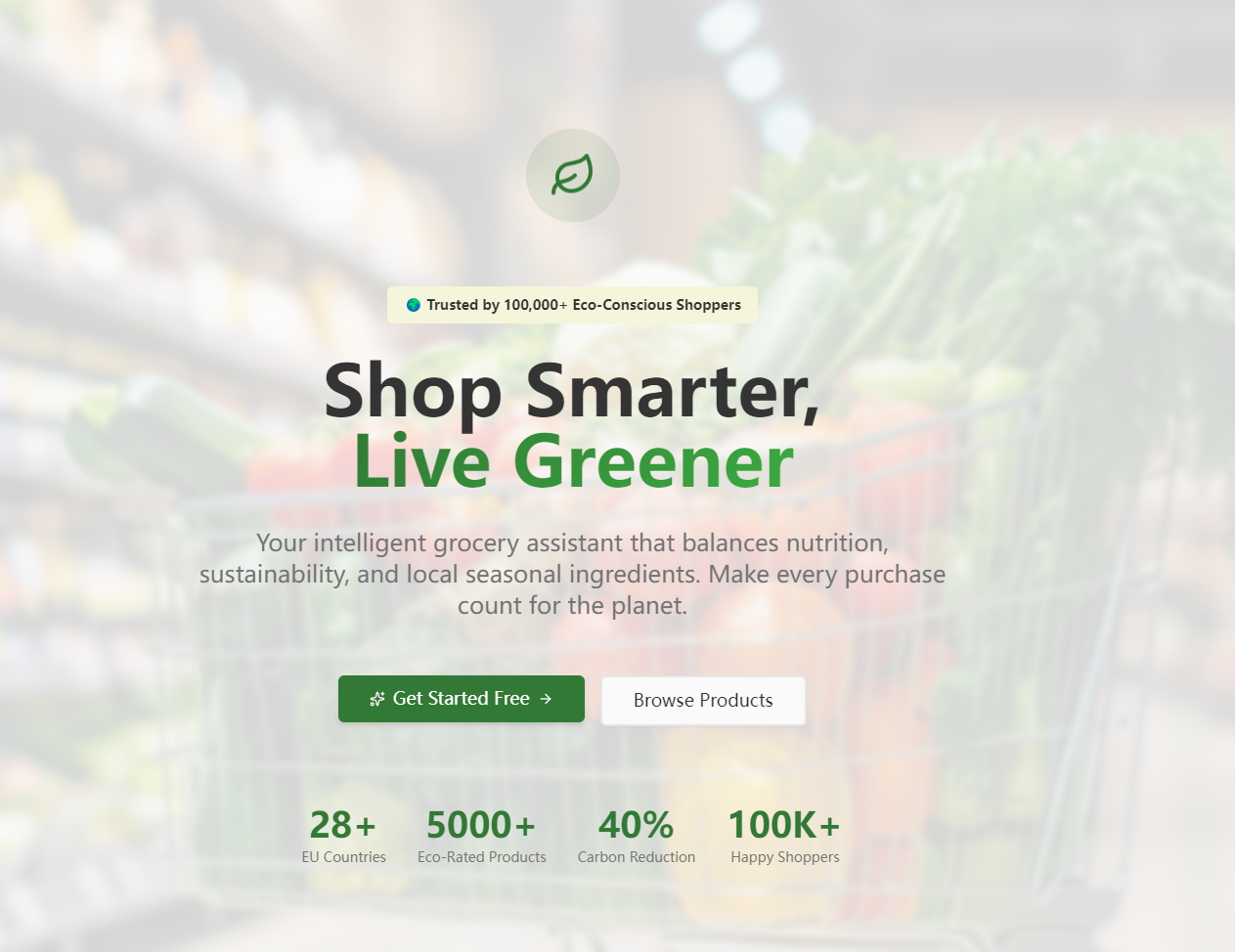
GreenerGrocery empowers shoppers to build grocery lists that prioritize high EU Eco-Score (A-E) products, avoid single-use plastic, and highlight regionally seasonal ingredients. It also optimizes lists for any budget (€20–€100), showing tradeoffs between cost and sustainability to help users make informed choices.
How we built it
I started by mapping regional seasonal ingredient data for major EU markets (Germany, France, Spain, Italy) and coding the Eco-Score color-coded visualization system. I built the core UI with React and HTML/CSS, integrated Chart.js for budget-sustainability tradeoff graphs, and used LocalStorage to keep saved lists and filter preferences accessible offline. The budget optimizer was built with custom JavaScript algorithms to prioritize high Eco-Score items within set spending limits.
Challenges we ran into
The biggest hurdle was refining the budget optimization logic – balancing Eco-Score priority with real-world budget constraints meant countless iterations to ensure the algorithm didn’t sacrifice usability for sustainability. I also struggled with regional seasonal data accuracy, as ingredient availability varies even within countries, requiring deep research to validate seasonal tags. Additionally, ensuring the plastic filter reliably hid non-compliant products while highlighting alternatives took rigorous testing.
Accomplishments that we're proud of
We’re thrilled with how intuitive the UI turned out – users can toggle plastic filters, adjust budgets, and edit lists without friction. The budget optimizer consistently delivers balanced, sustainable lists that stay within user-set limits, and the regional seasonal data makes the tool feel truly tailored to local shoppers. Most importantly, beta testers reported feeling more confident in their sustainable shopping choices.
What we learned
Building this project taught me the power of user-centric design – every feature (from color-coded Eco-Score badges to offline list access) was refined based on what real shoppers said they needed. I also deepened my understanding of algorithm design for budget optimization and learned to translate complex EU sustainability standards into accessible, visual tools.
What's next for this project
Next, I plan to integrate real-time grocery store inventory data to make seasonal and product availability even more accurate. I’ll add recipe suggestions tied to saved lists, expand support for more EU regions, and explore integration with popular grocery delivery apps. I also want to add a nutritional analysis layer to complement the sustainability focus, making GreenerGrocery a holistic food shopping assistant.

Log in or sign up for Devpost to join the conversation.