ShopLink Hackathon Submission
Inspiration
The inspiration for ShopLink came from observing Nigeria's massive informal economy. Millions of small business owners across Nigeria are successfully selling products and services through WhatsApp, TikTok, and Facebook - they're making real money, but they're completely invisible to potential customers who don't already know them.
I watched talented makeup artists, fashion designers, food vendors, and service providers struggle with the same problem: they couldn't get discovered beyond their immediate social circles. Existing e-commerce platforms like Jumia and Konga felt too corporate and complex for these WhatsApp-native sellers who just wanted to reach more customers without changing how they operate.
The "aha moment" was realizing we shouldn't try to replace WhatsApp selling - we should amplify it. Instead of forcing sellers into complex e-commerce workflows, we should give them professional online presence while preserving their preferred selling method.
What it does
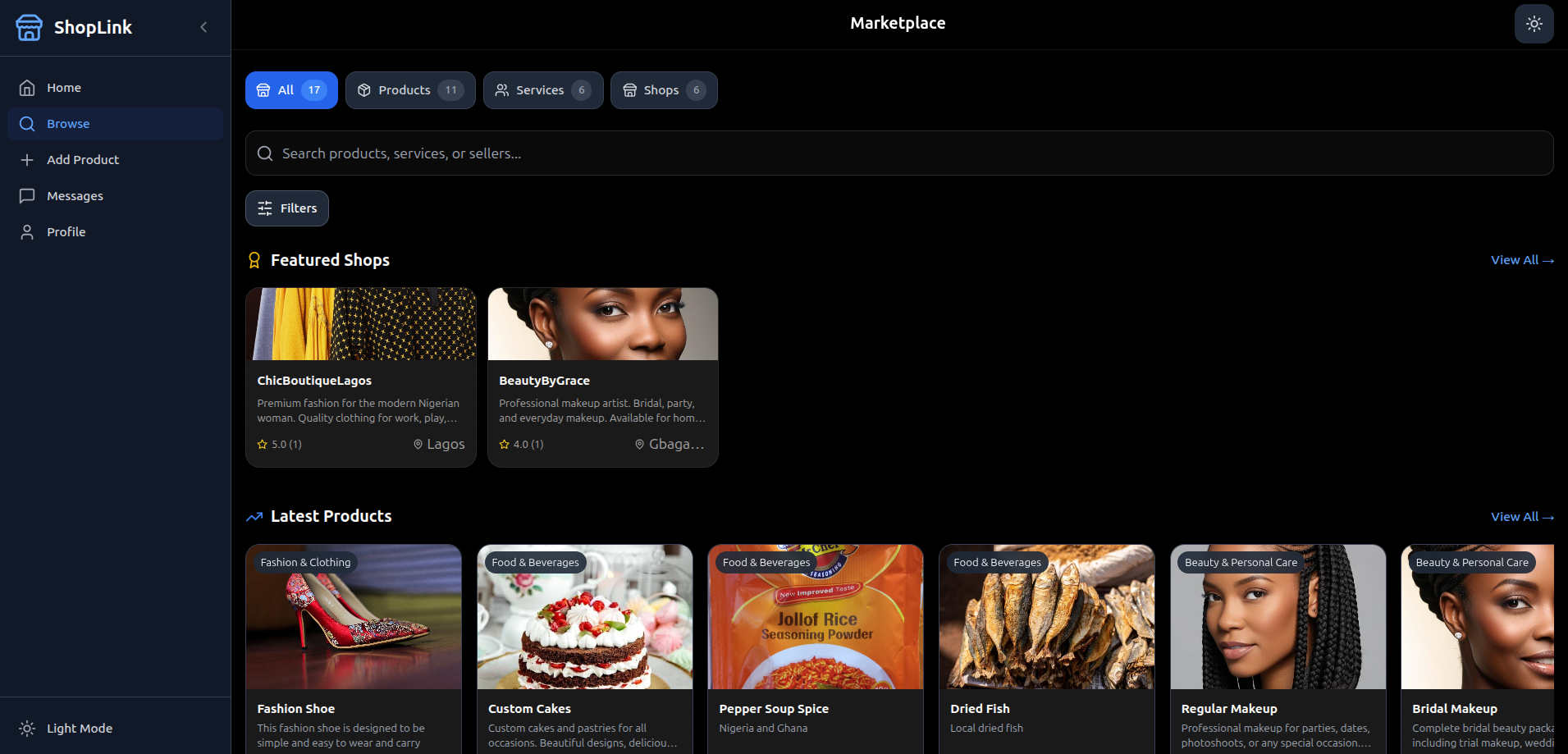
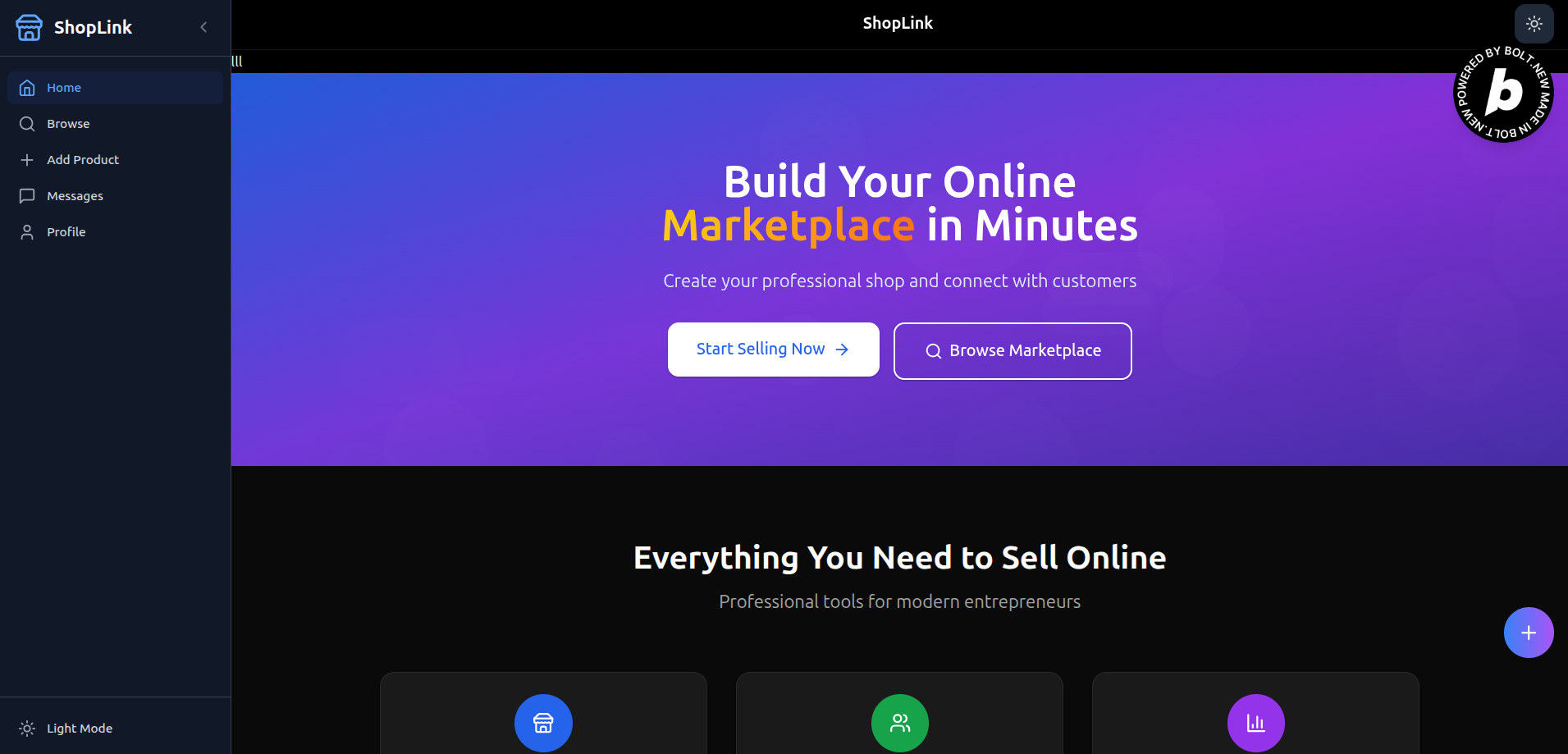
ShopLink is the professional front door for WhatsApp businesses. It bridges the gap between customer discovery and the existing WhatsApp selling workflow that Nigerian entrepreneurs already love and trust.
For Customers:
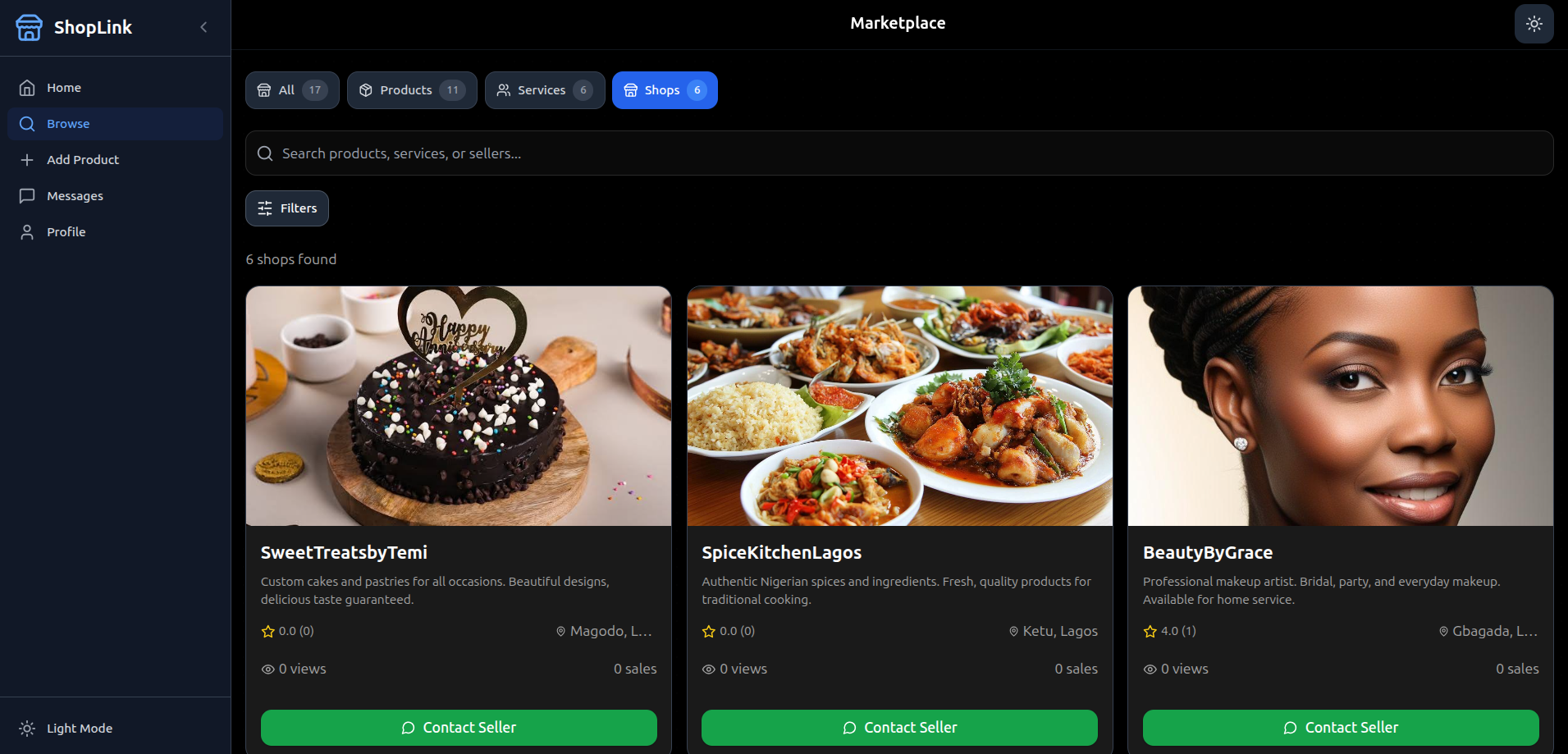
- Discover local products and services by location and category
- Browse professional shop pages with detailed product information
- Connect directly with sellers via WhatsApp with pre-filled inquiry messages
- Find trusted businesses through reviews and professional profiles
For Sellers:
- Create beautiful, mobile-optimized shop pages in minutes
- Get a custom URL (shoplink.com/shop/yourbusiness) to share everywhere
- Receive qualified inquiries directly on WhatsApp
- Manage products, services, and business information through a simple dashboard
- Generate digital business cards with QR codes for offline marketing
- Track customer inquiries and shop performance
The platform serves as a marketplace for discovery while keeping all sales conversations and transactions in the familiar WhatsApp environment.
How we built it
Frontend: Built with React.js for a responsive, mobile-first user interface optimized for Nigerian smartphone users and internet speeds.
Backend: Leveraged Supabase for real-time database management, user authentication, and file storage. Supabase's PostgreSQL database handles complex queries for location-based search and product categorization.
Key Technical Features:
- Location Services: Integrated geolocation API for local business discovery
- WhatsApp Integration: Deep-linking to WhatsApp with pre-filled messages containing product details
- Image Optimization: Compressed image uploads for faster loading on slower connections
- Progressive Web App: App-like experience without requiring app store downloads
- QR Code Generation: Dynamic QR codes for business cards and shop sharing
- Search & Filtering: Real-time search across products, services, and business names
Architecture Decisions:
- Mobile-first responsive design (90% of target users are on mobile)
- Offline-capable PWA for unreliable internet connections
- Optimized for Nigerian data plans and connection speeds
- Simple, intuitive UI following familiar social media patterns
Challenges we ran into
User Adoption Resistance: The biggest challenge was getting initial sellers to test the platform. Many Nigerian entrepreneurs are skeptical of new digital tools unless they see immediate financial benefits. We learned that demonstrating success stories is more effective than explaining features.
Technical Challenges:
- Mobile Optimization: Ensuring the platform works seamlessly across different Android devices and browsers popular in Nigeria
- WhatsApp Integration: Creating smooth deep-linking that works across different WhatsApp versions and mobile browsers
- Image Handling: Balancing image quality with loading speed for users on slower internet connections
- Location Accuracy: Handling location services for users who might not have precise GPS or prefer to keep location private
Market Research: Understanding the informal economy's needs required extensive conversations with actual WhatsApp sellers to avoid building features they wouldn't use.
Content Management: Designing a product management system simple enough for non-technical users while powerful enough to showcase their businesses professionally.
Accomplishments that we're proud of
Solving a Real Problem: We identified and addressed a genuine gap in Nigeria's digital economy - the 40+ million small businesses operating informally through messaging apps.
User-Centric Design: Built a platform that doesn't force behavior change but amplifies existing successful workflows. Sellers keep using WhatsApp; we just make them discoverable.
Technical Achievement: Created a fully functional marketplace with location-based discovery, WhatsApp integration, and business management tools in a short timeframe.
Mobile-First Excellence: Designed specifically for Nigerian mobile users, with optimizations for data usage, loading speed, and touch interfaces.
Practical Innovation: Instead of building another complex e-commerce platform, we created infrastructure that serves the underserved informal economy.
Local Relevance: Built with deep understanding of Nigerian business culture, pricing expectations, and communication preferences.
What we learned
Market Insight: Nigeria's informal economy needs digital infrastructure that works with their existing behaviors, not against them. The most successful digital solutions for developing markets are often bridges, not replacements.
Technical Lessons:
- Mobile-first isn't just about responsive design - it's about rethinking the entire user experience for smartphone-native users
- Performance optimization is crucial when targeting users with limited data plans
- Simple, familiar interfaces outperform feature-rich but complex ones in this market
User Research: Talking to actual WhatsApp sellers taught us that professional appearance and customer discovery were bigger pain points than payment processing or inventory management.
Product Strategy: Starting with a focused solution (discovery + professional presence) is more effective than trying to solve every business problem at once.
Cultural Understanding: Success in Nigerian tech requires deep appreciation for existing social and economic behaviors, not just importing Silicon Valley solutions.
What's next for ShopLink
Immediate Next Steps (3-6 months):
- User Acquisition: Launch with hyper-local focus in specific Lagos neighborhoods to build density
- Seller Onboarding: Develop partnerships with existing business communities and markets
- Feature Refinement: Iterate based on real user feedback and usage patterns
- Mobile App: Convert to native mobile app for better performance and push notifications
Medium-term Vision (6-12 months):
- Geographic Expansion: Scale to other major Nigerian cities (Abuja, Port Harcourt, Kano)
- Category Expansion: Add specialized features for different business types (restaurants, services, retail)
- Premium Features: Introduce paid tiers with advanced analytics, promoted listings, and business verification
- Integration Ecosystem: Connect with Nigerian payment providers and logistics services
Long-term Goals (1-3 years):
- Regional Expansion: Extend to other West African countries with similar informal economies
- Economic Impact: Become the digital backbone for Nigeria's informal economy
- Financial Services: Partner with fintech companies to offer business banking and credit services
- Data Insights: Provide market intelligence to help informal businesses make better decisions
Vision: Transform ShopLink from a discovery platform into comprehensive digital infrastructure that helps Nigeria's informal economy scale while preserving the personal relationships that make it special.
The goal isn't just to build a successful product, but to create meaningful economic opportunity for millions of entrepreneurs across Nigeria and beyond.
Built With
- bolt.new
- react
- supabase
- tailwind
- typescript

Log in or sign up for Devpost to join the conversation.