-
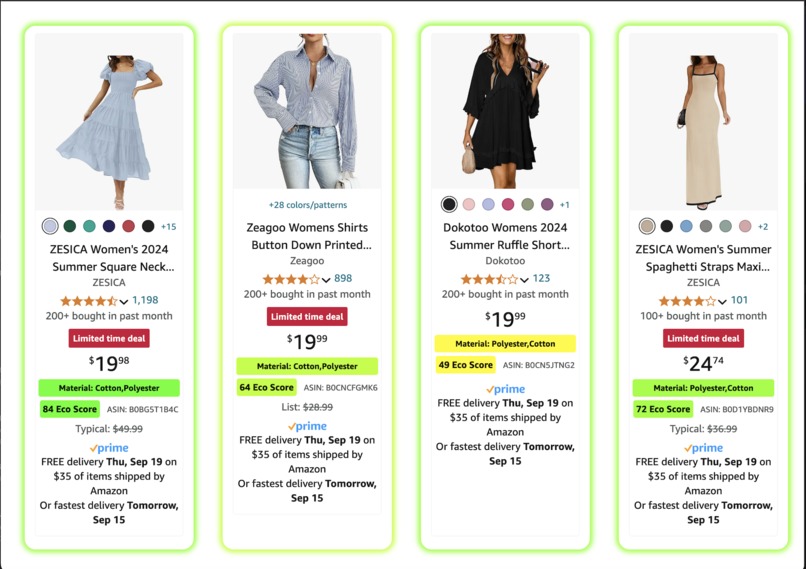
A sample of what the extension looks like on amazon
Inspiration
We were inspired by the growing need for sustainable shopping options and the lack of transparency around the environmental impact of everyday products. We wanted to create a tool that helps consumers make eco-friendly choices easily.
What it does
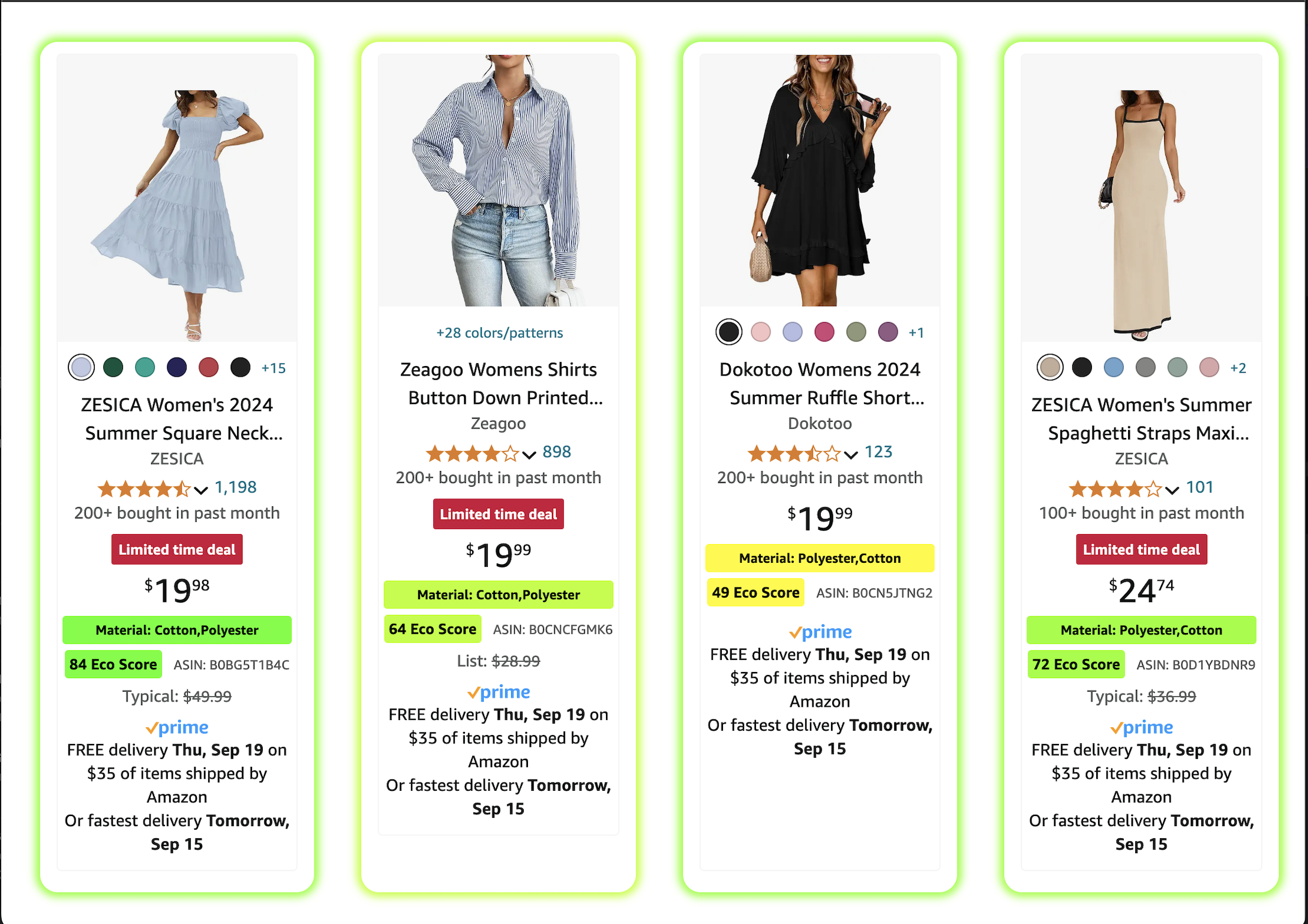
shop.eco analyzes product data and assigns a sustainability score, allowing users to quickly assess how environmentally friendly a product is before making a purchase.
How we built it
We used machine learning models to analyze product descriptions, materials, and manufacturing practices, then quantified the results into an easy-to-read sustainability score. The platform was built using a combination of Python, Javascript, APIs, and web development tools.
Challenges we ran into
One major challenge was ensuring our dataset was comprehensive enough to evaluate a wide range of products, especially those using unfamiliar materials. We also faced difficulties in balancing accuracy with user experience in presenting the sustainability scores. Another challenge we faced was loading multiple product pages at the same time as we would hit rate limits on some API calls.
Accomplishments that we're proud of
We're proud of creating an intuitive tool that makes sustainability easy to understand. Our machine learning model successfully quantifies sustainability, making eco-conscious shopping accessible for everyone. It was also nice to learn how to build a web extension and how to connect an AI model to it to output data for the user to see.
What we learned
We learned the importance of both data diversity and user experience in creating an impactful tool. Additionally, we gained deeper insight into the complexities of environmental impact metrics. We also learned how to build a web extension and learned about API routing in order to connect the AI model and the web extension to work together.
What's next for shop.eco
We plan to extend our tool beyond specific categories, improving the model’s ability to analyze new materials. We also aim to integrate directly into platforms other than Amazon, making sustainable shopping seamless for more users. We also want to be able to provide an explanation later on of why it's getting the eco-score it's getting.

Log in or sign up for Devpost to join the conversation.