Inspiration
Asteroids, meteors, and near-Earth objects are often discussed in scientific reports and headlines, but for most students they remain abstract and difficult to understand. While reading about asteroid flybys and planetary defense missions, we noticed how inaccessible space science can feel due to complex equations, professional tools, and static explanations.
We wanted to create something that transforms space from a distant concept into an interactive experience. ShootingStars was inspired by the idea that learning about the cosmos should feel exploratory and engaging, not intimidating. Our goal was to help users visualize orbital motion, experiment with asteroid impacts, and build curiosity about what exists beyond Earth’s orbit.
What it does
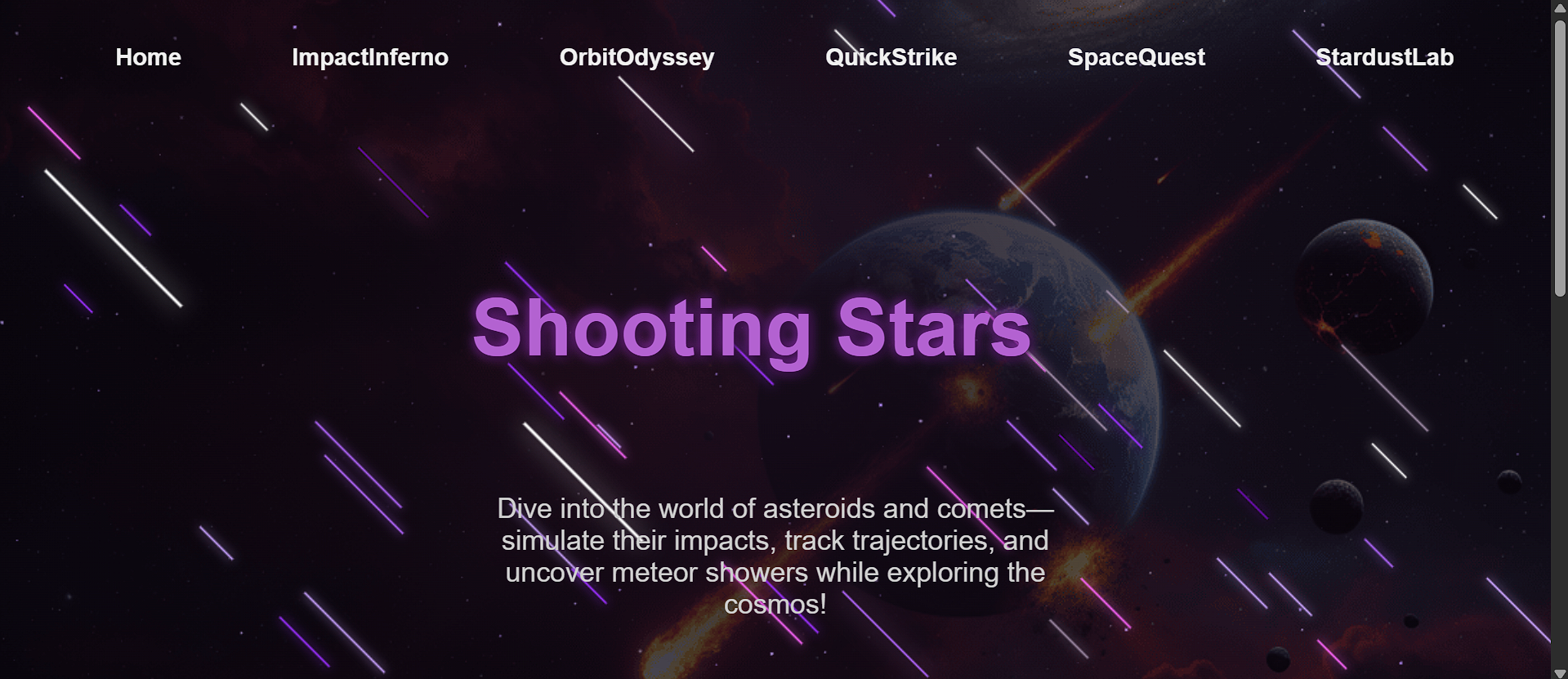
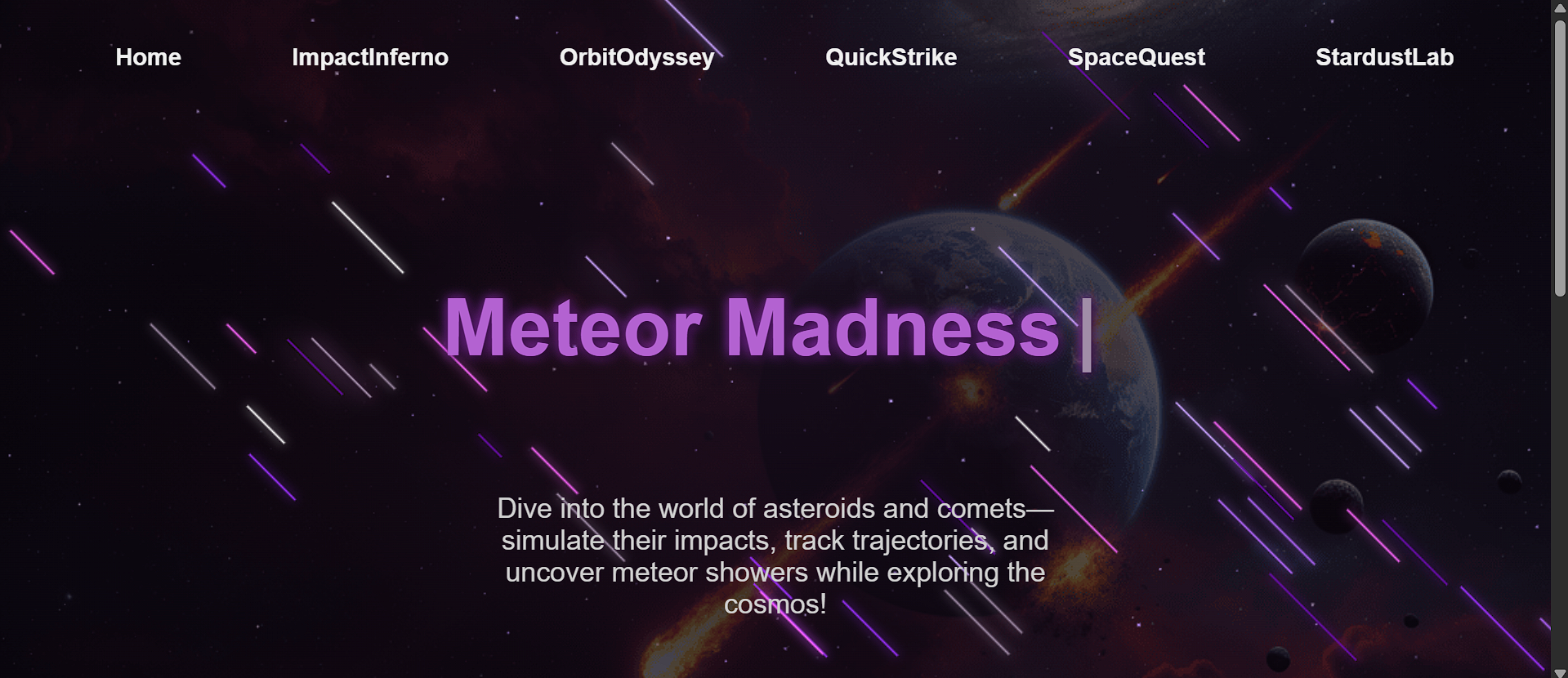
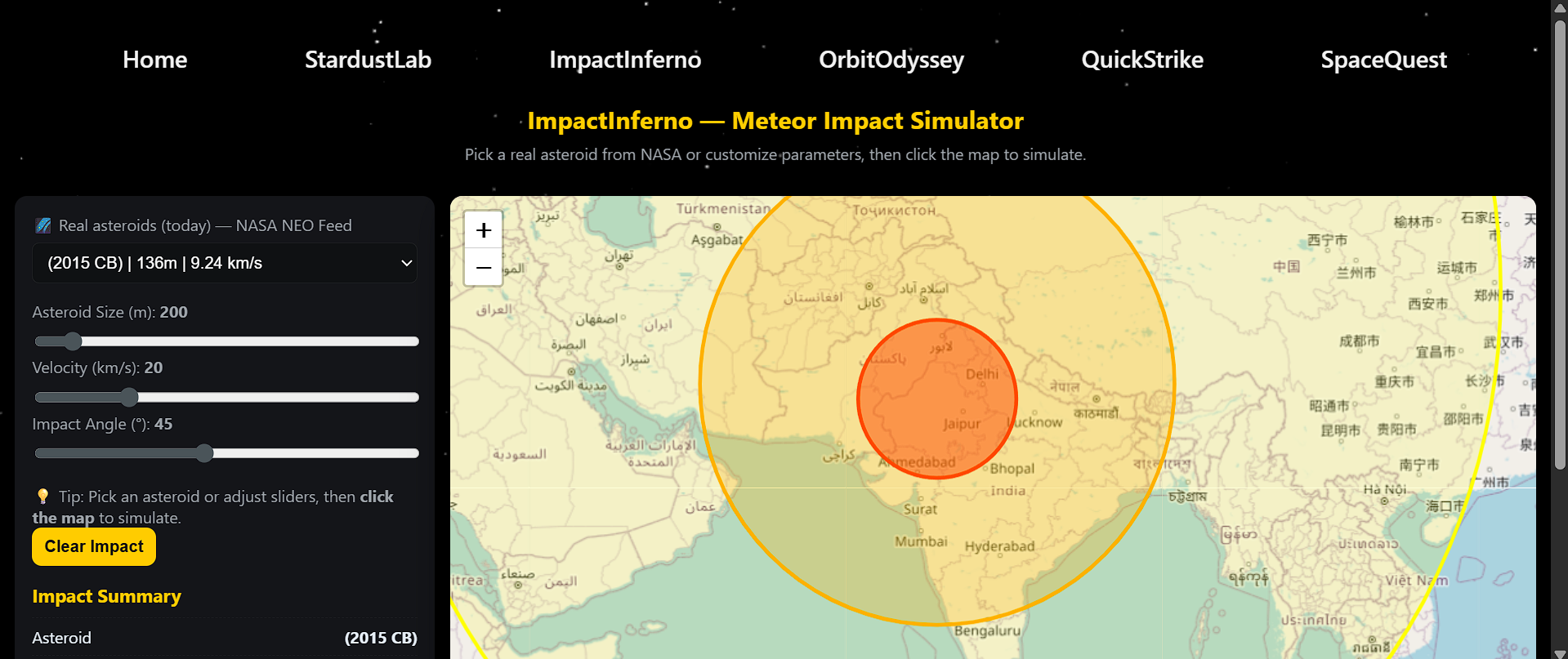
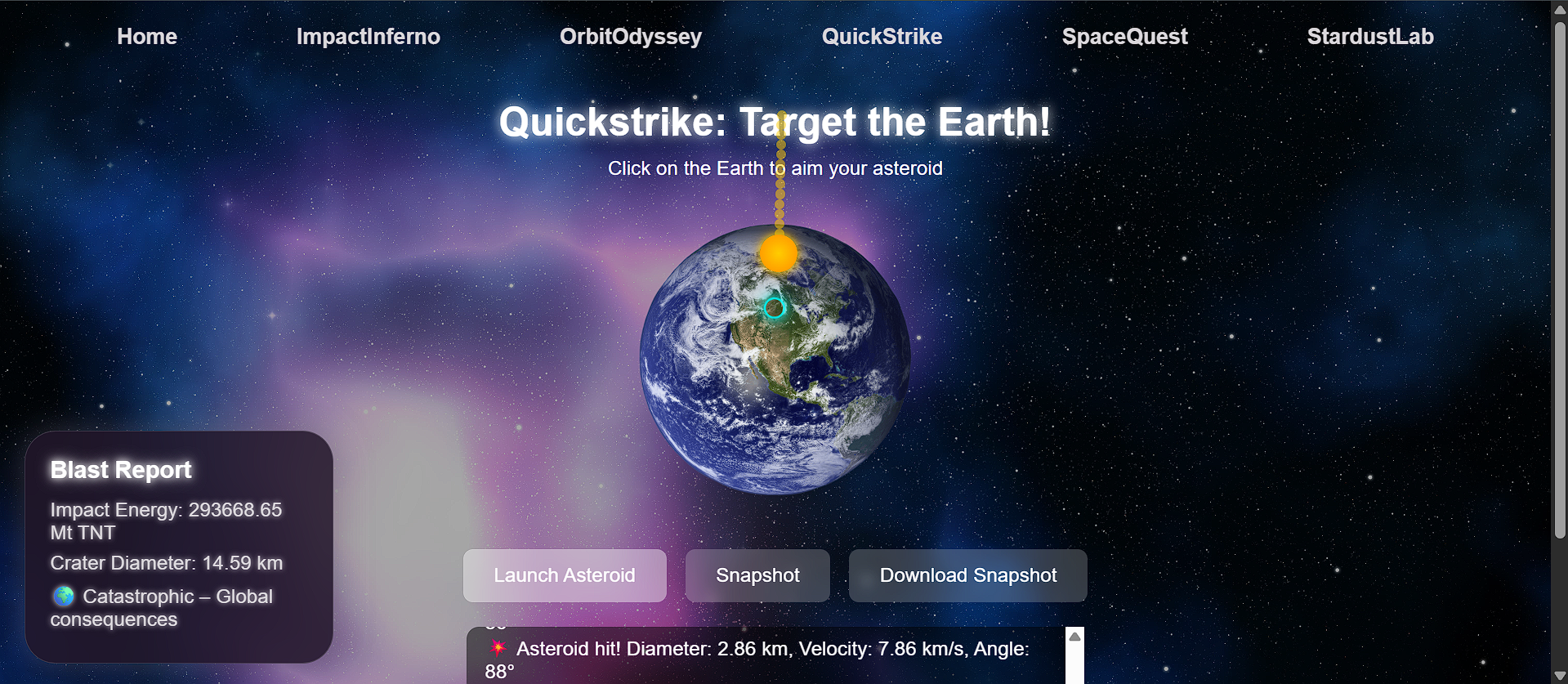
ShootingStars – Asteroid Impact Simulator & Space Explorer is an interactive web platform that allows users to explore asteroids, meteors, and orbital mechanics through hands-on simulations and educational modules.
Users can:
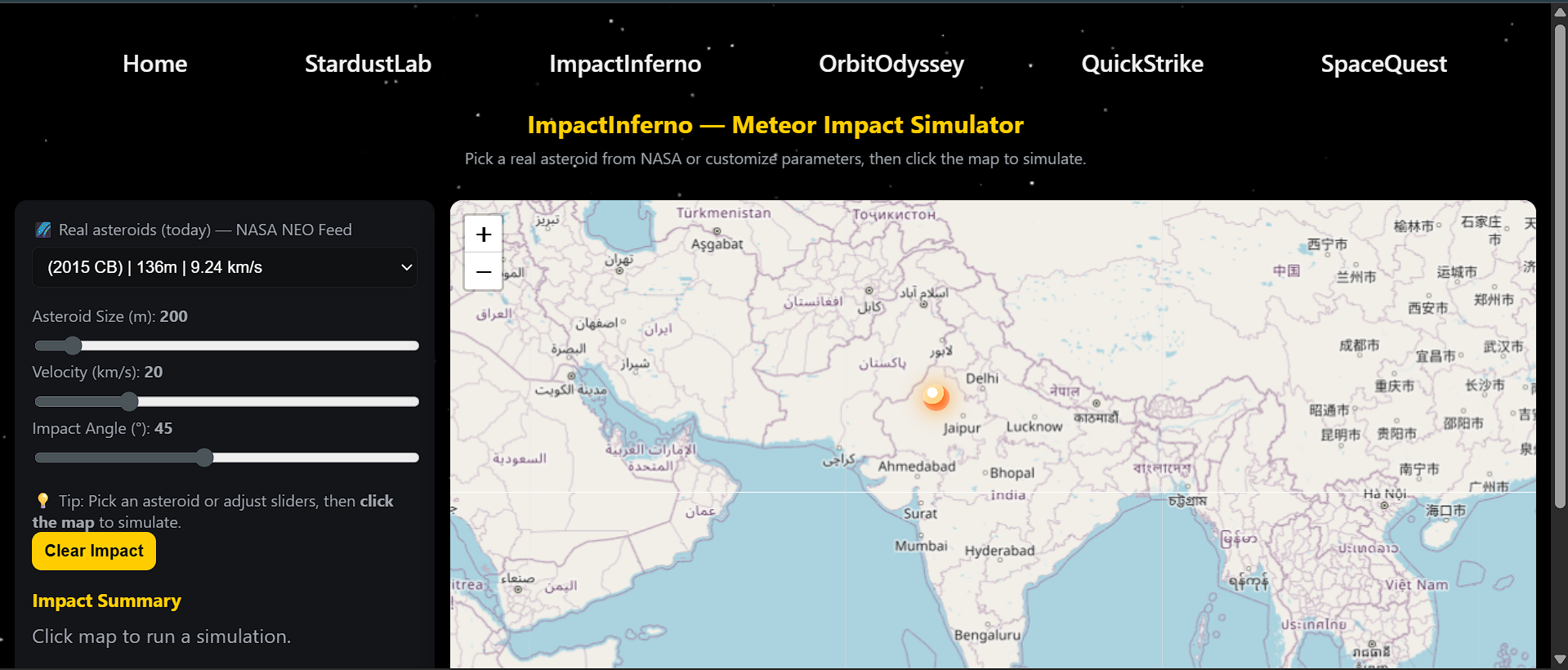
- Simulate asteroid impacts by adjusting parameters such as size, velocity, and angle
- Track near-Earth objects using real data from NASA’s Near-Earth Object (NEO) API
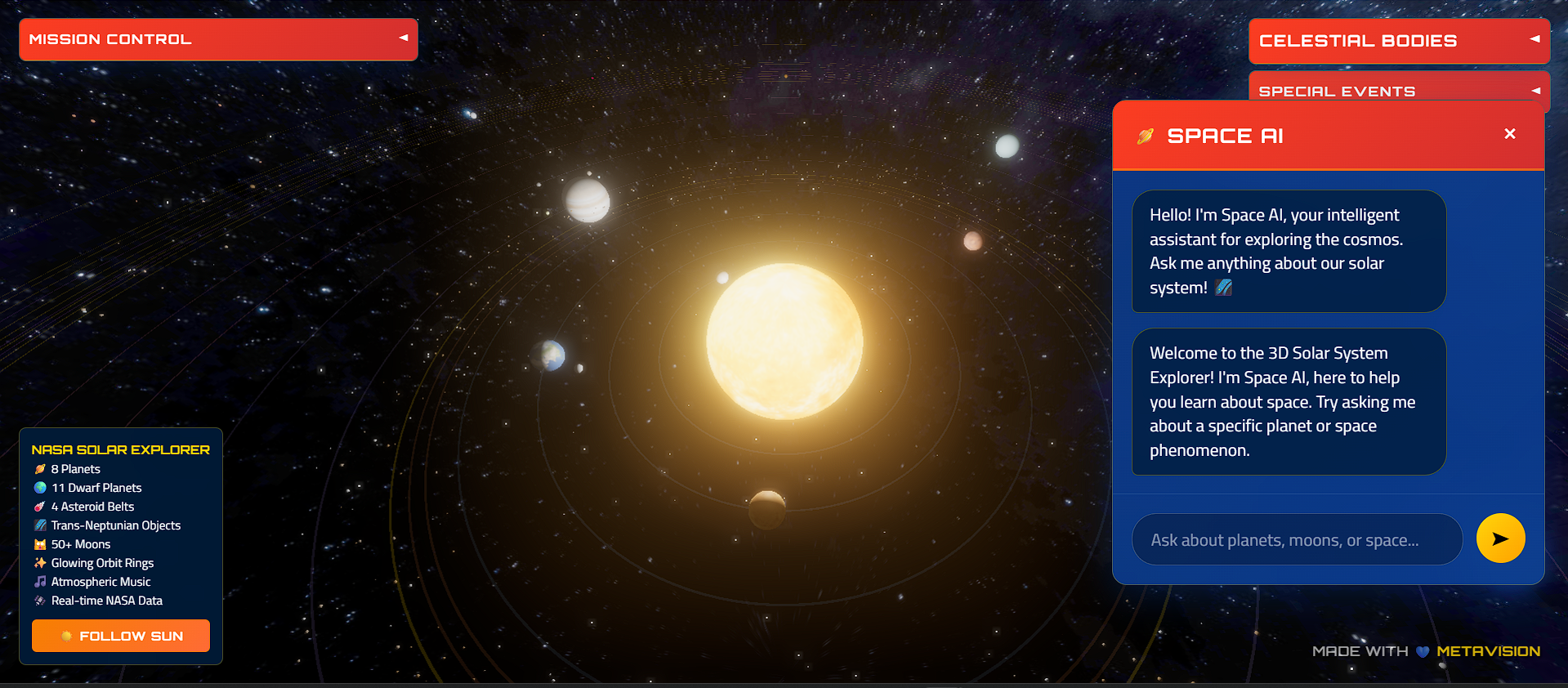
- Explore orbital paths and cosmic trajectories
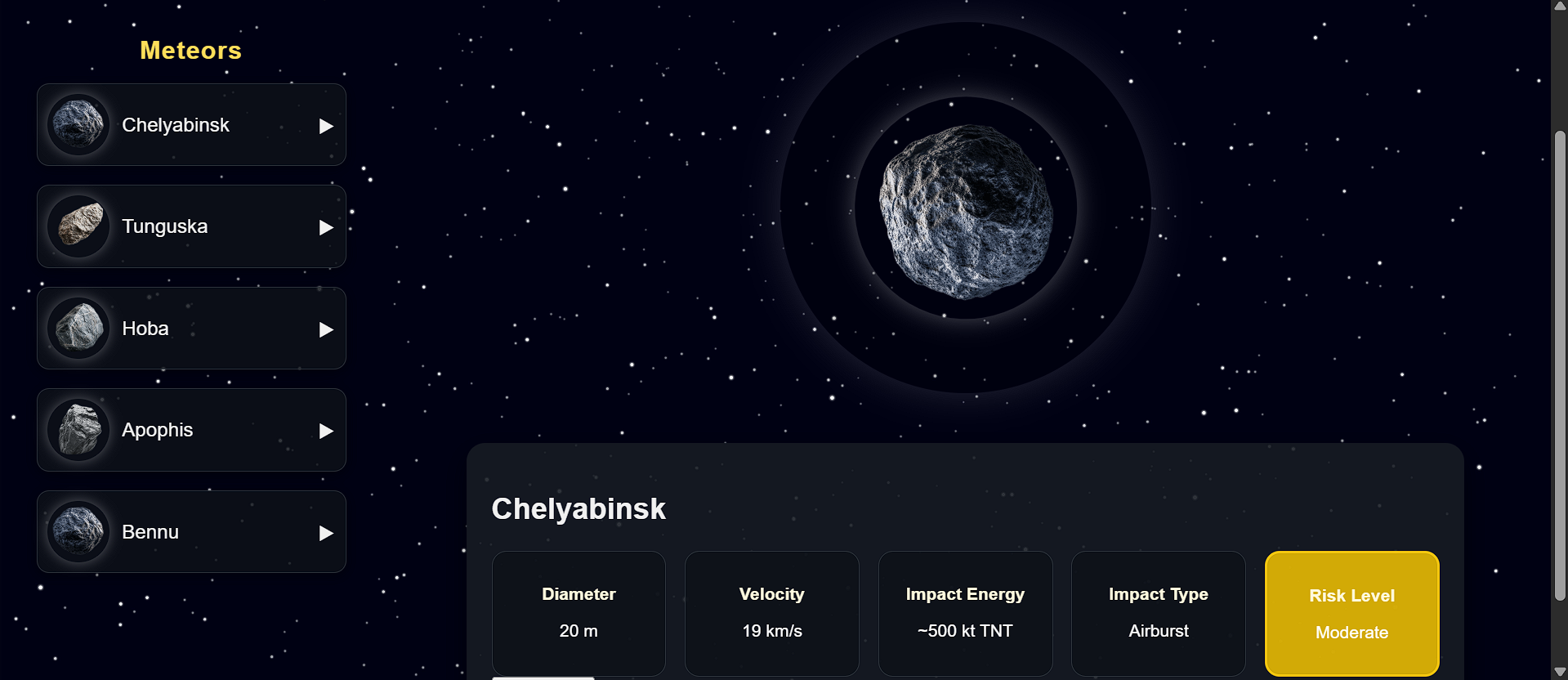
- Learn about meteor composition, velocity, and historical impact events
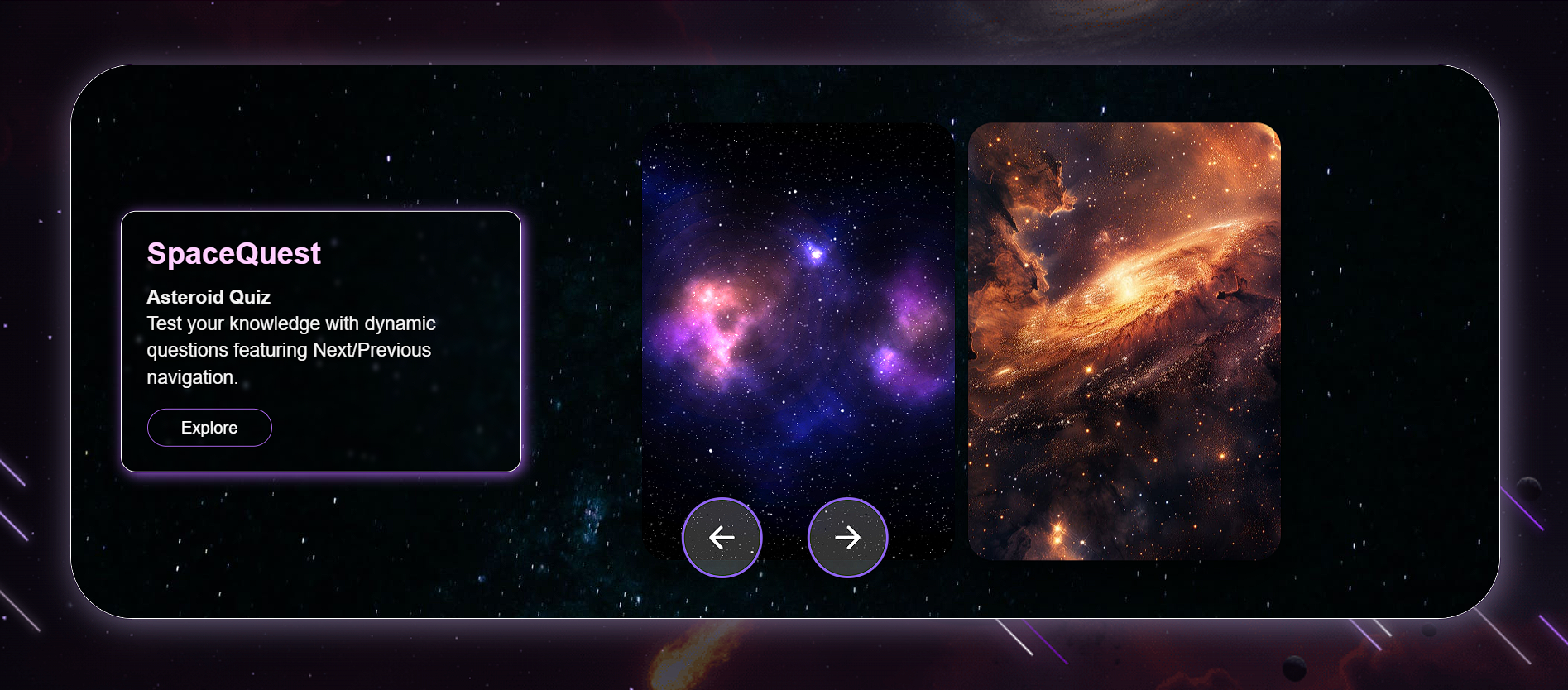
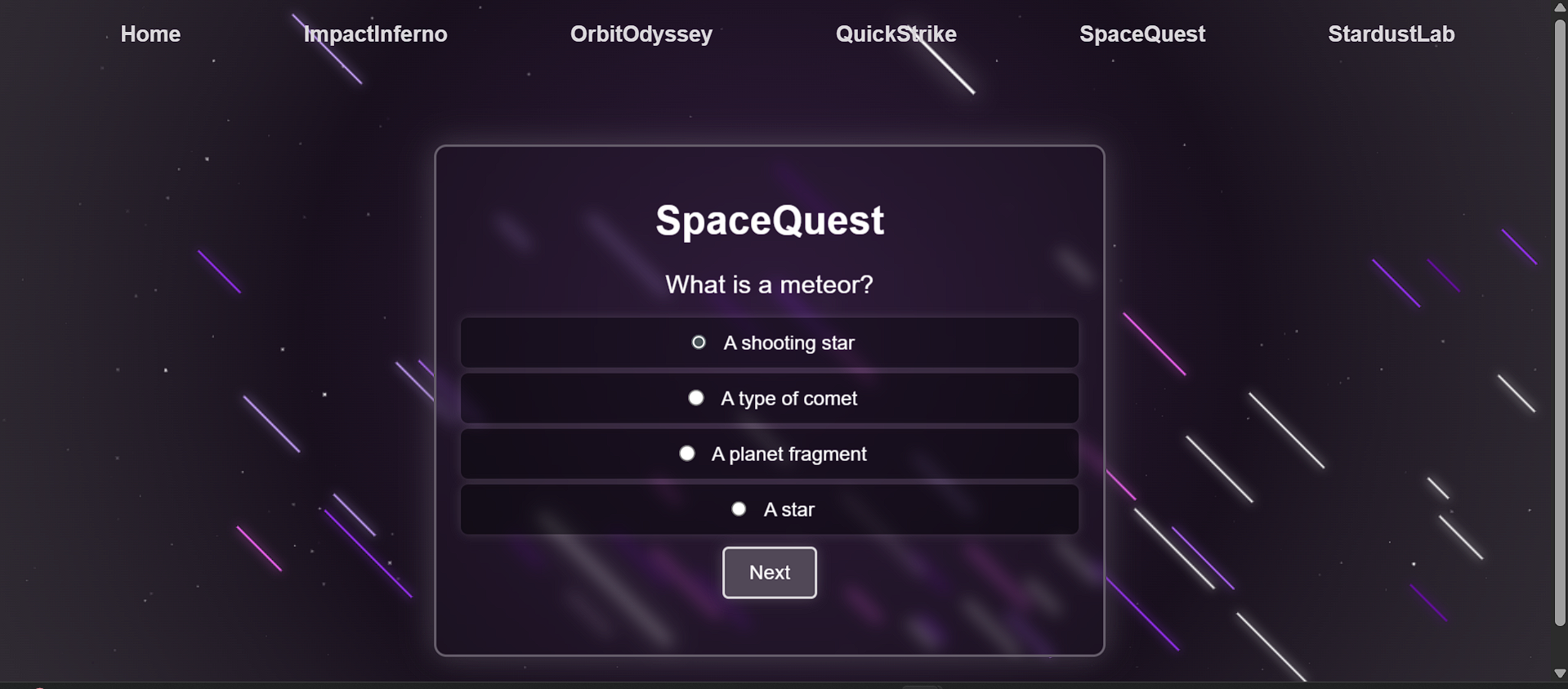
- Reinforce learning through interactive quizzes and gamified challenges
The platform focuses on education and awareness, making complex space concepts easier to understand for students and beginners.
How we built it
ShootingStars is built entirely using HTML, CSS, and JavaScript, with a front-end-only architecture that requires no backend or database. This approach keeps the project lightweight, fast, and accessible.
We integrated the NASA Near-Earth Object (NEO) API to fetch real-world asteroid data and combined it with custom JavaScript logic to simulate impact effects and orbital motion. Each major feature is organized into modular pages with dedicated CSS and JavaScript files, improving maintainability and scalability.
The user interface emphasizes visual feedback, smooth animations, and intuitive controls so users can experiment freely without technical barriers.
Challenges we ran into
One of the main challenges was simplifying complex space science concepts without losing educational value. Translating real asteroid data into understandable simulations required careful balancing between accuracy and accessibility.
Another challenge was coordinating multiple interactive modules within a purely front-end architecture while maintaining performance and consistency across pages. Ensuring responsive design and smooth user experience across different screen sizes also required iterative testing and refinement.
Accomplishments that we're proud of
- Successfully integrating real-time NASA asteroid data into an interactive educational platform
- Building a fully functional space exploration tool using only front-end technologies
- Creating intuitive simulations that make orbital mechanics and impact scenarios easy to understand
- Designing a visually engaging interface that encourages curiosity and exploration
What we learned
Through this project, we gained hands-on experience working with external APIs, structuring modular front-end applications, and translating scientific data into interactive visual experiences.
We also learned the importance of designing educational tools that prioritize clarity and user engagement, especially when dealing with complex subjects like space science and orbital mechanics.
What's next for ShootingStars – Asteroid Impact Simulator & Space Explorer
In the future, we plan to expand ShootingStars with more advanced simulations, including space debris tracking and satellite collision awareness. We also aim to add guided learning paths for students, deeper orbital visualizations, and improved accessibility features.
Long-term, we hope ShootingStars can evolve into a comprehensive educational platform that inspires more students to explore space science, planetary defense, and careers in aerospace and technology.


Log in or sign up for Devpost to join the conversation.