-
-
-
-
-
-
-
-
-
-
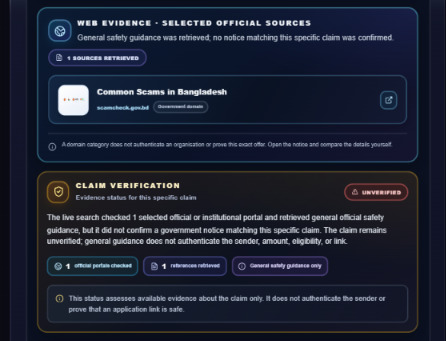
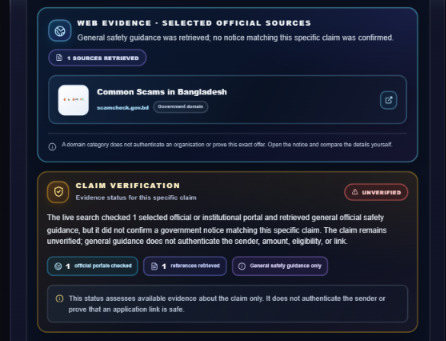
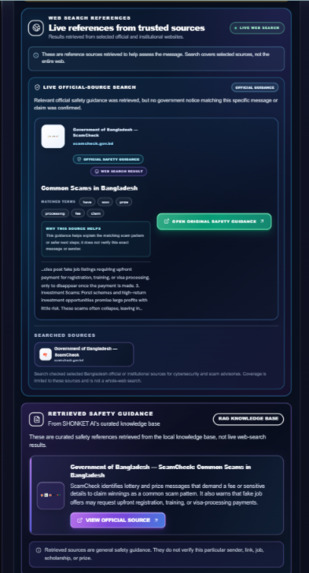
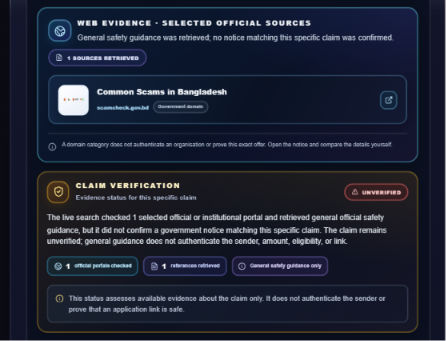
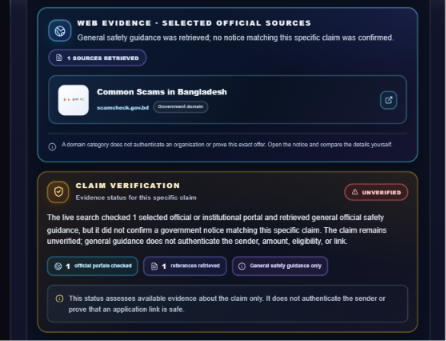
Evidence-aware claim verification with clear uncertainty and official-source context.
-
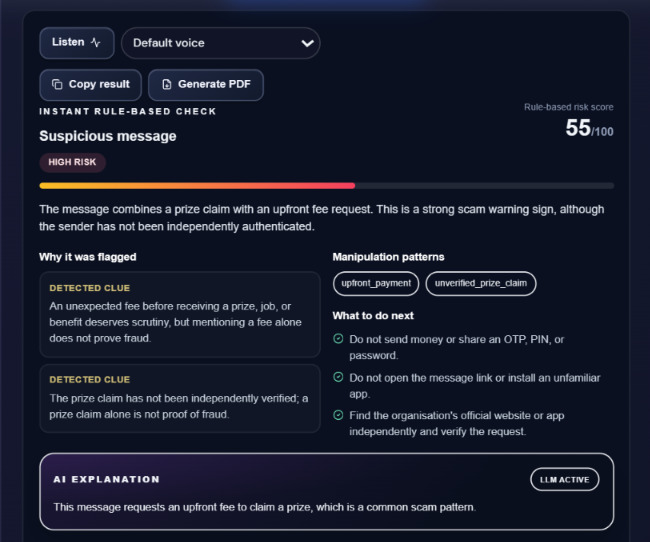
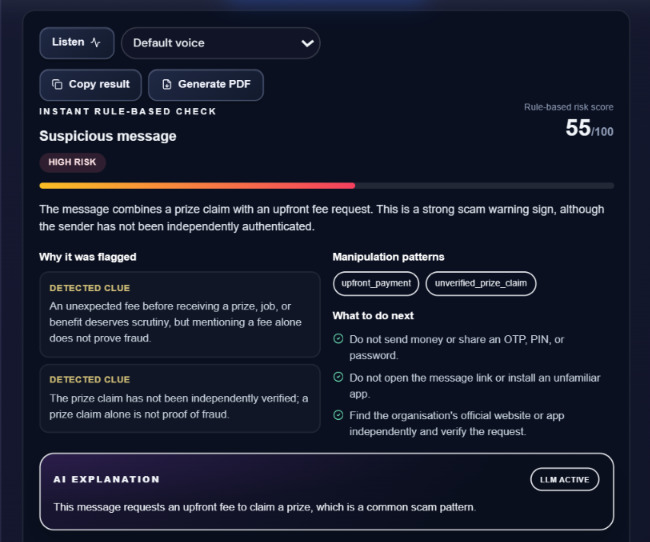
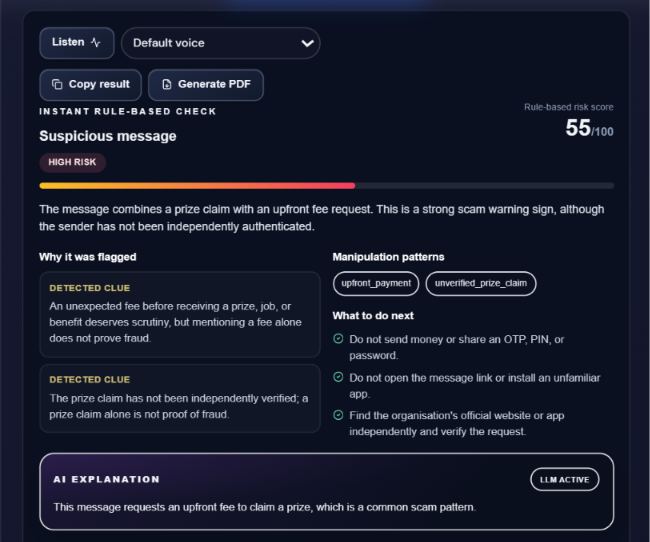
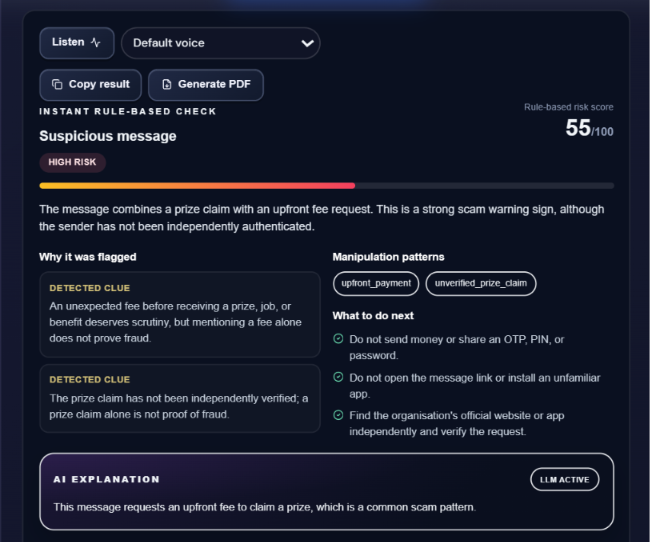
Explainable scam assessment with risk score, detected clues, and safety recommendations.
-
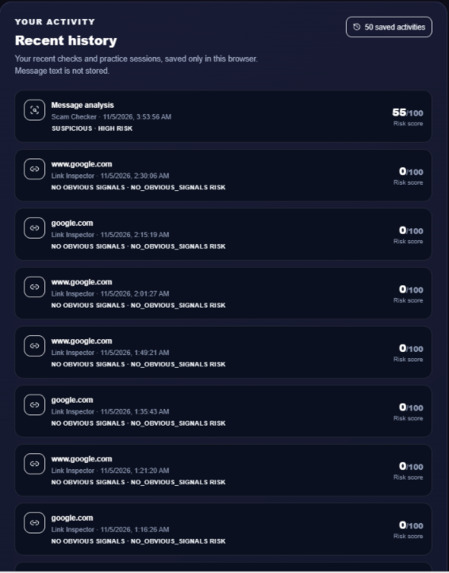
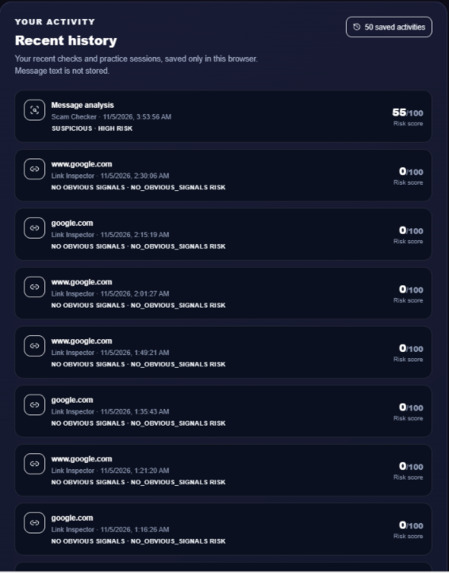
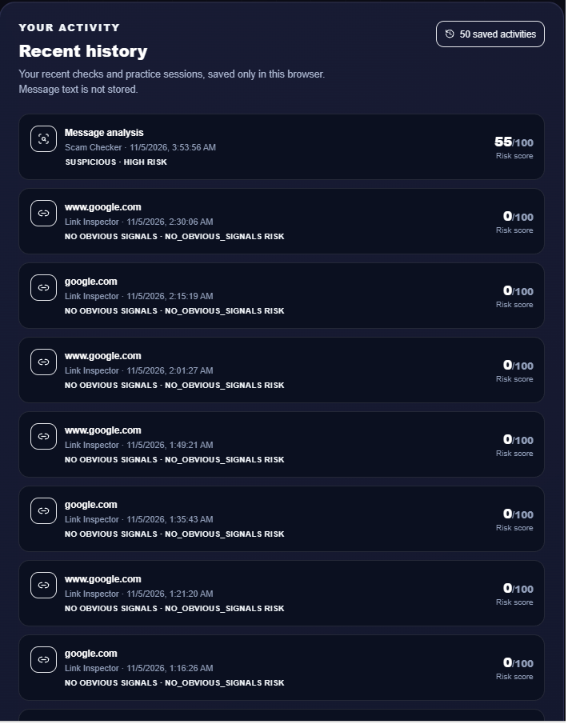
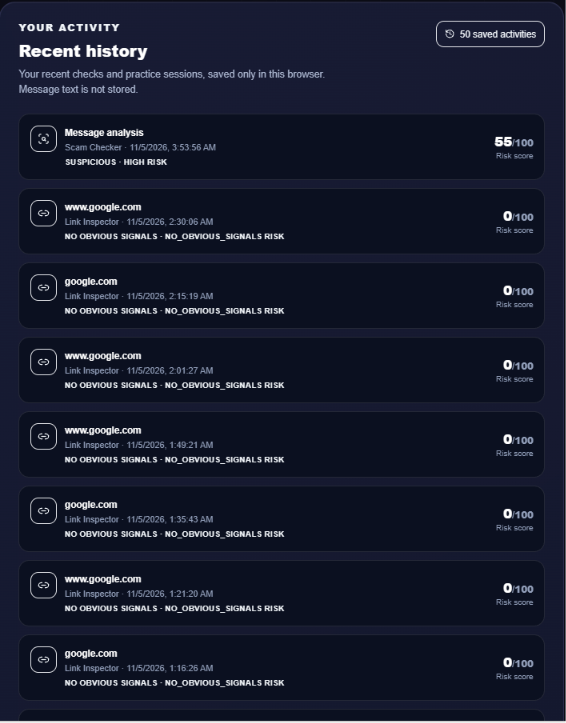
Review previous checks and practice sessions saved locally in the browser.
-
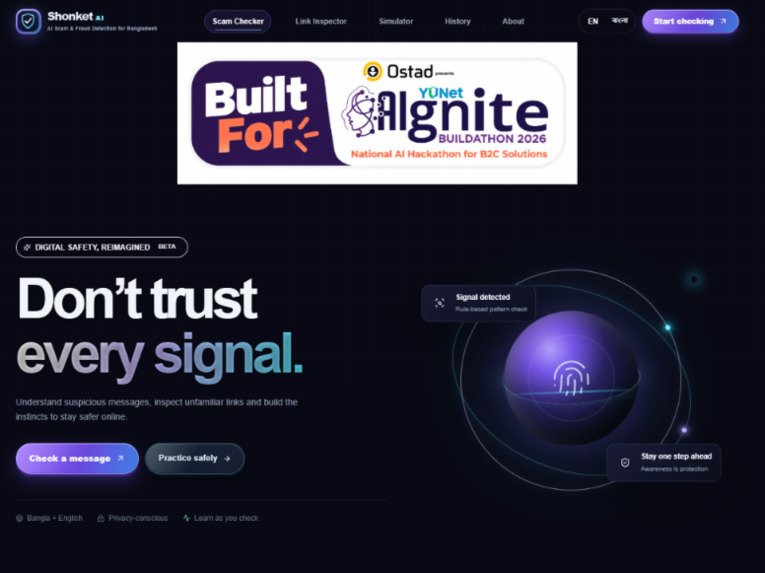
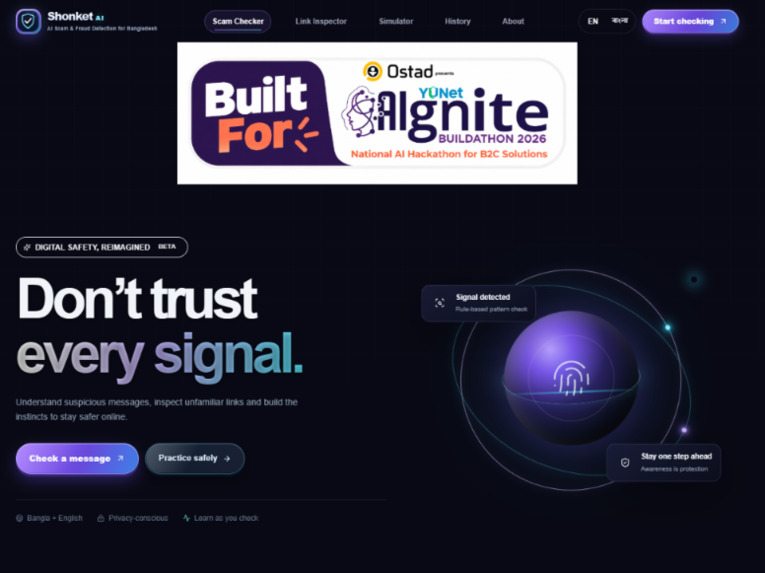
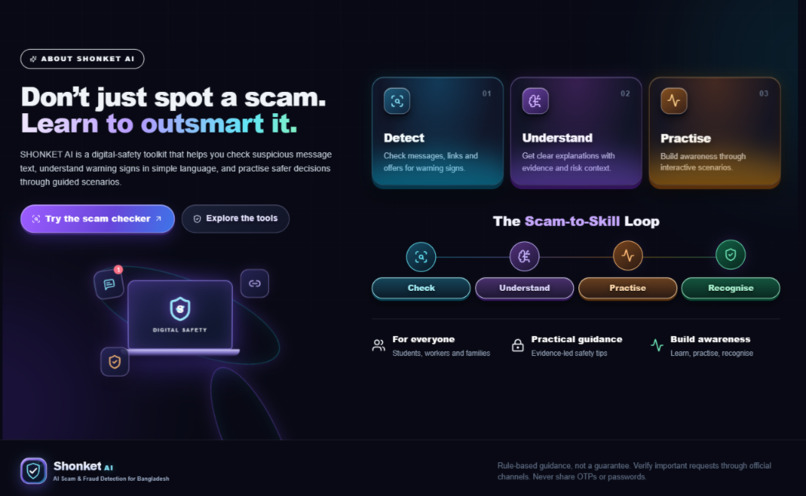
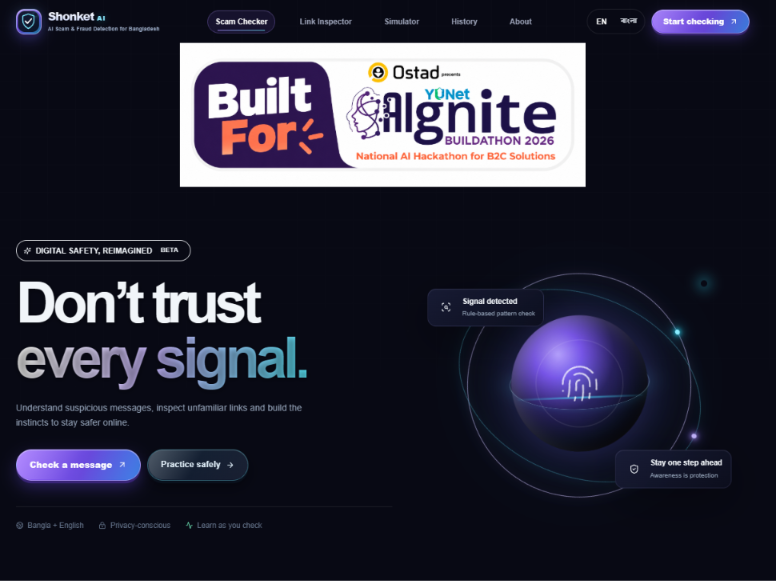
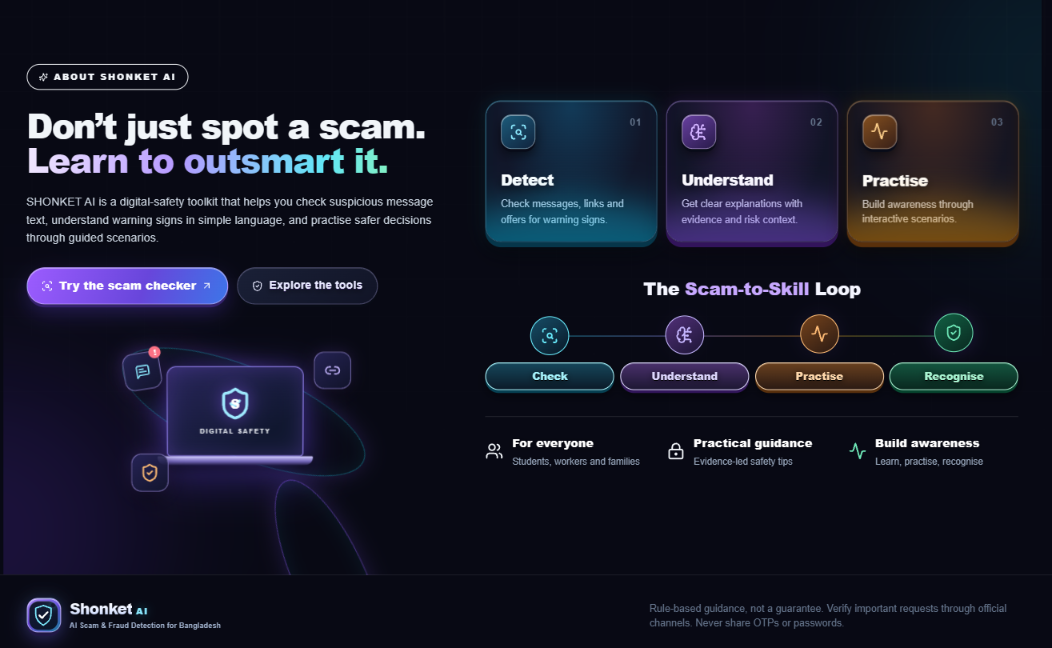
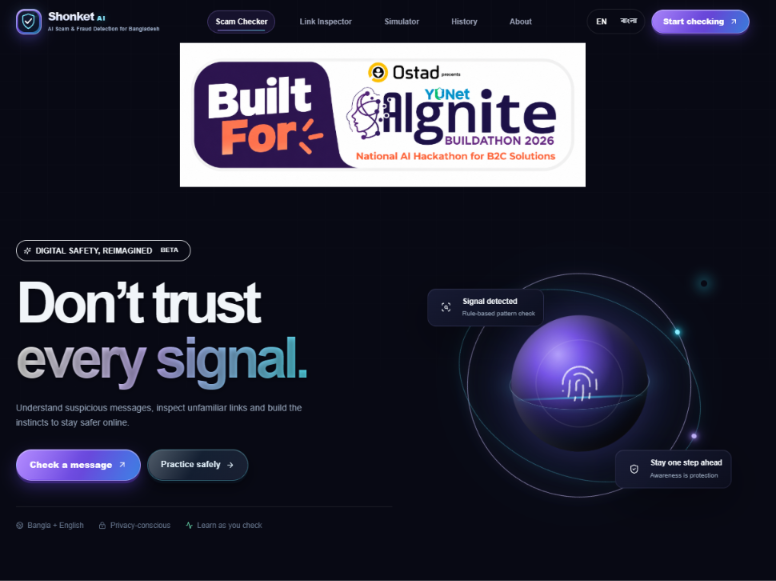
Shonket AI homepage featuring the core digital safety experience.
-
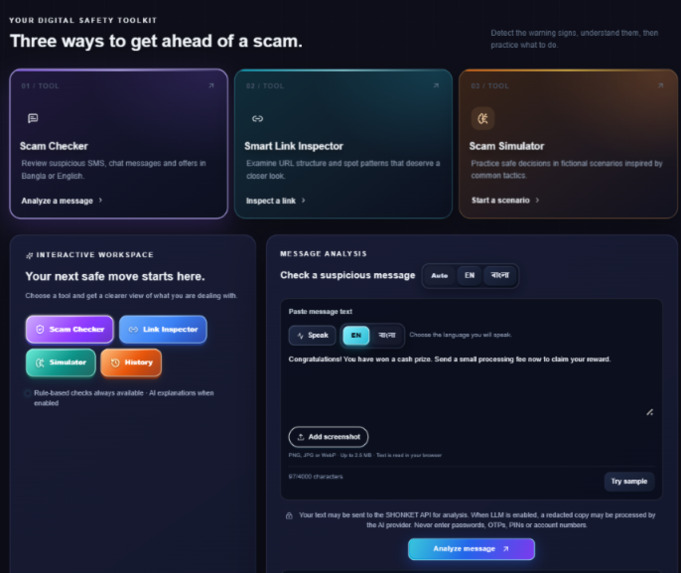
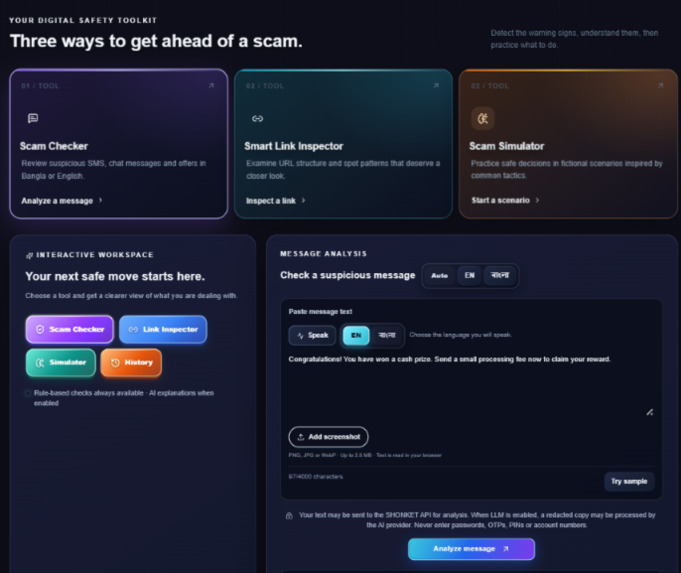
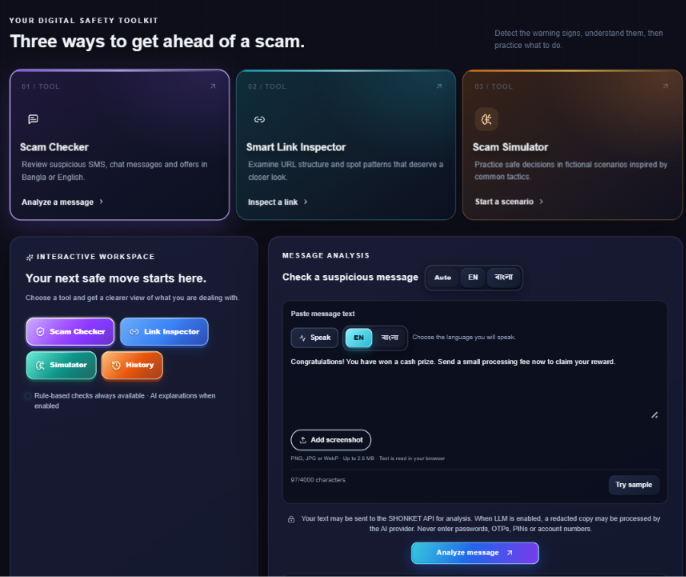
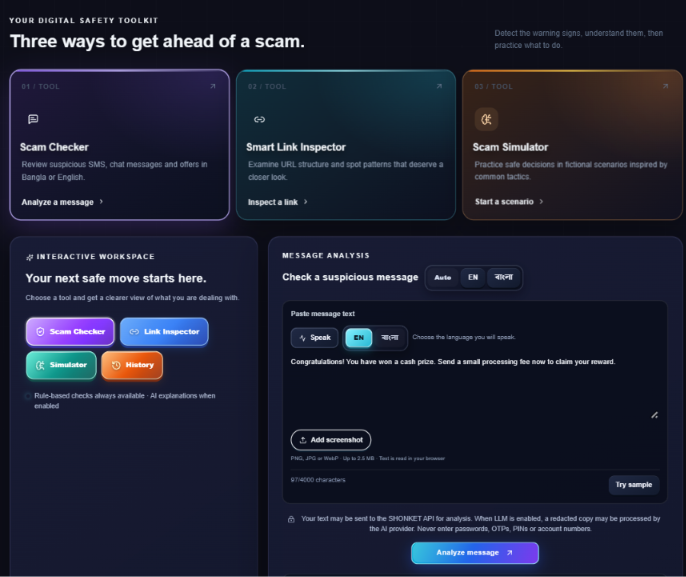
Explore scam checking, link inspection, and interactive analysis tools.
-
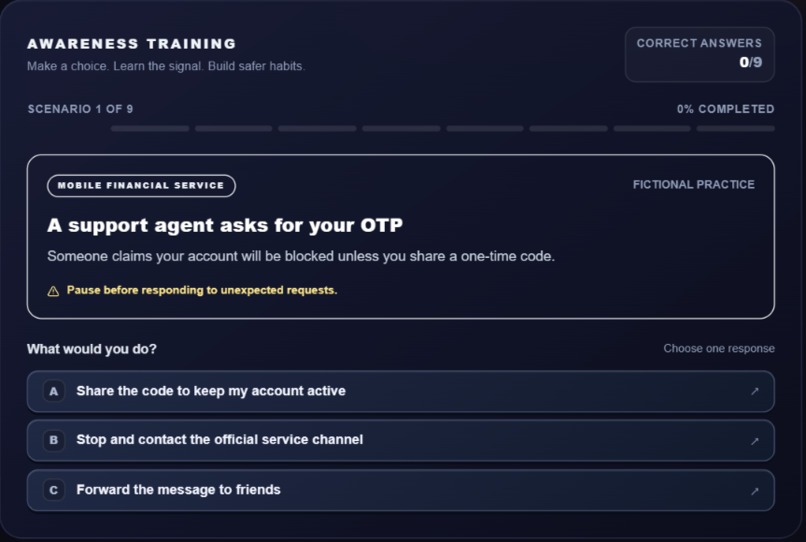
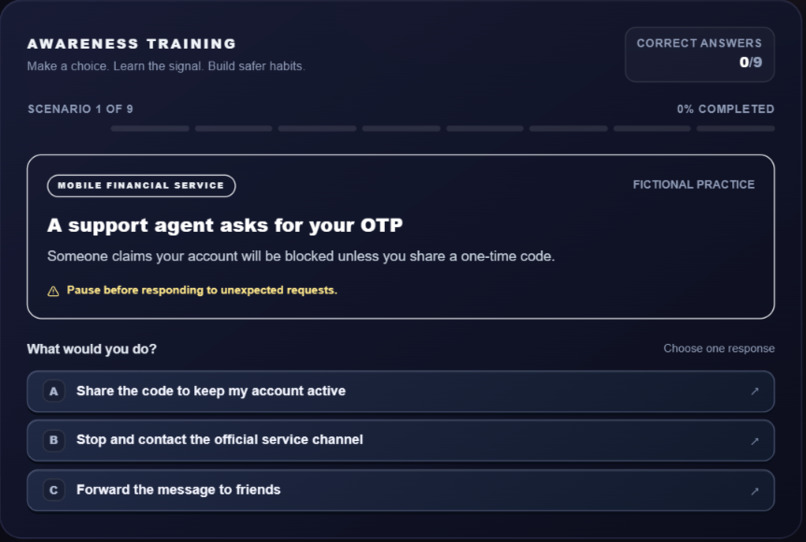
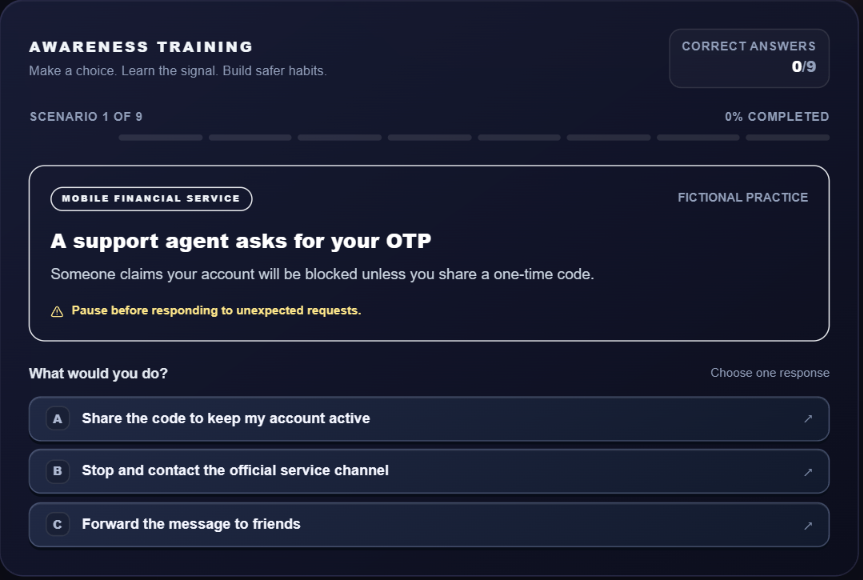
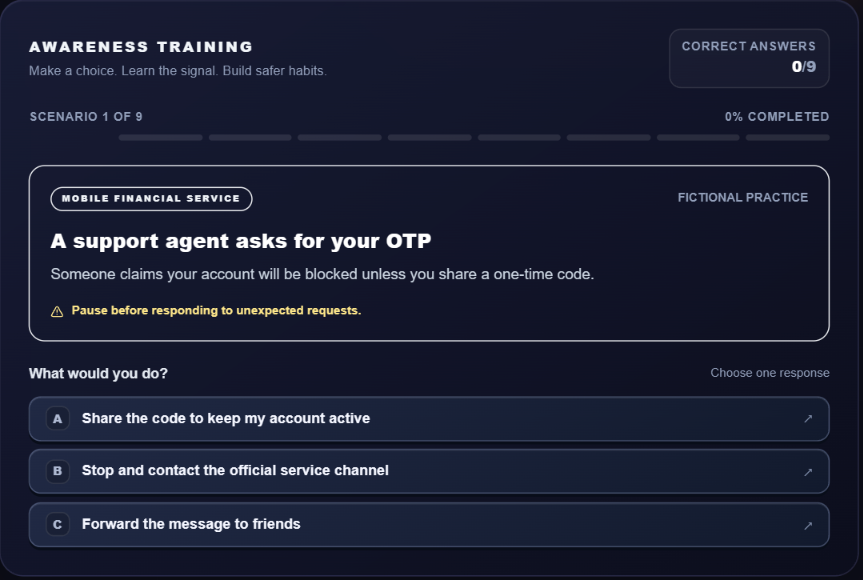
Practise identifying common scam tactics through interactive fictional scenarios.
-
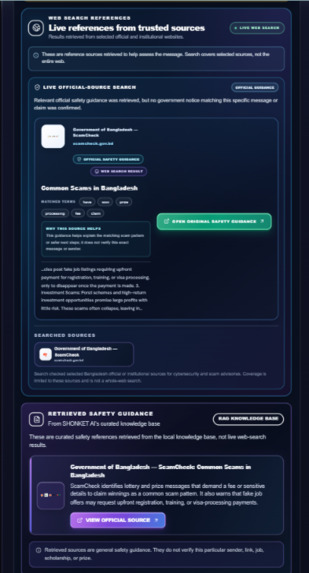
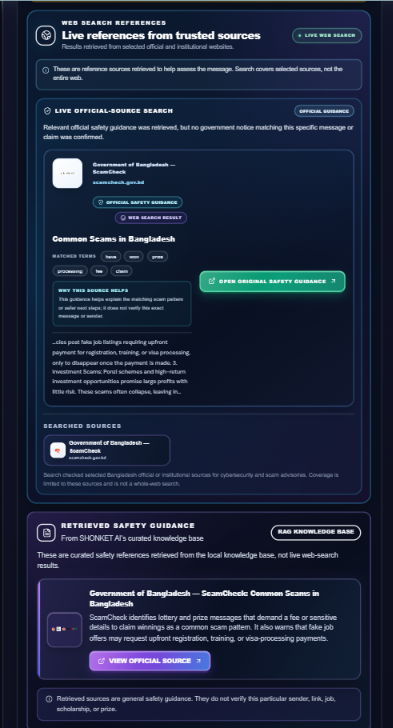
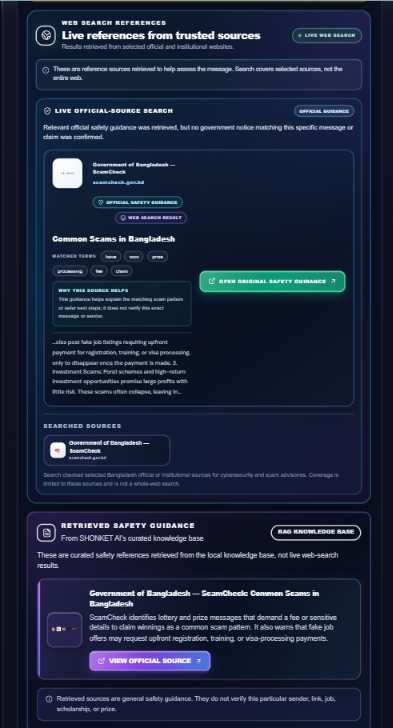
Search selected official sources and review relevant safety guidance.
-
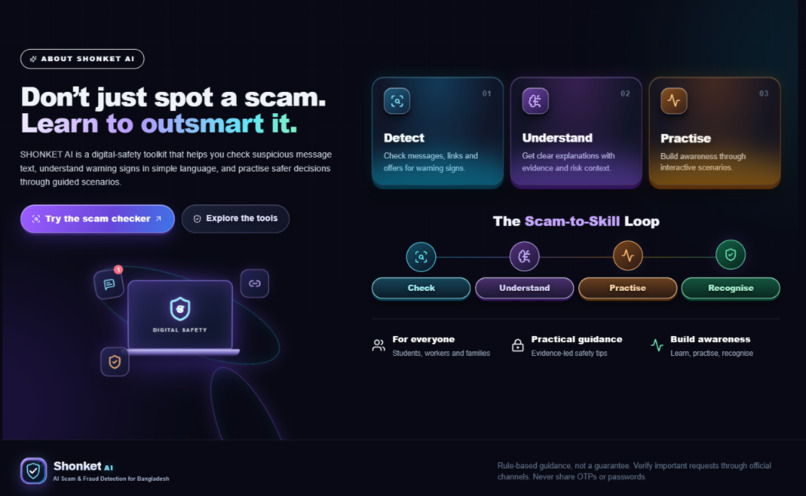
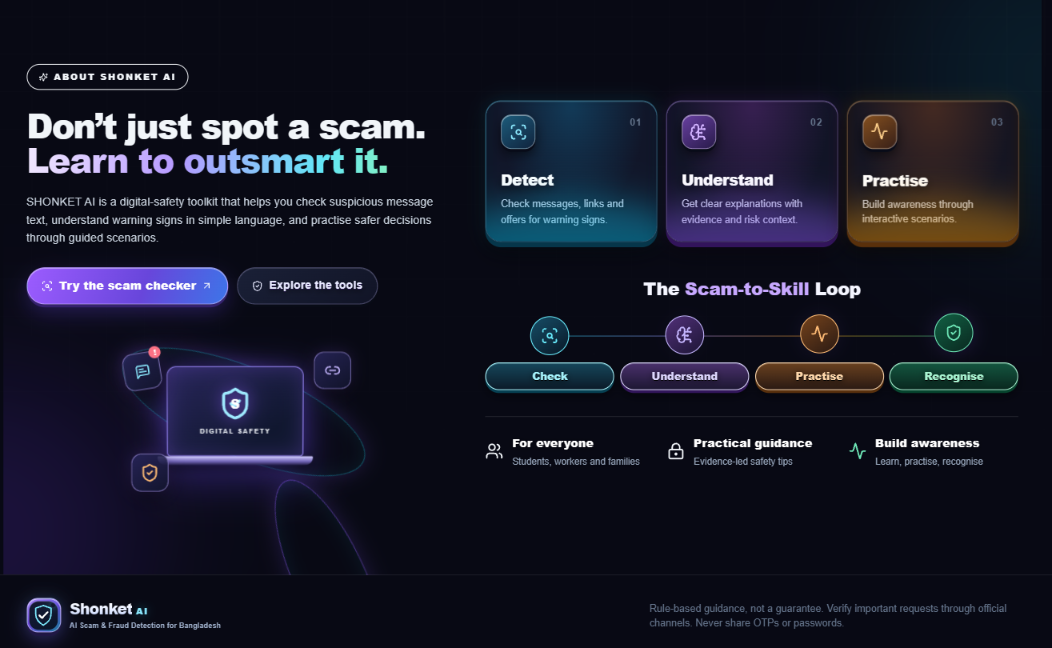
Learn how Shonket AI helps users detect, understand, and practise safer digital habits.
Inspiration
Online scams are becoming increasingly convincing. From fake job offers and prize notifications to phishing links and impersonation messages, anyone can encounter suspicious digital communication.
We wanted to build something that helps people do more than simply guess whether a message is safe. Our goal was to make scam awareness easier through clear explanations, practical guidance, and interactive learning.
That idea led to Shonket AI.
What it does
Shonket AI is an AI-assisted scam awareness platform that helps users examine suspicious messages, inspect links, extract text from screenshots, and understand potential scam warning signs.
Its key features include:
- Scam Message Checker: Analyzes messages and highlights suspicious patterns with an explainable heuristic risk score.
- Bangla & English Support: Helps users examine messages in both languages.
- Link Inspector: Examines URL structures and available threat-intelligence signals without opening submitted webpages.
- Screenshot OCR: Extracts text from screenshots directly in the browser using Tesseract.js.
- Official-Source Search: Searches selected official and institutional sources for supported categories.
- AI Explanation: Provides additional explanations to make suspicious patterns easier to understand.
- Scam Awareness Simulator: Provides fictional interactive scenarios to practise recognizing common scam tactics.
- Voice Input & Read Aloud: Makes the experience more accessible.
- Recent History: Allows users to review previous checks saved locally in their browser.
How we built it
We built Shonket AI using React, Vite, JavaScript, and CSS for the frontend, with Cloudflare Workers powering the backend API.
The platform combines a deterministic rule-based assessment engine with optional AI-generated explanations using Cloudflare Workers AI and Gemma 4.
We used Tesseract.js for browser-based screenshot OCR and implemented URL inspection, curated safety knowledge retrieval, selected official-source search, and rate limiting.
For quality assurance, we used the Node.js test runner and Playwright to test core functionality, API behaviour, and browser interactions.
Challenges we ran into
One of our biggest challenges was making scam analysis understandable rather than simply displaying a risk score.
We addressed this by separating deterministic rule-based assessments from optional AI explanations and showing the warning signals behind an assessment.
Supporting Bangla and English, extracting text from screenshots, inspecting different URL structures, and handling external service limitations also required careful testing.
Another challenge was communicating uncertainty. A suspicious message is not automatically proof of fraud, and a low-risk result cannot guarantee safety. We designed the experience to make these limitations clear.
Accomplishments that we're proud of
- Built a working scam awareness platform with multiple integrated tools.
- Combined deterministic scam assessment with optional AI explanations.
- Implemented Bangla and English message analysis.
- Added browser-based screenshot OCR and URL inspection.
- Integrated selected official-source search and evidence-aware guidance.
- Created an interactive scam awareness simulator.
- Added responsive interfaces and automated browser testing.
- Successfully passed the latest checked automated CI workflow.
We are especially proud that Shonket AI focuses on explaining warning signs and helping users make more informed decisions rather than presenting an unexplained verdict.
What we learned
We learned that building a useful AI application requires more than connecting a model to a user interface.
Reliable rule-based checks, clear explanations, thoughtful privacy practices, testing, and honest communication of limitations are equally important.
We also learned how to integrate frontend and backend services, work with AI inference, implement OCR, inspect URLs, and build automated testing workflows.
Most importantly, we learned that technology should help people understand risks and make better decisions—not create a false sense of certainty.
What's next for Shonket AI
Our next goals are to:
- Expand language support and improve multilingual scam-pattern recognition.
- Improve assessment quality through more representative test cases.
- Broaden official-source coverage across different regions.
- Improve accessibility and mobile usability.
- Expand the awareness simulator with more realistic educational scenarios.
- Continue strengthening privacy, reliability, and performance.
Our vision is to make scam awareness more accessible and understandable for people everywhere.
Detect. Understand. Practise. Protect.
Built With
- ai
- cloudflare-workers
- cloudflare-workers-ai
- css
- gemma-4
- html
- javascript
- node.js
- ocr
- playwright
- react
- tesseract.js
- vite