Inspiration
A woman’s body and daily well-being are constantly changing. Sleep, food, periods, skin, hair, weight, hormones, mood, activity, and stress can all affect how she feels from one day to the next. Yet keeping track of these things usually means jumping between different apps, notes, videos, and websites.
One app tracks periods. Another tracks calories or workouts. Skincare and haircare routines are often managed separately. Sleep and daily habits are easy to overlook. And when something feels wrong, finding the right doctor becomes another disconnected process.
We built Shongi (সঙ্গী, “companion” in Bengali) to bring these parts of everyday life together.
Rather than focusing on a single condition, Shongi is designed as a daily companion for women. It helps women understand their routines, take care of themselves, notice changes over time, and find professional support when they need it.
Conditions such as PCOS can also affect cycles, skin, hair, weight, mood, and other aspects of daily health. Shongi helps users track these changes together instead of treating every symptom as an isolated problem.
The idea is simple: a woman should not need five different apps to understand what is happening with her body and daily well-being.
What it does
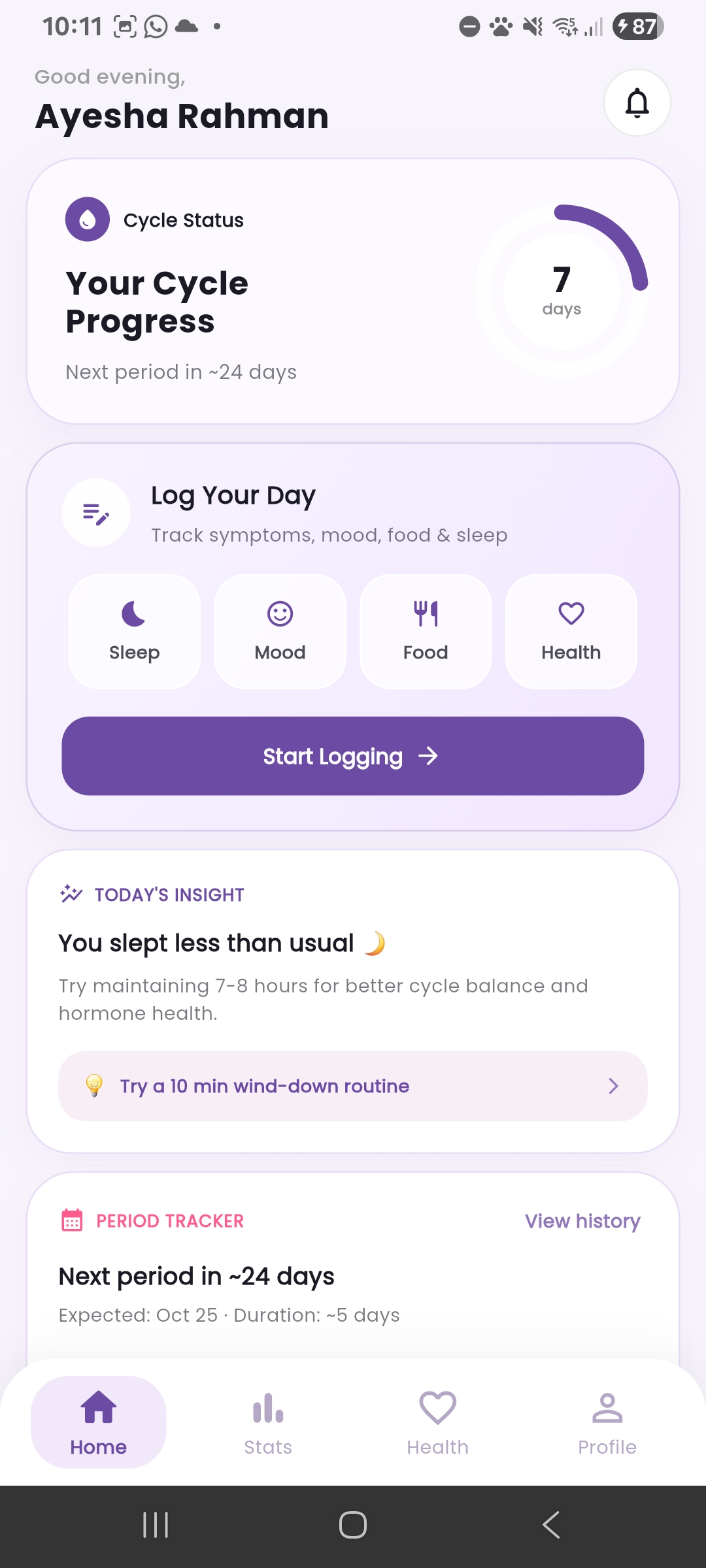
Shongi brings everyday women’s health, wellness, and self-care into one app:
- Daily tracking: keep track of food, water, sleep, mood, activity, and everyday habits
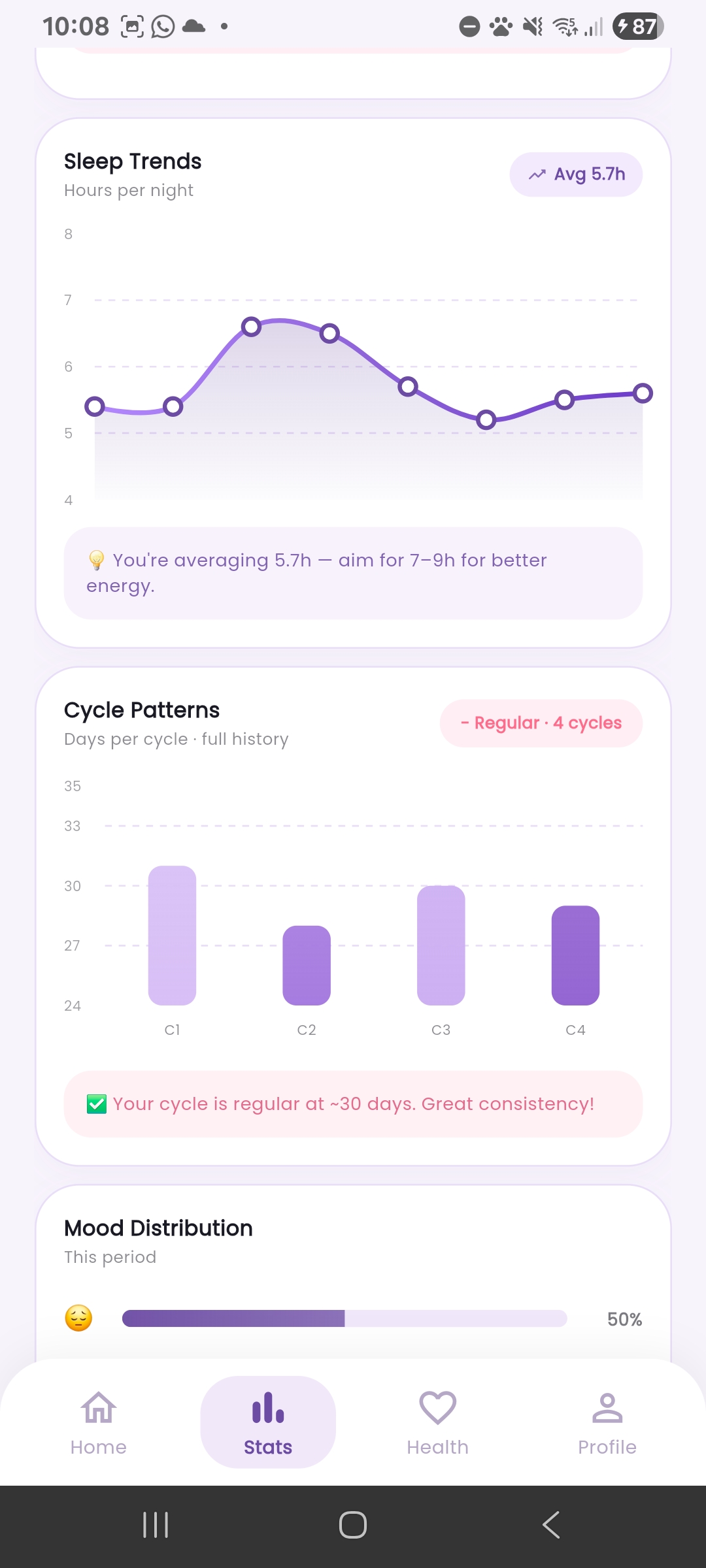
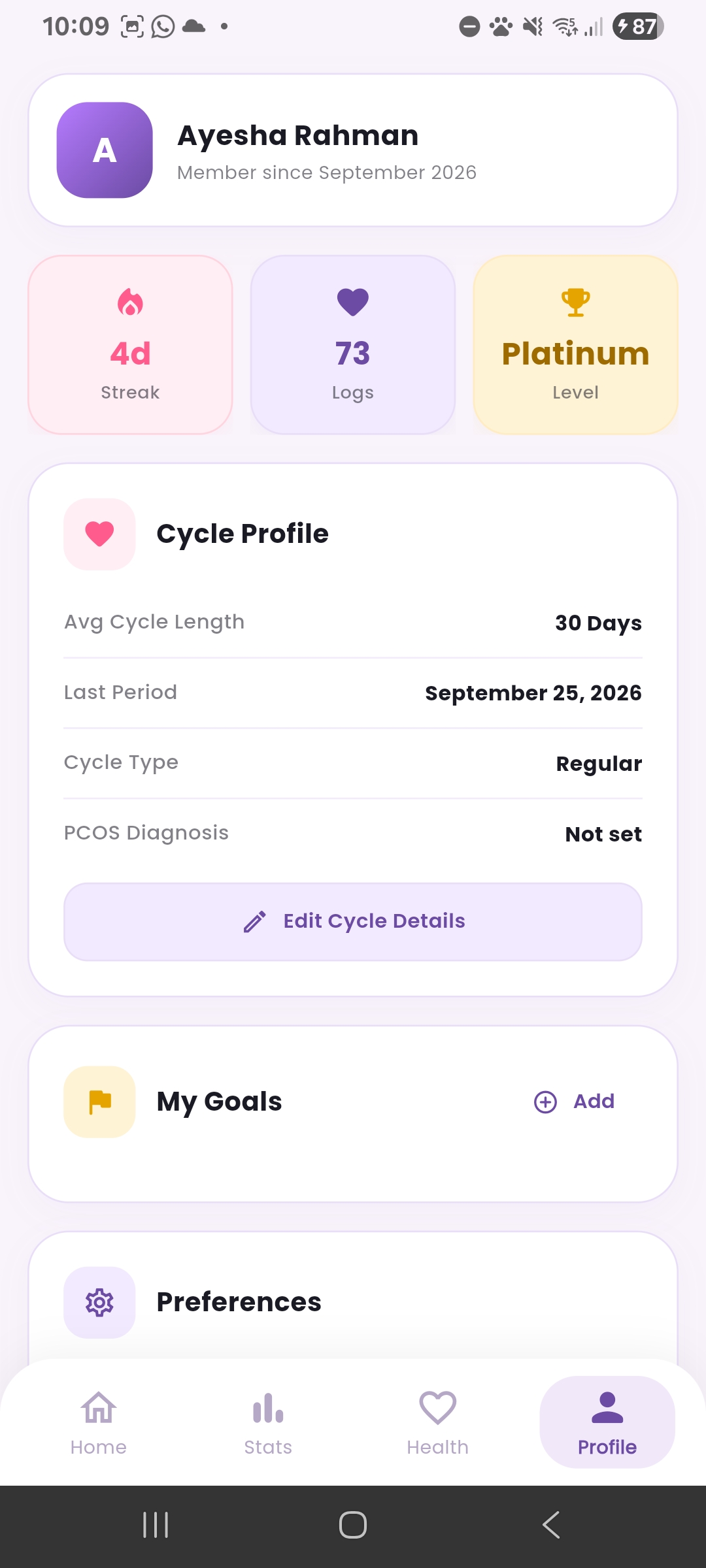
- Period tracking: log cycles, understand patterns, predict upcoming periods, and notice irregularities
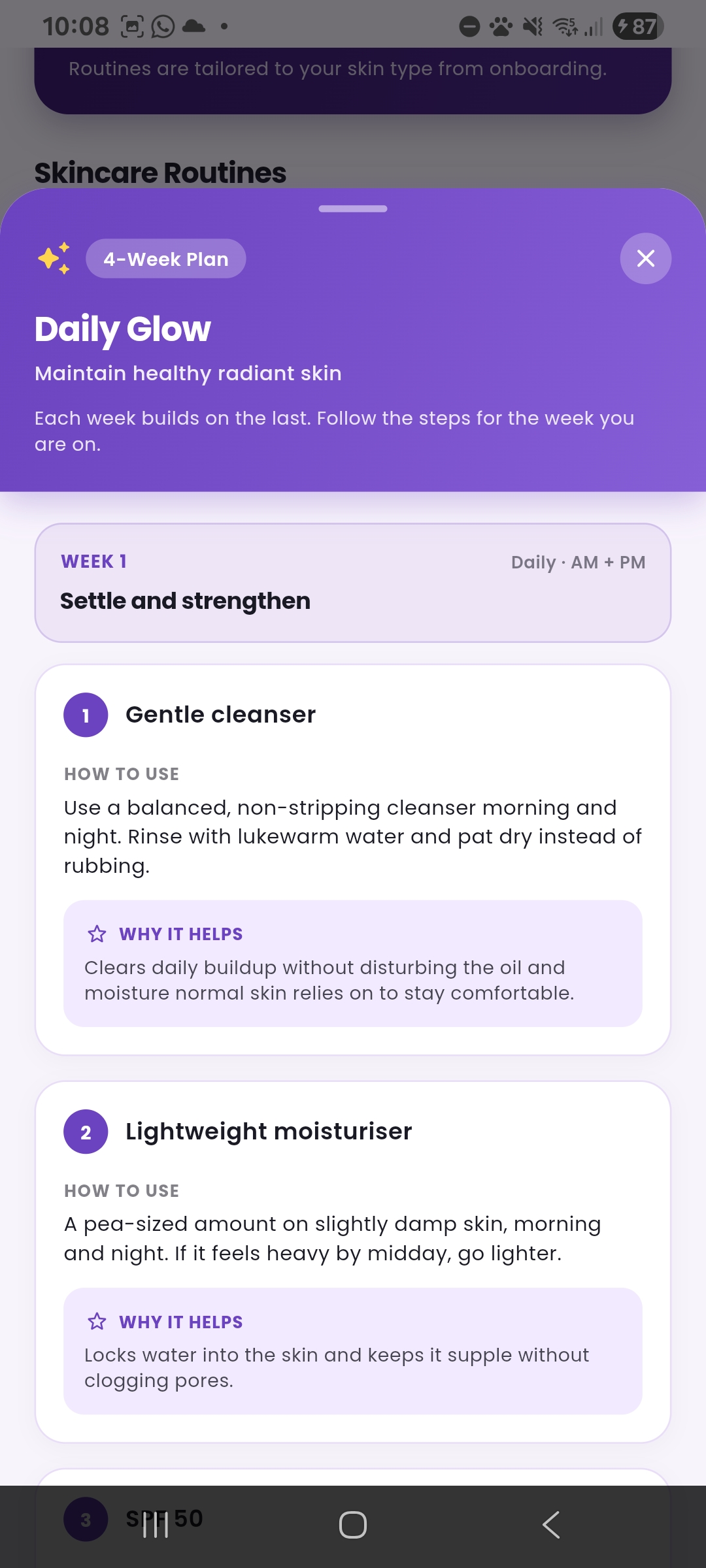
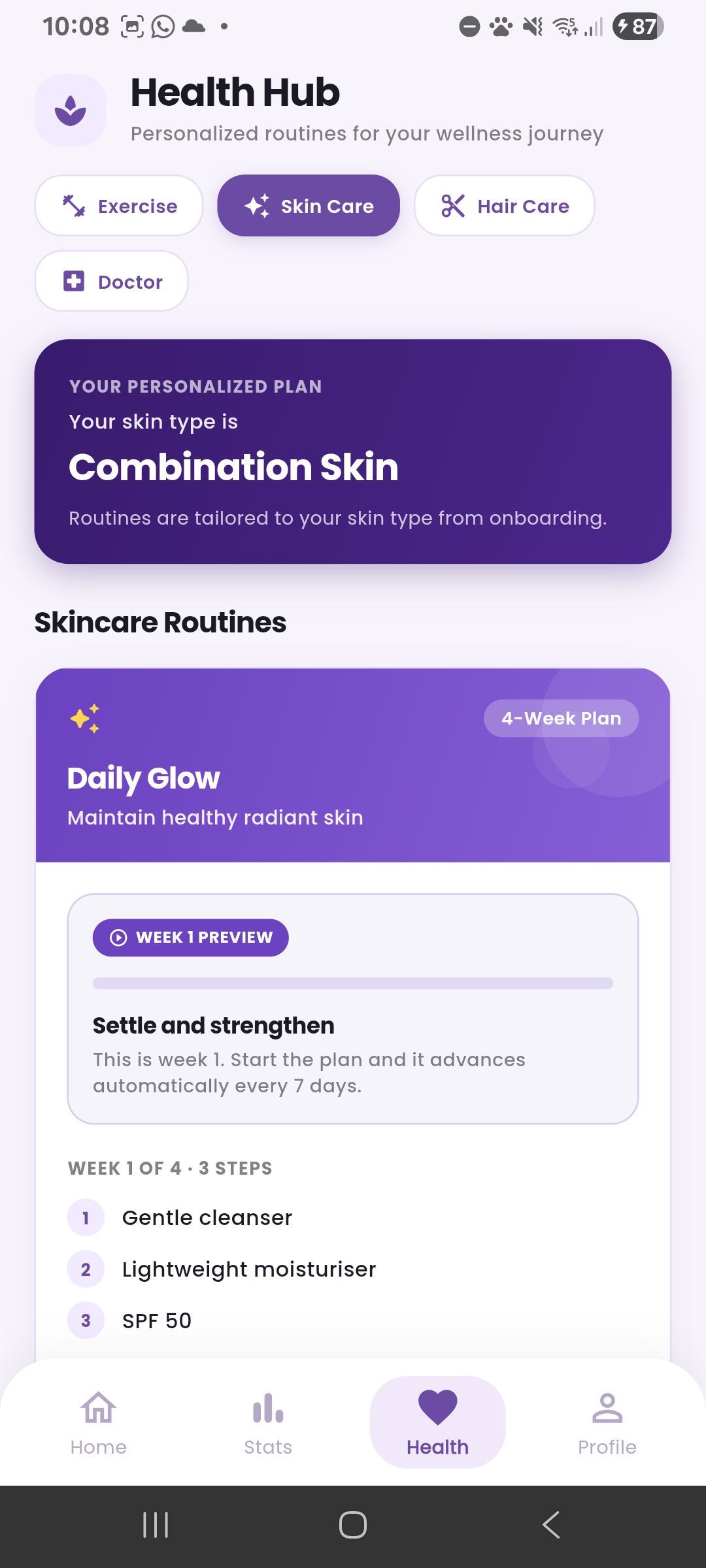
- Skin & acne care: maintain skincare routines, receive personalized guidance, and track changes over time
- Hair care: monitor hair fall, maintain haircare routines, and follow treatment or care guidance
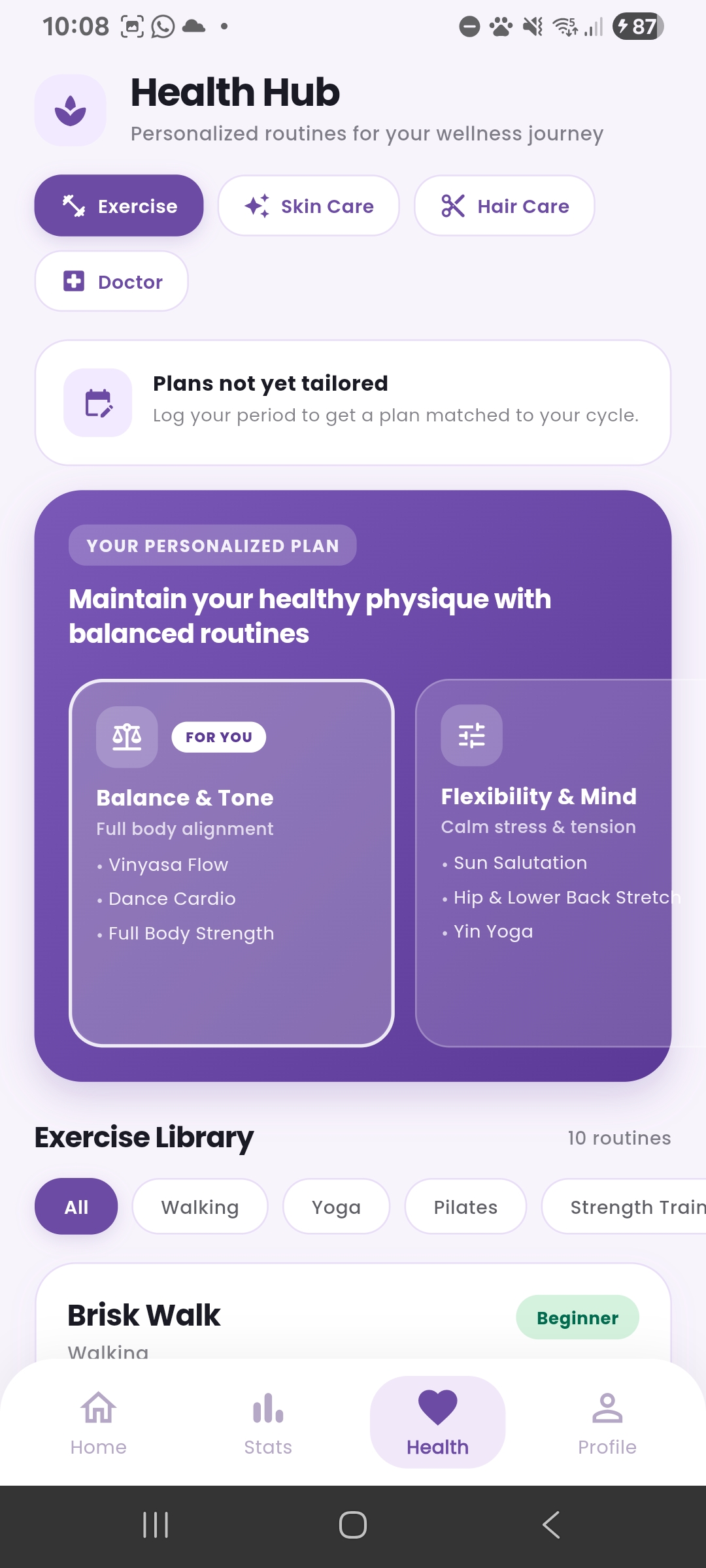
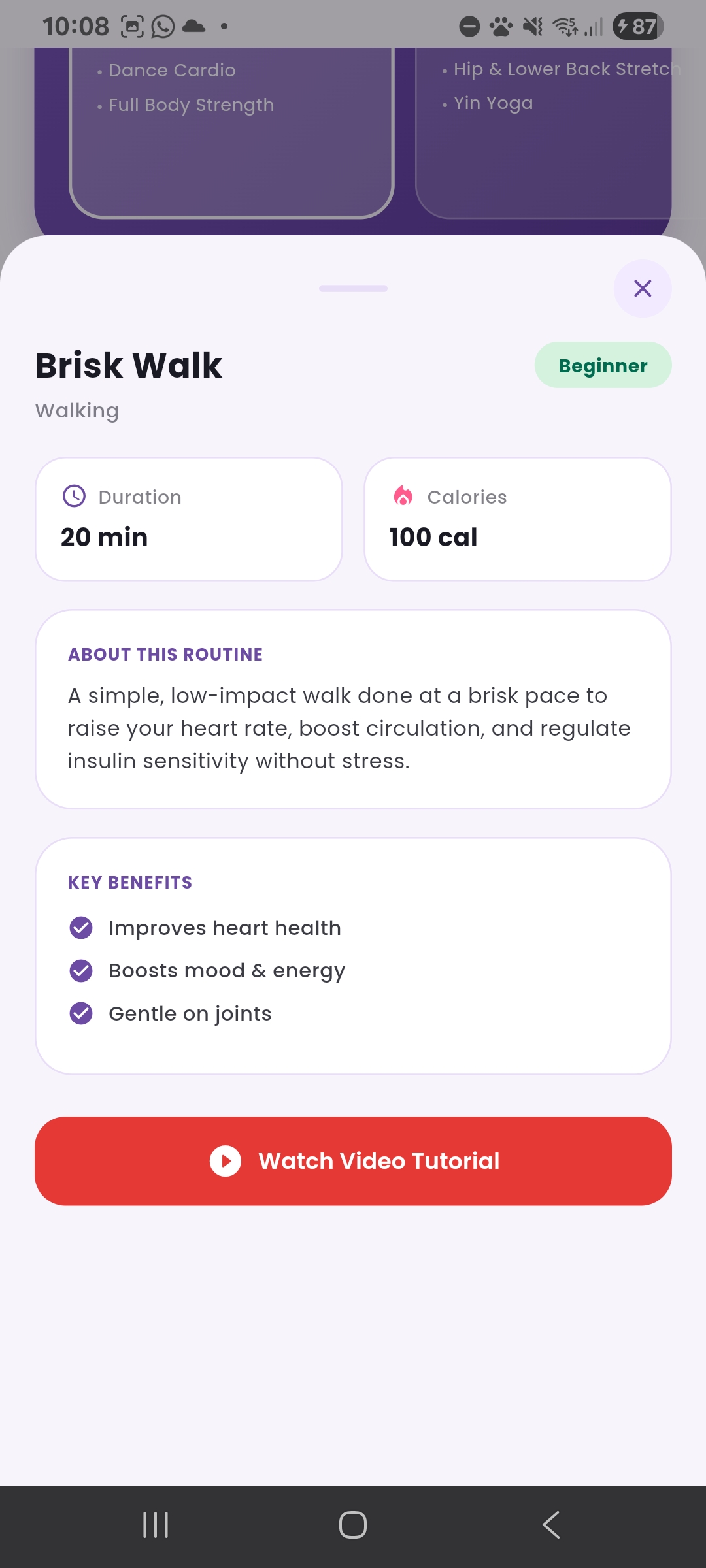
- Weight & fitness: track weight and activity while accessing an exercise library with video guidance
- Lifestyle overview: understand how sleep, food, activity, mood, and other habits change over time
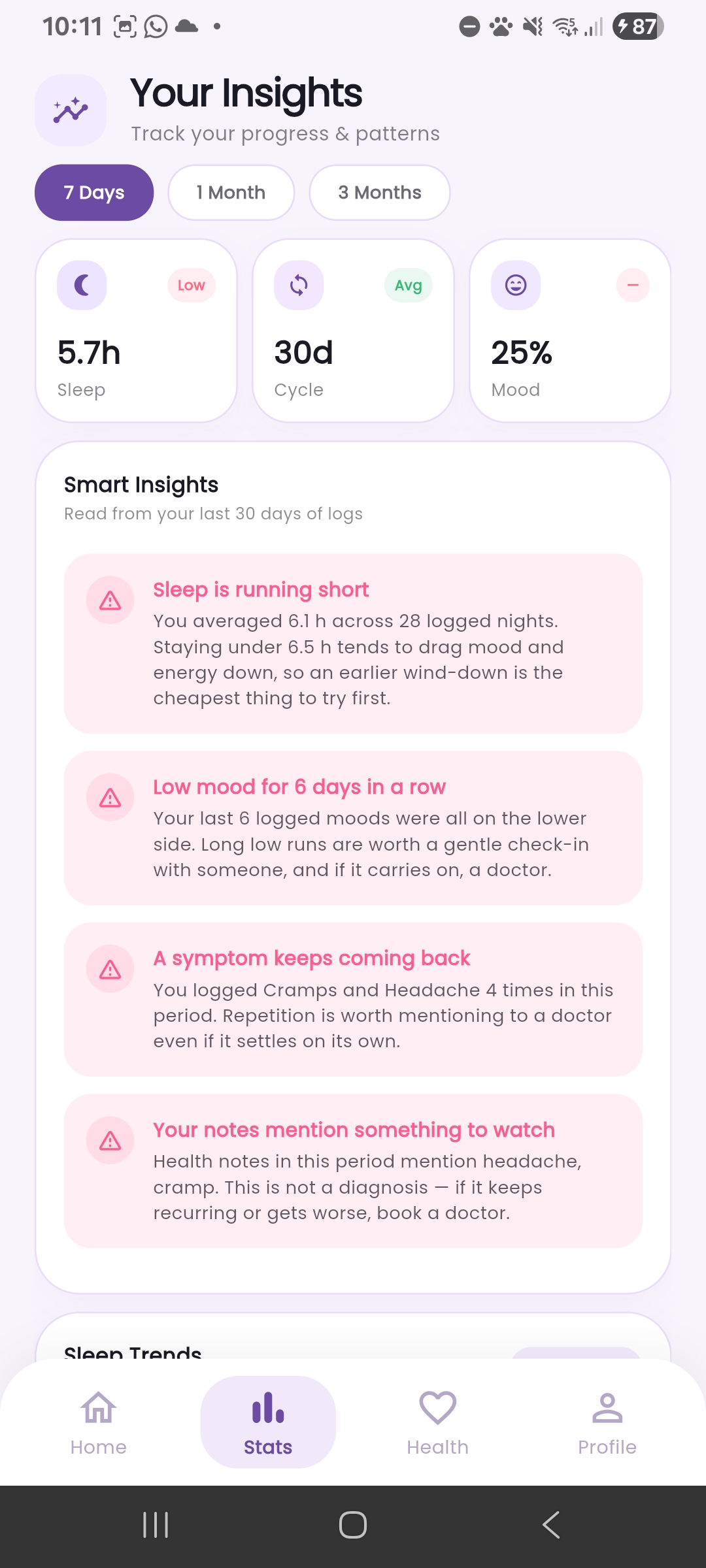
- Graphs & insights: see visual trends across cycle, skin, hair, weight, sleep, and other tracked information
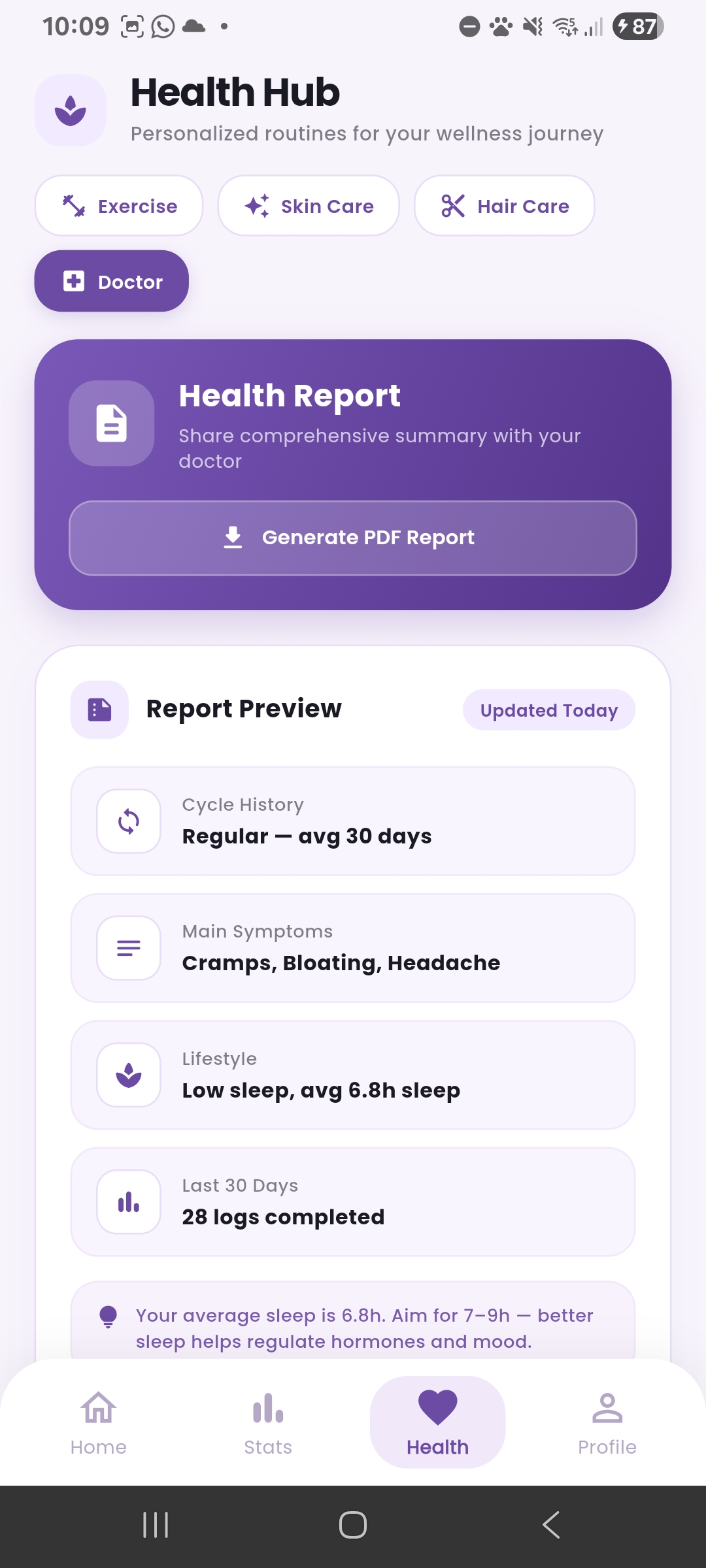
- Doctors: browse doctor profiles and book appointments directly through the app
- Smart reminders: receive reminders for periods, medication, skincare, haircare, appointments, water, and other routines
Shongi is not built only for women managing a particular health condition. It is designed for everyday use.
A user might open Shongi in the morning to check her routine, log her meals during the day, track water intake, follow her skincare routine at night, record changes in her period or mood, and review how her habits have changed over the past few weeks.
If she is managing something such as PCOS, irregular periods, acne, hair fall, or weight changes, those concerns can be tracked within the same daily experience rather than requiring an entirely separate system.
Shongi grows with the user and becomes a record of her everyday health and well-being.
How we built it
- Framework: Flutter (Dart) for a smooth cross-platform mobile experience
- Architecture: A layered structure: models → data → widgets → pages
- Backend (Firebase):
- Firebase Authentication for secure sign-in and private user accounts
- Cloud Firestore to store daily logs, cycle data, skin and hair progress, lifestyle information, doctor profiles, and appointment data in real time
- Firebase Cloud Messaging (FCM) for push notifications
- Data layer: Abstract repository interfaces, initially backed by a mock repository, so moving to Firebase meant adding a new repository implementation without rewriting the UI
- Notifications:
- firebase_messaging delivers cloud-triggered push notifications such as appointment updates and relevant health or wellness information
- flutter_local_notifications handles on-device scheduled reminders for periods, medication, skincare, routines, and other daily tasks, allowing reminders to work offline
- UI: Reusable custom widgets such as tag chips and segmented toggles, with FutureBuilder for asynchronous data
- Navigation: IndexedStack preserves each tab’s state while users move between different areas of the app
- Media: youtube_player_flutter provides inline exercise and guidance videos
- Doctors: Profile bottom sheets and an integrated appointment-booking flow
Challenges we ran into
Bringing many parts of daily life into one simple experience. Periods, food, sleep, skin, hair, fitness, mood, and doctors all contain different types of information. Bringing them together without making the app feel complicated required several iterations of the interface.
Making Shongi useful every day. We did not want the app to be something users open only when something is wrong. The challenge was designing features such as daily tracking, routines, reminders, and progress insights that make Shongi useful as part of everyday life.
Keeping the backend swappable. The data layer had to be designed so mock data could be replaced by Firebase without requiring changes throughout the UI.
State across tabs. We needed to prevent screens and data from unnecessarily reloading whenever users moved between different parts of the app.
Reliable notifications. Supporting foreground, background, and terminated app states, while also handling notification permissions across devices, required careful implementation.
Guidance vs. medical advice. Shongi can help users understand patterns and maintain healthier routines, but it should not replace professional medical care. We designed the experience to provide useful guidance while directing users toward doctors when appropriate.
Accomplishments that we're proud of
- Turned several disconnected parts of women’s everyday health and self-care into one cohesive companion
- Combined cycle tracking, lifestyle habits, skin, hair, fitness, routines, reminders, and doctor access within a single experience
- Built a clean, scalable architecture where the backend could be changed or expanded with minimal impact on the interface
- Designed an experience that feels private, approachable, and suitable for everyday use
- Made the product useful both for general wellness and for women managing concerns such as irregular cycles, acne, hair fall, weight changes, or PCOS
- Created a foundation that can gradually expand across different stages of a woman’s life
What we learned
Women’s health is interconnected. Sleep, food, activity, stress, periods, skin, hair, mood, and weight do not always change independently. Looking at them together can provide more useful context than tracking each one separately.
Small daily records become meaningful over time. A single day of poor sleep or unusual symptoms may not reveal much. Consistent tracking makes patterns easier to recognize.
Irregularity can be quantified. For cycle lengths (C_1, C_2, \dots, C_n):
[ \bar{C} = \frac{1}{n}\sum_{i=1}^{n} C_i, \qquad \sigma = \sqrt{\frac{1}{n}\sum_{i=1}^{n}(C_i-\bar{C})^2} ]
A higher variation in cycle length can help identify a pattern worth discussing with a doctor. It is an indicator for further attention rather than a diagnosis by itself.
Clean architecture pays off. Separating models, repositories, widgets, and pages made the application easier to build, test, and extend.
Daily-use products need low friction. Logging information has to be quick and simple. If tracking sleep, food, water, periods, or routines takes too much effort, users are less likely to maintain the habit.
Sensitive topics need thoughtful design. Privacy, tone, color, wording, and the way health information is presented all affect whether users feel comfortable using the product.
What's next for Shongi
Shongi started by bringing essential areas of women’s everyday health into one place, but the goal is to make it an increasingly complete companion for daily life and different life stages.
Deeper daily wellness tracking: expand food, nutrition, hydration, sleep, mood, activity, stress, and habit tracking to provide a clearer picture of everyday well-being
Smarter routine management: personalized skincare, haircare, fitness, medication, hydration, and wellness routines that adapt to each user
PCOS support: dedicated tools for users who need them, bringing cycle patterns, lifestyle, diet, exercise, symptoms, and treatment tracking into one overview without making PCOS the central focus of the entire app
Conception & fertility support: ovulation and fertile-window insights alongside tools for women who are preparing for pregnancy
Pregnancy and postpartum support: tracking and guidance designed around the changing needs of pregnancy and recovery after childbirth
Uterine and reproductive health: symptom awareness and tracking for concerns such as fibroids and other reproductive-health conditions, with clear pathways to appropriate medical care
Breast health awareness: self-examination guidance, screening reminders, and prompts for professional consultation when appropriate
Deeper doctor integration: verified specialists, teleconsultation, appointment management, and shareable health summaries that allow users to bring their tracked information into medical consultations
Smarter insights: identify useful patterns across cycle, sleep, food, mood, skin, hair, weight, and activity while keeping recommendations understandable and responsible
Support across life stages: gradually expand Shongi to support adolescence, adulthood, fertility, pregnancy, postpartum health, and menopause
Our vision is simple: one trusted companion that helps a woman understand and care for herself, every day.
Shongi: your companion, every step of the way.

Log in or sign up for Devpost to join the conversation.