-
-
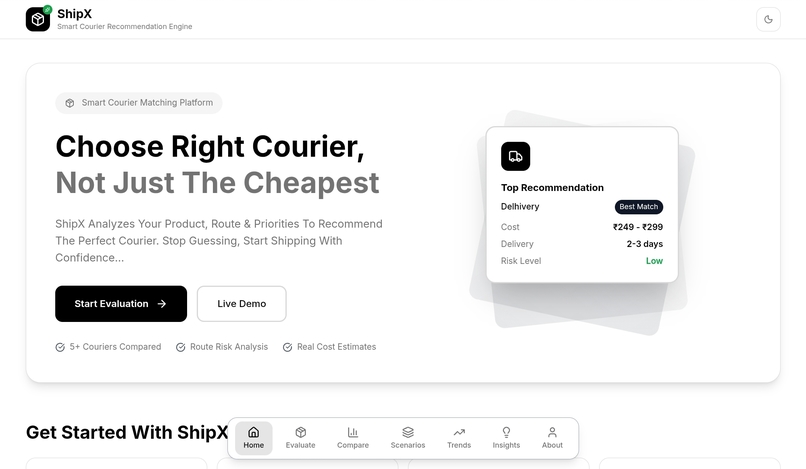
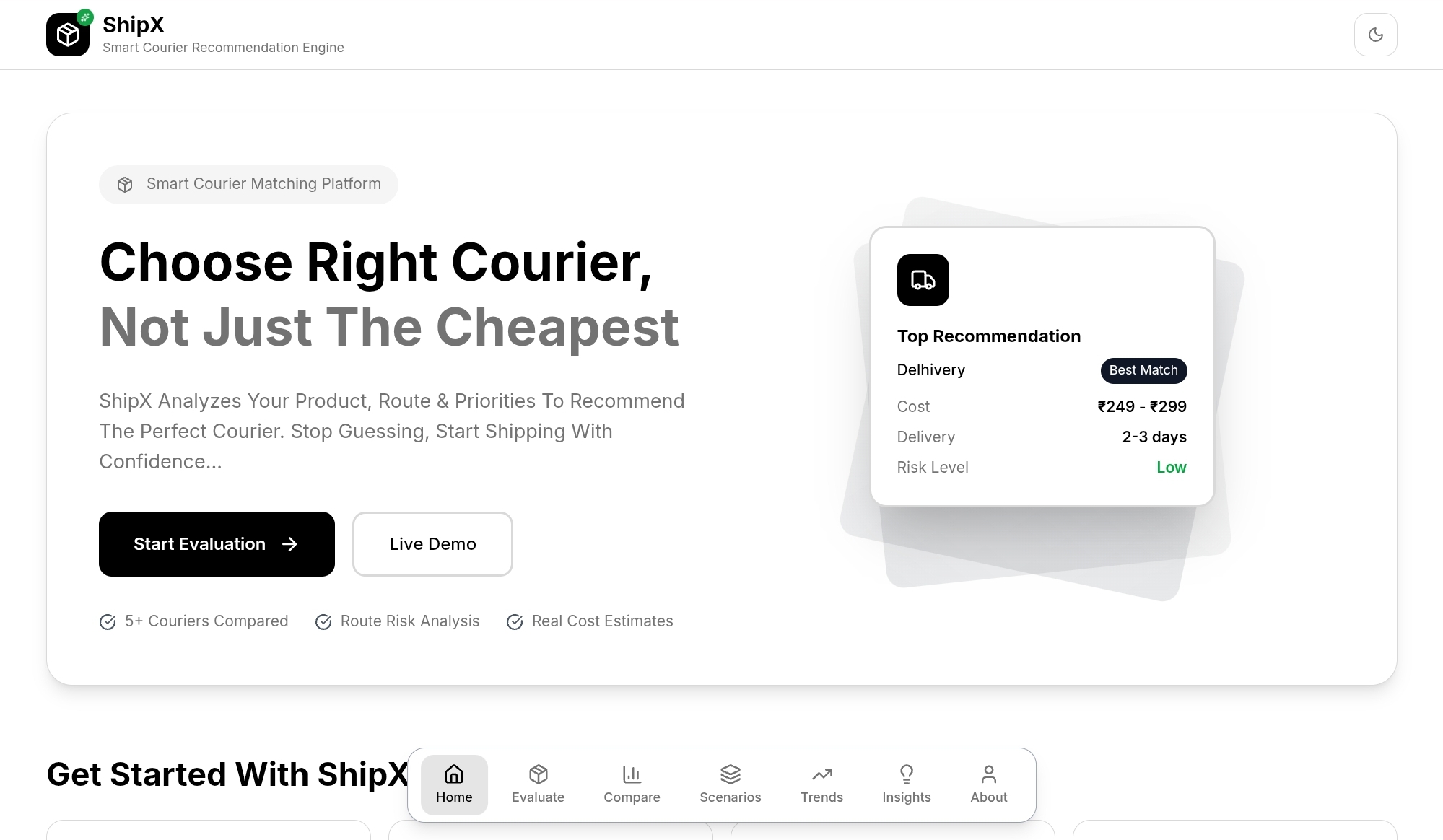
Home Page
-
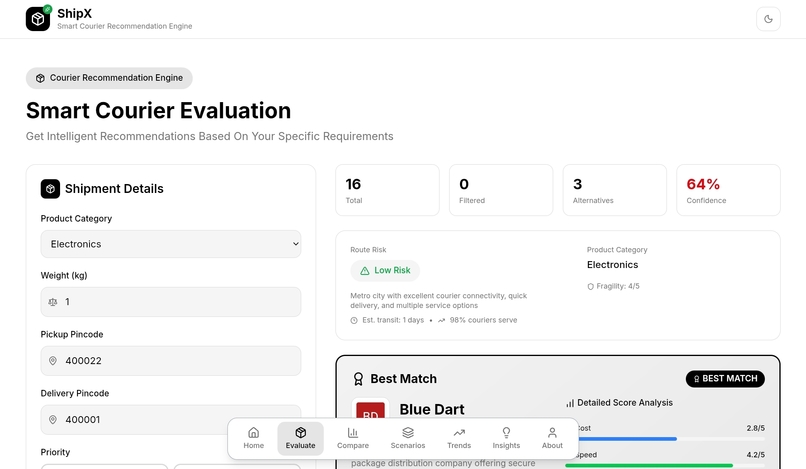
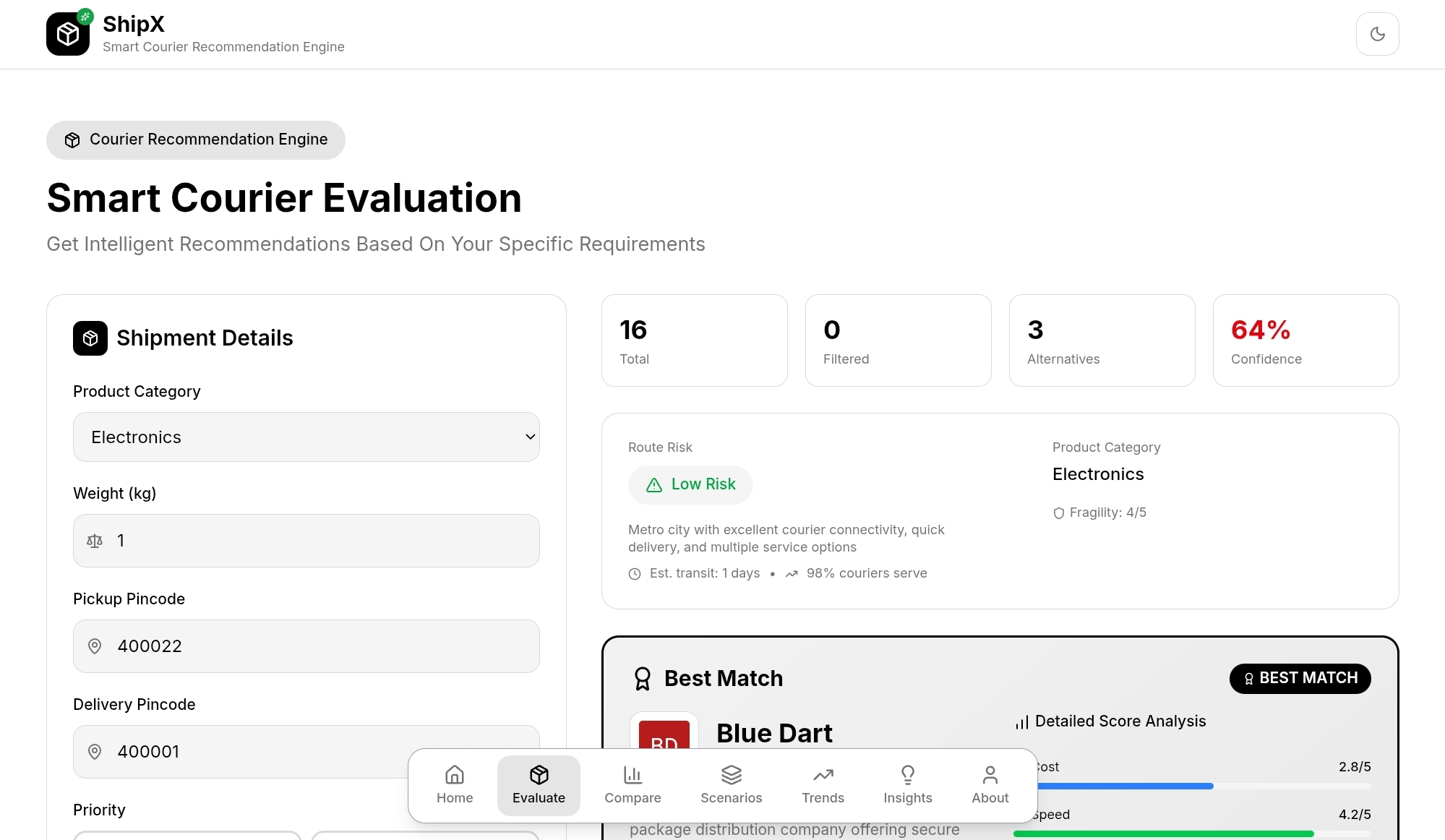
Courier Evaluation Page
-
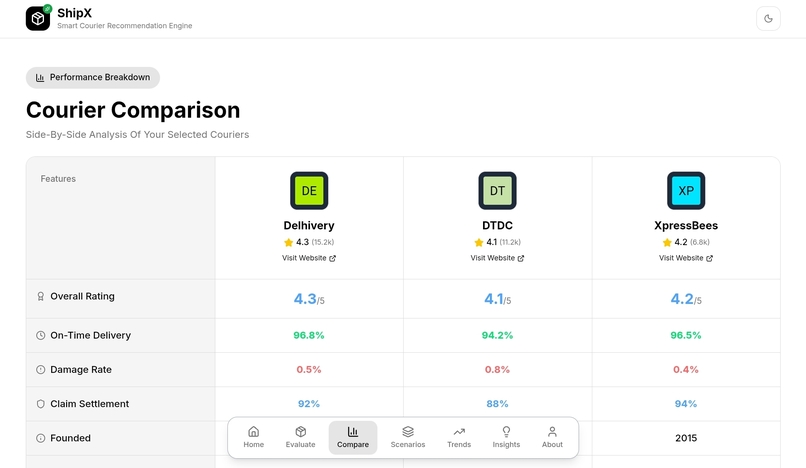
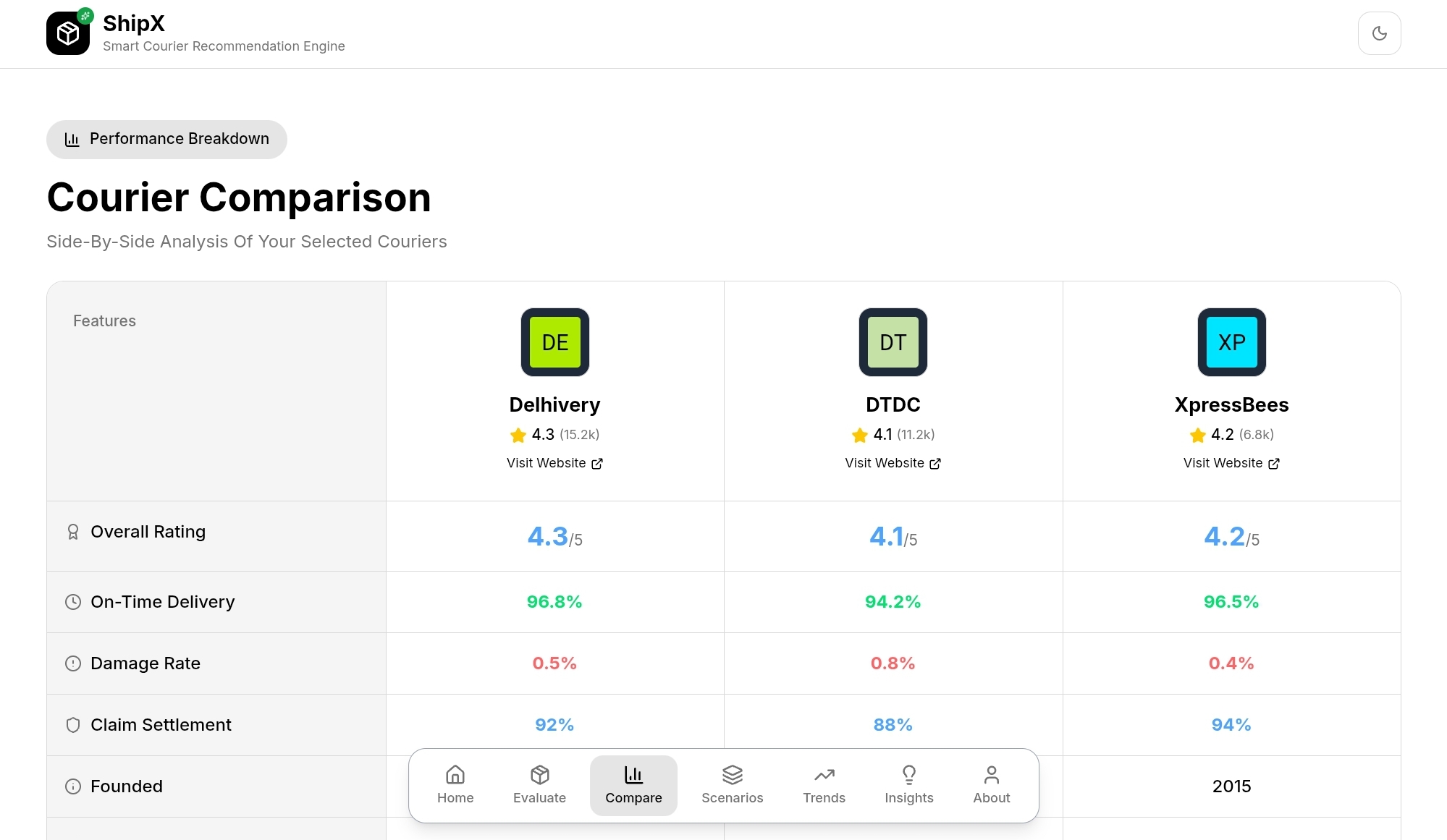
Courier Comparison Page
-
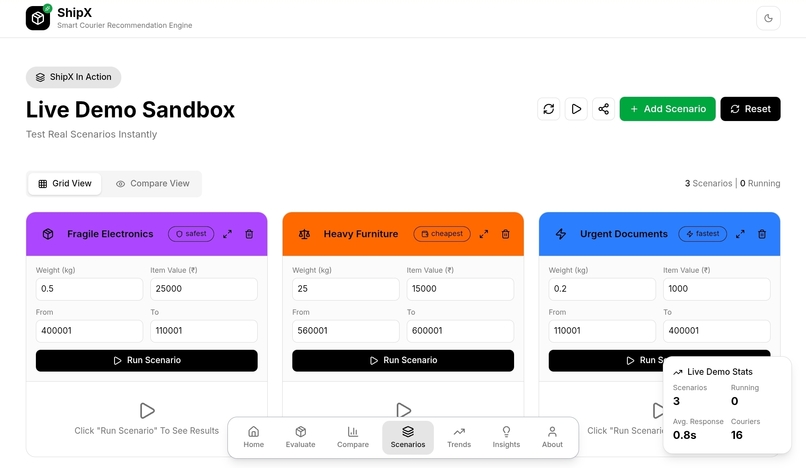
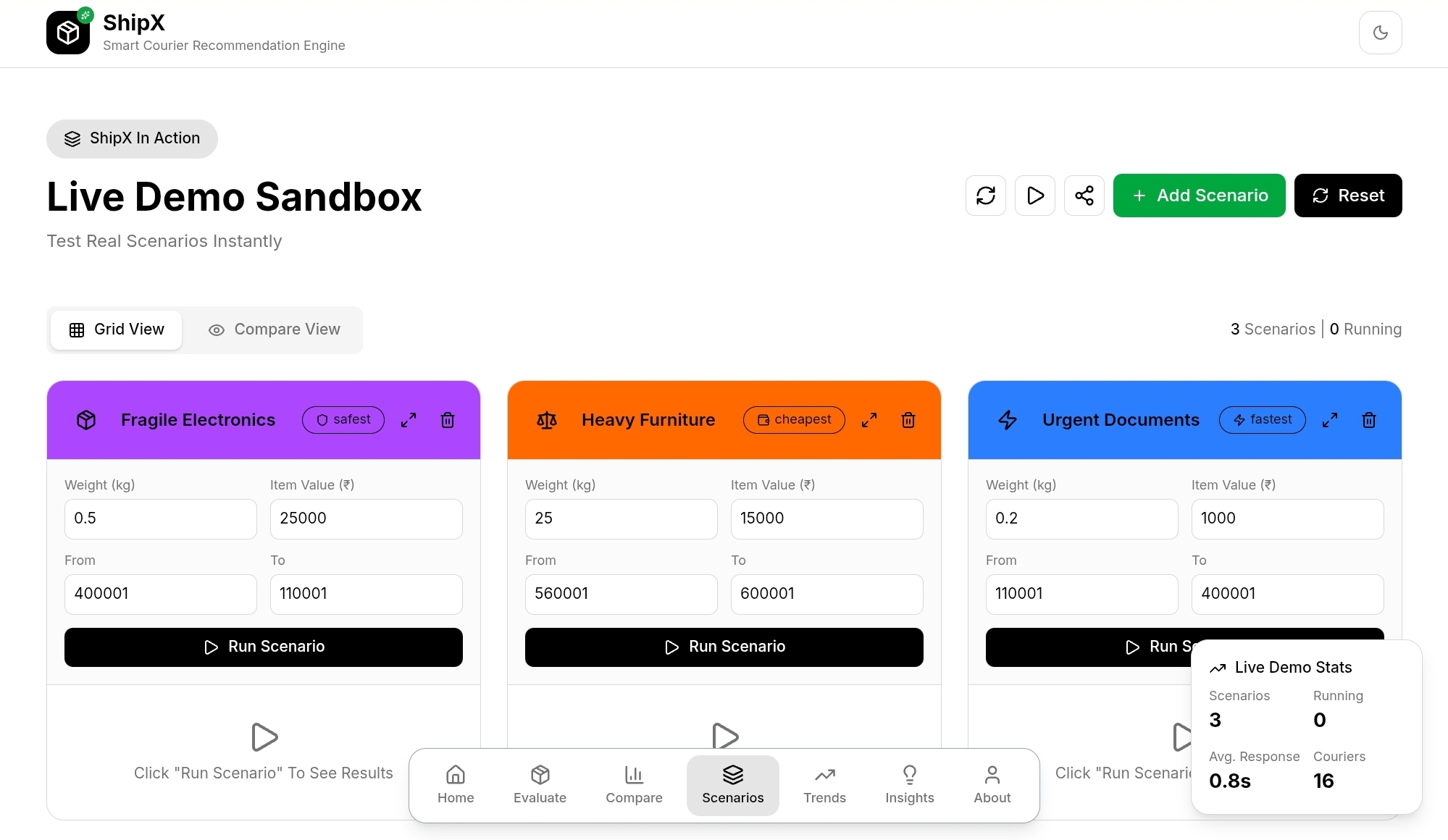
Scenarios (Live Demo) Page
-
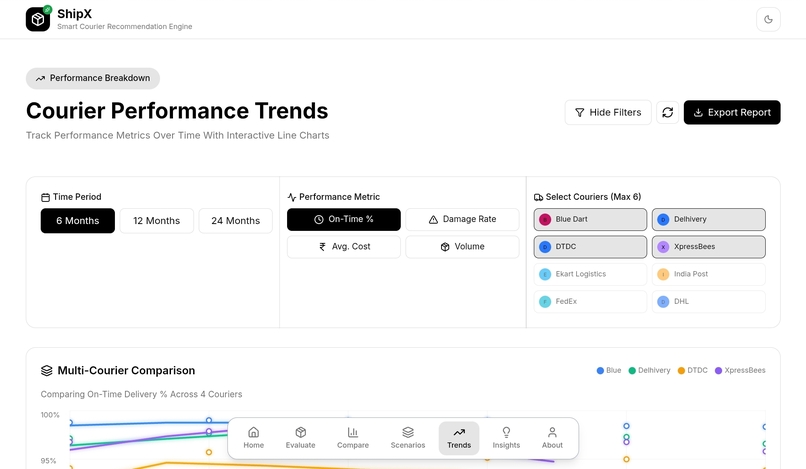
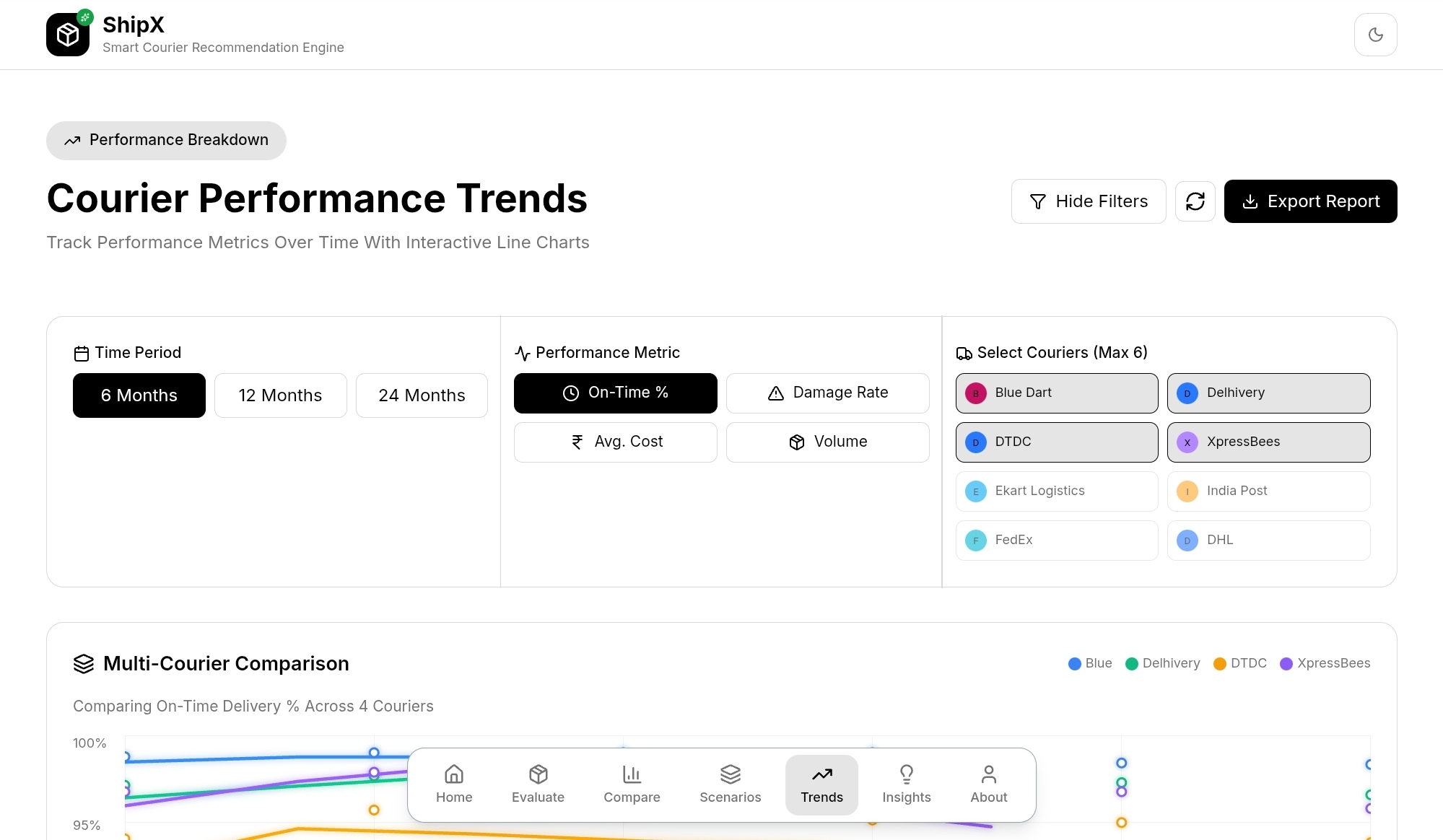
Courier Performance Trends Page
-
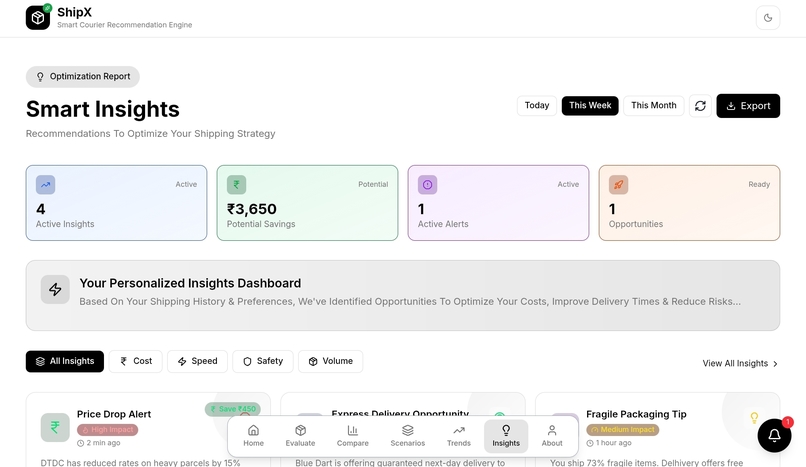
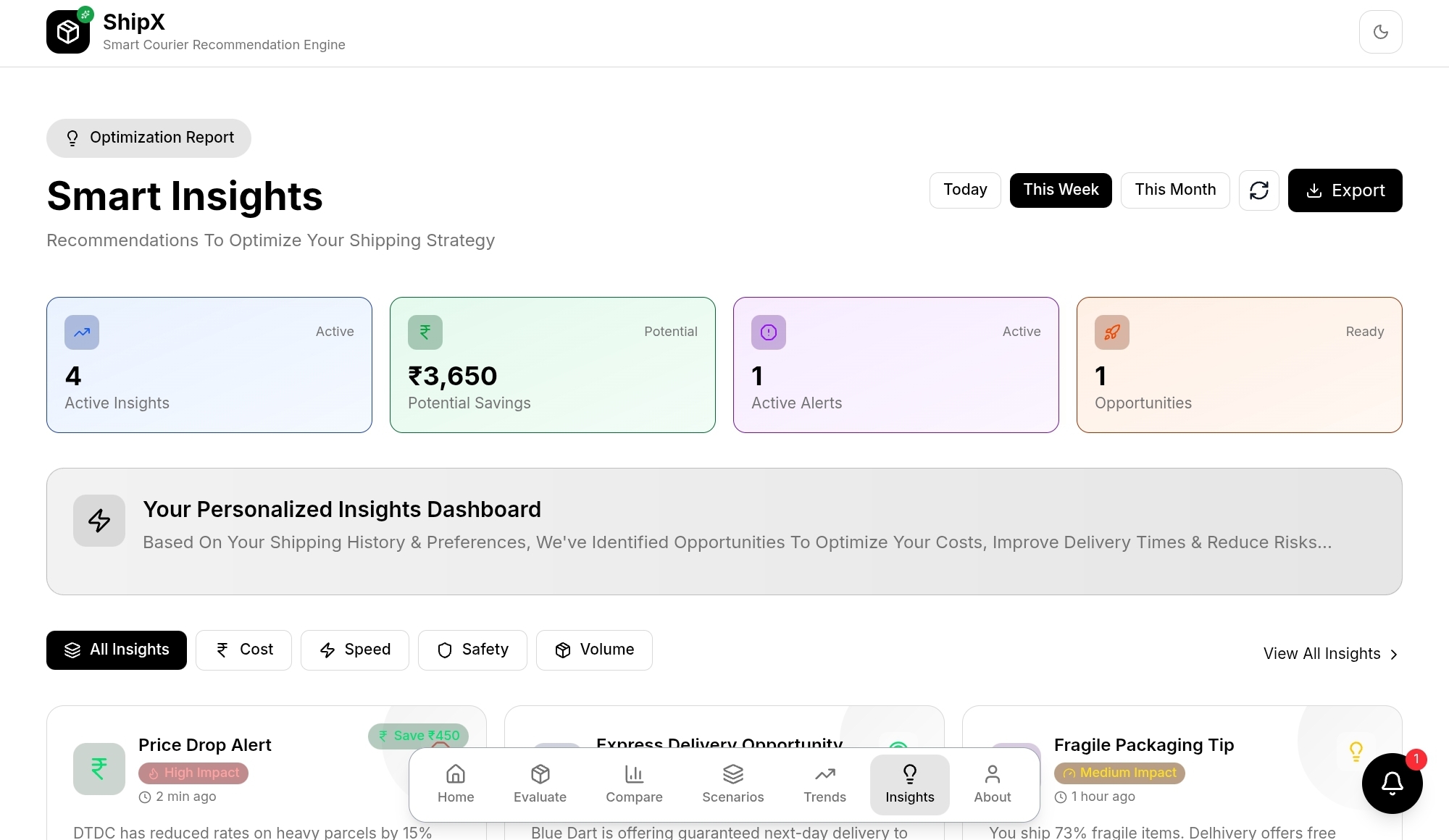
Smart Insights Page
-
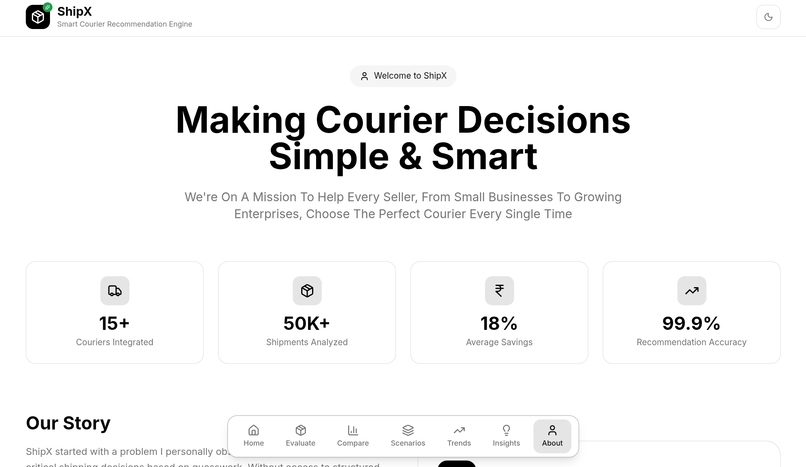
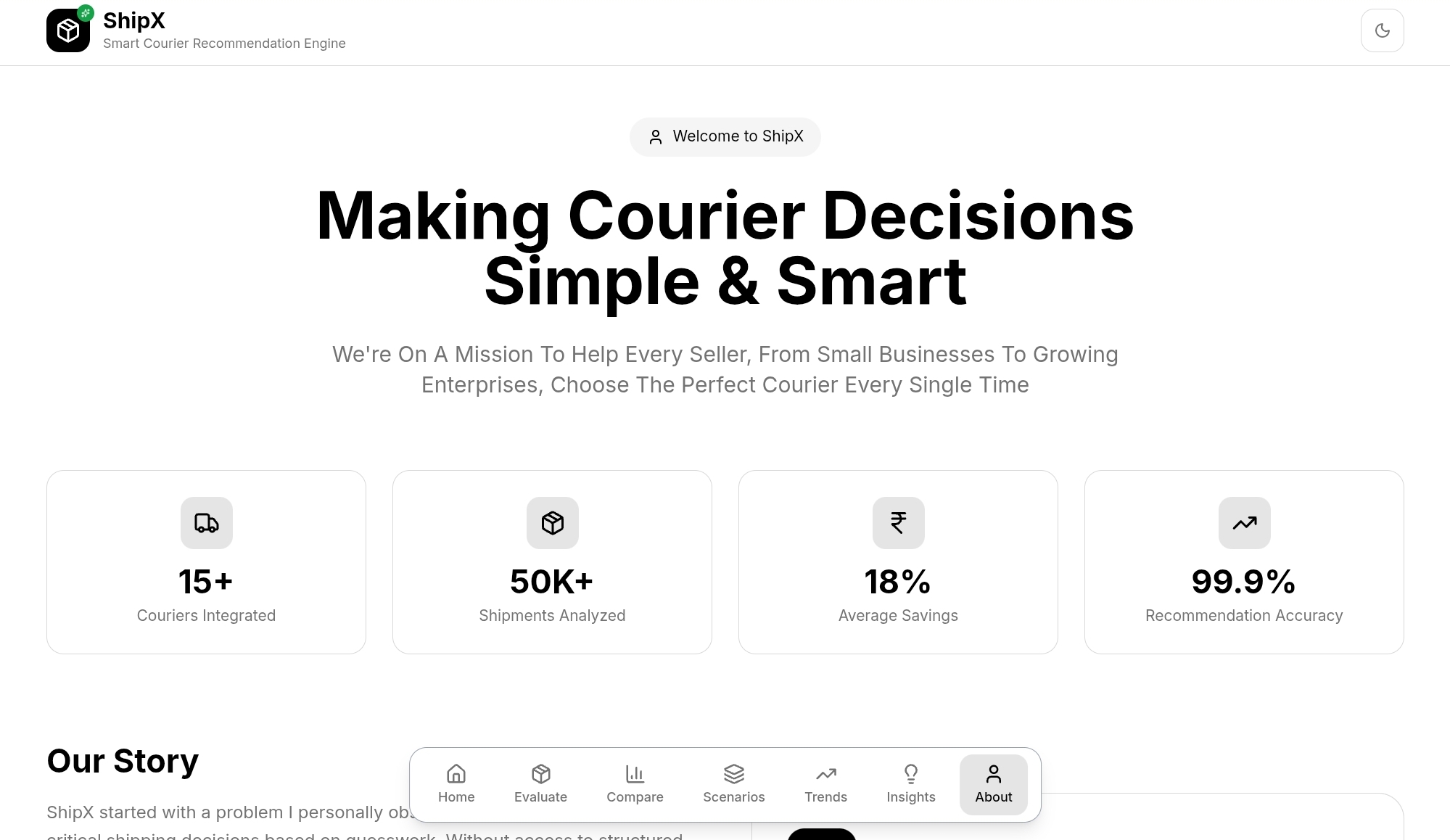
About Page
Inspiration
Small and medium e-commerce sellers operate in an increasingly competitive environment where logistics performance directly impacts profitability, customer satisfaction, and brand trust. Unlike large enterprises, they do not have access to dedicated logistics analysts or decision-support systems.
Courier selection is often reduced to either “cheapest” or “fastest,” without accounting for route risk, reliability, damage rates, service coverage, or historical performance trends. This leads to avoidable losses through delayed deliveries, damaged shipments, increased returns, and dissatisfied customers.
ShipX was inspired by the need to democratize logistics intelligence. We wanted to build a system that transforms courier selection from guesswork into a data-driven, multi-factor decision process.
What It Does
ShipX is a smart courier recommendation and comparison platform that helps sellers choose the most optimal courier based on structured, weighted evaluation.
The Platform:
- Analyzes product category, weight, origin and destination pincodes
- Classifies routes into Metro, Tier-2, Tier-3, or Rural categories
- Evaluates couriers across cost, speed, safety, reliability, coverage, and features
- Applies a scoring engine aligned with user priorities (Cheapest, Fastest, Safest, Balanced)
- Provides side-by-side comparisons across 50+ parameters
- Visualizes courier performance trends over time
- Generates actionable insights to optimize shipping strategy
Instead of simply listing prices, ShipX functions as a logistics intelligence layer that simplifies a multi-variable decision into a clear, explainable recommendation.
How We Built It
ShipX was built using a modular architecture with a strong separation between data modeling, scoring logic, and user interface.
Frontend:
- React 18
- TypeScript
- Tailwind CSS
- Vite
- React Router
Core Engine:
A custom-built recommendation engine that calculates weighted composite scores across multiple dimensions:
- Cost Efficiency
- Delivery Time Estimates
- Damage Probability Proxies
- On-time Performance Rates
- Coverage Strength
- Service Feature Availability
- Route Classification Logic Based On Pincode Patterns & Infrastructure Tiers
- Dynamic Scoring Recalculation Based On User-Selected Priority Profiles
Data Layer:
- Structured Courier Datasets Modeling Performance Metrics
- In-memory Evaluation & Aggregation
- Comparative Analysis Framework For Side-By-Side Benchmarking
This ensures explainability and adaptability rather than opaque black-box ranking.
Challenges We Ran Into
1. Designing a Fair Scoring System
Balancing cost, speed, safety, and reliability required careful normalization to prevent one metric from dominating results unfairly.
2. Route Risk Classification
Building a classification model that reflects real-world logistics variability across Metro, Tier-2, Tier-3, and Rural regions required structured abstraction while maintaining usability.
3. Avoiding Bias Toward Popular Couriers
We had to ensure that larger or more well-known couriers did not automatically receive higher rankings without metric justification.
4. UX Simplicity vs Analytical Depth
Presenting 50+ parameters without overwhelming users required thoughtful dashboard design and progressive disclosure.
5. Maintaining Explainability
We ensured the system remains interpretable rather than a black-box recommendation engine, which is critical for user trust in B2B tools.
Accomplishments That We're Proud Of
- Built a fully functional multi-factor logistics intelligence system
- Designed an explainable scoring engine grounded in weighted evaluation principles
- Created a scalable dashboard architecture with modular data flow
- Developed comparative analytics across dozens of courier parameters
- Delivered a clean, decision-focused user experience
- Framed logistics optimization as a structured engineering problem
We are especially proud that ShipX feels like a deployable SaaS product rather than a prototype.
What We Learned
1. Logistics Optimization Is a Systems Problem
Courier selection is not a single-variable comparison. It is a trade-off analysis across cost, risk, reliability, and coverage.
2. Explainability Builds Trust
In decision-support systems, transparency in scoring logic is as important as accuracy.
3. UI Matters in Analytical Tools
Complex evaluation systems only deliver value if users can interpret the results quickly and confidently.
4. Structured Data Modeling Simplifies Complexity
Strong TypeScript interfaces and modular engine design reduced development friction and improved maintainability.
5. Real-World Tools Require Constraint Awareness
We learned to design within practical business constraints rather than theoretical optimization models.
What's Next For ShipX
- Integration with real-time courier APIs for dynamic pricing and performance updates
- Historical shipment data ingestion for personalized recommendation models
- Predictive delay modeling using time-series analysis
- Bulk shipment evaluation for enterprise users
- Cost optimization simulations across multiple couriers
- Machine learning–based anomaly detection for performance drops
- SaaS deployment with authentication, saved preferences, and analytics dashboards
The long-term vision is to position ShipX as a logistics intelligence layer that empowers small and mid-sized businesses with capabilities traditionally available only to large enterprises.
Built With
- react
- tailwindcss
- typescript
- vite

Log in or sign up for Devpost to join the conversation.