Inspiration
I grew up battling spinning tops on the kitchen table, and I wanted that same feeling of ripping the cord and cheering as your top knocks the other one out of the ring. With the Quest 3's mixed reality and hand tracking, a battle arena appears right in your room. No controllers, no fake world: your real room, your real hands, and a top that feels like it's actually spinning in front of you.
What it does
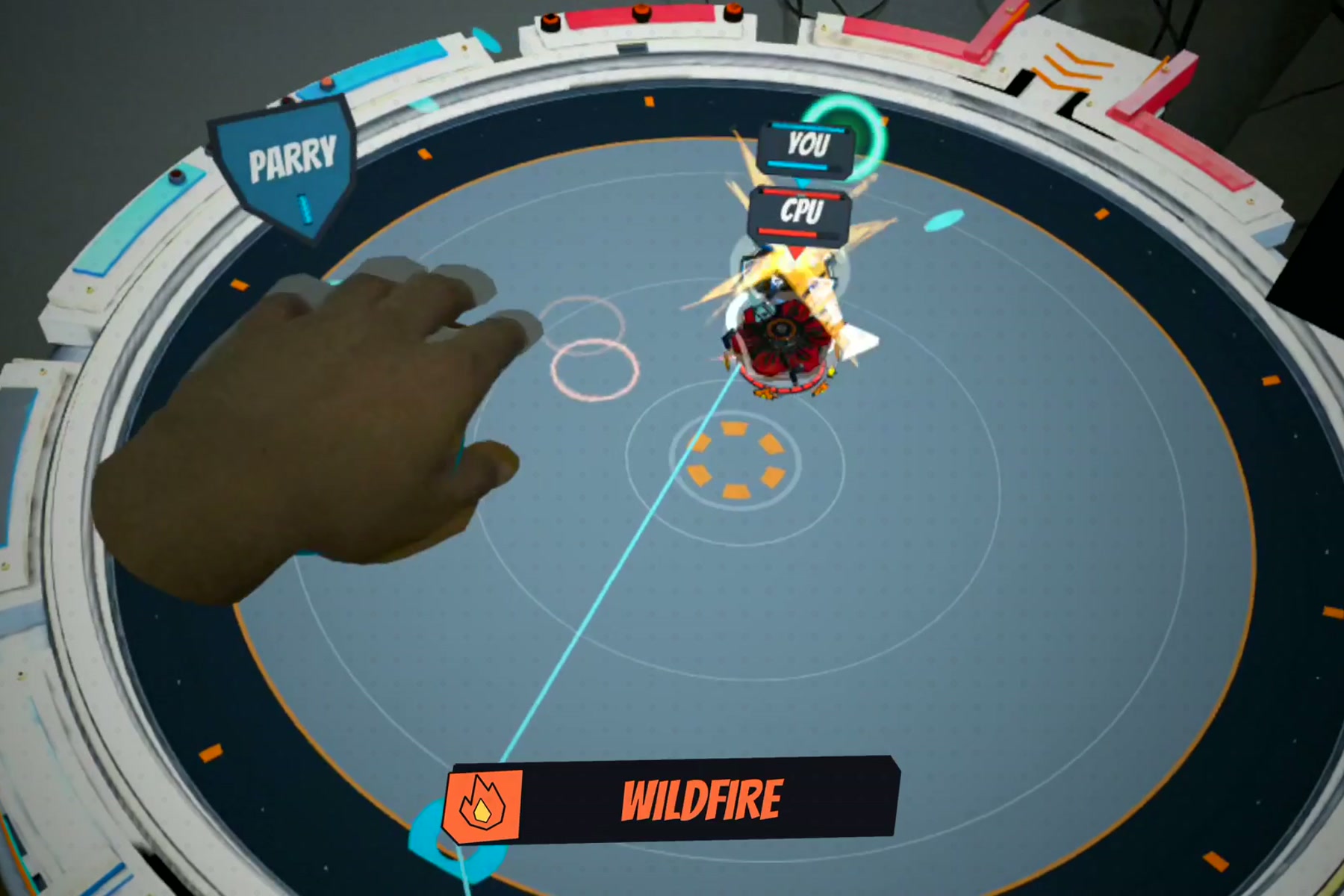
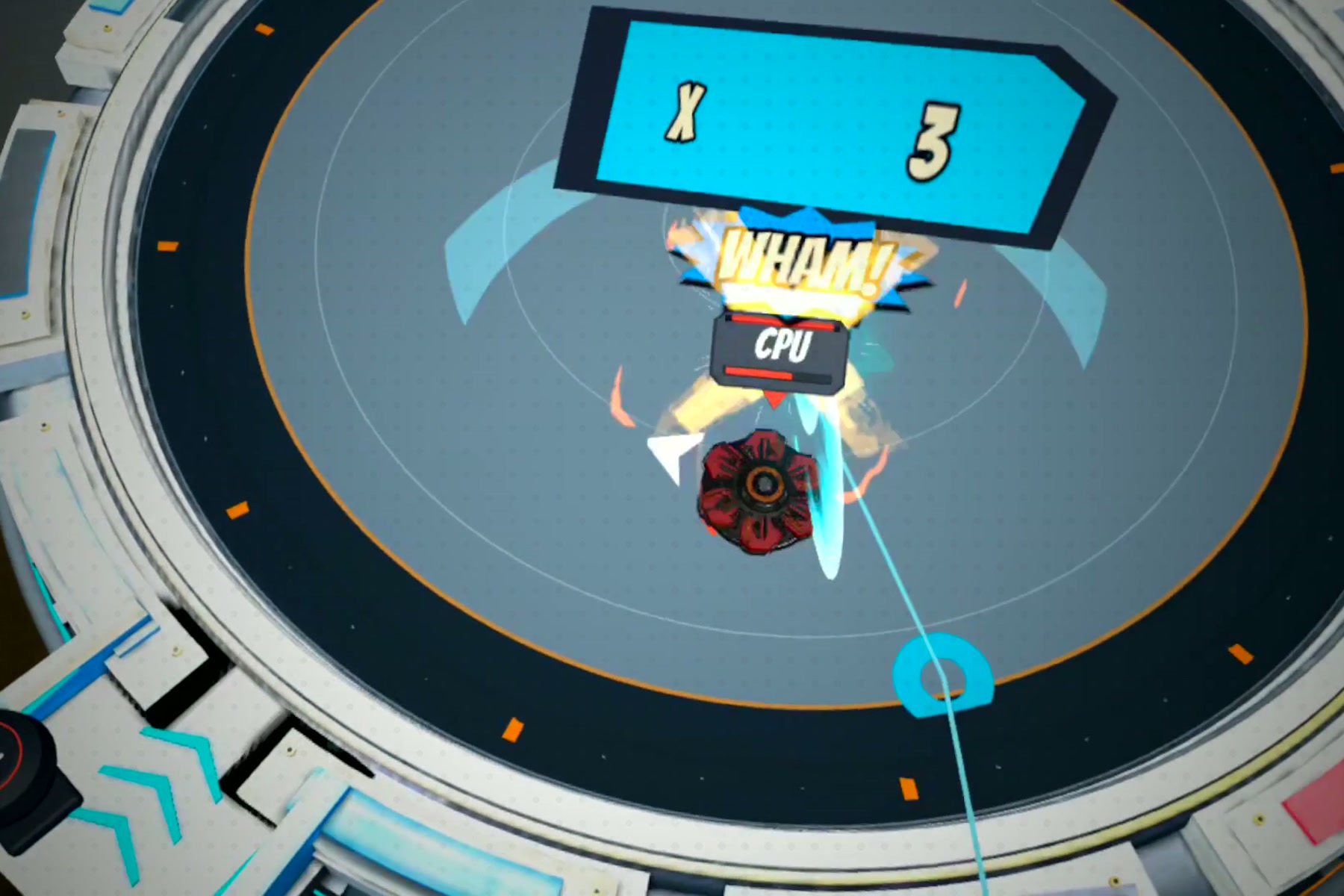
SpinArena VR is a hands-only mixed-reality spinning-top battler.
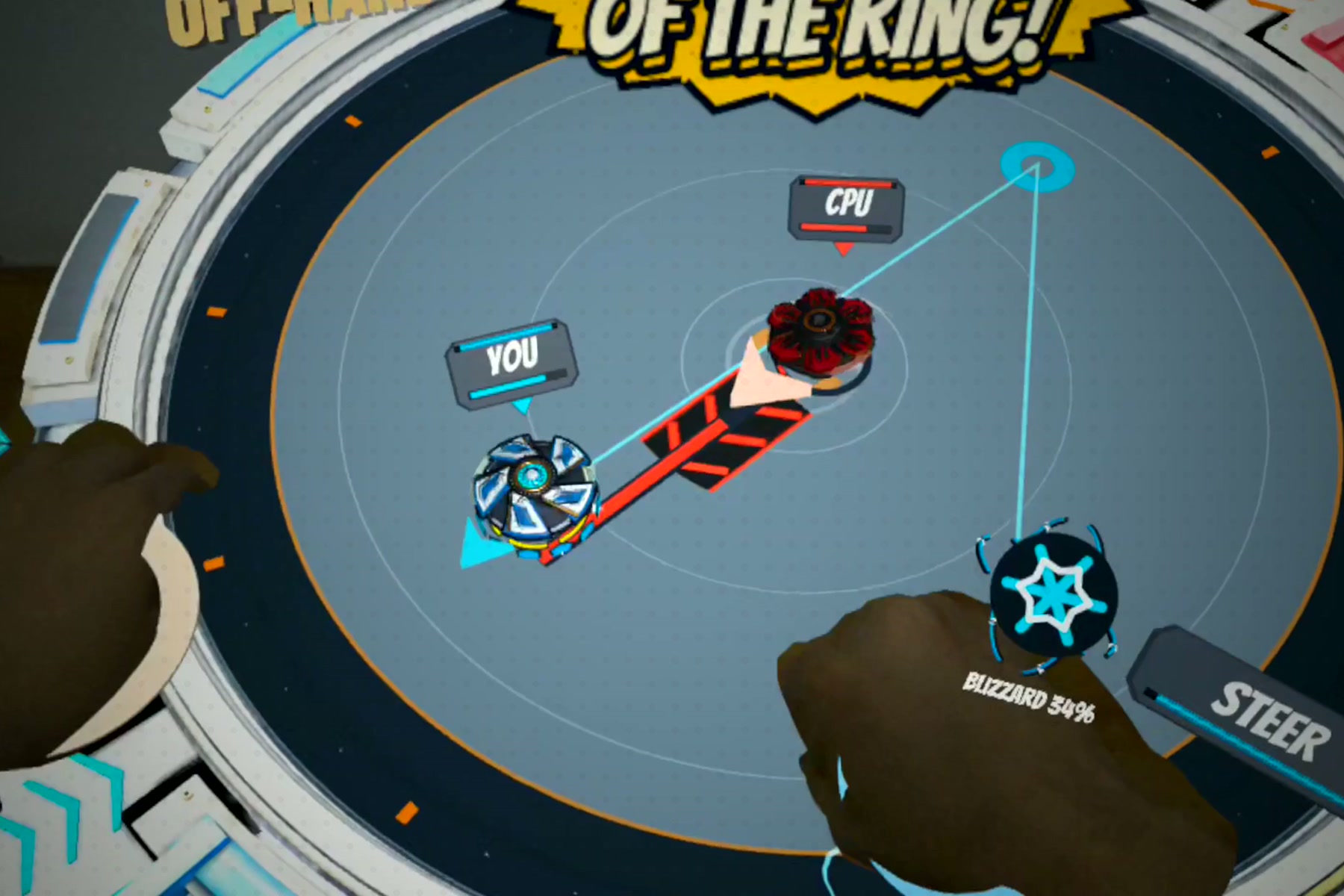
- The arena is in your room. Hold your hands out over your real table: the headset reads its shape, comic dots wash over it out to its edges, and the arena slams down on it (no table under your hands? a game table appears instead), and real objects in your room can hide the tops as they pass behind them.
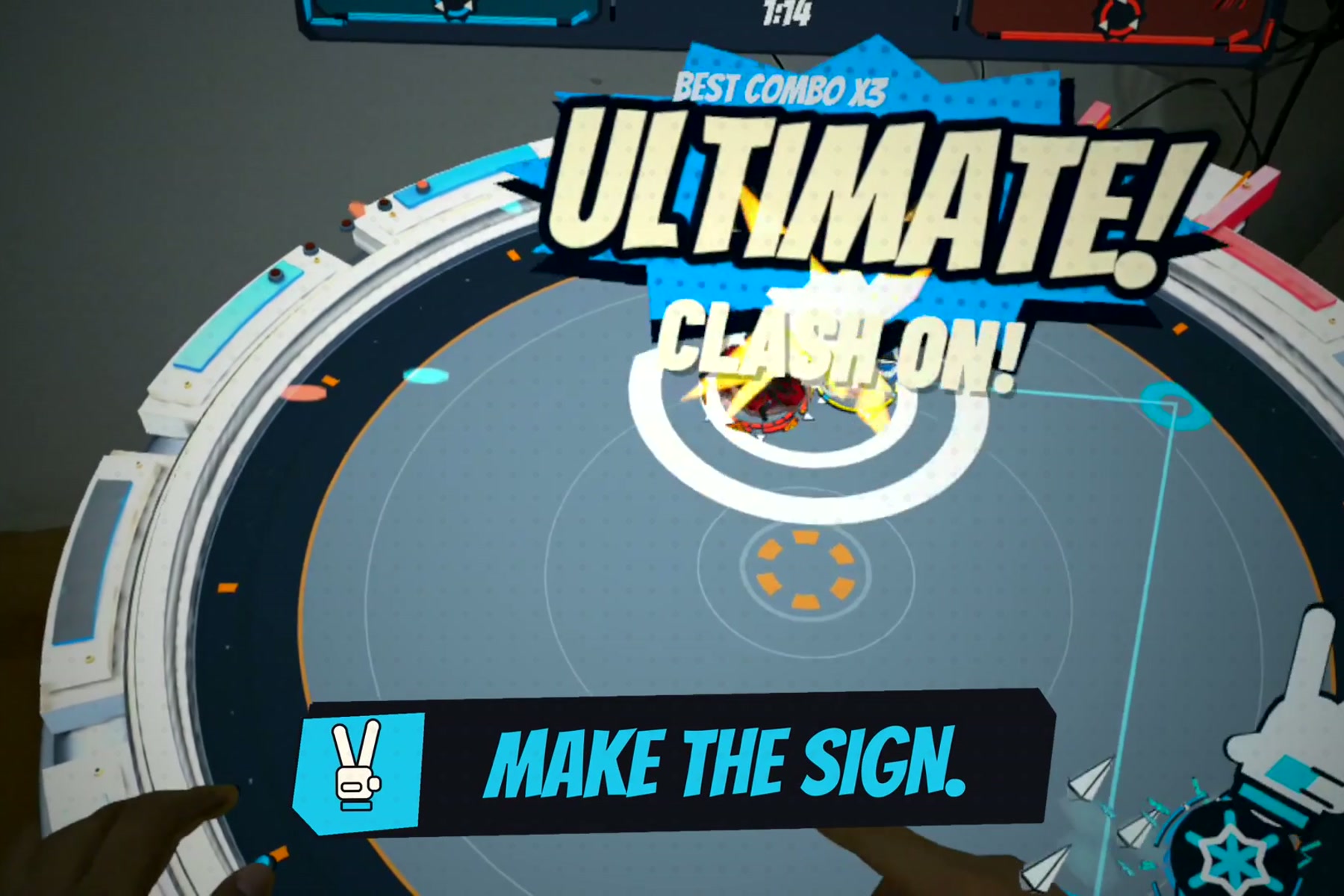
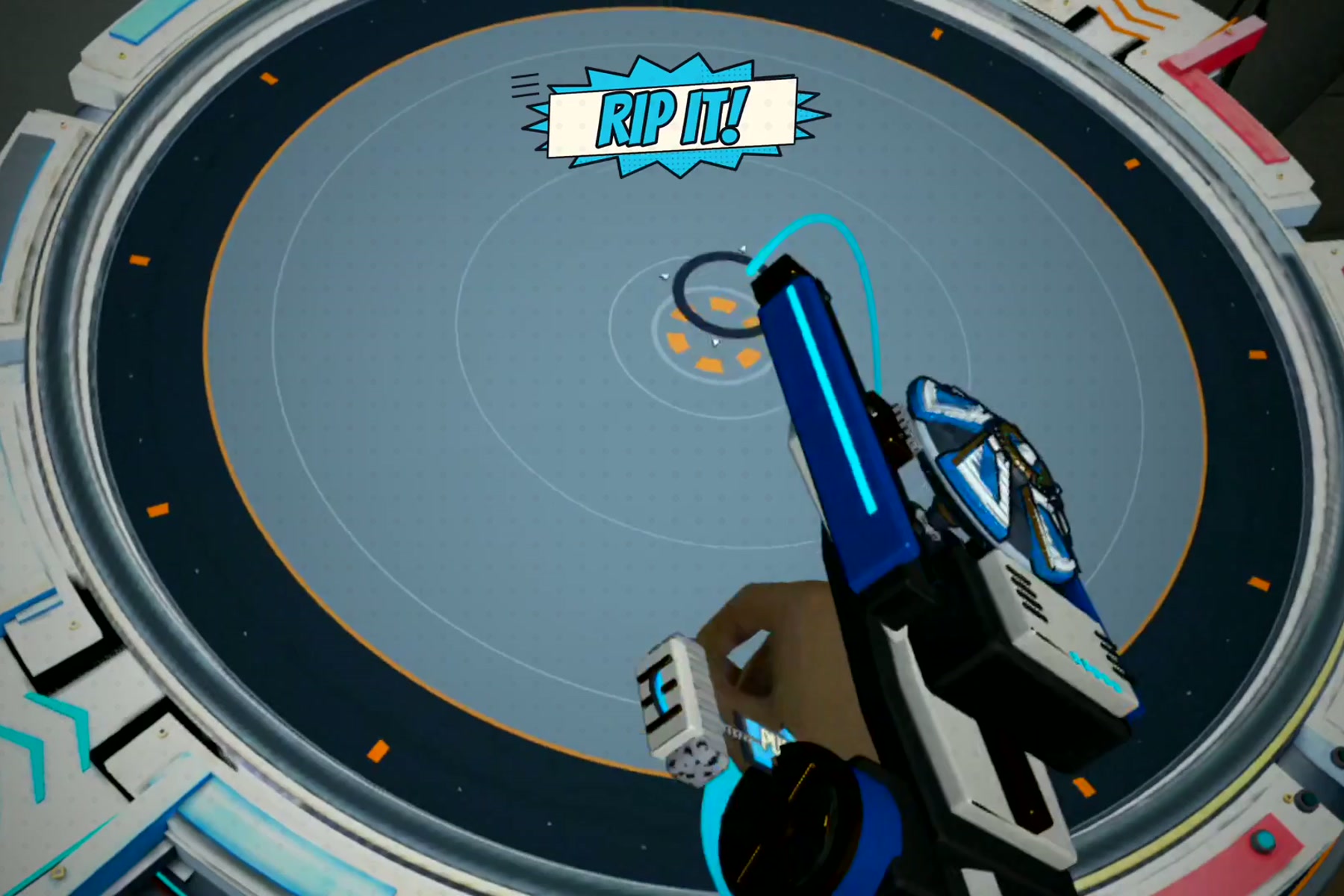
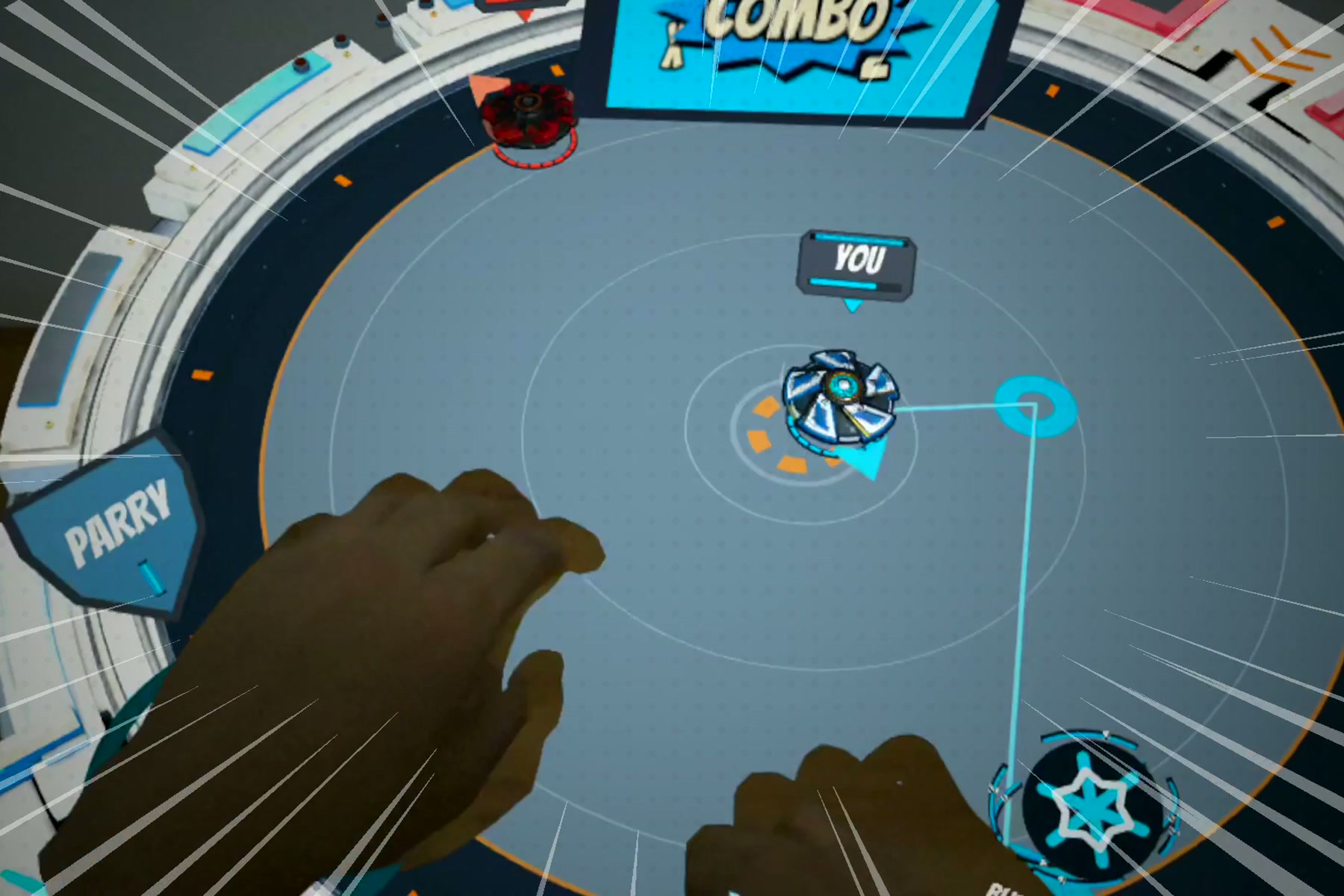
- Your hands are the launcher. Pinch to grab the cord, pull to rip, and the quality of your rip sets your spin power. In the fight you aim and dash, brace, parry, flick to dodge, and cast a hand-sign ultimate.
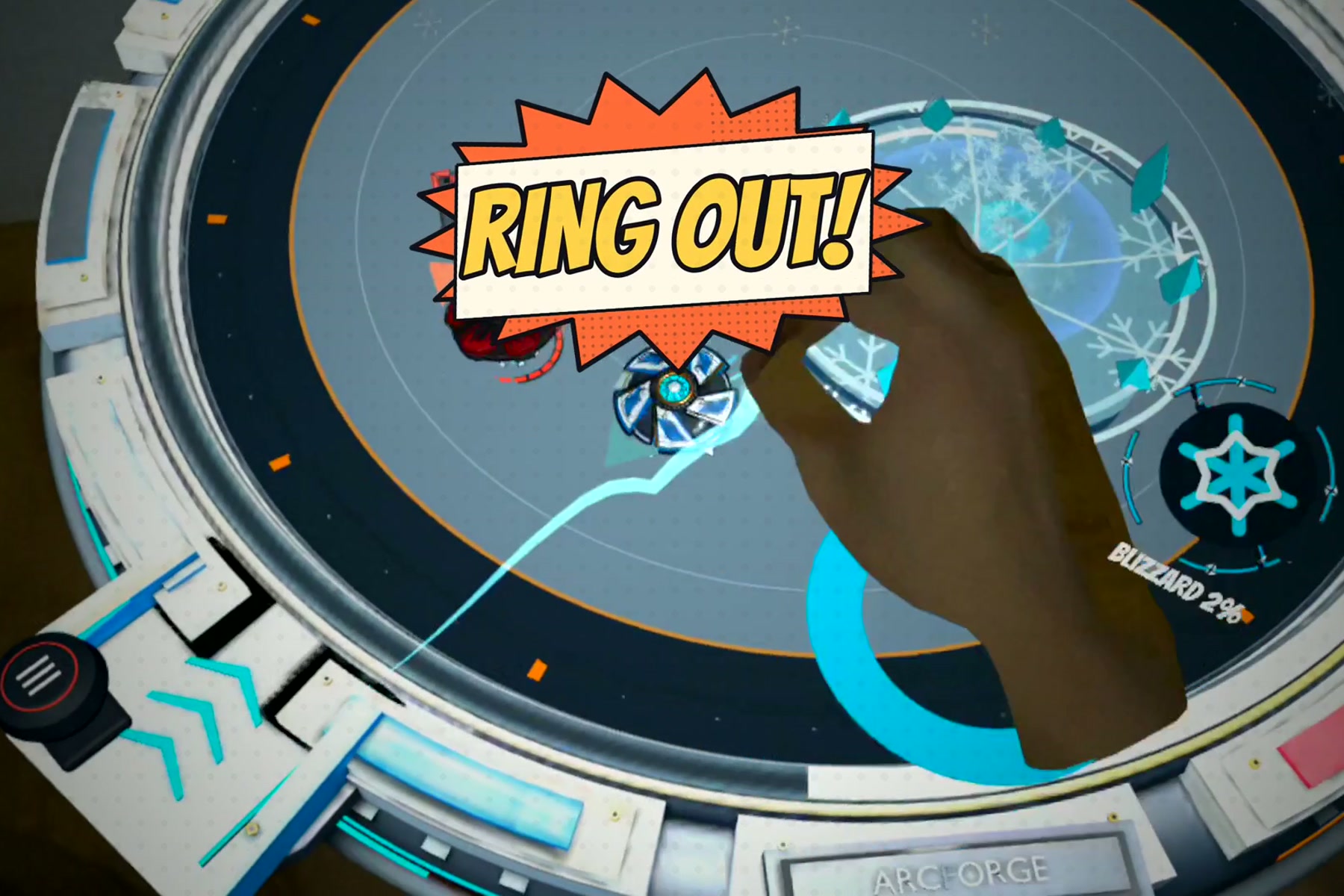
- Ring them out. Knock your rival off the table, then watch the K.O. replay.
- Modes:
- Gauntlet: four rivals, then the Overlord boss, with perk cards between fights, a Daily Run with a daily twist and medals.
- Online 1v1: private room codes, where you see your opponent's hands as glowing ghost hands and can taunt them with hand emotes.
- Nearby 1v1: on the same Wi-Fi.
- Plus: a guided tutorial that teaches every move by doing it.
- A roster of spinners and launchers, each with its own ultimate, and several themed arenas.
How we built it
I built SpinArena VR solo in Unity 6 with the Universal Render Pipeline for Meta Quest 3, using Meta's hand tracking, passthrough and Depth API for mixed reality. The game runs its own physics so every top behaves predictably, and the same game rules run on a small dedicated server for online matches. The art, VFX and audio were made in themed packs, each with a written brief, then integrated and tuned in the headset.
Challenges we ran into
- Gestures that feel right: making a cord rip, a dash and a parry read reliably from hand tracking alone, with no buttons to fall back on, took many rounds of tuning.
- Making a virtual arena feel physically there: the table had to sit at a comfortable height, stay put in any room and react believably, so it feels like a real object in front of you.
- Online play that feels fair: spinning tops collide fast, so keeping both players' views smooth and in agreement over the internet, even on bad Wi-Fi, was hard.
- Readability in a real room: effects, cards and text had to read clearly over a bright, busy living room.
Accomplishments that we're proud of
- A full game you play with only your hands, from the first launch to the final ring-out.
- A Gauntlet with a real boss fight, perks, daily runs and medals.
- Online 1v1 where you can see your opponent's hands and wave, point or thumbs-up at them.
- A tutorial that gets a new player ripping and dashing within a minute or two.
What we learned
Hand tracking rewards forgiving, generous design: every gesture needs clear feedback and a little tolerance. Mixed reality is at its best when the virtual game respects the real room, so occlusion and a table that sits naturally in your space matter more than more effects. And playtesting with friends in the headset beat every assumption I had.
What's next for SpinArena VR
- Testing the table reading in many more rooms and on more kinds of tables.
- Ranked online matchmaking and friend invites.
- More spinners, launchers and arenas.
- Weekly Gauntlet events and leaderboards.
- Tournaments in shared spaces for local parties.
- Launch on the Meta Horizon Store in December 2026.
