-
-
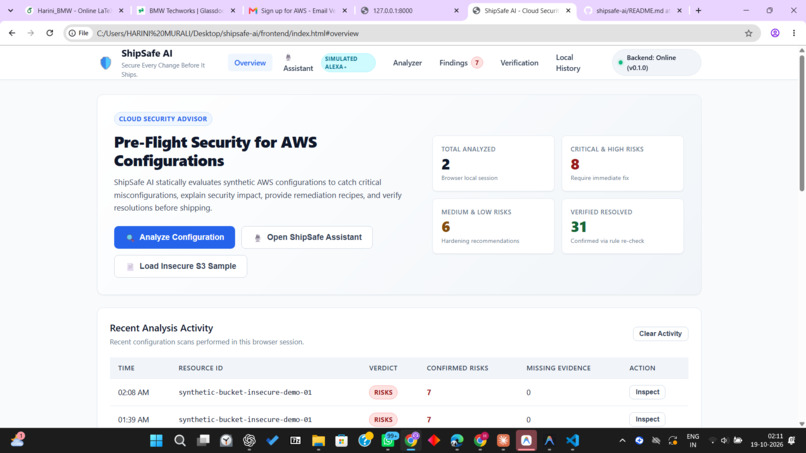
ShipSafe AI — Intelligent AWS Configuration Security Advisor
-
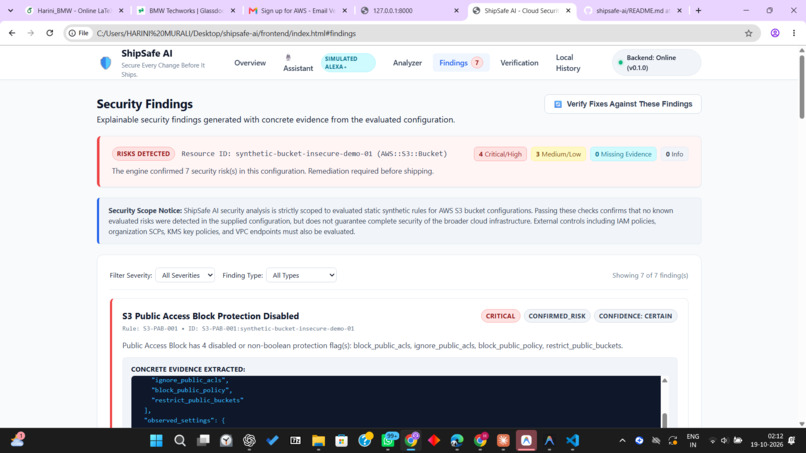
Detecting AWS S3 Security Misconfigurations
-
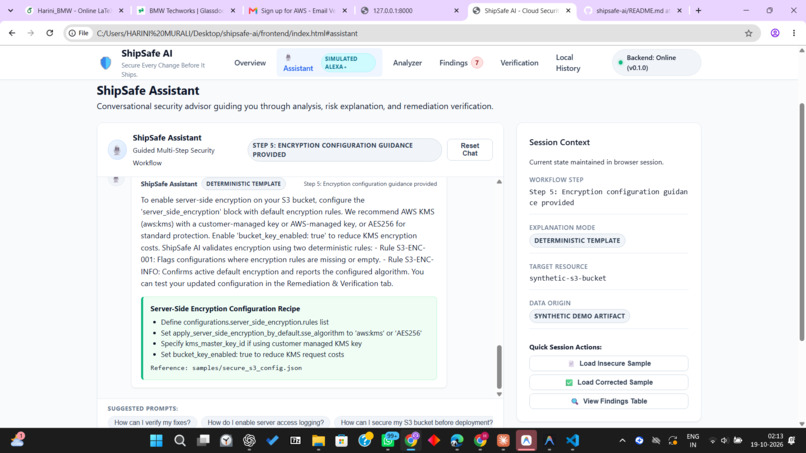
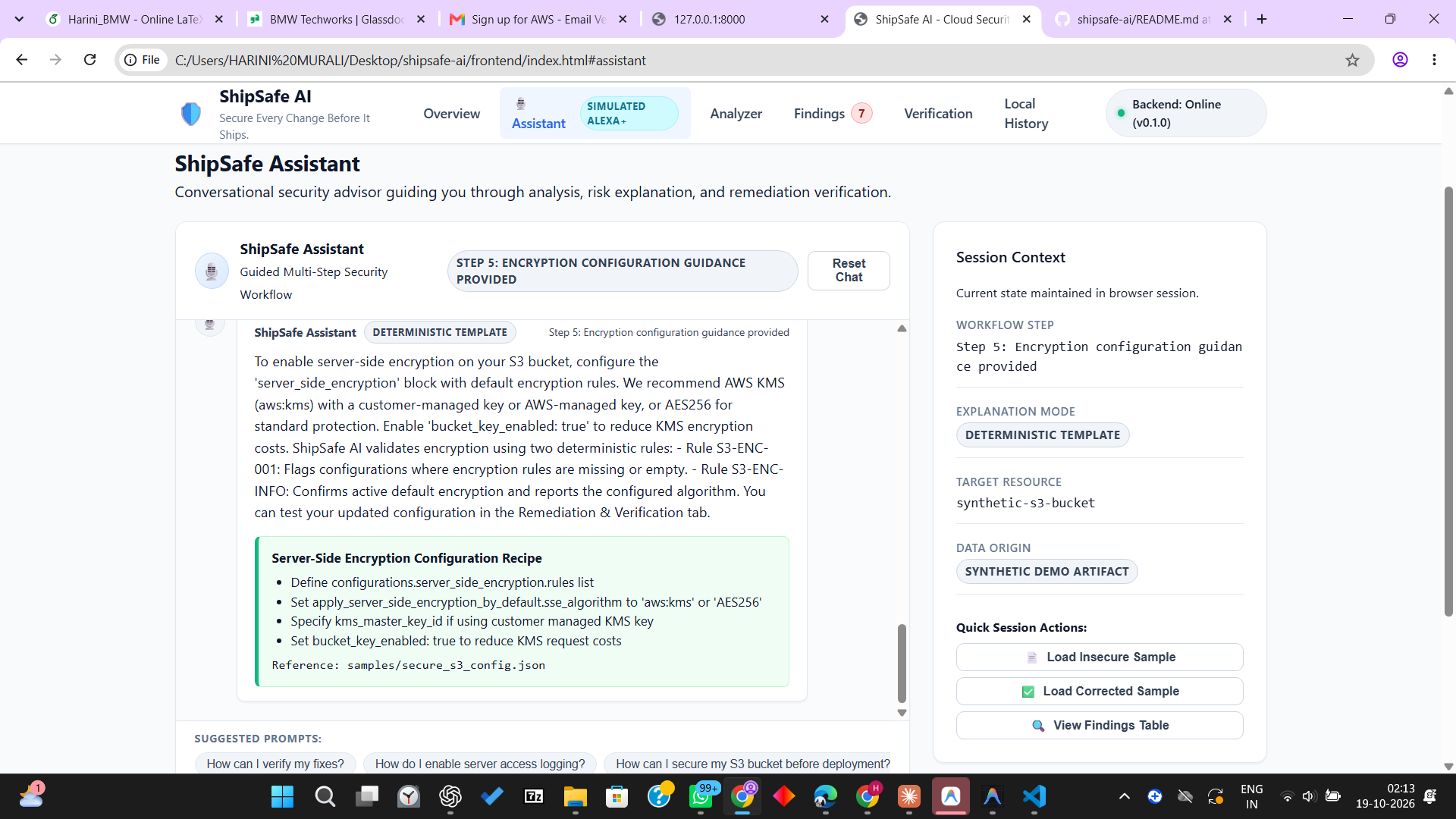
Simulated Alexa+ Assistant for AWS Security Guidance
-
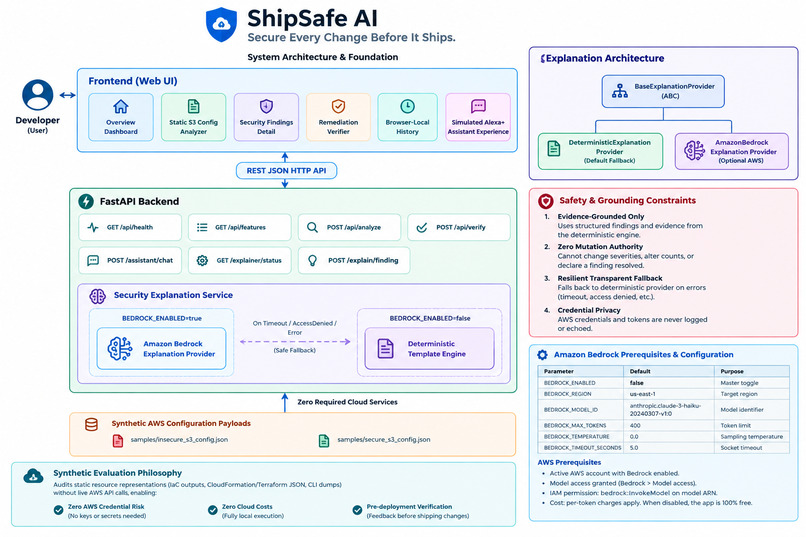
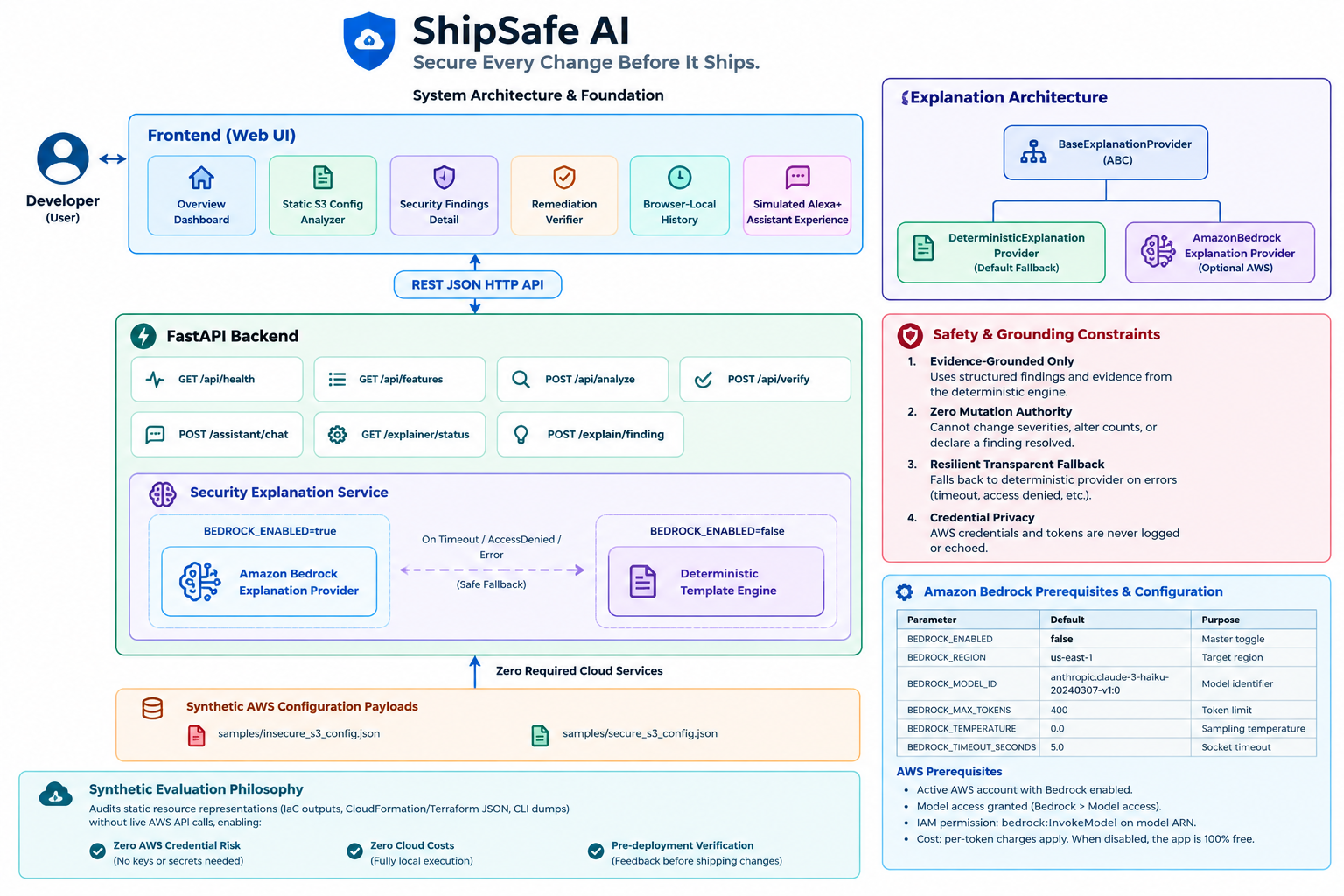
ShipSafe AI Architecture and Security Analysis Workflow
-
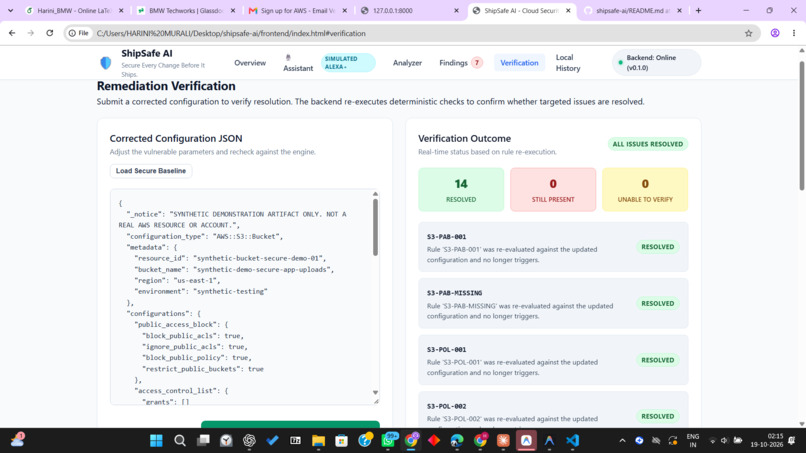
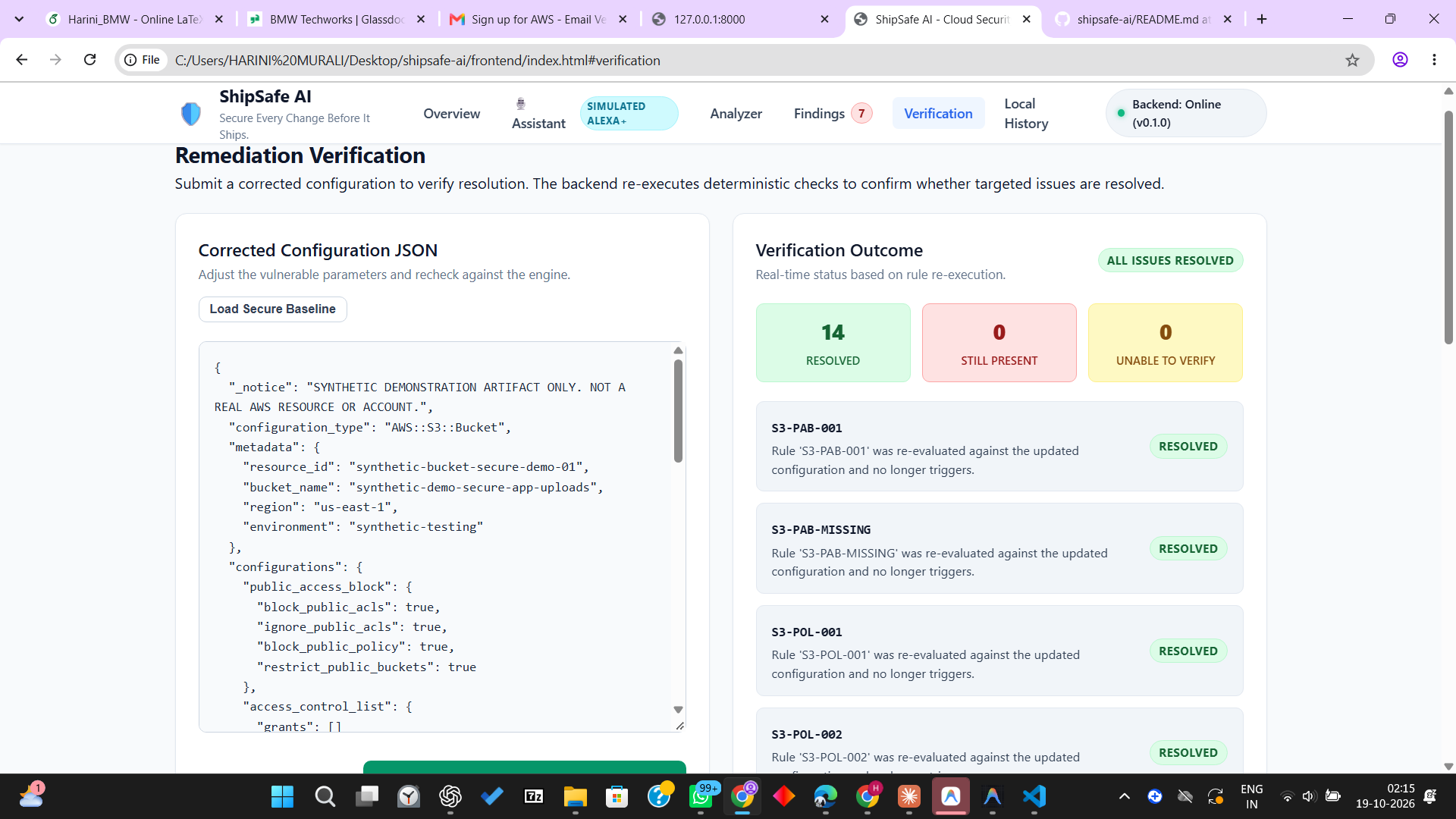
Remediation Verification — Automated Security Fix Validation
Inspiration
Cloud security misconfigurations can expose sensitive data and create serious risks. Developers need a simple way to identify configuration problems before deploying their applications. Traditional security tools can be difficult for beginners to understand, while AI-generated advice alone may not provide reliable evidence.
This inspired us to build ShipSafe AI — a developer-friendly security advisor that helps identify AWS configuration risks, explain why they matter, and verify whether proposed fixes resolve the detected issues.
What It Does
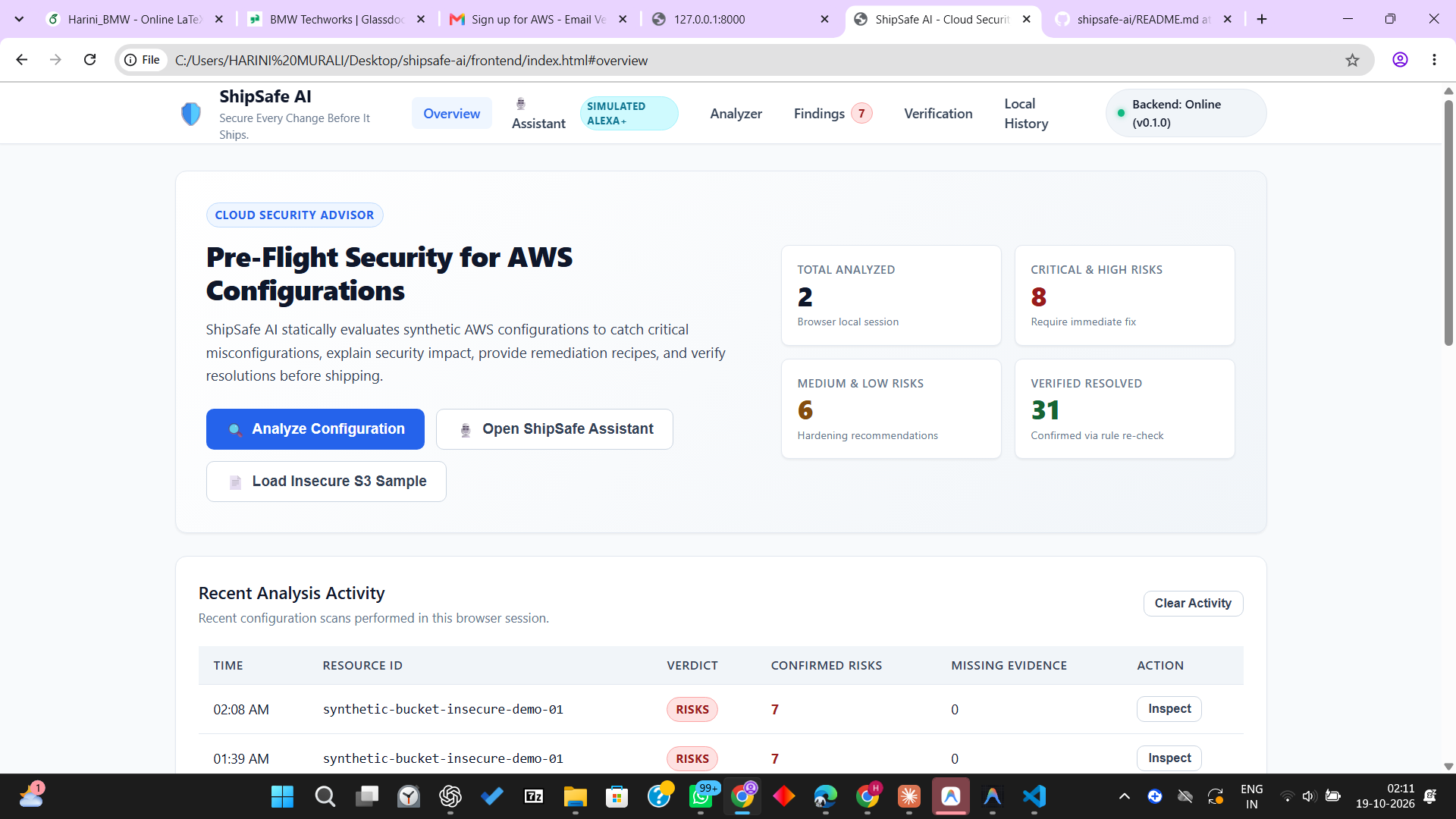
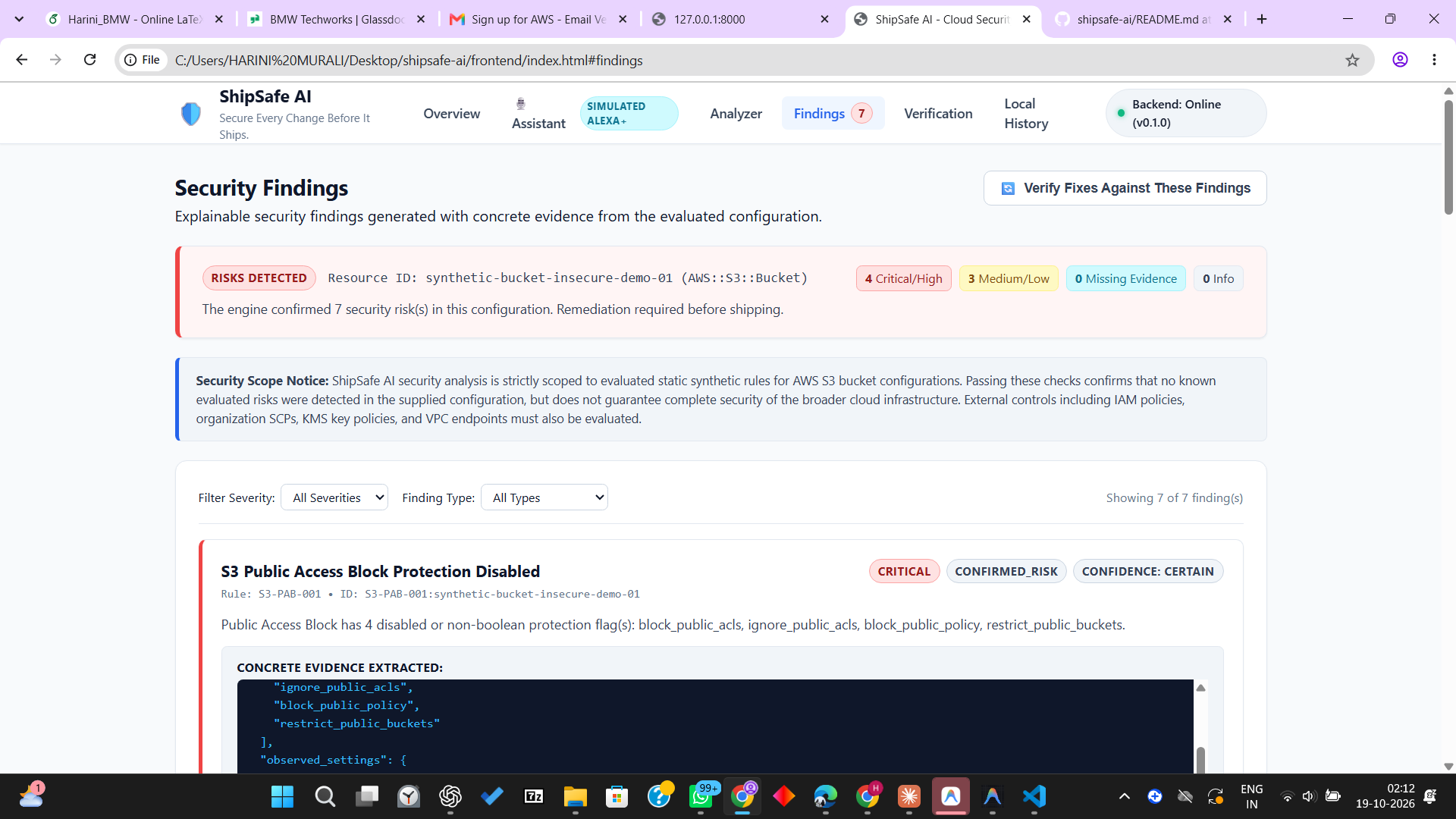
ShipSafe AI analyzes AWS S3 configuration JSON files using deterministic security rules. It identifies potential risks, presents supporting evidence, explains their impact, and recommends remediation steps.
Its verification workflow analyzes a corrected configuration again to determine whether previously detected issues remain. The project also includes a simulated Alexa+-style conversational experience that lets users interact with the security analysis through natural-language requests.
The core analysis works locally without requiring AWS credentials. An optional AI explanation component can provide more natural explanations when configured.
How We Built It
We built ShipSafe AI using Python and FastAPI for the backend, with HTML, CSS, and JavaScript for the frontend.
A rule-based analysis engine evaluates configuration settings and produces structured findings. The verification workflow reruns the same security rules against updated configurations rather than assuming a fix was successful.
The conversational interface connects to the backend so users can request analysis, explore findings, understand risks, and verify corrections. The application is designed to remain functional without an external AI service.
Challenges We Faced
One of the main challenges was ensuring that security findings were based on actual configuration evidence rather than unsupported AI-generated claims.
We addressed this by separating deterministic security checks from natural-language explanations. Another challenge was implementing meaningful remediation verification, which requires re-running the security rules against the corrected configuration.
We also focused on keeping the application accessible to developers who want to explore security concepts without connecting to live AWS infrastructure.
What We Learned
Building ShipSafe AI helped us explore backend API development, cloud security concepts, configuration validation, explainable security analysis, testing, and conversational application design.
We learned that AI is most useful in security workflows when its explanations are grounded in verifiable evidence and supported by deterministic checks.
Future Scope
Future improvements could include additional AWS security checks, broader infrastructure-as-code support, integration with CI/CD pipelines, and expanded cloud-service analysis.
Our goal is to help developers identify and address configuration risks before they ship.
Built With
- actions
- ai
- amazon
- amazon-web-services
- api
- bedrock
- cloud
- css
- docker
- fastapi
- generative
- github
- html
- javascript
- python
- rest
- security

Log in or sign up for Devpost to join the conversation.