-
-
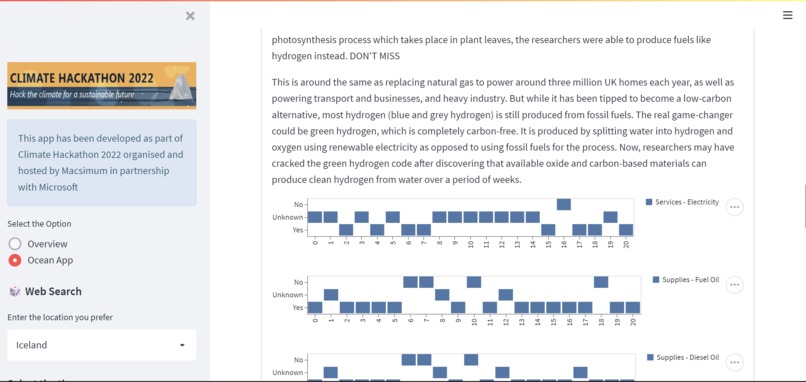
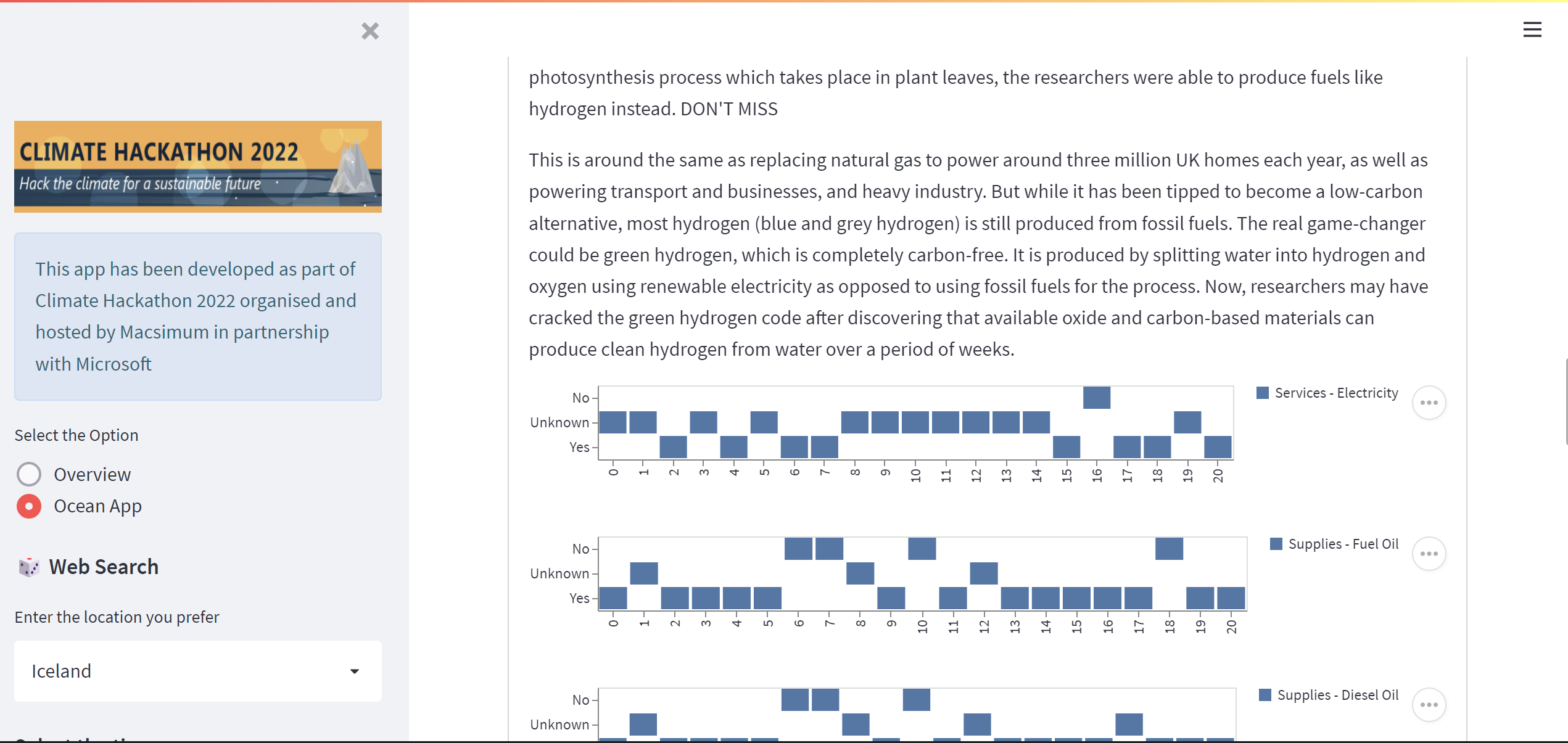
NLP Analysis
-
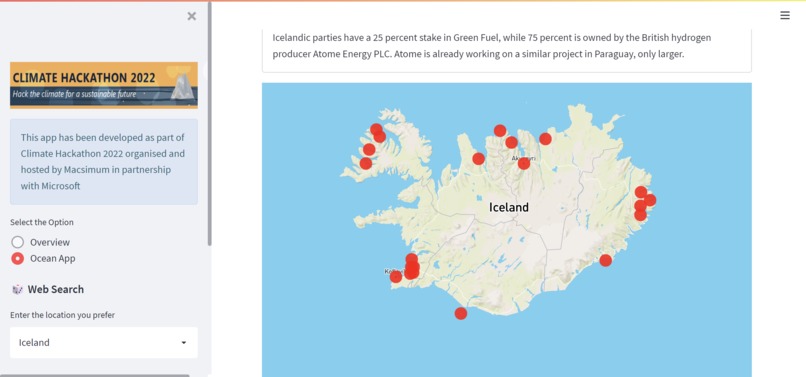
Port locations for a region
-
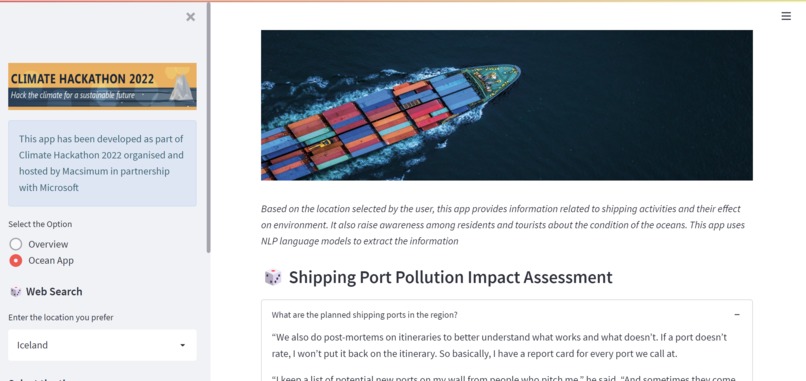
Introduction View

Inspiration
We believe that AI has great potential to have positive impact on environment and climate.
What it does
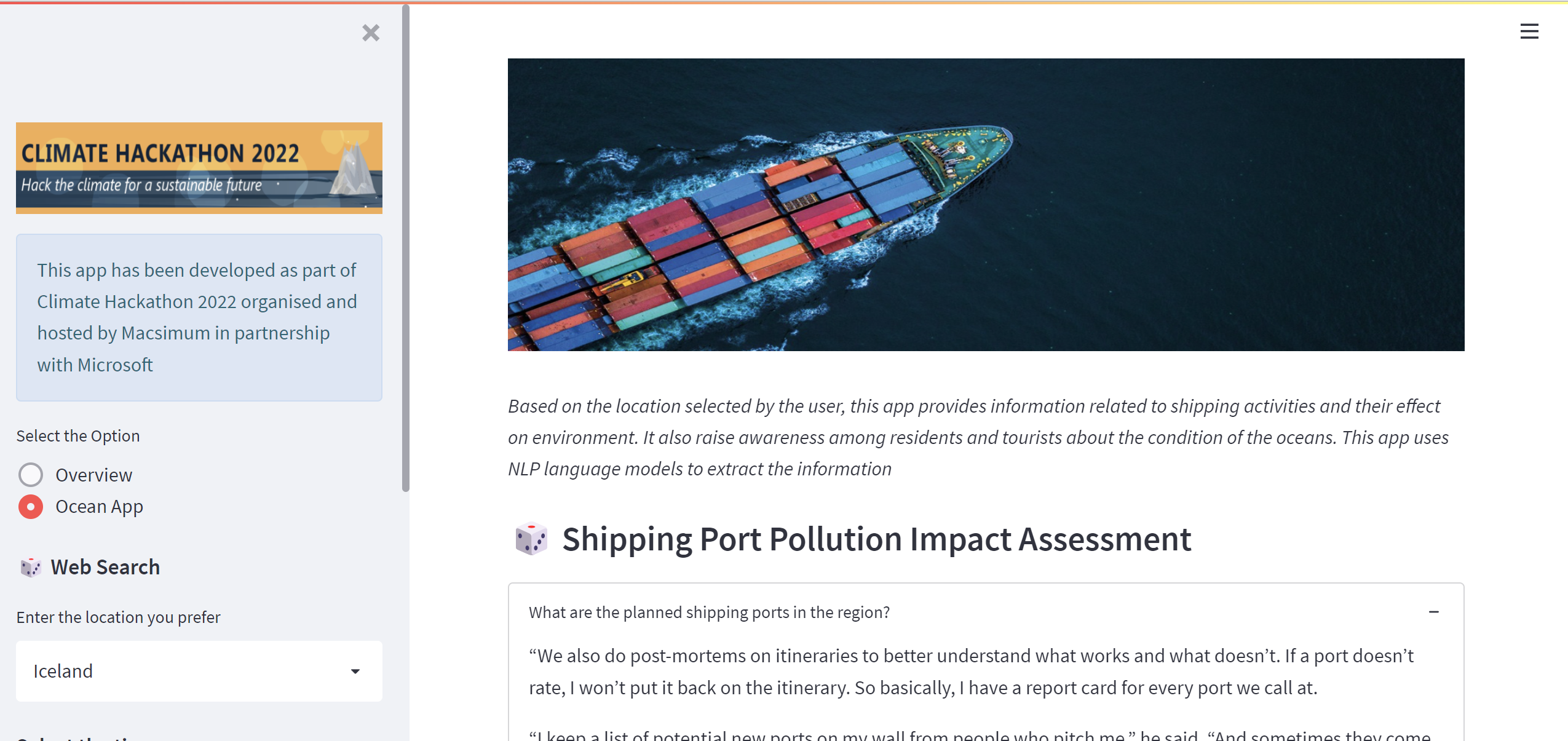
Depending on the location chosen by the user, our app gives information about the pollution impact of shipping ports, the affect on biodiversity, accidents occurred etc.
How we built it
We used ocean data connector for the dataset and used NLP (deep learning models) to extract relevant information for all the questions in the app.
Challenges we ran into
We used Machine GPU (RTX 3060) and Azure ML (Tesla K80) during development, which offered us faster results because the embeddings calculation was cuda enabled. However, we didn't have this flexibility when we deployed the app, and as a result, the solution became slower. One of the most difficult aspects of scaling up these types of solutions is the requirement of GPU compute. It was challenging to scrape all the topic specific data with open sourced toolkits.
Accomplishments that we're proud of
We have successfully built a product that uses NLP to identify, extract and collect relevant information which can be used to create a database in the future. Thereby, taking a step in the direction of combating ocean based pollution and preserving biodiversity by increasing awareness through our app.
What we learned
We learnt about ocean data connector, it serves as an easy to use IDE/ server with an extensive collection of climate related data. We were able to incorporate map box based port location map and use NLP for information extraction. All of this in limited time so the best takeaway was developing a prototype in limited time!
What's next for Shipping Port Pollution Impact Assessment
The next step would be to create a database with every user search which in turn will help in predicting as well as analyzing shipping port data and tagging this information with the world port index data provided by ocean data collector.


Log in or sign up for Devpost to join the conversation.