Inspiration
ShipLoop started as a platform for solo builders and small groups to share the work they've been doing—a way for builders to learn from each other in public. It's also built for friends building together: a lightweight space to see what your crew is shipping, swap feedback, and trade ideas without another Slack channel or Notion doc.
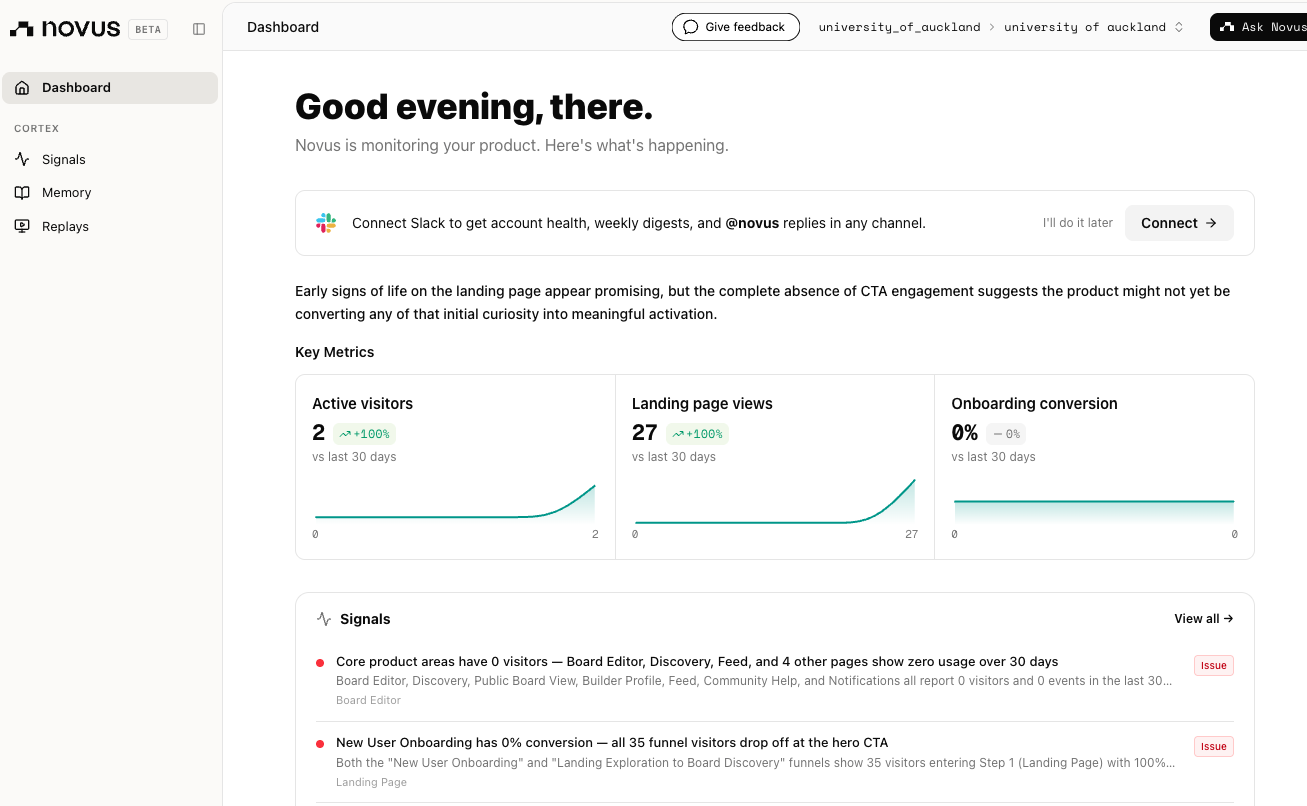
Novus came in as a natural layer on top of that. Once builders are sharing their loop, the missing piece is what to work on next. Novus AI fits here: paste user signals from Novus, get an insight and ranked backlog, ship with provenance, and show the learning arc on your public profile. The social layer gets people building in open; Novus helps them ship the right thing.
What it does
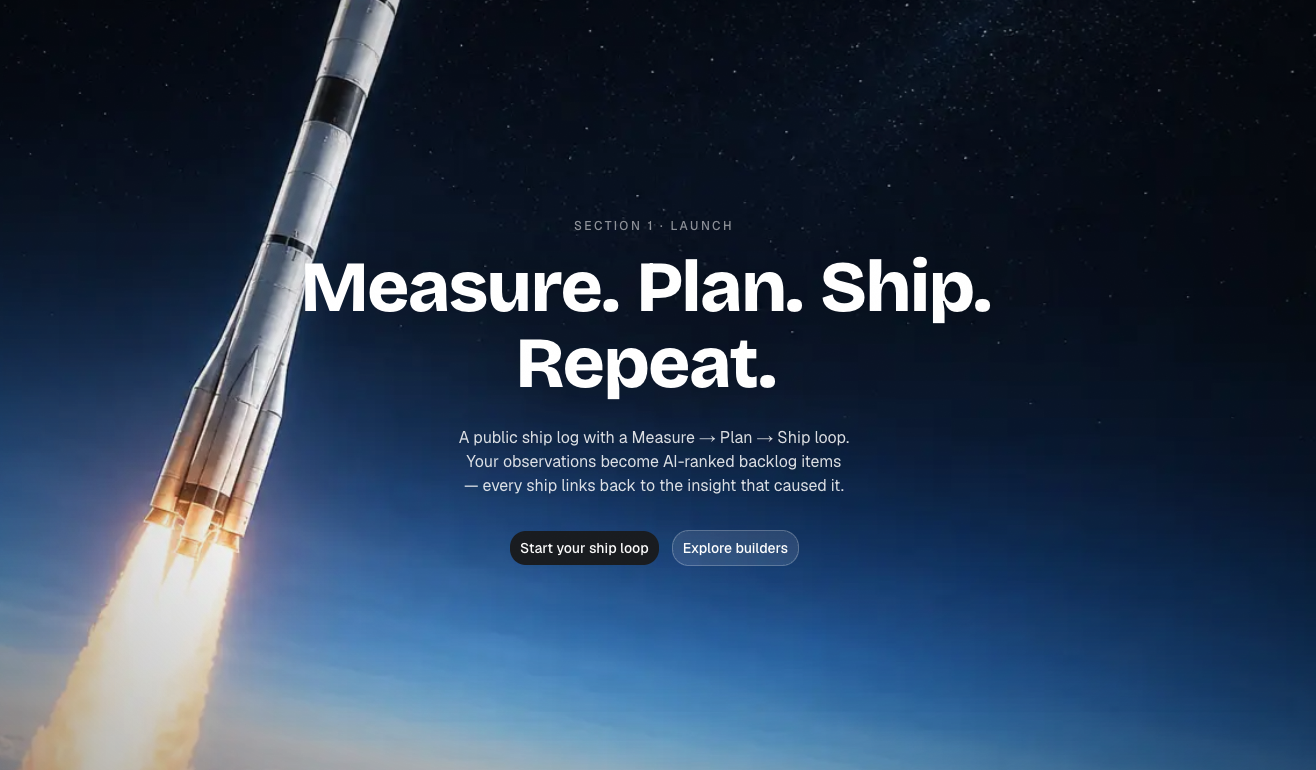
ShipLoop is a Measure → Plan → Ship loop for builders—solo or in small groups. You get a private dashboard to run your loop and a public profile (/@username) so others can see what you're building.
Measure
- Paste Novus signals from your product dashboard—drop-off notes, session counts, funnel context
- AI generates a clear insight, a recommended fix approach, and a ranked backlog of suggested tasks (tagged From Novus)
- Review past insights on a learning arc timeline so you can see how your product thinking evolved
Plan
- Kanban board with three columns: Backlog → In progress → Shipped
- Add your own tasks anytime—type a title and hit Add task; user-created items are tagged From User so they're distinct from Novus-suggested work
- Promote tasks from backlog to in progress, demote them back, or dismiss ideas you don't want
- Pin important backlog items to the top; drag to reorder priorities
- Batch-ship multiple in-progress tasks at once when you're on a roll
Ship
- Log ships manually from the Ship tab or ship directly from the Plan board
- Every ship can link back to the insight that caused it—provenance, not just a changelog
- Shipping graph (GitHub-style heatmap) shows your rhythm over time; stats for today, week, streak, and velocity
- Public profile shows your project, recent ships, active insight, and shipping rhythm—so friends and other builders can follow along
- Explore surfaces public ship logs (including curated showcase builders) so new visitors have something real to browse
Settings & projects
- Multiple projects per builder with a project switcher
- Edit project title, description, demo URL, cover color, and public visibility
- GitHub sign-in via Supabase Auth for production; demo mode with seed data when Supabase isn't configured
How we built it
- Next.js 16 App Router with server actions and API routes
- Supabase for GitHub OAuth auth and Postgres database—profiles, projects, ship log, insights, and backlog items with row-level security
- Vercel AI SDK (
gpt-4o-mini) with a deterministic fallback when no API key is set - Novus / Pendo for product analytics context in the Measure step
- Client-side dashboard state so actions (ship, promote, generate insight) update in place without full page reloads
- 2D GitHub-style heatmap for shipping velocity (violet brand palette)
- dnd-kit for backlog drag-and-drop; Framer Motion for ship celebrations
- Deployed on Vercel with OG image generation for profile and ship shares
Challenges we ran into
- Scope — The original vision was broad (social feed, teams, comments, deep analytics). We had to revise scope and design to fit hackathon requirements and ship something coherent: a tight Measure → Plan → Ship loop with public profiles, not everything at once.
- Integrating Novus AI — Wiring Novus signals into insight generation, backlog ranking, and provenance took iteration. We went from "paste anything" to a structured flow (signal → insight → ranked tasks → ship) and had to handle missing API keys, malformed model output, and keeping the UI responsive without page flashes.
- Schema migrations in production — Renaming
next_up→in_progressrequired dropping the check constraint first; backlog pin/sort columns needed a graceful fallback for databases that hadn't run migration 004 yet. - Auth redirect safety — OAuth
nextparams needed validation to block open redirects. - Demo vs. production — Mock data, in-memory store persistence, and Supabase-backed production had to share one codebase without confusing the UX.
Accomplishments that we're proud of
- End-to-end loop: Novus signal → AI insight → backlog → ship → public provenance
- Builders can mix Novus-suggested and self-added tasks on one board—not locked into AI-only workflows
- Production-ready Supabase auth, ownership checks, and input sanitization for AI prompts
- Polished Plan board (pin, reorder, batch ship, From Novus / From User tags)
- Explore page with realistic showcase dashboards so the product never feels empty
- Works in demo mode without any backend configured—great for judges and local dev
What we learned
- Coherent beats comprehensive — It's more important to ship a few sensible, connected features than to add everything you can think of. Cutting scope made the product easier to explain and actually use.
- Provenance matters — Linking ships to the insight behind them turns a public log into a learning journal, not just a changelog.
- Measure before Plan — Starting from user signals (not only a blank todo list) changes what gets prioritized—but user-added tasks still matter for ideas Novus won't catch.
- Product design is a skill — We wish there had been more hackathon resources on product design and management; narrowing "what to build" was as hard as building it.
- Graceful degradation — Fallback AI, mock data, and migration-compatible inserts keep the app usable when infra isn't perfect.
What's next for ShipLoop
- Community feedback — Comments on someone's public dashboard, or lightweight chat so friends can react and leave ideas on each other's ships
- Direct Novus API integration (auto-pull sessions instead of paste)
- Small-group workspaces—friends building together with shared visibility
- Weekly digest emails from insight → ship velocity
- Deeper analytics: time-to-ship per insight, backlog aging alerts
Built With
- css
- github
- next.js
- novus
- oauth
- openai
- postgresql
- react
- supabase
- tailwind
- typescript
- vercel

Log in or sign up for Devpost to join the conversation.