-
-
-
-
-
-
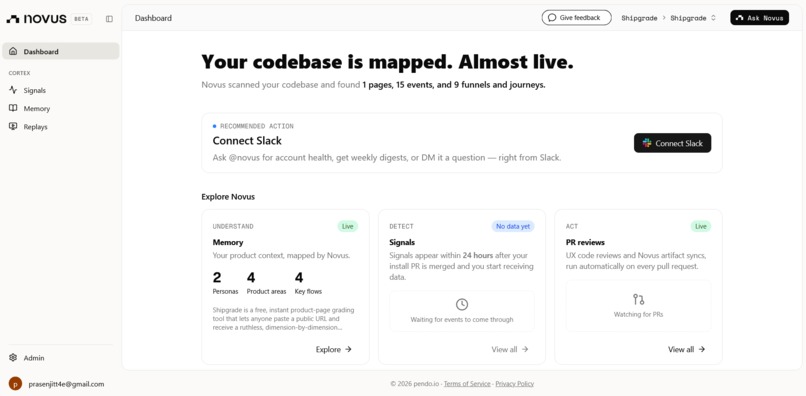
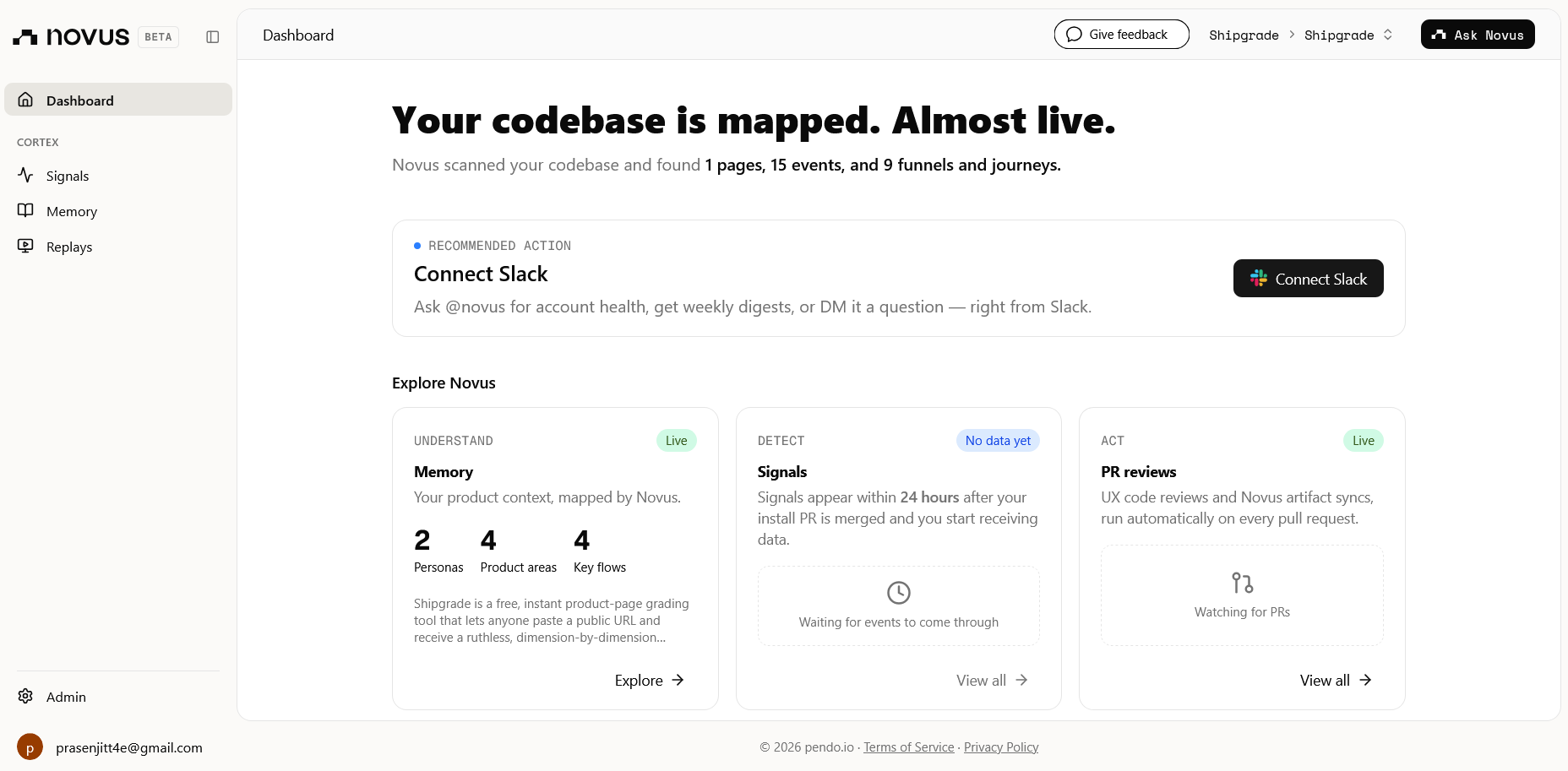
Novus is live on Shipgrade: it scanned the codebase and mapped 1 page, 15 events, and 9 funnels and journeys.
-
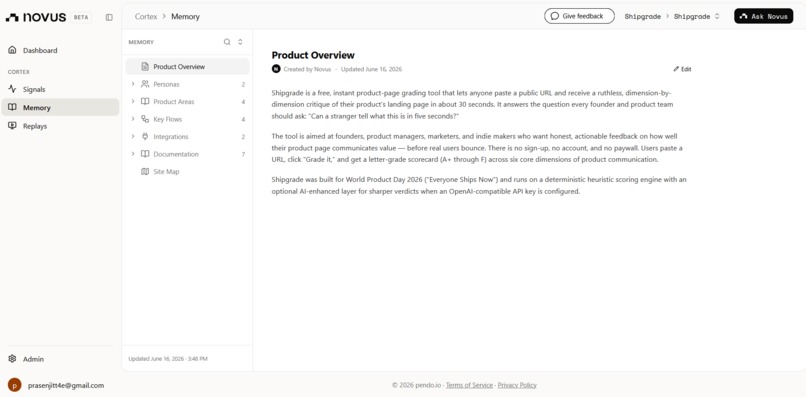
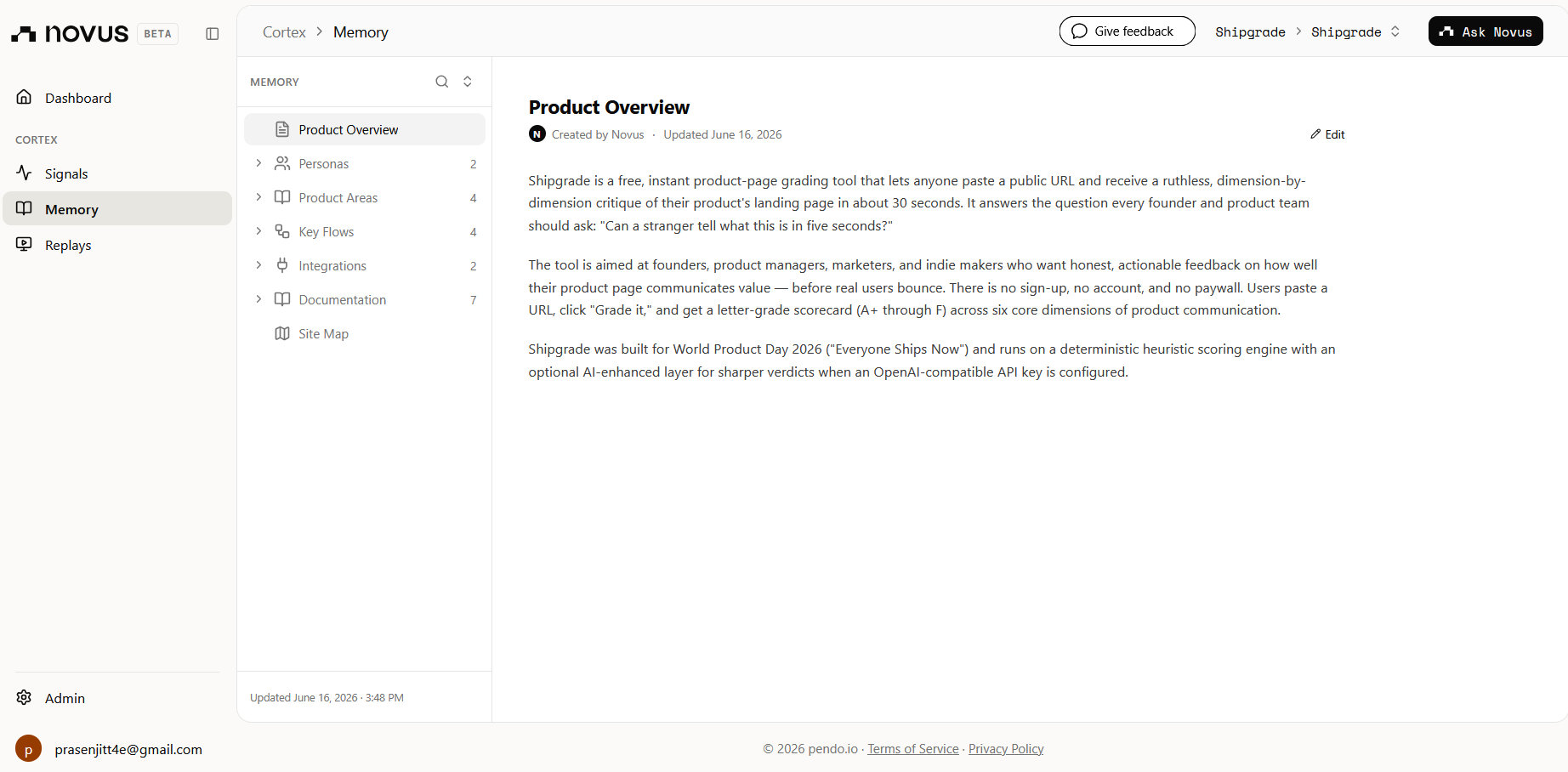
Inside Novus Memory: the product context it built for Shipgrade, with personas, product areas, and key flows
-
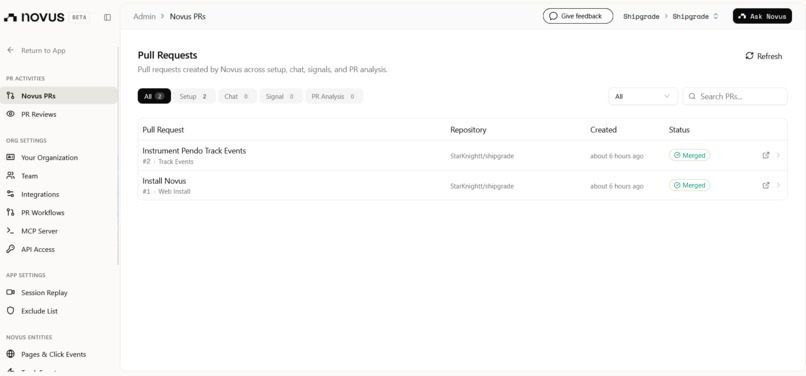
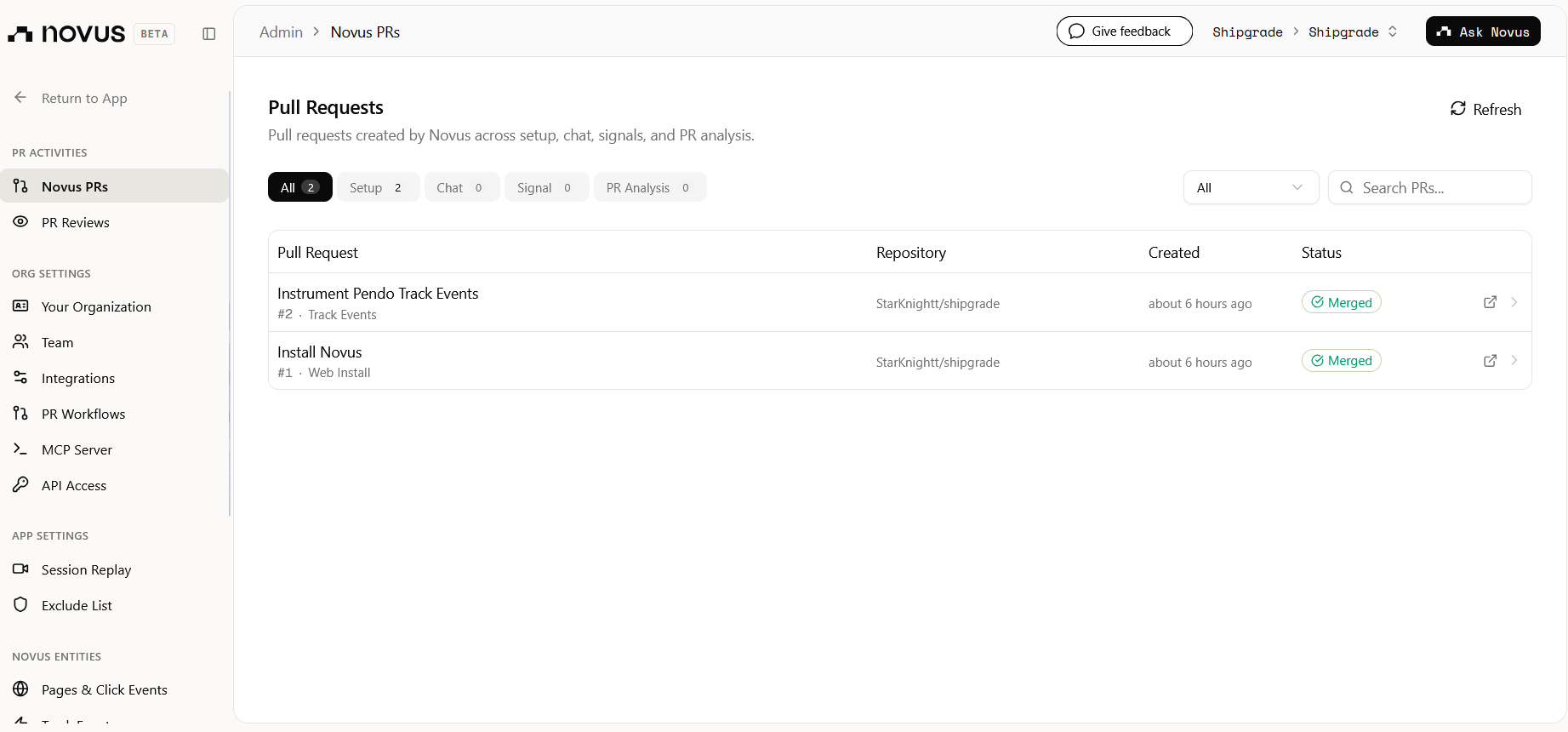
Both Novus PRs merged into the repo: #1 installed the SDK, #2 wired the Pendo track events for the full funnel.
Inspiration
What it does
How we built it
Challenges we ran into
Accomplishments that we're proud of
What we learned
What's next for Shipgrade - Grade your landing page in 30 seconds
Inspiration
Most landing pages fail the same test. A stranger arrives, gives it five seconds, and leaves with no idea what the product is or who it's for. I've shipped pages like that myself and watched people miss the point completely.
World Product Day is about shipping, so I built the tool I always wanted: something that reads a page the way a sharp product reviewer would, and tells you where it loses people, before your users do.
What it does
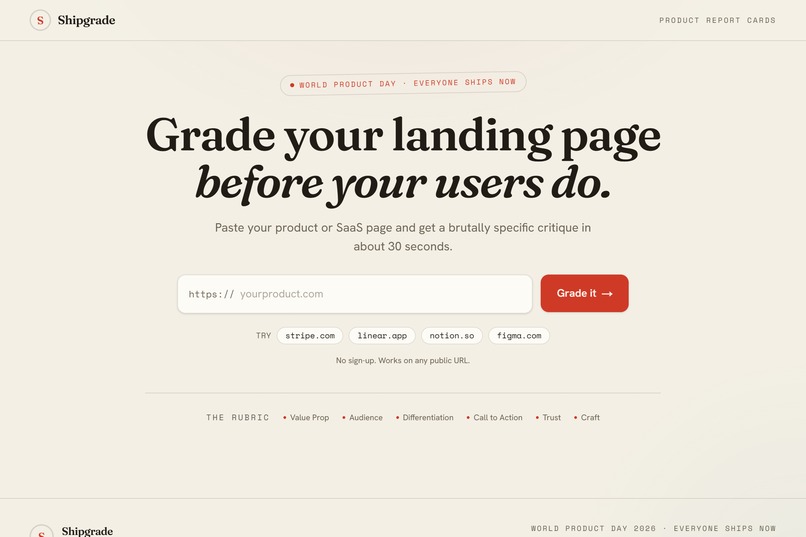
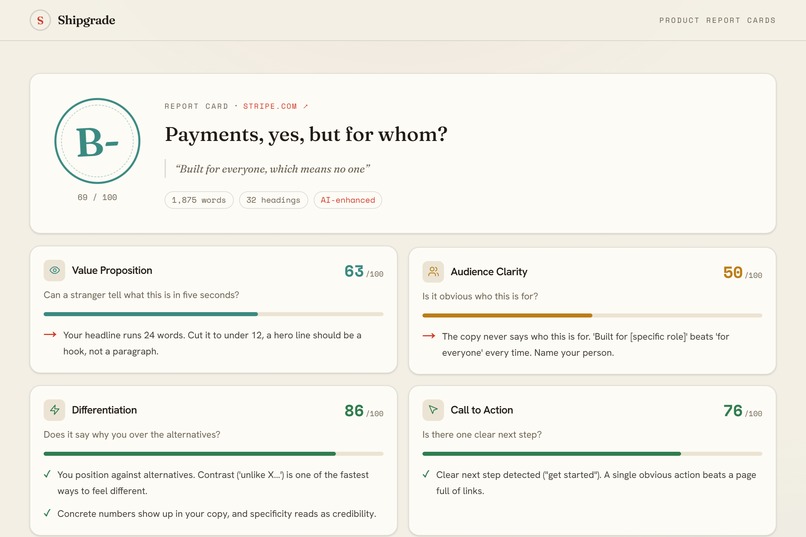
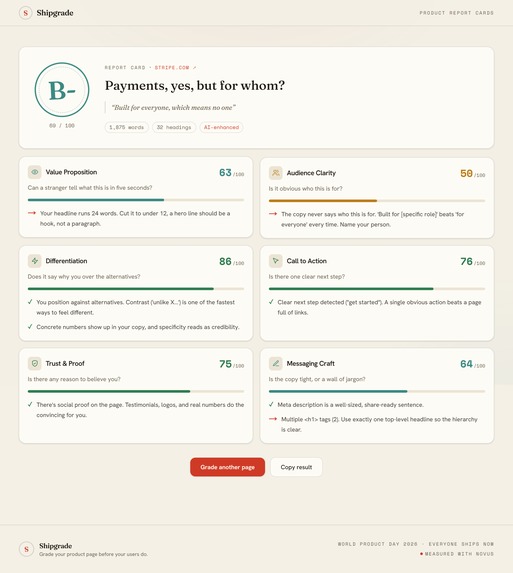
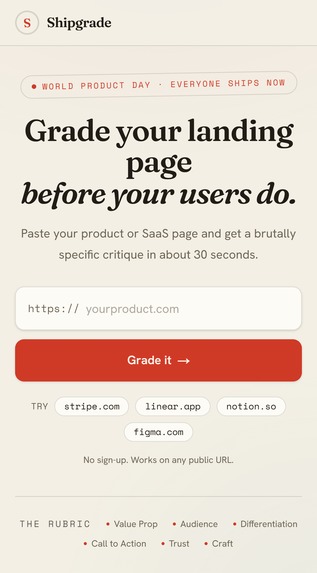
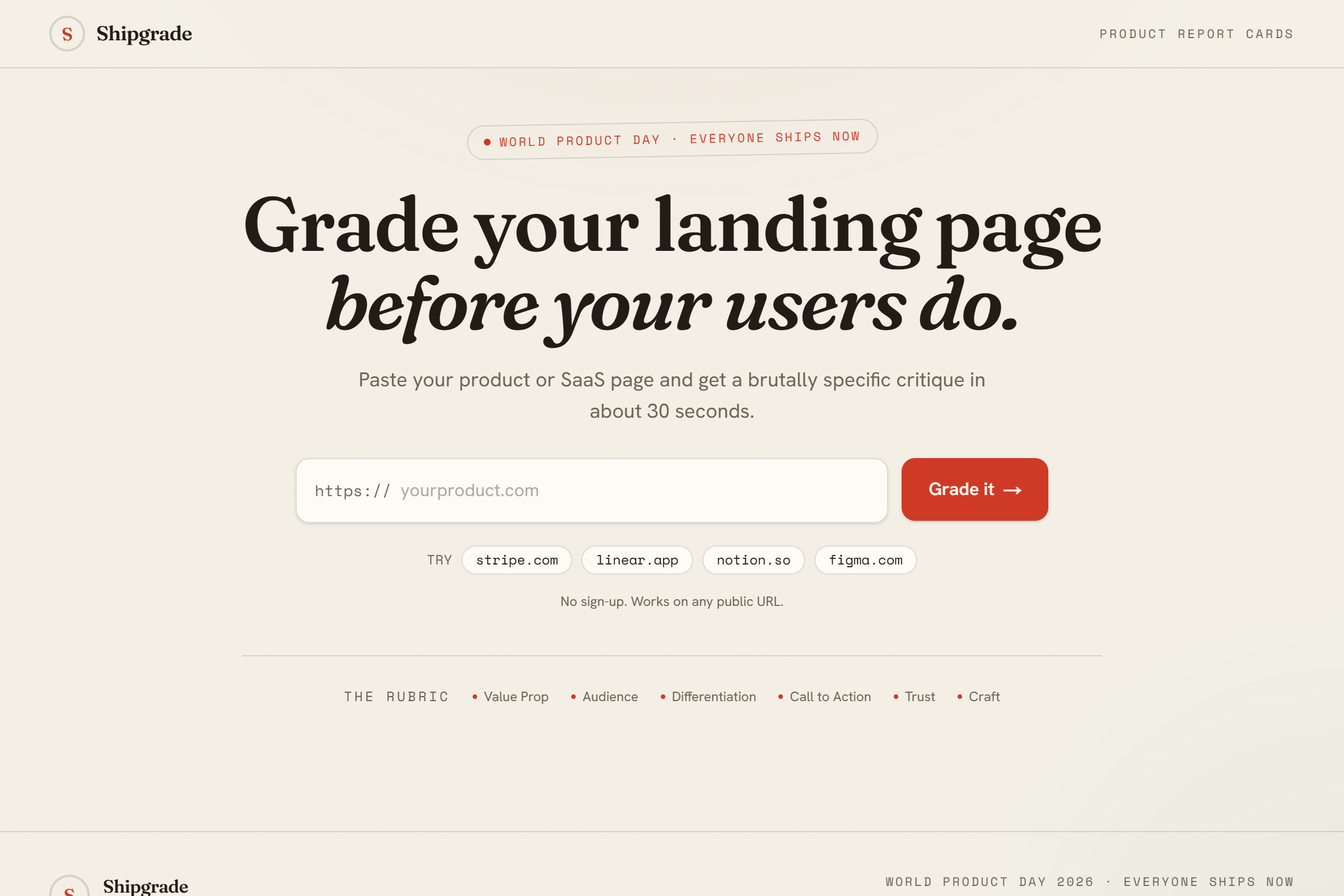
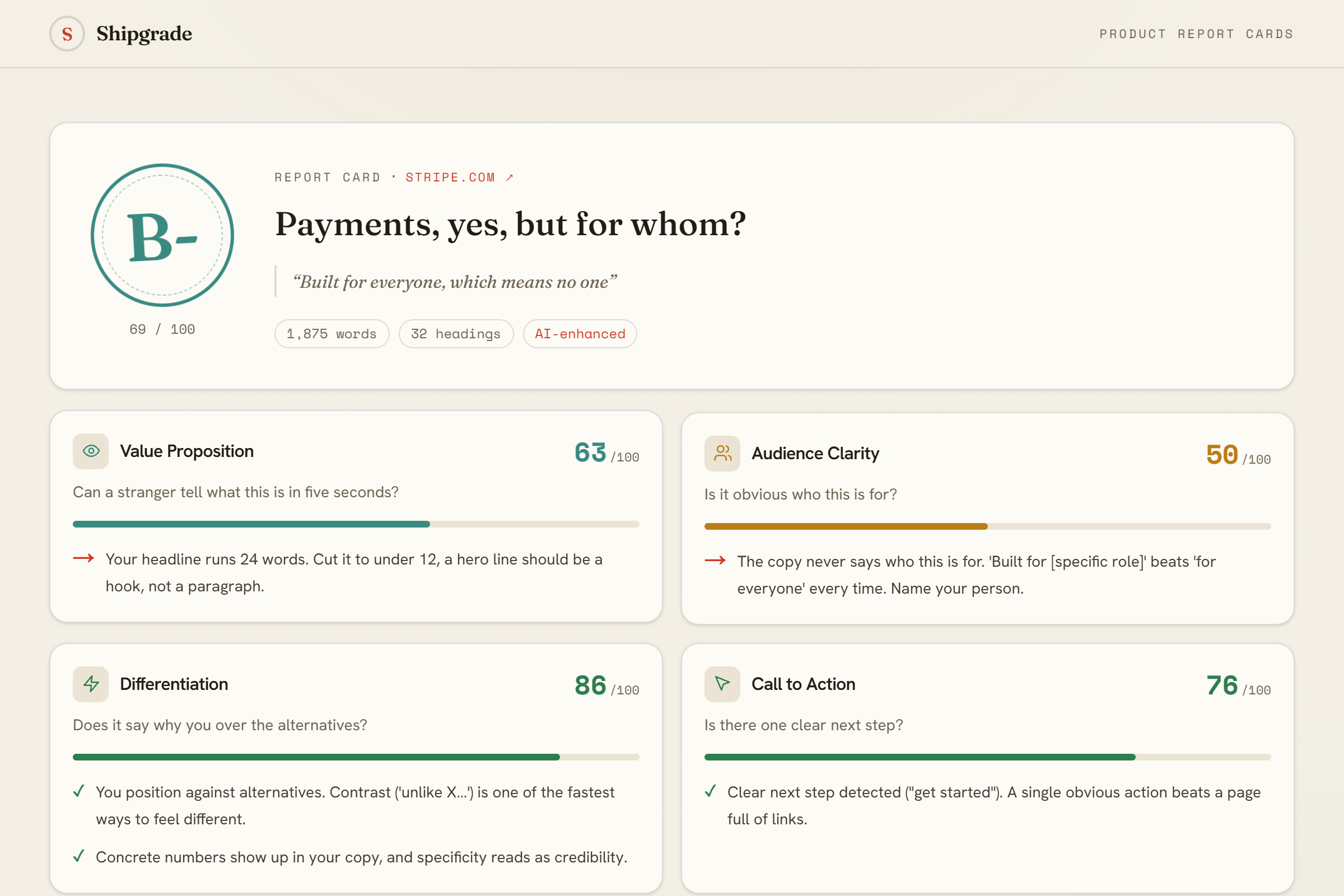
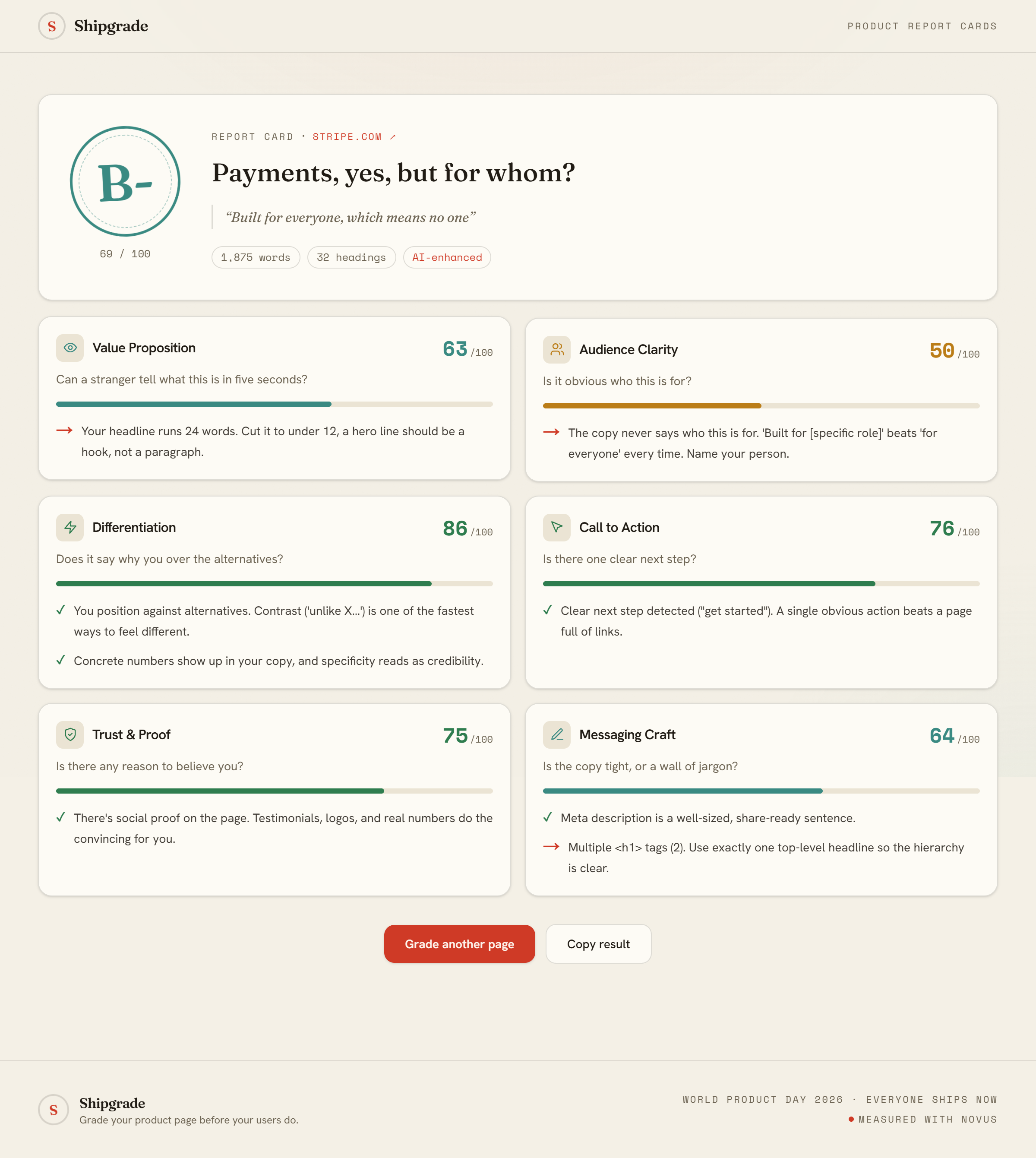
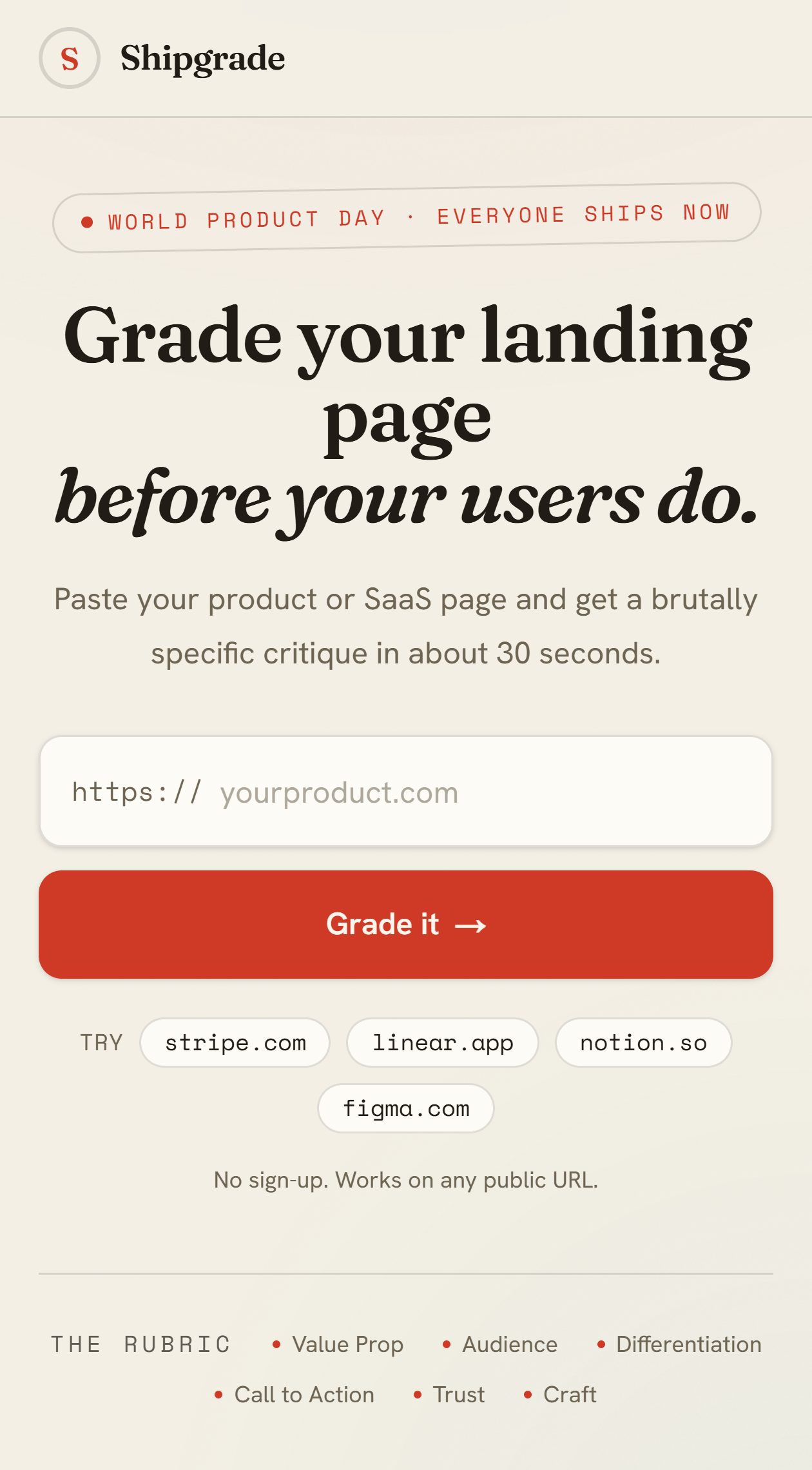
Shipgrade grades any product or SaaS page in about 30 seconds. You paste a URL and get a report card across six dimensions:
- Value Proposition: can a stranger tell what this is in five seconds?
- Audience: is it obvious who it's for?
- Differentiation: does it say why you over the alternatives?
- Call to Action: is there one clear next step?
- Trust and Proof: is there any reason to believe you?
- Messaging Craft: is the copy tight, or a wall of jargon?
Every dimension gets a score, a plain explanation, and specific fixes. You also get an overall grade, a one line verdict, and a shareable roast. No sign up, and it works on any public URL.
How I built it
The core is a deterministic engine. It fetches the page, parses the HTML, and pulls out the things that shape a first impression: the headline, meta description, sub heads, body copy, links, calls to action, and proof signals. A set of rules scores each dimension, so the same page always gets the same honest grade.
On top sits an optional AI layer. It reads the extracted content and writes the human verdict and the roast. It first works out what kind of page it is (product, SaaS, portfolio, agency) and judges it on its own terms, so a portfolio gets reviewed like a portfolio, not like a SaaS app.
Stack: Next.js and React with TypeScript, Tailwind CSS for the editorial report card look, a serverless route for the analysis, and Groq running Llama 3.3 for the AI verdict. Deployed on Vercel.
Measured with Novus
The live app is instrumented with Novus. On top of automatic tracking, I wired explicit events for the whole funnel: submitting a URL, a grade succeeding or failing, clicking an example, resetting, and sharing a result. Each event carries useful metadata like the grade, the score, and the per dimension breakdown, so I can see how people actually use it.
Challenges I ran into
The hard part was making feedback specific instead of generic. Anyone can say "improve your value prop." Most of the work went into rules that point at the real problem, like "your headline runs 24 words, cut it under 12." Tuning the AI to sound like a sharp human reviewer, punchy but fair, instead of a generic marketing bot took a few passes too.
Accomplishments that I'm proud of
- It's fast and honest. Paste a URL, get a specific report card in about 30 seconds.
- Results are consistent and explainable because the engine is deterministic. The AI adds voice on top, it doesn't invent the grade.
- A distinctive design that looks like a printed report card instead of another dark dashboard.
What I learned
Clarity is a product feature. Reading dozens of real pages made it obvious how often good products hide behind vague copy. Building the grader made me better at writing my own.
What's next for Shipgrade
- Shareable report card pages with a generated image, so a grade is one click to post.
- Side by side comparisons against competitors.
- A fix it mode that rewrites your weakest section for you.
Built With
- groq
- llama
- next.js
- node.js
- novus
- react
- tailwind-css
- typescript
- vercel

Log in or sign up for Devpost to join the conversation.