ShipEzy
Inspiration
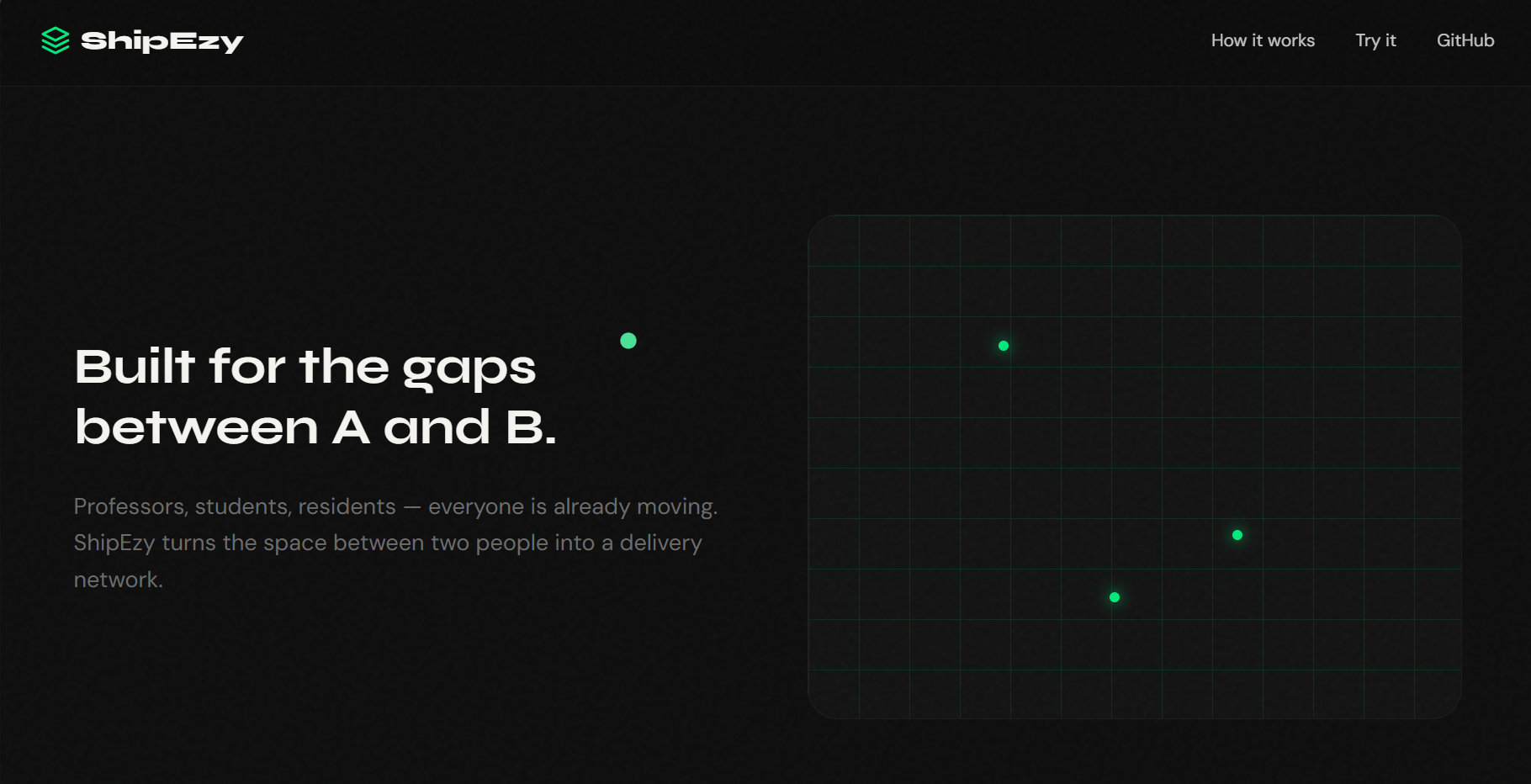
Twenty minutes before a final presentation, I needed my laptop charger from my dorm across campus. No time. No one to ask. Later that day, I watched three people walk past my building heading exactly where I needed to go. The delivery network already existed. It was just made of people nobody had connected yet.
What it does
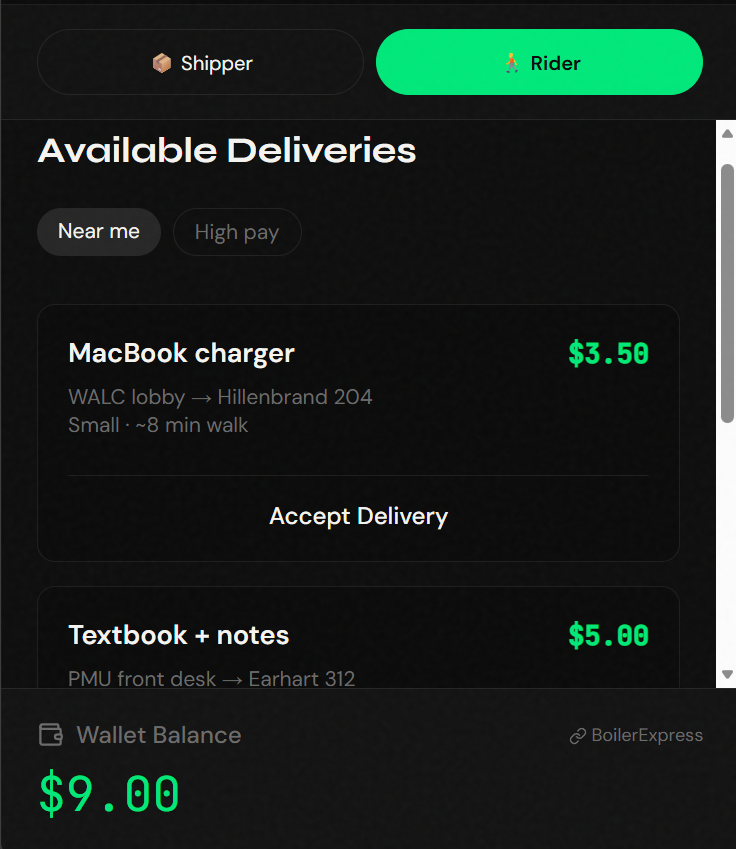
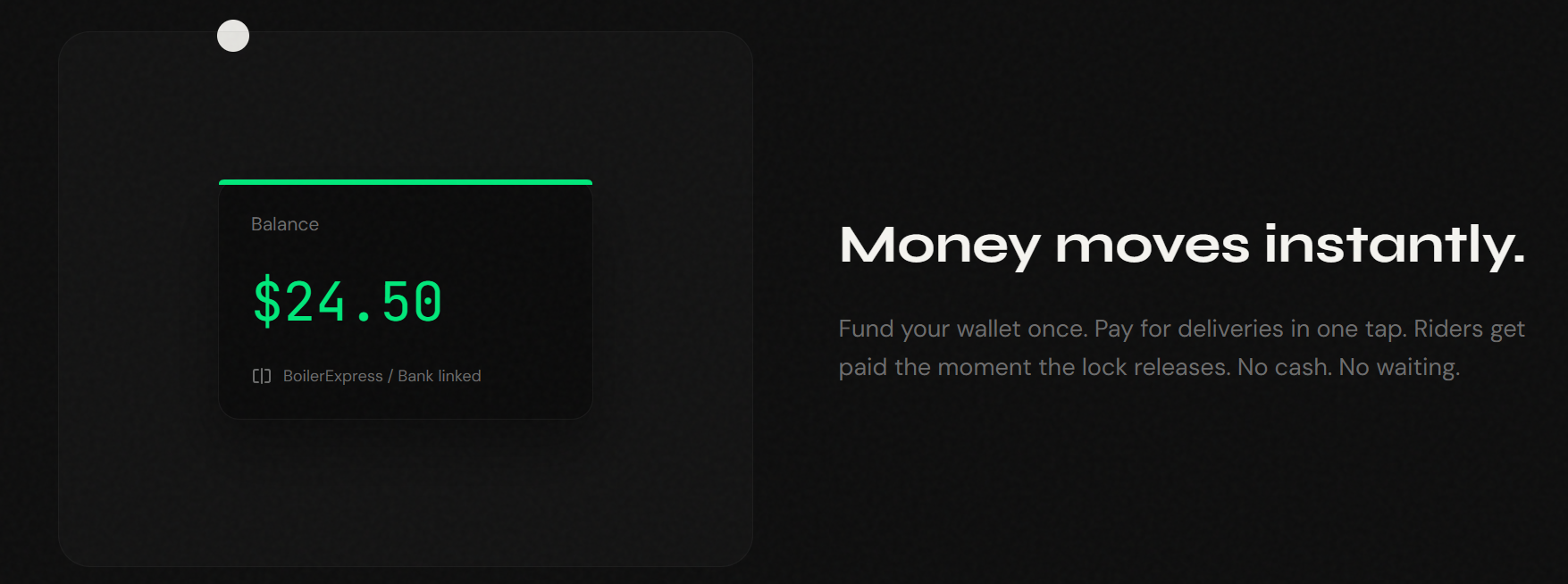
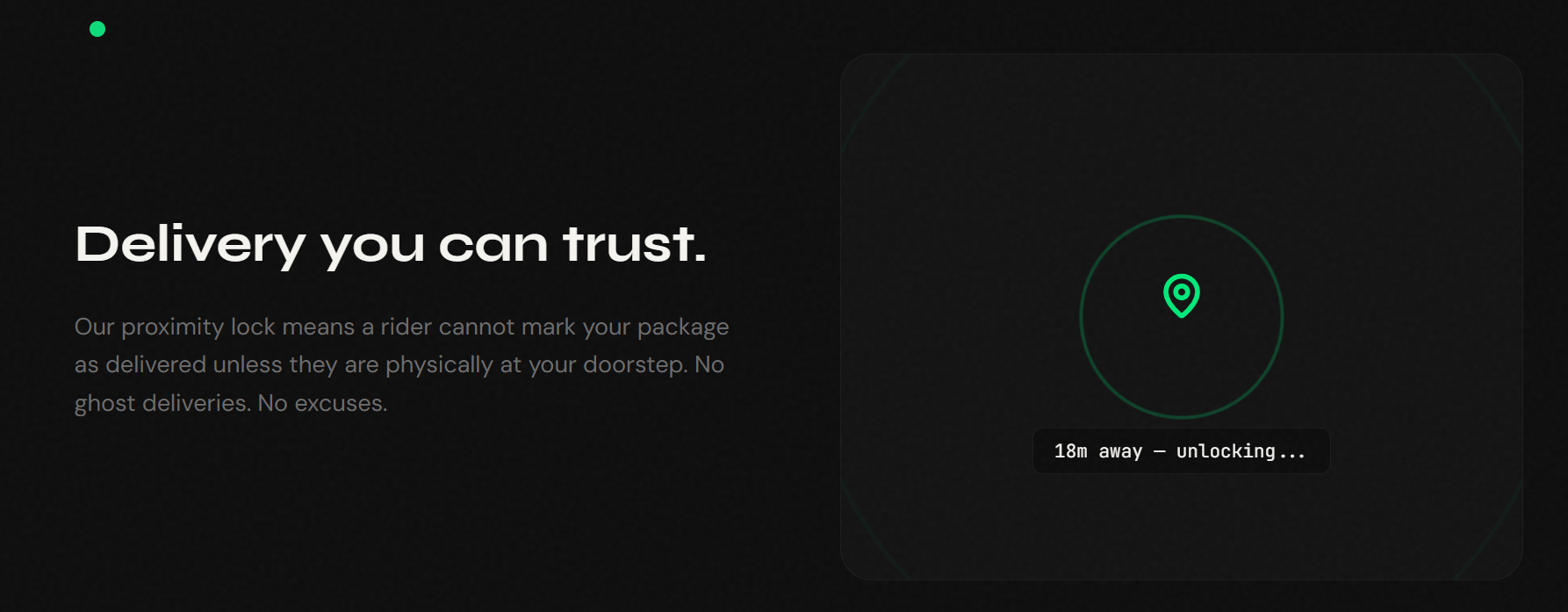
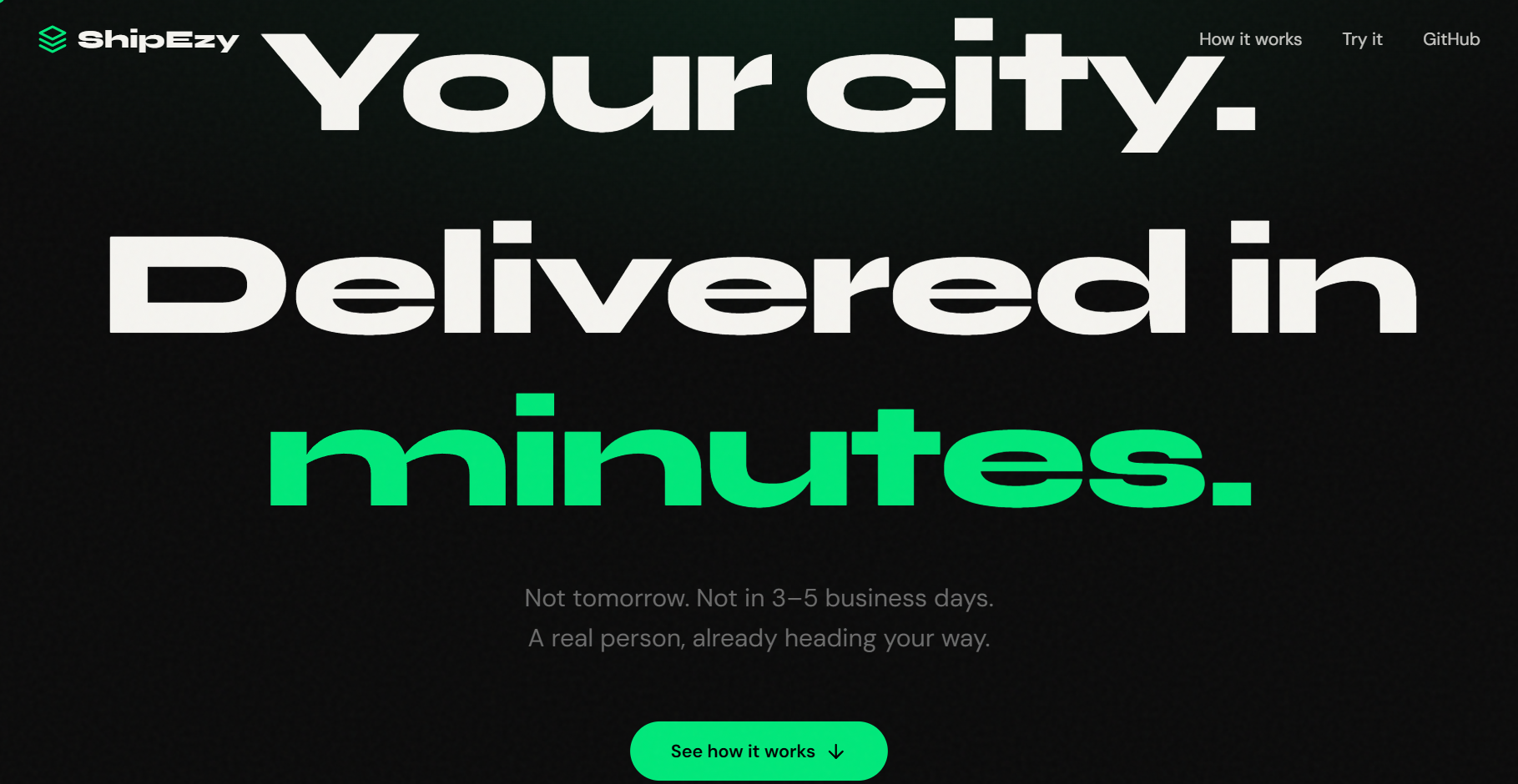
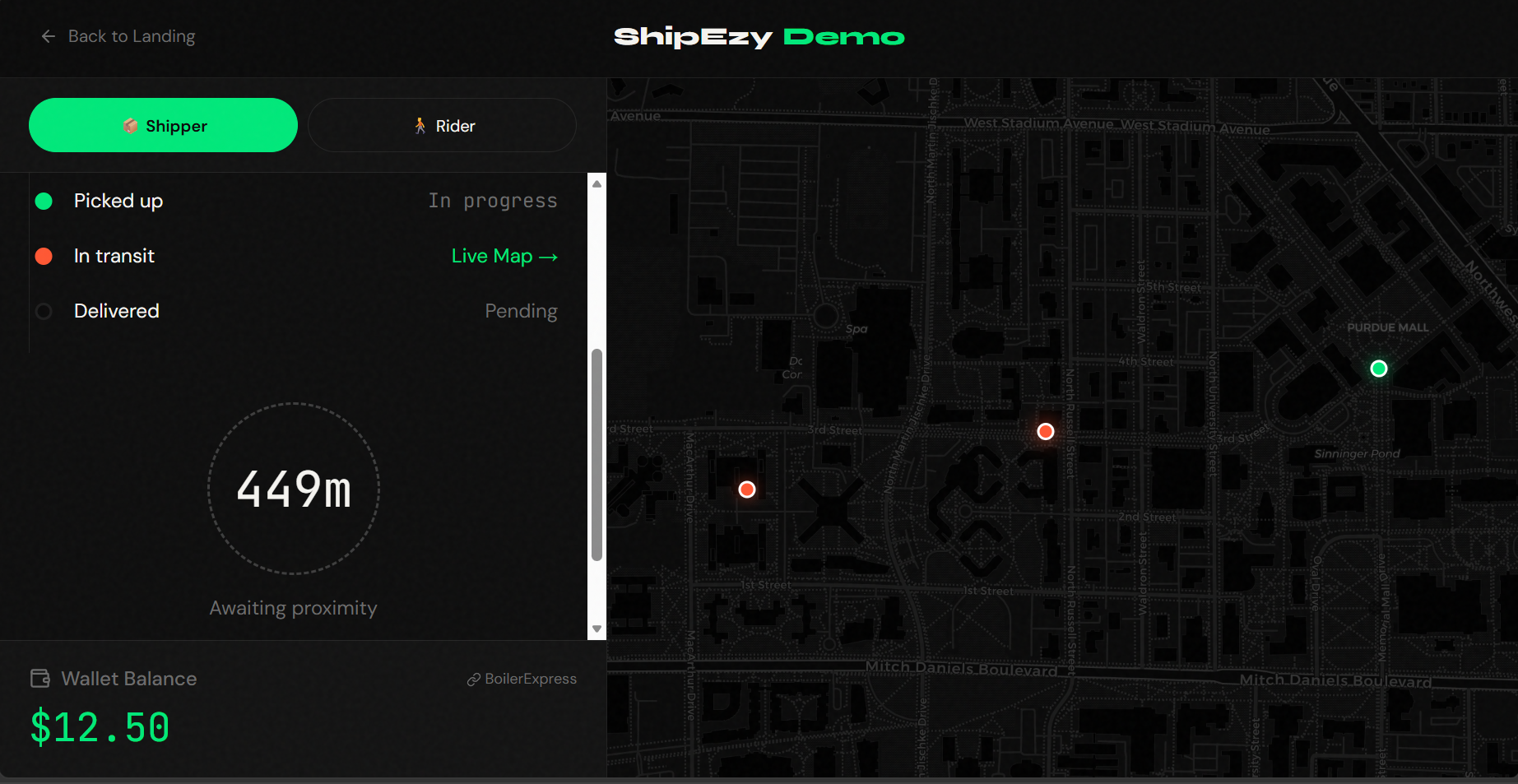
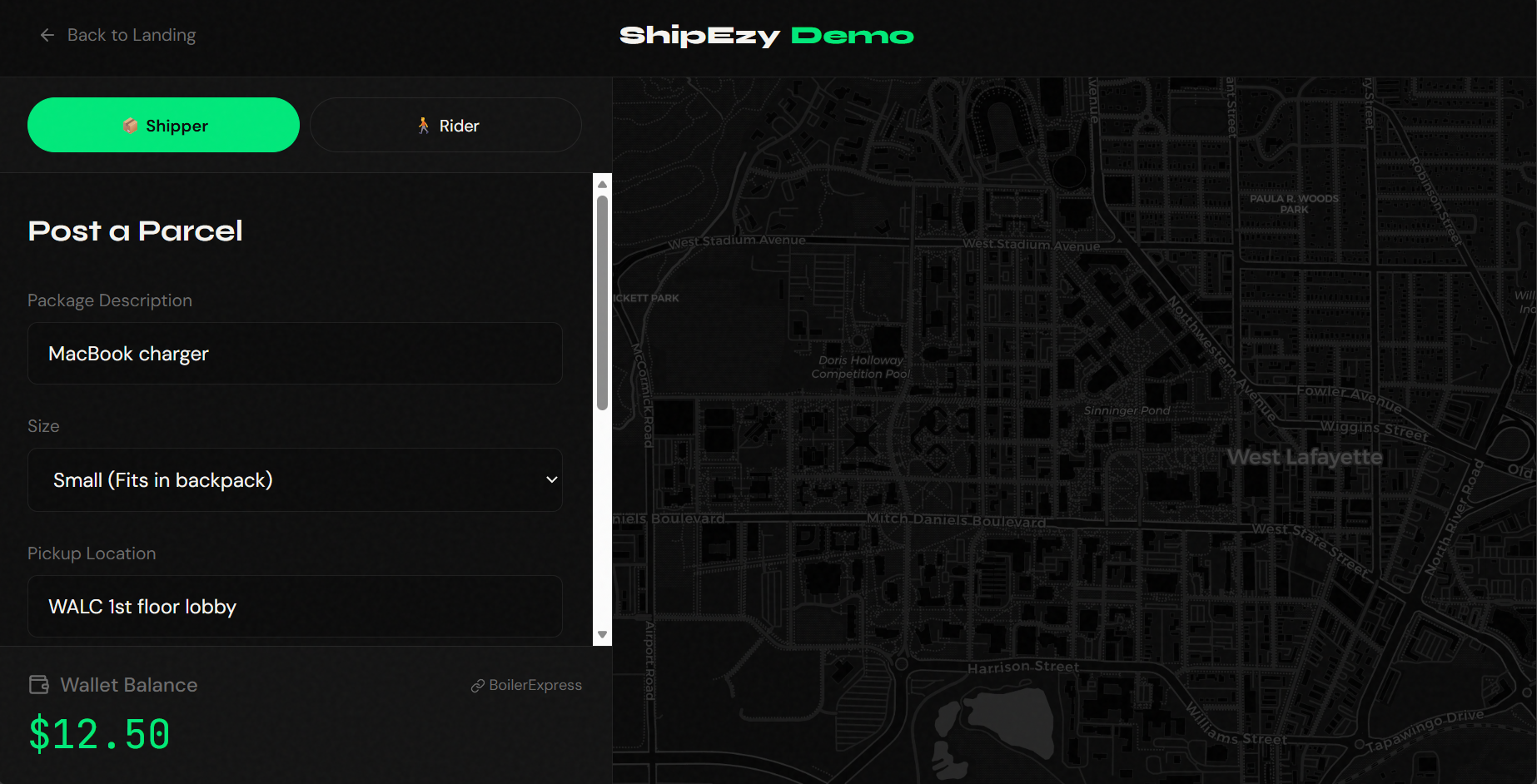
ShipEzy connects Shippers (people who need something moved) with Riders (people already walking that route). Post a parcel, a nearby rider picks it up, delivers it in minutes. The core mechanic is a proximity lock — a rider cannot confirm delivery unless they are physically within 30m of the dropoff. No ghost deliveries. Wallet settles instantly.
How we built it
Vanilla HTML/CSS/JS, GSAP for animations, Leaflet.js for the live dark-themed map, localStorage for demo state. No backend, no build step. The full product spec was written as a structured markdown file and fed to Google Antigravity to accelerate development. Design references: CRED, Apple, Stitch.
Challenges we ran into
Making the proximity UX feel tense and rewarding, not just a number counting down. Writing landing page copy that felt earned rather than generic. Keeping map animations performant on mobile with animated Leaflet markers. And completing on time.
Accomplishments that we're proud of
The proximity lock works end-to-end on a real Purdue map. The landing page feels genuinely different — cinematic typography, scroll-triggered reveals, full-bleed quote sections. Built and specced in a single session.
What we learned
Agentic IDEs are multipliers — but only as good as the spec you hand them. The proximity lock, not the wallet, is the core innovation. Without it, crowdsourced delivery is hope. With it, it is a contract.
What's next for ShipEzy
Real GPS, Supabase backend, and a closed beta within one Purdue residence hall cluster. Campus first. Every city next.

Log in or sign up for Devpost to join the conversation.