-
-
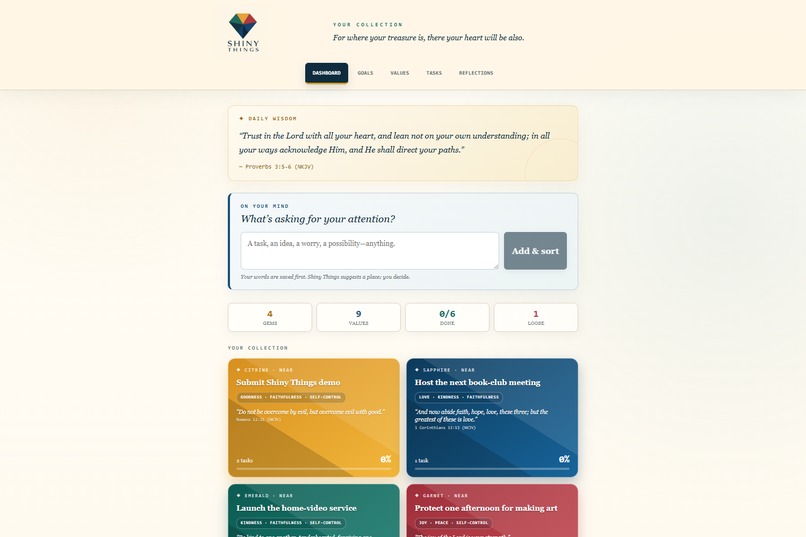
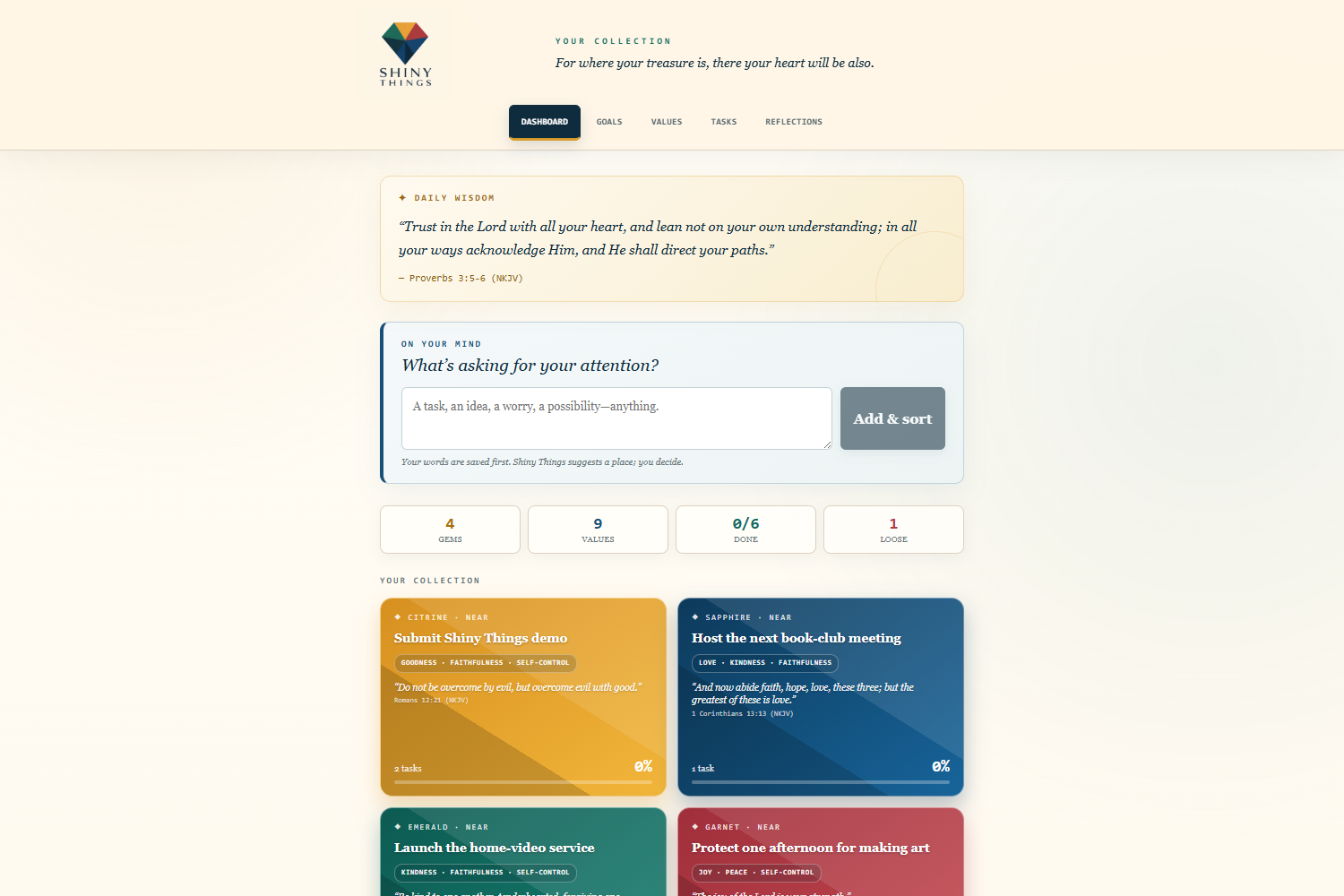
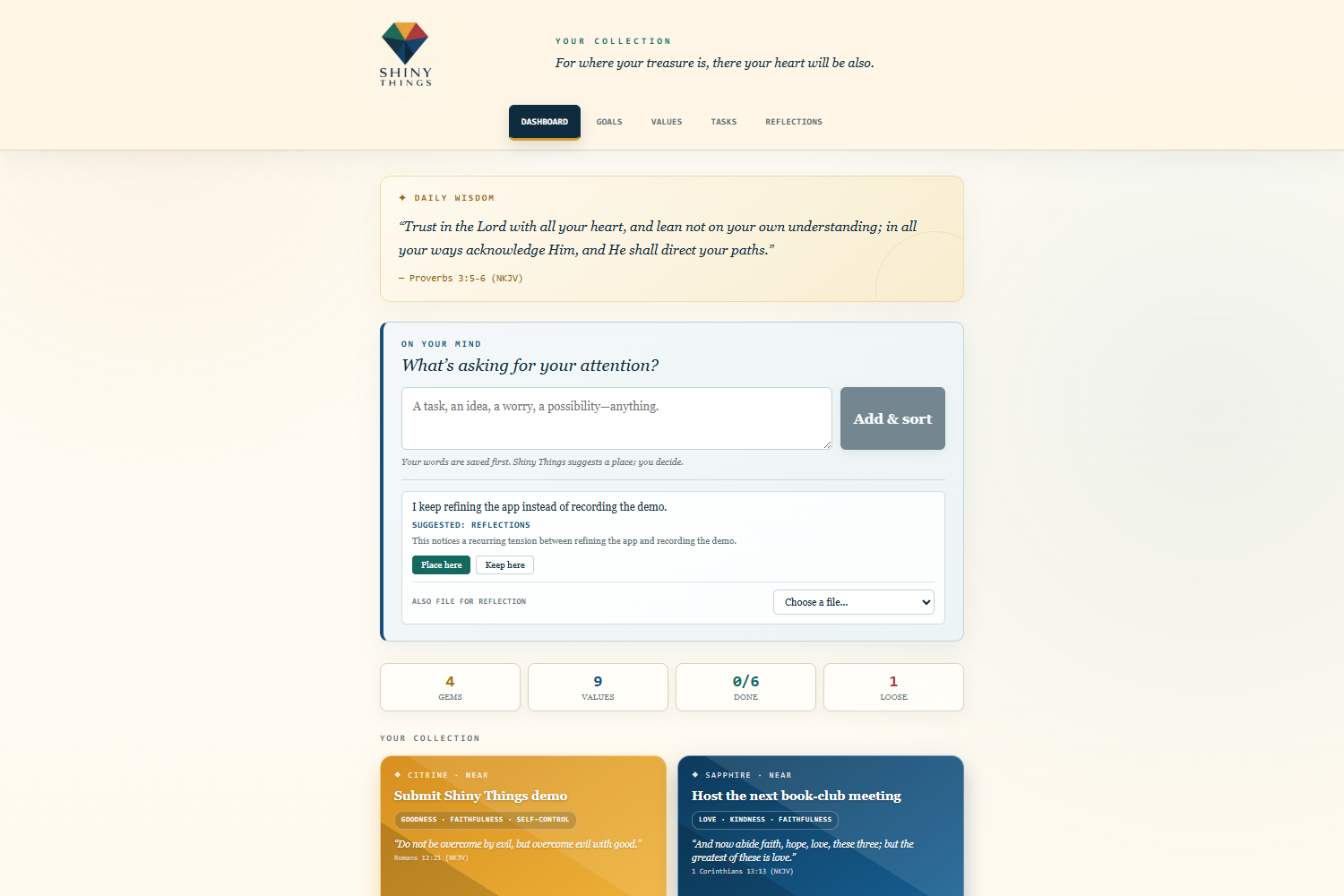
Capture what is pulling your attention, then see the goals, values, and work already in your collection.
-
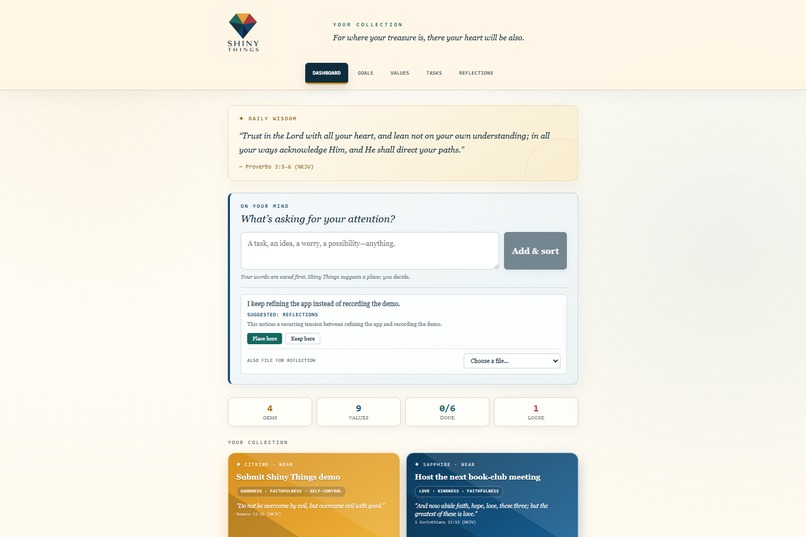
GPT-5.6 suggests where a thought may belong. You decide whether to place it, keep it, or file it for reflection.
-
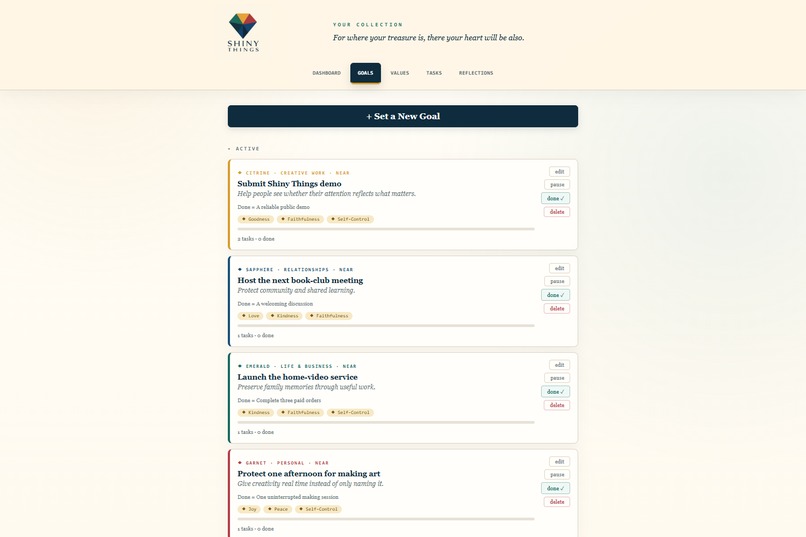
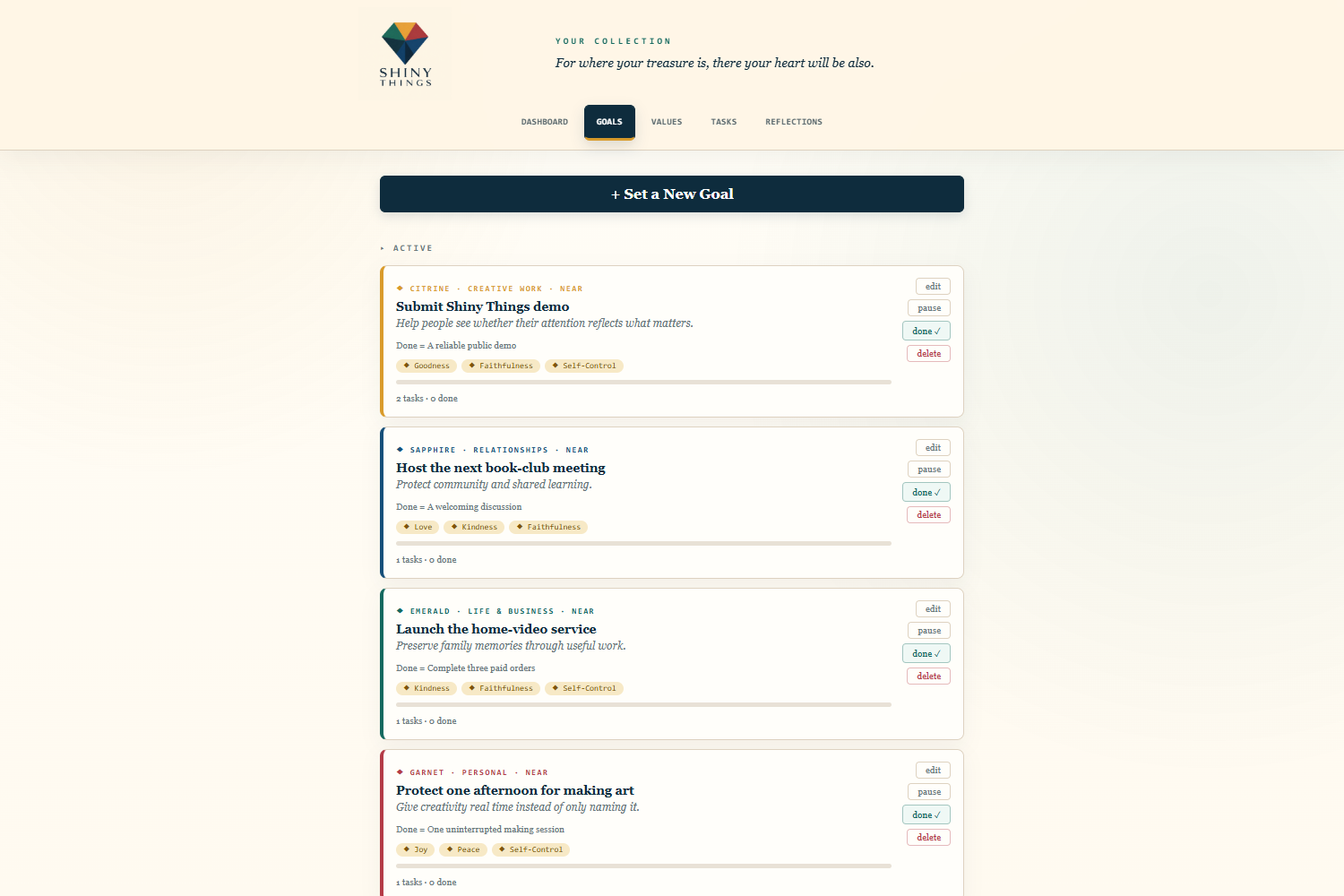
Turn chosen goals into gems with a reason, definition of success, connected values, tasks, and visible progress.
-
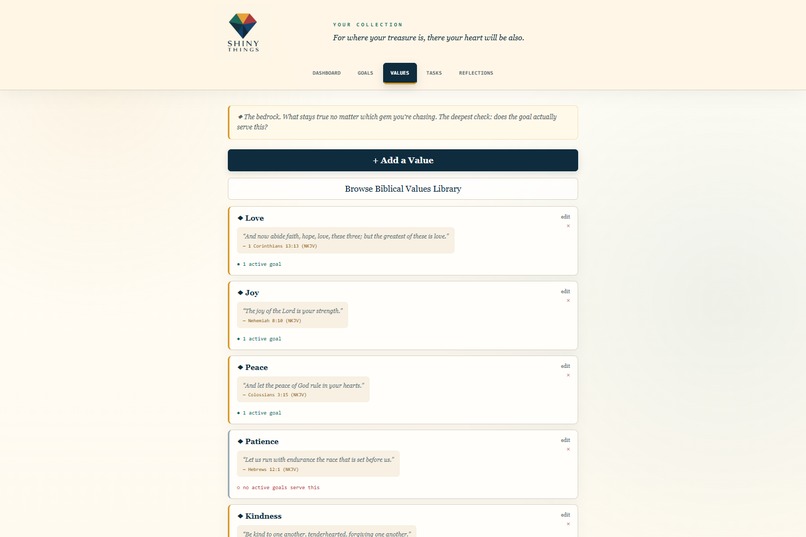
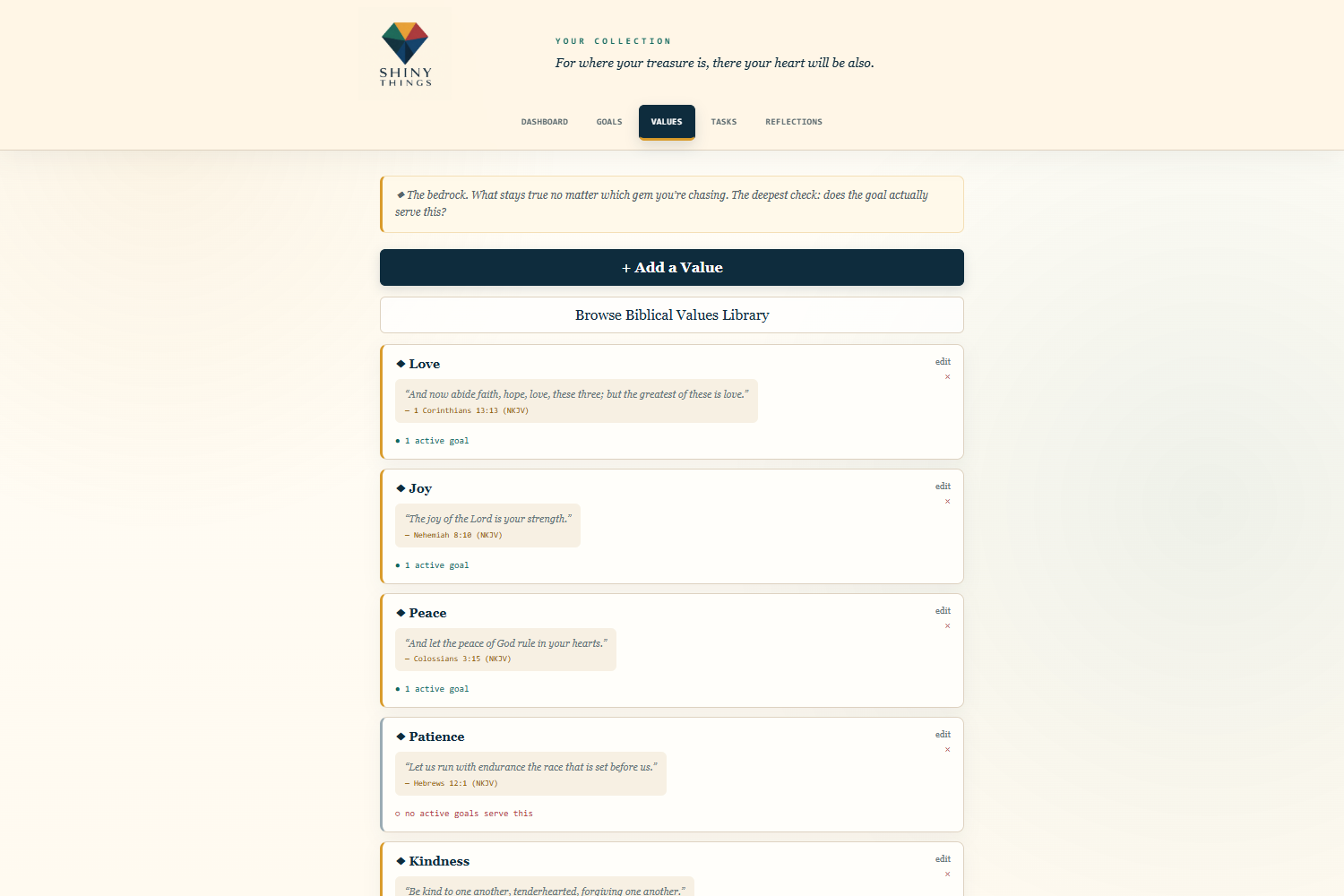
Define current and desired values in your own words, connect them to goals, and see which values are being practiced.
-
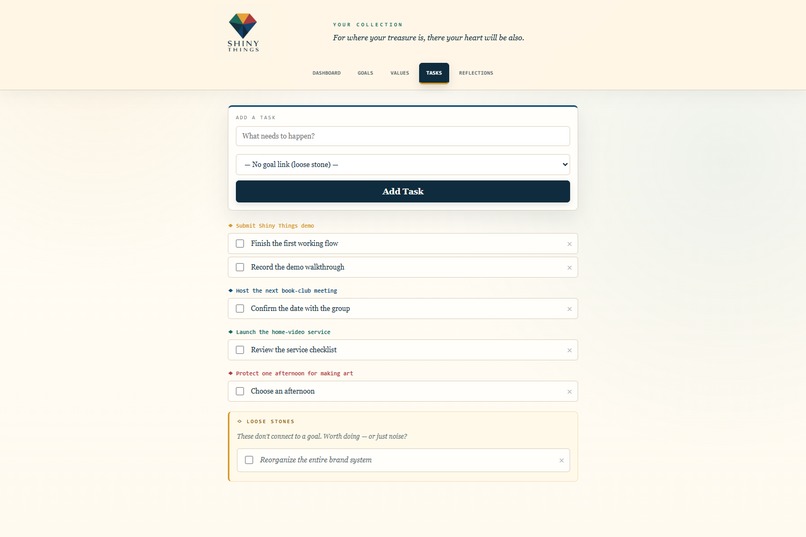
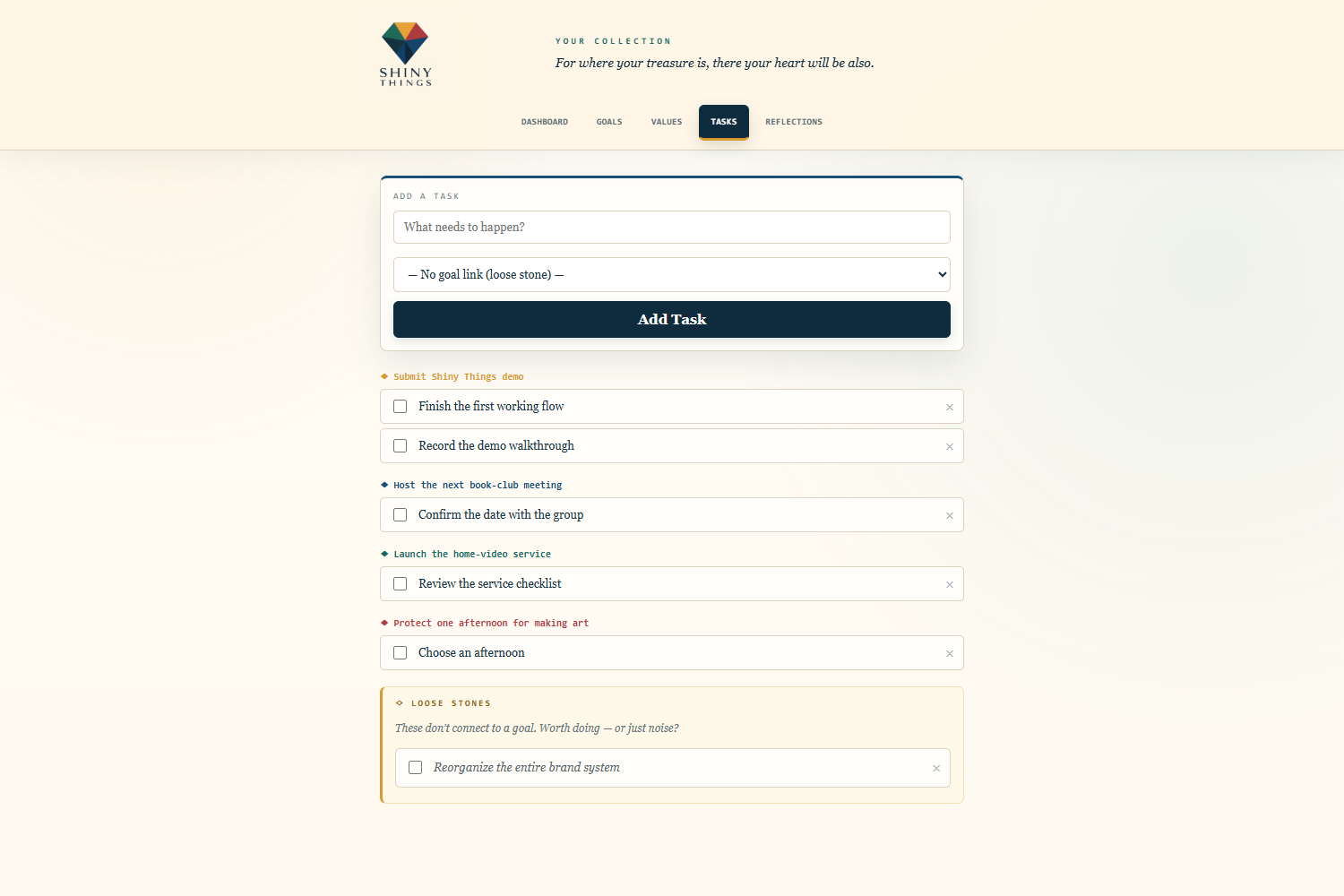
Keep goal-linked tasks clear while loose work stays visible—useful, perhaps, but not automatically meaningful.
-
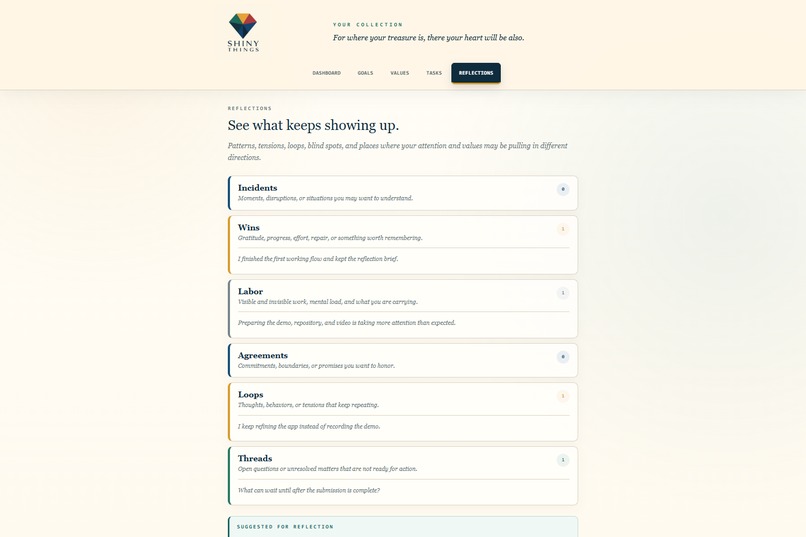
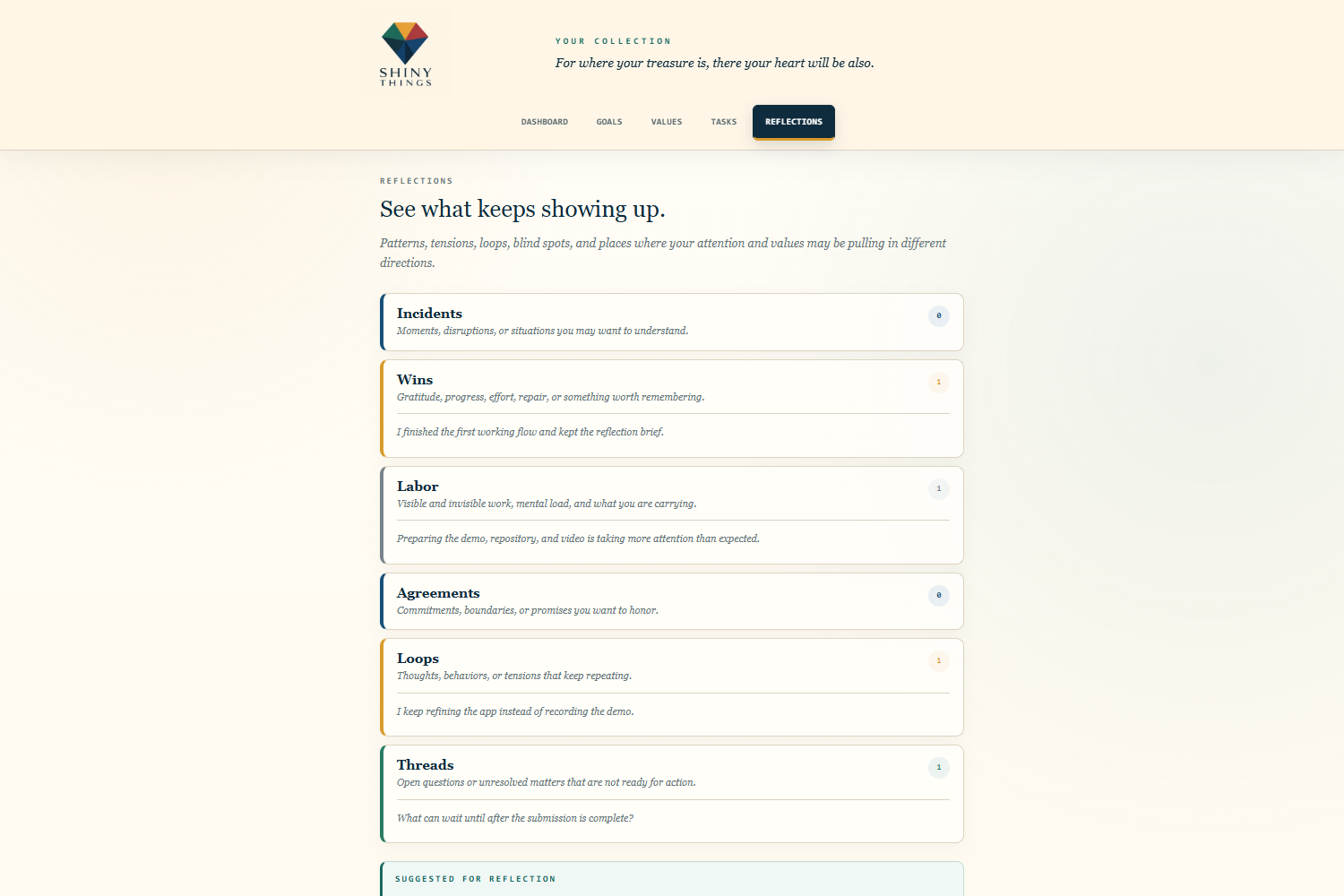
File attention as Incidents, Wins, Labor, Agreements, Loops, or Threads before inviting any analysis.
-
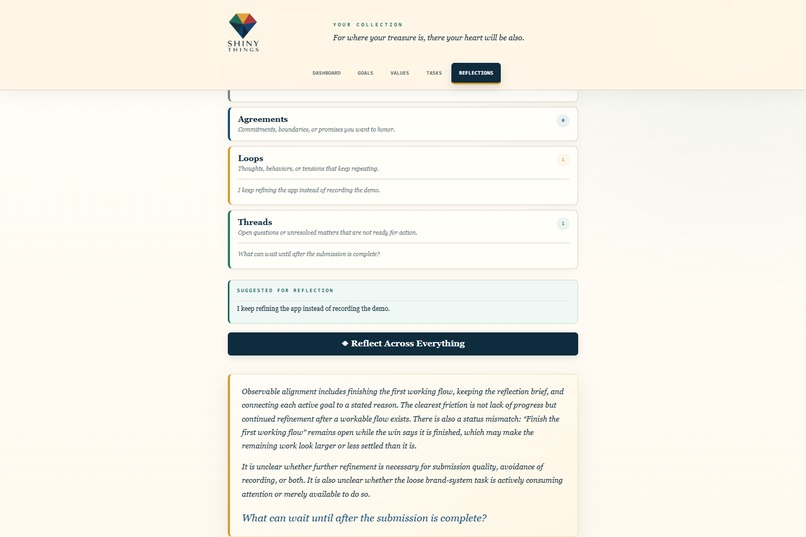
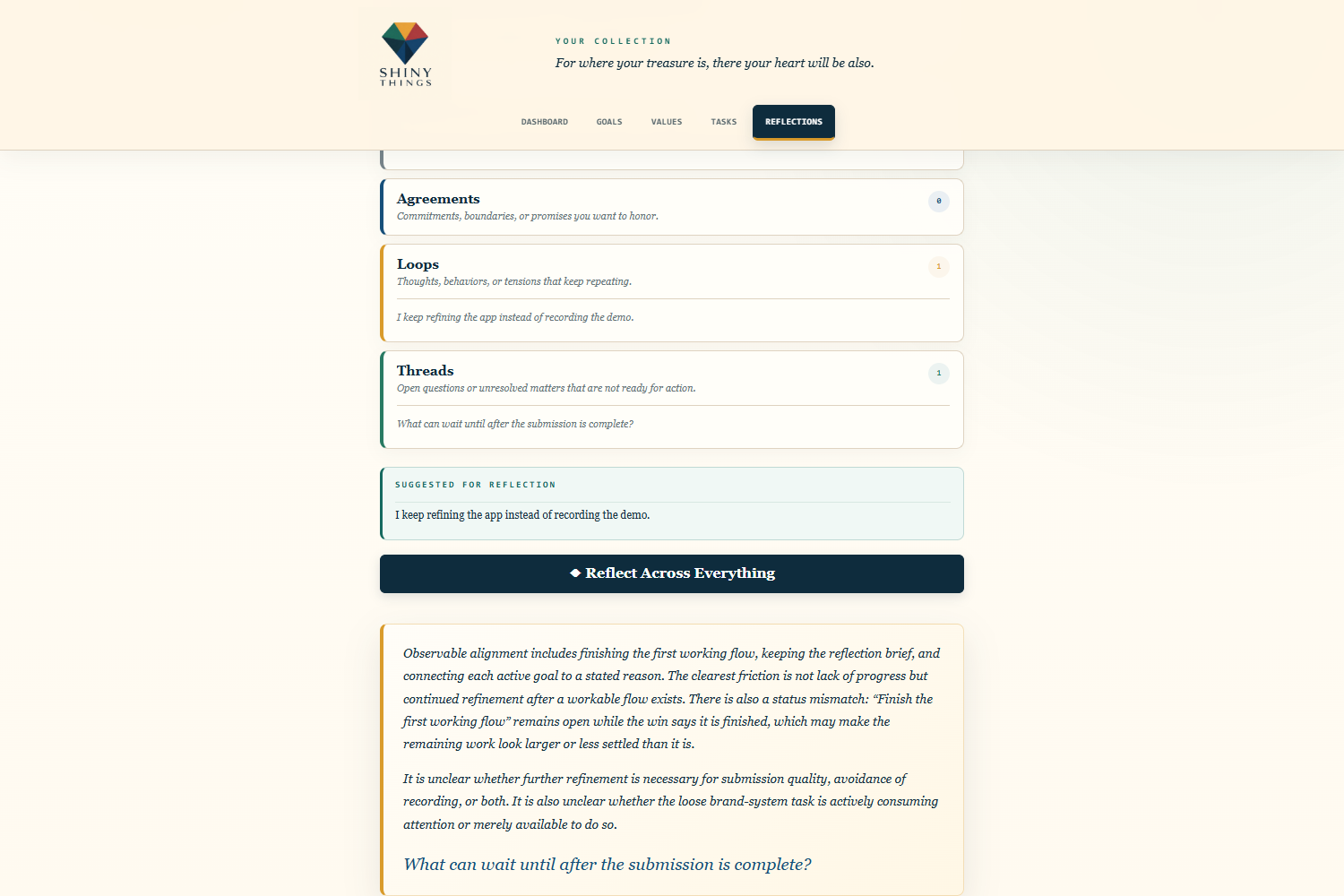
The invited Alignment Witness reflects one pattern, names uncertainty, and asks one question without taking authority.
Inspiration
The question that started this: Is this important to me — or is it only shining loudly right now?Most productivity tools make that question harder to answer. They reward action over discernment, completion over clarity, and treat everything pulling your attention as a task to be captured and closed. I wanted to build something that starts somewhere different — with what actually matters, not what's loudest.The deeper inspiration is a pattern I keep seeing across medicine, leadership, and relationships: the gap between what institutions perform and what they actually deliver. People trust a system, the system performs care without practicing it, and the person ends up carrying the cost. I didn't want to build that gap into a product.
What it does
Shiny Things is a values-grounded attention tool. You define what actually matters to you — not categories, but real values with real definitions and what makes them hard to live. Then the app watches the gap between what you say matters and where your attention actually goes. The AI witness surfaces that gap without coaching you. It shows you evidence: "You named Creativity as important, but it received no protected time this week. Does the plan need to change — or has the value changed?" Then it waits for you to decide. You can accept, dismiss, or tell it the suggestion doesn't match. Your call, always.
How we built it
Built with Codex and GPT-5.6 during OpenAI Build Week. Strict TypeScript throughout — typed domain models, explicit provenance on every AI suggestion, and analysis permission controls that let users decide what the AI is and isn't allowed to see. GPT-5.6 runs the witness layer with your values as context. Every suggestion is sourced — you can always see why it flagged something. The app never makes a decision for you.
Challenges we ran into
Maintaining the principle under pressure. Every time a feature would have made the app feel smarter or stickier, I had to ask: does this make the user more capable, or more dependent? Dark patterns are the path of least resistance. Honest friction requires intention at every layer — data model, copy, interaction design, prompt design. The other challenge was the AI witness tone. It's genuinely hard to write an AI that surfaces uncomfortable truths without sounding like a coach, a judge, or a therapist. Plain and honest is harder to get right than warm and hollow.
Accomplishments that we're proud of
The analysis permission model. Users choose what the AI can see — allowed, source only, protected, or not yet. That's not a setting buried in preferences. It's part of every capture. The AI earns access; it doesn't assume it. The witness principle in the UI. The AI never overrides what you know about yourself. It proposes; you decide. That distinction is visible in every interaction.
What we learned
Building an AI product that genuinely doesn't manipulate is harder than building one that does. And the product constitution I wrote before touching code — a moral and philosophical foundation for every product decision — was the most useful constraint I've ever worked with. When the rules trace back to something you actually believe, edge cases become easier, not harder.
What's next for Shiny Things
Same Side — the relational layer. The same witness principle, applied to two people in a conflict: what is each person actually protecting? Where are they already on the same side and don't know it? What's the question neither has asked yet? The self layer and the relational layer share the same foundation. That's the product.
Built With
- codex
- gpt-5.6
- next.js
- tailwind-css
- tanstack-query
- typescript
- zod
- zustand

Log in or sign up for Devpost to join the conversation.