Inspiration
Cycling, both for daily commuting and long-distance, ultra-endurance events requires high visibility to stay safe when sharing roadways with other vehicles. Bright, blinking lights dramatically increases a cyclist’s visibility, both at night and during the day. However, few commercial bike lights offer both bright and long-lasting illumination since these are typically competing design choices. There is a definite need in the cycling community for ultra-bright lights, to see and to be seen, that also offer long usage times. Despite lighting being a relatively simple technology, existing solutions to this problem either hamper cycling performance, for example by adding significant pedaling resistance, or are outrageously expensive, or both, and typically do not take usage convenience into account in their designs.
What it does
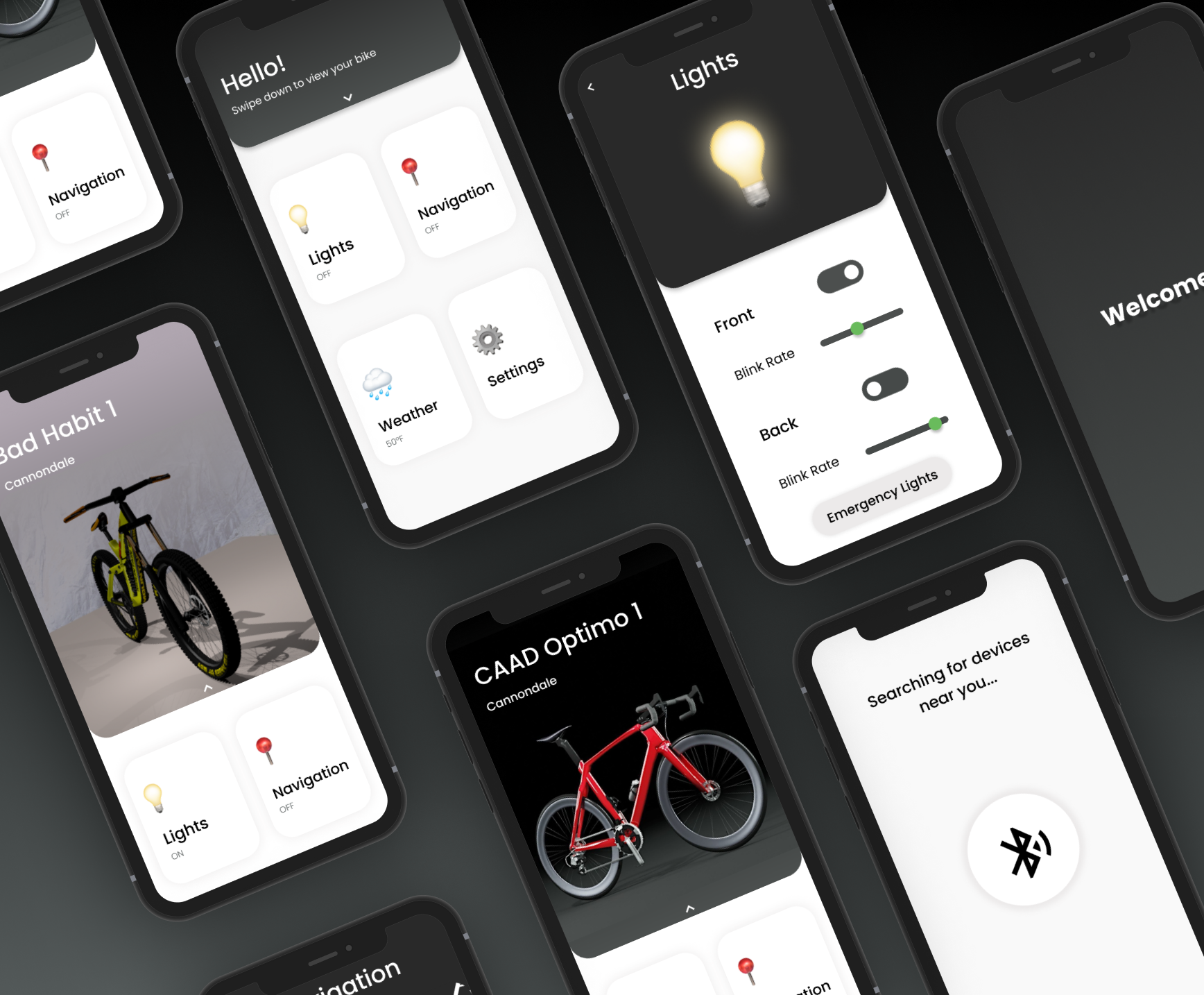
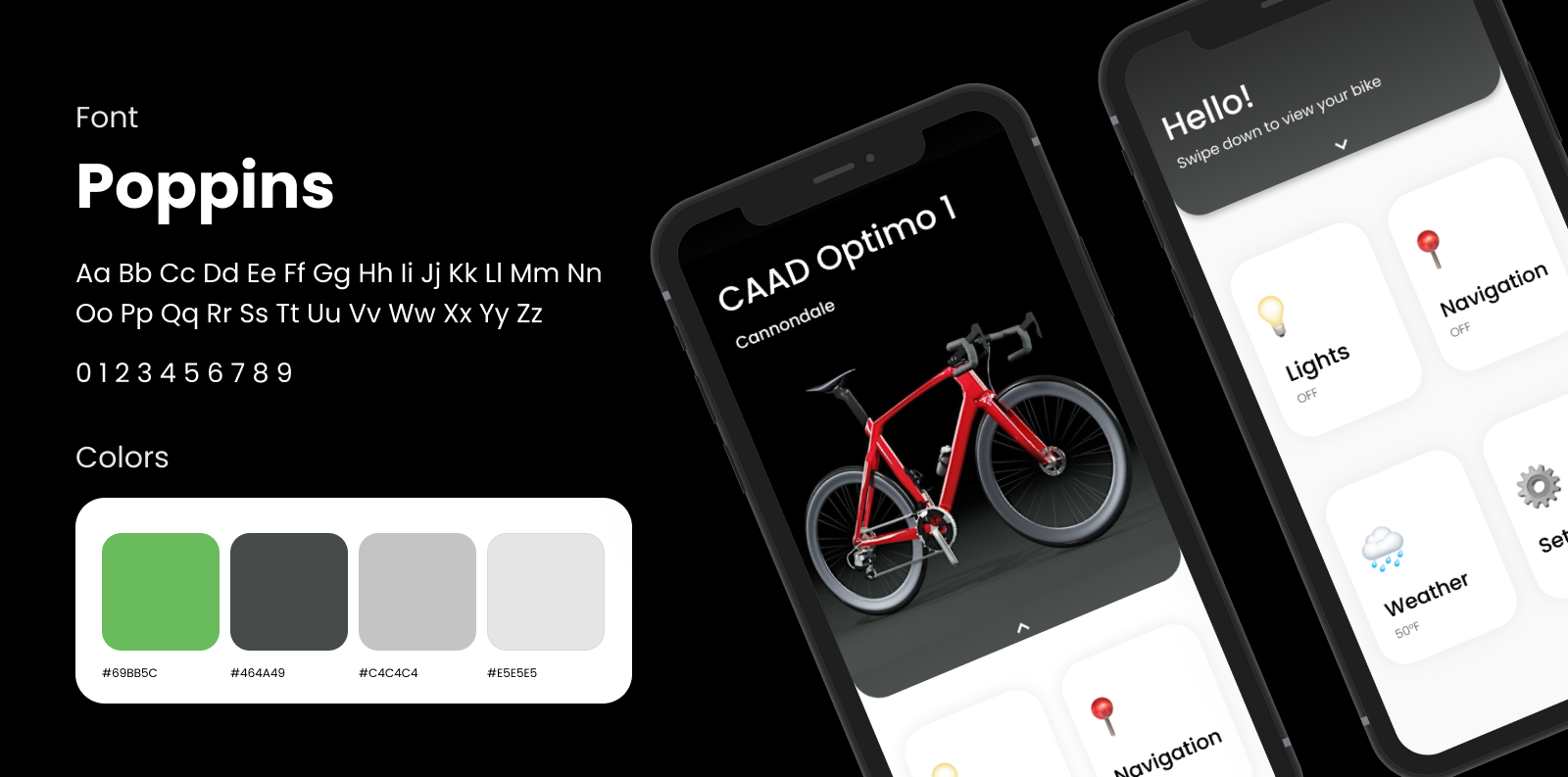
We created a remote-controlled, ultra-bright, long-lasting “Smart” bicycle light that dramatically enhances cyclists’ visibility and increases safety on shared roads and bike paths. Custom-built, ultra-bright LED lights mounted on the front and rear of a conventional bicycle are linked to a high-capacity power bank and are operated by a field-programmable gate array (FPGA) that controls the on/off state and flashing rates of each light, independently. A cyclist can control the states of the bike lights via a smart-phone app, which pairs with the FPGA via its low-energy Bluetooth interface. The custom-designed app, which can read and store parameters from multiple device profiles, gives the cyclist easy, push-button access to each of the lights’ properties, as well as serves to inform them of relevant weather information (e.g., sunrise/sunset) and navigational details.
How we built it
Using a mixture of scavenged parts (e.g., LED elements taken from free, “give-away” flashlights), and common “Maker” components, including an Arduino Nano and relay module, we constructed a bicycle light and control electronics system. The lighting system is powered by a rechargeable lithium-ion power bank, commonly used to recharge electronic devices (e.g., cell phones), offering very high charging and discharging powers. With this large but light-weight battery, the lights can be operated at very high currents (producing very bright light) for extended periods of time, far longer than most commercial solutions that use alkaline (e.g., “AA”) or small rechargeable batteries.
Using its built-in, low-energy Bluetooth connectivity, the Arduino interfaces with an app on a handlebar-mounted smartphone, much like many cyclists already use for navigation or performance tracking. The app enables simple, push-button control of the independent light settings, as well as provides relevant weather (e.g., local sunrise/sunset times) and location data.
Challenges we ran into
Hardware challenges included integrating all the components together in a robust and compact form to fit inside the waterproof frame bag, and properly tuning the circuit elements (resistors) to allow the desired amount of current to flow (not too much, to burn the LEDs, but not too little that would be too dim).
Software-wise, developing an Android app was a challenge and was a new skill to develop, especially learning how to write the control bits from the app to the Arduino, which modify the on-board program flow that controls the lights.
Accomplishments that we're proud of
Designing the smartphone app in such a short amount of time is impressive. Even if some of the more elaborate “nice-to-have” features could not be included, still being able to use the core functionality, linking software and hardware via a smartphone make this project immediately usable. Scavenging and assembling electronic components that all work together was also quite an accomplishment.
What we learned
As a team consisting of a designer and a developer, at the beginning, we weren't very familiar with each other's specialties. However, by working on this project, we gained more detailed understanding of the design process for smartphone apps, via Figma, as well as knowledge about how the hardware works, bluetooth data and connectivity characteristics. We really enjoyed working together on this project, and it's definitely been a great learning experience.
What's next for #11 Shine Bright Like a Bike Light
(Software) Expanding the app to include more nice-to-have features that could not be completed this weekend.
(Hardware) Building a more robust case for the control electronics.


Log in or sign up for Devpost to join the conversation.