Inspiration
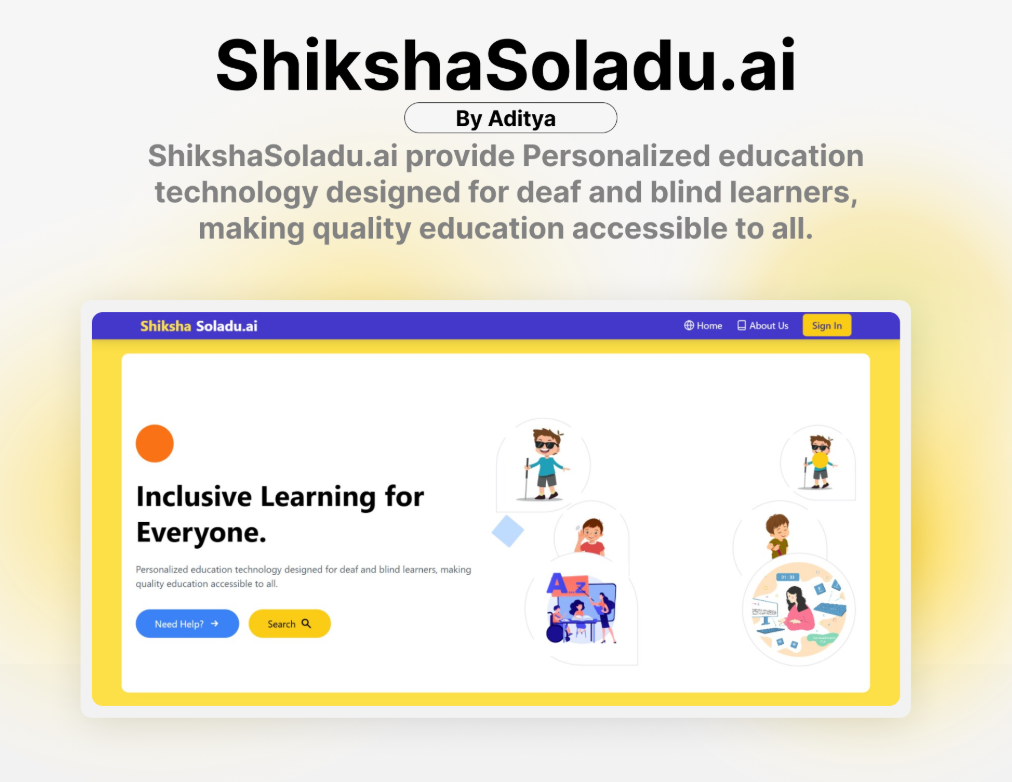
ShikshaSoladu.ai was inspired by how traditional classrooms and even most edtech products still leave students with disabilities behind, especially in low-resource and non-English-first environments. Growing up seeing classmates struggle with visual, hearing, or learning disabilities without proper support highlighted how much talent is lost just because the tools are not accessible. The project began with a simple question: “What if AI could act as a personalized assistive tutor that adapts to each learner’s disability instead of forcing them to adapt to the system?”
What it does
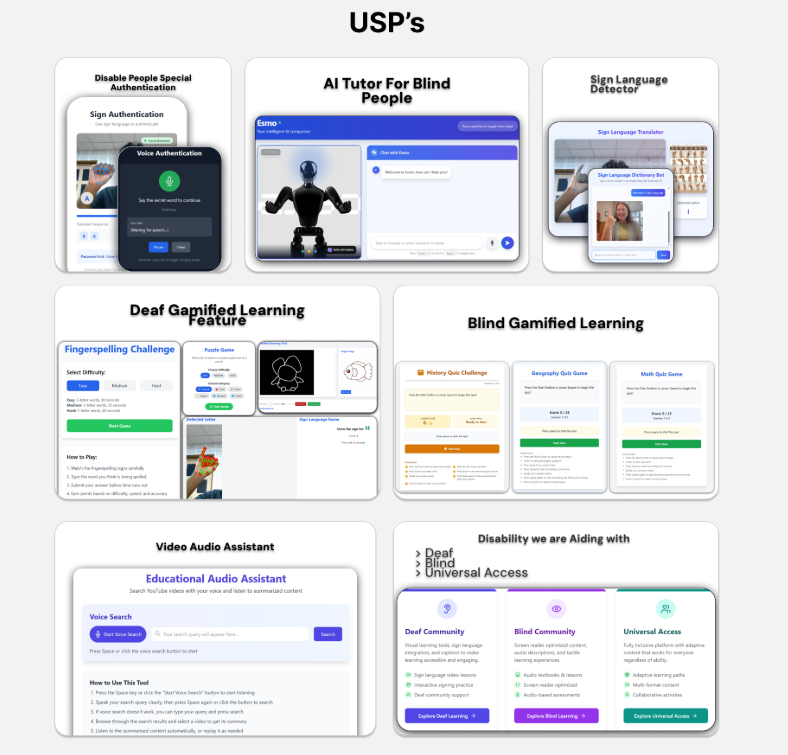
ShikshaSoladu.ai is an inclusive education platform that offers AI-powered learning support tailored to blind, deaf, dyslexic, and differently-abled learners. It focuses on converting the same educational content into multiple accessible formats so that every student can participate in the same lesson, just through different channels. Examples include: screen-reader-friendly interfaces for blind users, captioning and transcript-style content for deaf users, and simplified, dyslexia-friendly reading modes for learners with reading difficulties.
How we built it
The platform is built as a web application, with a frontend designed for accessibility-first UI (semantic HTML, ARIA roles, keyboard navigation, high-contrast and scalable text). On the backend, AI models are used for tasks like text simplification, question generation, and content transformation (e.g., generating explanations, practice questions, or alternate formats). The system is structured into modular services for different disability modes (blind, deaf, dyslexic), so new modes or languages can be added without rewriting the whole platform.
Challenges we ran into
One major challenge was designing for users the team does not personally represent: it is easy to guess what “accessible” means, but much harder to match real-world needs of blind or deaf students. Translating AI features into truly usable assistive experiences (for example, making sure a visually impaired learner can navigate without getting lost in the interface) required a lot of iteration. Another difficulty was balancing performance and model usage with accessibility; heavy AI calls can slow down the experience, which is especially painful for users already facing barriers like low bandwidth or older devices.
Accomplishments that we're proud of
The team is proud of building a single platform where multiple disability profiles are first-class citizens instead of afterthought “accessibility options.” Creating flows where a blind learner, a deaf learner, and a dyslexic learner can all access the same lesson in a way that works for them feels like a concrete step toward inclusive classrooms. Another key achievement is the architecture: the way the app is structured makes it feasible to extend to more languages, subjects, or disability modes without starting from scratch.
What we learned
Working on ShikshaSoladu.ai reinforced that accessibility is not a feature; it is a design philosophy that must guide every decision—from color contrast and keyboard focus states to error messages and content structure. The team also learned how powerful AI can be when used thoughtfully: not just to “add magic,” but to personalize explanations, pacing, and modality for learners who are often ignored by mainstream tools. Finally, the project highlighted the importance of talking to actual users, educators, and caregivers early to avoid building “for” people instead of “with” them.
What's next for ShikshaSoladu.ai
Next steps include integrating support for more regional languages and curricula so that students in different parts of the country can use the platform in their native language. The team also plans to collaborate with special educators and NGOs to validate the UX with real students, refine disability-specific modes, and add features like progress analytics for teachers and parents. In the long term, ShikshaSoladu.ai aims to evolve into a plug-and-play accessibility layer that schools and existing LMS platforms can integrate to instantly make their content more inclusive.
Built With
- aiagent
- express.js
- mongodb
- next.js
- openai
- reactwebspeech
- stt
- tailwindcss


Log in or sign up for Devpost to join the conversation.