Inspiration
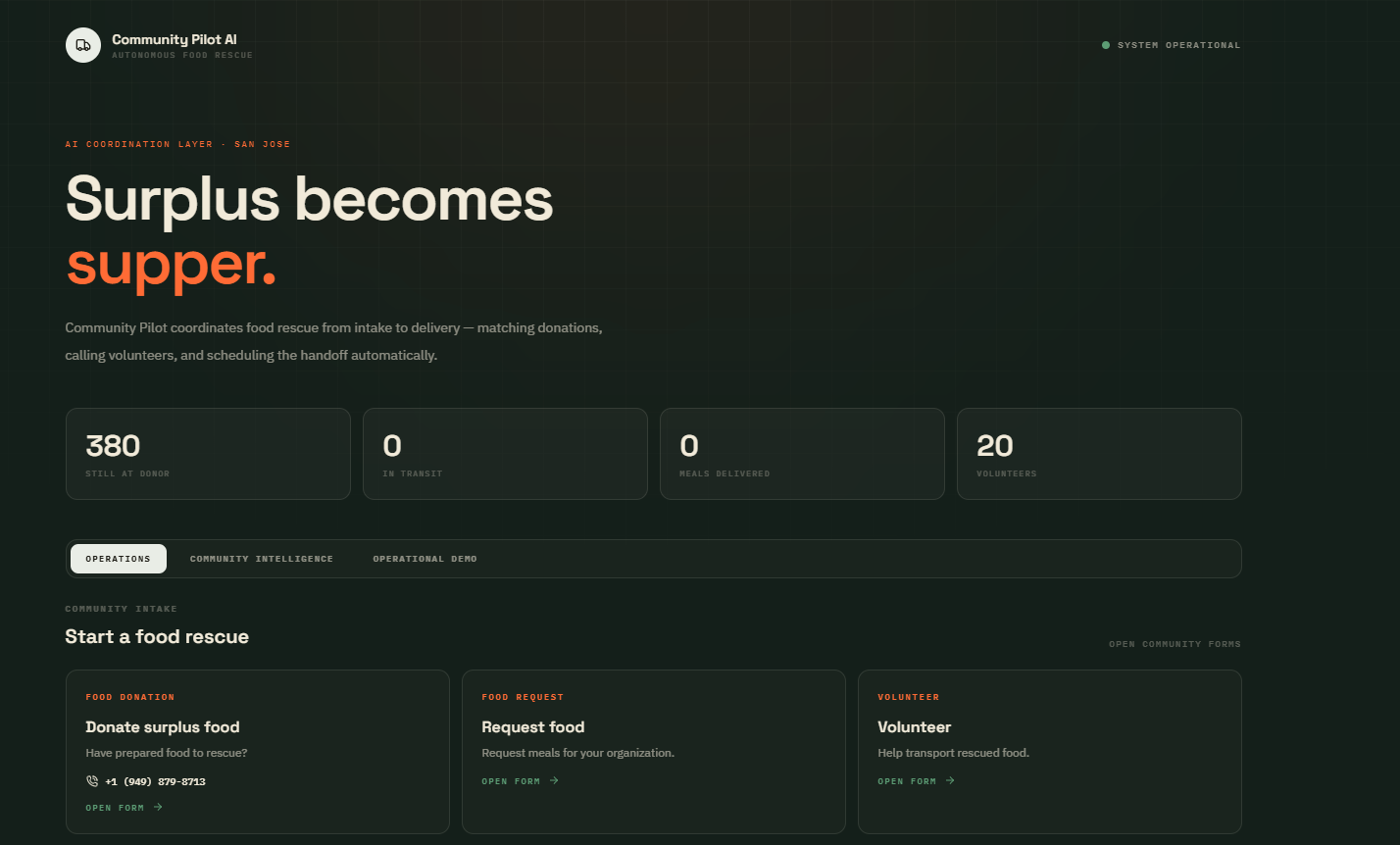
I wanted to explore how AI could solve a problem where the challenge isn't necessarily a lack of resources, but a lack of coordination. Restaurants, events, cafeterias, and businesses can have surplus food at the end of the day while shelters, nonprofits, and community organizations simultaneously need meals. Volunteers are willing to help, but coordinating all of these moving pieces manually is difficult. As a solo builder, I wanted to see if I could build an AI system that could connect these pieces and help answer one simple question: What should happen next?
What it does
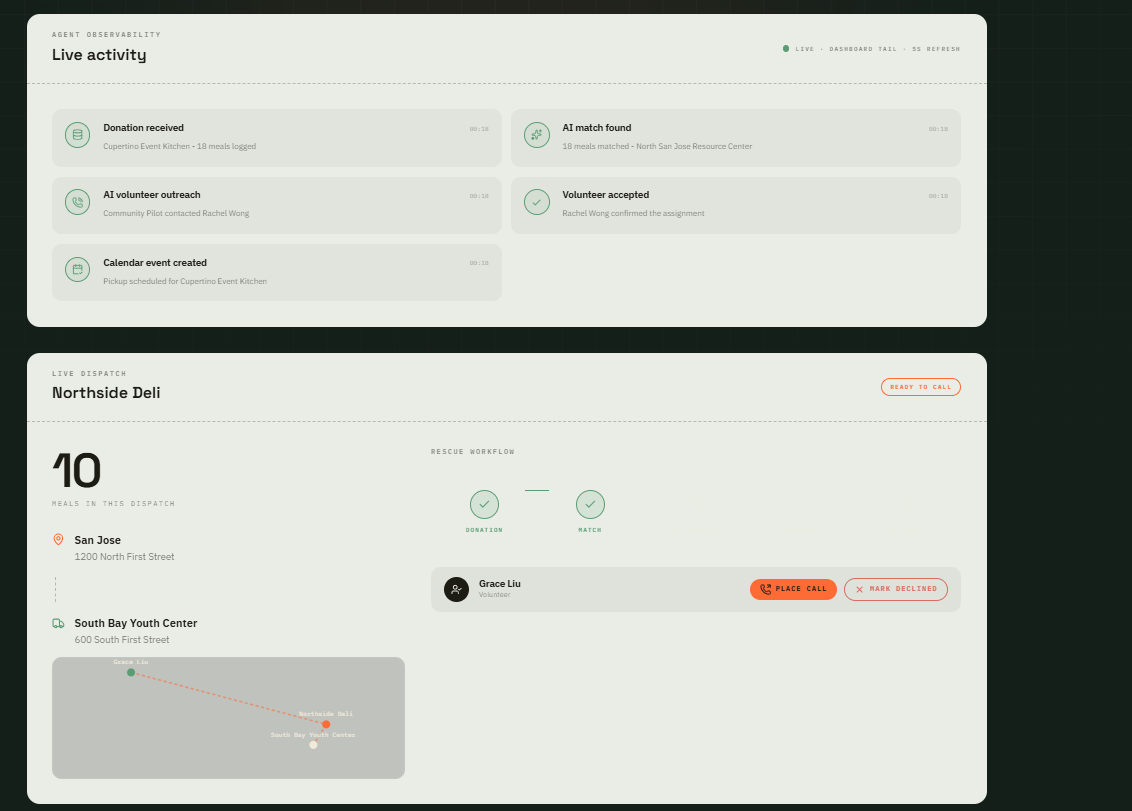
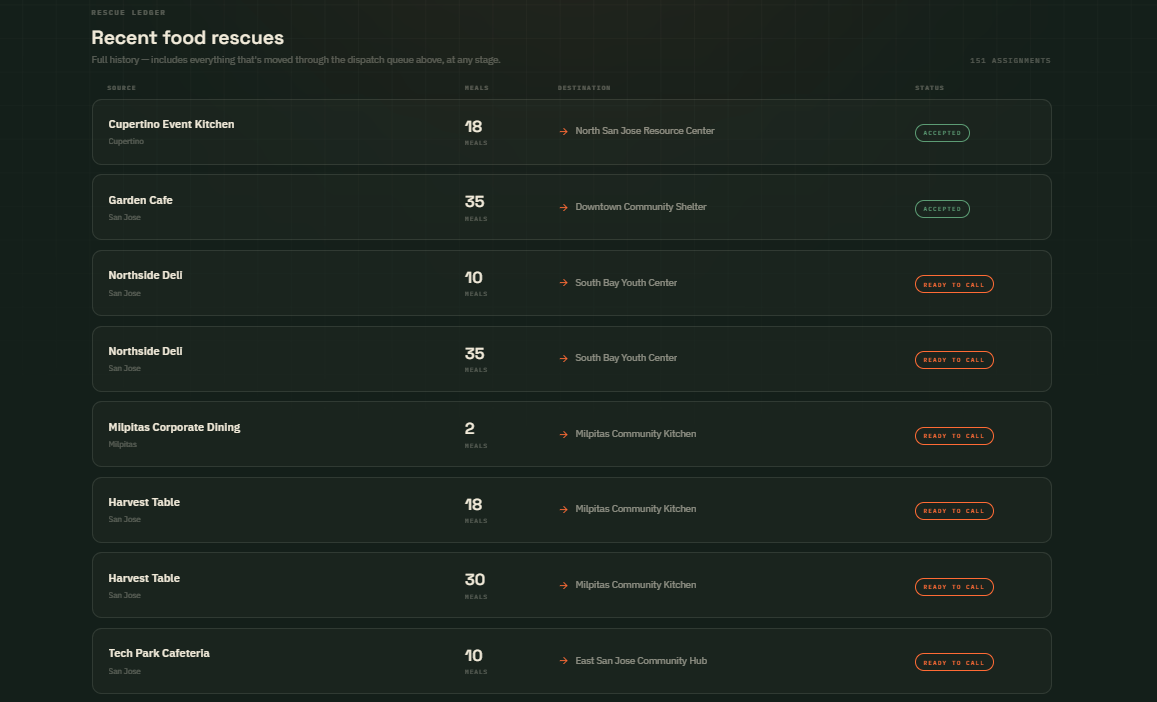
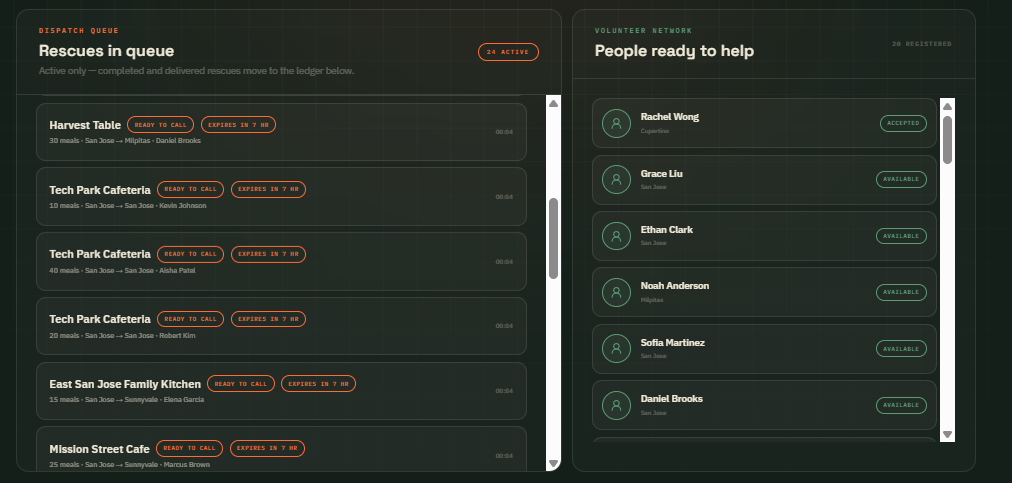
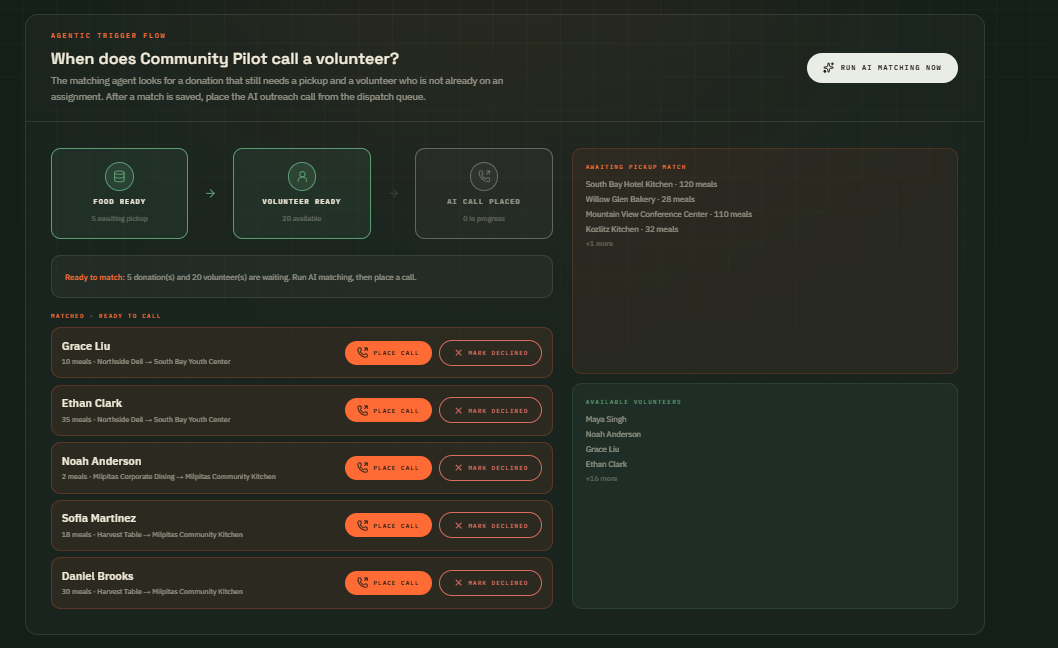
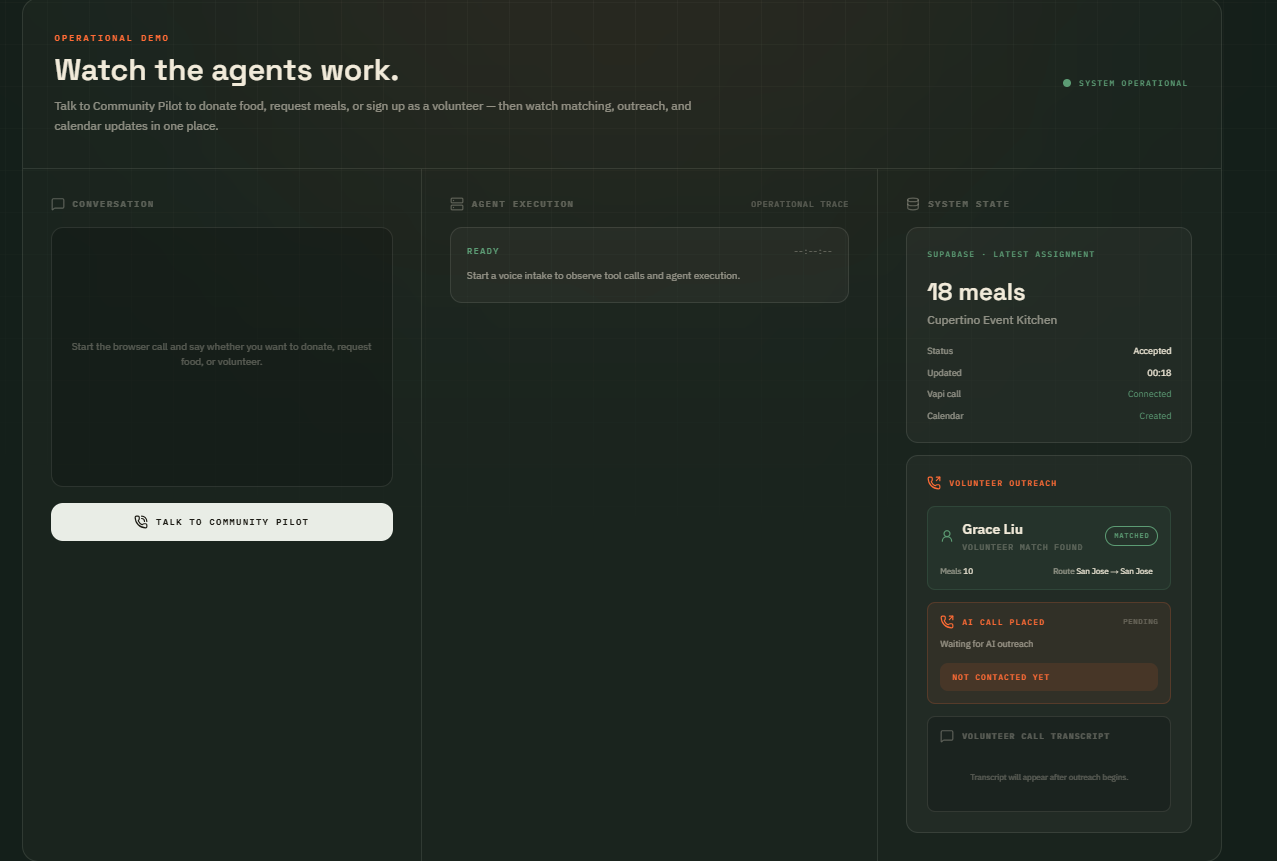
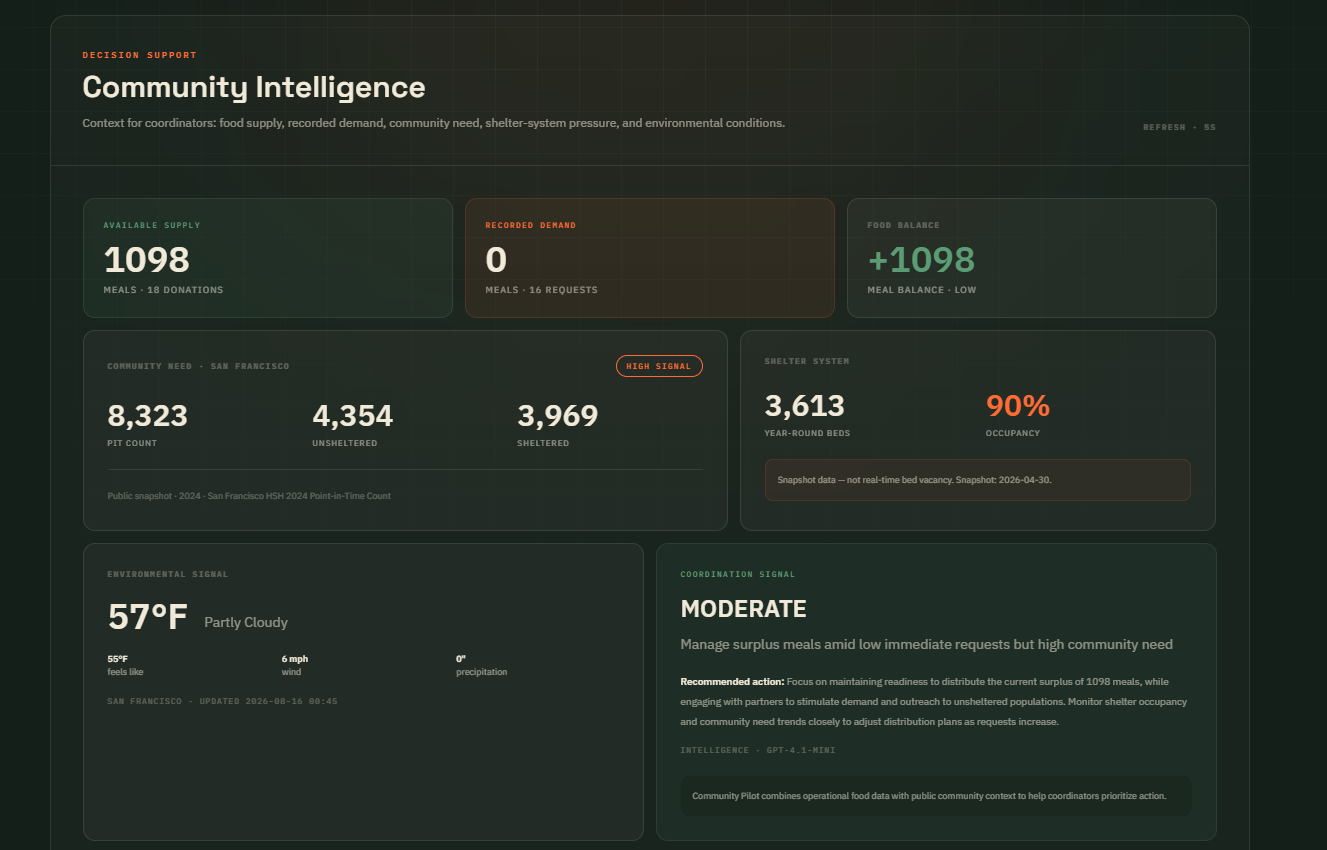
Community Pilot AI connects food donors, community organizations, and volunteers in a single operational workflow. Donors submit surplus food and pickup constraints, organizations request meals based on need and capacity, and volunteers register their transportation, availability, and service area. The coordinator dashboard then matches donations to destinations and one or more qualified volunteers based on geography, time windows, capacity, dietary requirements, and whether the volunteer can actually be reached. When the coordinator is ready, they can place an AI-powered outreach call through Vapi. If a volunteer declines or doesn't answer, the rescue can move to the next qualified volunteer or remain pending until a match is available. When a volunteer accepts, Community Pilot closes the loop by notifying the donor, creating a calendar event for the real pickup window, and tracking the rescue through pickup → in transit → delivered. Its intelligence layer combines supply, demand, community need, shelter-system pressure, and weather while also identifying donations that are approaching their expiration window so coordinators can prioritize food that needs to move first.
How I built it
I built Community Pilot AI end-to-end as a solo participant using Next.js, React, TypeScript, Tailwind CSS, Python, FastAPI, Supabase, OpenAI, Vapi, WeatherAPI, and REST APIs. I structured the system around specialized capabilities for matching, routing, volunteer outreach, and community intelligence rather than treating AI as a single chatbot. The core workflow is Data → Match → Place call → Outcome → Reassign or dispatch → Pickup → Delivery. AI helps with reasoning and coordination, while the human coordinator stays in the loop for important actions such as placing the volunteer call and confirming pickup and delivery.
Challenges I ran into
Building the entire system alone meant solving problems across the stack, but the most interesting challenges were making the coordination logic behave like a real operational system. I had to prevent donations from being double-booked and volunteers from being assigned to multiple active rescues, handle declines and no-answers without automatically calling the next volunteer, and make the dashboard statistics reflect the true state of a rescue rather than counting every assignment as "rescued." I also had to make the Place Call workflow reliably dial the intended volunteer while dealing with stale volunteer IDs, invalid demo numbers, and voice/SSL issues. Another surprisingly important challenge was treating pickup deadlines as real clock times rather than relative times like "15 minutes from now." Throughout the process, I kept coming back to the same end-to-end chain: Form → Database → API → AI → Decision → UI → Human action.
Accomplishments I'm proud of
I'm especially proud that I took Community Pilot from an idea to a working end-to-end AI coordination system as a solo builder. The matching workflow respects real-world constraints including occupancy, distance, time, dietary requirements, and capacity, and can even split a large donation across multiple volunteers when one person isn't enough. The voice workflow can recover from a decline or no-answer by moving to another qualified volunteer, while an accepted match can trigger donor notification, calendar coordination, and the full pickup-to-delivery workflow. The intelligence layer goes beyond assigning a generic priority label by identifying which donations are approaching their expiration window and should be acted on next. Most importantly, I didn't just build an AI feature—I built the operational product around it.
What I learned
Building Community Pilot as a solo participant taught me that agentic AI becomes much more powerful when it is connected to a real workflow. A model generating a recommendation is only one piece; the real value comes from connecting data → reasoning → decision → action. I also learned that turning an AI idea into a working product requires just as much attention to databases, APIs, deployment, UI state, external services, error handling, and human workflows as it does to the model itself. Most importantly, I learned that AI doesn't always need to replace people. Sometimes its most valuable role is to coordinate people more effectively.
What's next for Community Pilot AI
The next step is making Community Pilot smarter without taking important decisions away from the coordinator. I want to replace ZIP-code-based distance estimates with real driving time and traffic, move toward a more autonomous Find → Match → Contact workflow while keeping coordinator approval before a call is placed, and introduce predictive demand based on weather, events, and historical request patterns. I also want to expand the impact layer beyond meals delivered to measure food waste diverted, volunteer hours, miles driven, and people reached. The long-term vision is a coordination system that can continuously understand what resources are available, what is needed, what is about to expire, and what action should happen next—while keeping humans firmly in control. Rescue food. Feed people. Build community.
Built With
- and
- fastapi
- next.js
- openai
- python
- react
- rest
- supabase
- tailwind-css
- typescript
- vapi
- weatherapi

Log in or sign up for Devpost to join the conversation.