Inspiration
AI is creating new career paths and changing existing engineering roles. Students, learners and junior engineers may hear titles such as applied AI engineer, go-to-market engineer or forward deployed engineer without knowing what the day-to-day work involves or whether it interests them.
Shiftwork was inspired by a simple goal: help them explore these roles before entering the workplace. Rather than only reading job descriptions or following coding tutorials, learners step into fictional workplaces and try the tasks, decisions and responsibilities associated with each role. They can investigate an AI service, work on a revenue workflow or prepare an integration for rollout. The aim is to make unfamiliar AI-related careers more concrete through hands-on practice, not to promise job readiness or certification.
What it does
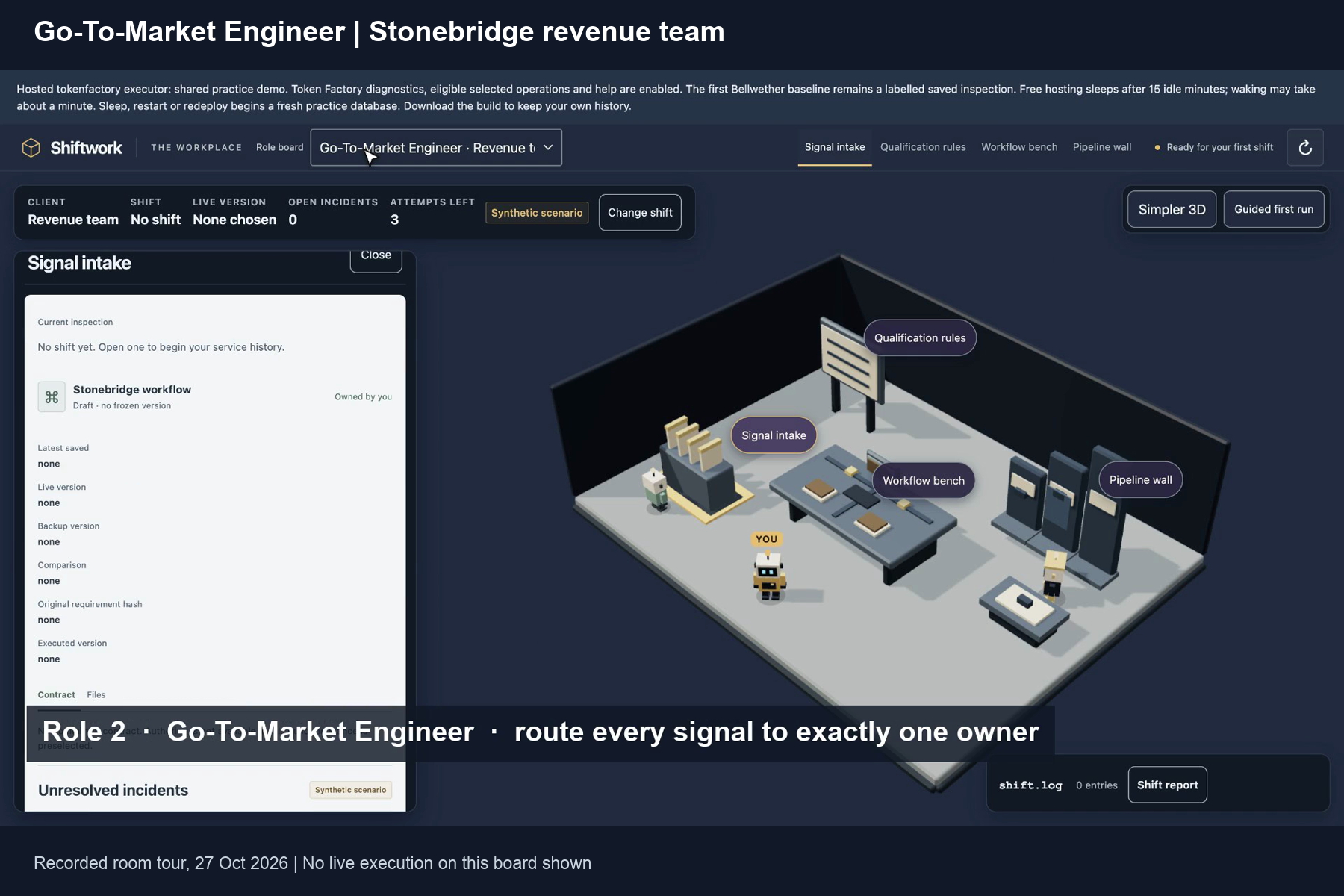
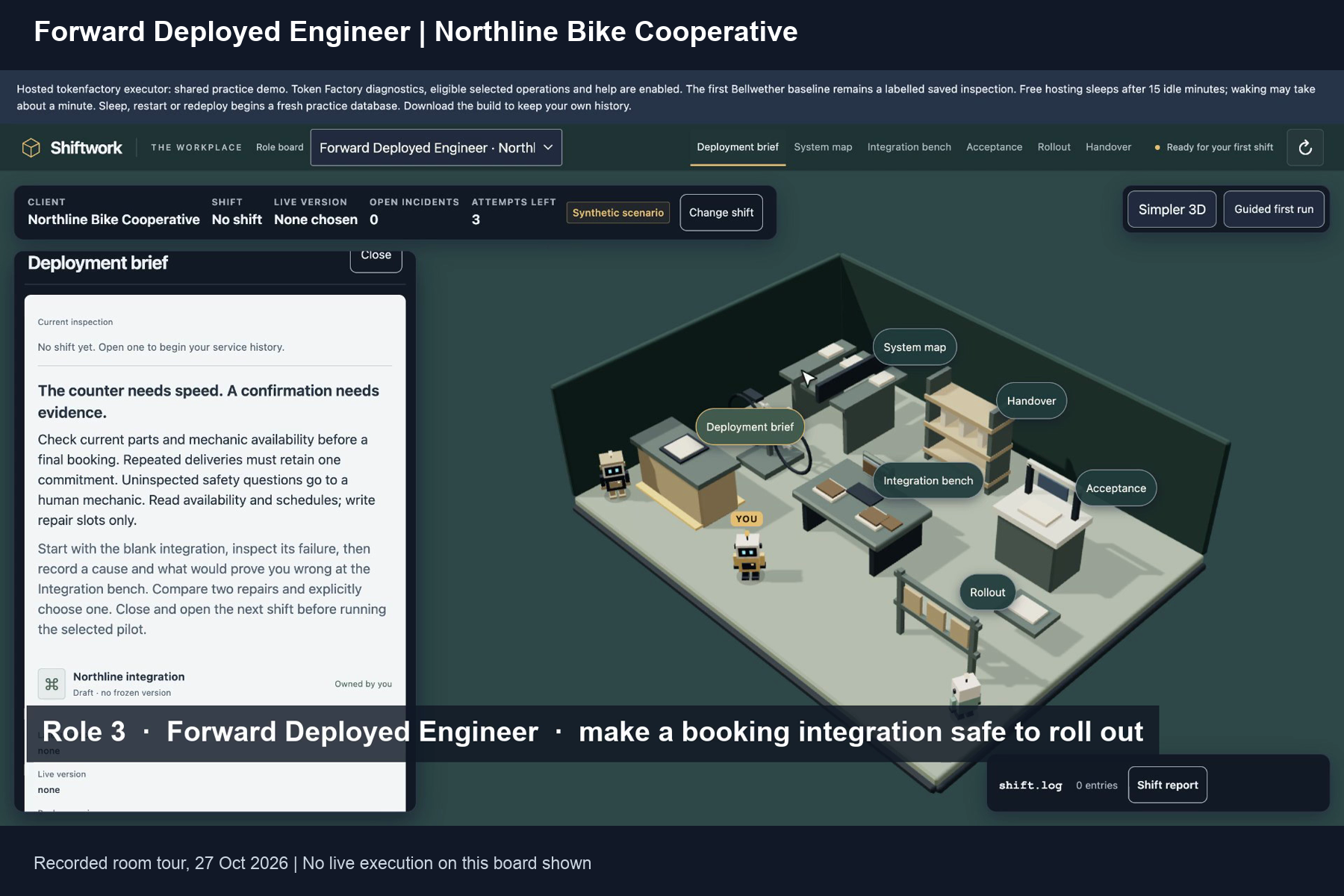
Shiftwork lets learners try three AI-related engineering roles in a simulated workplace:
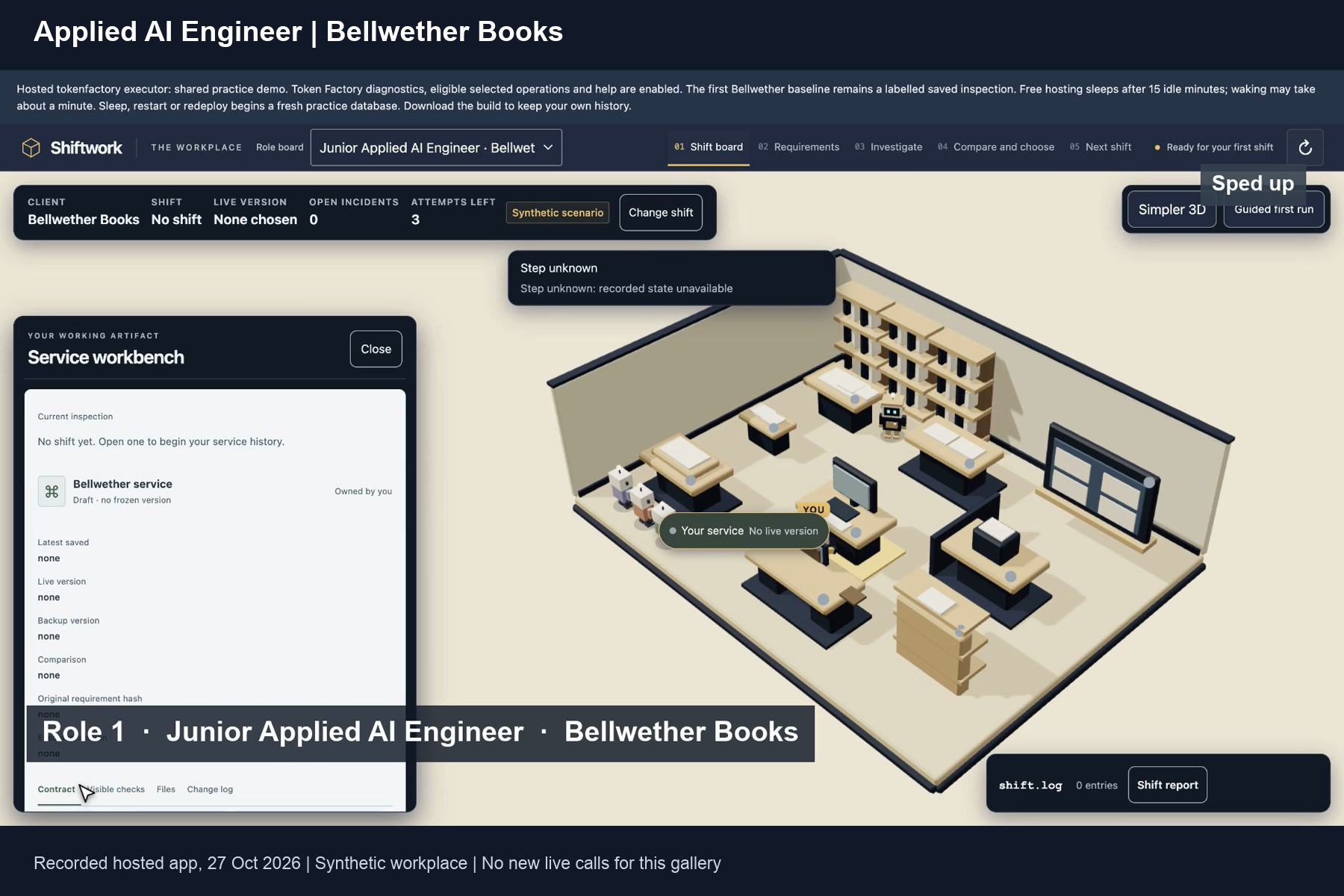
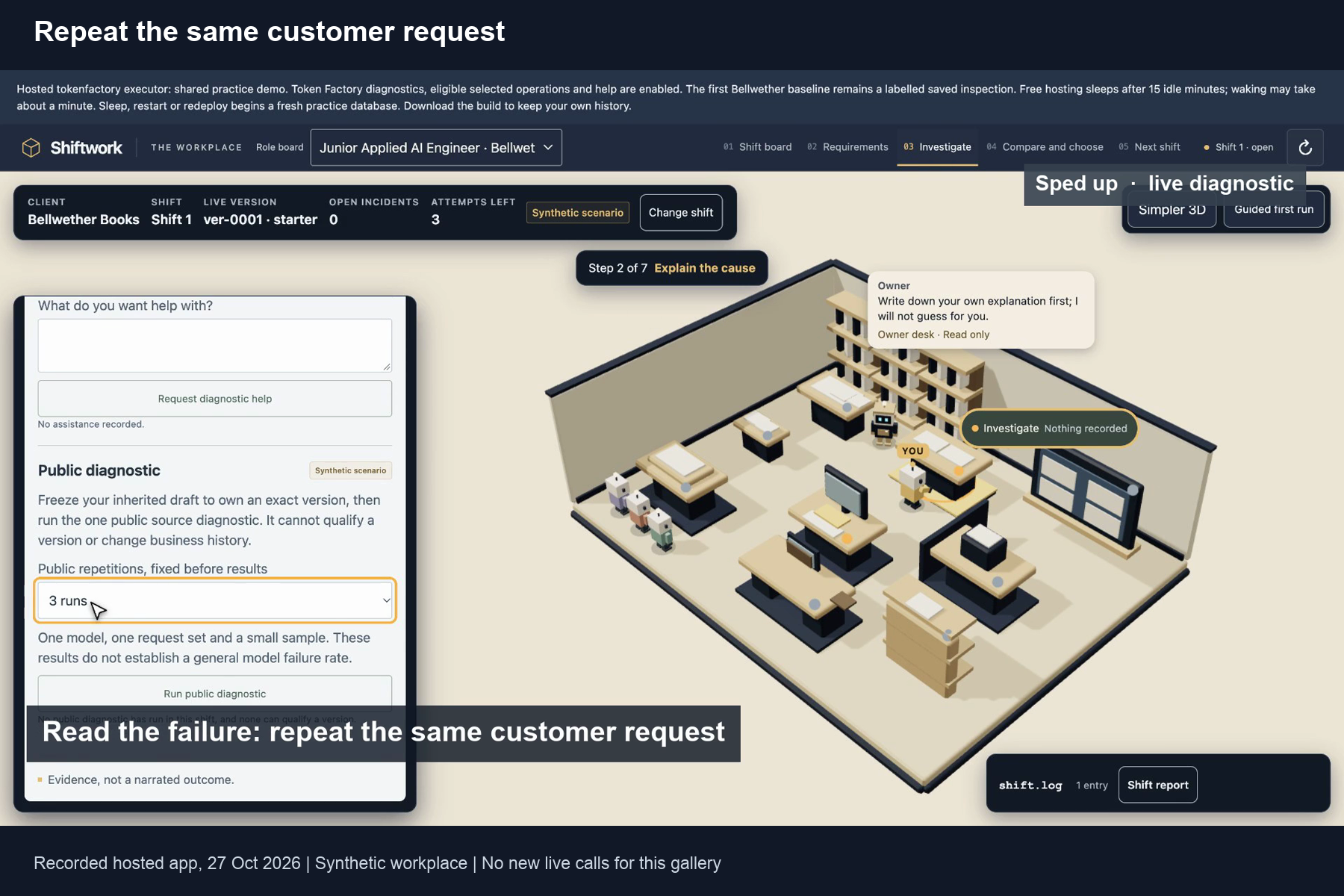
- Applied AI Engineer: keep a bookshop's AI service working.
- Go-To-Market Engineer: work on a revenue workflow that sends incoming signals to the right owner.
- Forward Deployed Engineer: prepare a bike co-op's booking integration for rollout and handover.
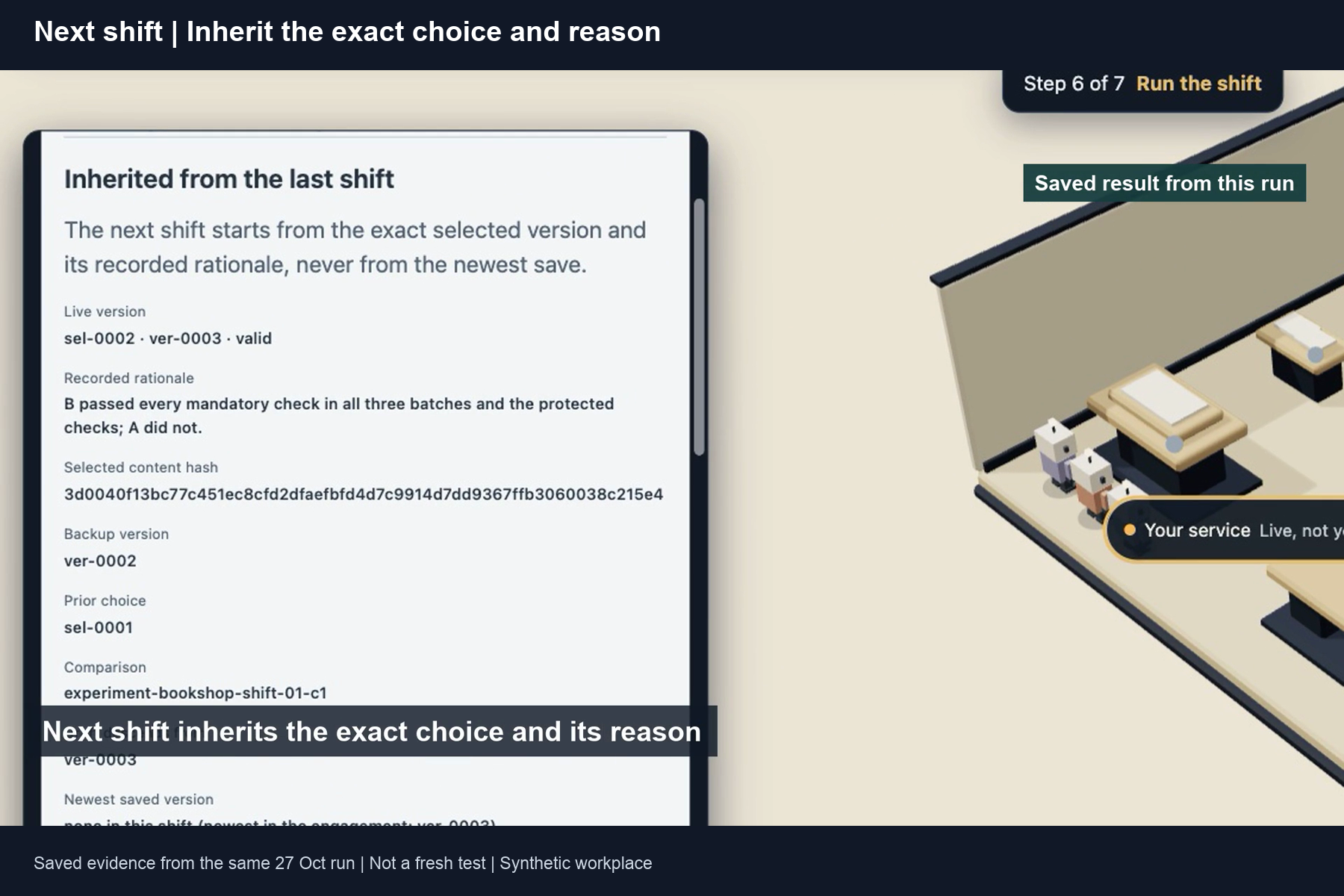
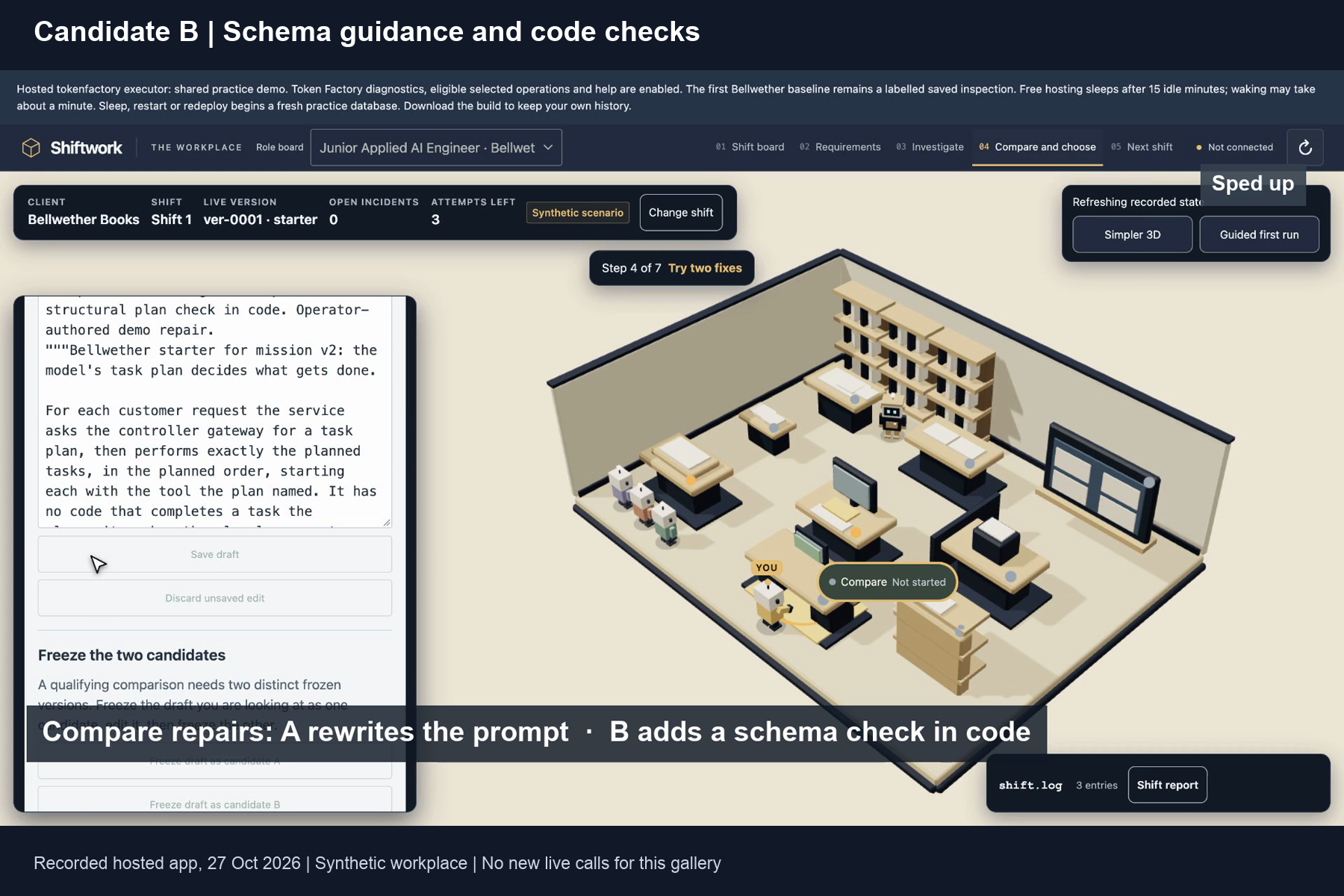
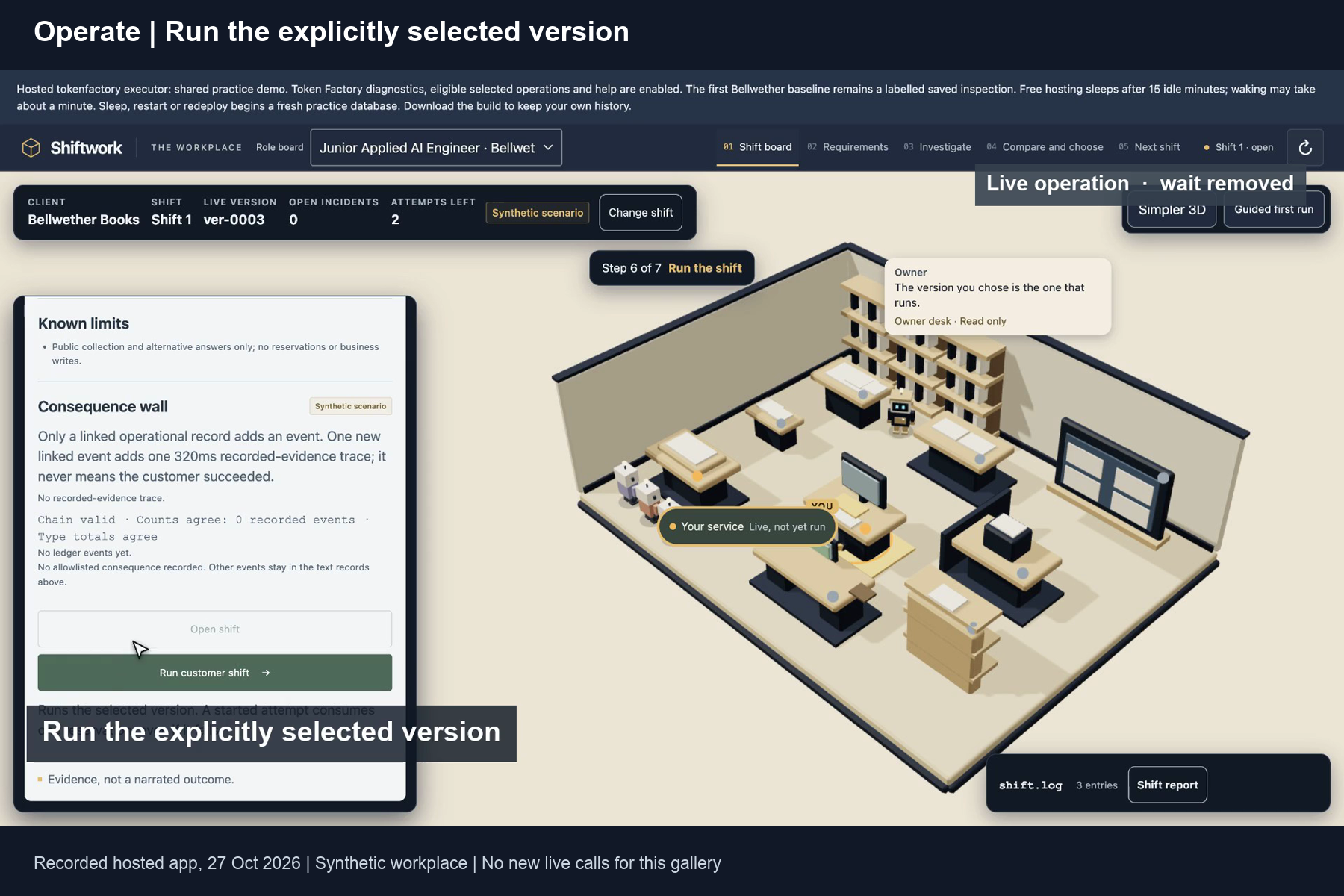
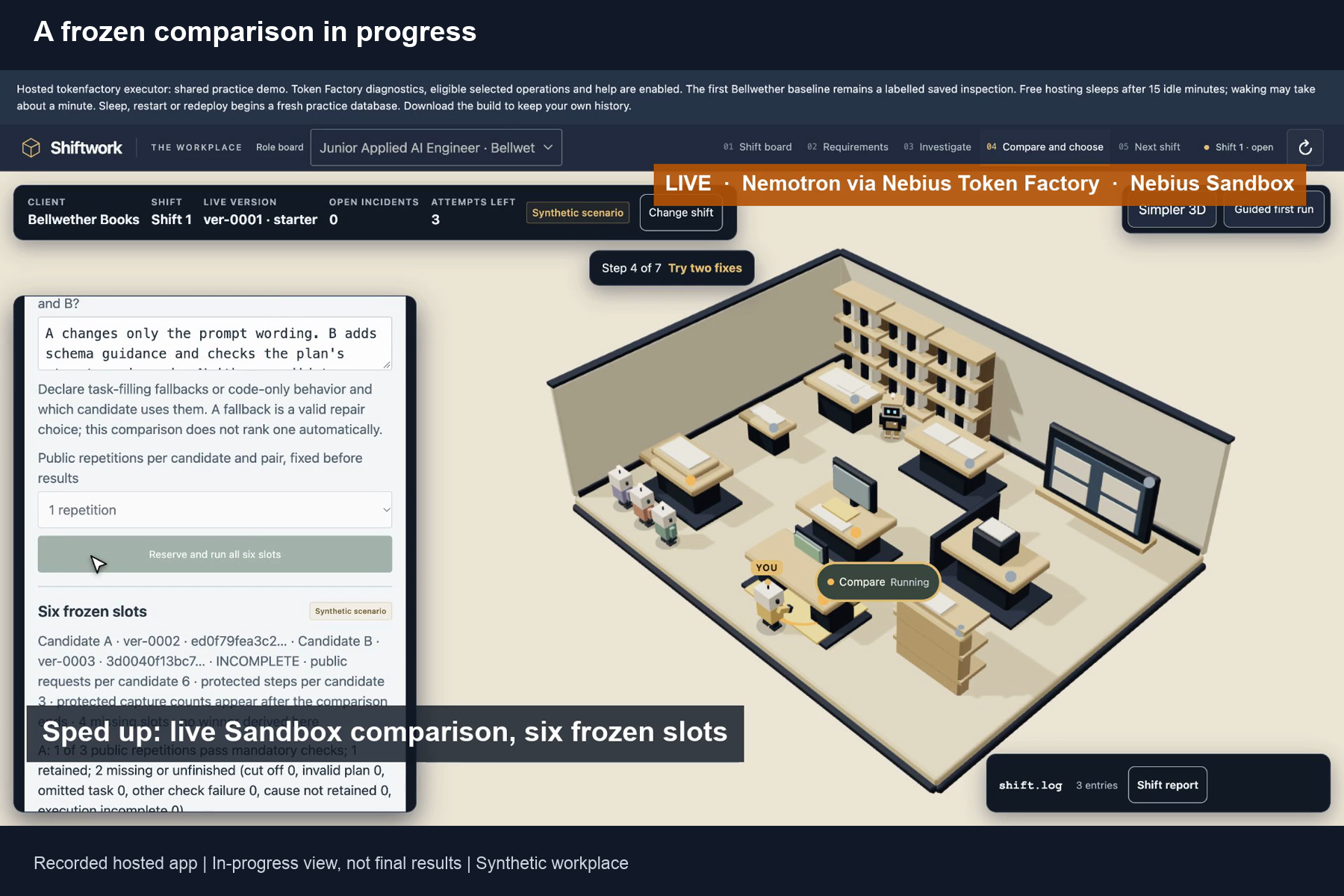
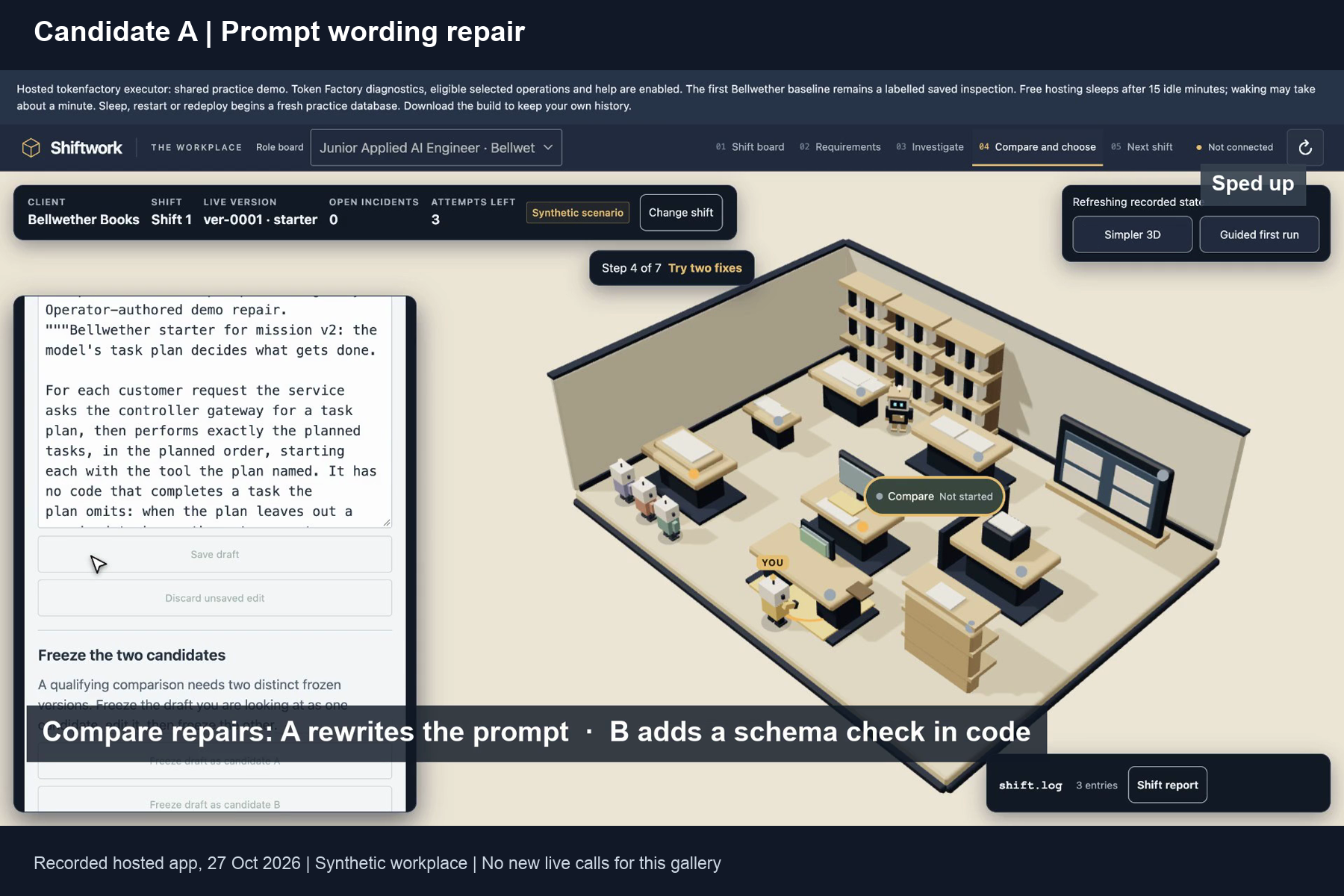
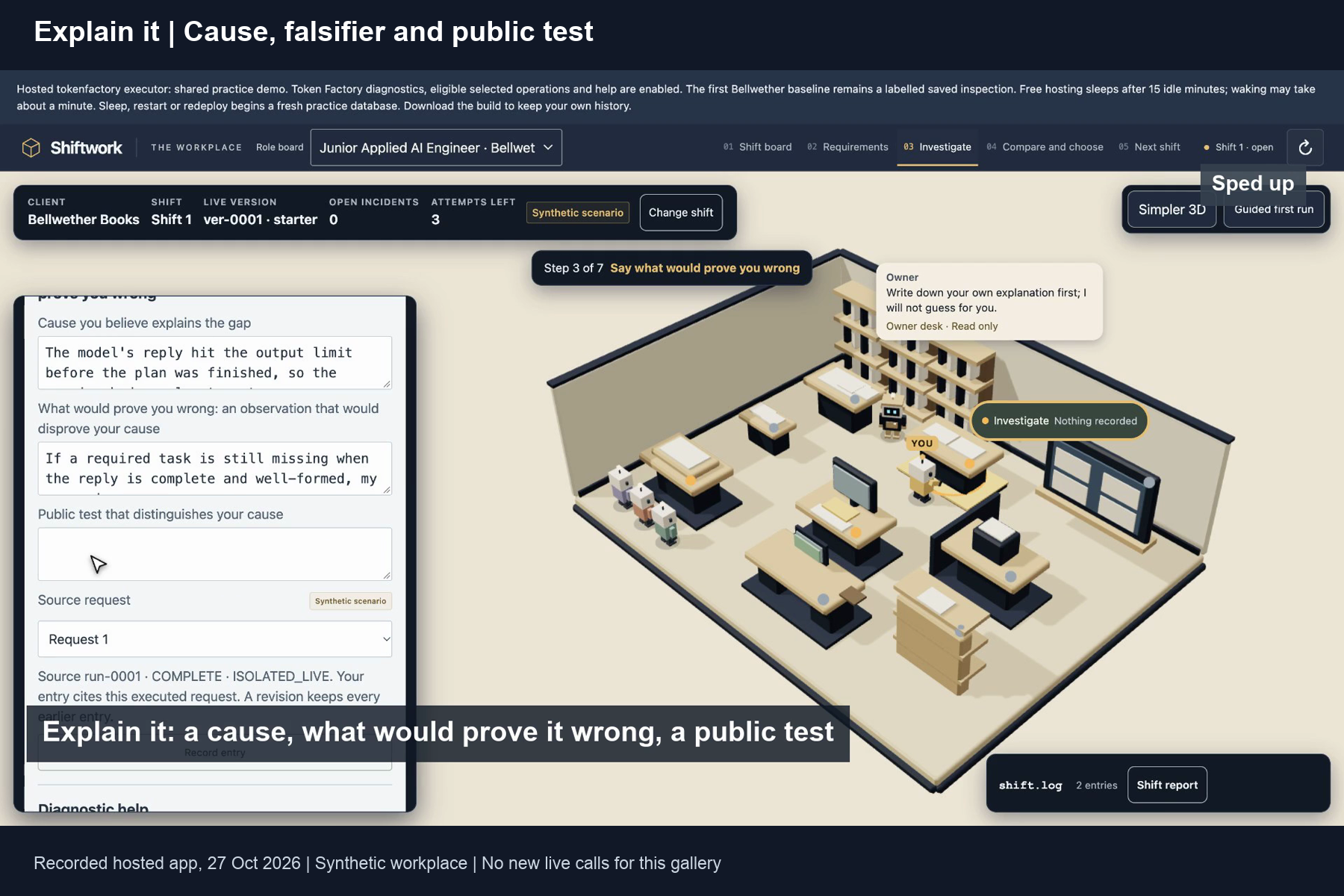
Learners investigate a problem, compare repairs and decide which version to run. Their next shift starts from that choice, so the work continues rather than resetting after each exercise.
The video demonstrates the bookshop journey and gives a quick tour of the other two roles.
How we built it
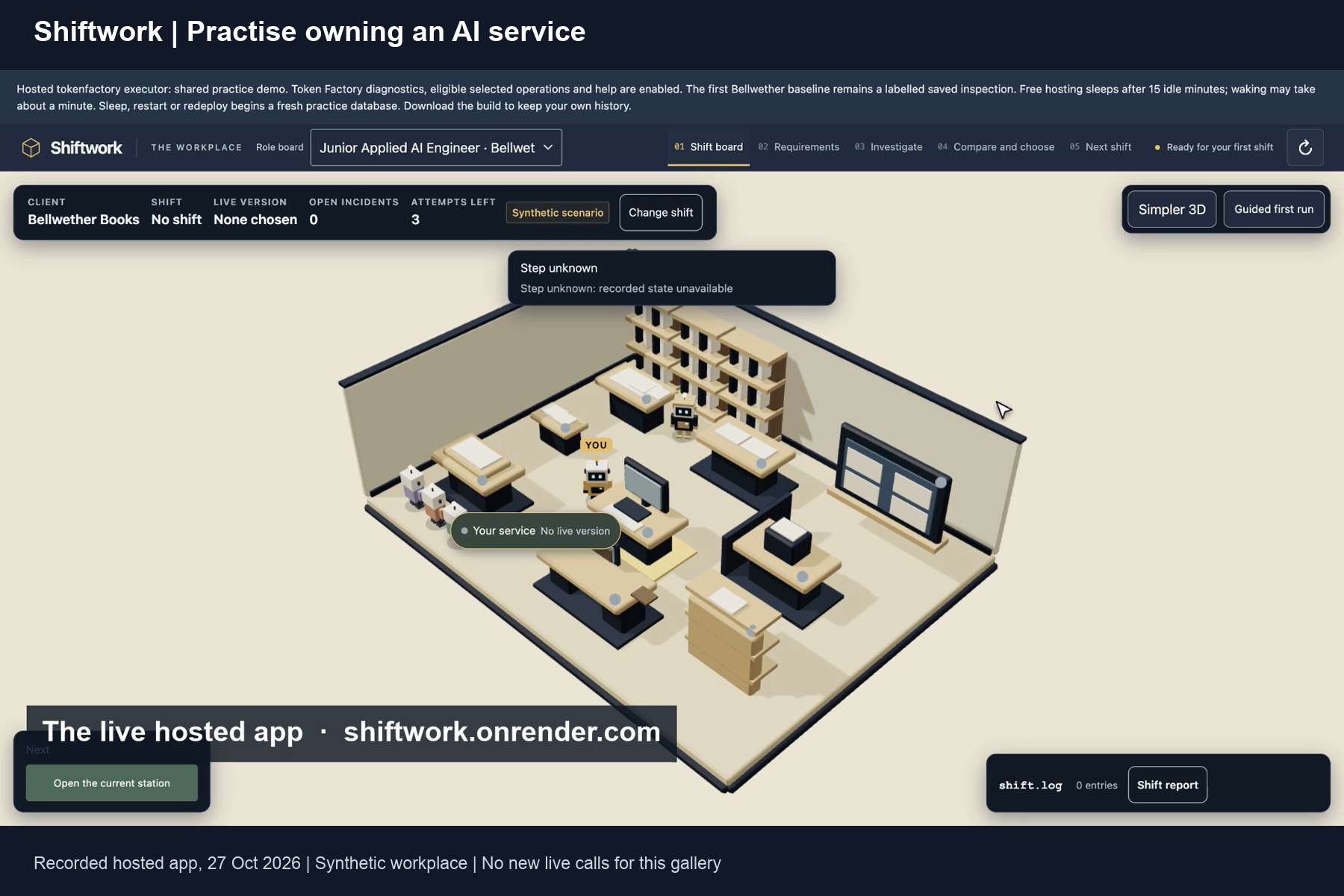
We built an interactive 3D workplace where learners can inspect problems, edit code and test their decisions. NVIDIA Nemotron 3 Nano on Nebius Token Factory interprets customer requests, while Nebius Sandboxes run the repair code. The app checks whether the customer's task was actually completed, rather than relying on the AI to judge itself.
The app uses Python and JavaScript and is hosted on Render. The free demo can reset; the local build lets learners keep their history.
Challenges we ran into
The challenge was connecting the room, the code and the consequences into one understandable experience.
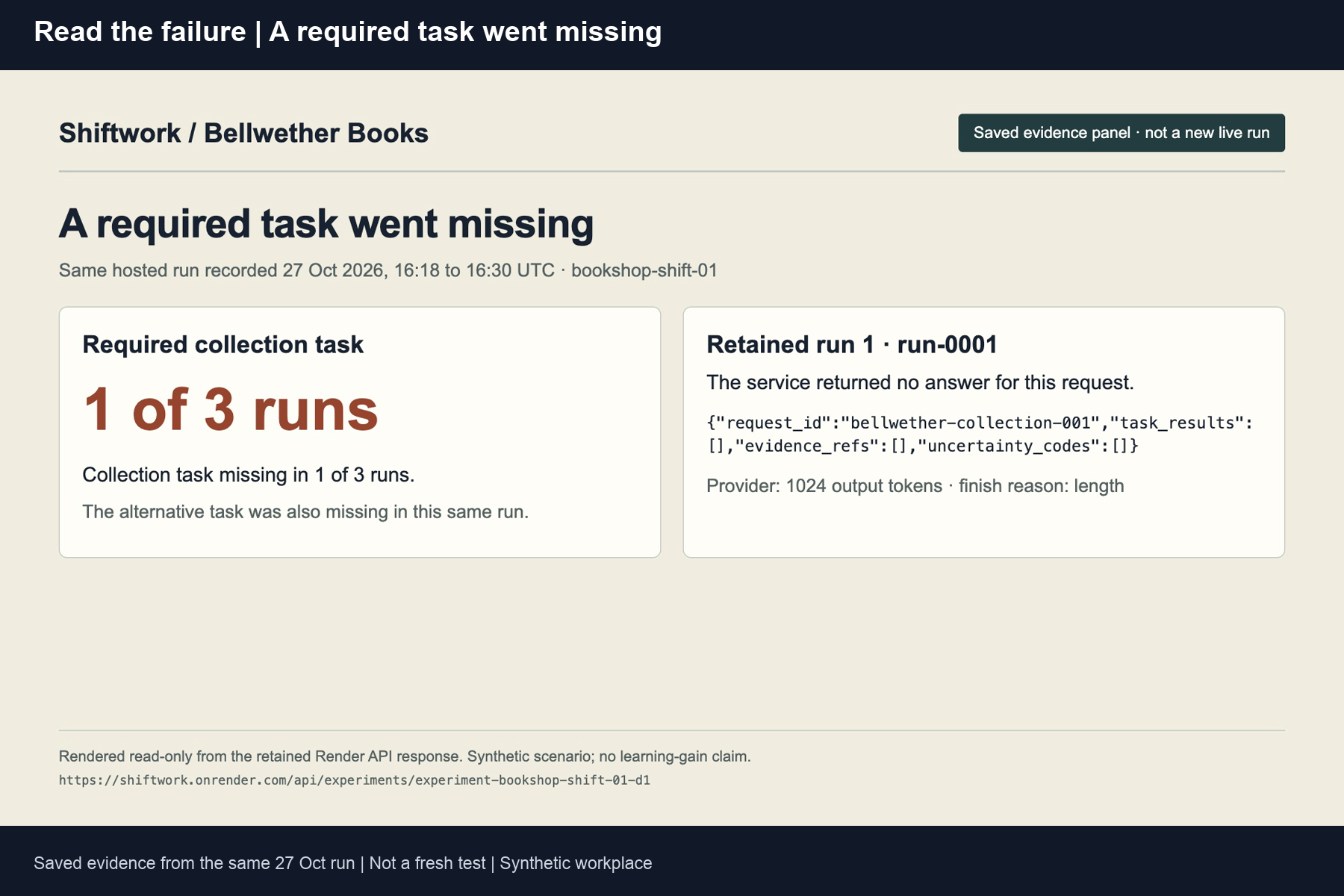
AI replies could sound convincing while missing part of a customer's request, and live connections could fail. We had to make those failures visible and keep the learner in charge of the repair, rather than letting the app quietly choose for them. Saved results in the video are clearly labelled.
Accomplishments that we're proud of
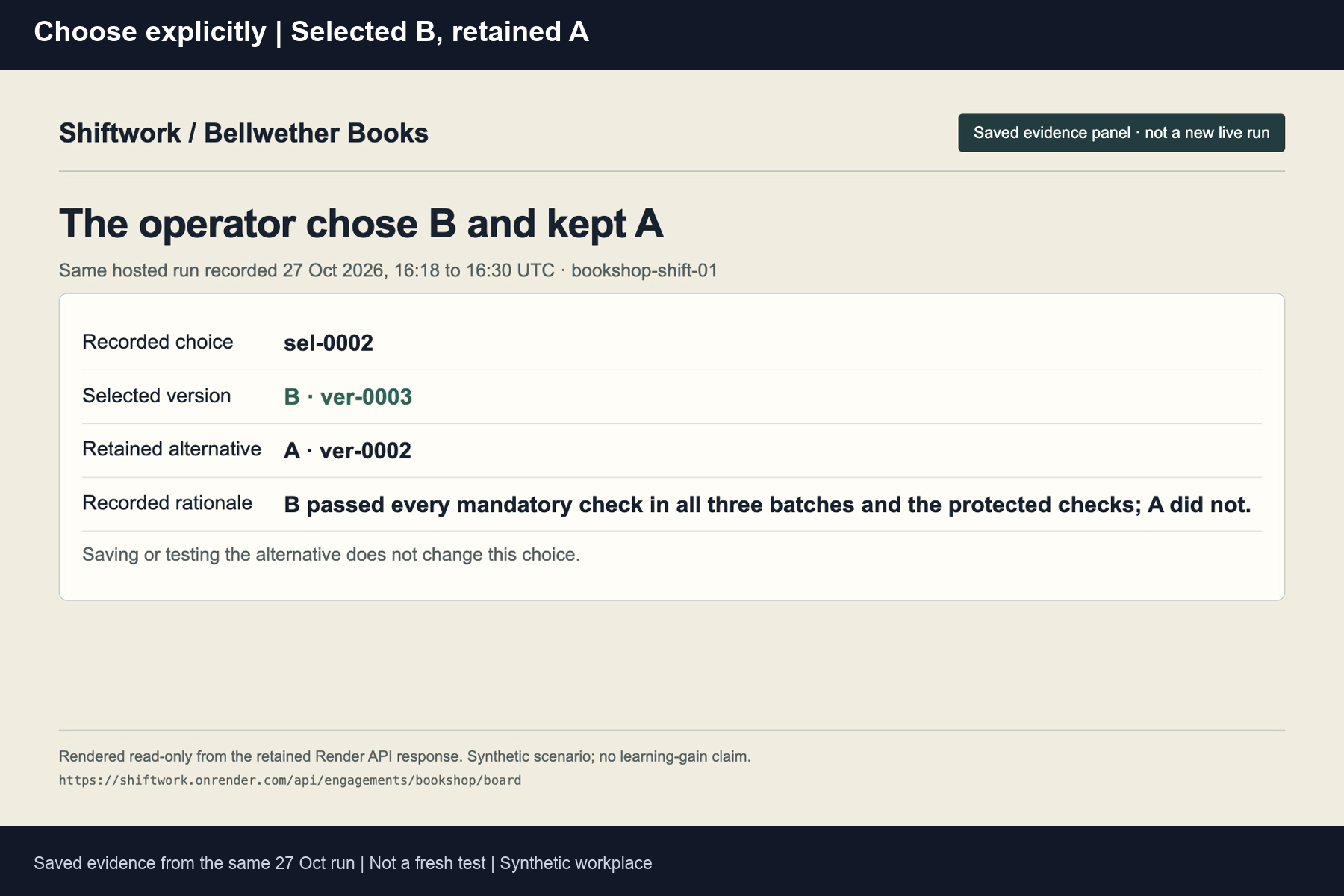
We built one workplace with three distinct roles and demonstrated a complete bookshop journey: find a failure, compare repairs, choose a version, run it and carry that choice into the next shift.
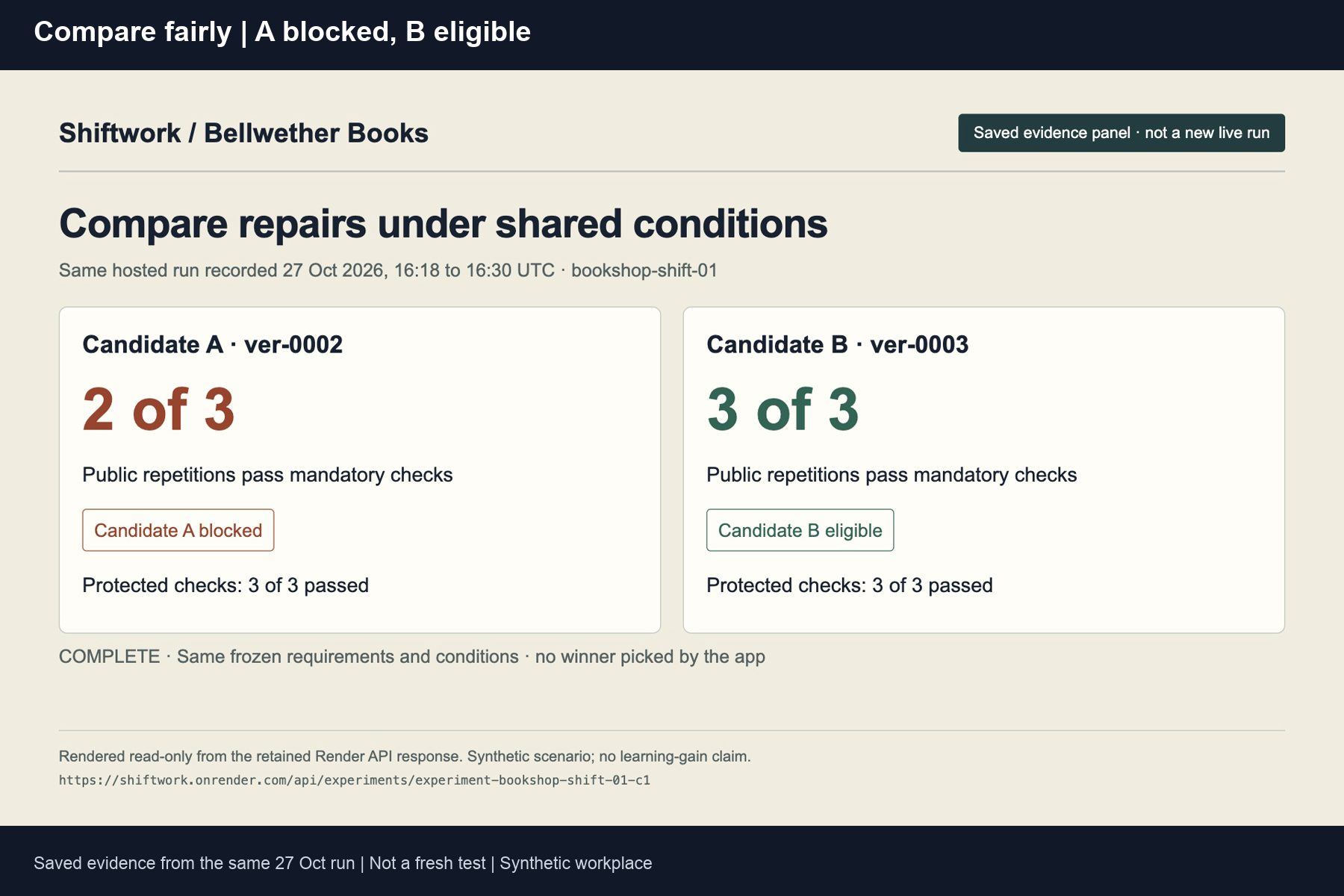
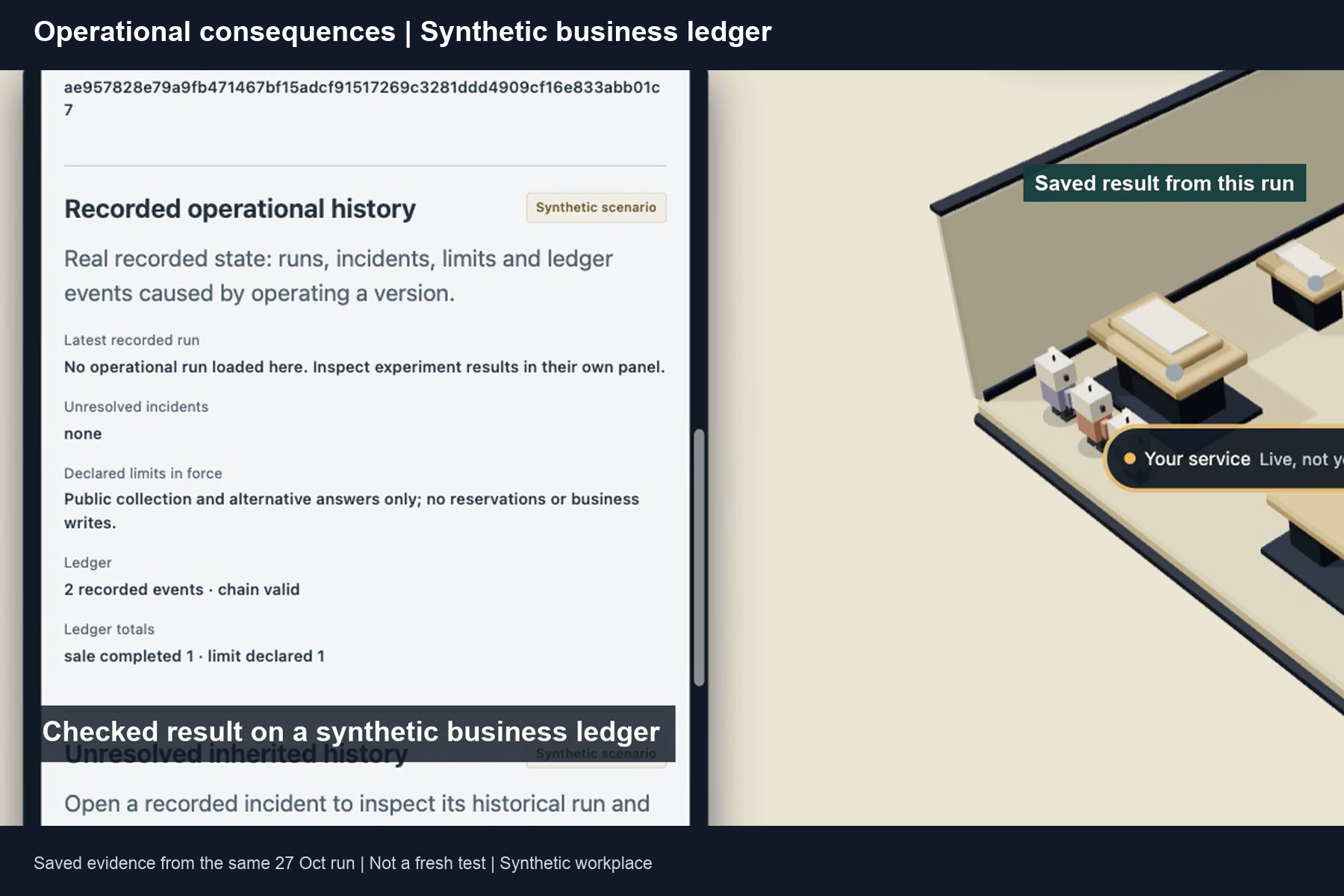
In the demo, one repair passed two of three public test batches and the other passed all three. The app blocked the failing candidate, and the operator chose which eligible version to run. The resulting sale was simulated, but the code execution and recorded choice were real.
What we learned
Building Shiftwork reinforced the difference between finishing a coding exercise and taking responsibility for a system. The interesting decisions come when something fails and there is no prescribed fix to follow.
Our aim is to make that work easier to explore. Whether it improves learning still needs to be tested with real learners.
What's next for Shiftwork
Put Shiftwork in front of students and junior engineers, find out which roles interest them, and test whether the practice helps them tackle unfamiliar problems.
Next, deepen the existing role journeys and give learners private, lasting progress. The goal is to help them understand what an AI-related career involves before deciding whether to pursue it.

Log in or sign up for Devpost to join the conversation.